Visto n' Visa
Blog
Notícias e artigos
Destinations
Careers
Immigrants

Want to live and work in North Dakota?

Personalized immigration plan with eligible visas, costs, and next steps for your goal!

If you are not eligible, you will know exactly why and what to do to improve your approval chances.

Save up to 12 hours in meetings

No pointless assessments.

Save up to 90%

Save money on vague or unfocused consultations

Avoid Fraud and Mistakes

One mistake can cost you your visa

Total Impartiality

Zero commercial bias

Decide with peace of mind

No toxic urgency

Fast and Accurate

Answers in minutes, no guesswork

Discover North Dakota

Oil, agriculture, harsh winters, and a low cost of living. A quiet state in the northern US.

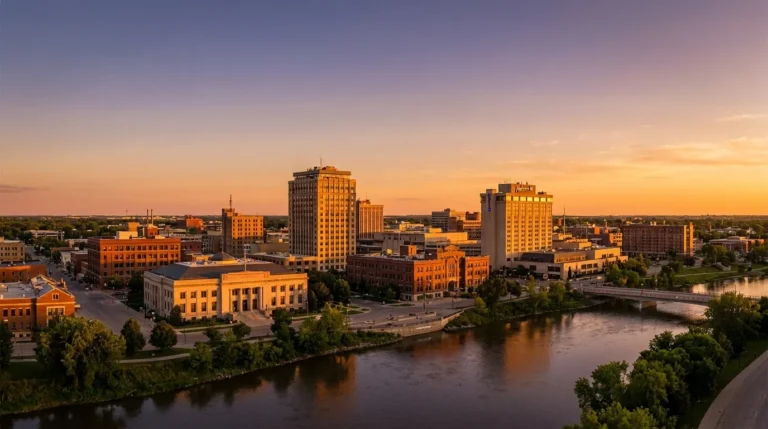
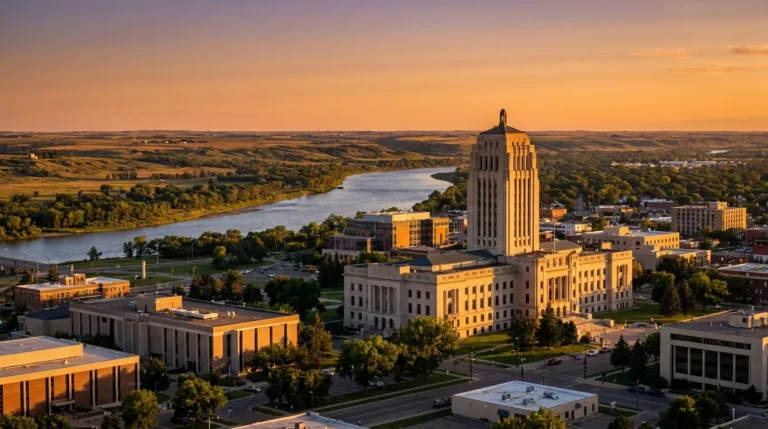
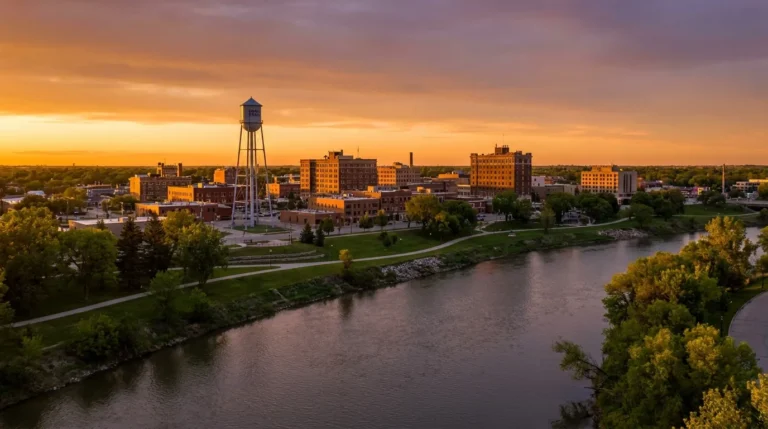
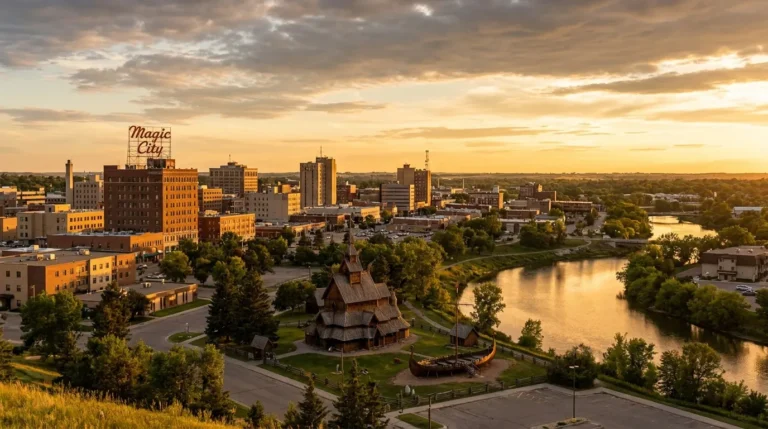
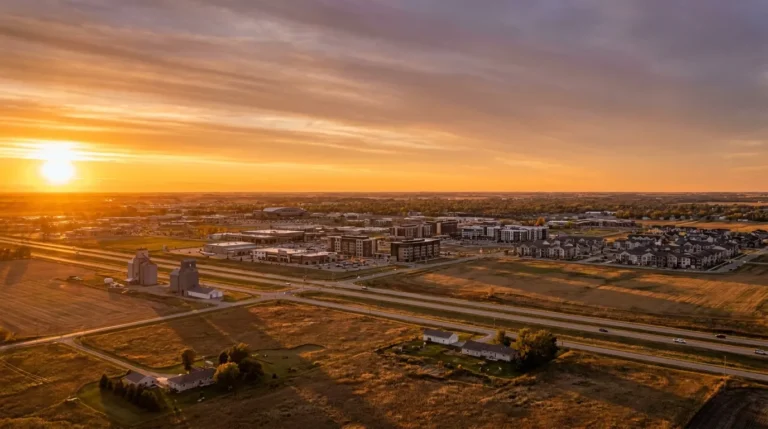
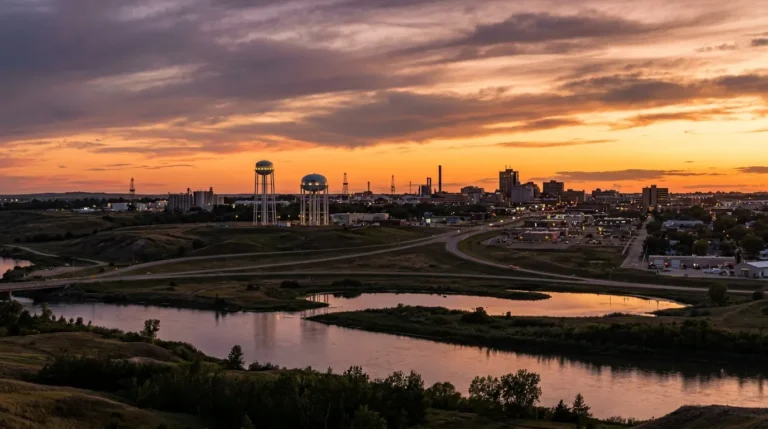
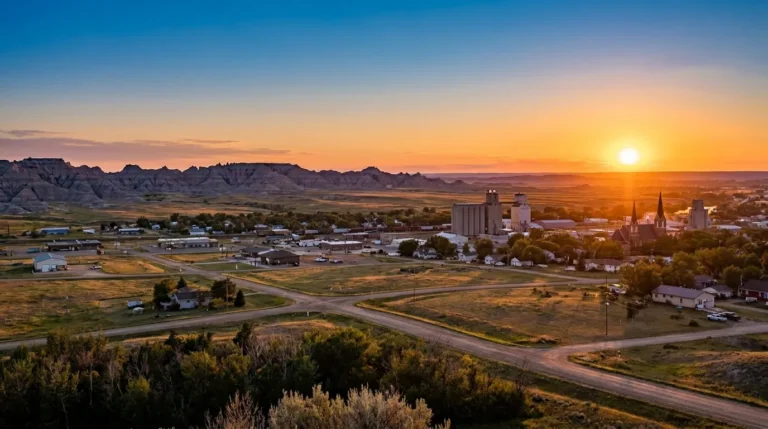
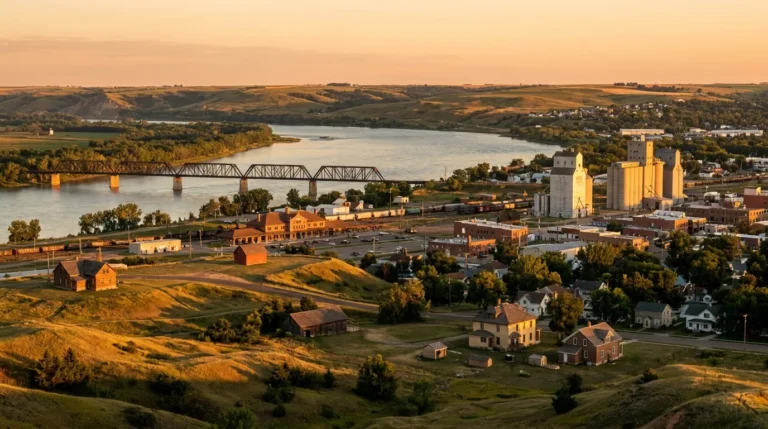
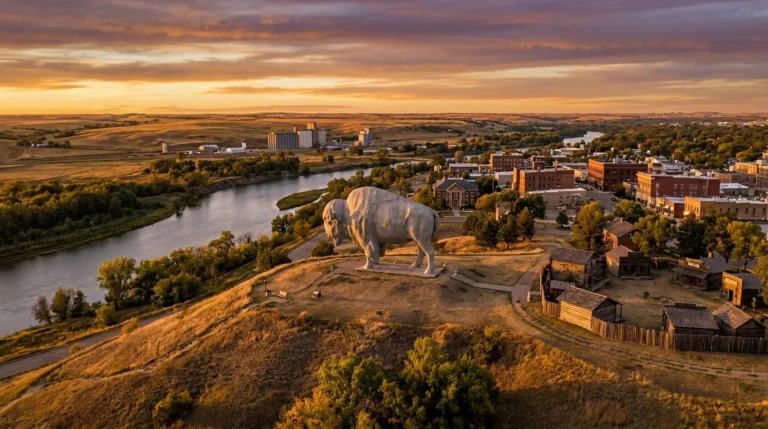
North Dakota sits in the north-central US, bordering Canada, Montana, Minnesota, and South Dakota. It is one of the least populous states in the country. The main cities are Fargo (the largest, in the east, on the Minnesota border), Bismarck (the capital, in the center), Grand Forks (a university city in the northeast), and Minot (in the north-center, home to an air force base).

The state experienced an economic boom in the 2010s with the development of the Bakken Formation oil field in the west (Williston, Dickinson). That boom attracted workers from across the US and generated significant wealth, though oil price cycles cause swings. Agriculture (wheat, corn, soybeans, sunflowers) is the other traditional pillar. North Dakota State University in Fargo is a major employer.

For immigrants, North Dakota attracts with employment in industry, oil, agriculture, and healthcare, with a cost of living well below the national average. Winter is the challenge: very cold, heavy snow, short days. The Brazilian community is small. Hispanics grew with the oil boom. Refugees (Sudanese, Somali, Bhutanese) have settled mainly in Fargo and Grand Forks.

Population
779,261
Average monthly salary
56,000 USD/mo
47.5289°, -99.7840°

Featured places

Top 10 places in North Dakota

The places most sought-after by immigrants in this region.

North Dakota demographics: white majority, with Native Americans and refugees

Around 84% white, 5% Native American (second-highest proportion after Alaska), with growing Hispanic and refugee populations.

North Dakota is predominantly white, mostly descendants of German (especially Russian-Germans), Norwegian, Swedish, and Finnish immigrants who arrived between 1880 and 1920. Surnames ending in -son (Anderson, Olson, Johnson) and -berg are common. The German-Russian tradition (from Mennonites and Lutherans) left its mark on cuisine and festivals.

The Native American population is the second-largest in proportion among US states, after Alaska. There are five reservations in the state, including Standing Rock (which gained international attention for the Dakota Access Pipeline protests in 2016), Spirit Lake, and the Three Affiliated Tribes (MHA Nation). Lakota, Dakota, Ojibwe, and other communities live on these lands.

Hispanics grew considerably with the oil boom, especially in Williston and Dickinson. Refugees, mainly from Somalia, South Sudan, Bhutan, and Iraq, were resettled in Fargo and Grand Forks, forming visible communities. Brazilians are rare, usually in Fargo or connected to the university. There is a small West African immigrant community in Bismarck and Fargo.

779,261
Population
36 yrs
Median age
4/km²
Density
$68,100
Median income
per year
Urban population63.7%
Foreign-born4.0%
Languages spoken
  • English
  • Spanish
  • Native languages (Lakota, Dakota, Ojibwe)
  • Somali (in Fargo)
  • Arabic
  • +1 more
Main religions
  • Christian (Lutheran and Catholic)
  • Lutheran (strong Scandinavian and German heritage)
  • Catholic
  • No religion (minority)
  • Native spiritual traditions (Sioux, Ojibwe)
  • +1 more

Cost of living in North Dakota: very affordable, with high salaries in the oil sector

Affordable rent and food. Small cities have costs well below the national average. Winter heating is a significant expense.

A one-bedroom apartment in Fargo runs between $800 and $1,100. In Bismarck, $750 to $1,050. In Grand Forks, even cheaper ($700 to $950). Williston, because of the oil sector, saw high rents at the peak of the boom ($2,000+), but has since returned to reasonable levels. Buying a home is feasible: three-bedroom homes in good neighborhoods range from $250,000 to $400,000.

Supermarkets (Hornbacher's, Walmart, Cash Wise, Costco, Hugo's) compete for customers. A meal at a casual restaurant costs $10 to $15. Gas is below the national average. Electricity is reasonable, but winter heating (natural gas or oil) can cost $200 to $400 per month in the coldest months.

State income tax is very low (zero or 2%, depending on the bracket). Sales tax is 5%. In general, a modest salary ($50,000 to $70,000 for a family) goes a long way. In the oil industry, wages reach $80,000 to $120,000 for experienced workers. Engineers and technicians earn more.

91Cost index (US = 100)9% below US average
CategorySingleCoupleFamily (2 + 2)
iHousing$1,183$1,365$1,729
iFood$346$692$1,256
iTransport$455$774$1,001
iHealthcare$255$510$956
iChildcare$1,656
iOther$774$1,392$1,957
Monthly total$3,013$4,733$8,555

Source: U.S. BLS Consumer Expenditure Survey 2023 + BEA Regional Price Parities 2023 · Estimates in USD, monthly.

Housing in North Dakota: large homes at affordable prices, with thermal insulation as a priority

Buying a home is feasible even on an average salary. Suburban neighborhoods are the norm. Heating, insulation, and a heated garage are top priorities.

In Fargo, homes in good neighborhoods such as Brandt Crossing, Osgood, Eagle Pointe, or the south side of the city range from $280,000 to $500,000. In Bismarck and Mandan (neighboring city), areas like Northeast Bismarck and suburban Mandan have homes from $250,000 to $450,000. Grand Forks has homes from $200,000 in good areas.

To rent, the standard American requirements apply: income 3x the rent, credit history, references. In Fargo and Bismarck, supply is good so competition is lower. Those arriving without an American credit score can usually rent with two months upfront or a co-signer. In Williston and Dickinson, the market fluctuates with the oil cycle.

Key features to look for in a home: good thermal insulation (double or triple-pane windows), an enclosed garage (ideally heated), natural gas or propane heating, flood-resistant foundation, and a roof built to handle snow loads. Recommended neighborhoods in Fargo: South Fargo, West Fargo, Eagle Pointe. In Bismarck: Northeast Bismarck, Mandan. In Grand Forks: South Forks, near UND.

Purchase price (m²)
  • Center$2,200/m²
  • Outside$1,450/m²
3.8×
Price-to-income
7.0%
Mortgage rate (20y)
Recommended neighborhoods
  • South Fargo (Eagle Pointe, Brandt Crossing)
  • West Fargo (suburban)
  • Northeast Bismarck
  • Mandan (near Bismarck)
  • South Forks (Grand Forks)
  • +2 more

Job market in North Dakota: oil, agriculture, healthcare, and industry

The oil boom in the west draws workers. Healthcare, education, and government employ in Fargo, Bismarck, and Grand Forks. Agriculture sustains rural areas.

Oil is the sector with the highest visibility. The Bakken Formation in the west transformed Williston and Dickinson into boom towns. Companies like ConocoPhillips, Continental Resources, Hess, and Marathon Oil employ engineers, geologists, operators, and rig workers. Field salaries are high, with 14-days-on/14-days-off rotation schedules common.

Agriculture is the traditional foundation. North Dakota is the largest US producer of spring wheat, barley, sunflowers, and flaxseed. It also produces soybeans, corn, and cattle. Cooperatives like CHS Inc. and companies like AGCO operate in the state. Agricultural processing and fertilizer industries also employ many.

In Fargo, there is healthcare (Sanford Health, headquartered here and in Sioux Falls, South Dakota), technology (Microsoft has a large campus), banking (Bell Bank, Gate City), insurance, and services. Bismarck has state government, healthcare (CHI St. Alexius, Sanford), and energy. Grand Forks has the university and the Grand Forks Air Force Base. Average salaries are lower than in major metros, but the cost of living more than compensates.

$56,000
Avg net salary
per month
$15,080
Minimum wage
per month
2.0%
Unemployment
68.5%
Labor force
Dominant sectors
  • Oil and gas (Bakken)
  • Agriculture (wheat, soybeans, corn, sunflowers)
  • Healthcare
  • Wind energy
  • Agricultural processing industry
  • +3 more
Major employers
  • Sanford Health (Fargo)
  • CHI St. Alexius Health (Bismarck)
  • Continental Resources and Hess (oil)
  • Microsoft (Fargo)
  • Bell Bank
  • +4 more

Education in North Dakota: decent public schools and solid public universities

An accessible and well-structured educational system. NDSU (Fargo) and UND (Grand Forks) are the main public universities.

Children have the right to free public schooling. Schools vary less than in other states, partly because the population is small and relatively homogeneous. Districts in Fargo, West Fargo, and Bismarck have well-rated schools. Rural schools sometimes combine grade levels but are generally decent.

North Dakota State University (NDSU) in Fargo is the state's largest university, with strong programs in agriculture, engineering, architecture, and business. The University of North Dakota (UND) in Grand Forks is the oldest, with strengths in aerospace, medicine (UND School of Medicine), law, and atmospheric sciences.

Smaller universities include Minot State, Dickinson State, Valley City State, and Mayville State. Tuition for state residents runs around $9,000 to $11,000 per year at public universities. International students pay more, but the total cost (including housing) is considerably lower than in coastal states. NDSU has a well-known agricultural engineering program.

Literacy98.0%
Tertiary education31.0%
478
PISA score (avg)
$9,800
Private school
per year
Notable universities
  • North Dakota State University (NDSU, Fargo)
  • University of North Dakota (UND, Grand Forks)
  • Minot State University
  • Dickinson State University
  • Valley City State University
  • Mayville State University
  • United Tribes Technical College (Bismarck)

Healthcare in North Dakota: Sanford and CHI St. Alexius dominate, with limited access in rural areas

Sanford Health is the largest network, with hospitals in Fargo and Bismarck. CHI St. Alexius covers Bismarck. Small towns have clinics, not major hospitals.

Sanford Health, headquartered in Sioux Falls (South Dakota) and Fargo, is the state's largest health network, with hospitals in Fargo, Bismarck, Dickinson, and numerous cities. CHI St. Alexius Health dominates Bismarck. Essentia Health Network and Altru Health (in Grand Forks) serve the northeast of the state.

As everywhere in the US, there is no universal public system. Employer-sponsored insurance is the standard. North Dakota expanded Medicaid under the ACA, so low-income families have coverage. Indian Health Service serves Native Americans on reservations, with several tribal hospitals and clinics.

In rural areas, especially the west, there is a shortage of specialist physicians, and patients frequently travel to Bismarck or Fargo. Telemedicine has gained traction. Without insurance, an ER visit can exceed $1,500. Urgent care ($100-200) is an alternative. Generally, the system works reasonably for those with formal employer coverage.

Healthcare index70.0 / 100
  • Life expectancyyears at birth
    78.4yrs
  • Doctors per 1kpracticing physicians
    3.0
  • Health spendper capita, per year
    $11,200
  • Public systemoverall quality rating
    Fair

Safety in North Dakota: a generally safe state, with localized issues in boom areas

Fargo, Bismarck, and Grand Forks have low crime rates. Williston and Dickinson saw problems during the oil boom. Rural areas are very peaceful.

North Dakota is among the safest states in the US. Fargo, West Fargo, Bismarck, and Mandan regularly appear on lists of safe cities. Violent crime is rare, and most crimes involve petty theft, drunk driving, and domestic violence.

During the peak of the oil boom (2010-2014), Williston and Dickinson saw increases in crime, prostitution, drugs, and violence from the rapid influx of workers. The situation calmed after the peak, but these cities still have above-average state rates. They are, however, considerably more peaceful than large cities in other states.

On Native American reservations, there are longstanding issues of poverty and domestic violence, often with inadequate policing. In rural white communities, small towns have virtually zero crime. For immigrants, any city in the state is considerably safer than the American average. The biggest risks are the climate (extreme cold, snowstorms) and driving on icy roads.

3.8
Homicides per 100k
per year
Safety index
64.0
Crime index
36.0
Safer neighborhoods
  • West Fargo
  • Fargo South
  • Mandan (near Bismarck)
  • Bismarck Northeast
  • Grand Forks (South Forks)
  • Valley City
  • Minot (residential neighborhoods)
Areas to avoid
  • Fargo isolated neighborhoods at night
  • Bismarck eastern outskirts
  • Remote reservations

Transportation in North Dakota: a car is essential, with long distances between cities

Entirely car-dependent state. Fargo airport handles domestic flights. Roads are generally good but dangerous in winter.

North Dakota is a car state. Virtually everyone drives. There is no metro, and buses are limited to a few routes within Fargo, Bismarck, and Grand Forks. Distances between cities are large: Fargo to Bismarck is three and a half hours; Bismarck to Williston is another three and a half hours.

The interstate highways I-94 (running east-west through Fargo, Bismarck, and Dickinson) and I-29 (running north-south, connecting Fargo to Grand Forks and Canada) are the main routes. Traffic is minimal, even in cities. Parking is free or cheap everywhere. A 4WD or all-wheel-drive vehicle is desirable for winter, though many residents use sedans with snow tires.

Hector International Airport (FAR) in Fargo is the state's largest, with domestic flights to hubs like Minneapolis (MSP), Chicago, Denver, and Las Vegas. Bismarck Municipal (BIS), Grand Forks (GFK), Minot (MOT), and Williston (XWA) handle regional flights. For international connections, most passengers connect through Minneapolis or Denver.

18 min
Avg commute
24
Walkability
Airports
  • FAR (Hector International, Fargo)
  • BIS (Bismarck Municipal)
  • GFK (Grand Forks International)
  • MOT (Minot International)
  • XWA (Williston Basin International)
  • +1 more
  • Bike infrastructure

North Dakota climate: extreme continental, with harsh winters and a short, hot summer

Winters with temperatures below -30 degrees Celsius are common. Summers can exceed 35 degrees. A temperature range of over 70 degrees between seasons.

North Dakota has a severe continental climate (Koppen Dfb/Dfc). Winter is long and very cold: January lows frequently drop below -20 degrees Celsius and can reach -35 or lower with windchill. Snow covers the ground from December through March, and winds can create blizzards with near-zero visibility.

Summer is short and surprisingly warm. From June to August, highs of 27-32 degrees Celsius are common, and heat waves can exceed 35 degrees. Nights are cooler and pleasant. Spring is late (flowering in May), and autumn is brief, with tree colors in September and snow possible by October.

Tornadoes occur in summer, especially in the eastern part of the state, though less frequently than in states further south. Winter snowstorms close roads and schools. For immigrants, adapting to the cold is a real challenge: winter clothing (insulated coat, thermal gloves, boots, hat), efficient home heating, and a car in good condition before November are all essential.

Sunny days / year200 days
Avg high (°F)
  • 18°J
  • 23°F
  • 36°M
  • 54°A
  • 69°M
  • 78°J
  • 82°J
  • 81°A
  • 72°S
  • 56°O
  • 38°N
  • 24°D
Avg low (°F)
  • J
  • F
  • 18°M
  • 32°A
  • 44°M
  • 56°J
  • 59°J
  • 57°A
  • 48°S
  • 35°O
  • 21°N
  • D
Rainfall (")
  • 1"J
  • 1"F
  • 1"M
  • 2"A
  • 3"M
  • 4"J
  • 3"J
  • 3"A
  • 3"S
  • 2"O
  • 1"N
  • 1"D

North Dakota culture: Scandinavian-German tradition, Midwest friendliness, and Native American heritage

The distinctive Fargo accent, Midwest friendliness, college football, and Native American culture define the state's identity.

North Dakota's culture blends several currents. The Scandinavian (Norwegian, Swedish) and German-Russian heritage is strong. Festivals like Norsk Hostfest (in Minot, the largest Scandinavian festival in North America) and Oktoberfest celebrate these origins. Traditional foods include lefse (Norwegian flatbread), kuchen, hot dish, and knoephla (German dumpling soup).

The "Fargo accent" and "Minnesota nice" (from the neighboring state, but present here too) characterize the way people speak and their direct and friendly manner. The Coen Brothers' film Fargo (1996) popularized the accent, though in an exaggerated form. Rural communities have a strong religious life, with Lutheran and Catholic churches in almost every village.

College football is big. NDSU Bison have won multiple FCS championships. Hockey is also popular, with UND Fighting Hawks competing at the national level. Native American culture is alive on the reservations, with powwows (festivals featuring dance, music, food), art, and oral tradition. Theodore Roosevelt National Park in the west, with badlands and wild bison, is an important tourist destination.

95
Major museums
Notable dishes
  • Hotdish (Midwest casserole)
  • Lefse (Norwegian flatbread)
  • Kuchen (German cake, official state dessert)
  • Knoephla soup (German dumpling soup)
  • Fleischkuekle (Volga German meat pasty)
  • +3 more
Annual events
  • Norsk Hostfest (Minot, September, largest Scandinavian festival in the Americas)
  • NDSU Bison football (fall in Fargo)
  • United Tribes International Powwow (Bismarck, September)
  • North Dakota State Fair (Minot, July)
  • Medora Musical (summer, featuring Theodore Roosevelt history)
  • +1 more

Key sectors of the North Dakota economy

Oil, agriculture, healthcare, wind energy, agricultural manufacturing, and technology (in Fargo) sustain the economy.

Oil and gas are the recent engine. The Bakken Formation, using hydraulic fracturing (fracking), made North Dakota the second-largest oil producer in the US for several years. Continental Resources, Hess, ConocoPhillips, Marathon, and others operate in the state. Oil price cycles affect the entire economy.

Agriculture is the traditional pillar. The largest US producer of spring wheat, barley, sunflowers, and flaxseed. Soybeans and corn have grown in recent decades. Agricultural processing industries (flour, oils, feed) and fertilizers employ many. Cooperatives like CHS are important.

Wind energy has grown rapidly, with wind farms spread across the state. Healthcare, with Sanford and CHI St. Alexius, is a major urban employer. Fargo has become an unlikely technology hub, with Microsoft (a campus of 5,000 employees), Bobcat Company, and fintech companies. Air bases in Grand Forks and Minot inject federal dollars. Tourism at Theodore Roosevelt National Park in the west.

  • GDPgross domestic product
    $70.0B
  • GDP per capitaoutput per resident
    $89,800
  • GDP growth (yr)economy expanding
    +3.4%
Top sectors
  • Oil and gas (Bakken)
  • Agriculture (wheat, soybeans, sunflowers)
  • Wind energy
  • Healthcare
  • Technology (in Fargo)
  • +3 more

Immigrant communities in North Dakota

North Dakota has around 45,000 immigrants, with a strong Liberian, Somali, and Mexican presence concentrated in Fargo and Grand Forks.

North Dakota is home to about 45,000 people born outside the United States, close to 6% of the population. Fargo is the main hub, with one of the largest Liberian concentrations in the United States, the result of decades of refugee resettlement. Somalis, Bhutanese-Nepali, and Congolese have also been resettled in Fargo, Grand Forks, and Bismarck, and the Muslim presence has grown enough to sustain its own mosques in Fargo. Mexicans and Central Americans arrived through construction, agriculture, and the oil industry in the west of the state, with a presence in Bismarck, Williston, and Dickinson. The recent oil boom brought workers of many origins, and Ukrainians, Germans, and Canadians form older layers of immigration in the region.

North Dakota has no foreign consulates of its own, and consular support comes from Chicago or Minneapolis. Lutheran Social Services of North Dakota, based in Fargo, is the main refugee resettlement agency in the state, offering English classes, legal services, and support to newly arrived families. Cultural Diversity Resources Fargo connects immigrants to jobs and social services. Catholic and Lutheran churches act as orientation points in smaller towns, and public schools in Fargo and Grand Forks run bilingual programs in English, Somali, Nepali, and Spanish.

45,000
Foreign-born residents
estimated
Top countries of origin
  • Mexico
  • Liberia
  • Somalia
  • Bhutan
  • Philippines
Main immigrant hubs
  • Fargo
  • Grand Forks
  • Bismarck
  • Williston
  • Dickinson
Foreign consulates
  • Consular coverage via Chicago and Minneapolis
Community organizations
  • Lutheran Social Services of North Dakota
  • Cultural Diversity Resources Fargo
  • Immigrant Development Center

Latest posts

Posts about North Dakota

Coverage and updates related to this destination.