Visto n' Visa
Blog
Notícias e artigos
Destinations
Careers
Immigrants

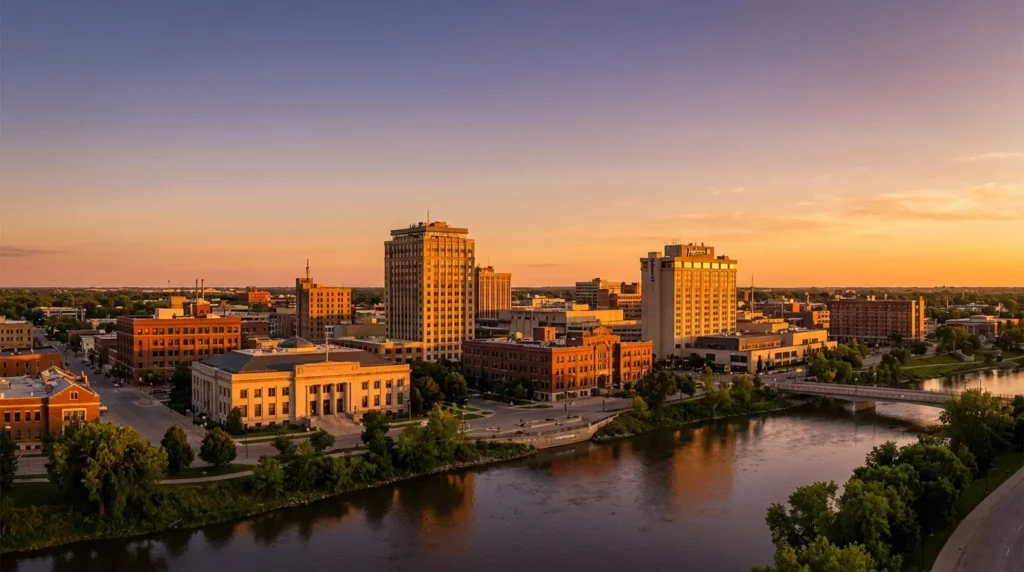
Want to live and work in Fargo?

Personalized immigration plan with eligible visas, costs, and next steps for your goal!

If you are not eligible, you will know exactly why and what to do to improve your approval chances.

Save up to 12 hours in meetings

No pointless assessments.

Save up to 90%

Save money on vague or unfocused consultations

Avoid Fraud and Mistakes

One mistake can cost you your visa

Total Impartiality

Zero commercial bias

Decide with peace of mind

No toxic urgency

Fast and Accurate

Answers in minutes, no guesswork

Who lives in Fargo: a white majority alongside refugees from many backgrounds

The city has a majority of German and Scandinavian descent, but has received refugees from Bosnia, Somalia, Sudan, Iraq, Bhutan, and the Congo. This has transformed the cultural profile over the past two decades.

Historically, Fargo is a city of the American Heartland, with strong German, Norwegian, and Swedish roots. The surnames Anderson, Johnson, and Olson rank among the most common in the area. This identity still shapes festivals, Lutheran churches, and the food itself.

Since the 1990s, Fargo has become a refugee resettlement hub thanks to the work of Lutheran Social Services. As a result, in markets such as Asian Foods and in neighborhoods on the north side, Somali, Bosnian, Arabic, Nepali, and Swahili can be heard. The Latino community has also grown, primarily Mexican, and there is a small Brazilian community scattered throughout, generally connected to studies at NDSU.

The population is young because of the university and the hospital system. Students from other parts of the state, rural Minnesota, and abroad come for engineering, agriculture, and health science programs. The 20-to-35 age group is proportionally high for an inland city.

Languages spoken
  • English
  • Spanish
  • Somali
  • Arabic
  • Bosnian
  • +1 more
Main religions
  • Lutheranism
  • Catholicism
  • Islam
  • No religion
  • Various evangelical denominations
Cost of living in Fargo: low by American standards, high for heating

Fargo is more affordable than most mid-sized American cities. Rent, food, and transportation fall below the national average, but heating bills in winter add significant weight to the budget.

Rent is one of the city's strengths. Two-bedroom apartments in decent neighborhoods cost well below what one would pay in Minneapolis or Denver. Homes to purchase are also accessible by American standards, with 30-year financing at national market rates. North Dakota has a low state income tax, which supports saving.

The major budget hit is natural gas in winter. Heating a home between November and April can double the bill, depending on the age of the property. Newer apartments with good insulation help considerably. Electricity, supplied by Xcel Energy and local cooperatives, stays in a reasonable range, and sales taxes are around seven percent.

For groceries, Hornbacher's is the most beloved local supermarket, with Cashwise, Walmart, and Costco competing on price. Restaurants offer good value, particularly Midwest chains such as Culver's and Buffalo Wild Wings. Fuel is cheap and the state has one of the lowest tax burdens in the United States.

91Cost index (US = 100)9% below US average
CategorySingleCoupleFamily (2 + 2)
iHousing$1,183$1,365$1,729
iFood$346$692$1,256
iTransport$455$774$1,001
iHealthcare$255$510$956
iChildcare$1,656
iOther$774$1,392$1,957
Monthly total$3,013$4,733$8,555

Source: U.S. BLS Consumer Expenditure Survey 2023 + BEA Regional Price Parities 2023 · Estimates in USD, monthly.

Housing in Fargo: an abundant supply of new homes and apartments

Residential construction in Fargo keeps pace with population growth. Modern apartments are available in the south, family homes in the west, and historic character in neighborhoods near downtown and NDSU.

The downtown neighborhood around Broadway is experiencing a revitalization, with lofts in older buildings and new apartments aimed at young professionals. Those who prefer a traditional house look to the south side, in neighborhoods such as Rose Creek and Osgood, with quiet streets, parks, and good schools. The west side is growing quickly near I-29.

Near NDSU, the rental supply for students is large, with shared apartments and converted houses. West Fargo, the neighboring city, has become a destination for families because of the schools and the expansion of new subdivisions. Moorhead, across the river, is in Minnesota and has different taxes, which can influence the decision.

Newcomers typically rent first for six months to a year, usually in complexes with heating included and covered parking, an important feature in winter. Buying property is feasible even for those just starting out, provided there is a credit history or a reasonable down payment. Local real estate agencies such as Park Co. dominate the market.

Recommended neighborhoods
  • Downtown Fargo
  • Rose Creek
  • Osgood
  • South University
  • West Fargo
  • +2 more

Job market in Fargo: healthcare, technology, agriculture, and finance

Fargo has a diversified economy, with large hospitals, a technology hub centered on Microsoft, the headquarters of the state's largest agricultural company, and regional banks. Unemployment remains among the lowest in the country.

Sanford Health and Essentia Health are the two major hospital complexes, employing physicians, nurses, technicians, and administrative staff. The shortage of healthcare professionals in the state opens doors for qualified immigrants, with visa sponsorship programs common in nursing and medicine. Bell Bank is also a major employer in the financial sector.

Microsoft maintains its second-largest campus in the United States in Fargo, after Redmond, with thousands of employees working on Dynamics 365 and other business products. This attracts software engineers and developers. A startup ecosystem has grown around it, with Emerging Prairie organizing events. RDO Equipment Co. and Doosan Bobcat represent the heavy machinery industry.

Agriculture is the historical foundation, with cooperatives, soybean, wheat, and corn processors, and companies such as Cargill present in the region. For those arriving without fluent English, there are positions at meatpacking plants such as JBS in nearby areas, restaurants, hotels, and construction, with wages higher than in comparable cities in the southern part of the country.

Dominant sectors
  • Healthcare and hospitals
  • Technology and software
  • Agribusiness
  • Higher education
  • Financial services
  • +1 more
Major employers
  • Sanford Health
  • Essentia Health
  • Microsoft
  • North Dakota State University
  • Bell Bank
  • +2 more

Education in Fargo: strong universities and a well-rated public school system

Fargo is home to three higher education institutions in the metro area, led by NDSU. The public schools serve most of the community well, with English language programs for immigrant students.

North Dakota State University is the local flagship, with strong programs in engineering, agricultural sciences, architecture, pharmacy, and technology. It attracts students from the state, Minnesota, and abroad, particularly from India, China, and Nepal. In Moorhead, across the river, Concordia College and Minnesota State University Moorhead further expand the academic offerings.

The public school system is managed by Fargo Public Schools, with schools such as Fargo South High and Davies High School among the most sought after. West Fargo Public Schools, in the neighboring municipality, tends to rank even higher. Programs exist for students who speak other languages at home, with ESL teachers and translators available in several languages.

For technical education, North Dakota State College of Science, in Wahpeton, is a reference for welding, mechanics, and practical nursing, with a secondary campus in Fargo. Rasmussen University offers healthcare and business programs in a flexible format. Charter schools and private religious institutions, mainly Catholic and Lutheran, round out the options.

Notable universities
  • North Dakota State University (NDSU)
  • Minnesota State University Moorhead
  • Concordia College
  • North Dakota State College of Science
  • Rasmussen University

Healthcare in Fargo: two major hospital systems in competition

Sanford Health and Essentia Health compete in the region, with large hospitals, broad specialties, and modern technology. Fargo serves as a medical referral center for North Dakota, western Minnesota, and eastern Montana.

Sanford Medical Center Fargo is the largest hospital in the state and functions as a tertiary referral center for the entire region. It offers trauma care, cardiology, oncology, transplants, and obstetrics. Essentia Health, headquartered in Duluth, also operates a large hospital in the city. Together with specialized clinics, these two systems concentrate nearly all medical care in the area.

As in any part of the United States, health insurance is required. Those in formal employment receive an employer-sponsored plan. Refugee immigrants have access to North Dakota Medicaid. Those without coverage can seek Family HealthCare Clinic or Valley Community Health Centers, with fees proportional to income.

For emergencies, the ER at Sanford or Essentia treats anyone. Specialists typically have a wait of several weeks. Mental health services have a good public and private network, with therapists in several languages and programs aimed at refugees. Dentistry is separate, and costs can be high without dental coverage.

Healthcare index68.0 / 100
  • Life expectancyyears at birth
    78.4yrs
  • Doctors per 1kpracticing physicians
    3.7
  • Health spendper capita, per year
    $13,473
  • Public systemoverall quality rating
    Good

Safety in Fargo: one of the safest cities in the United States

Fargo frequently appears in rankings of the safest cities in the country. Violent crime is rare, and the city's main concerns are winter traffic accidents and occasional property theft.

Crime in Fargo is low compared to American cities of similar size. Residential neighborhoods are quiet, there is a sense of safety walking downtown at night during events, and the police have a good local reputation. Bicycle theft and car break-ins occur, but armed violence is not a feature of daily life as it is in many major cities.

There are areas with higher incident rates, particularly near downtown on weekend nights, with alcohol-related incidents. Isolated cases receive considerable attention in the local press precisely because they are uncommon. Police work with a strong community presence and offer translation in cases involving refugees.

The greater danger here is the weather. Snowstorms, wind chills below minus 40 degrees, and ice-covered roads are real hazards that require preparation. Cases of hypothermia and frostbite occur every winter, and those arriving from tropical climates need to understand that going outside without proper clothing can be fatal. Investing in a quality coat, gloves, and insulated boots is a priority.

5.8
Homicides per 100k
per year
Safety index
60.0
Crime index
40.0
Safer neighborhoods
  • North Fargo (near NDSU)
  • South University area
  • Rose Creek
  • Osgood
  • Eagle Run
  • Historic Downtown
Areas to avoid
  • Industrial stretches north of Main Avenue at night
  • Isolated areas near Interstate 29 during late hours

Transportation in Fargo: regional airport, local buses, and car dependency

Like the rest of the Upper Midwest, Fargo revolves around the car. There is an airport with direct flights to several hubs, reasonably functional local buses, and cycling in summer, though cycling is not viable in winter.

Hector International Airport, a few minutes from downtown, operates direct flights to Minneapolis, Chicago, Denver, Las Vegas, Dallas, and cities in Florida. For international travelers, a connection through Minneapolis is required. Interstates 29 and 94 intersect in Fargo, making car travel easier to Minneapolis (4 hours), Winnipeg in Canada (about 3.5 hours), and Bismarck.

MATBUS is the transit system integrating Fargo, West Fargo, and Moorhead, with routes that serve downtown, the university, and main commercial corridors. It works, but requires planning. Uber and Lyft cover the city. Passenger rail (Amtrak) passes through Fargo on the Empire Builder line, connecting Chicago to Seattle, with a stop downtown.

A car is practically required for those who work non-standard hours or live far from the MATBUS route. Bicycles work in summer, especially on the Greater Fargo Bike Path, but winter ends the season. A North Dakota driver's license is straightforward to obtain, with the written test available in several languages at some offices.

17 min
Avg commute
40
Walkability
Airports
  • FAR — Hector International Airport
  • International airport
  • Bike infrastructure

What the Climate Is Like Living in Fargo

Fargo has an extreme humid continental climate, with very long and frigid winters, short warm summers, and occasional spring flooding.

Winters are severe and prolonged, with lows frequently dropping below -22 degrees Celsius between December and February. Blizzards are common, and winds across the plains drive wind chills to extreme levels.

Summers are short, sunny, and warm, with highs between 28 and 31 degrees Celsius in July, moderate humidity, and severe storms that can bring tornadoes. Spring snowmelt brings flooding risk along the Red River.

Living here requires robust heating, extreme-cold winter gear, boots, a heated garage, and snow tires. Air conditioning is helpful in summer, and protecting floors and pipes in January is a priority.

Sunny days / year200 days
Avg high (°F)
  • 20°J
  • 20°F
  • 37°M
  • 50°A
  • 68°M
  • 83°J
  • 84°J
  • 81°A
  • 73°S
  • 55°O
  • 40°N
  • 27°D
Avg low (°F)
  • J
  • F
  • 18°M
  • 31°A
  • 46°M
  • 61°J
  • 64°J
  • 62°A
  • 55°S
  • 39°O
  • 25°N
  • 12°D
Rainfall (")
  • 1"J
  • 1"F
  • 1"M
  • 3"A
  • 3"M
  • 3"J
  • 3"J
  • 3"A
  • 3"S
  • 2"O
  • 1"N
  • 2"D

Culture in Fargo: festivals, breweries, and Scandinavian influence

Fargo has an active cultural scene for its size, with theaters, music festivals, museums, and good restaurants. Scandinavian heritage shows up in the food, the churches, and events such as the Norwegian Hostfest.

Downtown comes alive along Broadway, home to the Fargo Theatre, a historic Art Deco cinema, and bars such as Wurst Bier Hall and JL Beers. The Plains Art Museum holds a solid collection of contemporary and regional art. Microbrewery culture is strong: Drekker, Junkyard, and Fargo Brewing compete in quality. Summer is the time for outdoor festivals such as the Red River Valley Fair.

Upper Midwest food is distinctive, shaped by Norwegian, Swedish, and German influence. Hotdish, lutefisk, lefse, knoephla soup, and tater tots are part of daily life. There are also excellent Somali, Bosnian, Vietnamese, and Mexican options, especially near University Drive. Ethnic markets such as Asian Foods and Pita Stop draw a diverse clientele.

NDSU Bison football is a local institution. The team is a powerhouse in the FCS division, and on game days restaurants fill up and the city wears green and gold. In winter, hockey, skating, and snowmobiling dominate leisure. Public libraries serve as active community spaces through the cold months.

Fargo

What to See and Do While Living in Fargo

Fargo is North Dakota's largest city, with a surprisingly vibrant cultural scene for its size, Scandinavian art museums, a revitalized Downtown district, and easy access to Minnesota's lakes.

The Plains Art Museum, the largest art museum in the Dakotas, occupies a former agricultural warehouse and exhibits regional, contemporary, and Native American art. The Hjemkomst Center, across the Red River in Moorhead, MN, houses a functional replica of a Viking longship and the Hopperstad stave church. The Fargo Air Museum features restored World War II aircraft.

Downtown Fargo, centered around Broadway and Roberts Street, is home to restaurants, bars, and the Fargo Theatre, a preserved 1920s Art Deco cinema. North Dakota State University (NDSU) brings cultural programming through the Reineke Fine Arts Center and Bison Sports Arena. The Red River Zoo and Bonanzaville USA, an open-air museum, are popular family destinations.

For outdoor recreation, Lindenwood Park runs along the Red River with trails and urban camping. Minnesota Lake Country, an hour away, including Detroit Lakes and Otter Tail County, is a popular weekend getaway. Itasca State Park, the headwaters of the Mississippi River, is about three hours out. The Fargo Marathon and West Fest in West Fargo are summer highlights.

  1. 1["Plains Art Museum"
  2. 2"Fargo Air Museum"
  3. 3"Roger Maris Museum"
  4. 4"Red River Zoo"
  5. 5"Bonanzaville USA (nearby
  6. 6West Fargo)"
Nightlife4.0 / 10
Parks & green spaces
  • ["Lindenwood Park"
  • "Island Park"
  • "Rose Creek Park"
  • "Trollwood Park"
  • "MB Johnson Park"
  • +1 more

Latest posts

Posts about North Dakota

Coverage and updates related to this destination.

Showing content from North Dakota, as there is no specific data for Fargo yet.