Visto n' Visa
Blog
Notícias e artigos
Destinations
Careers
Immigrants

Want to live and work in Alberta?

Personalized immigration plan with eligible visas, costs, and next steps for your goal!

If you are not eligible, you will know exactly why and what to do to improve your approval chances.

Save up to 12 hours in meetings

No pointless assessments.

Save up to 90%

Save money on vague or unfocused consultations

Avoid Fraud and Mistakes

One mistake can cost you your visa

Total Impartiality

Zero commercial bias

Decide with peace of mind

No toxic urgency

Fast and Accurate

Answers in minutes, no guesswork

More about Alberta

Prosperity without provincial tax, between mountains and prairies

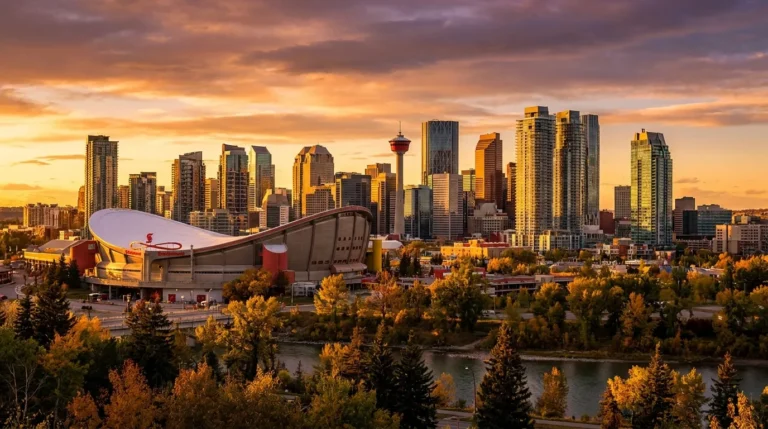
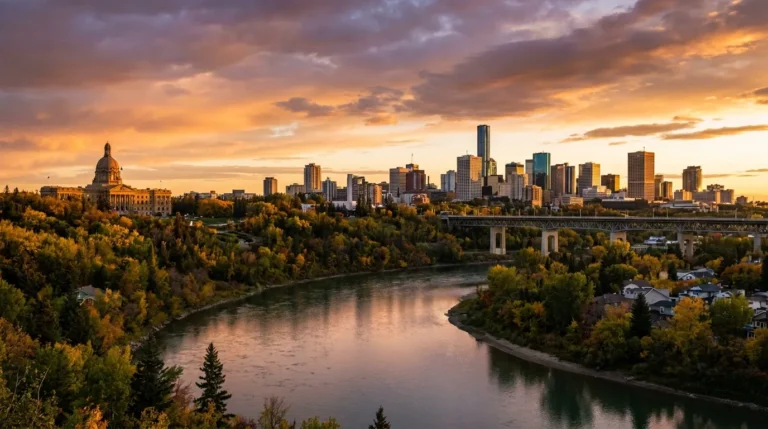
Alberta is known for its strong economy, driven by the energy sector and the absence of a provincial income tax, which makes a real difference for residents. Calgary and Edmonton are the two major cities, each with a distinct profile: Calgary is oriented toward business and outdoor sports, while Edmonton concentrates government, universities, and a growing cultural scene.

For immigrants, Alberta offers an attractive combination: competitive salaries, a lower cost of living than Vancouver or Toronto, and quick access to established communities. Credential recognition varies by field, but there are province-specific programs such as the Alberta Advantage Immigration Program (AAIP) to facilitate the process.

Winters are harsh, with intense cold from November to March, but summers are long and pleasant. The province has world-class national parks such as Banff and Jasper, within a few hours of the main cities, making weekends a real opportunity to explore nature.

Population
4,368,370
Average monthly salary
53,900 USD/mo
52.2833°, -117.4690°

Featured places

Top 10 places in Alberta

The places most sought-after by immigrants in this region.

Growing diversity in a predominantly anglophone province

With more than 4.3 million inhabitants, Alberta receives a strong flow of immigrants, with well-established Filipino, Indian, Chinese, and South American communities in both major cities.

Alberta's population is predominantly anglophone, but diversity is growing rapidly. Calgary and Edmonton have neighborhoods with high concentrations of immigrants, where it is possible to find services, restaurants, and community associations in multiple languages. The Latin American community, while smaller than in Toronto or Vancouver, has a visible presence especially in Calgary.

The province attracts skilled workers in technology, healthcare, and energy, as well as professionals in construction and transportation. This mix creates a relatively welcoming environment for newcomers, with active support networks in local associations and online groups.

English is essential in daily life and in the job market. There is no significant presence of French as a functional language outside federal contexts, unlike Quebec or New Brunswick.

4,368,370
Population
39 yrs
Median age
7/km²
Density
$53,300
Median income
per year
Urban population83.7%
Foreign-born23.8%
Languages spoken
  • English
Main religions
  • Christianity (53%)
  • No religion (37%)
  • Islam (3%)
  • Sikhism (2%)
  • Buddhism (1%)

Lower cost of living than Vancouver and Toronto, with above-average salaries

Alberta offers a good balance between income and cost of living, with no provincial income tax, though housing costs have been rising in Calgary and Edmonton.

The absence of a provincial income tax is Alberta's main financial advantage for those coming from other provinces or from abroad. In practice, this means hundreds or thousands of additional dollars per year depending on the salary bracket.

Rent and housing are more affordable than in Vancouver or Toronto, especially in Edmonton. In Calgary, prices have risen in recent years due to internal migration, but they still remain below the Toronto-Vancouver corridor. Food, public transportation, and services follow typical Canadian patterns.

Those working in the energy or technology sectors tend to find high salaries, which further improves the income-to-expense ratio. For families with children, public health and education services are free, which significantly eases the budget.

97Cost index (US = 100)3% below US average
CategorySingleCoupleFamily (2 + 2)
iHousing$1,266$1,564$2,010
iFood$298$596$1,080
iTransport$283$521$670
iHealthcare$60$119$208
iChildcare$1,303
iOther$402$670$894
Monthly total$2,309$3,470$6,165

Source: Statistics Canada (SHS 2022 + CPI 2024) · Estimates in USD, monthly.

More accessible housing than in Canada's major coastal cities

Calgary and Edmonton offer varied rental and purchase options, with well-developed suburbs and good infrastructure for families.

Calgary has a dynamic real estate market, with valued central neighborhoods and more affordable options in peripheral areas. Neighborhoods like Beltline and Kensington are popular among young professionals, while families prefer areas like Tuscany, Evergreen, and Auburn Bay, with good schools and parks.

Edmonton generally offers more affordable prices. Areas like Oliver, Glenora, and Garneau are well located and close to the university and downtown. Whyte Avenue is the most vibrant commercial corridor in the city, with a good supply of apartments for rent.

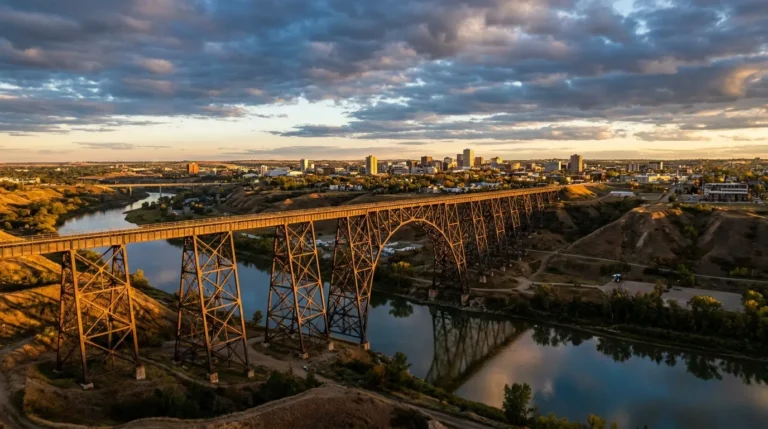
Outside the two metropolises, smaller cities like Red Deer, Lethbridge, and Medicine Hat have very affordable housing, but the job market is more limited. For newly arrived immigrants, the most common approach is to start in Calgary or Edmonton and evaluate the interior over time.

Purchase price (m²)
  • Center$3,700/m²
  • Outside$2,400/m²
4.8×
Price-to-income
6.5%
Mortgage rate (20y)
Recommended neighborhoods
  • Beltline (Calgary)
  • Kensington (Calgary)
  • Auburn Bay (Calgary)
  • Oliver (Edmonton)
  • Garneau (Edmonton)
  • +3 more

Strong job market in energy, technology, and construction

Alberta has low unemployment and high demand for skilled professionals, especially in oil, gas, IT, and healthcare.

Alberta's job market has historically been linked to the oil and gas sector, but it has diversified over recent decades. Calgary concentrates the headquarters of major energy, finance, and technology companies, while Edmonton has a strong presence of provincial government and healthcare.

Demand for IT professionals has grown steadily, with startups and established companies hiring developers, data analysts, and security specialists. In construction, the labor shortage is real and creates opportunities for both skilled tradespeople and project managers.

The Alberta Advantage Immigration Program (AAIP) has specific streams for workers with a job offer and for rural workers, facilitating the path to permanent residence. Recognition of degrees and certifications may require validation by local professional bodies, especially in engineering and healthcare.

$53,900
Avg net salary
per month
$22,300
Minimum wage
per month
6.5%
Unemployment
71.0%
Labor force
Dominant sectors
  • Oil and gas
  • Information technology
  • Construction
  • Healthcare
  • Agriculture
  • +1 more
Major employers
  • Cenovus Energy
  • Suncor Energy
  • Alberta Health Services
  • Government of Alberta
  • Canadian Natural Resources
  • +2 more

Leading universities and a strong network of technical colleges

Alberta has two internationally recognized research universities and a network of colleges focused on technical training and access to the job market.

The University of Alberta, in Edmonton, is one of Canada's leading research universities, with strong programs in engineering, health sciences, and business. The University of Calgary has recognized excellence in medicine, law, and energy management. Both welcome many international students and have support programs for immigrants.

For those seeking technical training and quick access to the job market, Alberta's colleges are an excellent entry point. SAIT (Southern Alberta Institute of Technology) and NAIT (Northern Alberta Institute of Technology) train professionals in mechanics, electrical trades, IT, culinary arts, and healthcare, with high employment rates.

The K-12 public education system is free for residents. There are also subsidized Catholic schools and some private international schools in the main cities, for those who prefer other curricula.

Literacy99.0%
Tertiary education64.2%
525
PISA score (avg)
$14,800
Private school
per year
Notable universities
  • University of Alberta (Edmonton)
  • University of Calgary
  • Athabasca University
  • MacEwan University (Edmonton)
  • Mount Royal University (Calgary)
  • SAIT — Southern Alberta Institute of Technology
  • NAIT — Northern Alberta Institute of Technology

Robust public system with universal coverage for residents

Alberta Health Services administers the public health system, with free coverage after a waiting period for new residents.

Alberta's healthcare system is administered by Alberta Health Services (AHS), one of Canada's largest health organizations. Residents with the Alberta Health Care Insurance Plan (AHCIP) have free access to medical consultations, emergency care, and hospital stays. The health card is issued after three months of residence in the province.

Calgary and Edmonton have major university hospitals, such as the Foothills Medical Centre and the University of Alberta Hospital. Access to a family doctor can be difficult due to a shortage of general practitioners, and many residents use walk-in clinics for non-urgent needs.

For mental health, dental care, and medications, public coverage is limited. Supplemental private plans, often provided by employers, cover these gaps. Some clinics offer services in Spanish or Portuguese, especially in neighborhoods with higher concentrations of immigrants.

Healthcare index78.0 / 100
  • Life expectancyyears at birth
    82.0yrs
  • Doctors per 1kpracticing physicians
    2.6
  • Health spendper capita, per year
    $6,200
  • Public systemoverall quality rating
    Good

High safety levels with areas of concern in city centers

Alberta is generally safe, but Calgary and Edmonton have central areas with higher incidence of crimes related to substance dependency and homelessness.

Overall, Alberta is one of Canada's safer provinces, with violent crime rates below those of some other major Canadian cities. The suburbs and residential neighborhoods of Calgary and Edmonton are quiet and suitable for families.

Calgary's downtown has faced challenges related to a growing unhoused population and drug use, especially near the East Village neighborhood. In Edmonton, the corridor along 97th Street downtown has similar issues. This does not mean widespread insecurity, but it does require attention at certain times and locations.

Smaller Alberta cities such as Red Deer, Lethbridge, and Camrose are generally quieter, with well-integrated communities. For newcomers, the recommendation is to research specific neighborhoods before signing a rental agreement.

2.9
Homicides per 100k
per year
Safety index
52.0
Crime index
48.0
Safer neighborhoods
  • Tuscany (Calgary)
  • Signal Hill (Calgary)
  • Aspen Woods (Calgary)
  • Windermere (Edmonton)
  • Glenora (Edmonton)
  • Sherwood Park (Edmonton)
  • Leduc
  • St. Albert
Areas to avoid
  • Forest Lawn (Calgary) at night
  • Chinatown (Edmonton) isolated areas
  • Whyte Avenue after bars close

Car essential outside urban centers, with expanding public transit

Calgary and Edmonton have functional LRT and bus systems, but a personal vehicle is indispensable for those living in suburbs or traveling through the interior.

Calgary operates the CTrain, a light rail system connecting downtown to the north and south neighborhoods, plus an extensive bus network. Edmonton has the LRT Valley Line and the original line, with ongoing expansions. Both systems are functional for commuting within the city, but have limited coverage in the suburbs.

Outside the cities, a car is practically mandatory. Provincial roads are well maintained, but winter requires snow tires and experience with icy conditions. The Trans-Canada Highway connects Alberta to the rest of the country, and there are scenic routes like the Icefields Parkway linking Calgary to Jasper.

For domestic and international travel, Calgary International Airport and Edmonton International Airport operate direct flights to major Canadian cities and international destinations. Both airports have regular connections to international hubs via Toronto or Montreal.

4
Metro lines
63
Metro stations
26 min
Avg commute
48
Walkability
Airports
  • YYC — Calgary International Airport
  • YEG — Edmonton International Airport
  • International airport
  • Bike infrastructure

Harsh winters, dry summers, and abundant sunshine year-round

Alberta has a semi-arid continental climate, with cold and long winters, pleasant summers, and more sunny days per year than any other Canadian province.

Winters in Alberta are cold and long, with temperatures that can drop to extreme lows between December and February, especially in the north of the province. Blizzards are frequent, and wind makes the wind chill factor even lower. The Chinook phenomenon, a warm wind blowing down from the Rockies, can rapidly raise temperatures in the middle of winter and is one of the region's most distinctive climatic features.

Spring arrives gradually from March onward, with rising temperatures and melting snow in the cities. Summer runs from June to August, with long days, abundant sunshine, and pleasant temperatures. Rainfall is moderate and concentrated in late spring and early summer, with the rest of the year being relatively dry.

Autumn is short but beautiful, with colorful foliage in September and October before the cold returns in November. Alberta receives more hours of sunshine per year than any other Canadian province, which surprises those who associate Canada only with cold and grey skies.

Sunny days / year325 days
Avg high (°F)
  • J
  • F
  • 11°M
  • 17°A
  • 32°M
  • 40°J
  • 50°J
  • 50°A
  • 39°S
  • 24°O
  • 10°N
  • D
Avg low (°F)
  • -4°J
  • -9°F
  • M
  • A
  • 21°M
  • 28°J
  • 36°J
  • 35°A
  • 27°S
  • 12°O
  • N
  • -6°D
Rainfall (")
  • 3"J
  • 3"F
  • 2"M
  • 2"A
  • 2"M
  • 4"J
  • 3"J
  • 3"A
  • 3"S
  • 3"O
  • 4"N
  • 3"D

Frontier culture with rodeos, winter festivals, and diverse cuisine

Alberta blends Western Canadian tradition, such as the Calgary Stampede, with a modern urban cultural scene and diverse cuisine in both major cities.

The Calgary Stampede is the province's largest cultural event and one of the world's largest rodeos, held every July with shows, exhibitions, and competitions. It is an experience that leaves a mark on those who live in Calgary, even those who had no prior interest in the theme. Edmonton hosts K-Days (formerly Klondike Days) and the Edmonton Folk Music Festival, one of Canada's most respected music festivals.

The culinary scene in Calgary and Edmonton has grown considerably over the past decade, with restaurants offering Middle Eastern, South Asian, Caribbean, and Latin American cuisine. Neighborhoods like Inglewood in Calgary and Whyte Avenue in Edmonton concentrate many of the most interesting options.

For immigrants, there are restaurants and markets with international products in Calgary, as well as masses in multiple languages at some churches. The Latin American community is active in cultural events and immigrant support groups.

220
Major museums
Notable dishes
  • Alberta beef (locally renowned quality beef)
  • Bison burger
  • Bannock (Indigenous bread)
  • Saskatoon berry pie
  • Poutine (fries with cheese curds and gravy)
  • +1 more
Annual events
  • Calgary Stampede (July)
  • Edmonton Folk Music Festival (August)
  • K-Days — Edmonton (July)
  • Banff Mountain Film and Book Festival (October)
  • Calgary International Film Festival (September)
  • +1 more
UNESCO sites
  • Banff National Park (part of the Canadian Rocky Mountain Parks)
  • Wood Buffalo National Park
  • Head-Smashed-In Buffalo Jump
  • Dinosaur Provincial Park
  • Writing-on-Stone / Aisinai'pi

Energy, agribusiness, and technology as pillars of the provincial economy

Alberta is Canada's leading oil and gas producer and is diversifying its economic base with technology, agribusiness, and nature tourism.

The energy sector is the historical engine of Alberta's economy. The province is home to the oil sands of Fort McMurray, one of the world's largest petroleum reserves. Companies such as Suncor, Canadian Natural Resources, and Cenovus have massive operations in the region, generating well-paying jobs, including for immigrants with technical training.

Agribusiness is another major force, with production of wheat, canola, cattle, and beef supplying national and international markets. Alberta's livestock industry is a benchmark for quality in Canada, and food processing is a sector with constant labor demand.

The technology sector is growing rapidly in Calgary and Edmonton, supported by government incentives and a young generation of entrepreneurs. Cleantech, fintech, and software startups have emerged and are creating an ecosystem that is beginning to attract investment beyond the energy sector.

  • GDPgross domestic product
    $320.0B
  • GDP per capitaoutput per resident
    $73,300
  • GDP growth (yr)economy expanding
    +2.5%
Top sectors
  • Oil and gas
  • Agribusiness and livestock
  • Technology and startups
  • Construction
  • Nature tourism
  • +2 more

Immigrant communities in Alberta

About 900,000 immigrants live in the province, nearly 22% of the population, split between Calgary and Edmonton with strong Indian and Filipino communities.

Alberta is home to roughly 900,000 immigrants, around 22% of the provincial population. The flow splits between two major cities. Calgary draws Indian newcomers to the northeast, in neighborhoods such as Martindale and Saddle Ridge, with one of the largest Sikh communities in Canada. Edmonton anchors Indian and Nepali settlement in Mill Woods. Filipinos form another core group and grew sharply in the 2010s, with a strong footprint in both Calgary and Edmonton, tied to healthcare, retail, and care work. Established Chinese communities cluster in Calgary NE, Syrian refugees arrived from 2015 onward, and Ukrainians hold deep historical roots in the province, reinforced by the recent wave.

The support network is robust for a province outside the Toronto, Montréal, and Vancouver axis. Calgary Catholic Immigration Society and the Centre for Newcomers run English classes, legal orientation, and credential recognition support. In Edmonton, the Edmonton Immigrant Services Association and Action for Healthy Communities play the same role. The Consulate-General of the United States in Calgary, the Consulate-General of the United States in Edmonton, the Consulate of Mexico in Calgary, and the Honorary Consulate of the Philippines in Edmonton are the most used representations. Sikh gurdwaras, mosques, and Filipino parishes anchor weekend community life.

900,000
Foreign-born residents
estimated
Top countries of origin
  • India
  • Philippines
  • China
  • United Kingdom
  • Syria
Main immigrant hubs
  • Calgary
  • Edmonton
  • Red Deer
  • Lethbridge
Foreign consulates
  • United States Consulate General in Calgary
  • Mexican Consulate in Calgary
  • Philippine Honorary Consulate in Edmonton
  • Indian Honorary Consulate in Calgary
Community organizations
  • Calgary Catholic Immigration Society (CCIS)
  • Centre for Newcomers
  • Edmonton Immigrant Services Association (EISA)
  • Action for Healthy Communities

Latest posts

Posts about Canada

Coverage and updates related to this destination.

Showing content from Canada, as there is no specific data for Alberta yet.