Visto n' Visa
Blog
Notícias e artigos
Destinations
Careers
Immigrants

Want to live and work in Canada?

Personalized immigration plan with eligible visas, costs, and next steps for your goal!

If you are not eligible, you will know exactly why and what to do to improve your approval chances.

Save up to 12 hours in meetings

No pointless assessments.

Save up to 90%

Save money on vague or unfocused consultations

Avoid Fraud and Mistakes

One mistake can cost you your visa

Total Impartiality

Zero commercial bias

Decide with peace of mind

No toxic urgency

Fast and Accurate

Answers in minutes, no guesswork

Get to know Canada

Organized immigration, real winters, and widely recognized quality of life.

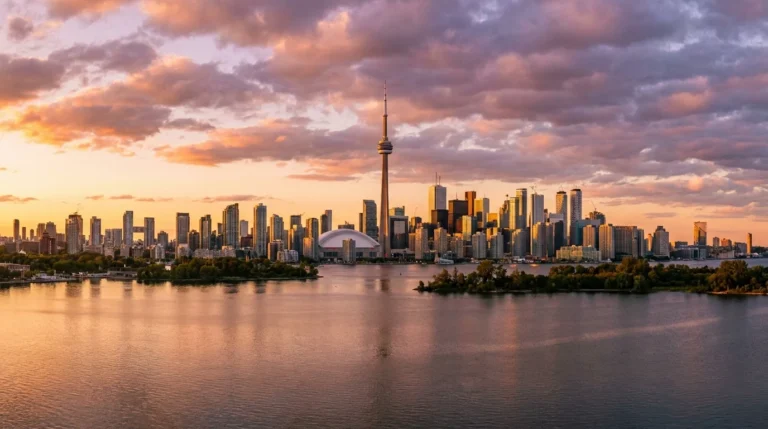
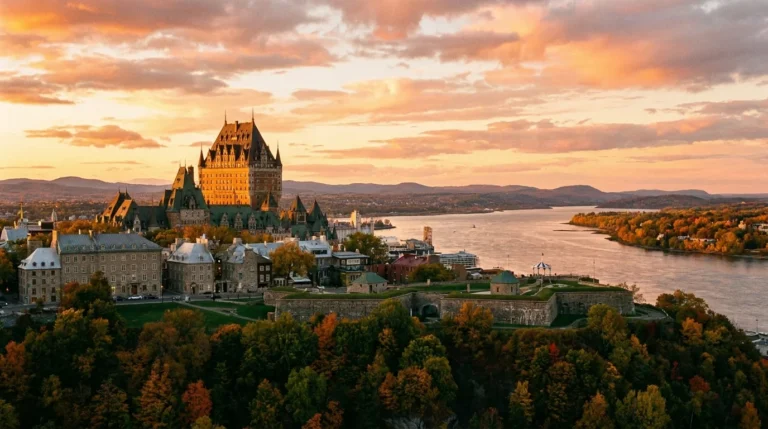
Canada is the second largest country in the world by land area, bordering the United States to the south and the Arctic Ocean to the north. The best-known cities are Toronto (the largest, a financial and diverse hub), Montreal (francophone and cultural), Vancouver (west coast, near the mountains), and Ottawa (the federal capital). Calgary, Edmonton, Quebec City, and Halifax are also significant.

English and French are official languages at the federal level. Quebec is the only predominantly francophone province, with its own laws on language use. In other provinces, English dominates, although New Brunswick is officially bilingual. The country receives between 400,000 and 500,000 permanent immigrants per year, a high number relative to the total population.

There are several immigration routes: Express Entry (a points-based system evaluating age, language, education, and experience), Provincial Nominee Programs (each province has its own), study, family sponsorship, temporary work, and investment. Canada has an E-2 treaty with the United States, active since 1993 under NAFTA/USMCA.

60.0000°, -95.0000°

Featured regions

Top 10 regions in Canada

The regions most sought-after by immigrants in this country.

Canada's demographics: about 41 million people in a highly diverse country

More than one in five residents was born outside the country. Toronto, Vancouver, and Montreal have large immigrant populations with vibrant ethnic neighborhoods.

Canada has about 41 million inhabitants, concentrated near the border with the United States. Ontario (Toronto, Ottawa) and Quebec alone account for more than half the population. British Columbia (Vancouver, Victoria) and Alberta (Calgary, Edmonton) are growing fast. The northern territories (Yukon, Nunavut, Northwest Territories) are sparsely populated.

It is one of the most diverse countries in the world. More than 20% of residents were born outside Canada. Recent immigrants come mainly from India, China, the Philippines, Nigeria, Pakistan, Brazil, Syria, Iran, and eastern European countries. There are long-established Chinese, Italian, Greek, Portuguese, Ukrainian, and Haitian communities. Indigenous peoples (First Nations, Inuit, and Metis) represent about 5% of the population.

English is spoken by about 75%. French is the first language of about 21%, concentrated in Quebec and part of New Brunswick. In Toronto and Vancouver, dozens of other languages are spoken daily. Brazilian and Portuguese communities are large in Toronto, Montreal, and Vancouver.

Languages spoken
  • English (official)
  • French (official, dominant in Quebec)
  • Mandarin, Cantonese, Punjabi, Tagalog (spoken by large communities)
Main religions
  • Christian (various denominations, declining)
  • No religion (growing, about 35%)
  • Muslim
  • Hindu
  • Sikh
  • +2 more

Cost of living in Canada: expensive in major cities, more affordable in mid-sized cities

Toronto and Vancouver rank among the most expensive cities in North America for housing. Montreal and prairie cities are far more accessible. Rent and taxes weigh on the budget.

The cost of living varies greatly by city. Vancouver and Toronto have one-bedroom apartment rents starting at CAD 2,200 to 2,800 per month in reasonable areas, while Montreal ranges from CAD 1,300 to 1,700. Calgary, Edmonton, Winnipeg, and Atlantic cities like Halifax are more affordable. Buying property is difficult for newcomers in major cities, with average prices exceeding CAD 1 million in Toronto.

Groceries add up: a basic monthly shop for one person runs around CAD 400 to 500. Public transit in Toronto (TTC) costs about CAD 156 per month; owning a car means high insurance, especially in Ontario (between CAD 1,500 and 3,000 per year). Electricity and gas combined range from CAD 150 to 250 per month in winter, higher in houses than apartments.

Combined income tax (federal and provincial) ranges from 20% to over 50% at the top. Public health care is free after a waiting period (3 months in some provinces), but dental and prescription coverage usually come as employment benefits. Dining out has become quite expensive: a meal at a casual restaurant runs CAD 18 to 25, and the 13-15% tax plus a 15-20% tip quickly doubles the bill.

75Cost index (NYC = 100)25% below NYC
CategorySingleCoupleFamily (2 + 2)
iHousing$1,844$2,390$3,191
iFood$405$810$1,485
iTransport$270$495$585
iHealthcare$90$171$288
iChildcare$400
iOther$262$450$600
Monthly total$2,871$4,316$6,549

Source: Statistics Canada (SHS 2022 + CPI 2024) · Estimates in USD, monthly.

Job market in Canada: open to skilled immigrants, with demand in health, technology, and construction

The economic immigration system is designed to fill real market needs. Health, construction, transportation, technology, and skilled trades appear on provincial lists of shortage occupations.

The Canadian job market is one of the most open in the world to skilled immigrants. Each province publishes lists of in-demand occupations. The most sought-after areas today include nursing, medicine, electricians, plumbers, mechanics, truck drivers, programmers, engineers, accountants, early childhood educators, and elder care workers. Express Entry and Provincial Nominee Programs use these demands to select candidates.

Salaries are reasonable. A programmer in Toronto or Vancouver earns between CAD 80,000 and 130,000 per year. A registered nurse (RN) earns between CAD 70,000 and 95,000. A licensed electrician can exceed CAD 90,000 in oil patch zones. The minimum wage varies by province, from about CAD 15 to CAD 17 per hour (roughly USD 1,900 to 2,100 per month full-time). College co-op programs are also an important entry point.

Foreign credential recognition is the biggest obstacle. For regulated professions (physician, lawyer, engineer), the process goes through provincial bodies with exams, internships, and high fees. For trades (red seal trades), the path is a provincial technical exam. For unregulated professions (tech, marketing, finance, design), the market evaluates portfolio and direct experience. Major employers include Shopify, RBC, TD Bank, Bombardier, Magna, Loblaw, Tim Hortons, and federal and provincial public services.

$2,000
Minimum wage
per month
Top national employers
  • Shopify
  • Royal Bank of Canada (RBC)
  • TD Bank
  • Bombardier
  • Magna International
  • +3 more

Education in Canada: free quality public schooling and world-recognized universities

Free basic education in public schools for residents. Universities such as Toronto, McGill, UBC, and Waterloo rank among the best in the world.

Basic education is free in public schools for permanent residents and citizens. Each province manages its own system, so there are differences between Ontario, Quebec, BC, and others. French-language schools are available across the country for families who want to maintain or learn French. Private and religious schools also exist.

Higher education is one of the country's greatest strengths. Universities such as Toronto, McGill (Montreal), UBC (Vancouver), Waterloo, McMaster, Alberta, and Queen's attract students from around the world. Tuition for international students is high (between CAD 25,000 and 60,000 per year), but costs for permanent residents are reduced. Community colleges with technical and vocational programs are also very popular as a gateway to immigration.

International students who graduate can obtain a Post-Graduation Work Permit (PGWP), valid for 1 to 3 years, which opens the door to work experience and permanent residence through Express Entry. This path is one of the most commonly used by Brazilians, Indians, and Nigerians.

Notable universities
  • University of Toronto
  • McGill University
  • University of British Columbia (UBC)
  • University of Waterloo
  • McMaster University
  • Université de Montréal
  • Queen's University
  • University of Alberta
  • University of Calgary
  • University of Ottawa

Healthcare in Canada: universal public system, with differences between provinces

Free public system for residents throughout the country. Access can involve wait times for specialist appointments and elective procedures. Medications are not always covered.

Canada's healthcare system is funded by provincial governments under federal guidelines. Coverage is universal for permanent residents and citizens. Consultations, hospitalizations, surgeries, and emergency care are paid for by the public system. Each province has its own plan: OHIP in Ontario, RAMQ in Quebec, MSP in BC.

The main challenge is wait times. Specialist appointments, elective surgeries, and imaging exams can have wait times ranging from weeks to months. Family doctors are in short supply in some regions. Emergency care works, but can be slow for non-critical cases. Prescription medications outside hospitals are generally not covered by the public system, which is why supplementary employer or private plans are important.

Newcomers face a 3-month waiting period in some provinces (Ontario, BC) before being covered by the public system. During that period, private health insurance is essential. Dental and vision plans are generally separate and covered by employer plans.

  • Public systemoverall quality rating
    Good

Safety in Canada: one of the safest countries in the world

Violent crime is low. Cities like Quebec City, Ottawa, Calgary, and Vancouver appear in global quality-of-life rankings. Issues are localized to some urban areas.

Canada is considered one of the safest countries in the world. Violent crime is low compared to its American neighbors. Cities have active policing, and gun ownership is restricted. In general, women walk at night in urban centers without major concerns, and suburban neighborhoods have a high sense of safety.

Issues do exist and are localized. Toronto and Vancouver have areas with drug trafficking, homelessness, and open drug use (Downtown Eastside in Vancouver is a well-known case). In some prairie cities (Edmonton, Winnipeg, Regina), crime statistics are higher. Car theft and break-ins have increased in some regions.

Natural risks include extreme winter temperatures (with hypothermia risk), snowstorms, summer wildfires (Alberta, BC), occasional flooding, and bears in rural and mountainous areas. Seasonal precautions and good winter gear are part of everyday life.

Safer neighborhoods
  • Quebec City
  • Ottawa
  • Calgary (central zones)
  • Vancouver (West Side, Kitsilano, North Shore)
  • Toronto (Etobicoke, North York, Markham)
  • Montreal (Outremont, Westmount, Plateau)
  • Halifax
  • Mid-sized cities like Burlington, Oakville, Burnaby

Climate in Canada: harsh winters and shorter summers, with enormous regional variation

Most of the country has a long winter with snow. Summers are short and warm. Vancouver is the exception, with a milder oceanic climate.

Canada has long, cold winters across most of the territory. In Toronto, Montreal, Ottawa, and Quebec City, temperatures easily drop to -15 to -25°C between December and February, with snow accumulating for months. In the prairies (Calgary, Edmonton, Winnipeg), the cold is even more intense, sometimes exceeding -30°C.

Summers are short but can be hot. In Toronto and Montreal, temperatures reach 30°C with high humidity. Ottawa, with its continental climate, has a large temperature range. Vancouver is the exception: an oceanic climate with mild, rainy winters (rarely below 0°C) and cool summers. The far north has extreme winters, with long nights and midnight-sun regions in summer.

Those coming from tropical climates often struggle with the first winter. Quality gear (parka, thermal boots, gloves, hat) is a mandatory investment. Homes have central heating and good thermal insulation. Cars require winter tires. Winter classes and snow festivals are part of everyday life.

Canadian culture: multicultural, hockey, winter festivals, and Indigenous influence

Culture blends British, French, Indigenous, and immigrant heritage. Hockey is the national sport. Jazz, comedy, and film festivals mark the cultural calendar.

Canadian culture has been officially multicultural since 1971. Each province has its own identity: Quebec strongly values French language and chanson music, Newfoundland has Irish folk music, the prairies have a country tradition, and Vancouver has a strong Asian influence. Indigenous traditions are regaining space in public discourse and art.

Ice hockey is practically a religion. Children play in local leagues from a young age, and the Stanley Cup Finals are a national event. Other popular sports: lacrosse, curling, Canadian football (CFL), and basketball (Toronto Raptors). Festivals such as Just for Laughs in Montreal (comedy), the Toronto International Film Festival (TIFF), the Calgary Stampede (rodeo), and the Quebec Winter Carnival attract visitors from around the world.

Food is regional. Quebec has poutine (fries with cheese curds and gravy), tourtiere, pea soup, and maple syrup. The Atlantic Coast offers lobster rolls, smoked salmon, and cod. The prairies feature bison and beef dishes. Toronto and Vancouver have excellent Chinese, Indian, Vietnamese, Ethiopian, and Portuguese food scenes, a product of immigration.

Notable dishes
  • Poutine (Quebec)
  • Tourtiere (meat pie, Quebec)
  • Maple syrup
  • Canadian bacon (peameal bacon)
  • Lobster rolls (East Coast)
  • +4 more
Annual events
  • Quebec Winter Carnival (January/February)
  • Montreal International Jazz Festival (June/July)
  • Just for Laughs in Montreal (July)
  • Toronto International Film Festival, TIFF (September)
  • Calgary Stampede (July)
  • +2 more
UNESCO sites
  • Historic District of Old Quebec
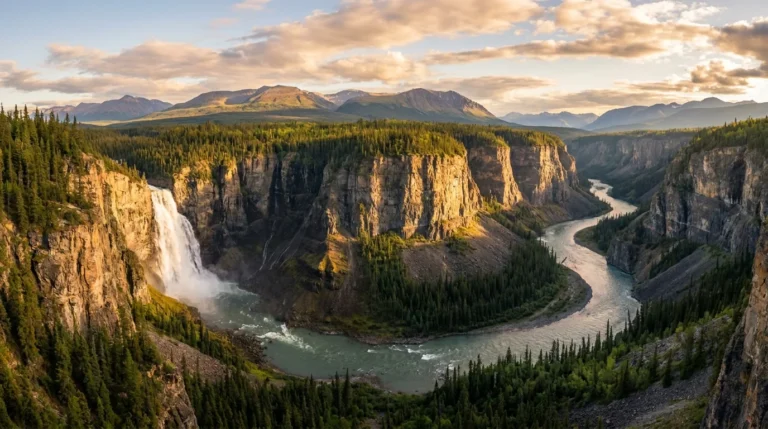
  • Nahanni National Park Reserve
  • Canadian Rocky Mountain Parks (Banff, Jasper)
  • Old Town Lunenburg
  • L'Anse aux Meadows (Vikings in Newfoundland)
  • +3 more

Canada's economy: natural resources, financial services, technology, and manufacturing

Diversified economy with weight in oil, gas, mining, lumber, financial services (Toronto), technology (Toronto, Montreal, Waterloo), and agribusiness.

Canada is a major producer of oil and gas, especially in Alberta (Calgary, Edmonton, Fort McMurray). The Athabasca oil sands are among the largest reserves in the world. Mining (uranium, nickel, gold, potash) is strong in Ontario, Quebec, and Saskatchewan. The forest industry is significant in BC, Quebec, and the Atlantic provinces.

Toronto is the country's financial center, home to the TSX (stock exchange) and the five big banks (Royal Bank, TD, Scotiabank, BMO, CIBC). Montreal has strength in aerospace (Bombardier, CAE), artificial intelligence, and digital gaming. Waterloo is a technology hub, and Vancouver has developed industries in film, gaming, biotechnology, and mining.

Agribusiness includes wheat, canola, cattle, pork, wine (Niagara, Okanagan Valley), and dairy. The automotive industry has plants in Ontario (Toyota, Honda, Ford, GM). The services sector (healthcare, education, government) employs the majority of the population. International trade is dominated by exchanges with the United States under USMCA.

Top sectors
  • Oil, gas, and oil sands (Alberta)
  • Mining (uranium, nickel, gold, potash)
  • Financial services (Toronto)
  • Technology (Toronto, Montreal, Waterloo, Vancouver)
  • Aerospace industry (Montreal)
  • +4 more

Geography of Canada: the second largest country in the world, with forests, mountains, and tundra

Nearly 10 million km², occupying most of North America north of the US. Boreal forests, plains, Rocky Mountains, and arctic tundra dominate the territory.

Canada is the second largest country in the world by area (about 9.98 million km²), with 10 provinces and 3 territories. Most of the population is concentrated in a narrow band along the US border, from the Atlantic to the Pacific. The north is dominated by tundra, frozen lakes, and boreal forests with very low human density.

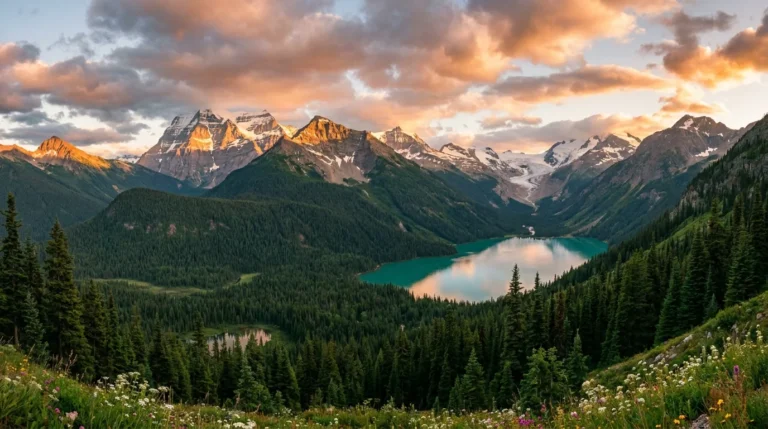
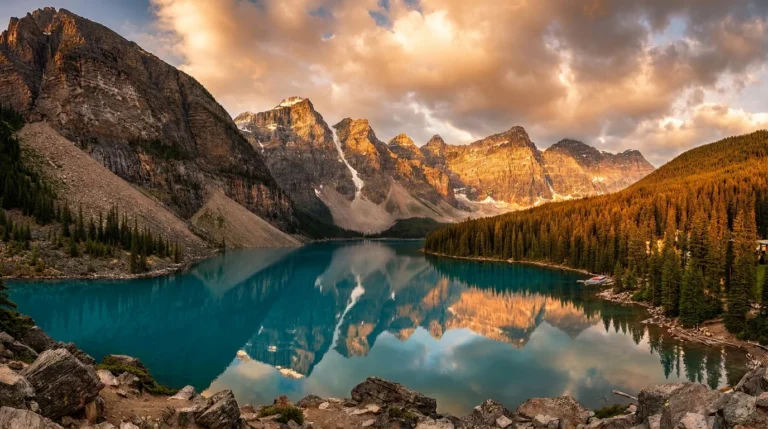
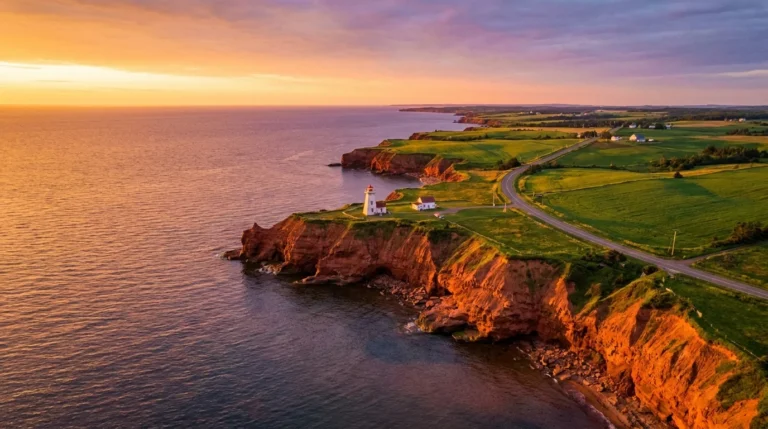
The terrain is varied. The Rocky Mountains cross Alberta and British Columbia, with peaks such as Mount Robson and national parks including Banff and Jasper. The central prairies (Saskatchewan, Manitoba, parts of Alberta) are agricultural plains. The Canadian Shield, with ancient rocks and thousands of lakes, covers much of Ontario and Quebec. The Atlantic coast is carved into fjords and cliffs, and the Arctic has islands, permanent ice, and polar bear habitat.

Biomes range from boreal forest (taiga) to arctic tundra, through temperate rainforest on the Pacific coast, mixed forests in the east, and prairies in the center. The average population density is very low, about 4 people per km², but concentrated in urban corridors. Five Great Lakes are shared with the United States, and the St. Lawrence River is the main river axis.

4/km²
Population density
Main biomes
  • Taiga (boreal forest)
  • Arctic tundra
  • Pacific temperate rainforest
  • Prairie
  • Mixed deciduous forest

Terrain

Boreal forests, prairie plains, Rocky Mountains to the west, Canadian Shield in the central-east, and arctic tundra to the north. Extensive coastline on the Atlantic, Pacific, and Arctic.

Immigrant communities in Canada: one of the most diverse countries in the world

More than one in five residents was born outside the country. Toronto, Vancouver, and Montreal concentrate the largest communities, with strong origins in Asia, Africa, and Eastern Europe.

Canada welcomes between 400,000 and 500,000 permanent residents per year, a high number relative to its total population. The most represented recent origins are India, China, Philippines, Nigeria, Syria, Pakistan, Iran, and Eastern European countries. Earlier waves left large communities of Italians, Greeks, Portuguese, Ukrainians, Haitians, and Vietnamese spread across major cities.

Toronto, Vancouver, and Montreal are the main hubs. Toronto has notable neighborhoods such as Little India, Chinatown, Greektown, and Little Portugal. Vancouver is one of the most Asian cities outside Asia, with a strong Chinese, South Korean, Filipino, and Indian presence. Montreal attracts much Francophone immigration from Africa and the Maghreb, and also has historic Lebanese and Haitian communities.

Integration requires English (CLB for Express Entry) or French (TEF for Quebec), recognition of credentials through provincial bodies, and three years of permanent residency to apply for citizenship. The country maintains a robust offer of free language classes (LINC and francisation), federally and provincially funded settlement services, and the right to vote in municipal elections in some provinces even without citizenship.

Top countries of origin
  • India
  • China
  • Philippines
  • Nigeria
  • Pakistan
Main immigrant hubs
  • Toronto
  • Vancouver
  • Montreal
  • Calgary
  • Brampton

Integration & naturalization

English (CLB) or French (TEF) required by program. Credential recognition through provincial body. Citizenship after 3 years of permanent residency. Free language classes (LINC, francisation) and government-funded settlement services.

Paths to living in Canada: Express Entry, PNP, study, and work

Express Entry is the best-known points-based gateway. Provincial Nominee Programs (PNPs) expand options. Study plus work is a common path to residency.

Express Entry is the federal points-based selection system (CRS) that evaluates age, language (IELTS or TEF), education, experience, and job offers. It covers three main programs: Federal Skilled Worker (FSW), Federal Skilled Trades (FST), and Canadian Experience Class (CEC). Those with high scores receive an Invitation to Apply for permanent residence.

Each province has its own Provincial Nominee Program (PNP), with its own criteria and regional labor needs (Saskatchewan, Manitoba, Ontario, BC, Alberta, Atlantic Provinces). Studying at a Canadian college or university and obtaining a Post-Graduation Work Permit (PGWP) is one of the most common routes for later applying for residency through CEC. Quebec has its own program (PEQ, PSTQ) because of its autonomy in immigration matters.

Canada has an E-2 treaty with the United States through USMCA (formerly NAFTA), which gives Canadian citizens access to the American investor visa. For those looking to live in Canada through investment, there is the Start-up Visa Program (with endorsement from incubators) and the Self-Employed Persons Program (culture and sports). The old Quebec Investor program is suspended.

From Canada, the most relevant route is the TN (USMCA visa, fast and low-cost for listed professions), followed by E-2 treaty (investor), L-1 (intracompany transfer, common with banks, tech, and mining firms), H-1B, EB-1, O-1 for exceptional talent, EB-2 NIW, and F-1. Canadians do not need ESTA: most short visits are visa-free with a passport.

Latest posts

Posts about Canada

Coverage and updates related to this destination.