Visto n' Visa
Blog
Notícias e artigos
Destinations
Careers
Immigrants

Want to live and work in Quebec?

Personalized immigration plan with eligible visas, costs, and next steps for your goal!

If you are not eligible, you will know exactly why and what to do to improve your approval chances.

Save up to 12 hours in meetings

No pointless assessments.

Save up to 90%

Save money on vague or unfocused consultations

Avoid Fraud and Mistakes

One mistake can cost you your visa

Total Impartiality

Zero commercial bias

Decide with peace of mind

No toxic urgency

Fast and Accurate

Answers in minutes, no guesswork

Get to know Quebec

The Francophone province with its own culture and a competitive cost of living

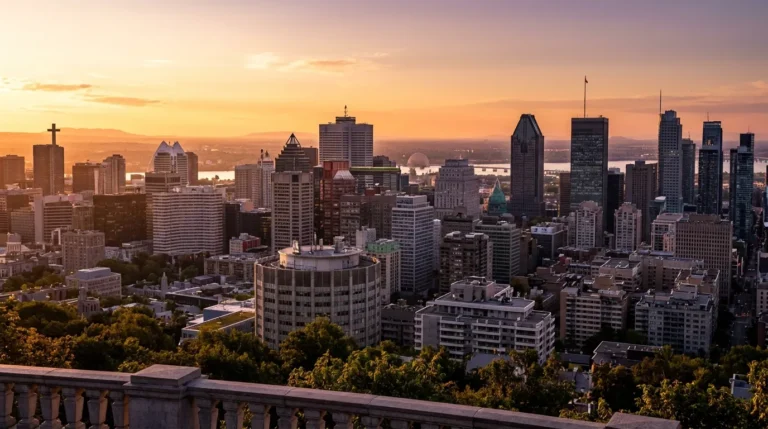
Quebec occupies a singular position in Canada: it is the only province where French is the official language and the language of everyday life, signage, public services and the labour market. With more than 8.5 million residents, the province combines dynamic urban centres with vast rural and forested regions to the north.

Montreal is the provincial metropolis and one of Canada's largest cities, known for its intense cultural scene, world-class universities and a strong labour market in technology and media. Quebec City, the capital, combines preserved colonial history with government administration and robust tourism.

For those considering immigration, Quebec offers its own immigrant selection program, the Quebec Skilled Worker program, with criteria distinct from federal programs, prioritizing applicants who are proficient in French. The cost of living tends to be lower than in Toronto or Vancouver, especially for housing, which attracts families and professionals from many fields.

Population
8,501,840
Average monthly salary
43,600 USD/mo
52.0002°, -71.9991°

Featured places

Top 10 places in Quebec

The places most sought-after by immigrants in this region.

Predominantly Francophone society with growing immigrant communities

Quebec has French as its dominant language and hosts significant immigrant communities in Montreal, with increasing cultural diversity over recent decades.

Around 80 percent of Quebec's population has French as their mother tongue, making the province culturally distinct from the rest of Anglophone Canada. Quebec identity is strong and present in everyday life: in cuisine, the arts, humour and local traditions.

Montreal concentrates the largest share of the province's ethnic diversity. Neighbourhoods such as Parc-Extension, Cote-des-Neiges and Saint-Michel are home to Haitian, Moroccan, Filipino, Latin American and Sub-Saharan African communities, among others. Portuguese also has a historical presence, especially among descendants of Azorean and mainland Portuguese settlers.

The provincial government requires immigrants to generally demonstrate French proficiency in order to receive the Certificat de Selection du Quebec (CSQ). This requirement has shaped a distinct immigration profile, with increasing arrivals of French speakers from West Africa, Lebanon and the Maghreb, as well as immigrants from other countries who have invested in learning the language.

8,501,840
Population
43 yrs
Median age
6/km²
Density
$42,600
Median income
per year
Urban population81.6%
Foreign-born14.6%
Languages spoken
  • French
  • English
Main religions
  • Christianity (64%)
  • No religion (29%)
  • Islam (5%)
  • Judaism (1%)
  • Buddhism (1%)

Cost of living below the Canadian average, especially for housing

Quebec, particularly Montreal, offers a more affordable cost of living than Toronto and Vancouver, with rental prices described as moderate by Canadian standards.

Among Canada's large provinces, Quebec stands out for its relatively lower cost of living. Rent in Montreal is considerably less expensive than in Toronto or Vancouver, allowing families and early-career professionals to achieve a higher quality of life from the very first years of residence.

Neighbourhoods such as Rosemont, Verdun and Plateau-Mont-Royal offer well-located apartments at moderate prices by Canadian standards. Quebec City, being smaller, has costs even lower than Montreal's, with quiet residential neighbourhoods close to the city centre.

Income tax in Quebec is the highest in the country, which reduces take-home pay compared to other provinces. On the other hand, public services such as subsidized childcare (CPE), universal healthcare and public transit in Montreal help balance the financial picture for families.

91Cost index (US = 100)9% below US average
CategorySingleCoupleFamily (2 + 2)
iHousing$1,191$1,472$1,892
iFood$280$561$1,016
iTransport$266$491$631
iHealthcare$56$112$196
iChildcare$280
iOther$378$631$841
Monthly total$2,171$3,267$4,856

Source: Statistics Canada (SHS 2022 + CPI 2024) · Estimates in USD, monthly.

Active housing market in Montreal, with affordable options outside the metropolis

Quebec's housing market is more accessible than Toronto's and Vancouver's, with a wide variety of neighbourhoods for renting and buying in Montreal and Quebec City.

Montreal is Quebec's main housing market, with a diverse supply of apartments, plexes (buildings divided into residential units) and properties for purchase. Renting remains viable in many neighbourhoods, unlike cities such as Toronto, where prices have made that access more difficult for newcomers.

Neighbourhoods such as Rosemont-La Petite-Patrie, Villeray and Verdun are popular among immigrants seeking community, nearby services and metro access. Laval and Longueuil, in Greater Montreal, offer larger homes with good connections to the city centre.

In Quebec City, neighbourhoods such as Sainte-Foy, Limoilou and Charlesbourg concentrate residential options for those working in government or at universities. For those who prioritize space and nature, cities such as Sherbrooke, Trois-Rivieres and Saguenay have very affordable properties and moderate economic growth.

Purchase price (m²)
  • Center$5,200/m²
  • Outside$2,800/m²
6.8×
Price-to-income
6.5%
Mortgage rate (20y)
Recommended neighborhoods
  • Rosemont-La Petite-Patrie (Montreal)
  • Verdun (Montreal)
  • Plateau-Mont-Royal (Montreal)
  • Sainte-Foy (Quebec City)
  • Limoilou (Quebec City)
  • +2 more

Strong labour market in technology, healthcare and the creative industry in Montreal

Quebec has a diversified economy, with technology and artificial intelligence at the forefront in Montreal, alongside strong sectors in healthcare, aerospace, manufacturing and government services.

Montreal has established itself as one of the world's leading artificial intelligence hubs, with Mila (the Montreal Institute for Learning Algorithms) and companies such as Ubisoft, CAE, Bombardier and Element AI attracting skilled professionals. The city is also an important centre for video game production and digital animation.

The aerospace sector is historically strong and significant in Greater Montreal, with companies such as Pratt and Whitney Canada, Bombardier Aeronautique and Bell Textron. Healthcare and life sciences also employ many professionals, with major university hospitals such as CHUM and the McGill University Health Centre.

French proficiency is an essential requirement for the vast majority of positions in the province. IT, engineering and healthcare professionals with functional French have broader access to the labour market. Those who arrive without the language generally need several months of intensive coursework before competing more effectively.

$43,600
Avg net salary
per month
$23,200
Minimum wage
per month
5.3%
Unemployment
65.7%
Labor force
Dominant sectors
  • Technology and AI
  • Aerospace
  • Video games and digital media
  • Healthcare and life sciences
  • Education and research
  • +1 more
Major employers
  • Ubisoft Montreal
  • Bombardier
  • CAE
  • Bell Textron
  • Pratt and Whitney Canada
  • +2 more

Robust public education system with internationally prestigious universities

Quebec has one of Canada's best higher education systems, with world-recognized universities and lower tuition fees than other provinces.

Quebec's education system includes a unique stage called CEGEP (College d'enseignement general et professionnel), which is mandatory between secondary school and university. This model provides two to three years of technical or pre-university education, with free or subsidized access for residents.

At the university level, McGill University and the Universite de Montreal are world-class institutions, with widely recognized programs in medicine, law, engineering and social sciences. The Universite du Quebec is a decentralized public network with campuses in several cities, accessible and focused on regional development.

University tuition fees in Quebec are the lowest in Canada for residents, especially at Francophone universities. International students pay higher amounts, but the total cost is still generally lower than at universities in Ontario or British Columbia.

Literacy99.0%
Tertiary education61.0%
530
PISA score (avg)
$14,000
Private school
per year
Notable universities
  • McGill University
  • Universite de Montreal
  • Universite Laval
  • Universite du Quebec a Montreal (UQAM)
  • Concordia University
  • Universite de Sherbrooke

Universal public healthcare system, with variable wait times

Quebec has universal public healthcare managed by the RAMQ, with access to doctors and hospitals, but long wait times for a family physician in some regions.

The Regie de l'assurance maladie du Quebec (RAMQ) is the provincial health plan covering medical consultations, tests and hospital admissions for permanent residents and citizens. Newcomers to Canada under certain immigration programs may have a waiting period of up to three months before accessing the public system.

Montreal is home to reference university hospitals such as CHUM (Centre hospitalier de l'Universite de Montreal) and MUHC (McGill University Health Centre), with high capacity in medical specialties and technology. Quebec City has the CHU de Quebec as its main hospital centre.

Access to a family doctor is a recurring challenge in the province, with long waiting lists. Walk-in clinics and digital platforms such as Bonjour-sante help address part of this demand in the short term, especially for those who are still getting established.

Healthcare index76.0 / 100
  • Life expectancyyears at birth
    82.5yrs
  • Doctors per 1kpracticing physicians
    2.8
  • Health spendper capita, per year
    $6,100
  • Public systemoverall quality rating
    Good

Safety above the Canadian average, with neighbourhood variation in Montreal

Quebec is one of Canada's safest provinces, with low crime rates in most cities and neighbourhoods, including Quebec City and the large majority of Montreal.

Quebec City is consistently ranked as one of Canada's safest cities, with low crime rates and a high sense of safety among residents and visitors. The provincial capital maintains a calm atmosphere even in its historic central neighbourhoods.

Montreal shows greater variation between neighbourhoods. Areas such as Outremont, Westmount, Cote-Saint-Luc and Mont-Royal are considered very safe and suitable for families. Some northern-central neighbourhoods and certain areas in the far east have crime indicators above the city average, requiring more attention when choosing a place to live.

Overall, violent crime in Quebec is low by international standards. The main everyday concern involves petty theft, especially in areas with heavy tourist and public transit traffic. Municipal police and the Surete du Quebec maintain good coverage across the provincial territory.

1.1
Homicides per 100k
per year
Safety index
64.0
Crime index
36.0
Safer neighborhoods
  • Quebec City (general)
  • Outremont (Montreal)
  • Westmount (Montreal)
  • Cote-Saint-Luc (Montreal)
  • Mont-Royal (Montreal)
  • Sainte-Foy (Quebec City)
Areas to avoid
  • Hochelaga-Maisonneuve (Montreal) specific areas
  • Montreal-Nord at night
  • Quartier Saint-Roch (Quebec City) certain streets

Efficient public transit in Montreal, with car dependence outside the metropolis

Montreal has a well-developed metro, bus and cycling network. Outside the metropolitan region, a car is essential for mobility across Quebec's vast territory.

Montreal has one of Canada's best public transit systems, operated by the STM (Societe de transport de Montreal). The metro connects the island's main neighbourhoods and integrates with the bus network, with extensions to Laval and Longueuil. The REM (Reseau express metropolitain) is a new electric train that expands the metropolitan network to the airport and suburbs.

For cyclists, Montreal has one of Canada's largest cycling lane networks, with the BIXI bike-sharing system active from May to November. In winter, the underground passage system (RESO) connects dozens of downtown blocks without having to face the outdoor cold.

Outside Montreal, cities such as Quebec City, Sherbrooke and Gatineau have more limited public transit, making a car indispensable for daily life. Well-maintained highways connect the province's main cities. Quebec City has urban transit through the RTC (Reseau de transport de la Capitale), which is functional but less extensive than the STM.

4
Metro lines
68
Metro stations
31 min
Avg commute
65
Walkability
Airports
  • YUL — Montreal-Trudeau International Airport
  • YQB — Quebec City Jean Lesage International Airport
  • YBG — Saguenay-Bagotville Airport
  • YSC — Sherbrooke Airport
  • International airport
  • Bike infrastructure

Continental climate with harsh winters and pleasantly warm summers

Quebec has long, cold winters, with sub-zero temperatures from November to March, and warm, rainy summers from June to August, with short spring and autumn seasons.

Winter in Quebec is intense and prolonged. From December to February, daytime highs remain well below freezing, with temperatures dropping to extreme lows at night, especially in the interior of the province. Snow accumulates for months, and daily life requires adaptation: proper clothing, footwear suitable for ice and familiarity with residential heating systems.

Spring arrives late, with still-cold temperatures in March and early April, rising consistently only from May onwards. Summers, from June to August, are warm and pleasant, with highs that reach comfortable levels, especially in Montreal, which records the province's highest temperatures. Precipitation is well distributed throughout the year, peaking in the warmer months.

Quebec's autumn is short but visually striking: the foliage of maples and other deciduous trees paints the landscape in shades of orange, red and yellow between September and October. Those who appreciate four well-defined seasons will find in Quebec a complete climatic cycle, requiring a varied wardrobe and a willingness to endure extended cold.

Sunny days / year220 days
Avg high (°F)
  • J
  • F
  • 16°M
  • 30°A
  • 44°M
  • 60°J
  • 65°J
  • 63°A
  • 54°S
  • 42°O
  • 24°N
  • 13°D
Avg low (°F)
  • -9°J
  • -10°F
  • M
  • 18°A
  • 29°M
  • 43°J
  • 50°J
  • 50°A
  • 42°S
  • 33°O
  • 16°N
  • D
Rainfall (")
  • 1"J
  • 2"F
  • 3"M
  • 3"A
  • 3"M
  • 5"J
  • 6"J
  • 7"A
  • 5"S
  • 4"O
  • 4"N
  • 3"D

Vibrant Francophone culture with gastronomy, festivals and a standout arts scene

Quebec has one of Canada's richest cultural scenes, with international festivals, a distinctive cuisine, theatre, cinema and French-language music that define provincial identity.

Quebec culture is a unique blend of French heritage, North American influence and immigrant diversity. Montreal hosts internationally renowned festivals: the Festival International de Jazz de Montreal, Just For Laughs (a comedy festival), Osheaga (music) and the Festival du Nouveau Cinema draw international audiences every year.

Local gastronomy has a strong identity. Poutine, with french fries, cheese curds and gravy, is the most iconic dish. Maple syrup (sirop d'erable) permeates everything from breakfast to sophisticated desserts. Tourtiere, cretons and Montreal-style bagels complete the typical culinary repertoire.

Quebec City has a more intimate cultural scene, centred around the Carnaval de Quebec in winter and the Festival d'ete de Quebec in summer, along with museums such as the Musee national des beaux-arts du Quebec. The Vieux-Quebec, a UNESCO World Heritage Site, is a constant presence in the capital's daily life.

430
Major museums
Notable dishes
  • Poutine
  • Tourtiere
  • Cretons
  • Montreal-style bagel
  • Maple syrup
  • +1 more
Annual events
  • Festival International de Jazz de Montreal
  • Just For Laughs
  • Osheaga Music and Arts Festival
  • Carnaval de Quebec
  • Festival d'ete de Quebec
  • +1 more
UNESCO sites
  • Historic District of Old Quebec
  • Charlevoix Biosphere Reserve

Diversified economy led by technology, aerospace and natural resources

Quebec has one of Canada's most diversified economies, with technology, aerospace, natural resources, manufacturing and financial services as its main pillars.

Quebec's economy is the second largest in Canada, supported by a varied industrial base. The aerospace sector is historically strong, with companies such as Bombardier, CAE and Pratt and Whitney Canada positioning Montreal as one of North America's leading aerospace centres.

Technology and artificial intelligence have taken centre stage over the last decade. Mila, co-founded by Professor Yoshua Bengio (a Turing Award laureate), attracted investment from Google, Microsoft, Samsung and other major players, creating an ecosystem of AI startups and applied research. The video game sector is also robust, with studios from Ubisoft, EA and Warner Bros. established in Montreal.

Natural resources remain relevant: hydroelectric power from Hydro-Quebec generates abundant and relatively affordable energy, attracting heavy manufacturing, mining and data centre industries. The forestry industry, critical minerals mining and agri-food processing complete the provincial economic base.

  • GDPgross domestic product
    $410.0B
  • GDP per capitaoutput per resident
    $48,200
  • GDP growth (yr)economy expanding
    +1.3%
Top sectors
  • Aerospace
  • Artificial intelligence and technology
  • Video games and digital entertainment
  • Hydroelectric energy
  • Advanced manufacturing
  • +2 more

Immigrant communities in Quebec

About 1.2 million immigrants live in the province, 14% of the population, with a strong preference for French-speaking origins concentrated in Montréal.

Quebec is home to roughly 1.2 million immigrants, around 14% of the population, with a unique profile in Canada due to provincial selection based on French-language knowledge. Montréal concentrates almost all newcomers. Haitians form one of the largest communities, with a strong presence in Montréal-Nord, Saint-Michel, and Rivière-des-Prairies, roots dating back to the 1960s and new arrivals after the 2010 earthquake. Algerians, Moroccans, and Tunisians make up the second largest block, settled in Côte-des-Neiges, Saint-Laurent, and Villeray, with French fluency and a marked presence in tech, healthcare, and education. The French form a large community on the Plateau Mont-Royal and Le Sud-Ouest. Lebanese (Laval, Saint-Laurent), Colombians, and Brazilians round out the picture. Laval is rising as a second hub. Quebec City and Gatineau receive smaller flows, especially francophone Africans and Europeans.

Maison d'Haïti in Montréal-Nord is the historic reference for the Haitian community. Centre R.I.R.E. 2000, the Table de concertation des organismes au service des personnes réfugiées et immigrantes, and the Centre des femmes de Montréal offer legal orientation, French classes, employment mentoring, and support for immigrant women. Montréal hosts the Consulate-General of France in Montréal (the largest French consular representation in the Americas), the Consulate-General of Haiti in Montréal, the Consulate-General of Lebanon in Montréal, the Consulate-General of Algeria in Montréal, the Consulate-General of Morocco in Montréal, the Consulate-General of the United States in Montréal, the Consulate-General of Mexico in Montréal, the Consulate-General of China in Montréal, and the Consulate-General of Brazil in Montréal. Mosques in Saint-Laurent, Haitian churches in Montréal-Nord, and the French parish on the Plateau anchor religious life.

1,200,000
Foreign-born residents
estimated
Top countries of origin
  • France
  • Haiti
  • Algeria
  • Morocco
  • China
Main immigrant hubs
  • Montreal
  • Laval
  • Longueuil
  • Gatineau
Foreign consulates
  • French Consulate General in Montreal
  • Haitian Consulate General in Montreal
  • Lebanese Consulate General in Montreal
  • Algerian Consulate General in Montreal
  • Moroccan Consulate General in Montreal
  • +4 more
Community organizations
  • Maison d'Haiti
  • Centre R.I.R.E. 2000
  • Table de concertation des organismes au service des personnes refugiees et immigrantes (TCRI)
  • Centre des femmes de Montreal

Latest posts

Posts about Canada

Coverage and updates related to this destination.

Showing content from Canada, as there is no specific data for Quebec yet.