Visto n' Visa
Blog
Notícias e artigos
Destinations
Careers
Immigrants

Want to live and work in Portugal?

Personalized immigration plan with eligible visas, costs, and next steps for your goal!

If you are not eligible, you will know exactly why and what to do to improve your approval chances.

Save up to 12 hours in meetings

No pointless assessments.

Save up to 90%

Save money on vague or unfocused consultations

Avoid Fraud and Mistakes

One mistake can cost you your visa

Total Impartiality

Zero commercial bias

Decide with peace of mind

No toxic urgency

Fast and Accurate

Answers in minutes, no guesswork

A closer look at Portugal

Portuguese language, mild climate, and safety on the Atlantic.

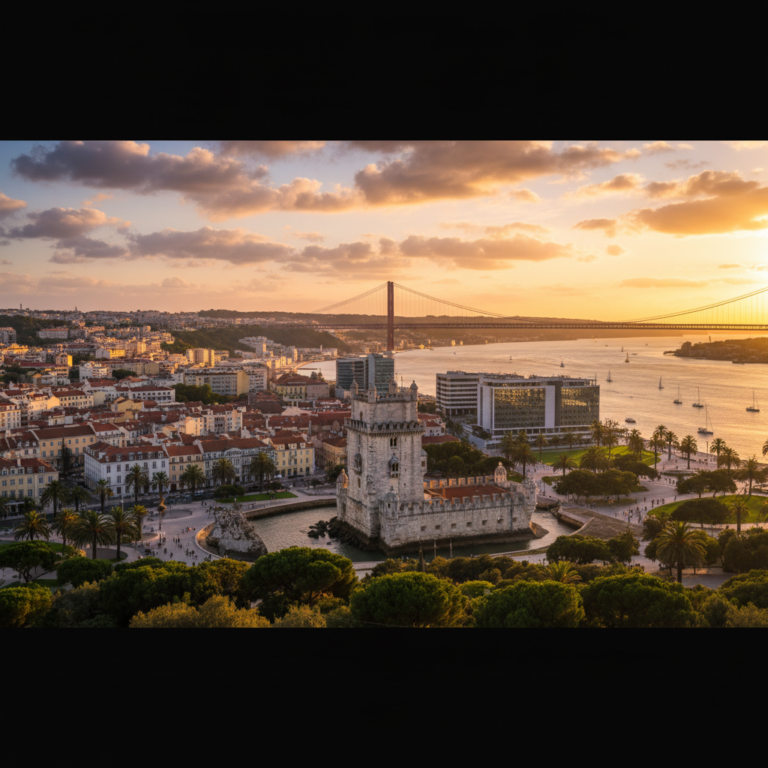
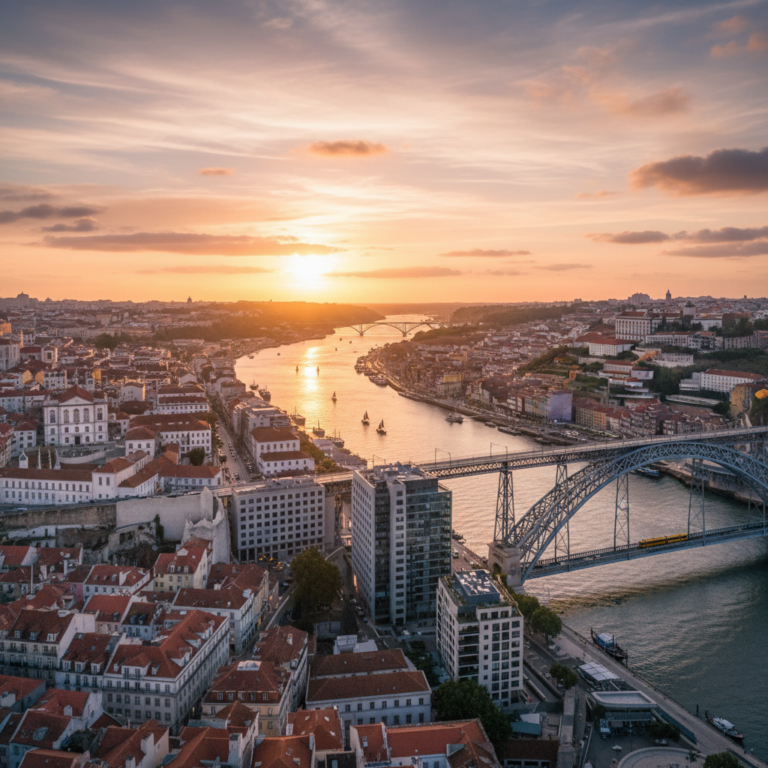
Portugal sits at the western end of the Iberian Peninsula, facing the Atlantic Ocean, and shares its only land border with Spain. Lisbon, the capital, is the largest economic and cultural hub. Other important cities include Porto (northern city known for wine and industry), Coimbra (university city), and Braga (a religious hub in the north), as well as the Atlantic archipelagos of Madeira and the Azores.

Daily life is relaxed, with a pleasant climate for most of the year. People are generally welcoming and the pace is slower than in larger European capitals. Portuguese speakers find the language familiar, though accent and some vocabulary differ, making integration much easier. The cost of living has risen in recent years but remains lower than in the UK, France, or Germany.

Portugal offers some of the most popular residency programs in Europe. The D7 visa (passive income) attracts retirees and investors. The D8 is the route for digital nomads. The Golden Visa still exists, but the property purchase option was removed in 2023, leaving investment funds and company creation as the remaining pathways. Permanent residency and citizenship become available after five years.

39.5000°, -8.0000°

Portuguese demographics: around 10 million people, with a large and recent Brazilian community

A relatively small and aging population. Brazilians now form the largest immigrant community, concentrated in Lisbon, Porto, and the Algarve.

Portugal has around 10 million inhabitants. A large portion lives along the coast and in the Lisbon-Porto corridor. The interior has been losing residents, with entire villages nearly empty and local governments offering incentives to attract families.

Portuguese society is one of the most aging in Europe. Immigration has propped up population growth, with over one million foreign residents. Brazilians are the largest community, numbering over 350,000. There are also Ukrainians, British (concentrated in the Algarve), Cape Verdeans, Angolans, Indians, and Nepalese.

Portuguese is the official language. Those who already speak it find the same language with some accent and vocabulary differences. English is spoken by most young people in Lisbon and Porto, and is widely understood in tourist areas like the Algarve. Spanish is understood by many Portuguese as well.

Languages spoken
  • Portuguese (European variant)
  • English (young urban residents and tourism)
  • Mirandese (regional official language in the northeast)
  • Cape Verdean Creole (community language)
Main religions
  • Catholic (around 80%)
  • No religion
  • Evangelical (growing)
  • Orthodox (Ukrainian community)
  • Hindu and Islamic (smaller communities)
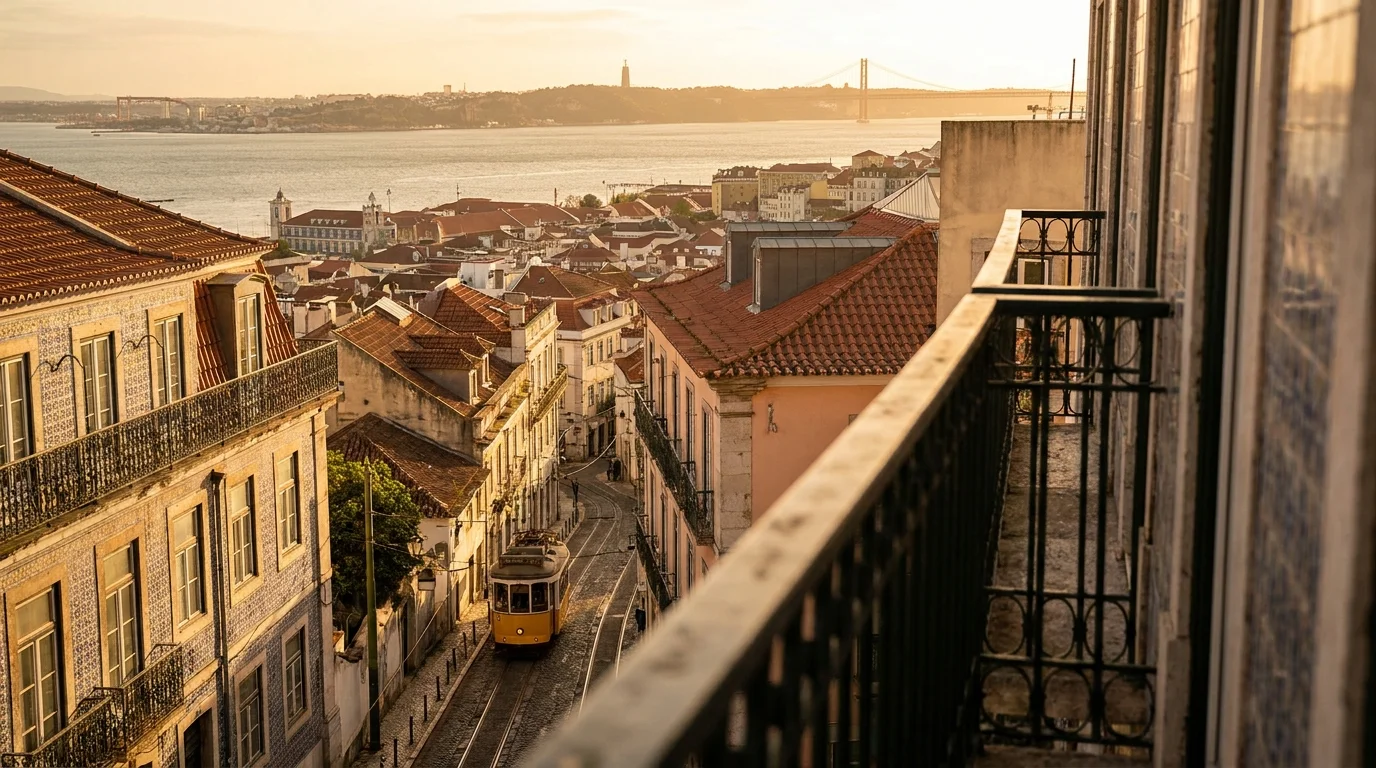
Cost of living in Portugal: among the cheapest in Western Europe, with sharp recent increases

The interior and medium-sized cities remain affordable. Lisbon, Porto, Cascais, and the Algarve have become expensive after the Golden Visa, D7, digital nomad, and tourism boom.

Portugal remains one of the cheapest countries in Western Europe, but prices have risen considerably over the past decade, mainly in Lisbon, Porto, Cascais, Estoril, and the Algarve. A one-bedroom apartment in central Lisbon runs between 900 and 1,500 euros per month; in Porto, 700 to 1,200 euros; in medium-sized cities like Braga, Coimbra, or Aveiro, 500 to 800 euros. The Alentejo interior and the north have much lower rents.

Monthly groceries for one person run between 200 and 320 euros. Continente, Pingo Doce, Lidl, Aldi, and Mercadona are the most common chains. Eating out is still affordable: a daily special at a tasca runs 8 to 12 euros, dinner at a mid-range restaurant 15 to 25 euros per person. A coffee at the counter runs 0.80 to 1.20 euros. Local wine and olive oil are inexpensive and high quality.

Electricity, gas, and water run between 80 and 150 euros per month. Fiber internet (MEO, NOS, Vodafone) costs 35 to 60 euros. Public transport in Lisbon (Carris/Metro) costs 40 euros per month with the Navegante pass. A car is practical outside large cities; gasoline is around 1.75 euros per liter. Income tax is progressive (up to 48%) and standard VAT is 23%. The classic Non-Habitual Resident (NHR) regime closed to new applications in 2024, with a successor regime focused on research, innovation, and qualified talent.

58Cost index (NYC = 100)42% below NYC
CategorySingleCoupleFamily (2 + 2)
iHousing$1,204$1,560$2,081
iFood$248$495$908
iTransport$165$302$358
iHealthcare$75$142$240
iChildcare$400
iOther$203$348$464
Monthly total$1,895$2,847$4,451

Portugal's job market: tourism, technology, textiles, and construction lead the way

Tourism concentrates jobs on the coast. Technology is growing in Lisbon and Porto. There is a chronic shortage in construction, healthcare, hospitality, and agriculture.

Portugal's labor market is driven by tourism, which accounts for about 16% of GDP. Hotels, restaurants, vacation rental (Airbnb, Booking), tour guides, and transport generate tens of thousands of jobs in Lisbon, Porto, the Algarve, Madeira, Sintra, and Evora. The textile and footwear sector, traditional in the Ave Valley and Sao Joao da Madeira, continues exporting worldwide. The automotive sector (Autoeuropa in Palmela, Bosch in Braga) and pulp and paper (The Navigator Company) also carry significant weight.

Technology grew significantly over the past decade, with Lisbon becoming a European startup hub thanks to Web Summit, the Tech Visa, a reasonable cost of living, and a supply of qualified labor. Companies such as Farfetch, OutSystems, Talkdesk, Feedzai, Unbabel, Sword Health, and Cleverly were founded in Portugal. Technology outsourcing hubs (Critical Software, Mercedes-Benz.io, Volkswagen Digital Solutions) have brought multinationals to Porto, Lisbon, and Braga.

There is a chronic shortage in construction, agriculture (especially in Alentejo), healthcare (doctors and nurses), hospitality, and elderly care. Wages are still low by EU standards: the national minimum wage is 870 euros gross (roughly USD 950 to 1,050). Average net salary in Lisbon is around 1,200 to 1,500 euros. Developers earn between 1,500 and 3,500 euros net depending on seniority. Largest employers: Jeronimo Martins (Pingo Doce), Sonae (Continente), EDP, Galp, Millennium BCP, Banco BPI, NOS, and The Navigator Company.

$1,000
Minimum wage
per month
Top national employers
  • Jeronimo Martins (Pingo Doce)
  • Sonae (Continente)
  • EDP
  • Galp Energia
  • Millennium BCP
  • +3 more

Education in Portugal: free public schooling and reputable universities

Free compulsory basic education. Universities such as Lisbon, Porto, and Coimbra attract international students, with specific admission tracks for some nationalities.

Basic education in Portugal is free and compulsory from ages 6 to 18. Children of immigrants have the right to enroll in public schools. Private and international schools (British, French, German) are available in Lisbon, Porto, and the Algarve.

Portugal's public universities offer quality education at low tuition rates for EU citizens and moderate fees for international students. The University of Lisbon, the University of Porto, and the University of Coimbra (one of the oldest in Europe) are flagship institutions. Several universities have specific admission tracks for students with equivalent foreign qualifications.

The common language, reasonable cost, and European recognition of Portuguese degrees attract thousands of international students each year. Strong areas include medicine, engineering, law, business, and communication. English-language postgraduate programs are also available.

Notable universities
  • University of Lisbon
  • University of Porto
  • University of Coimbra (est. 1290)
  • NOVA University Lisbon
  • Universidade Catolica Portuguesa
  • University of Minho (Braga)
  • University of Aveiro
  • ISCTE Lisbon University Institute

Healthcare in Portugal: free NHS for residents and a growing private sector

The National Health Service covers legal residents. Waiting times exist for some specialties, and those who can afford it supplement with private insurance.

The National Health Service (SNS) covers legal residents, including foreign nationals with a residency card. Care is universal and free or very low cost (small co-payments for consultations and tests, with exemptions for low incomes).

The system has wait times for elective procedures and specialist consultations. Non-urgent surgeries can take months. For this reason, many residents take out private health insurance (Multicare, Medis, AdvanceCare) or use private facilities directly, with hospitals such as CUF, Lusiadas, and Luz offering prompt service.

Recent arrivals often use the SNS for emergencies and basic care, and the private sector for elective procedures. Private plans are affordable compared to many countries, with low monthly premiums for young people. Bilateral health agreements (PB4) facilitate emergency care for Brazilian tourists visiting Portugal.

  • Public systemoverall quality rating
    Good

Safety in Portugal: one of the safest countries in the world

Violent crime is rare. Lisbon, Porto, and small towns are peaceful. Watch for occasional petty theft in tourist areas.

Portugal consistently ranks among the safest countries in the world. The Global Peace Index regularly places it in the top 10. Walking at night in Lisbon, Porto, Coimbra, or small towns is safe. Police presence is discreet but effective.

The main risk for immigrants and tourists is petty theft (wallet, phone, backpack) in busy tourist areas such as tram 28 in Lisbon, Baixa, Porto's Ribeira, and train stations. Residential burglaries and violent crime are rare.

Some peripheral neighborhoods in Lisbon (Cova da Moura, Quinta do Mocho) and Porto have social challenges but rarely affect most residents' daily lives. Small interior towns are extremely peaceful, to the point where many people leave their doors unlocked. The Algarve and Madeira are particularly safe.

Safer neighborhoods
  • Lisbon: Lapa, Estrela, Principe Real, Avenidas Novas, Telheiras
  • Porto: Foz do Douro, Boavista, Cedofeita
  • Cascais and Estoril
  • Coimbra city center
  • Braga and Guimaraes
  • Madeira (Funchal and surroundings)
  • Algarve (Lagos, Tavira, inland Albufeira)

Portuguese climate: Mediterranean in the south, Atlantic in the north, with mild winters

Hot and dry summers, with more heat inland and in the south. Mild winters with rain in the north. The Algarve has over 300 sunny days a year.

Portugal has a Mediterranean climate, with differences between north and south. Summer (June to September) is hot and dry, with temperatures around 25 to 35 degrees Celsius, sometimes exceeding 40 degrees in the interior of the Alentejo and Algarve. Lisbon and Porto enjoy milder summers thanks to the Atlantic breeze.

Winter (December to February) is mild, rarely dropping below zero even in the north. Rain is heavier in the north (Porto, Braga) and mountain areas, while the south enjoys more consistent sunshine. Snow appears only in the mountains (Serra da Estrela, home to the country's only ski resort).

Spring and autumn are mild and pleasant. The Algarve, in the far south, has over 300 sunny days a year and is the preferred destination of European retirees. Madeira enjoys a pleasant subtropical climate year-round, and the Azores have a humid, windy, and mild climate.

Portuguese culture: fado, bacalhau, wines, and popular festivals

Fado in Lisbon and Coimbra, a thousand codfish recipes, Port wine, and the Festas dos Santos Populares in June. A calm and traditional culture.

Fado is the music most associated with Portugal, recognized by UNESCO. Fado houses in Lisbon (Alfama, Mouraria) and Coimbra attract tourists and locals alike. Mariza, Ana Moura, and Camane are among the leading contemporary names. Portuguese culture is relaxed, centered on the dinner table, family, and conversation in cafes.

Gastronomy is rich and based on fish, pork, and olive oil. It is said there are more than a thousand ways to prepare bacalhau (salted cod). Other classic dishes include cozido a portuguesa, francesinha (Porto), seafood rice, pasteis de Belem, grilled sardines (in summer). Wines from the Douro, Alentejo, and Vinho Verde regions are recognized worldwide.

The cultural calendar features the Festas dos Santos Populares (Santo Antonio in Lisbon, Sao Joao in Porto, Sao Pedro in various cities) in June, with grilled sardines in the streets. Carnival is more subdued than in some Latin American countries but has tradition in certain cities. Festivals like NOS Alive, Rock in Rio Lisboa, and Vodafone Paredes de Coura attract major international acts.

Notable dishes
  • Bacalhau (salted cod, in countless recipes, especially bacalhau a bras and com natas)
  • Cozido a portuguesa (slow-cooked stew)
  • Francesinha (Porto)
  • Pastel de nata (Belem custard tart)
  • Grilled sardines
  • +5 more
Annual events
  • Santo Antonio in Lisbon (June 12-13)
  • Sao Joao in Porto (June 23-24)
  • Festa de Sao Pedro in Sintra (June)
  • Rock in Rio Lisboa (every two years)
  • NOS Alive (July)
  • +2 more
UNESCO sites
  • Jeronimos Monastery and Tower of Belem
  • Historic center of Porto
  • Historic center of Evora
  • Convent of Christ in Tomar
  • Alto Douro Wine Region
  • +5 more

Portuguese economy: tourism, wine, textiles, footwear, and technology

Tourism is the main driver. Port and Douro wines, textiles, and footwear are traditional exports. Technology is growing in Lisbon and Porto.

Tourism is the most important economic sector. Portugal receives tens of millions of tourists each year, with Lisbon, the Algarve, Madeira, and Porto among the most visited destinations. Hospitality, restaurants, and short-term rental (Airbnb) generate employment across the entire coastline.

Wine production is traditional and exported worldwide. Port, Douro, Alentejo wines, and Vinho Verde enjoy international recognition. Textiles (especially in the Braga and Guimaraes regions) and footwear (Felgueiras, Sao Joao da Madeira) are also strong export sectors.

The technology sector grew significantly over the past decade, with Lisbon becoming a European startup hub. Web Summit (one of the world's largest technology conferences) takes place in Lisbon annually. Companies such as Farfetch, OutSystems, Talkdesk, and Feedzai were founded in Portugal and have a global footprint. There is also a strong automotive industry (Autoeuropa) and a paper industry (The Navigator).

Top sectors
  • Tourism and hospitality
  • Wine and beverages
  • Textiles and footwear
  • Technology and startups
  • Automotive (Autoeuropa)
  • +3 more

Portugal's geography: Atlantic edge of the Iberian Peninsula, with Madeira and the Azores in the ocean

About 92,391 sq km across the mainland, Madeira, and the Azores. The Tagus divides a mountainous north from a flatter south. A long Atlantic coast and volcanic island groups.

Portugal covers about 92,391 sq km, split between the mainland, the Madeira archipelago, and the Azores archipelago. On the mainland it borders only Spain (1,214 km) and has 943 km of Atlantic coastline. The River Tagus divides the territory into two major regions: the north, more mountainous and rainy, with the Serra da Estrela (highest continental point at 1,993 m) and Peneda-Geres National Park; and the south, flatter, warmer, and drier, with the Alentejo (plains of grain, cork oak, and olive groves) and the Algarve (coast with cliffs and beaches).

The coastline is highly varied: long white-sand beaches in the Algarve, dramatic cliffs on the Vicentine Coast, the giant waves of Nazare (among the world's biggest), and estuaries on the Tagus and Sado. The main rivers (Douro, Tagus, Mondego, Guadiana) rise in Spain. Madeira is volcanic, with Pico Ruivo (1,862 m) and the laurisilva forest (UNESCO World Heritage). The Azores are nine volcanic islands in the Atlantic, with Pico (2,351 m, Portugal's highest point) and several active calderas.

Biomes include Mediterranean cork oak and holm oak forest in the center and south, maritime pine along the coast, Atlantic oak and chestnut forest in the north, Alentejo scrubland, coastal dune vegetation, laurisilva on Madeira, and Atlantic vegetation across the Azores. Average population density is about 111 people per sq km, heavily concentrated along the Braga-Setubal coastal corridor, with a marked decline in the interior.

111/km²
Population density
Main biomes
  • Mediterranean cork oak and holm oak forest
  • Maritime pine coast
  • Atlantic oak and chestnut forest
  • Alentejo scrubland
  • Madeira laurisilva

Immigrant communities in Portugal: from the Portuguese-speaking diaspora to recent arrivals from Asia

Historic communities from Cape Verde, Angola, and Guinea coexist with recent arrivals from India, Nepal, and Ukraine. Lisbon, Porto, and the Algarve concentrate the most diversity.

Portugal was historically a country of emigration, with a Portuguese diaspora in France, Switzerland, Germany, Luxembourg, the US, Canada, and Venezuela. Since the 2010s, it has become a country of immigration. Today there are over one million foreign residents. The historic communities come from the PALOP countries (Cape Verde, Angola, Guinea-Bissau, Sao Tome, Mozambique), with a strong presence in Lisbon and the south bank of the Tagus, integrated into construction, healthcare, and services.

The most visible recent communities are Indian, Nepalese, and Bangladeshi (in produce, restaurants, and construction, mainly in Alentejo and the Algarve), Ukrainian (since 2002 with an initial wave in construction, reinforced after 2022 by war refugees), Portuguese-speaking Brazilians (the largest foreign community, present in Lisbon, Porto, Braga, and the Algarve, in healthcare, hospitality, technology, and education), and British (concentrated in the Algarve and Madeira, predominantly retirees).

Formal integration requires Portuguese for citizenship (A2 level). Recognition of foreign qualifications is handled through the DGES and professional associations. Citizenship generally requires five years of legal residency, proof of Portuguese (A2), and a clean record. There are special regimes: the CPLP Mobility Agreement (simplifies entry for Portuguese speakers), citizenship by descent up to great-grandchildren, citizenship for Sephardic Jews, and citizenship for those born in Portugal to legal immigrant parents.

Top countries of origin
  • Brazil
  • Cape Verde
  • United Kingdom
  • India
  • Ukraine
Main immigrant hubs
  • Lisbon
  • Porto
  • Faro (Algarve)
  • Braga
  • Setubal

Integration & naturalization

Portuguese is required for citizenship (A2 level). Qualification recognition via DGES and professional associations. Citizenship after 5 years of legal residency. The CPLP Agreement simplifies entry for Portuguese speakers. Descent up to great-grandchildren and Sephardic citizenship are common routes.

Pathways to living in Portugal: D7, D8, Golden Visa, study, and CPLP agreement

Portugal offers the D7 for retirees, D8 for digital nomads, Golden Visa (no property), Tech Visa, student visa, and the CPLP agreement for Portuguese speakers.

The D7 visa is one of the most widely used options. Designed for those with passive income (pensions, rental income, investments), it requires a minimum monthly income equivalent to the Portuguese minimum wage. It grants residency for two years, renewable, with a path to citizenship after five years.

The D8 visa, created in 2022, is specifically for digital nomads and remote workers. It requires a monthly income starting at around 3,500 euros and a contract with a company based outside Portugal. The Golden Visa exists but, as of October 2023, no longer accepts property purchases, only investment funds (minimum 500,000 euros), company creation with local jobs, or cultural donations.

Other routes include the D2 (entrepreneur), D3 (highly qualified professional), D4 (student), Tech Visa, family reunification, and the CPLP Mobility Agreement (for Portuguese-speaking nationals, which significantly simplified entry for eligible nationalities). Citizenship requires five years of legal residency, a basic Portuguese language test, and no serious criminal record. Portugal does NOT have an E-1 or E-2 treaty with the US, so it cannot serve as a bridge for a US commerce or investment visa.

Typical pathways from Portugal to the US include EB-1, EB-2, and EB-2 NIW for researchers and qualified professionals (a heavily used route), O-1 for exceptional talent, L-1 for intracompany transfer, F-1 for university students, and H-1B for qualified employees. The US-Portugal E-2 treaty exists but is not on the active list; ESTA covers short visits up to 90 days.

Latest posts

Straight from the blog

There are no posts specifically about Portugal yet. In the meantime, check out our latest posts.