Visto n' Visa
Blog
Notícias e artigos
Destinations
Careers
Immigrants

Want to live and work in Los Angeles?

Personalized immigration plan with eligible visas, costs, and next steps for your goal!

If you are not eligible, you will know exactly why and what to do to improve your approval chances.

Save up to 12 hours in meetings

No pointless assessments.

Save up to 90%

Save money on vague or unfocused consultations

Avoid Fraud and Mistakes

One mistake can cost you your visa

Total Impartiality

Zero commercial bias

Decide with peace of mind

No toxic urgency

Fast and Accurate

Answers in minutes, no guesswork

LA's population: Latino majority, global mosaic in every neighborhood

Nearly half the city is Hispanic, primarily Mexican. Large Korean, Armenian, Persian, Filipino, Chinese, and Central American communities are also present.

Los Angeles is mostly Latino. About 48% of residents are Hispanic, with a strong Mexican, Salvadoran, and Guatemalan presence. Neighborhoods like East LA, Boyle Heights, Pico-Union, Huntington Park, and Pacoima have shops, schools, and churches where Spanish is the main language.

The city also has the largest Koreatown outside Korea, the largest Armenian community outside Armenia (in Glendale and Hollywood), Tehrangeles (the largest Persian diaspora in the world, in Westwood), as well as Little Tokyo, Chinatown, Filipinotown, Thai Town, and Little Ethiopia. The Brazilian community is smaller but active, concentrated in Culver City, West LA, and the Valley, with churches and restaurants like Cafe Brasil and Rio Brazilian Cafe.

The population is young by American standards, with many recent immigrants of working age. The wealthy Westside neighborhoods (Beverly Hills, Brentwood, Pacific Palisades) and the coast (Malibu, Manhattan Beach) hold established families, while Silver Lake, Echo Park, and Highland Park draw young creatives.

3,820,914
Population
36 yrs
Median age
$76,100
Median income
per year
Urban population80.1%
Foreign-born36.8%
Languages spoken
  • English
  • Spanish (strong Mexican and Central American presence)
  • Korean
  • Armenian
  • Persian (Farsi)
  • +3 more
Main religions
  • Christian (majority Catholic, growing Evangelical)
  • Unaffiliated
  • Jewish (one of the largest diasporas in the US)
  • Muslim
  • Buddhist
  • +1 more

Cost of living in Los Angeles: high, driven by rent and gas

Rent weighs heavily on the budget. Food, transportation (a car is almost mandatory), and California taxes add up to a cost well above the American average.

Los Angeles is one of the most expensive cities in the United States, in part because of rent. A one-bedroom apartment in central neighborhoods (Downtown, Koreatown, Hollywood, Silver Lake) runs about $2,200 to $2,800 per month. At the beach (Santa Monica, Venice) and on the Westside (West Hollywood, Brentwood), it climbs to $3,000-$4,500. In more distant areas (San Fernando Valley, South LA, parts of Long Beach), it drops to $1,700-$2,300.

Groceries at chains like Ralphs, Vons, Trader Joe's, and Whole Foods are expensive. Vallarta and El Super (Latino markets) offer better prices on fresh produce. A meal at a casual restaurant costs between $18 and $30. Taco trucks, a city symbol, run $3-$5 per taco.

The hidden weight is the car. California gas tends to be the most expensive in the US ($5-$6 per gallon), insurance is high, and downtown parking is paid. State income tax is progressive up to 13.3%. A private health plan for those without employer coverage runs $400-$800 per month.

127Cost index (US = 100)27% above US average
CategorySingleCoupleFamily (2 + 2)
iHousing$1,645$1,898$2,405
iFood$480$962$1,746
iTransport$633$1,076$1,392
iHealthcare$354$709$1,329
iChildcare$2,304
iOther$1,076$1,936$2,722
Monthly total$4,188$6,581$11,898

Housing in Los Angeles: low-rise sprawl, new buildings in specific corridors

The city is horizontal, with one- and two-story houses. Tall buildings concentrate in Downtown, Koreatown, Hollywood, and along the coast.

Los Angeles is the city of the single-family home: wood or stucco house, small yard, two-car garage. That format dominates the San Fernando Valley, South LA, parts of Hollywood Hills, Pacific Palisades, and the suburbs of Pasadena, Glendale, and Long Beach. Tall buildings exist only in Downtown, Koreatown, parts of Hollywood, Century City, and the Wilshire Corridor.

For renters, common options are apartments in low-rise buildings (4-12 units) spread across the city. Newcomers look for neighborhoods well served by bus or rail (Koreatown, Mid-City, North Hollywood) to avoid depending so much on a car. Families prefer the Valley (Sherman Oaks, Studio City, Burbank), Pasadena, or Culver City for the schools. Young people go to Silver Lake, Echo Park, Highland Park, Venice, or DTLA.

To rent, landlords ask for a credit check, proof of income (usually 2.5 to 3 times the rent), and references. Newcomers without American credit history need a co-signer or to pay several months upfront. Popular sites are Zillow, Apartments.com, Westside Rentals, and Facebook Marketplace.

Purchase price (m²)
  • Center$9,500/m²
  • Outside$7,000/m²
11.5×
Price-to-income
6.8%
Mortgage rate (20y)
Recommended neighborhoods
  • Koreatown (central, rail connection, reasonable cost)
  • Silver Lake and Echo Park (young, alternative, food scene)
  • Sherman Oaks and Studio City (Valley, families, good restaurants)
  • Culver City (organized, Brazilian community)
  • Pasadena (architectural charm, schools)
  • +3 more

LA job market: entertainment, tech, port, aerospace, and healthcare

Hollywood employs many people in film, TV, and streaming. There is tech in Silicon Beach, aerospace in the south, and the largest port in the country.

Work in LA revolves heavily around entertainment. Studios like Warner Bros (Burbank), Universal, Paramount, Sony (Culver City), Disney, and Netflix, plus hundreds of independent producers, hire for camera, lighting, editing, VFX, writing, directing, agents, and administration. The music sector is also large, with labels and studios in Hollywood and Burbank.

Silicon Beach (Santa Monica, Venice, Playa Vista, Culver City) became a tech hub, with offices for Google, Meta, Snap, Riot Games, and hundreds of startups. Engineering salaries run between $130,000 and $220,000. Further south (El Segundo, Hawthorne, Long Beach), the aerospace sector includes SpaceX, Northrop Grumman, and Boeing.

The Port of Los Angeles/Long Beach is the largest in the US and supports millions of jobs in logistics, trucking, and longshore work. Healthcare is huge, with UCLA Health, Cedars-Sinai, Kaiser Permanente, and the county hospital system. Tourism, hospitality, construction, restaurants, and fashion also employ many immigrants. The city's minimum wage is $17.28 per hour (2024).

$5,100
Avg net salary
per month
$2,900
Minimum wage
per month
3.6%
Unemployment
62.1%
Labor force
Dominant sectors
  • Film, TV, and streaming
  • Music and media
  • Technology (Silicon Beach)
  • Aerospace and defense
  • Port and logistics
  • +3 more
Major employers
  • Walt Disney Company (Burbank)
  • Warner Bros Discovery
  • Universal Pictures (NBCUniversal)
  • Sony Pictures (Culver City)
  • Netflix
  • +5 more

Education in LA: varied public schools and elite universities

Resident children attend public schools through LAUSD. The city has UCLA, USC, and Caltech (in Pasadena), three of the best universities in the US.

Resident children have a right to public school through the Los Angeles Unified School District (LAUSD), the second-largest in the US. Quality varies widely by neighborhood. Neighboring districts like Beverly Hills Unified, Santa Monica-Malibu, Glendale, Pasadena, Culver City, and South Pasadena tend to have better-rated schools. Charter and magnet schools are alternatives within the public system.

The University of California, Los Angeles (UCLA), in Westwood, and the University of Southern California (USC), near Downtown, are the two major universities, both globally top-ranked. UCLA is public (cheaper for California residents); USC is private (expensive, but with a strong network). Caltech, in Pasadena, is one of the best science and engineering universities in the world.

There are also Cal State LA, Cal State Northridge, Loyola Marymount University, Occidental College, and dozens of community colleges (Santa Monica College, Pasadena City College, Los Angeles City College) that take many international students. International tuition ranges from $25,000 (community college) to $65,000 (UCLA, USC) per year. Studying requires an F-1 visa before arrival.

Literacy99.0%
Tertiary education38.6%
495
PISA score (avg)
$24,000
Private school
per year
Notable universities
  • University of California, Los Angeles (UCLA)
  • University of Southern California (USC)
  • California Institute of Technology (Caltech, in Pasadena)
  • Loyola Marymount University (LMU)
  • California State University, Los Angeles
  • California State University, Northridge (CSUN)
  • Occidental College
  • Santa Monica College (community college)
  • Pasadena City College

Healthcare in LA: top hospitals, but a fragmented system

The city has top hospitals like Cedars-Sinai and UCLA, but access depends heavily on insurance. Those without coverage pay dearly.

Los Angeles has some of the best hospitals in the United States. Cedars-Sinai Medical Center, UCLA Medical Center (Westwood and Santa Monica), Keck Hospital of USC, and Children's Hospital LA rank among the most respected in the country, with recognized specialists in cardiology, oncology, and research. Kaiser Permanente is the region's largest HMO, with hospitals and clinics in nearly every neighborhood.

The American system runs on private health insurance. Those employed formally usually receive coverage through their employer. Without coverage, a basic walk-in clinic visit costs between $100 and $250, and a hospital night can exceed $10,000. Those without income may qualify for Medi-Cal, the free state program.

For recent immigrants who do not yet have a plan, community clinics (federally qualified health centers) charge on a sliding scale, such as AltaMed and Eisner Health. For emergencies, every hospital must treat patients regardless of ability to pay, but the bill comes later. Telemedicine (Teladoc, Amwell) is a cheap option for one-off issues.

Healthcare index68.0 / 100
  • Life expectancyyears at birth
    78.4yrs
  • Doctors per 1kpracticing physicians
    3.7
  • Health spendper capita, per year
    $13,473
  • Public systemoverall quality rating
    Good

Safety in LA: varies a lot from neighborhood to neighborhood

Most of the city is safe day-to-day. Some zones have higher crime, and Skid Row downtown faces a homelessness crisis.

Los Angeles has a bad reputation that does not always match reality. Most neighborhoods are safe: walking at night in Santa Monica, Westwood, Culver City, Pasadena, Silver Lake, or Sherman Oaks is fine. Violent crimes concentrate in specific areas of South LA, parts of the Valley, and regions with historical gang activity.

Skid Row, in Downtown around 6th and San Pedro, is the most visible point of the West Coast homelessness and drug crisis (fentanyl and meth). The area is sad and impactful, but violence against passersby is uncommon. The LAPD and LA County Sheriff handle policing, with a more visible presence in tourist areas (Hollywood, Venice, Downtown).

The most common crimes against immigrants are smash-and-grab thefts from cars (never leave a bag, backpack, or electronics in view), garage break-ins, and catalytic converter theft. In beach parking lots (Venice, Santa Monica) and trailheads (Griffith Park, Runyon), extra caution is needed. Gun crimes are more frequent in specific residential areas that tourists rarely visit.

5.8
Homicides per 100k
per year
Safety index
44.0
Crime index
56.0
Safer neighborhoods
  • Beverly Hills
  • Santa Monica
  • West Hollywood
  • Brentwood
  • Pacific Palisades
  • Manhattan Beach
Areas to avoid
  • Skid Row (east Downtown)
  • Compton at night
  • Watts
  • MacArthur Park after dark
  • South Central late at night

Transportation in LA: a car city, with expanding rail

Almost everyone drives. The Metro covers some corridors, but the freeway network and traffic define daily life.

Los Angeles was designed for the car. Freeways like the 101, 405, 10, and 110 cross the city and carry famous traffic, especially from 7-10 am and 4-8 pm. Most residents depend on their own car, and newcomers usually consider it an essential expense.

LA Metro has subway lines (B Line, D Line) and light rail (A, E, C, K) connecting Downtown to the Valley, Long Beach, Santa Monica, Culver City, and LAX (via connection). The system works but covers only part of the city. In neighborhoods like Koreatown, DTLA, Pasadena, North Hollywood, and Long Beach, you can live without a car if you have patience.

Los Angeles International Airport (LAX) is a global hub and the second busiest in the US. It has direct flights to all of Latin America, Europe, Asia, and Oceania. Other smaller airports (Burbank, Long Beach, Ontario, John Wayne) handle domestic flights. Uber, Lyft, and Metro Bike Share electric bikes round out the options.

6
Metro lines
101
Metro stations
32 min
Avg commute
67
Walkability
Airports
  • LAX — Los Angeles International Airport
  • BUR — Hollywood Burbank Airport
  • LGB — Long Beach Airport
  • ONT — Ontario International Airport
  • International airport
  • Bike infrastructure

Living with the climate in Los Angeles

Los Angeles has a coastal Mediterranean climate with long, hot, dry summers, mild, rainy winters and around 284 sunny days per year.

Summer is long, dry and warm, from May through October. Along the coastal strip highs stay between 26 and 30 degrees, but in valley neighborhoods (San Fernando, Pasadena) they can exceed 38 degrees. Heat waves are real and wildfire smoke can degrade air quality for weeks. Air conditioning is important, particularly away from the coast.

Winter is short and mild, from December through March, with highs between 19 and 22 degrees and lows between 9 and 12 degrees. Snow does not fall and frost is nearly nonexistent. Almost all the annual rainfall (around 380 mm) falls in this season, with occasional landslide risk on burned hillsides.

Local hazards include wildfires at the end of summer, unpredictable earthquakes (San Andreas fault) and air quality degraded by thermal inversion. For daily life, air conditioning with a smoke filter, a seismic emergency kit and an evacuation plan are genuine priorities.

Sunny days / year284 days
Avg high (°F)
  • 66°J
  • 68°F
  • 69°M
  • 75°A
  • 76°M
  • 82°J
  • 87°J
  • 89°A
  • 88°S
  • 83°O
  • 75°N
  • 66°D
Avg low (°F)
  • 46°J
  • 46°F
  • 48°M
  • 53°A
  • 56°M
  • 60°J
  • 63°J
  • 64°A
  • 64°S
  • 59°O
  • 51°N
  • 48°D
Rainfall (")
  • 4"J
  • 2"F
  • 4"M
  • 1"A
  • 1"M
  • 0"J
  • 0"J
  • 1"A
  • 1"S
  • 0"O
  • 1"N
  • 5"D

Culture of Los Angeles: film, tacos, hip-hop, surf, and religious diversity

A city that runs on culture: studios, museums, Latin and Asian food, music of every kind, outdoor life year-round.

Culture in LA is film above all. The Hollywood Walk of Fame, the hillside sign, the Dolby Theatre (where the Oscars happen), and studios like Warner Bros and Universal define the identity. Museums like the Getty (in Brentwood), LACMA, The Broad, and MOCA rank among the best in the US, with free or cheap admission.

The food scene is defined by Mexican food. Tacos al pastor from food trucks, birria at Boyle Heights restaurants, seafood at Mariscos Jalisco, Salvadoran pupusas in Pico-Union, Korean food in Koreatown (KBBQ, soondubu), Persian in Westwood, Japanese in Little Tokyo and Sawtelle, Ethiopian in Fairfax. Legendary spots include Phillippe's, Langer's Deli, and Grand Central Market.

The city breathes outdoor life. Trails in Griffith Park, Runyon Canyon, Topanga, and Malibu. Beaches in Santa Monica, Venice, Manhattan Beach, and Zuma. Events like the Rose Bowl Parade (January 1 in Pasadena), Coachella (two hours away in Indio), Dia de los Muertos on Olvera Street, and LA Pride mark the calendar. Hip-hop, jazz, rock, and Latin music make up the local soundtrack.

80
Major museums
Notable dishes
  • French dip sandwich
  • California burrito
  • Koreatown Korean BBQ
  • Tacos al pastor
  • Carne asada fries
  • +3 more
Annual events
  • Oscars (Academy Awards)
  • Rose Parade in Pasadena
  • LA Pride
  • Grammy Awards
  • LA Film Festival
  • +3 more

What to see in Los Angeles: from Hollywood studios to Santa Monica beaches

Los Angeles concentrates film, world-class museums, mountain parks, and Pacific beaches, with neighborhoods so distinct they feel like separate cities within the same metropolitan area.

The most obvious postcard is the Hollywood sign as seen from Griffith Observatory, atop Griffith Park. From there you can grasp the city's geography, with downtown to the east and the Pacific to the west. The Walk of Fame on Hollywood Boulevard and the studios of Universal Studios and Warner Bros, in Burbank, remain must-stops for newcomers.

The museum scene surprises those who expect only beach and palm trees. The Getty Center, in Brentwood, and the Getty Villa, in Pacific Palisades, are free. LACMA and The Broad, on Wilshire and Grand Avenue, form the modern art axis. For science and natural history, the California Science Center, in Exposition Park, holds the Endeavour space shuttle.

Outdoor life is part of the local identity. Venice Beach and Santa Monica Pier anchor the coast, with a bike path linking beaches for more than 20 miles. Runyon Canyon and Topanga State Park deliver trails with views. Neighborhoods like Silver Lake, Echo Park, Koreatown, and Little Tokyo show everyday Los Angeles, far from the tour bus circuits.

  1. 1Hollywood Walk of Fame
  2. 2Griffith Observatory
  3. 3Getty Center
  4. 4Universal Studios Hollywood
  5. 5Santa Monica Pier
  6. 6The Broad Museum
Nightlife9.0 / 10
Parks & green spaces
  • Griffith Park
  • Runyon Canyon Park
  • Elysian Park
  • Echo Park Lake
  • Will Rogers State Historic Park
  • +1 more

Immigrant communities in Los Angeles

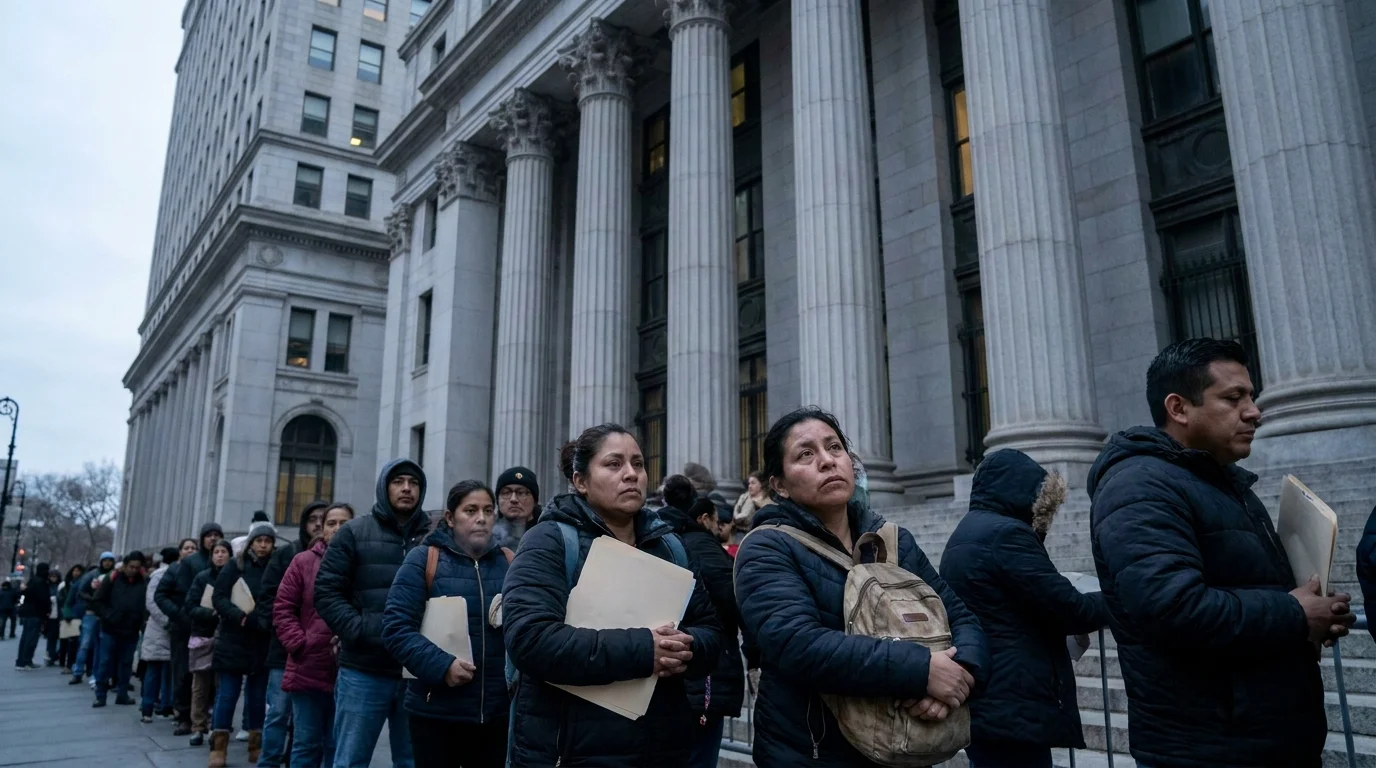
Los Angeles is the largest Mexican city outside Mexico and at the same time one of the most Asian cities in the United States. Around one third of residents were born abroad, and Spanish is spoken at home by nearly half the population. The Mexican community spreads across Boyle Heights, East LA, Pico-Union and the San Fernando Valley, with roots that predate California's annexation in 1848. Salvadorans and Guatemalans arrived in large numbers during the civil wars of the 1980s and formed the largest Central American enclave in the country around Westlake, near MacArthur Park. Koreans transformed Koreatown into the largest Korean enclave outside the peninsula, while Little Tokyo, Thai Town and Filipinotown mark other Asian presences. Iranians concentrate in Westwood, nicknamed Tehrangeles, Armenians in Glendale and East Hollywood, and recent arrivals from Honduras, China and Vietnam continue to reinforce the mosaic.

The national hub of pro-immigrant advocacy is CHIRLA (Coalition for Humane Immigrant Rights), which operates a legal hotline, citizenship workshops and anti-deportation support. Other key resources are CARECEN-LA for Central Americans, Asian Americans Advancing Justice Los Angeles, the Korean Resource Center, KIWA for immigrant workers and LA Voice in the faith community. The city's LA Justice Fund and the Office of Immigrant Affairs cover attorney fees at hearings. The Mexican, Salvadoran and Guatemalan consulates in Los Angeles rank among the busiest in the world, processing passports, consular registration cards and legal assistance every day.

1,300,000
Foreign-born residents
estimated
Top countries of origin
  • Mexico
  • El Salvador
  • Guatemala
  • Philippines
  • South Korea
  • China
  • Iran
  • Vietnam
  • Armenia
  • Honduras
Foreign consulates
  • Consulate General of Mexico in Los Angeles
  • Consulate General of El Salvador in Los Angeles
  • Consulate General of Guatemala in Los Angeles
  • Consulate General of the Philippines in Los Angeles
  • Consulate General of South Korea in Los Angeles
  • +6 more
Community organizations
  • CHIRLA (Coalition for Humane Immigrant Rights of Los Angeles)
  • CARECEN-LA (Central American Resource Center)
  • Asian Americans Advancing Justice Los Angeles
  • Korean Resource Center
  • KIWA (Koreatown Immigrant Workers Alliance)
  • LA Voice
  • Public Counsel
  • Immigrant Defenders Law Center

Latest posts

Posts about California

Coverage and updates related to this destination.

Showing content from California, as there is no specific data for Los Angeles yet.