Visto n' Visa
Blog
Notícias e artigos
Destinations
Careers
Immigrants

Want to live and work in California?

Personalized immigration plan with eligible visas, costs, and next steps for your goal!

If you are not eligible, you will know exactly why and what to do to improve your approval chances.

Save up to 12 hours in meetings

No pointless assessments.

Save up to 90%

Save money on vague or unfocused consultations

Avoid Fraud and Mistakes

One mistake can cost you your visa

Total Impartiality

Zero commercial bias

Decide with peace of mind

No toxic urgency

Fast and Accurate

Answers in minutes, no guesswork

Discover California

Sun, technology, film, and entrepreneurship. Where the American dream blends with the world.

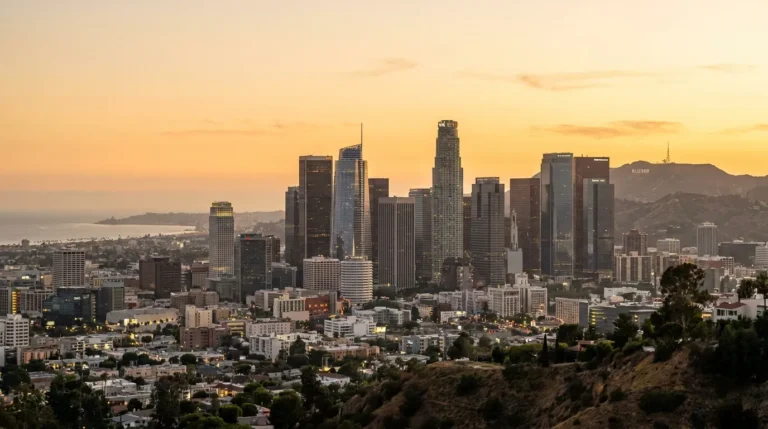
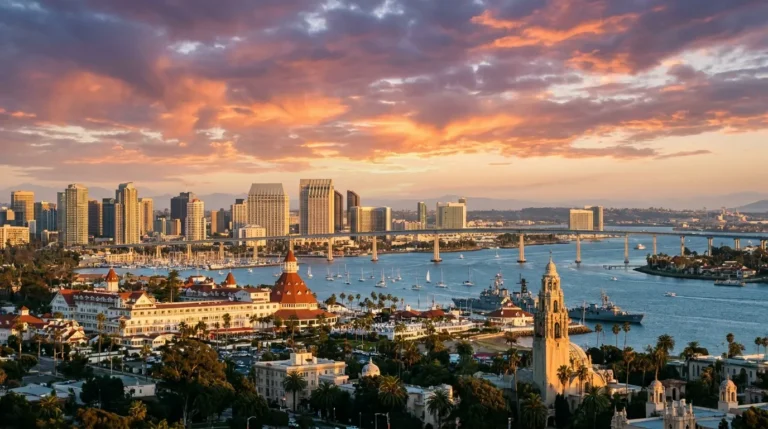
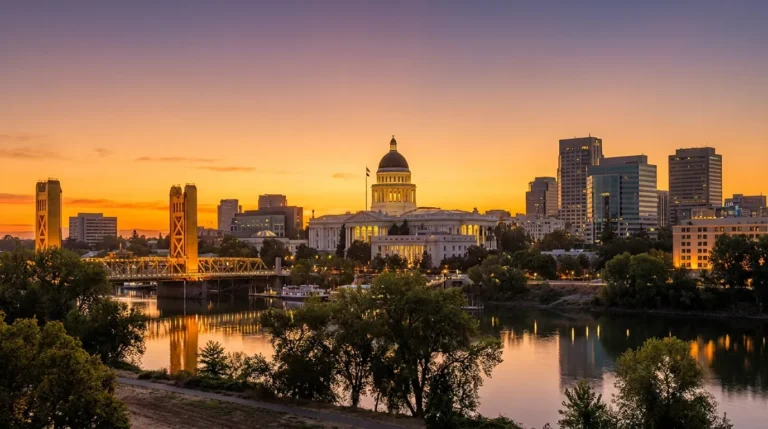
California is the most populous US state and has the largest economy of any state in the country. If it were a nation, it would be the fifth-largest economy in the world. The main cities are Los Angeles (film, industry, port), San Francisco (technology, finance), San Diego (tourism, military), and Sacramento (the state capital).

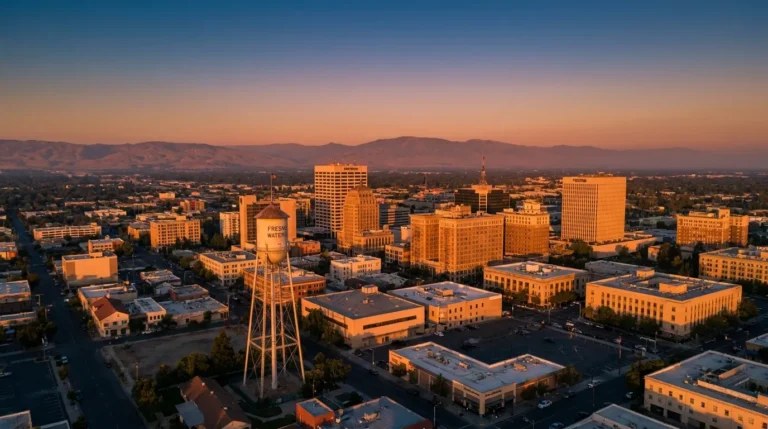
The cost of living is high, especially in San Francisco and Los Angeles. In return, salaries in technology, entertainment, and healthcare are among the highest in the US. Smaller inland cities (Sacramento, Fresno) have a lower cost of living.

California offers a good balance for newcomers: an active community of immigrants, a climate similar to many parts of the world, abundant Latin food, and excellent global connections through Los Angeles (LAX) and San Francisco (SFO) airports.

Population
39,029,342
Average monthly salary
76,900 USD/mo
36.1162°, -119.6816°

Featured places

Top 10 places in California

The places most sought-after by immigrants in this region.

California demographics: the most diverse state in the US

Nearly 40% of the population is Hispanic. Large Asian communities and immigrant communities spread throughout the state.

California is the most diverse state in the US. Hispanics and Latinos form the largest ethnic group, surpassing non-Hispanic whites. There are also large Chinese, Vietnamese, Filipino, Korean, and Indian communities, especially in Silicon Valley.

Spanish is spoken throughout the state alongside English. In cities like Los Angeles and San Jose, Portuguese is commonly heard, particularly in neighborhoods such as Culver City and Mountain View. Brazilian-Portuguese radio stations, newspapers, and churches serve these communities.

The population is largely urban, concentrated along the coast (Los Angeles, San Diego, San Francisco). The agricultural interior (Central Valley) has immigrant communities, primarily from Mexico, working in agriculture.

39,029,342
Population
38 yrs
Median age
96/km²
Density
$91,550
Median income
per year
Urban population94.0%
Foreign-born26.7%
Languages spoken
  • English
  • Spanish
  • Mandarin and Cantonese
  • Tagalog (Filipino)
  • Vietnamese
  • +2 more
Main religions
  • Christian (Catholic and Protestant)
  • No religion (around 30%)
  • Jewish
  • Buddhist and Hindu
  • Muslim

Cost of living in California: high on the coast, more affordable inland

San Francisco and Los Angeles are among the most expensive cities in the US. Mid-sized inland cities are more accessible.

The cost of living in San Francisco is the highest in the state. A one-bedroom apartment in the city center runs around $3,000 per month. In Los Angeles, $2,500 to $3,000. In San Diego, slightly less. Sacramento, Fresno, and Bakersfield fall in the $1,500 to $2,000 range.

Groceries and electricity are also above the national average. A simple meal at a casual restaurant costs $15 to $25. A mid-range lunch at a popular chain (Chipotle, Panera) runs $12 to $18.

Those earning in dollars can live comfortably in California on a household income above $100,000 per year. Single tech workers often earn considerably more. Those arriving without a formal job offer need savings for the initial period, especially for the rental deposit (typically first month plus one or two months' security).

113Cost index (US = 100)13% above US average
CategorySingleCoupleFamily (2 + 2)
iHousing$1,469$1,695$2,147
iFood$429$859$1,559
iTransport$565$961$1,243
iHealthcare$316$633$1,187
iChildcare$2,057
iOther$961$1,729$2,430
Monthly total$3,740$5,877$10,623

Source: U.S. BLS Consumer Expenditure Survey 2023 + BEA Regional Price Parities 2023 · Estimates in USD, monthly.

Housing in California: expensive near the coast, larger homes inland

Prices vary dramatically by city. Researching neighborhoods with good schools and proximity to work pays off.

In San Francisco and the Bay Area (Mountain View, Palo Alto, Cupertino), properties are small and expensive. Modest homes easily exceed $1.5 million. In Los Angeles, homes in desirable neighborhoods (Santa Monica, Beverly Hills) go above $2 million; more distant areas (Pasadena, Burbank) are more accessible.

San Diego typically offers larger homes for the same price as Los Angeles. Sacramento and the Central Valley have much more affordable real estate, with family homes (3-4 bedrooms with a yard) between $400,000 and $700,000. Areas like Fresno or Bakersfield are the most affordable in the state.

To rent, landlords typically require proof of income (usually 3 times the rent), a US credit history (FICO score), and references. Those arriving without a credit score may need a co-signer or to pay several months upfront.

Purchase price (m²)
  • Center$8,800/m²
  • Outside$5,400/m²
9.1×
Price-to-income
7.0%
Mortgage rate (20y)
Recommended neighborhoods
  • Mountain View and Palo Alto (Bay Area, tech hub)
  • Sunnyvale and Cupertino (top schools)
  • Santa Monica and Culver City (Los Angeles, immigrant community)
  • Pasadena (Los Angeles, more affordable)
  • La Jolla and Carlsbad (San Diego, beaches)
  • +2 more

Job market in California: technology, film, agriculture, and healthcare

Silicon Valley concentrates technology jobs. Los Angeles has film, media, and logistics. Agriculture employs workers in the interior.

California has the world's largest technology market. Apple, Google, Meta, Nvidia, Salesforce, Cisco, and thousands of startups are based in Silicon Valley. Average software engineering salaries exceed $150,000 per year and can double at large companies.

Los Angeles is the hub of film, television, music, and advertising. Studios like Disney, Warner, Universal, Sony Pictures, and Netflix employ thousands. San Diego is strong in biotechnology, medical devices, and Navy-related companies. Sacramento is the center of state government.

In the interior (Central Valley), agriculture employs many workers, especially Latin American immigrants. California produces grapes, almonds, lettuce, strawberries, and dairy at scale. There is also employment in healthcare (major hospitals), education (UC system), and tourism.

$76,900
Avg net salary
per month
$33,280
Minimum wage
per month
5.3%
Unemployment
62.6%
Labor force
Dominant sectors
  • Technology and software
  • Film, TV, and media
  • Biotechnology
  • Agriculture (fruits, vegetables, wine)
  • Aerospace and defense
  • +3 more
Major employers
  • Apple (Cupertino)
  • Google (Mountain View)
  • Meta/Facebook (Menlo Park)
  • Disney (Burbank)
  • Tesla (Palo Alto, Fremont)
  • +3 more

Education in California: free public schools and elite universities

Free public K-12 for residents. Public universities (UC and CSU) rank among the best in the US.

Children and teenagers have the right to free public schooling regardless of their parents' immigration status. Quality varies by district: wealthier neighborhoods tend to have better schools (Palo Alto, Cupertino, Beverly Hills, Irvine). Renting strategically to access good schools is a common practice among immigrant families.

The public university system has two branches: the University of California (UC) with 10 campuses (Berkeley, UCLA, San Diego, Davis, Santa Barbara) is more research-oriented and selective. The California State University (CSU) with 23 campuses is larger, more accessible in terms of admissions and cost, and focuses on teaching and undergraduate education.

Stanford, Caltech, and USC are prestigious private universities with high tuition (above $60,000 per year) but with financial aid for low-income students. International students pay more than in-state residents, but the quality of the degree justifies the investment for many.

Literacy95.0%
Tertiary education36.6%
478
PISA score (avg)
$15,800
Private school
per year
Notable universities
  • Stanford University (Palo Alto)
  • University of California, Berkeley
  • University of California, Los Angeles (UCLA)
  • California Institute of Technology (Caltech, Pasadena)
  • University of Southern California (USC)
  • University of California, San Diego
  • University of California, Davis
  • University of California, Irvine

Healthcare in California: a high-quality private network with public coverage for low incomes

Health insurance is practically essential. Those with formal employment usually receive it as a benefit; those with lower incomes qualify for Medi-Cal.

The US does not have a universal public healthcare system. In California, those with formal employment generally receive health insurance from their employer as part of their compensation. Family premiums can exceed $1,500 per month, but the employer covers part of it. For those without employment, Covered California (the state insurance marketplace) offers subsidized plans based on income.

Low-income families are eligible for Medi-Cal (California's version of Medicaid), which is free or low-cost. Documented immigrants over 50 and children up to age 25 have full access, even without citizenship. Undocumented immigrants have limited access (emergencies and pregnancy).

Hospitals like Cedars-Sinai (Los Angeles), Stanford Health Care, UCSF (San Francisco), and Kaiser Permanente are among the best in the country. Those arriving without insurance should avoid private emergency rooms: a basic visit can cost $1,500 to $5,000.

Healthcare index73.0 / 100
  • Life expectancyyears at birth
    80.9yrs
  • Doctors per 1kpracticing physicians
    2.9
  • Health spendper capita, per year
    $10,300
  • Public systemoverall quality rating
    Fair

Safety in California: conditions vary significantly by neighborhood

Some areas are very safe; others have serious issues with homelessness and drugs, primarily in San Francisco and Los Angeles.

Safety in California varies widely. Suburbs with good schools (Palo Alto, Cupertino, Pasadena, Irvine) are extremely safe, with crime rates below the national average. By contrast, areas such as the Tenderloin (San Francisco), Skid Row (Los Angeles), and parts of Oakland and Stockton have serious problems.

The main challenges are vehicle break-ins (particularly smash-and-grab thefts from parked cars), robberies targeting tourists at famous landmarks, and a visible homeless population in urban centers. Violent crimes are less common in most residential neighborhoods.

Cities like Irvine (Orange County) regularly rank among the safest in the US. Those planning to move should check Niche.com or GreatSchools for safety ratings and school quality in their target neighborhood before signing a lease.

5.7
Homicides per 100k
per year
Safety index
46.0
Crime index
54.0
Safer neighborhoods
  • Irvine (Orange County)
  • Cupertino and Saratoga (Bay Area)
  • Pasadena (Los Angeles)
  • La Jolla and Carlsbad (San Diego)
  • Mountain View and Palo Alto
  • Manhattan Beach and Hermosa Beach
  • Westlake Village
Areas to avoid
  • Los Angeles downtown (Skid Row)
  • West Oakland
  • San Francisco Tenderloin
  • Stockton downtown

Transportation in California: a personal car is almost essential outside major cities

Long distances and limited public transit make the car the primary mode. San Francisco has the state's best transit system.

Most people in California rely on a car. Distances between cities are large, and public transit outside major centers is limited. Even in Los Angeles, while a Metro system exists, its network is smaller than in most European capitals.

San Francisco has the most varied system: buses, the historic cable car, Muni, BART (regional train), and ferry service. It is possible to live there without a car, especially in central neighborhoods. In Los Angeles and San Diego, a car is practically necessary for commuting. Rideshare apps like Uber and Lyft are ubiquitous.

California has some of the world's largest airports: LAX (Los Angeles), SFO (San Francisco), and SAN (San Diego). Highways such as the 101 (running the length of the state north to south) and I-5 are the main routes. Traffic in Los Angeles and the Bay Area can be severe during peak hours.

12
Metro lines
175
Metro stations
30 min
Avg commute
53
Walkability
Airports
  • LAX (Los Angeles International)
  • SFO (San Francisco International)
  • SAN (San Diego International)
  • SJC (San Jose International)
  • OAK (Oakland International)
  • +3 more
  • International airport
  • Bike infrastructure

California climate: Mediterranean on the coast, desert inland, snow in the Sierras

Dry and mild summers on the coast. Hot and dry inland valleys. The Sierra Nevada has snow in winter.

California has a highly varied climate. Along the central coast (San Francisco, Santa Cruz), summers are mild with foggy mornings and sunny afternoons; winters are cool and rainy. In Los Angeles and San Diego, summers are warm and dry with highs of 25-30 degrees Celsius, and winters are mild, rarely dropping below 10 degrees.

In the interior (Central Valley, Sacramento, Fresno), summers are very hot and dry, with temperatures frequently exceeding 35 degrees. Winters are cooler, with frost on some nights. In the southern deserts (Palm Springs, Death Valley), summer heat can reach 45 degrees or more.

The Sierra Nevada in the east receives abundant winter snow, drawing skiers to Lake Tahoe and Mammoth Mountain. Wildfires are a growing concern from August through November, especially in the north and Bay Area.

Sunny days / year263 days
Avg high (°F)
  • 68°J
  • 68°F
  • 70°M
  • 72°A
  • 74°M
  • 77°J
  • 82°J
  • 84°A
  • 83°S
  • 79°O
  • 73°N
  • 67°D
Avg low (°F)
  • 49°J
  • 50°F
  • 52°M
  • 55°A
  • 58°M
  • 61°J
  • 65°J
  • 65°A
  • 64°S
  • 60°O
  • 53°N
  • 48°D
Rainfall (")
  • 3"J
  • 4"F
  • 2"M
  • 1"A
  • 0"M
  • 0"J
  • 0"J
  • 0"A
  • 0"S
  • 1"O
  • 1"N
  • 2"D

California culture: a blend of Hollywood, outdoor living, and Latin influence

Film, surfing, Mexican food, and technology define the state's identity. Festivals and events run year-round.

Hollywood, in Los Angeles, is the global center of film and television. The city breathes the entertainment industry: studios, actors in coffee shops, events like the Oscars. In San Francisco and Silicon Valley, the culture leans toward innovation and entrepreneurship. Nearly every major startup in the world has passed through the area.

Outdoor living is a core part of the Californian identity. Surfing, hiking in national parks (Yosemite, Joshua Tree, Redwood), running on the beach, or cycling are routine for many residents. The climate helps: outdoor activities are possible year-round.

Latin influence is strong. More than a third of the population is Hispanic, meaning Mexican restaurants on every corner, events like Cinco de Mayo, and Latin pop as part of the everyday cultural landscape.

1,500
Major museums
Notable dishes
  • California-style burritos (Mission style)
  • Fish tacos (San Diego)
  • California roll
  • Avocado toast
  • Cobb salad
  • +4 more
Annual events
  • Coachella (music festival, April)
  • Stagecoach (country festival, April)
  • San Francisco International Film Festival (April)
  • LA Pride (June)
  • Comic-Con San Diego (July)
  • +1 more
UNESCO sites
  • Yosemite National Park
  • Redwood National Park
  • Sequoia-Kings Canyon Parks and Reserves

Key sectors of the California economy

Technology, film, agriculture, and tourism lead. Clean energy and biotechnology are growing fast.

Technology is the state's most recognized sector, with Apple, Google, Meta, Tesla, and thousands of startups headquartered here. Silicon Valley, around San Francisco, is the most influential innovation ecosystem in the world, attracting capital and talent from every country.

Film and entertainment have Hollywood as their global capital. Disney, Warner Bros., Universal, Paramount, and Netflix maintain studios and thousands of jobs in Los Angeles and surrounding areas. Music, gaming, and content creation also center their operations in the state.

California agriculture feeds the entire US: Napa and Sonoma wine, almonds, strawberries, lettuce, dairy, and citrus. Tourism (Disneyland, Yosemite, San Diego, vineyards) is a billion-dollar sector. Biotechnology and pharmaceuticals have grown significantly in San Diego and the Bay Area.

  • GDPgross domestic product
    $3,900.0B
  • GDP per capitaoutput per resident
    $99,900
  • GDP growth (yr)economy expanding
    +3.5%
Top sectors
  • Technology and software
  • Film, TV, and streaming
  • Agriculture and wine
  • Aerospace and defense
  • Biotechnology and medical devices
  • +3 more

Immigrant communities in California

More than 10.6 million immigrants live in the state, 27% of the population. It is the largest foreign-born concentration in the United States.

California is home to roughly 10.6 million residents born outside the United States, close to 27% of the population, the highest share in the country. Mexicans are the largest group and are present across the entire state, with strong concentrations in Los Angeles, the Central Valley (Fresno, Bakersfield), and San Diego. Los Angeles also hosts the largest Filipino community in the United States (Historic Filipinotown, Carson, West Covina) and the Filipino enclave of Daly City in the Bay Area. Chinese immigrants dominate the San Gabriel Valley (Monterey Park, Alhambra, San Gabriel), the largest Chinese American region in the country, along with Cupertino and the Richmond District in San Francisco. Indians concentrate in Silicon Valley (Fremont, Sunnyvale, Cupertino), tied to the tech industry. The largest Vietnamese community outside Vietnam is in Westminster's Little Saigon in Orange County, extending into San Jose. Salvadorans, Guatemalans, and Hondurans fill Pico-Union and the San Fernando Valley in Los Angeles. Koreatown in LA and Garden Grove host the largest Korean diaspora in the Americas. Iranians form Tehrangeles in Westwood, and Armenians concentrate in Glendale and East Hollywood.

The support network is the densest in the country. CHIRLA, CARECEN LA, Asian Americans Advancing Justice LA, the Asian Law Caucus in San Francisco, Centro Legal de la Raza in Oakland, the Filipino Migrant Center, and the Korean Resource Center provide legal aid, deportation defense, and help with citizenship applications. The Consulate-General of Mexico in Los Angeles is the largest in the world. Consulates-general operate in Los Angeles and San Francisco for India, China, the Philippines, South Korea, Japan, Vietnam, El Salvador, Guatemala, Honduras, Brazil, France, and Indonesia. Mexico also keeps consulates in San Diego, Sacramento, Fresno, and San Bernardino. Almost every public agency offers service in Spanish, Mandarin, Cantonese, Vietnamese, Korean, Tagalog, and Armenian.

10,600,000
Foreign-born residents
estimated
Top countries of origin
  • Mexico
  • Philippines
  • China
  • India
  • Vietnam
Main immigrant hubs
  • Los Angeles
  • San Francisco
  • San Diego
  • San Jose
  • Fresno
Foreign consulates
  • Mexican Consulate General in Los Angeles
  • Indian Consulate General in San Francisco
  • Philippine Consulate General in Los Angeles
  • Chinese Consulate General in Los Angeles
  • South Korean Consulate General in Los Angeles
  • +1 more
Community organizations
  • CHIRLA (Coalition for Humane Immigrant Rights)
  • CARECEN Los Angeles
  • Asian Americans Advancing Justice Los Angeles
  • Centro Legal de la Raza
  • Korean Resource Center

Latest posts

Posts about California

Coverage and updates related to this destination.