Visto n' Visa
Blog
Notícias e artigos
Destinations
Careers
Immigrants

Want to live and work in Prince Edward Island?

Personalized immigration plan with eligible visas, costs, and next steps for your goal!

If you are not eligible, you will know exactly why and what to do to improve your approval chances.

Save up to 12 hours in meetings

No pointless assessments.

Save up to 90%

Save money on vague or unfocused consultations

Avoid Fraud and Mistakes

One mistake can cost you your visa

Total Impartiality

Zero commercial bias

Decide with peace of mind

No toxic urgency

Fast and Accurate

Answers in minutes, no guesswork

All about Prince Edward Island

Atlantic landscapes, a quiet pace, and a welcoming community in the smallest Canada

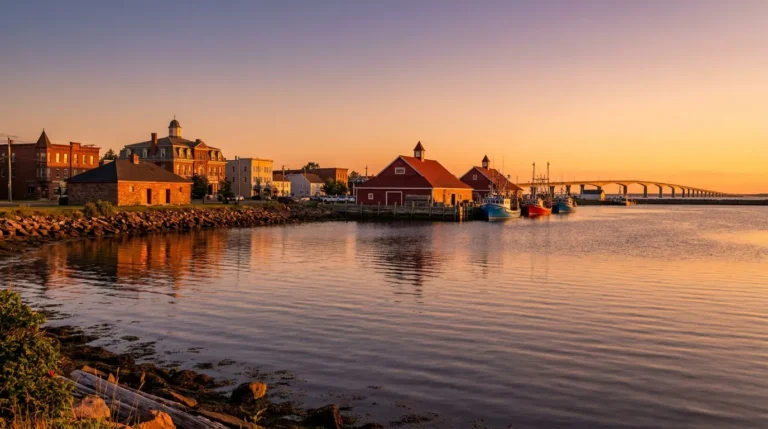
Prince Edward Island (PEI) is a small island in the Gulf of St. Lawrence, connected to the mainland by the Confederation Bridge, which opened in 1997. With just over 154,000 inhabitants, it is the smallest and most densely populated province in Canada relative to its area.

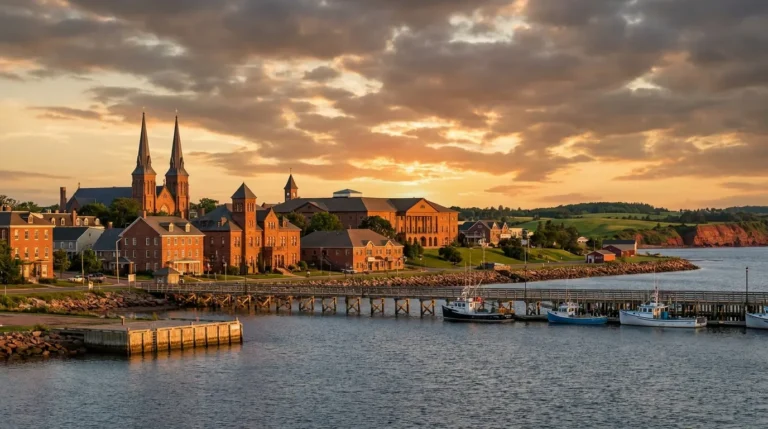
Charlottetown is the provincial capital and the island's only city of significant size, serving as the administrative, cultural, and commercial center. The provincial economy revolves around tourism, agriculture, and fishing, with particular emphasis on potato production (PEI accounts for around 25% of Canada's total output) and lobster and mussel farming.

For immigrants, PEI offers the Prince Edward Island Provincial Nominee Program (PEI PNP), with specific categories for skilled workers, in-demand professionals, and entrepreneurs willing to invest in the province. The small size of the island creates a close community where integration tends to happen more organically than in large metropolitan areas.

Population
154,331
Average monthly salary
40,000 USD/mo
46.3981°, -63.2984°

Featured places

Top 10 places in Prince Edward Island

The places most sought-after by immigrants in this region.

Predominantly anglophone community with rapid growth through recent immigration

PEI is predominantly anglophone with a historical Francophone minority (Acadians), and has been receiving a growing number of international immigrants, especially from India, the Philippines, and Latin America.

The majority of Prince Edward Island's population is anglophone, of British and Irish origin, descending from the earliest European settlers. There is also an Acadian Francophone minority in the western part of the island, with a historically preserved presence in communities such as Evangeline. Both languages have official status in the province.

In recent years, PEI has become a much more active immigration destination than in previous decades. The rapid population growth is driven mainly by the arrival of immigrants from India, the Philippines, Nepal, and Latin American countries. This change is visible especially in Charlottetown, where new restaurants, religious temples, and multicultural events have emerged in recent years.

The small size of the island makes community integration more direct. Newcomers often find informal support networks and active immigrant groups on local social media. Proximity to neighbors and coworkers creates an environment where it is easier to build connections than in large urban centers.

154,331
Population
44 yrs
Median age
27/km²
Density
$39,000
Median income
per year
Urban population47.3%
Foreign-born9.5%
Languages spoken
  • English
  • French
Main religions
  • Christianity (70%)
  • No religion (28%)
  • Islam (1%)
  • Hinduism (1%)

Moderate cost of living by Canadian standards, with more accessible housing than major cities

PEI has a more affordable cost of living than the central and western Canadian provinces, with relatively cheaper housing, food, and transportation, though average salaries are also lower.

The cost of living on Prince Edward Island is moderate by Canadian standards. Rent in Charlottetown has risen considerably in the past decade due to the real estate boom driven by immigration, but it remains below the levels in Vancouver, Toronto, or even Halifax. For those coming from large metropolitan areas, the difference in housing costs can be significant.

Fresh food, especially local seafood, can be more affordable than in other provinces due to local production. However, processed goods, electronics, and imported items tend to be more expensive due to the logistics costs of an island with limited land access.

Average salaries in PEI are historically lower than in Canada's central and western provinces, which is an important factor in the financial equation. For those prioritizing quality of life, a quieter pace, and more accessible housing, the balance can be positive. For those seeking to maximize their net income, opportunities in Alberta or Ontario are typically more attractive.

90Cost index (US = 100)10% below US average
CategorySingleCoupleFamily (2 + 2)
iHousing$1,179$1,456$1,872
iFood$277$555$1,006
iTransport$264$485$624
iHealthcare$55$111$194
iChildcare$1,214
iOther$374$624$832
Monthly total$2,149$3,231$5,742

Source: Statistics Canada (SHS 2022 + CPI 2024) · Estimates in USD, monthly.

Rising real estate market in Charlottetown, with more affordable options in rural areas

PEI has a housing market that has grown rapidly in recent years, especially in Charlottetown, with more accessible alternatives in smaller municipalities and rural areas of the island.

Charlottetown concentrates the majority of the province's real estate demand. Neighborhoods like Parkdale, Sherwood, and West Royalty are popular among families, with mid-range homes and good proximity to schools, supermarkets, and clinics. The historic city center has well-located apartments and townhouses, suitable for singles and couples without children.

The sharp price increases of the past five years have made buying a home more difficult for newcomers without initial capital. Renting is more accessible, although unit availability can be limited during peak tourist months (summer), when some properties are converted to short-term rentals.

In smaller cities such as Summerside, Stratford, and Montague, rental and purchase prices are significantly lower. Those working in agriculture, fishing, or local services usually opt for these communities, where access to nature, beaches, and rural life is immediate, and housing costs are much more favorable.

Purchase price (m²)
  • Center$2,700/m²
  • Outside$1,700/m²
4.6×
Price-to-income
6.5%
Mortgage rate (20y)
Recommended neighborhoods
  • Parkdale (Charlottetown)
  • Sherwood (Charlottetown)
  • West Royalty (Charlottetown)
  • Stratford
  • Summerside
  • +1 more

Seasonal economy with opportunities in tourism, healthcare, agriculture, and emerging technology

PEI has a smaller job market with strong seasonality in tourism and agriculture, but constant demand in healthcare, education, construction, and an emerging technology sector in Charlottetown.

Prince Edward Island's job market is limited in size but varied in sectors. Tourism is the main employer in summer, with hotels, restaurants, attractions, and temporary services absorbing a large workforce between June and September. This seasonal nature requires financial planning for the winter months, when economic activity slows down.

Healthcare is the sector with the most consistent and growing demand, given the aging local population. Doctors, nurses, and long-term care professionals have regular openings both in Charlottetown and in rural communities. Construction is also active, driven by population growth and infrastructure expansion.

A modest technology sector has been developing in Charlottetown, with companies focused on agritech, climate data, and digital services. UPEI and Holland College train professionals for this market, but local absorption capacity is still smaller than in major centers. IT professionals with transferable skills often choose to work remotely for companies in other provinces while residing in PEI.

$40,000
Avg net salary
per month
$22,800
Minimum wage
per month
7.1%
Unemployment
65.0%
Labor force
Dominant sectors
  • Tourism and hospitality
  • Agriculture and fishing
  • Healthcare
  • Construction
  • Education
  • +1 more
Major employers
  • Government of Prince Edward Island
  • Health PEI
  • UPEI (University of Prince Edward Island)
  • Cavendish Farms
  • Murphy Hospitality Group
  • +1 more

UPEI and Holland College as the island's main higher education institutions

Prince Edward Island has quality public education, with UPEI as the main university and Holland College as the reference for technical and professional training.

The University of Prince Edward Island (UPEI) is the province's only university, founded in 1969 from the merger of earlier institutions. It offers undergraduate and postgraduate programs in areas such as veterinary medicine (with national renown), marine biology, business, nursing, and computer science. The campus is in Charlottetown and has an active university atmosphere for the size of the city.

Holland College is the island's main polytechnic institution, with campuses in Charlottetown, Summerside, and other locations. It offers technical diplomas in culinary arts, information technology, practical nursing, construction, and business management. Programs last one to two years and are directly oriented toward the local job market.

The provincial public K-12 education system is administered by the provincial Ministry of Education, with schools distributed throughout the island. Teaching quality is consistent, with smaller class sizes than in larger provinces, allowing for more individualized attention. For families arriving with children, adapting to the school system tends to be straightforward.

Literacy99.0%
Tertiary education60.0%
500
PISA score (avg)
$11,000
Private school
per year
Notable universities
  • University of Prince Edward Island (UPEI)
  • Holland College

Universal public health via Health PEI, with access challenges in rural areas

PEI has universal public health coverage managed by Health PEI, with the Queen Elizabeth Hospital in Charlottetown as the main hospital center, but with limitations in advanced specialties.

Prince Edward Island's healthcare system is administered by Health PEI, the provincial authority that manages hospitals, clinics, and mental health services across the island. The Queen Elizabeth Hospital (QEH) in Charlottetown is the province's main hospital, with capacity for surgeries, emergencies, and a variety of medical specialties.

Access to a family doctor is a significant challenge, especially for newcomers. The shortage of general practitioners available to new patients is a recognized problem, and the provincial government has implemented community clinics and team-based health models to meet demand. More complex cases requiring specialties not available in PEI are referred to hospitals in Halifax or other mainland cities.

For immigrants, the provincial health card is issued after establishing residence, with a three-month waiting period for some categories. During this period, it is advisable to have supplemental health insurance. The island has walk-in clinics in Charlottetown and Summerside that provide care without an appointment for non-urgent health needs.

Healthcare index72.0 / 100
  • Life expectancyyears at birth
    81.3yrs
  • Doctors per 1kpracticing physicians
    2.0
  • Health spendper capita, per year
    $7,000
  • Public systemoverall quality rating
    Fair

One of the safest regions in Canada, with very low crime rates

Prince Edward Island consistently has some of the lowest crime rates in Canada, with a high sense of safety throughout the island, both in urban and rural areas.

Prince Edward Island is consistently ranked among Canada's safest provinces. The small community size, social cohesion, and relative historical homogeneity have created a low-crime environment that is maintained even with recent population growth through immigration.

Charlottetown has urban crime typical of a small city: some cases of theft and disorderly conduct, especially in summer when tourism increases foot traffic. Violent crime, however, is rare and residents often describe the city as a place where it is still possible to leave the door unlocked in many residential neighborhoods.

The island's rural areas are even quieter, with agricultural communities where everyone knows each other and informal surveillance is natural. The RCMP and Charlottetown Police Department provide good coverage, and response times are fast by the standards of a small island.

0.6
Homicides per 100k
per year
Safety index
68.0
Crime index
32.0
Safer neighborhoods
  • Charlottetown (general)
  • Stratford
  • Cornwall
  • Summerside
  • Parkdale (Charlottetown)
  • Sherwood (Charlottetown)
Areas to avoid
  • Charlottetown downtown isolated areas at night
  • Rural roads in winter

Car indispensable on the island, with limited public transportation in Charlottetown

Mobility in PEI depends almost entirely on the car, with public transportation only in Charlottetown. The Confederation Bridge connects the island to the mainland, and the local airport has flights to major Canadian cities.

Prince Edward Island has no metro or train system. T3 Transit operates urban bus routes in Charlottetown, covering the main neighborhoods and the airport, but with limited frequency and no evening or weekend service on many routes. For mobility outside Charlottetown, a car is practically indispensable.

The Confederation Bridge is the fixed land connection to the mainland, crossing the Northumberland Strait to New Brunswick. At 12.9 km in length, it is the world's longest bridge over ice-covered water. The car crossing takes approximately 10 to 12 minutes, with a toll charged only when leaving the island. The ferry service between Wood Islands (PEI) and Caribou (Nova Scotia) is a seasonal alternative.

Charlottetown Airport offers direct flights to Toronto, Montreal, Ottawa, Halifax, and other Canadian cities, with connections to international destinations. In summer, flight frequency increases considerably due to tourism. Those planning to travel along Canada's east coast often drive across the Confederation Bridge, combining practicality with Atlantic scenery.

18 min
Avg commute
38
Walkability
Airports
  • YYG — Charlottetown Airport
  • International airport
  • Bike infrastructure

Atlantic climate with moderate winters for Canada and pleasant island summers

PEI has an Atlantic climate with cold and rainy winters, warm and pleasant summers, and well-distributed precipitation throughout the year, including snow in winter.

Prince Edward Island's climate is moderated by the Gulf of St. Lawrence, making it less extreme than that of Canada's continental interior. Winters are cold, with maximum temperatures below zero from December to February, but without the extremely low values of provinces such as Saskatchewan or Manitoba. Snow is frequent and accumulates for weeks, with winter precipitation distributed throughout the cold season.

Spring is gradual, with March still very cold and April marking a slow transition. Temperatures only reach consistently comfortable levels from May onward, when the Gulf begins to warm. Summer, from June to August, is the year's highlight: long days, pleasantly warm temperatures, lively beaches, and outdoor festivals. Summer nights are cool and pleasant, very different from the humid heat of regions farther south.

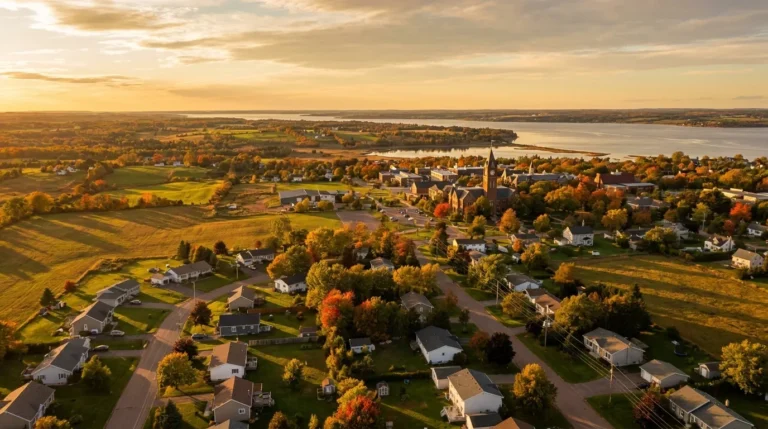
PEI's autumn is colorful and temperate, with September still warm and October marking the beginning of leaf fall. Precipitation is reasonably constant in all months, without a defined dry season, which keeps the rural landscape lush throughout the year. Those arriving from tropical or subtropical climates need to prepare for the winter months with appropriate clothing and efficient home heating.

Sunny days / year185 days
Avg high (°F)
  • 31°J
  • 28°F
  • 35°M
  • 44°A
  • 54°M
  • 67°J
  • 73°J
  • 74°A
  • 67°S
  • 57°O
  • 45°N
  • 37°D
Avg low (°F)
  • 18°J
  • 14°F
  • 22°M
  • 33°A
  • 41°M
  • 54°J
  • 62°J
  • 62°A
  • 56°S
  • 47°O
  • 35°N
  • 27°D
Rainfall (")
  • 5"J
  • 4"F
  • 4"M
  • 4"A
  • 3"M
  • 5"J
  • 4"J
  • 4"A
  • 5"S
  • 4"O
  • 5"N
  • 5"D

Acadian heritage, maritime traditions, and Anne of Green Gables as a cultural icon

PEI has a culture shaped by Atlantic traditions, Acadian heritage, Celtic folk music, and the iconic presence of Anne of Green Gables, which attracts visitors from around the world.

Prince Edward Island has a strong cultural identity, shaped by centuries of maritime life, British colonization, and French Acadian heritage. Celtic folk music, brought by Irish and Scottish immigrants, still echoes in festivals and musical sessions in Charlottetown bars and rural communities. The Charlottetown Festival and the Indian River Festival are notable cultural events on the provincial calendar.

Anne of Green Gables, the character created by author L.M. Montgomery in 1908, is the island's greatest cultural icon. The Green Gables farm in Cavendish is one of the most visited tourist attractions in Atlantic Canada, and the story of the long-braided redhead has influenced Japanese popular culture in a remarkable way, generating a steady flow of visitors from Japan to the island.

PEI's cuisine is dominated by seafood: lobster, mussels (Malpeque Oysters are internationally renowned), crab, and shrimp appear on formal tables and at outdoor markets. PEI potatoes are another culinary symbol, used in countless local preparations. The Island Potato Tour and seasonal food events attract food lovers from other provinces.

28
Major museums
Notable dishes
  • Atlantic lobster
  • Malpeque Oysters
  • Rope-grown mussels
  • PEI potatoes
  • Lobster rolls
  • +1 more
Annual events
  • Charlottetown Festival
  • PEI Burger Love Festival
  • PEI International Shellfish Festival
  • Indian River Festival
  • Cavendish Beach Music Festival

Potatoes, lobster, tourism, and an emerging biotech sector sustain the island economy

PEI's economy is based on agriculture, fishing, and tourism, with growth in aerospace biotechnology and services, in a slow but consistent diversification model.

Agriculture is the historical foundation of PEI's economy. The island produces around 25% of Canada's potatoes, with exports to the United States, Europe, and other markets. Companies such as Cavendish Farms and McCain Foods have significant processing operations on the island. Diversification into other crops, such as specialty grains and organics, has advanced in recent years.

Fishing and aquaculture are the second major economic pillar. PEI is Canada's largest producer of rope-grown mussels and its main lobster export product is Atlantic lobster. The lobster fishing season, which occurs twice a year, drives the island's entire coastal economy and employs thousands of fishers and processing workers.

Tourism is growing continuously, supported by the preserved rural landscape, red-sand Atlantic beaches, and the island's cultural heritage. The aerospace sector has a discreet but growing presence, with maintenance and components companies attracted by the Aerospace Industry PEI cluster. Biotechnology related to agriculture is also advancing, with applied research into disease-resistant potato production and sustainable aquaculture.

  • GDPgross domestic product
    $6.0B
  • GDP per capitaoutput per resident
    $38,800
  • GDP growth (yr)economy expanding
    +2.2%
Top sectors
  • Agriculture (potatoes)
  • Fishing and aquaculture
  • Tourism
  • Food processing
  • Health and social services
  • +2 more

Immigrant communities in Prince Edward Island

About 22,000 immigrants live in the province, 10% of the population, with strong Chinese and Indian presence driven by the investor PNP.

Prince Edward Island is home to roughly 22,000 immigrants, around 10% of the population, a small number in absolute terms but with one of the highest shares among Atlantic provinces. Charlottetown and Summerside concentrate most settlement. The Chinese community grew sharply in the 2010s, driven by the investor stream of the Provincial Nominee Program and by UPEI students. Indians followed, with accelerated arrival via the skilled PNP and the Atlantic Immigration Program, working in healthcare, retail, and tech. Filipinos form the third front, tied to care work and tourism, and there is a modest British and American base linked to agriculture and tourism.

The PEI Association for Newcomers to Canada is the central reference, with English classes, mentoring, entrepreneurship support, and family settlement, operating from Charlottetown. There are no consulates in the province, and immigrants turn to Halifax, Montréal, or Toronto for consular services. Chinese temples in Charlottetown, small mosques, and the Filipino Catholic parish anchor religious life.

22,000
Foreign-born residents
estimated
Top countries of origin
  • China
  • India
  • Philippines
  • United Kingdom
  • Syria
Main immigrant hubs
  • Charlottetown
  • Summerside
  • Stratford
Foreign consulates
  • No consulates in the province; services available via Halifax, Montreal and Toronto
Community organizations
  • PEI Association for Newcomers to Canada

Latest posts

Posts about Canada

Coverage and updates related to this destination.

Showing content from Canada, as there is no specific data for Prince Edward Island yet.