Visto n' Visa
Blog
Notícias e artigos
Destinations
Careers
Immigrants

Want to live and work in British Columbia?

Personalized immigration plan with eligible visas, costs, and next steps for your goal!

If you are not eligible, you will know exactly why and what to do to improve your approval chances.

Save up to 12 hours in meetings

No pointless assessments.

Save up to 90%

Save money on vague or unfocused consultations

Avoid Fraud and Mistakes

One mistake can cost you your visa

Total Impartiality

Zero commercial bias

Decide with peace of mind

No toxic urgency

Fast and Accurate

Answers in minutes, no guesswork

Inside British Columbia

Pacific coast, real opportunities and one of Canada's most immigrant-friendly cities

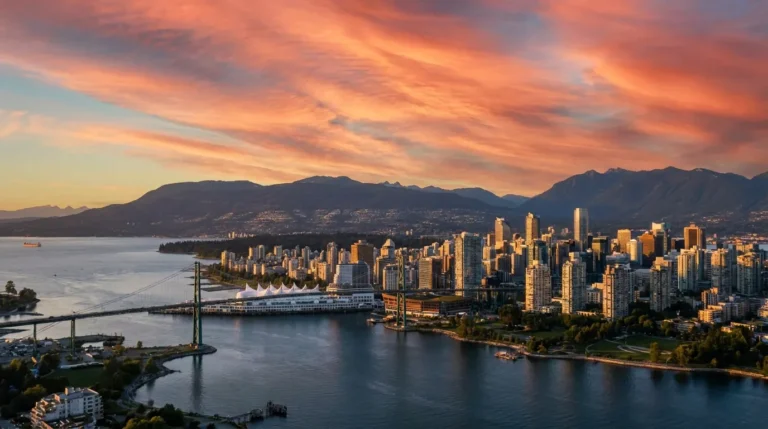
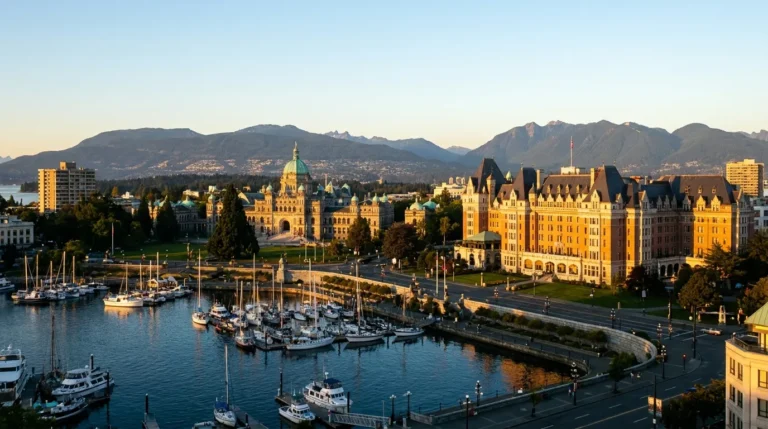
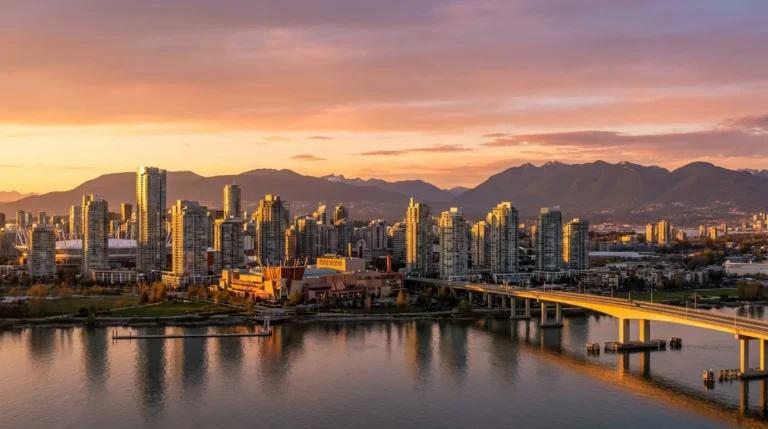
British Columbia sits at the far west of Canada, bordering the Pacific Ocean and the U.S. state of Alaska. The capital is Victoria, on Vancouver Island, but Vancouver is the largest city and the province's economic hub, internationally recognized for its quality of life and concentration of technology companies.

Newcomers to BC will find an expensive real estate market, especially in Vancouver and surrounding municipalities, but also higher wages and genuine opportunities in technology, construction, healthcare and tourism. The unemployment rate tends to be low compared to other provinces, and the provincial government runs active immigration programs through the BC Provincial Nominee Program.

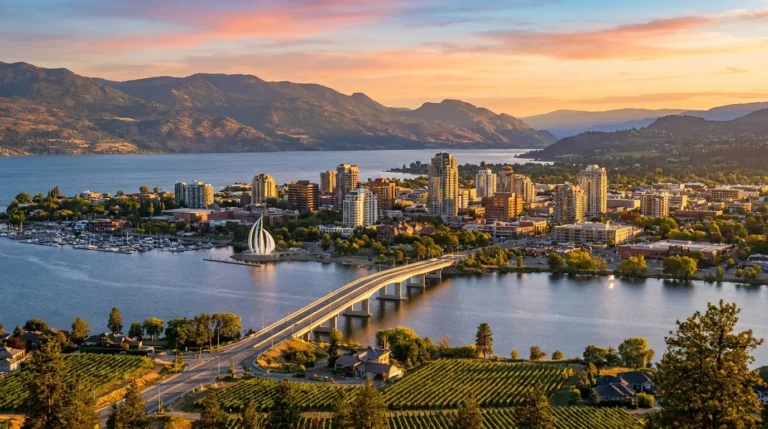
Cultural diversity is one of British Columbia's defining features: Asian, South Asian and Latin American communities are well established, and it is easy to find community support for newcomers. The high cost of living is the main challenge, but smaller cities such as Kelowna, Kamloops and Prince George offer more affordable alternatives with a high quality of life.

Population
5,000,879
Average monthly salary
48,900 USD/mo
53.9998°, -125.0032°

Featured places

Top 10 places in British Columbia

The places most sought-after by immigrants in this region.

British Columbia is one of Canada's most diverse provinces

With more than 5 million residents and a strong presence of Asian and South Asian communities, BC is an established destination for immigrants from around the world.

British Columbia has one of the most diverse demographic compositions in Canada. In Greater Vancouver, a significant portion of the population is of Asian origin, including Chinese, Filipino-Canadian, South Asian and Korean communities, creating a vibrant multicultural social fabric with accessible community support for newcomers.

English is the official language and is widely used in daily life and at work. In areas such as Surrey, Burnaby and Richmond, Mandarin, Punjabi and Tagalog also have a strong presence. Fluent English is essential for professional integration, but free language courses are available through the government for permanent residents.

BC's population has grown consistently in recent years, driven by both international immigration and internal migration from other provinces. Smaller inland cities such as Kelowna and Kamloops have also been attracting more immigrants seeking a lower cost of living without sacrificing quality services.

5,000,879
Population
43 yrs
Median age
5/km²
Density
$48,700
Median income
per year
Urban population86.2%
Foreign-born28.9%
Languages spoken
  • English
  • Mandarin
  • Punjabi
  • Tagalog
  • Cantonese
  • +1 more
Main religions
  • No religion (52%)
  • Christianity (35%)
  • Sikhism (5%)
  • Islam (2%)
  • Buddhism (2%)

High cost of living in Vancouver, more affordable in BC's interior

Vancouver ranks among Canada's most expensive cities, but interior cities such as Kelowna and Kamloops offer a considerably lower cost of living with a good quality of life.

In Greater Vancouver, the cost of living is high, especially rent. A one-bedroom apartment in the city centre can cost between CAD 2,200 and CAD 3,000 per month, and prices do not improve much in outlying neighbourhoods. Food, public transit and leisure also run above the Canadian average, making careful financial planning essential before relocating.

Outside Greater Vancouver, the picture changes significantly. In Kelowna, Kamloops, Prince George or Nanaimo, rent can be 30 to 50 percent lower, and the quality of public services, schools and infrastructure remains good. Many immigrants choose to settle in these cities first and move to Vancouver later if needed.

The provincial government offers no income tax on low salaries and provides benefits such as the BC Income Assistance program and refundable tax credits for lower-income families. The BC Medical Services Plan covers basic healthcare, which provides meaningful relief in the budget of those just starting out. Planning the first months with at least three to six months of savings in reserve is the most common advice among those who have made this transition.

110Cost index (US = 100)10% above US average
CategorySingleCoupleFamily (2 + 2)
iHousing$1,440$1,778$2,286
iFood$339$677$1,228
iTransport$322$593$762
iHealthcare$68$135$237
iChildcare$1,482
iOther$457$762$1,016
Monthly total$2,626$3,945$7,011

Source: Statistics Canada (SHS 2022 + CPI 2024) · Estimates in USD, monthly.

Expensive properties in Vancouver, but BC's interior offers solid alternatives

Vancouver's real estate market is one of the most expensive in Canada. For immigrants early in their careers, interior cities are the most practical strategy.

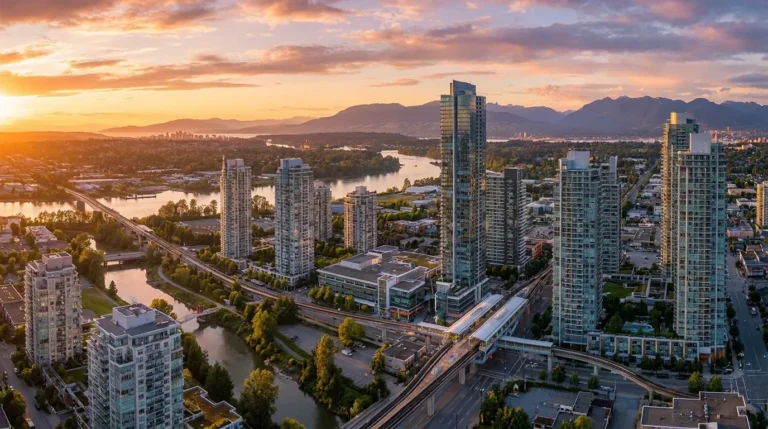
Vancouver and neighbouring municipalities such as Burnaby, Richmond and Surrey have one of Canada's most expensive real estate markets. Buying a home in Vancouver requires significant capital and a stable income, putting ownership out of reach for most newcomers. Rent is also high, and competition for apartments is intense, especially in neighbourhoods near the SkyTrain metro.

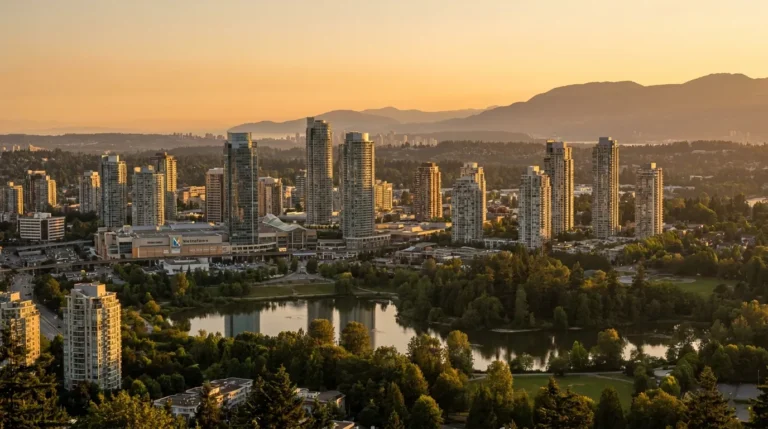
Neighbourhoods such as East Vancouver, New Westminster and Port Moody have slightly lower prices with good access to public transit. For families seeking space and quality schools, Surrey and Langley are popular options with a greater supply of houses and apartments at somewhat more accessible prices. Renting rooms in shared houses is a common option for those arriving alone.

In BC's interior, cities such as Kelowna, Kamloops and Vernon offer properties to rent or buy at considerably lower prices, with access to nature, a good quality of life and economic growth. Remote work has been attracting many technology professionals to these regions, making them increasingly well-equipped to welcome new residents.

Purchase price (m²)
  • Center$9,800/m²
  • Outside$5,200/m²
11.5×
Price-to-income
6.5%
Mortgage rate (20y)
Recommended neighborhoods
  • East Vancouver
  • New Westminster
  • Surrey
  • Burnaby
  • Langley
  • +3 more

Technology, construction and healthcare lead BC's labour market

British Columbia has a strong labour market, with technology standing out in Vancouver, construction booming across the province and public healthcare expanding.

Vancouver is an internationally recognized technology hub, with offices from companies such as Amazon, Microsoft, Apple and Electronic Arts, alongside a growing startup ecosystem. The information technology sector absorbs a substantial volume of skilled immigrants, particularly in software development, data and cybersecurity. The so-called "Silicon North" is competitive, but accessible to those with experience and fluent English.

Construction is in a sustained period of expansion across BC, with high demand for electricians, plumbers, carpenters and heavy equipment operators. Regulated professions such as engineering and medicine require credential recognition from the corresponding provincial body, which can take several months, but support programs for recognition are well structured.

Public healthcare is also a major employer, with shortages of nurses, physicians and technicians in various regions of the province. The tourism and hospitality sector, though seasonal in some areas, offers quick entry into the labour market for those still getting established. The BC PNP facilitates immigration for workers in priority categories with accelerated processing.

$48,900
Avg net salary
per month
$25,200
Minimum wage
per month
5.6%
Unemployment
65.4%
Labor force
Dominant sectors
  • information technology
  • construction
  • public healthcare
  • tourism and hospitality
  • retail and commerce
  • +1 more
Major employers
  • Amazon Canada
  • Microsoft Canada
  • Electronic Arts
  • BC Health Authorities
  • BC Hydro
  • +3 more

World-class universities and a well-structured public education system in BC

British Columbia has internationally recognized educational institutions, with a strong offering of technical and university programs for immigrants and their children.

The University of British Columbia (UBC), in Vancouver, is consistently ranked among the world's best and offers programs across all major fields of knowledge. Simon Fraser University (SFU), with campuses in Burnaby, Vancouver and Surrey, is also highly respected, particularly in business, computer science and social sciences. Both have support programs for international students and immigrants.

For technical and professional training, the British Columbia Institute of Technology (BCIT) and Langara College are popular options with high rates of employability. Various community colleges across the province, such as Camosun College in Victoria and Okanagan College in Kelowna, offer two-year programs at more accessible costs with a good local reputation.

BC's public primary and secondary school system is free for residents and has a strong reputation. Children from immigrant families are entitled to English as a Second Language (ESL) support in public schools. The provincial government also offers professional training and retraining programs for adults who arrive with qualifications in other fields.

Literacy99.0%
Tertiary education66.4%
525
PISA score (avg)
$16,200
Private school
per year
Notable universities
  • University of British Columbia (UBC)
  • Simon Fraser University (SFU)
  • University of Victoria
  • British Columbia Institute of Technology (BCIT)
  • Langara College
  • Kwantlen Polytechnic University

Publicly funded healthcare accessible to all BC residents

The BC Medical Services Plan covers consultations and hospital stays for all permanent residents, but accessing a family doctor may require patience and some planning.

British Columbia has a public healthcare system administered by the provincial government through the BC Medical Services Plan (MSP). Permanent residents are entitled to coverage after a three-month waiting period, during which obtaining temporary private insurance is recommended. The MSP covers medical consultations, laboratory tests and hospital admissions at no direct cost at the point of service.

The main challenge in BC's healthcare system is the shortage of family doctors, particularly in smaller cities and rural areas. In Vancouver, many newcomers go months without finding a family doctor and rely on walk-in clinics for non-urgent care. The provincial government has been expanding the role of nurse practitioners to address part of this demand.

Hospitals such as Vancouver General Hospital and BC Children's Hospital are references for complex procedures and emergency care. For mental health, BC Mental Health and other provincial programs provide free or subsidized access to psychologists and counsellors. Immigrants in vulnerable situations have access to specific services through the BC Newcomers Health Service.

Healthcare index80.0 / 100
  • Life expectancyyears at birth
    83.0yrs
  • Doctors per 1kpracticing physicians
    2.8
  • Health spendper capita, per year
    $6,000
  • Public systemoverall quality rating
    Good

BC is safe across most of its territory, with attention warranted in specific Vancouver areas

British Columbia is generally considered safe, but Vancouver has areas with concentrations of drug-related issues and homelessness that deserve awareness.

British Columbia as a whole is one of Canada's safest regions. Interior cities such as Kelowna, Kamloops and Victoria have low rates of violent crime and are considered excellent places for families. Safety standards in residential neighbourhoods are high, and respect for laws and community norms is part of everyday local life.

In Vancouver, the Downtown Eastside neighbourhood is known for its high concentration of drug dependency and unhoused residents, and it is advisable to avoid the area, especially at night. The city centre and tourist areas are safe during the day but require the same level of awareness as any large metropolitan area. Neighbourhoods such as Kitsilano, Commercial Drive, West End and Yaletown have reputations for being safe and pleasant to live in.

The Vancouver Police Department (VPD) and the RCMP in metropolitan regions maintain a visible presence. Opportunistic crimes such as vehicle break-ins are more common than violent crimes, and keeping an eye on belongings in busy areas is always advisable. In general, the sense of safety for those living in residential neighbourhoods is high.

2.4
Homicides per 100k
per year
Safety index
50.0
Crime index
50.0
Safer neighborhoods
  • Kitsilano
  • West End
  • Yaletown
  • Commercial Drive
  • New Westminster
  • North Vancouver
  • Victoria
  • Kelowna
Areas to avoid
  • Downtown Eastside (Vancouver)
  • Whalley (Surrey) at night
  • Crab Park harbour area
  • Hastings Street (east side)

Efficient public transit in Vancouver, but a car is essential in BC's interior

Greater Vancouver has one of Canada's most comprehensive public transit networks, while in interior cities a personal vehicle is practically indispensable.

Greater Vancouver's public transit network is operated by TransLink and includes the SkyTrain metro, municipal bus routes and the SeaBus ferry service connecting Vancouver to North Vancouver. The SkyTrain links downtown Vancouver to Burnaby, Surrey, Richmond and Vancouver International Airport (YVR) with frequency and reliability. The fare system is unified and can be accessed with the Compass Card.

For those living outside the Vancouver metropolitan area, a personal vehicle is practically indispensable. Cities such as Kelowna, Kamloops and Prince George have limited public transit, and travel between smaller cities depends on provincial highways. Winter weather can make roads more challenging, and a four-wheel-drive vehicle is advisable for those living in higher-elevation areas.

BC Ferries connects Vancouver Island to the mainland and serves various coastal communities, making it an essential form of transport for residents of Victoria and other island cities. For inter-provincial travel, BC is also well connected by domestic flights from YVR and regional airports. The BC driver's licence is issued by ICBC and can be obtained by immigrants after arrival.

3
Metro lines
53
Metro stations
30 min
Avg commute
58
Walkability
Airports
  • YVR — Vancouver International Airport
  • YYJ — Victoria International Airport
  • YLW — Kelowna International Airport
  • YKA — Kamloops Airport
  • YXS — Prince George Airport
  • +1 more
  • International airport
  • Bike infrastructure

Mild climate on the coast, intense cold in the interior during winter

BC's climate varies greatly between the coast and the interior. Vancouver has rainy, mild winters, while the interior faces heavy snowfall and hot, dry summers.

Vancouver and BC's coastline have one of Canada's mildest winters, but are known for persistent rain from October through March. Snow in downtown Vancouver is infrequent, but the damp cold and overcast days can be difficult for those unaccustomed to it. Summers are pleasant, with long days, comfortable temperatures and little rain.

BC's interior, in the Kamloops, Kelowna and Prince George regions, has a more continental climate, with cold, snowy winters and hot, dry summers. The Okanagan Valley is famous for summer heat and fruit and wine production, but winter still requires preparation for snow and sub-zero temperatures. Whistler, in the mountains north of Vancouver, receives abundant snowfall from November to April, making it a world-class ski destination.

For those coming from warmer climates, a Canadian winter represents a significant change in daily routine, regardless of which part of BC. Proper winter clothing, efficient home heating and the habit of checking road conditions before travelling in the interior are adaptations that are simply part of local life. Spring and autumn are transitional seasons with beautiful scenery throughout the province.

Sunny days / year165 days
Avg high (°F)
  • 29°J
  • 28°F
  • 40°M
  • 49°A
  • 62°M
  • 68°J
  • 72°J
  • 72°A
  • 64°S
  • 49°O
  • 37°N
  • 27°D
Avg low (°F)
  • 19°J
  • 15°F
  • 22°M
  • 29°A
  • 40°M
  • 47°J
  • 52°J
  • 52°A
  • 46°S
  • 37°O
  • 27°N
  • 17°D
Rainfall (")
  • 2"J
  • 2"F
  • 1"M
  • 1"A
  • 2"M
  • 2"J
  • 3"J
  • 2"A
  • 2"S
  • 3"O
  • 3"N
  • 2"D

British Columbia blends nature, multiculturalism and a vibrant cultural scene

BC has an intense cultural life with film festivals, high-quality Asian cuisine, active Indigenous communities and a deep connection to the natural environment.

British Columbia's cultural identity is shaped by the diversity of its residents and the striking presence of nature. Vancouver hosts the Vancouver International Film Festival, the Bard on the Beach Shakespeare Festival and the Celebration of Light, one of the world's largest fireworks festivals. The visual arts, live music and theatre scene is rich and accessible, with many free events throughout the year.

BC's gastronomy reflects the multiculturalism of its population. Richmond is famous for having some of the best Cantonese and dim sum restaurants outside Asia. Vancouver offers cuisines from almost every country, with Japanese, Korean and Vietnamese cooking standing out, as well as a growing scene of food trucks and contemporary fusion restaurants in recent years. Farmers markets are popular throughout the summer.

The cultures of the First Nations have an active presence in BC, with museums, art galleries and events celebrating the traditions of the region's Indigenous peoples. The relationship with the natural environment is central to local culture: hiking, skiing, kayaking and camping are everyday activities for BC residents, regardless of cultural background.

350
Major museums
Notable dishes
  • Cantonese dim sum
  • Japanese-Canadian-style sushi
  • grilled Pacific salmon
  • poutine with local variations
  • Indo-Canadian naan with curry
  • +1 more
Annual events
  • Vancouver International Film Festival
  • Celebration of Light
  • Bard on the Beach Shakespeare Festival
  • Vancouver Pride Parade
  • Diwali in Surrey
  • +1 more
UNESCO sites
  • SGang Gwaay (Anthony Island)
  • Kluane National Park (part of the Kluane/Wrangell-St. Elias/Glacier Bay/Tatshenshini-Alsek ensemble)
  • Canadian Rocky Mountain Parks (BC portion: Yoho, Kootenay)

Technology, natural resources and tourism sustain British Columbia's economy

BC has a diversified economy with strength in information technology, forestry, mining, tourism and trade with Asia-Pacific.

British Columbia has one of Canada's most diversified provincial economies. The information technology sector, centred in Vancouver, grew rapidly over the last decade and is now one of the largest employers in the metropolitan region. Companies in gaming, software, artificial intelligence and fintech have established offices and continue to hire.

The forestry and lumber industry remains relevant in BC's interior, as does the mining of copper, gold and other minerals. Commercial fishing and aquaculture are traditional sectors, especially in coastal communities. The Port of Vancouver is Canada's largest and processes a significant volume of trade with Asia, supporting a substantial logistics and transportation sector.

Tourism is an important economic driver, attracting visitors to Whistler, the coastal islands, the Okanagan Valley and the interior mountains. BC's wine industry, especially from the Okanagan Valley, has gained international recognition in recent years. The transition to clean energy has also been attracting investment in hydroelectric, solar and wind projects across the province.

  • GDPgross domestic product
    $290.0B
  • GDP per capitaoutput per resident
    $58,000
  • GDP growth (yr)economy expanding
    +1.6%
Top sectors
  • information technology
  • forestry
  • mining
  • tourism
  • agriculture and viticulture
  • +3 more

Immigrant communities in British Columbia

About 1.5 million immigrants live in the province, 29% of the population, with Richmond, Surrey, and Burnaby as dense Asian hubs.

British Columbia is home to roughly 1.5 million immigrants, close to 29% of the provincial population, and serves as Canada's Asia-Pacific gateway. Vancouver and its metro area concentrate most of the settlement. Richmond now has the highest share of Chinese origin of any city outside Asia, with entire supermarkets, hospitals, and malls in Mandarin and Cantonese. Burnaby reinforces that presence, and Vancouver's West End hosts Hong Kong communities settled since the 1990s. Surrey and Abbotsford anchor the largest Sikh community in Canada outside Brampton, with gurdwaras, Punjabi media, and entire districts such as Newton and Whalley. Filipinos have a strong presence in Vancouver and Surrey, tied to caregiving and nursing. North Vancouver concentrates Iranians to the point of being nicknamed Tehranto-west, and Coquitlam has become a Korean hub.

The support infrastructure is one of the most mature in the country. MOSAIC BC, S.U.C.C.E.S.S. (originally Chinese-Canadian focused, now serving all newcomers), and the Immigrant Services Society of BC run English classes, legal aid, credential recognition, and employment programs. In Surrey, Progressive Intercultural Community Services covers the entire Fraser region. The Consulate-General of China in Vancouver, the Consulate-General of India in Vancouver, the Consulate-General of the Philippines in Vancouver, the Consulate-General of Korea in Vancouver, the Consulate-General of the United States in Vancouver, and the Consulate of Japan in Vancouver handle most consular demand. Gurdwaras in Surrey, Buddhist temples in Richmond, and mosques in Burnaby anchor religious life.

1,500,000
Foreign-born residents
estimated
Top countries of origin
  • China
  • India
  • Philippines
  • United Kingdom
  • Iran
Main immigrant hubs
  • Vancouver
  • Surrey
  • Richmond
  • Burnaby
  • Coquitlam
Foreign consulates
  • Chinese Consulate General in Vancouver
  • Indian Consulate General in Vancouver
  • Philippine Consulate General in Vancouver
  • Korean Consulate General in Vancouver
  • United States Consulate General in Vancouver
  • +1 more
Community organizations
  • MOSAIC BC
  • S.U.C.C.E.S.S.
  • Immigrant Services Society of BC (ISSofBC)
  • Progressive Intercultural Community Services (PICS Surrey)

Latest posts

Posts about Canada

Coverage and updates related to this destination.

Showing content from Canada, as there is no specific data for British Columbia yet.