Visto n' Visa
Blog
Notícias e artigos
Destinations
Careers
Immigrants

Want to live and work in New Brunswick?

Personalized immigration plan with eligible visas, costs, and next steps for your goal!

If you are not eligible, you will know exactly why and what to do to improve your approval chances.

Save up to 12 hours in meetings

No pointless assessments.

Save up to 90%

Save money on vague or unfocused consultations

Avoid Fraud and Mistakes

One mistake can cost you your visa

Total Impartiality

Zero commercial bias

Decide with peace of mind

No toxic urgency

Fast and Accurate

Answers in minutes, no guesswork

All about New Brunswick

Bilingualism, low cost of living, and quality of life on the Atlantic coast

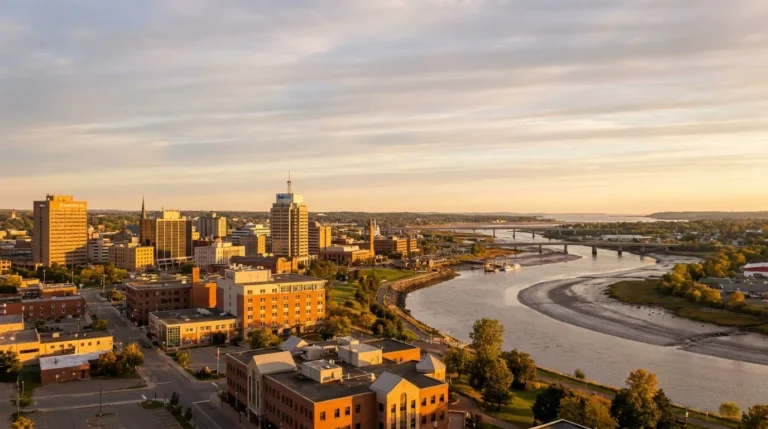
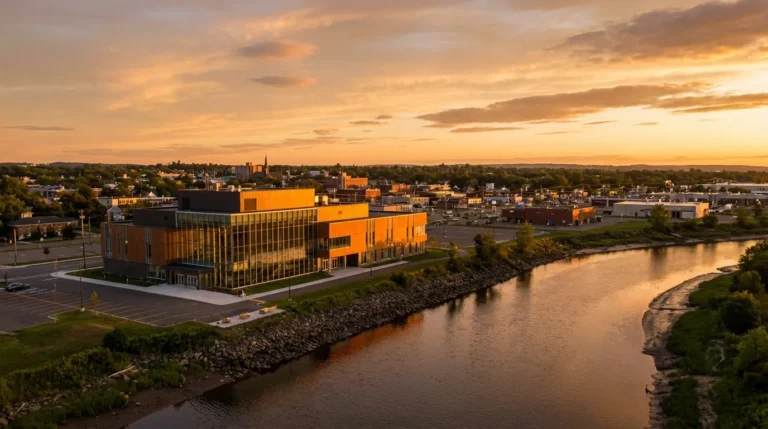
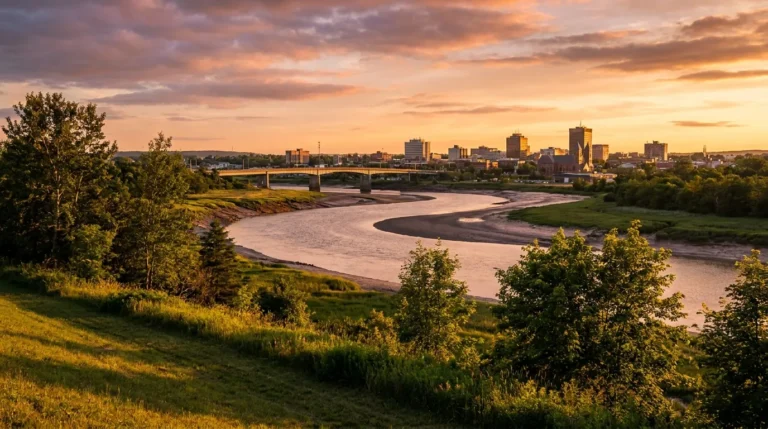
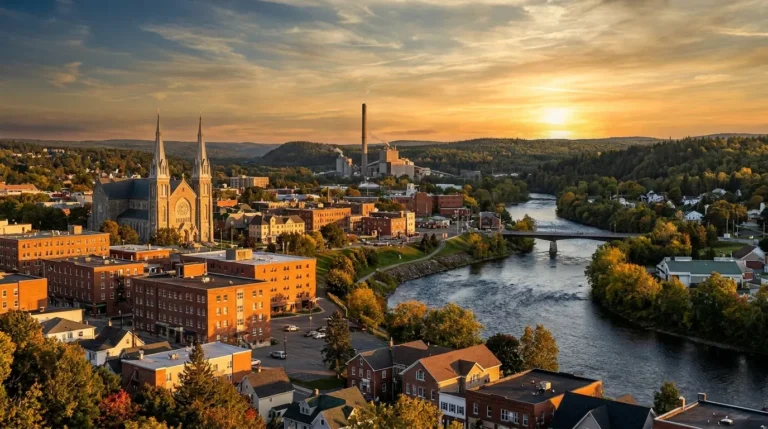
New Brunswick is the only Canadian province with English and French as official languages, creating a unique environment for immigrants who already arrive speaking one of the two. The province sits on the east coast, bordering Quebec and the US state of Maine, with a population of around 775,000 people spread across cities like Moncton, Saint John, and Fredericton.

The cost of living is among the lowest in Canada across inhabited provinces, especially when it comes to housing. This makes New Brunswick attractive for families who want space and quality of life without paying Ontario or British Columbia prices. The provincial government has specific immigration programs aimed at attracting skilled workers and entrepreneurs.

The economy is more modest than Alberta or Ontario, with the public sector, healthcare, forestry, and seafood as its main pillars. For those arriving with professional qualifications and a willingness to integrate into the local community, the province offers a smoother entry into Canada than the large metropolitan areas.

Population
775,610
Average monthly salary
40,000 USD/mo
46.5001°, -65.9988°

Featured places

Top 10 places in New Brunswick

The places most sought-after by immigrants in this region.

Acadian people, Anglophones, and a new wave of international immigrants

New Brunswick has deep Francophone Acadian roots and an established Anglophone community. In recent years, international immigrants have become a significant part of demographic growth.

About one-third of New Brunswick's population is Francophone, concentrated especially in the north and northeast of the province, including cities like Bathurst, Campbellton, and Caraquet. Acadian culture has a strong identity, with its own festivals, music, and gastronomy. Moncton is a genuinely bilingual city where English and French coexist in the same neighborhood.

The province has actively encouraged immigration in recent years to offset an aging population and youth emigration to other provinces. Communities of African, South Asian, and Latin American immigrants have grown in Moncton and Fredericton. There is also a modest presence of immigrants from various countries, many arriving through qualification or study programs.

The environment is generally welcoming to newcomers, with settlement services in English and French in the main cities. Knowing at least one of the two languages is essential for daily life and the local job market.

775,610
Population
46 yrs
Median age
11/km²
Density
$39,200
Median income
per year
Urban population56.7%
Foreign-born7.9%
Languages spoken
  • English
  • French
Main religions
  • Christianity (75%)
  • No religion (22%)
  • Islam (1%)
  • Hinduism (1%)
  • Buddhism (1%)

One of the most affordable costs of living among Canadian provinces

Cheap housing, reasonably priced food, and overall expenses well below Toronto or Vancouver standards make New Brunswick a financially attractive option.

New Brunswick stands out for its significantly lower housing costs compared to the larger provinces. Renting a two-bedroom apartment in Moncton or Fredericton costs a fraction of what it would in Toronto or Vancouver. Buying a home is also far more accessible, allowing middle-income families to achieve homeownership more quickly.

Food, transportation, and services broadly follow the Canadian norm but with some regional variations. The consumption tax is higher than in Alberta, since the province has HST (Harmonized Sales Tax). Energy and heating during winter can weigh on the budget, especially in older homes.

Salaries tend to be lower than in Ontario or Alberta, but the difference is offset by the lower cost of living. For those who secure remote work with salaries from another market, New Brunswick is a particularly advantageous option.

87Cost index (US = 100)13% below US average
CategorySingleCoupleFamily (2 + 2)
iHousing$1,142$1,410$1,813
iFood$269$537$974
iTransport$255$470$604
iHealthcare$54$107$188
iChildcare$1,175
iOther$363$604$806
Monthly total$2,083$3,128$5,560

Source: Statistics Canada (SHS 2022 + CPI 2024) · Estimates in USD, monthly.

Spacious and affordable housing, with a warming market in major cities

Large homes at affordable prices are the norm in New Brunswick, with Moncton and Fredericton leading demand for new units.

Moncton has been New Brunswick's fastest-growing city, with neighborhoods like Riverview and Dieppe (Francophone) highly sought after by families. The real estate market has heated up in recent years with the arrival of interprovincial and international immigrants, but prices still sit well below the national average.

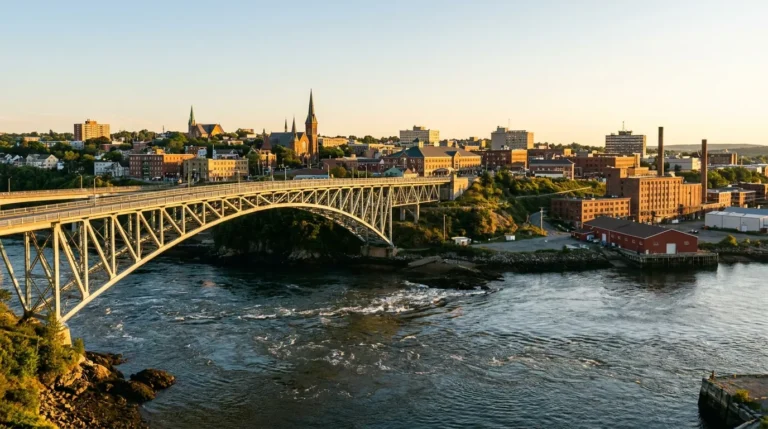
Fredericton, the capital, has a university atmosphere and well-preserved historic neighborhoods such as Uptown and the area near the University of New Brunswick. Saint John, the largest city by population, has a historic downtown in the process of revitalization, with cheaper properties and a growing creative community.

For immigrants arriving without a Canadian credit history, the start can be challenging. Many landlords require local references or an additional deposit. Platforms like Facebook Marketplace and Kijiji are widely used to find informal rentals upon arrival.

Purchase price (m²)
  • Center$1,900/m²
  • Outside$1,200/m²
3.6×
Price-to-income
6.5%
Mortgage rate (20y)
Recommended neighborhoods
  • Riverview (Moncton)
  • Dieppe (Moncton)
  • Uptown (Fredericton)
  • Silverwood (Fredericton)
  • North End (Saint John)
  • +2 more

Moderate job market with focus on healthcare, technology, and services

New Brunswick has unemployment above the national average, but niches such as healthcare, IT, construction, and the food industry have consistent demand for workers.

New Brunswick's job market is more limited than Alberta or Ontario, but certain sectors have consistent demand. Healthcare is the largest public employer, with hospitals and clinics in every city hiring nurses, technicians, and administrative professionals. The provincial government is also a major employer, especially in Fredericton.

The technology sector has grown in Moncton and Fredericton, with companies and some multinational subsidiaries established in the region. Remote work has opened new possibilities for those living in the province but working for companies in other centers.

The seafood processing, lumber, and paper industries employ a significant share of the population outside the cities. For immigrants with technical or university training, opportunities are greater in the cities than in rural areas. The New Brunswick Provincial Nominee Program (NBPNP) has specific streams for different professional profiles.

$40,000
Avg net salary
per month
$21,100
Minimum wage
per month
6.7%
Unemployment
62.0%
Labor force
Dominant sectors
  • Healthcare and social services
  • Government and public administration
  • Information technology
  • Construction
  • Seafood and aquaculture
  • +2 more
Major employers
  • Horizon Health Network
  • Vitalite Health Network
  • Government of New Brunswick
  • University of New Brunswick
  • Service New Brunswick
  • +2 more

Bilingual universities and a technical network adapted to the local market

New Brunswick has respected universities, including the bilingual Universite de Moncton, and technical colleges that train workers for the regional market.

The University of New Brunswick (UNB), in Fredericton, is one of Canada's oldest universities, with recognized programs in engineering, law, business administration, and computer science. It has a smaller campus in Saint John. The Universite de Moncton is the largest Francophone university outside Quebec and an important hub for the Acadian community.

Mount Allison University, in Sackville, is a liberal arts university with a solid reputation for undergraduate students. The New Brunswick Community College (NBCC), with campuses in the main cities, offers technical programs in healthcare, technology, business, and mechanics that are highly valued by the local market.

The availability of French-language education is a differentiating feature of the province, with French-language public schools available in various cities, which facilitates integration for Francophone immigrants with school-age children.

Literacy99.0%
Tertiary education53.5%
505
PISA score (avg)
$11,000
Private school
per year
Notable universities
  • University of New Brunswick (Fredericton and Saint John)
  • Universite de Moncton
  • Mount Allison University (Sackville)
  • St. Thomas University (Fredericton)
  • New Brunswick Community College (NBCC)

Two parallel health systems, one in English and one in French

Public healthcare is administered by two separate networks, Horizon (English) and Vitalite (French), with universal coverage for residents after a waiting period.

New Brunswick has a healthcare system divided into two language networks: Horizon Health Network serves mainly the Anglophone population, while Vitalite Health Network covers the Francophone regions. Both have hospitals and clinics in the main cities, and access is free for residents with the provincial health card, issued after three months of residency.

The shortage of family doctors is a serious problem in the province, especially outside the larger cities. Many residents turn to walk-in clinics for non-urgent care. The provincial government has actively encouraged the recruitment of doctors and nurses from other provinces and countries to address this gap.

For mental health, dental care, and medications, public coverage is limited. Assistance programs exist for low-income families, but most workers depend on private plans offered by employers to cover these services.

Healthcare index72.0 / 100
  • Life expectancyyears at birth
    80.5yrs
  • Doctors per 1kpracticing physicians
    2.4
  • Health spendper capita, per year
    $6,600
  • Public systemoverall quality rating
    Good

Peaceful province with low crime rates in major cities

New Brunswick is one of Canada's safest provinces, with medium-sized cities, cohesive communities, and low rates of violent crime.

New Brunswick is generally considered a safe province, with violent crime rates below the national average. The three main cities, Moncton, Fredericton, and Saint John, have well-integrated neighborhoods and an overall sense of calm that immigrant families value.

Saint John has downtown areas with a history of social problems related to poverty and substance use, but the situation is not comparable to that of larger urban centers. Moncton and Fredericton have more homogeneous and generally quieter environments.

For those arriving with children, the province offers a relatively calm environment for raising a family. Smaller interior communities are very peaceful, but can be socially isolating for newly arrived immigrants who are still building their network of contacts.

1.5
Homicides per 100k
per year
Safety index
56.0
Crime index
44.0
Safer neighborhoods
  • Riverview (Moncton)
  • Dieppe (Moncton)
  • Silverwood (Fredericton)
  • Rothesay (Saint John)
  • Quispamsis (Saint John)
  • Sackville
  • Bathurst
Areas to avoid
  • South End (Saint John) at night
  • Moncton downtown isolated areas
  • Rural roads in winter

Car essential outside cities, with limited public transportation

New Brunswick's cities have basic municipal bus services, but a car is essential for most travel, especially in the interior of the province.

Public transportation in New Brunswick is limited compared to the larger provinces. Moncton, Fredericton, and Saint John have municipal bus systems that cover the main neighborhoods, but frequencies are low and suburban coverage is uneven. For those who depend on public transportation, living close to the city center is almost mandatory.

A car is practically indispensable for those living outside central areas or needing to travel between cities. Provincial roads are well maintained for most of the year, but winter snow and ice require specific tires and experience driving in adverse conditions.

Greater Moncton Romeo LeBlanc International Airport (YQM) is the province's main air hub, with flights to Toronto, Montreal, and other Canadian cities. Saint John and Fredericton have regional airports with more limited connections. For international travel, the most common route is to connect through Montreal or Toronto.

22 min
Avg commute
36
Walkability
Airports
  • YQM — Greater Moncton Romeo LeBlanc International Airport
  • YSJ — Saint John Airport
  • YFC — Fredericton International Airport
  • International airport
  • Bike infrastructure

Four well-defined seasons: snowy winters and pleasant summers on the Atlantic coast

New Brunswick has a temperate continental climate, with warm and humid summers, colorful autumns, winters with abundant snowfall, and a late but welcome spring.

Winters in New Brunswick are cold and snowy, with temperatures below freezing from December through March. Snowstorms are frequent, especially in the north and interior of the province. Atlantic winds increase the wind chill in coastal regions, but also moderate some extreme temperature peaks compared to Canada's interior.

Spring gradually arrives from April onward, with flowers and the landscape renewing quickly. Summer is the most pleasant season: warm days with high temperatures in July and August, good relative humidity, and precipitation distributed throughout the months. It is the season of festivals, fresh seafood, and excursions to the Bay of Fundy.

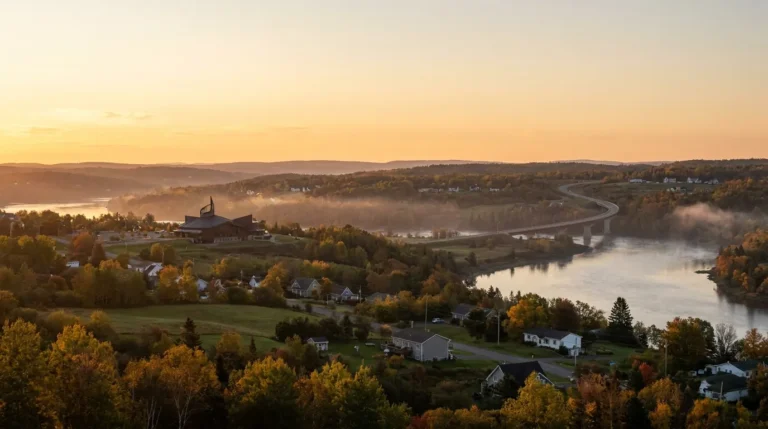
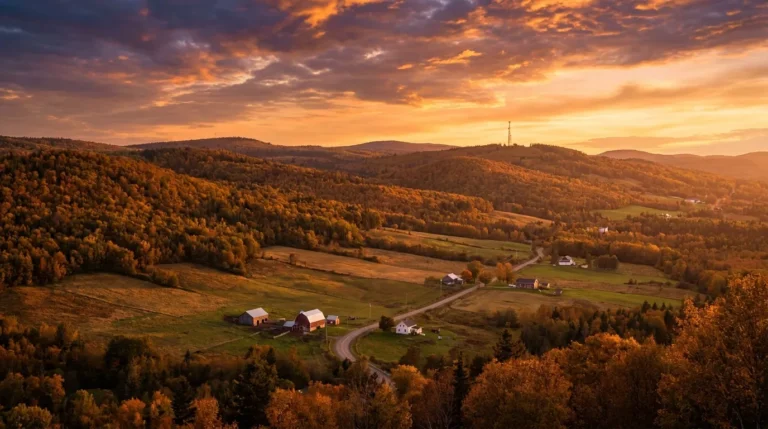
Autumn in New Brunswick is spectacular, with foliage turning red, orange, and yellow from mid-September through October. Rainfall increases in autumn and early winter, and the transition to cold happens quite abruptly in November. Those arriving from warmer climates need time to adapt to the climatic cycle, especially to the long winter.

Sunny days / year195 days
Avg high (°F)
  • 27°J
  • 27°F
  • 36°M
  • 48°A
  • 61°M
  • 71°J
  • 77°J
  • 76°A
  • 68°S
  • 58°O
  • 42°N
  • 34°D
Avg low (°F)
  • 10°J
  • 10°F
  • 20°M
  • 30°A
  • 40°M
  • 53°J
  • 60°J
  • 59°A
  • 51°S
  • 43°O
  • 28°N
  • 21°D
Rainfall (")
  • 5"J
  • 4"F
  • 3"M
  • 4"A
  • 4"M
  • 4"J
  • 5"J
  • 4"A
  • 5"S
  • 4"O
  • 4"N
  • 5"D

Vibrant Acadian culture, summer festivals, and world-class seafood

New Brunswick blends French Acadian heritage with Atlantic Anglophone tradition, colorful summer festivals, and some of the world's finest seafood.

Acadian culture is one of New Brunswick's most distinctive elements. The Fete nationale des Acadiens, celebrated on August 15, is an event of strong identity with music, dances, food, and colors that fill the streets in Francophone cities. The Festival Acadien de Caraquet, held every August, is considered one of the largest festivals of Francophone culture in North America.

The province's gastronomy is dominated by the seafood of the Bay of Fundy and the Gulf of St. Lawrence: lobster, mussels, scallops, and the local icon, fiddleheads. The tides of the Bay of Fundy are the highest in the world and a tourist attraction that impresses first-time visitors.

For newcomers, cultural life may seem more understated than in large metropolises, but Moncton has an active music scene and neighborhoods with varied restaurants. Groups of Latin American immigrants organize gatherings and events that help newcomers integrate socially.

70
Major museums
Notable dishes
  • Lobster roll
  • Rappie pie (Acadian pie)
  • Dulse (dried Atlantic seaweed)
  • Fiddleheads (sauteed fern shoots)
  • Ployes (Acadian buckwheat crepe)
  • +1 more
Annual events
  • Festival Acadien de Caraquet (August)
  • Fete nationale des Acadiens (August 15)
  • Moncton Jazz and Blues Festival (July)
  • Harvest Jazz and Blues Festival (Fredericton, September)
  • Buskers on the Boardwalk (Saint John, August)
  • +1 more
UNESCO sites
  • Joggins Fossil Cliffs (shared with Nova Scotia)
  • Fundy Biosphere Reserve

Seafood, lumber, healthcare, and technology as pillars of the economy

New Brunswick's economy is diversified across the primary sector, healthcare, government, and an emerging IT sector in the main cities.

The primary sector still carries significant weight in the provincial economy: lobster, scallop, and salmon fishing and aquaculture place New Brunswick among Canada's largest seafood producers. The lumber and paper industry, though contracting in recent decades, remains present in interior cities.

Healthcare and public administration are the province's largest formal employers, with hospitals, clinics, and the provincial government concentrating a significant share of the workforce. Fredericton has positioned itself as a technology hub, with the Opportunities NB IT cluster and companies like Innovatia and Introhive operating in the city.

Nature tourism is beginning to gain ground as a strategic sector, with the Bay of Fundy tides, Fundy National Park, and the Fundy Trail attracting visitors from around the world. The provincial government invests in infrastructure to capitalize on this potential, especially in outdoor tourism experiences.

  • GDPgross domestic product
    $32.0B
  • GDP per capitaoutput per resident
    $41,300
  • GDP growth (yr)economy expanding
    +1.2%
Top sectors
  • Seafood and aquaculture
  • Healthcare and social services
  • Government and public administration
  • Information technology
  • Lumber industry
  • +2 more

Immigrant communities in New Brunswick

About 50,000 immigrants live in the province, 6% of the population, with recent arrivals accelerated by the Provincial Nominee Program.

New Brunswick is home to roughly 50,000 immigrants, around 6% of the population, a modest number but one that has grown sharply since 2015. Most settle in Moncton, Saint John, and Fredericton. Filipinos and Indians form the two central groups, drawn by the Provincial Nominee Program and the Atlantic Immigration Program, focused on healthcare, manufacturing, and transport. There is also a meaningful Syrian and Congolese community from the refugee wave after 2016, alongside a historical francophone population that makes integration easier for immigrants from francophone Africa, especially the DRC, Burundi, and Morocco, than in other Atlantic provinces.

The support network is compact but effective. The Multicultural Association of Fredericton, the Saint John Newcomers Centre, and Magma in Moncton help with English and French classes, job search, and housing. The provincial government's Population Growth Division coordinates the PNP. There are no career consulates in the province, and residents turn to Halifax, Montréal, or Toronto for consular services. Mosques in Fredericton and Moncton, Filipino parishes, and Acadian cultural centres anchor community life.

50,000
Foreign-born residents
estimated
Top countries of origin
  • Philippines
  • India
  • Syria
  • Congo (DRC)
  • United Kingdom
Main immigrant hubs
  • Moncton
  • Saint John
  • Fredericton
  • Dieppe
Foreign consulates
  • No career consulates in the province; services available via Halifax, Montreal and Toronto
Community organizations
  • Multicultural Association of Fredericton
  • Saint John Newcomers Centre
  • Magma (Greater Moncton)

Latest posts

Posts about Canada

Coverage and updates related to this destination.

Showing content from Canada, as there is no specific data for New Brunswick yet.