Visto n' Visa
Blog
Notícias e artigos
Destinations
Careers
Immigrants

Want to live and work in Nova Scotia?

Personalized immigration plan with eligible visas, costs, and next steps for your goal!

If you are not eligible, you will know exactly why and what to do to improve your approval chances.

Save up to 12 hours in meetings

No pointless assessments.

Save up to 90%

Save money on vague or unfocused consultations

Avoid Fraud and Mistakes

One mistake can cost you your visa

Total Impartiality

Zero commercial bias

Decide with peace of mind

No toxic urgency

Fast and Accurate

Answers in minutes, no guesswork

All about Nova Scotia

Atlantic coast, accessible costs and real opportunities for immigrants in eastern Canada

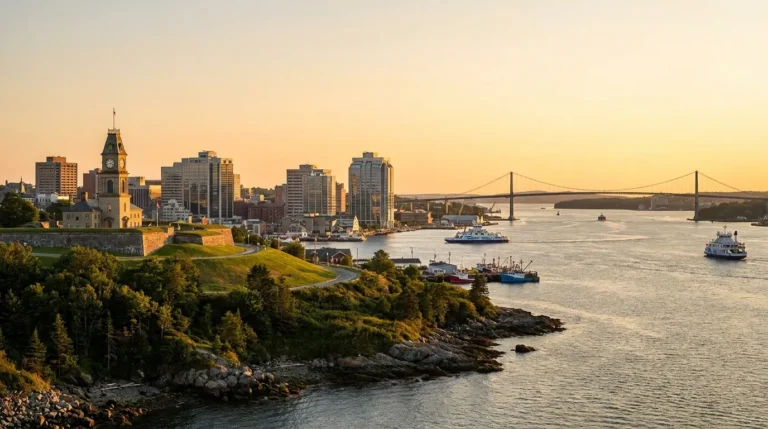
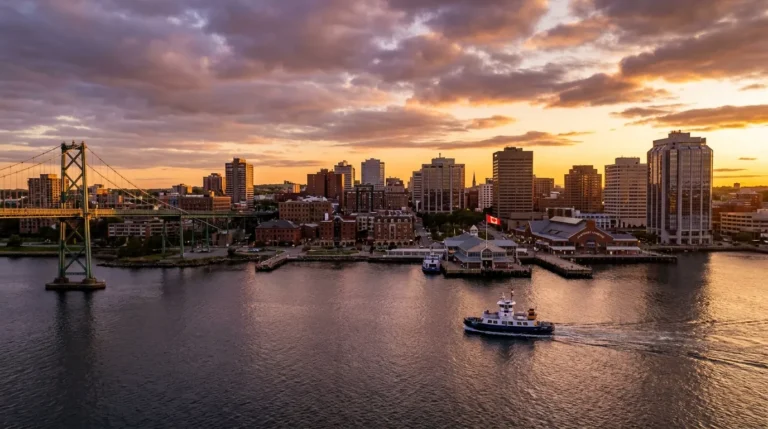
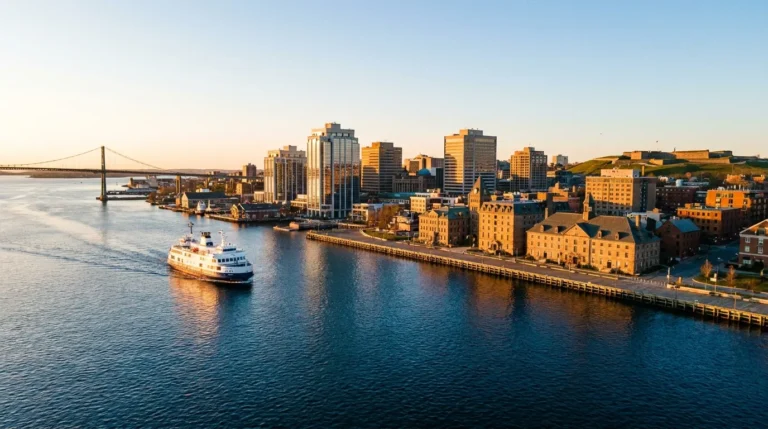
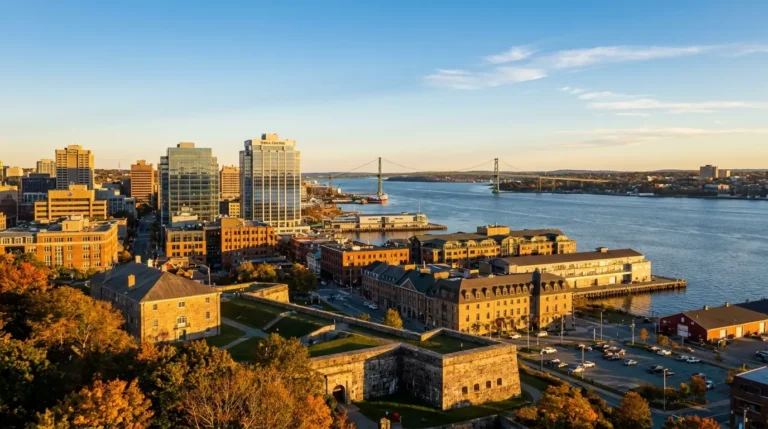
Nova Scotia sits in eastern Canada, in the region known as Atlantic Canada, and is surrounded by the Atlantic Ocean along almost its entire perimeter. The capital and largest city is Halifax, a vibrant urban centre with universities, a robust public sector, an active port and a culturally rich scene that is surprisingly lively for a city of around 400,000 people.

Nova Scotia has been attracting attention as a more accessible gateway to Canada: a lower cost of living, a relatively straightforward selection process through the Nova Scotia Nominee Program (NSNP) for certain categories, and a growing immigrant community. Demand for professionals in healthcare, technology, construction and hospitality is real and well documented.

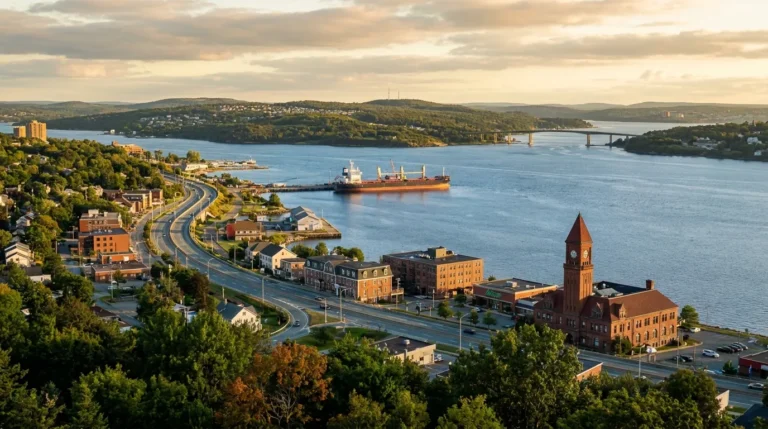
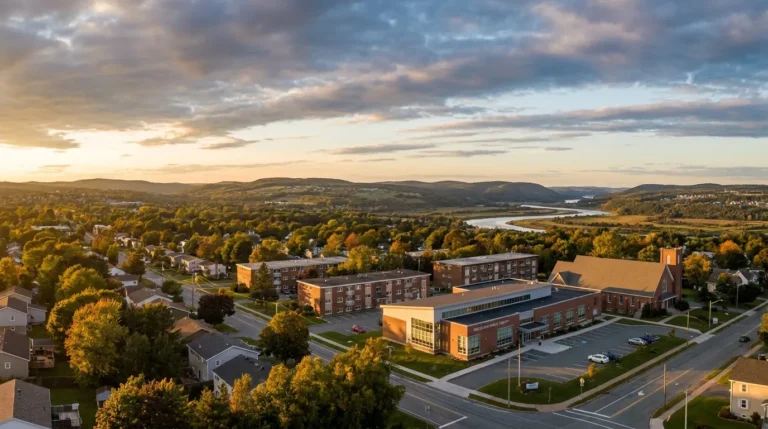
Life in Nova Scotia moves at a different pace than Toronto or Vancouver. The atmosphere is quieter, nature is never far away, and people tend to be welcoming to newcomers. Those who value quality of life without the stress of major metropolitan areas will find Nova Scotia a solid and increasingly well-structured alternative for immigrants.

Population
969,383
Average monthly salary
41,500 USD/mo
45.0002°, -62.9987°

Featured places

Top 10 places in Nova Scotia

The places most sought-after by immigrants in this region.

Rapidly growing immigrant community in Nova Scotia

With fewer than 1 million residents, Nova Scotia has been relying on immigration to offset population ageing, and the immigrant community in Halifax has grown noticeably in recent years.

Nova Scotia has a population of just under 1 million, historically composed of descendants of Scottish, Irish and Acadian French settlers and African Nova Scotians, whose communities have been established for centuries in places such as Africville and Preston. The provincial government has invested in policies to attract and retain immigrants to offset population ageing and the departure of young people to other provinces.

In recent years, Halifax has become an increasingly popular destination for immigrants from Portuguese-speaking countries, South America and Asia. The immigrant community is active and has support networks operating through social media groups and local churches. English is the dominant language throughout the province, with Acadian French present in some rural communities.

Nova Scotia has a significant Acadian population in the southwest and north of the province, with towns such as Yarmouth and Cheticamp preserving French as a community language. For immigrants, proficiency in English is essential for professional and social integration, but the multicultural environment in Halifax has created an increasingly welcoming atmosphere for diversity.

969,383
Population
44 yrs
Median age
18/km²
Density
$40,000
Median income
per year
Urban population58.0%
Foreign-born9.3%
Languages spoken
  • English
  • Acadian French
  • Arabic
  • Tagalog
  • Spanish
  • +1 more
Main religions
  • Christianity (66%)
  • No religion (32%)
  • Islam (1%)
  • Hinduism (1%)

Cost of living well below Toronto and Vancouver, with accessible rents in Halifax

Nova Scotia has one of the lowest costs of living in Canada, making it attractive for immigrants seeking financial stability from the very first months.

Compared to Canada's large provinces, Nova Scotia offers a significantly lower cost of living. A one-bedroom apartment in Halifax can cost between CAD 1,400 and CAD 2,000 per month, considerably less than in Toronto or Vancouver. Food, services and leisure follow this more affordable average, allowing newcomers to manage their finances with greater ease.

The main challenge in recent years has been growing pressure on Halifax's housing market, driven by population growth fuelled by immigration and arrivals from other provinces. The rental market has become more competitive and prices have risen, though they remain below those of Canada's major metropolitan areas. Smaller cities such as Truro, New Glasgow and Bridgewater have even more accessible prices.

Nova Scotia's government charges a Harmonized Sales Tax (HST) of 15 percent on most goods and services, which is relevant for monthly budgeting. Public transit in Halifax is operated by Halifax Transit at reasonable fares. For those living outside Halifax, a personal vehicle is practically indispensable, and vehicle insurance costs in the province are lower than in British Columbia or Ontario.

93Cost index (US = 100)7% below US average
CategorySingleCoupleFamily (2 + 2)
iHousing$1,216$1,502$1,932
iFood$286$572$1,037
iTransport$272$501$644
iHealthcare$57$114$200
iChildcare$1,252
iOther$386$644$858
Monthly total$2,217$3,333$5,923

Source: Statistics Canada (SHS 2022 + CPI 2024) · Estimates in USD, monthly.

Accessible housing market in Halifax with varied options for immigrants

Nova Scotia has property and rental prices below the national average, though market pressure in Halifax has been rising with increasing demand in recent years.

Halifax is Nova Scotia's main housing market and offers a variety of options: condominium apartments, semi-detached houses and detached homes in quiet residential neighbourhoods. Areas such as the North End, South End and West End of Halifax are popular among young professionals and students, with good access to shops, restaurants and public transit. Downtown Halifax has luxury apartments and studios close to the waterfront and the business district.

For families seeking more space, Halifax suburbs such as Clayton Park, Dartmouth and Bedford offer houses with yards at more accessible prices than central neighbourhoods. Dartmouth, on the other side of the harbour, has gained popularity in recent years for its lower property prices and quick access to downtown Halifax by ferry.

In smaller cities across the province such as Truro, Kentville and New Glasgow, rental and purchase prices are noticeably lower. Those with remote work flexibility will find a high quality of life in these cities at reduced costs. The rental process in Nova Scotia requires a credit check and references, and newcomers without a Canadian credit history may need to offer additional months of deposit.

Purchase price (m²)
  • Center$3,500/m²
  • Outside$1,900/m²
5.5×
Price-to-income
6.5%
Mortgage rate (20y)
Recommended neighborhoods
  • North End Halifax
  • South End Halifax
  • Dartmouth
  • Clayton Park
  • Bedford
  • +3 more

Healthcare, technology and the public sector lead employment opportunities in Halifax

Nova Scotia has genuine demand for professionals in healthcare, information technology, construction and hospitality, with the provincial government as one of the largest employers.

Halifax concentrates the largest share of formal employment opportunities in Nova Scotia. The federal and provincial public sector is one of the biggest employers, with facilities from the Royal Canadian Navy, National Defence and various government agencies. Hospitals such as the QEII Health Sciences Centre and the IWK Health Centre employ thousands of health professionals, and there is a documented shortage of nurses, family physicians and health technicians.

The technology sector has been growing in Halifax with companies such as Salesforce, IBM, Innodata and various local startups. The innovation ecosystem is smaller than in Toronto or Vancouver but is expanding and has been hiring software engineers, data analysts and cybersecurity professionals. Dalhousie University and NSCC train local technical talent, but demand exceeds supply.

Commercial fishing, aquaculture and coastal tourism remain pillars of the economy outside Halifax. Cities such as Yarmouth, Antigonish and Amherst have smaller labour markets but offer specific opportunities in food production, logistics and local services. The NSNP has specific streams for workers in priority areas, facilitating immigration for those who already have a job offer.

$41,500
Avg net salary
per month
$22,100
Minimum wage
per month
6.3%
Unemployment
62.5%
Labor force
Dominant sectors
  • public healthcare
  • information technology
  • federal and provincial public sector
  • fishing and aquaculture
  • tourism and hospitality
  • +1 more
Major employers
  • Nova Scotia Health
  • Department of National Defence
  • Dalhousie University
  • IWK Health Centre
  • Sobeys (Empire Company)
  • +3 more

Dalhousie and a network of established universities make Nova Scotia an Atlantic university hub

Nova Scotia has an impressive concentration of universities for its population size, with Dalhousie in Halifax leading the way and NSCC as the technical training reference.

Nova Scotia has more universities per capita than any other Canadian province, reflecting a long tradition of investment in higher education. Dalhousie University in Halifax is the largest and most recognized, with a strong reputation in medicine, law, engineering, ocean sciences and management. It has well-established graduate programs and attracts international students from around the world.

Saint Mary's University and Mount Saint Vincent University, also in Halifax, are solid options in business, social sciences and education. Acadia University in Wolfville and Cape Breton University in Sydney have more focused profiles in sciences, arts and management, with smaller campuses and a more integrated environment. Universite Sainte-Anne in Pointe-de-l'Eglise is the only Francophone university in Nova Scotia.

Nova Scotia Community College (NSCC) is the reference for technical and professional training, with programs in healthcare, IT, construction, management and tourism. Its diplomas are well regarded in the provincial labour market and cost less than university programs. For children, the public primary and secondary education system is free and includes support for students with English as a second language.

Literacy99.0%
Tertiary education58.0%
510
PISA score (avg)
$12,500
Private school
per year
Notable universities
  • Dalhousie University
  • Saint Mary's University
  • Nova Scotia Community College (NSCC)
  • Acadia University
  • Cape Breton University
  • Mount Saint Vincent University

Functional public healthcare system in Halifax, with challenges in rural areas

Nova Scotia has public health coverage for all residents, but faces a shortage of family doctors, especially outside Halifax.

Nova Scotia's healthcare system is administered by Nova Scotia Health, which operates all the province's public hospitals and clinics. Permanent residents are entitled to universal coverage upon registering with the provincial health plan, with access to medical consultations, tests and hospital admissions at no direct cost. The QEII Health Sciences Centre in Halifax is the main referral hospital for complex and specialized procedures.

The main bottleneck in Nova Scotia's healthcare system is the shortage of family doctors. A significant share of residents in the province, including in Halifax, do not have a family doctor and depend on walk-in clinics for primary care. The provincial government has implemented measures to attract physicians to the region, including financial incentives and programs for recognizing foreign credentials.

In rural areas, access to specialists and mental health services can be limited, with long wait times. Telemedicine has been expanding to reduce these gaps, especially since the pandemic. Newly arrived immigrants needing urgent medical attention can use the hospital emergency system while they complete registration with the provincial plan.

Healthcare index73.0 / 100
  • Life expectancyyears at birth
    80.3yrs
  • Doctors per 1kpracticing physicians
    2.5
  • Health spendper capita, per year
    $6,900
  • Public systemoverall quality rating
    Good

Nova Scotia is one of Canada's safest provinces

Nova Scotia has low rates of violence and is considered one of the country's most peaceful places to live, with Halifax being a safe capital for families.

Nova Scotia consistently ranks among the Canadian provinces with the lowest rates of violent crime. Halifax, despite being the largest city, maintains a high sense of safety across most neighbourhoods. The general atmosphere is calm, and it is common to see people walking at night, using public transit and frequenting public spaces without excessive concern.

Like any city, Halifax has areas that require more attention, particularly in some parts of downtown and in neighbourhoods with higher concentrations of residents in vulnerable situations. However, violent crimes are rare, and the most common offences involve theft and break-ins rather than physical confrontation. Local police, including Halifax Regional Police and the RCMP, are well present and accessible.

Smaller cities and rural areas of Nova Scotia have even lower crime rates. Communities such as Lunenburg, Wolfville, Annapolis Royal and Chester are known for a complete sense of safety and a strong community lifestyle. For families with children, Nova Scotia is frequently cited as one of the best places in Canada to raise a family with quality of life and peace of mind.

2.0
Homicides per 100k
per year
Safety index
54.0
Crime index
46.0
Safer neighborhoods
  • South End Halifax
  • Dartmouth
  • Wolfville
  • Lunenburg
  • New Glasgow
  • Antigonish
  • Truro
  • Bridgewater
Areas to avoid
  • Spryfield (Halifax) at night
  • Dartmouth downtown isolated areas
  • Northern Halifax outskirts

Reasonable public transit in Halifax, a car essential outside the capital

Halifax has a bus and ferry system operated by Halifax Transit, but most of Nova Scotia requires a personal vehicle for independent mobility.

In Halifax, public transit is operated by Halifax Transit and includes bus routes covering the city and suburbs, along with the ferry service that crosses the harbour between Halifax and Dartmouth. The ferry is heavily used by Dartmouth residents who work in downtown Halifax and is one of the most pleasant ways to cross the city. The bus network covers most residential areas, though frequency can be lower on weekends and in outlying neighbourhoods.

Outside Halifax, public transit is practically non-existent across much of Nova Scotia. Cities such as Truro, New Glasgow, Yarmouth and Sydney have limited local bus routes, and independent mobility relies almost entirely on a personal vehicle. Provincial highways are well maintained, but winter weather can make some roads difficult on snowy days.

Halifax Stanfield International Airport (YHZ) is the main hub for Atlantic Canada, with direct flights to various destinations in Canada, the United States and Europe. For travel between Nova Scotia cities, the only mode of transport beyond a private car is the Maritime Bus intercity service. Obtaining a Nova Scotia driver's licence is mandatory after a period of residence and can be done with a driving record from the country of origin.

24 min
Avg commute
44
Walkability
Airports
  • YHZ — Halifax Stanfield International Airport
  • YSY — Sydney/J.A. Douglas McCurdy Airport
  • YYG — Charlottetown Airport (PEI, nearby)
  • International airport
  • Bike infrastructure

Oceanic climate with snowy winters and pleasant summers in Nova Scotia

Nova Scotia has four well-defined seasons, with cold and rainy winters, pleasant summers and spring and autumn transitions marked by rain and Atlantic winds.

Nova Scotia has a humid oceanic climate, strongly influenced by the Atlantic. Winter runs from December to March, with temperatures below freezing and frequent snowfall, especially in the interior and Cape Breton. The combination of cold and humidity can make winter feel more severe than the numbers suggest, and proper clothing is essential for those coming from warmer climates.

Spring arrives gradually from April, with still-cold temperatures and considerable rain. July and August are the most pleasant months, with moderate temperatures, long days and lower humidity. Halifax rarely experiences intense summer heat, which is appreciated by those who prefer milder climates. Autumn is particularly beautiful, with tree foliage covering the landscape in shades of orange and red.

Rain is a constant throughout much of the year, with precipitation spread across all months including summer. Snowstorms known as nor'easters can deliver significant accumulation within a few hours, and it is common for schools and offices to close temporarily on those days. For those coming from warmer regions, adapting to winter is one of the greatest challenges, but the community support available in Halifax makes this transition easier.

Sunny days / year190 days
Avg high (°F)
  • 34°J
  • 33°F
  • 40°M
  • 50°A
  • 58°M
  • 69°J
  • 75°J
  • 75°A
  • 68°S
  • 59°O
  • 47°N
  • 39°D
Avg low (°F)
  • 19°J
  • 16°F
  • 24°M
  • 34°A
  • 40°M
  • 52°J
  • 60°J
  • 60°A
  • 54°S
  • 45°O
  • 34°N
  • 27°D
Rainfall (")
  • 6"J
  • 5"F
  • 4"M
  • 5"A
  • 4"M
  • 5"J
  • 5"J
  • 5"A
  • 5"S
  • 5"O
  • 6"N
  • 7"D

Scottish heritage, Acadian tradition and an active cultural scene in Halifax

Nova Scotia has a unique cultural identity, marked by its Celtic heritage, maritime tradition and a diverse cultural life centred on Halifax.

Nova Scotia's cultural identity is deeply connected to the sea and its Scottish, Irish and Acadian roots. Halifax is a university city with an intense cultural life: jazz and folk festivals, and the Celtic Colours International Festival, held annually in Cape Breton, draw people from across the country. The live music and folk scene is vibrant, especially in the streets of historic downtown Halifax.

Local cuisine is strongly influenced by the sea. Fresh seafood such as lobster, mussels, scallops and crab are abundant and more affordable here than in other provinces. The lobster roll, seafood chowder and the donair, a sandwich of Arab origin that has become a Halifax culinary institution, are central to local food culture. Markets such as the Seaport Farmers' Market are social gathering points throughout the year.

Acadian culture, with its language, music and culinary traditions, remains alive especially in the southwest and north of Nova Scotia. The African Nova Scotian communities, with roots going back to the eighteenth century, also have a rich and preserved culture in historic localities. For immigrants, Nova Scotia is a place where diversity is celebrated and where it is possible to maintain connections with one's own heritage while integrating into local life.

95
Major museums
Notable dishes
  • Nova Scotia lobster
  • Halifax-style donair
  • seafood chowder
  • lobster roll
  • dulse (dried seaweed)
  • +1 more
Annual events
  • Celtic Colours International Festival
  • Halifax Jazz Festival
  • Nova Scotia Lobster Crawl
  • Royal Nova Scotia International Tattoo
  • TD Halifax Jazz Festival
  • +1 more
UNESCO sites
  • Old Town Lunenburg
  • Landscape of Grand-Pre
  • Joggins Fossil Cliffs

Fishing, defence, tourism and technology sustain Nova Scotia's economy

Nova Scotia's economy is diversified, with a strong base in fishing and seafood, a defence sector in Halifax, coastal tourism and a growing technology sector.

Fishing and aquaculture are historic and still relevant sectors in Nova Scotia, especially in coastal communities. Nova Scotia lobster is exported to international markets and is one of the province's most valuable commodities. Oysters, mussels and scallops also drive a growing aquaculture sector. Seafood processing plants generate employment in numerous communities outside Halifax.

Halifax is one of Canada's main naval bases, and the defence sector carries significant weight in the local economy. Irving Shipbuilding is one of the region's largest industrial employers and holds long-term federal contracts for the construction of military vessels. The federal and provincial public sector is also a major employer, with Canadian government agencies represented in Halifax.

Tourism is increasingly important to the provincial economy, with highlights including cruise ship tourism in Halifax, the Cabot Trail in Cape Breton and the wine route in the Annapolis Valley. The technology sector, though smaller than in other provinces, has been growing as national and international companies open offices in Halifax, attracted by lower operating costs and the talent pipeline from local universities.

  • GDPgross domestic product
    $38.0B
  • GDP per capitaoutput per resident
    $39,200
  • GDP growth (yr)economy expanding
    +1.6%
Top sectors
  • fishing and aquaculture
  • defence and shipbuilding
  • federal public sector
  • information technology
  • coastal tourism
  • +3 more

Immigrant communities in Nova Scotia

About 85,000 immigrants live in the province, 9% of the population, with Halifax home to Canada's oldest Arab community.

Nova Scotia is home to roughly 85,000 immigrants, around 9% of the population, with a clear concentration in Halifax and recent growth in Sydney. Syrians and Lebanese form the oldest Arab community in Canada, with original arrivals dating back to the late 19th century, surnames established in Halifax commerce, and two larger more recent waves in 1990 (Lebanese civil war) and from 2015 onward (Syrian refugees). Indians and Chinese grew sharply in the 2010s through Dalhousie University, Saint Mary's, and the Atlantic Immigration Program. Filipinos hold a consolidated presence in healthcare, and there is an expanding African community, especially Nigerians and Ghanaians.

The Immigrant Services Association of Nova Scotia is the provincial reference, with offices in Halifax and Sydney, English classes, refugee support, credential recognition, and employment mentoring. The YMCA Centre for Immigrant Programs complements that work. The Honorary Consulate of France in Halifax and several smaller honorary consulates handle local demand; career consular services remain in Montréal and Toronto. Mosques in Halifax, Filipino parishes, and small gurdwaras anchor religious life.

85,000
Foreign-born residents
estimated
Top countries of origin
  • India
  • China
  • Syria
  • Philippines
  • United Kingdom
Main immigrant hubs
  • Halifax
  • Dartmouth
  • Sydney
  • Truro
Foreign consulates
  • French Honorary Consulate in Halifax
  • United Kingdom Honorary Consulate in Halifax
  • German Honorary Consulate in Halifax
Community organizations
  • Immigrant Services Association of Nova Scotia (ISANS)
  • YMCA Centre for Immigrant Programs

Latest posts

Posts about Canada

Coverage and updates related to this destination.

Showing content from Canada, as there is no specific data for Nova Scotia yet.