Visto n' Visa
Blog
Notícias e artigos
Destinations
Careers
Immigrants

Want to live and work in Manitoba?

Personalized immigration plan with eligible visas, costs, and next steps for your goal!

If you are not eligible, you will know exactly why and what to do to improve your approval chances.

Save up to 12 hours in meetings

No pointless assessments.

Save up to 90%

Save money on vague or unfocused consultations

Avoid Fraud and Mistakes

One mistake can cost you your visa

Total Impartiality

Zero commercial bias

Decide with peace of mind

No toxic urgency

Fast and Accurate

Answers in minutes, no guesswork

Everything about Manitoba

An affordable gateway to Canada with a strong provincial immigration program

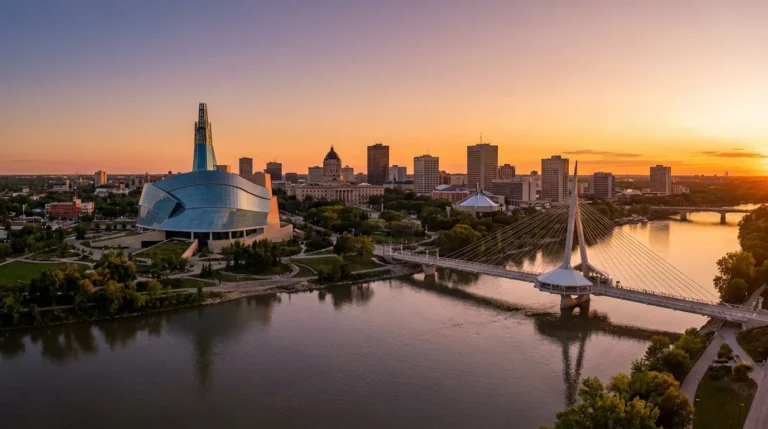
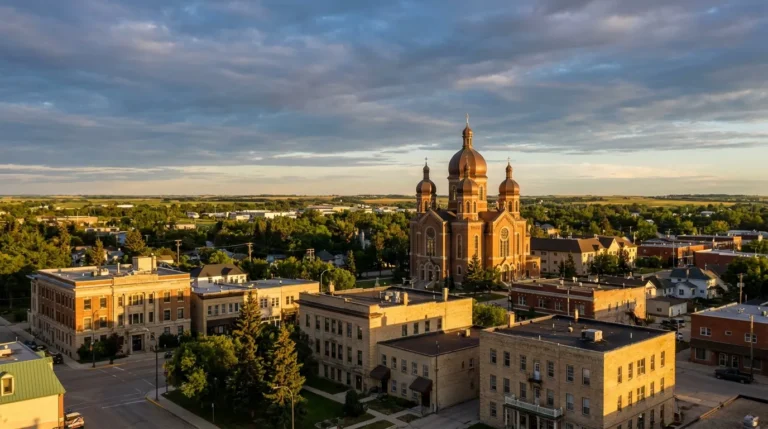
Manitoba sits at the geographic center of Canada and has Winnipeg as its urban core, where more than 60% of the provincial population lives. The city has historically been a crossroads of trade routes and, today, of immigration flows. With just over 1.3 million residents across the entire province, Manitoba moves at a different pace than the large eastern metropolises.

The Manitoba Provincial Nominee Program (MPNP) is one of the most active in the country, with specific pathways for skilled workers, healthcare professionals, students who have already studied in Manitoba, and people with existing connections in the province. This makes Manitoba a meaningful entry point for permanent immigration to Canada.

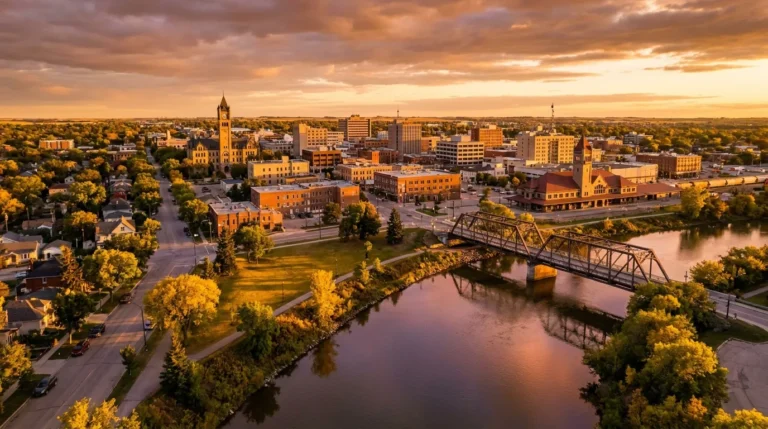
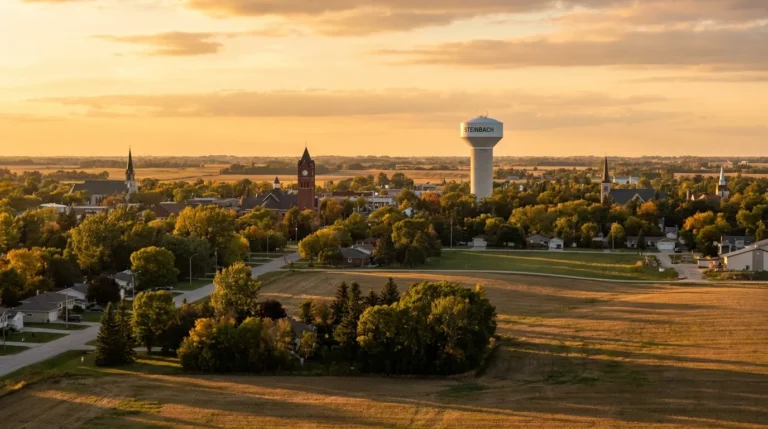
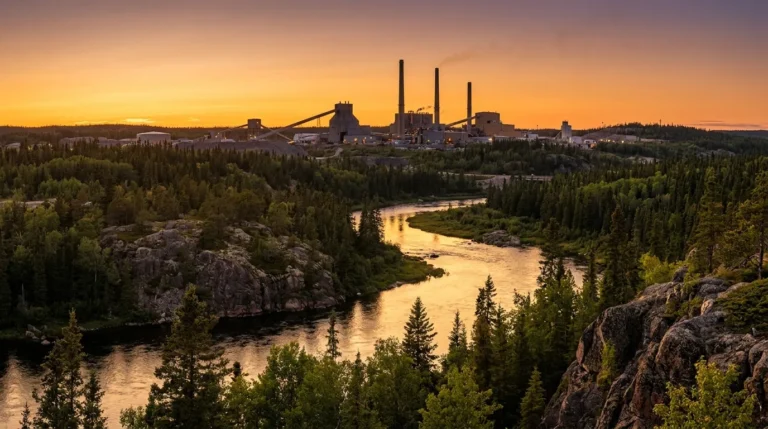
Beyond Winnipeg, cities such as Brandon, Thompson, and Steinbach have their own labor markets and established immigrant communities. Agriculture, manufacturing, and the public sector are important economic pillars outside the capital. For those seeking a quieter start in Canada, Manitoba offers stability with a cost of living well below Toronto or Vancouver.

Population
1,342,153
Average monthly salary
42,800 USD/mo
55.0002°, -97.0005°

Featured places

Top 10 places in Manitoba

The places most sought-after by immigrants in this region.

Growing diversity: Filipinos, Indigenous peoples, Nigerians, and Europeans living side by side in Winnipeg

Manitoba has one of the highest proportions of Indigenous population among Canadian provinces and receives significant flows of Filipino, Nigerian, and Caribbean immigrants.

Winnipeg has one of the largest urban Indigenous populations in Canada, with a strong presence of Metis, Ojibwe, and Cree peoples. This reality shapes aspects of local culture and is important for any immigrant to understand when settling in the city. Recognizing and respecting this identity is part of everyday life.

The Filipino community is the largest group of recent immigrants in Manitoba, with a strong presence in Winnipeg and in smaller towns. There are churches, community associations, restaurants, and supermarkets carrying Asian products throughout the city. The Nigerian community and those from sub-Saharan Africa have also grown significantly in the past decade, especially through refugee programs and skilled immigration.

Communities of German, Ukrainian, and Polish origin have existed for generations in Manitoba and have left visible cultural marks in local cuisine and festivals. Brazilians and Portuguese speakers form a smaller but growing community. English is the dominant language; French has a historical presence in Saint-Boniface, a Winnipeg neighborhood with a strong Franco-Manitoban identity.

1,342,153
Population
38 yrs
Median age
2/km²
Density
$41,500
Median income
per year
Urban population73.2%
Foreign-born20.4%
Languages spoken
  • English
  • French
  • Tagalog
  • German
  • Ukrainian
  • +3 more
Main religions
  • Christianity (60%)
  • No religion (29%)
  • Islam (2%)
  • Hinduism (2%)
  • Sikhism (1%)

Affordable cost of living, especially for housing and food

Manitoba is one of Canada's most affordable provinces in terms of cost of living, with housing and food well below prices in Toronto or Vancouver.

Renting an apartment in Winnipeg is considerably cheaper than in the major cities of eastern or western Canada. Newly arrived immigrants can find one- or two-bedroom apartments in safe areas for amounts that fit within a mid-level working salary. This provides more room for savings and adjustment in the first months.

Grocery costs and everyday services are closer to the national average, but the savings on housing compensate. Winnipeg Transit provides a functional bus network for getting around the city, though with lower frequency than systems in larger cities. For those living outside the capital, a car is essential.

The provincial sales tax in Manitoba is 12% (federal GST plus provincial PST), which affects purchases of goods and services. Even so, the overall cost of living in Manitoba remains one of the province's main advantages for immigrants building a financial foundation in Canada.

89Cost index (US = 100)11% below US average
CategorySingleCoupleFamily (2 + 2)
iHousing$1,167$1,441$1,853
iFood$274$549$995
iTransport$261$480$618
iHealthcare$55$110$192
iChildcare$1,201
iOther$371$618$823
Monthly total$2,128$3,198$5,682

Source: Statistics Canada (SHS 2022 + CPI 2024) · Estimates in USD, monthly.

Affordable housing in Winnipeg with a stable market and good availability of homes

Winnipeg has a real estate market with prices well below other Canadian provincial capitals, with good availability of homes to rent and buy.

In Winnipeg, it is possible to rent entire houses or spacious apartments for amounts that in Toronto would barely cover a single room. Neighborhoods such as St. Vital, Fort Garry, and Transcona are popular residential choices among immigrants, with good infrastructure, schools, and transit. Downtown Winnipeg has apartments available, but most families prefer more residential neighborhoods.

Buying property in Winnipeg is a more realistic goal for immigrants than in other Canadian capitals. The market is more stable and less speculative, with average home prices well below Toronto or Vancouver averages. For those with permanent residency and an established credit history, entering the housing market within a few years is feasible.

Brandon, Manitoba's second-largest city, offers even more affordable housing options, with an active labor market in healthcare, manufacturing, and agribusiness. Steinbach, southeast of Winnipeg, is a fast-growing city with a large Mennonite community, offering homes in a more suburban and family-friendly environment.

Purchase price (m²)
  • Center$2,400/m²
  • Outside$1,600/m²
3.7×
Price-to-income
6.5%
Mortgage rate (20y)
Recommended neighborhoods
  • St. Vital (Winnipeg)
  • Fort Garry (Winnipeg)
  • Transcona (Winnipeg)
  • St. Boniface (Winnipeg)
  • Brandon
  • +1 more

Stable labor market with strong demand in healthcare, manufacturing, and services

Manitoba has a low unemployment rate and consistent demand for workers in healthcare, education, food manufacturing, logistics, and services.

The healthcare sector is Manitoba's largest employer, with the Shared Health system operating hospitals and clinics across the province. Demand for nurses, health technicians, and elder-care workers is high and ongoing. The provincial government has specific international recruitment programs for healthcare professionals, facilitating skilled immigration in this sector.

The food processing industry is significant in Manitoba, with plants belonging to companies such as Maple Leaf Foods and JBS operating in the Winnipeg area and beyond. The transportation and logistics sector, benefiting from the province's central location, generates positions for drivers, warehouse operators, and supply chain professionals. Construction is also in consistent demand, particularly in Winnipeg.

The broader public sector, including provincial government, municipalities, and education, is a stable and relevant employer. Winnipeg has a growing technology and startup scene, still small compared to Toronto or Vancouver, but with real opportunities for developers and IT professionals willing to work in a less saturated market.

$42,800
Avg net salary
per month
$22,000
Minimum wage
per month
4.9%
Unemployment
67.0%
Labor force
Dominant sectors
  • healthcare
  • food manufacturing
  • logistics and transportation
  • construction
  • public sector
  • +2 more
Major employers
  • Shared Health Manitoba
  • Province of Manitoba
  • Maple Leaf Foods
  • Canada Goose
  • New Flyer Industries
  • +2 more

Universities and colleges focused on sciences and applied technology

Manitoba has respected universities such as the University of Manitoba and technical colleges offering practical programs for immigrants seeking qualifications.

The University of Manitoba is the province's largest university, offering undergraduate and graduate programs in medicine, engineering, social sciences, and humanities. It has a solid national reputation and receives a growing number of international students. In Winnipeg, the University of Winnipeg is smaller and focused on arts and social sciences.

Red River College Polytechnic is the province's main technical college, offering one- to two-year programs in healthcare, technology, business, and construction, with strong employment outcomes. It is a frequent choice for immigrants seeking fast requalification. Assiniboine Community College in Brandon serves the western region of the province with similar programs.

Public schools in Winnipeg have well-developed ESL programs and experience with students from diverse backgrounds. The public school system is divided between English and French Immersion streams, with the latter being a popular option for parents who want their children to graduate bilingual.

Literacy99.0%
Tertiary education56.0%
510
PISA score (avg)
$11,500
Private school
per year
Notable universities
  • University of Manitoba
  • University of Winnipeg
  • Red River College Polytechnic
  • Assiniboine Community College
  • Brandon University

Public health system managed by Shared Health with province-wide coverage

Manitoba offers universal health coverage through Manitoba Health, with hospitals in Winnipeg and a regional network of clinics and health stations across the province.

Manitoba's health system is managed by Shared Health and covers medical consultations, hospital stays, and procedures for all residents holding a provincial health card. Newly arrived immigrants should apply for the Manitoba Health Card as soon as they arrive, as there is a three-month waiting period. During that period, temporary travel or private insurance is recommended.

Finding a family doctor in Winnipeg is challenging, as it is in other provinces. Walk-in clinics are widely used for routine care. Hospitals such as Health Sciences Centre and St. Boniface Hospital are high-complexity references for the entire prairie region. In the interior of the province, access to specialists may require travel to Winnipeg.

Manitoba has faced challenges with retaining healthcare professionals in rural areas, which has created attractive international recruitment programs, especially for nurses and doctors willing to work in smaller communities. This can be an opportunity for immigrants in the healthcare field who are looking for a faster entry into a regulated labor market.

Healthcare index74.0 / 100
  • Life expectancyyears at birth
    80.1yrs
  • Doctors per 1kpracticing physicians
    2.3
  • Health spendper capita, per year
    $6,500
  • Public systemoverall quality rating
    Fair

Winnipeg has areas requiring attention downtown, but residential neighborhoods are safe

Manitoba has crime rates above the Canadian average in some areas of Winnipeg, but residential neighborhoods and smaller cities are quiet and safe.

Winnipeg has areas in the inner city, such as the North End and parts of the historic downtown, with higher incidences of drug-related crime and theft. These areas have received social investment and community programs, but still require attention for newcomers. Avoiding these areas at night and researching a neighborhood thoroughly before renting is practical advice.

Residential neighborhoods such as St. Vital, Fort Garry, River Heights, and Charleswood have significantly better safety records and are preferred by immigrant families. The Winnipeg Police Service has specific community engagement programs for immigrant communities, facilitating communication and resolution of local issues.

In Manitoba's interior, cities such as Brandon, Steinbach, Portage la Prairie, and Dauphin are quite peaceful, with low crime rates and a strong sense of community. Many immigrant families choose to start in smaller cities precisely because of this safer and more welcoming environment before eventually moving to Winnipeg.

6.0
Homicides per 100k
per year
Safety index
38.0
Crime index
62.0
Safer neighborhoods
  • St. Vital (Winnipeg)
  • Fort Garry (Winnipeg)
  • River Heights (Winnipeg)
  • Charleswood (Winnipeg)
  • Steinbach
  • Brandon
Areas to avoid
  • North End (Winnipeg)
  • Point Douglas at night
  • Centre Venture downtown after dark
  • Isolated rural roads in winter

Functional public transit in Winnipeg, car essential in the rest of the province

Winnipeg has a reasonable bus system for urban commuting, but outside the capital a car is essential for any travel.

Winnipeg Transit operates a bus network that covers most of the city, with routes connecting the main residential neighborhoods to downtown, shopping centers, and universities. The Rapid Transit BRT corridor connects southern Winnipeg to downtown more efficiently. The system works, but evening and weekend frequency is reduced.

For those living outside bus routes or needing mobility for shift work, a car is practically indispensable. Winnipeg has a good internal road network and distances within the city are manageable, although peak-hour congestion on main avenues is a factor to consider. Maintaining a car during winter, including battery, winter tires, and a block heater, is a real cost that immigrants should plan for.

Domestic flights from Winnipeg connect the city to Toronto, Calgary, Vancouver, and other provincial capitals in under three hours. For travel within Manitoba, paved highways reach Brandon, Thompson, The Pas, and other cities, though winter snow conditions require extra care.

24 min
Avg commute
42
Walkability
Airports
  • YWG — Winnipeg James Armstrong Richardson International Airport
  • YBR — Brandon Municipal Airport
  • YTH — Thompson Airport
  • International airport
  • Bike infrastructure

Extreme winters and hot summers: Canada's most severe continental climate

Manitoba has one of Canada's most extreme climates, with very cold and snowy winters and short but hot summers. Seasonal transitions are rapid and autumn is brief.

Winters in Manitoba are exceptionally harsh. From December to February, minimum temperatures drop well below zero frequently, making the days bitterly cold and commuting challenging. Snowfall is common and prairie winds intensify the wind chill. Quality winter clothing, efficient home heating, and a block heater in the car are essentials, not optional extras.

Spring arrives somewhat abruptly in April and May, with above-average rainfall and temperatures that fluctuate significantly. June through August is hot, with highs reaching around 23 degrees Celsius and precipitation concentrated in intense summer rainstorms, especially in July and August. Summer is short but genuinely warm, and residents make the most of it.

Autumn is brief: September still has pleasant temperatures, but October brings the cold back and November can see the first snowfall. October rain is moderate and colorful foliage makes autumn visually beautiful, though fleeting. Those coming from tropical climates need a genuine adjustment period to adapt to Manitoba's seasonal cycle.

Sunny days / year316 days
Avg high (°F)
  • J
  • F
  • 23°M
  • 38°A
  • 55°M
  • 68°J
  • 73°J
  • 69°A
  • 62°S
  • 43°O
  • 24°N
  • D
Avg low (°F)
  • -8°J
  • -12°F
  • M
  • 20°A
  • 34°M
  • 48°J
  • 56°J
  • 56°A
  • 48°S
  • 34°O
  • 13°N
  • -4°D
Rainfall (")
  • 1"J
  • 1"F
  • 1"M
  • 1"A
  • 3"M
  • 3"J
  • 3"J
  • 4"A
  • 2"S
  • 3"O
  • 2"N
  • 1"D

Prairie culture: summer festivals, Indigenous heritage, and varied cuisine

Manitoba has a culture shaped by Indigenous heritage, the legacy of European settlers, and the diversity of recent immigrants, with vibrant summer festivals and an active cultural life in Winnipeg.

Winnipeg has a surprisingly rich cultural scene for a city of its size. The Royal Manitoba Theatre Centre is one of the most respected theatre companies in Canada. The Winnipeg Folk Festival and the February Festival du Voyageur, which celebrates Franco-Manitoban and Metis heritage, are annual events that bring together residents from across the region. The Canadian Museum for Human Rights is a national landmark.

The local cuisine reflects successive immigration waves: Ukrainian perogies, German rye bread, Filipino dishes, and Indigenous foods such as bannock and pemmican are part of everyday dining in Winnipeg. The Saint-Boniface neighborhood preserves French identity through churches, cafes, and the Festival du Voyageur. Filipino-Canadian Community Centres and Nigerian associations regularly organize cultural events.

Manitoba's short summer is enjoyed to the fullest by residents, with music festivals, outdoor markets, and activities in provincial parks. Riding Mountain National Park is a destination for camping and hiking for those seeking nature during the warm months. Winter brings the ice festival at Festival du Voyageur and activities on the Red River and the outdoor skating rink at The Forks.

110
Major museums
Notable dishes
  • Perogies (Ukrainian tradition)
  • Bannock (Indigenous bread)
  • Smoked Goldeye (local fish)
  • Poutine
  • Sinigang (Filipino cuisine)
  • +1 more
Annual events
  • Winnipeg Folk Festival
  • Festival du Voyageur
  • Winnipeg Fringe Theatre Festival
  • Manito Ahbee Festival (Indigenous culture)
  • Folklorama
UNESCO sites
  • Pimachiowin Aki (shared with Ontario)
  • Red River Historic District (proposed)

Agribusiness, manufacturing, logistics, and the public sector form the economic backbone

Manitoba's economy is sustained by agribusiness, industrial manufacturing, the public sector, and logistics favored by the province's central location in the country.

Manitoba is one of Canada's leading producers of grain, canola, wheat, and animal protein. Agribusiness is not just farming: it drives an entire chain of food processing, agricultural equipment, and exports. Meat processing companies such as JBS and Canadian Premium Meats have significant operations in the region.

Manufacturing has deep roots in Manitoba, with highlights including New Flyer Industries, the largest manufacturer of electric buses in North America, headquartered in Winnipeg. The aerospace sector, with companies such as StandardAero, has a significant presence, generating skilled jobs in aircraft component maintenance and manufacturing.

Manitoba's central geographic position makes it an important logistics hub: railways such as CN Rail and CP Rail have major operations in the province, connecting Canada from coast to coast. The public sector, which includes provincial government, healthcare, and education, is stable and represents an important share of formal employment in Winnipeg and across the province.

  • GDPgross domestic product
    $60.0B
  • GDP per capitaoutput per resident
    $44,700
  • GDP growth (yr)economy expanding
    +1.7%
Top sectors
  • agribusiness and food processing
  • industrial manufacturing
  • transportation and logistics
  • public sector
  • healthcare
  • +3 more

Immigrant communities in Manitoba

About 250,000 immigrants live in the province, 18% of the population, with Winnipeg holding Canada's highest proportional Filipino community.

Manitoba is home to roughly 250,000 immigrants, around 18% of the provincial population, and nearly all live in Winnipeg. The Filipino community is the province's signature. Winnipeg holds the highest share of Filipino origin among all major Canadian cities, with a strong presence across the north and west neighborhoods, shops, Catholic parishes, and dedicated street festivals. The Manitoba Provincial Nominee Program drove that flow from the early 2000s and still recruits nurses, technicians, and operators. Indians form the second fastest-growing group, with accelerated arrival via PNP and study permits, and Nigerian and Eritrean communities grow at a steadier pace. There is also a long-standing German, Ukrainian, and Mennonite base in towns such as Steinbach and Winkler.

The Manitoba Interfaith Immigration Council, known locally as Welcome Place, is the reference for newly arrived refugees, offering transitional housing, English classes, and legal support. The Immigrant and Refugee Community Organization of Manitoba runs community housing and mentoring. Consular representation is limited: the Honorary Consulate of the Philippines in Winnipeg and the Honorary Consulate of Mexico in Winnipeg cover most local demand, and more complex cases are routed to Toronto. Filipino parishes, gurdwaras, and Ukrainian cultural centres anchor community life.

250,000
Foreign-born residents
estimated
Top countries of origin
  • Philippines
  • India
  • China
  • Nigeria
  • Ukraine
Main immigrant hubs
  • Winnipeg
  • Brandon
  • Steinbach
  • Winkler
Foreign consulates
  • Philippine Honorary Consulate in Winnipeg
  • Mexican Honorary Consulate in Winnipeg
Community organizations
  • Manitoba Interfaith Immigration Council (Welcome Place)
  • Immigrant and Refugee Community Organization of Manitoba (IRCOM)

Latest posts

Posts about Canada

Coverage and updates related to this destination.

Showing content from Canada, as there is no specific data for Manitoba yet.