Visto n' Visa
Blog
Notícias e artigos
Destinations
Careers
Immigrants

Want to live and work in West St. Paul?

Personalized immigration plan with eligible visas, costs, and next steps for your goal!

If you are not eligible, you will know exactly why and what to do to improve your approval chances.

Save up to 12 hours in meetings

No pointless assessments.

Save up to 90%

Save money on vague or unfocused consultations

Avoid Fraud and Mistakes

One mistake can cost you your visa

Total Impartiality

Zero commercial bias

Decide with peace of mind

No toxic urgency

Fast and Accurate

Answers in minutes, no guesswork

West St. Paul Population: Canadian Families and a Recent Wave of Immigrants

A majority of white British and European descent, with Filipinos, Indians, and new immigrants growing. A small, residential community.

Historically, West St. Paul was settled by Scots, English, and Ukrainians who established themselves along the Red River in the 19th century. British and European heritage still dominates the demographics, but the municipality has changed in recent decades with Winnipeg's suburban expansion.

The recent wave has brought Filipino, Indian, and Eastern European families, attracted by more accessible property prices than in equivalent Winnipeg neighborhoods. There is no strong ethnic concentration as seen in neighborhoods like The Maples (Filipino) or Mynarski (Ukrainian): West St. Paul is more spread out and mixed.

Languages most commonly heard after English are Tagalog, Punjabi, Ukrainian, and French. The Indigenous Métis community also has a historical presence, with St. Andrews (nearby) being one of Manitoba's original Métis settlements. Social life takes place mainly in Winnipeg.

Languages spoken
  • English
  • Tagalog (Filipino)
  • Punjabi
  • Ukrainian
  • French
Main religions
  • Christian (Anglican, Catholic, Protestant)
  • No religion
  • Ukrainian Orthodox Christian
  • Hindu
  • Sikh

Cost of Living in West St. Paul: Cheaper Than Winnipeg for the Same Type of Home

Larger properties for the same price as costlier neighborhoods in the capital. Dining out and grocery shopping happen in Winnipeg.

West St. Paul offers larger homes for less money than equivalent Winnipeg neighborhoods such as Tuxedo, River Heights, or Charleswood. Those seeking large lots, double garages, and backyards for children often find what they need here for the price of a townhouse in the capital. Rental inventory is limited: most of the housing stock is for sale, not for rent.

There are no large supermarkets in the municipality. For groceries, residents drive to Winnipeg, primarily to Sobeys, Save-On-Foods, Walmart, and Costco in the northern part of the capital. Local restaurants are few; the dining scene is in Winnipeg. This pattern of frequent commuting is the trade-off of living in a rural suburb.

Electricity is inexpensive through Manitoba Hydro. Winter heating and Manitoba Public Insurance car insurance weigh on the budget. Fuel costs more than for residents of central Winnipeg due to the daily commute. Municipal taxes are generally lower than in Winnipeg.

West St. Paul

Housing in West St. Paul: Large Family Homes on Quiet Streets

Buying is the norm, with large lots and backyards. Properties near the Red River are the most valued. Rentals are limited.

The municipality is dominated by 3-4 bedroom single-family homes with double garages and large backyards. Properties near the Red River are the most valued, with waterfront lots and views. River Road and Henderson Highway concentrate many of the older, charming homes, some over 100 years old.

New subdivisions are growing to the west, with modern homes and new infrastructure. Townhouses and condominiums are rare, though some are appearing in small subdivisions. The rental market is limited: most properties are for sale, so newcomers typically rent in Winnipeg before purchasing here.

Banks such as RBC, TD, Scotiabank, and the Sunova Credit Union cooperative offer mortgages to newcomers with 5% down. Winnipeg real estate firms such as Royal LePage Top Producers serve the market. Property taxes are generally lower than in Winnipeg, an additional attraction for those looking to buy.

Recommended neighborhoods
  • Near the Red River (River Road)
  • Henderson Highway corridor
  • New western subdivisions
  • Near municipal parks

Job Market in West St. Paul: Nearly Everyone Works in Winnipeg

There are no major employers in the municipality. Residents commute to Winnipeg, with access to the full capital labor market.

West St. Paul is a residential bedroom community, not an economic hub. Virtually all residents work in Winnipeg, commuting daily via Highway 9 or Henderson Highway. The trip takes 15 to 30 minutes depending on the destination, and traffic is generally light outside peak hours.

In Winnipeg, residents have access to the full capital labor market: companies such as Great-West Life, Manitoba Hydro, IG Wealth Management, the University of Manitoba, hospitals like the Health Sciences Centre, the provincial government, and thousands of smaller employers. Strong sectors include finance, healthcare, education, agribusiness, and technology.

Through the MPNP, West St. Paul residents compete for positions in the Winnipeg market like any metropolitan area resident. In-demand occupations include nurses, technicians, IT professionals, accountants, mechanics, welders, and drivers. There are also municipal services (public works, parks) and some small local businesses with openings.

Dominant sectors
  • Commute to Winnipeg (all sectors)
  • Local construction
  • Small businesses and services
  • Municipal services
Major employers
  • Municipality of West St. Paul (administration)
  • Local construction
  • Access to the full Winnipeg job market

Education in West St. Paul: Local Public Schools and Universities in Winnipeg

Children attend public schools in the Seven Oaks School Division or River East Transcona. Universities are in Winnipeg, 20 minutes away.

Resident children are entitled to free public schooling, served by the Seven Oaks School Division (northern Winnipeg) and other divisions depending on the area. There are elementary schools in the municipality, with high school in Winnipeg. Quality varies by school, but proximity to the capital allows access to several options.

There is no university or college in West St. Paul. University students attend the University of Manitoba, the University of Winnipeg, or Red River College Polytechnic, all in Winnipeg, 20 to 30 minutes by car. The daily commute to university is practical for those living in the municipality.

For adult immigrants, free English classes (LINC) are offered in Winnipeg through various organizations. Manitoba Start, English Online, and NGOs such as Welcome Place and Immigrant Centre Manitoba serve newcomers living in the metropolitan area.

Literacy99.0%
Tertiary education32.9%
516
PISA score (avg)
$11,000
Private school
per year
Notable universities
  • University of Manitoba
  • University of Winnipeg
  • Red River College Polytechnic
  • Canadian Mennonite University
  • Université de Saint-Boniface

Healthcare in West St. Paul: Free Public System, Hospitals in Winnipeg

There is no hospital in the municipality. Care is available in Winnipeg, with major hospitals 20 to 30 minutes away. Manitoba Health covers residents after 3 months.

Manitoba Health covers legal residents after a waiting period of approximately 3 months. Medical care, hospitalization, and surgery are free with the health card. Newcomers often obtain temporary private insurance for the first few months, especially families with young children.

There is no hospital in West St. Paul. For emergencies and specialized care, residents go to Winnipeg hospitals, primarily the Health Sciences Centre (the largest in western Canada), St. Boniface (cardiac care reference), Seven Oaks General, and Concordia Hospital. All are 20 to 30 minutes by car.

Walk-in clinics and family doctors are available in the municipality and in nearby Winnipeg neighborhoods. Finding a family physician can take time, which is common throughout Canada. Medications are not fully covered: the provincial Pharmacare program helps those with high drug costs. Dental, optometry, and physiotherapy require private insurance.

Healthcare index70.0 / 100
  • Life expectancyyears at birth
    81.6yrs
  • Doctors per 1kpracticing physicians
    2.8
  • Health spendper capita, per year
    $6,187
  • Public systemoverall quality rating
    Good

Safety in West St. Paul: One of the Safest Places in the Metropolitan Area

Serious crime is very rare. A quiet residential suburb, with neighbors who know each other. Distance from central Winnipeg's urban challenges.

West St. Paul is considered one of the safest places in the Winnipeg metropolitan area. Violent crime is very rare. Most police calls involve minor matters: theft, property damage, and traffic violations. Families with children live without major concerns in all parts of the municipality.

The residential nature of the municipality, removed from Winnipeg's urban challenges in the downtown core, protects residents from many of the incidents typical of a larger city. Vehicle theft and residential break-ins are the most common concerns, with rates well below those of the capital.

The greatest real risk is the weather. Manitoba winters with temperatures reaching 30 degrees below zero require appropriate clothing, and snowstorms can complicate the daily commute to Winnipeg. Winter tires are essential, and caution on Red River roads in icy conditions is important. In summer, mosquitoes are abundant near the river.

2.0
Homicides per 100k
per year
Safety index
72.0
Crime index
28.0
Safer neighborhoods
  • Rivercrest
  • River Pointe
  • Northwood Estates
  • Middlechurch
  • Birchwood
Areas to avoid
  • Isolated stretches along Main Street (Highway 9) at night
  • Isolated industrial areas near the rail lines

Transportation in West St. Paul: Car Required, with Direct Links to Winnipeg

No public transit. A car is essential. Highways 9 and Henderson lead to Winnipeg in 15 to 30 minutes.

West St. Paul is entirely car-dependent. There is no municipal bus service or regular public transit to Winnipeg. For those working in the capital, a car is absolutely necessary, and families typically have two vehicles. Residential parking is generous, with double garages as the standard.

Highway 9 (Main Street) and Henderson Highway are the two main routes to Winnipeg. On both, the trip to downtown Winnipeg takes 15 to 30 minutes depending on the time of day. The Perimeter Highway (Highway 101) circles Winnipeg and facilitates access to other parts of the capital. In winter, snowstorms can complicate the commute.

There is no airport in West St. Paul. Winnipeg James Armstrong Richardson International Airport (YWG) is the nearest, approximately 25 minutes by car. For international flights, it is the natural option. There is no Uber or Lyft based in the municipality, but Winnipeg-based drivers serve the area with an additional fare.

22 min
Avg commute
32
Walkability
Airports
  • JLP — Lyncrest Airport (nearby)
  • Bike infrastructure

What the climate is like living in West St. Paul

A residential suburb north of Winnipeg on the banks of the Red River. Humid continental climate with short, warm summers and long, severe winters.

Summer from June through August brings highs between 25 and 28 degrees Celsius, with long days and daylight lasting past 9 p.m. The proximity of the Red River supports fishing, canoeing, and cycling along trails connecting the community to the Winnipeg metropolitan area. Summer thunderstorms are frequent.

Winter is the dominant season. From December through February, regular lows reach minus 25 degrees Celsius, with periodic episodes below minus 35. Suburban homes rely on central gas heating, enclosed garages, and exterior block heater outlets. Layered clothing and a heavy parka are standard.

Annual rainfall totals around 520 mm, peaking in summer. Snowfall accumulates approximately 1.1 meters between November and March. Suburban streets are well maintained by the municipality, with prompt snow removal. Residents depend on cars for nearly all errands given limited local transit.

Sunny days / year235 days
Avg high (°F)
  • 31°J
  • 32°F
  • 54°M
  • 66°A
  • 82°M
  • 94°J
  • 93°J
  • 92°A
  • 87°S
  • 75°O
  • 52°N
  • 35°D
Avg low (°F)
  • -35°J
  • -34°F
  • -18°M
  • 15°A
  • 28°M
  • 44°J
  • 52°J
  • 48°A
  • 37°S
  • 18°O
  • -2°N
  • -25°D
Rainfall (")
  • 1"J
  • 1"F
  • 1"M
  • 2"A
  • 2"M
  • 2"J
  • 2"J
  • 2"A
  • 2"S
  • 2"O
  • 1"N
  • 1"D

Culture in West St. Paul: Quiet Residential Life, with Culture Happening in Winnipeg

Little cultural life of its own. Parks along the Red River and nearby Lower Fort Garry. Social and cultural life happens in Winnipeg.

West St. Paul has no significant cultural scene of its own, a natural characteristic of a residential suburb. Cultural life takes place in Winnipeg: the Canadian Museum for Human Rights, the Royal Manitoba Theatre Centre, the Winnipeg Art Gallery, Winnipeg Jets games, and the Folklorama festival are all 20 minutes away by car.

Locally, the main attraction is the Red River landscape. There are municipal parks (St. Paul's Park), trails along the riverbank, and the scenic River Road, with older homes and river views. Lower Fort Garry National Historic Site, in Selkirk (15 minutes north), is the oldest stone fort of the Hudson's Bay Company west of the Great Lakes, with period-costumed actors in the summer.

Local dining is limited: small restaurants and pubs along Main Street and Henderson Highway. For variety, residents head to Winnipeg, with nearby neighborhoods such as the North End and Garden City offering Filipino, Ukrainian, Vietnamese, and other restaurants.

1
Major museums
Notable dishes
  • Red River pickerel
  • Smoked goldeye
  • Perogies
  • Bannock
  • Cabbage rolls
  • +1 more
Annual events
  • West St. Paul Canada Day
  • St. Paul's Day Garden Party
  • Red River Trail Days
  • Sunova Centre seasonal events
  • Northwood Community events
  • +1 more

What to do in West St. Paul, Winnipeg's quiet northern neighbor

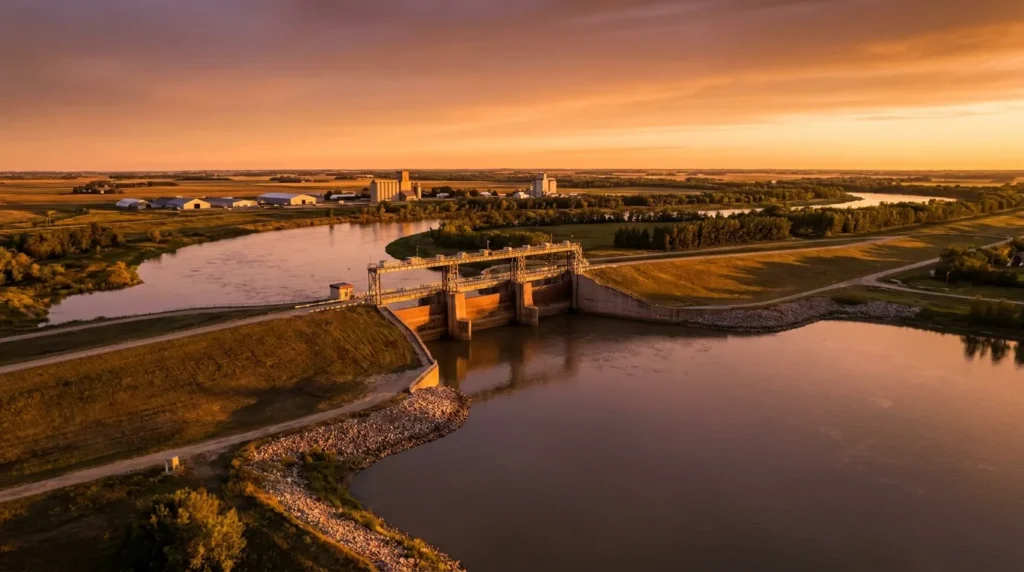
West St. Paul is a rural-urban municipality on the banks of the Red River, bordering Winnipeg to the north. Quiet living, large lots, and quick access to the attractions of Manitoba's capital.

The area is defined by the Red River, and the central draw is Lower Fort Garry National Historic Site, a former Hudson's Bay Company trading post located just above the municipality. Families spend entire afternoons watching demonstrations of blacksmithing, confectionery, and 19th-century life led by costumed interpreters.

For everyday life, the West St. Paul Community Centre is the hub for hockey, curling, and community events, while Rivercrest Park serves as the gathering spot on summer evenings. The Perimeter Highway connects residents to downtown Winnipeg in 15 to 20 minutes, where The Forks, the Canadian Museum for Human Rights, and Assiniboine Park are within easy reach for longer outings.

Outdoor enthusiasts make frequent use of the Selkirk and District Community Forest and the scenic River Road, which follows the Red River past historic churches such as St. Andrew's-on-the-Red. In winter, ice fishing on the river is common, and snowmobile clubs use local trails to reach the Lake Winnipeg region.

  1. 1["Sunova Centre"
  2. 2"Red River trails"
  3. 3"St. Paul's Anglican Church (Middlechurch)"
  4. 4"Kil-Cona Park (nearby)"
  5. 5"Larters at St. Andrews Golf Course (nearby)"
  6. 6"Lower Fort Garry National Historic Site (nearby)"]
Nightlife2.0 / 10
Parks & green spaces
  • ["Red River Greenway"
  • "Kil-Cona Park (Winnipeg
  • nearby)"
  • "Riverstone Park"
  • "Sunova Centre grounds"
  • +1 more

Latest posts

Straight from the blog

There are no posts specifically about West St. Paul yet. In the meantime, check out our latest posts.