Visto n' Visa
Blog
Notícias e artigos
Destinations
Careers
Immigrants

Want to live and work in Ontario?

Personalized immigration plan with eligible visas, costs, and next steps for your goal!

If you are not eligible, you will know exactly why and what to do to improve your approval chances.

Save up to 12 hours in meetings

No pointless assessments.

Save up to 90%

Save money on vague or unfocused consultations

Avoid Fraud and Mistakes

One mistake can cost you your visa

Total Impartiality

Zero commercial bias

Decide with peace of mind

No toxic urgency

Fast and Accurate

Answers in minutes, no guesswork

Inside Ontario

Canada's largest job market, with genuine openness to immigrants

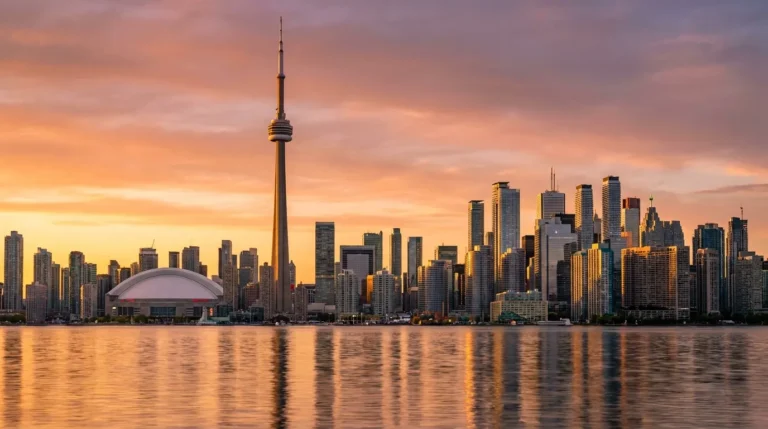
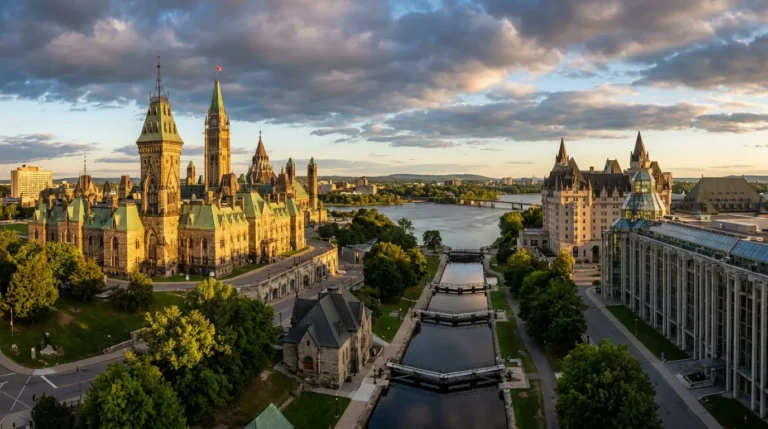
Ontario is home to more than 14 million people and concentrates much of Canada's economic, political, and cultural life. Toronto, its largest city, rivals global metropolises in diversity, job market, and infrastructure. Ottawa, the federal capital, offers stable employment in the public sector and in technology.

For immigrants, Ontario presents a rare combination: access to major companies, top-tier universities, established public services, and communities from virtually every country in the world. The Peel Region, Mississauga, and Brampton area is home to one of the largest South Asian diasporas in North America, while Toronto has well-established neighborhoods such as Little Portugal and Little Italy.

Living in Ontario requires financial planning: Toronto and its surroundings rank among the country's most expensive areas, especially when it comes to housing costs. Mid-sized cities like London, Hamilton, Kitchener-Waterloo, and Windsor offer a similar quality of life at more accessible costs, and have attracted an increasing number of immigrants seeking a balance between opportunity and affordability.

Population
14,223,942
Average monthly salary
46,700 USD/mo
49.2501°, -84.4998°

Featured places

Top 10 places in Ontario

The places most sought-after by immigrants in this region.

Intense diversity: more than 200 languages spoken in the province

Ontario is one of the most diverse provinces on the planet, with established immigrant communities from virtually every country, especially in Toronto and the surrounding area.

Toronto is frequently cited as the world's most diverse city, and that is reflected in the profile of the entire province. Ontario historically receives the largest share of immigrants arriving in Canada, with notable communities from the Philippines, India, China, Nigeria, and a growing number of newcomers from Latin America.

Portuguese-speaking communities have existed in Toronto for decades, mainly in the Dufferin-Davenport and Kensington Market neighborhoods. There are churches, associations, restaurants, and services in Portuguese scattered throughout the city, which eases the initial adjustment for those who arrive without strong English skills.

In smaller cities inland, the population tends to be more homogeneous, with a predominance of European-descent residents, but recent immigration flows are changing that profile. English is the dominant language throughout the province; French has a smaller presence, concentrated near the Quebec border and in Franco-Ontarian communities.

14,223,942
Population
42 yrs
Median age
15/km²
Density
$46,300
Median income
per year
Urban population86.1%
Foreign-born30.0%
Languages spoken
  • English
  • French
  • Mandarin
  • Punjabi
  • Spanish
  • +2 more
Main religions
  • Christianity (52%)
  • No religion (32%)
  • Islam (5%)
  • Hinduism (3%)
  • Judaism (1%)

High cost of living in Toronto, more affordable in interior cities

Toronto is among Canada's most expensive cities, but Ontario's interior offers alternatives with a much more accessible cost of living and high quality of life.

In Toronto and the Greater Toronto Area (GTA), housing costs are the biggest obstacle for immigrants. Renting a one-bedroom apartment downtown can represent a significant portion of the average local salary, and buying property is out of reach for those just starting out. Sharing accommodation in the first months is common practice among newcomers.

Food, public transportation, and services in general are priced higher than in the province's interior. The Presto card simplifies the use of the TTC (Toronto's subway and bus) and regional train and bus systems, but monthly passes carry a considerable cost for those on a tight budget.

Cities like London, Kitchener, Barrie, and Windsor offer significantly more affordable housing, an active job market, and access to the same healthcare and educational services. For immigrants with geographic flexibility, these cities have been an advantageous point of entry before a possible move to the GTA.

106Cost index (US = 100)6% above US average
CategorySingleCoupleFamily (2 + 2)
iHousing$1,390$1,717$2,208
iFood$327$654$1,186
iTransport$311$572$736
iHealthcare$65$131$229
iChildcare$1,431
iOther$442$736$981
Monthly total$2,535$3,810$6,771

Source: Statistics Canada (SHS 2022 + CPI 2024) · Estimates in USD, monthly.

Competitive real estate market in Toronto, with affordable options in the interior

Housing in Toronto is expensive and competitive; cities like London, Hamilton, and Kitchener offer more viable alternatives for immigrants in the early stages.

The rental market in the GTA is fiercely competitive: demand consistently outpaces supply, and landlords generally require proof of income, references, and sometimes several months of deposit upfront. Newly arrived immigrants, without a Canadian credit history, often face difficulties at this stage and need additional guarantees.

Neighborhoods such as Scarborough, North York, and Etobicoke, within Toronto, are options with relatively lower prices compared to the downtown core and the West End. Mississauga and Brampton, neighboring cities in the GTA, have a larger supply of semi-detached houses and apartments at slightly lower prices.

Outside the GTA, London offers houses and apartments at considerably more accessible prices, with full infrastructure and train connections to Toronto. Kitchener-Waterloo, driven by the technology sector, has grown significantly in recent years but still maintains costs below those of the provincial capital.

Purchase price (m²)
  • Center$8,500/m²
  • Outside$4,500/m²
10.2×
Price-to-income
6.5%
Mortgage rate (20y)
Recommended neighborhoods
  • Scarborough (Toronto)
  • North York (Toronto)
  • Mississauga
  • Brampton
  • London
  • +3 more

Diversified job market with strong demand in technology, healthcare, and logistics

Ontario has Canada's most robust job market, with opportunities in finance, technology, healthcare, manufacturing, and services, especially in the GTA and the Waterloo technology corridor.

Toronto is Canada's largest financial center and one of the most important in North America, with the headquarters of banks like RBC, TD, Scotiabank, BMO, and CIBC. The technology sector has grown strongly in the past decade, with companies like Shopify, Thomson Reuters, and countless startups attracting IT professionals from around the world. The Toronto-Waterloo innovation corridor is compared to Silicon Valley by investors and specialized media.

The healthcare field employs a significant number of qualified immigrants, but requires credential recognition and provincial certifications. The same applies to engineering, law, and accounting. Skilled trades such as electricians, plumbers, and carpenters are in high demand, with more agile recognition processes through provincial unions and trade boards.

The logistics and distribution sector has grown significantly with e-commerce, generating warehouse and transportation positions across the Peel Region and eastern GTA. For those in their first months who have not yet regularized credentials, these positions offer an entry into the job market with potential for internal advancement.

$46,700
Avg net salary
per month
$25,000
Minimum wage
per month
6.8%
Unemployment
65.5%
Labor force
Dominant sectors
  • technology
  • finance
  • healthcare
  • manufacturing
  • logistics
  • +2 more
Major employers
  • RBC
  • TD Bank
  • Shopify
  • Thomson Reuters
  • Magna International
  • +3 more

Reference educational system with excellent universities and colleges

Ontario has some of Canada's and the world's best universities, as well as technical colleges that provide direct pathways to the job market for immigrants.

The University of Toronto is consistently ranked among the world's best and attracts large numbers of international students. Waterloo is a global reference in engineering and computer science, with one of North America's most respected co-op programs. Queen's University in Kingston and Western in London are also highly regarded in various fields.

For immigrant adults seeking professional retraining, Colleges of Applied Arts and Technology such as Humber, George Brown, Seneca, and Algonquin offer one- to two-year programs with a practical focus and strong connections to local employers. Many offer programs recognized for immigration purposes, including postgraduate work permits (PGWP) that allow work after graduation.

The public school system for children is free and well-structured, with ESL (English as a Second Language) programs available at virtually every school with a high concentration of immigrants. Access to subsidized early childhood education is still limited, but the provincial government has been gradually expanding the program.

Literacy99.0%
Tertiary education68.0%
522
PISA score (avg)
$18,500
Private school
per year
Notable universities
  • University of Toronto
  • University of Waterloo
  • Queen's University
  • Western University
  • McMaster University
  • York University
  • University of Ottawa

Universal public health system with guaranteed access for residents

Ontario offers public health coverage (OHIP) for all permanent residents and citizens, with a broad network of hospitals, clinics, and specialists.

The Ontario Health Insurance Plan (OHIP) covers medical consultations, hospital stays, and surgical procedures at no direct cost to the patient. For newly arrived immigrants, there is a three-month waiting period before OHIP activation, during which temporary private insurance is recommended. After activation, family doctors and specialists are accessible without a co-payment.

Finding a family doctor is the greatest challenge in the system. Demand exceeds supply throughout the province, especially outside Toronto. Many residents turn to walk-in clinics for routine care while waiting on a list for a permanent physician. The Government of Ontario maintains a portal to search for doctors accepting new patients.

Toronto has reference hospitals such as Toronto General, SickKids, and Sunnybrook, which handle complex cases from across Canada. Medications, vision exams, and dental care are not covered by public OHIP, which means most formal workers rely on supplementary plans offered by employers.

Healthcare index79.0 / 100
  • Life expectancyyears at birth
    82.5yrs
  • Doctors per 1kpracticing physicians
    2.6
  • Health spendper capita, per year
    $5,800
  • Public systemoverall quality rating
    Good

High safety levels across most of the province, with neighborhood-level variations

Ontario is one of Canada's safest provinces. Toronto has incidents concentrated in specific areas, but the vast majority of residential neighborhoods are quiet and safe for immigrants.

In general terms, Ontario is a safe place to live. Violent crimes are relatively rare and well below the rates of comparable large American cities. The Ontario Provincial Police (OPP) and municipal forces maintain an active presence, and the sense of safety on streets and public transportation is high for most residents.

In Toronto, neighborhoods such as Regent Park, Jane-Finch, and parts of Rexdale record crime rates above the city average. However, these are also neighborhoods with a history of urban renewal and active social programs. Most immigrants who settle in these areas do so for cost reasons and do not face serious day-to-day issues.

Mid-sized cities like London, Hamilton, and Kitchener have very positive safety records, with rare violent crimes and a family-friendly environment. Rural areas and small towns in Ontario's interior are peaceful but may offer fewer support services for immigrants.

1.6
Homicides per 100k
per year
Safety index
62.0
Crime index
38.0
Safer neighborhoods
  • Oakville
  • Burlington
  • Markham
  • Richmond Hill
  • Mississauga (north)
  • Kitchener
  • Guelph
  • Barrie
Areas to avoid
  • Jane and Finch (Toronto)
  • Regent Park outskirts (Toronto)
  • Sudbury downtown at night
  • Hamilton central district after dark

Robust transit network in Toronto, with car dependence in the interior

Toronto has well-integrated subway, bus, and regional rail services. Outside the GTA, a car is practically essential for daily life.

Toronto's TTC system operates subway, streetcars, and buses with reasonable city coverage, but faces criticism for overcrowding and frequent delays. GO Transit connects Toronto with GTA cities and surrounding areas such as Hamilton, Barrie, Kitchener, and Niagara Falls by train and express bus. The Presto card unifies payment across all these systems.

For those living in the GTA but outside Toronto, a car is almost indispensable. Peel Region (Mississauga and Brampton), York Region, and Durham have local bus networks, but frequency and coverage are lower than in Toronto. Many residents in these areas drive to the nearest GO Transit station and then take the train to Toronto.

Outside the GTA, a car is absolutely necessary. Cities like London, Windsor, and Kingston have local public transportation, but it is limited. Ontario's road network is well maintained, and provincial highways (400-series) allow for fast travel. In winter, it is essential to have snow tires and to be prepared for reduced visibility conditions.

4
Metro lines
75
Metro stations
34 min
Avg commute
61
Walkability
Airports
  • YYZ — Toronto Pearson International Airport
  • YTZ — Billy Bishop Toronto City Airport
  • YOW — Ottawa Macdonald-Cartier International Airport
  • YHM — John C. Munro Hamilton International Airport
  • YXU — London Airport
  • International airport
  • Bike infrastructure

Four distinct seasons: harsh winters and hot, humid summers

Ontario's climate varies greatly by region: cold winters with heavy snowfall and hot summers. Spring and autumn are mild and pleasant.

Ontario experiences four very distinct seasons. Winter, running from December to March, is harsh: minimum temperatures that drop well below freezing, frequent snowfall, and biting winds are the norm. Those arriving from tropical climates need to invest in proper clothing, as the difference is significant. The northern part of the province has even more severe winters than Toronto and the south.

Spring, in April and May, is short but beautiful, with blooms and milder temperatures. Summers, from June to August, are warm with good precipitation, especially in July and August, the wettest months. Humidity in Toronto can make summer days feel more uncomfortable than the thermometer readings suggest.

Autumn, from September to November, is considered the best season by many residents: vibrant leaf colors, comfortable temperatures, and moderate rainfall. In October, temperatures still allow outdoor activities without heavy coats. December marks the return of intense cold and the first significant snowfalls in the southern part of the province.

Sunny days / year230 days
Avg high (°F)
  • 15°J
  • 16°F
  • 30°M
  • 44°A
  • 61°M
  • 72°J
  • 76°J
  • 73°A
  • 63°S
  • 50°O
  • 34°N
  • 23°D
Avg low (°F)
  • -2°J
  • -3°F
  • 12°M
  • 24°A
  • 38°M
  • 49°J
  • 56°J
  • 55°A
  • 47°S
  • 37°O
  • 22°N
  • D
Rainfall (")
  • 1"J
  • 2"F
  • 2"M
  • 3"A
  • 2"M
  • 3"J
  • 3"J
  • 3"A
  • 4"S
  • 3"O
  • 2"N
  • 2"D

Intense cultural life, diverse gastronomy, and international events all year long

Ontario, especially Toronto, has one of the most vibrant cultural scenes in North America, with museums, festivals, gastronomy, and nightlife at an international level.

Toronto hosts TIFF (Toronto International Film Festival), one of the world's most important film festivals, as well as events like Caribana, Pride Toronto, and Nuit Blanche. The Royal Ontario Museum, the Art Gallery of Ontario, and the CN Tower are cultural landmarks of the city. The restaurant scene reflects the population's diversity: from ramen to Ethiopian, from Persian to poutine.

Iconic local dishes include poutine (fries with cheese curds and gravy), the peameal bacon sandwich at St. Lawrence Market, and an endless variety of world cuisines. Newcomers from various backgrounds can usually find familiar foods at specialized grocery stores and ethnic markets throughout the GTA.

Outside Toronto, Stratford has an internationally recognized Shakespearean theatre festival, Niagara-on-the-Lake hosts the Shaw Festival, and Ottawa celebrates Winterlude in winter with activities on the frozen Rideau Canal. Ontario's nature, with parks like Algonquin, draws residents during the summer months for camping, hiking, and canoeing.

750
Major museums
Notable dishes
  • Poutine
  • Peameal bacon sandwich
  • BeaverTails (pastry)
  • Butter tart
  • Shawarma (Toronto style)
  • +1 more
Annual events
  • Toronto International Film Festival (TIFF)
  • Caribana (Scotiabank Caribbean Carnival)
  • Pride Toronto
  • Nuit Blanche Toronto
  • Ottawa Winterlude
UNESCO sites
  • Rideau Canal
  • Pimachiowin Aki (shared with Manitoba)
  • Old Town Niagara-on-the-Lake Historic District (proposed)

Diversified economy led by finance, technology, and advanced manufacturing

Ontario accounts for more than 40% of Canada's GDP, with strengths in financial services, information technology, manufacturing, life sciences, and education.

The financial sector is the cornerstone of Ontario's economy. Toronto hosts the headquarters of the five largest Canadian banks and the Toronto Stock Exchange (TSX), one of North America's largest. Insurance, asset management, and fintech also have a significant presence, generating well-paid positions for qualified professionals.

The automotive industry has deep roots in the Windsor-Toronto corridor, with assembly plants from Ford, GM, and Stellantis, as well as hundreds of suppliers. With the transition to electric vehicles, Ontario is investing in new battery and component facilities, creating specialized technical positions. Food and beverage manufacturing also has a major footprint across the province.

The life sciences sector, with laboratories, pharmaceutical manufacturers, and biotechnology firms, is another key pillar, concentrated in the Mississauga-Toronto corridor. Higher education and research move billions of dollars annually, with universities attracting private and public funding for technological innovation.

  • GDPgross domestic product
    $745.0B
  • GDP per capitaoutput per resident
    $52,400
  • GDP growth (yr)economy expanding
    +1.4%
Top sectors
  • financial services
  • information technology
  • automotive industry
  • life sciences
  • advanced manufacturing
  • +3 more

Immigrant communities in Ontario

About 4.4 million immigrants live in the province, 29% of the population, and Toronto is considered the most diverse city on earth.

Ontario is home to roughly 4.4 million immigrants, around 29% of the population, the largest absolute concentration in Canada. Toronto and its metro area drive almost everything, and the city is considered one of the most diverse on earth, with more than half of residents born outside the country. The Chinese community spreads across Markham and Scarborough, with supermarkets, hospitals, and schools in Mandarin and Cantonese. Brampton and Mississauga hold the largest Sikh community in Canada, with Brampton reaching about half of its population of South Asian origin. Filipinos form another huge block in Mississauga and central Toronto, tied to healthcare and care work. Italians consolidated Woodbridge and Vaughan, and the Caribbean community (Jamaican, Haitian, Trinidadian) marks Toronto. Africans, especially Nigerians, Somalis, and Ethiopians, grow in Toronto and Ottawa.

The support network is the densest in the country. COSTI Immigrant Services, the Toronto Region Immigrant Employment Council, the Canadian Council for Refugees, and the FCJ Refugee Centre dominate the settlement sector, with English classes, employment mentoring, legal support, transitional housing, and credential recognition. Toronto hosts practically every foreign consulate, including the Consulate-General of India in Toronto, the Consulate-General of China in Toronto, the Consulate-General of the Philippines in Toronto, the Consulate-General of Italy in Toronto, the Consulate-General of Portugal in Toronto, the Consulate-General of Brazil in Toronto, the Consulate-General of Mexico in Toronto, and the Consulate-General of the United States in Toronto. Gurdwaras in Brampton, mosques in Mississauga, Hindu temples in Scarborough, and Filipino, Italian, and Portuguese churches anchor community life.

4,400,000
Foreign-born residents
estimated
Top countries of origin
  • India
  • China
  • Philippines
  • United Kingdom
  • Italy
Main immigrant hubs
  • Toronto
  • Brampton
  • Mississauga
  • Markham
  • Ottawa
Foreign consulates
  • Indian Consulate General in Toronto
  • Chinese Consulate General in Toronto
  • Philippine Consulate General in Toronto
  • Italian Consulate General in Toronto
  • Portuguese Consulate General in Toronto
  • +3 more
Community organizations
  • COSTI Immigrant Services
  • Toronto Region Immigrant Employment Council (TRIEC)
  • Canadian Council for Refugees
  • FCJ Refugee Centre

Latest posts

Posts about Canada

Coverage and updates related to this destination.

Showing content from Canada, as there is no specific data for Ontario yet.