Visto n' Visa
Blog
Notícias e artigos
Destinations
Careers
Immigrants

Want to live and work in London?

Personalized immigration plan with eligible visas, costs, and next steps for your goal!

If you are not eligible, you will know exactly why and what to do to improve your approval chances.

Save up to 12 hours in meetings

No pointless assessments.

Save up to 90%

Save money on vague or unfocused consultations

Avoid Fraud and Mistakes

One mistake can cost you your visa

Total Impartiality

Zero commercial bias

Decide with peace of mind

No toxic urgency

Fast and Accurate

Answers in minutes, no guesswork

Why visit London

University and medical city in southwestern Ontario, with an accessible cost of living.

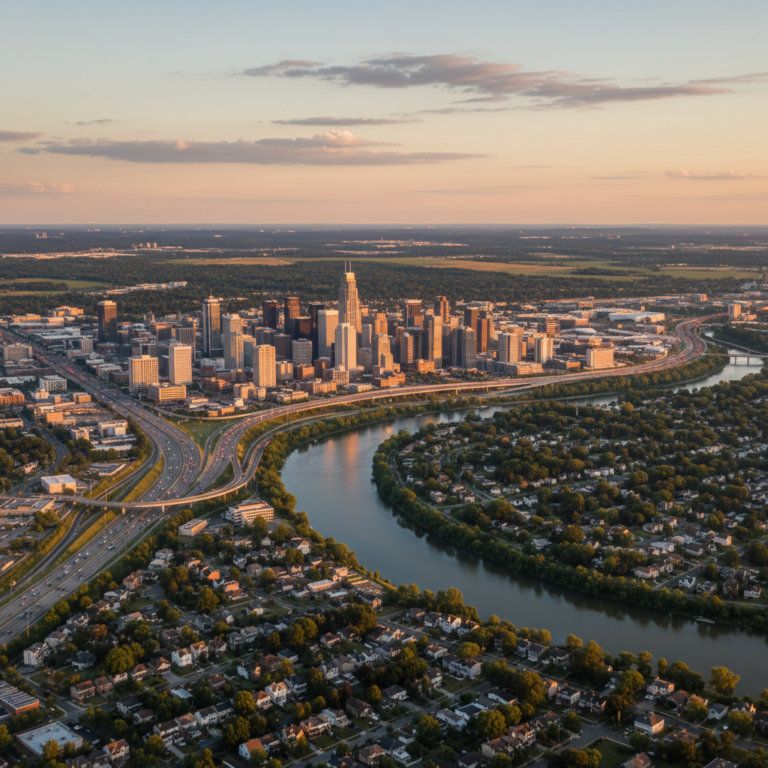
London is located in southwestern Ontario, roughly midway between Toronto and Detroit. The city has approximately 422,000 residents, with the metropolitan area exceeding 540,000 when St. Thomas and Strathroy are included. Despite its English name and rivers called the Thames and Avon, the city has a well-defined Canadian identity.

The climate is humid continental, similar to Toronto but with less lake effect. Summers can exceed 30 degrees Celsius in July with considerable humidity, and winters range between -5 and -15 with regular snowfall. London sits in the path of the snowbelt coming off Lake Huron, so heavy snowstorms can occur in November and December.

The economy is dominated by healthcare and education. Western University (University of Western Ontario) and Fanshawe College bring approximately 70,000 students during the academic year. London Health Sciences Centre is one of Canada's largest hospitals. Life centers around Richmond Row (downtown), Old North (near the university), and Wortley Village (trendy).

35.3290°, -93.2530°

London's Population: Predominantly European, with Growing New Immigration

Traditionally British, German, Dutch, and Italian. Arab, Colombian, and Indian communities have grown over the last two decades.

London has the traditional demographic profile of southwestern Ontario, historically dominated by British, German, Dutch, and Italian immigrants who arrived between 1880 and 1950. This is reflected in street names, churches, schools, and local traditions such as the Western Fair (annual agricultural fair).

Diversity has grown significantly over the past 25 years. There are large Arab communities (Lebanese, Syrian, Palestinian), Colombian, Indian, Chinese, and Nigerian. The Muslim presence is strong, with the London Muslim Mosque and the Islamic Centre of Southwest Ontario. The Brazilian community is small but present, mainly among students at Western and Fanshawe.

The age profile shifts considerably depending on the time of year. During the academic year (September to April), the city becomes younger due to students. In summer, the average rises. Established families live in Byron, Lambeth, and Masonville, while singles and young couples tend to be in downtown, Old North, or Old South.

Languages spoken
  • English
  • Arabic
  • Spanish
  • Mandarin
  • Portuguese
  • +3 more
Main religions
  • Christian (Catholic and Protestant)
  • No religion
  • Muslim
  • Hindu
  • Sikh
  • +1 more

Cost of Living in London: Among the Most Affordable in Ontario

Rent is significantly cheaper than the GTA. Houses at prices that in Toronto would be for a small apartment. Food and transportation follow Ontario standards.

London is one of Ontario's most affordable mid-sized cities, especially compared to the GTA. A 1-bedroom apartment in the downtown or Old North area ranges from CAD 1,300 to CAD 1,700 per month. In more peripheral neighborhoods (East London, White Oaks), prices drop to CAD 1,100 to CAD 1,500. Full houses for rent start at CAD 2,000 for 3 bedrooms. A room in a shared house costs CAD 600 to CAD 900.

Buying a home in London is still feasible. A bungalow in established neighborhoods costs amounts that in Toronto would buy a 1-bedroom apartment. Grocery stores such as Loblaws, Metro, Real Canadian Superstore, No Frills, Costco, and Sobeys cover the basics. Covent Garden Market downtown sells fresh produce directly from local farmers.

Public transit (London Transit Commission, LTC) costs CAD 95 per month for adults. A cell phone plan runs CAD 50 to CAD 80. A car is very helpful in London, as distances between neighborhoods can be large and public transit is less frequent outside peak hours.

95Cost index (US = 100)5% below US average
CategorySingleCoupleFamily (2 + 2)
iHousing$1,251$1,545$1,987
iFood$294$589$1,067
iTransport$280$515$662
iHealthcare$59$118$206
iChildcare$1,288
iOther$398$662$883
Monthly total$2,282$3,429$6,093

Source: U.S. BLS Consumer Expenditure Survey 2023 + BEA Regional Price Parities 2023 · Estimates in USD, monthly.

Housing in London: Houses in Quiet Neighborhoods and Buildings Near the University

A city dominated by suburban houses. Apartments are concentrated downtown and around Western. Older neighborhoods feature charming brick houses.

London is predominantly residential with detached houses. Neighborhoods such as Old North (north of downtown, near Western), Old South (south of downtown, near Wortley Village), Hyde Park (west, newer), and Masonville (north, upper-middle class) feature brick houses with porches and yards. Many lots are larger than typical GTA lots, with ample green space.

Apartments and buildings are concentrated downtown (Talbot Street, Richmond Row) and near Western University (Western Road, Sarnia Road, Platt's Lane). Students often rent rooms in shared houses near campus, with monthly costs between CAD 600 and CAD 900. There are also many high-rise buildings rented to students in complexes such as London Heights and The Quarters.

To rent, landlords typically require proof of income, references, and a credit check. Those arriving without a credit history need a guarantor or may be asked to pay several months upfront. Popular sites include Realtor.ca, Zumper, Kijiji, Facebook Marketplace, and Western University Off-Campus Housing for students. Availability is good outside of September, when students move in.

Recommended neighborhoods
  • Old North (near Western, older homes)
  • Old South (Wortley Village, trendy)
  • Downtown (Richmond Row, apartment buildings)
  • Masonville (upper-middle class, good schools)
  • Byron (family suburb)
  • +3 more

London's Job Market: Healthcare, Education, and Insurance

Hospitals and Western University lead the way. Insurance (London is Canada Life's base). Manufacturing remains relevant.

London has a diversified economy, with healthcare and education as main pillars. London Health Sciences Centre (operating University Hospital, Victoria Hospital, and Children's Hospital) and St. Joseph's Health Care London together employ more than 20,000 people. Western University and Fanshawe College, with their departments and spin-off companies, are also major employers.

Insurance is a historically strong sector. London is home to Canada Life (one of the country's largest insurers), with major operations from Manulife (formerly Standard Life). 3M Canada is headquartered in London. Manufacturing remains relevant, with factories producing goods such as General Dynamics Land Systems (armored military vehicles) and Cami Automotive (in nearby Ingersoll), plus food processing.

Technology is growing on a smaller scale, with startups and TechAlliance as a hub. Ontario's minimum wage is CAD 17.20 per hour (2024). For qualified professionals, the market is stable but more limited than in the GTA. Many people commute to St. Thomas, Strathroy, or the Kitchener-Waterloo region.

Dominant sectors
  • Healthcare
  • Higher education (Western and Fanshawe)
  • Insurance and financial services
  • Industrial manufacturing
  • Growing technology sector
  • +2 more
Major employers
  • London Health Sciences Centre
  • St. Joseph's Health Care London
  • Western University
  • Fanshawe College
  • Canada Life
  • +4 more

Education in London: Western University and Fanshawe College

Western is one of Canada's best universities. Fanshawe is a reference for practical programs. The public school system is reasonably good.

Residents' children have access to free public schooling through the Thames Valley District School Board (public) or the London District Catholic School Board (Catholic). Schools in Masonville, Byron, and Old North tend to be better rated. French Immersion is offered in several schools.

Western University (University of Western Ontario) ranks among Canada's top 5 research universities. It has strong programs in medicine (Schulich School), engineering, science, and business (Ivey Business School, considered one of the country's top MBA schools). The campus, with more than 30,000 students, is located in the northern part of the city, featuring stone buildings and the Thames River running through the grounds. It has the atmosphere of an American university town.

Fanshawe College is one of Canada's largest colleges, with approximately 43,000 students (including international) across several campuses. Strong programs in design, journalism, hospitality, and trades. International tuition at Western ranges from CAD 35,000 to CAD 60,000 per year; at Fanshawe, CAD 15,000 to CAD 20,000. Students require a federal study permit.

Notable universities
  • Western University (University of Western Ontario)
  • Fanshawe College
  • Brescia University College (affiliated with Western)
  • Huron University College (affiliated with Western)
  • King's University College (affiliated with Western)

Healthcare in London: Large Hospital Network and Medical Education

Covered by OHIP. London Health Sciences Centre is one of Canada's largest hospitals. Complex cases from the region are treated here.

Healthcare in London is covered by OHIP (Ontario Health Insurance Plan), free for permanent residents and most work permit holders with more than six months of validity. There is a waiting period of up to three months, so private insurance in the first months is practically required.

London has one of the strongest hospital systems in the province. London Health Sciences Centre operates three hospitals: University Hospital (cardiology, neuroscience), Victoria Hospital (trauma, oncology), and Children's Hospital (pediatrics). St. Joseph's Health Care London handles mental health, geriatrics, and family medicine. Complex cases from across southwestern Ontario are referred to this network.

Finding a family doctor is difficult, with long waiting lists. Walk-in clinics and telemedicine (Maple, Telus Health) cover day-to-day needs. Medications are not covered by default for adults. Extended health plans (typically offered by employers such as Canada Life or Western) cover dental, physiotherapy, and medications. Children under 24 have coverage through OHIP+.

Healthcare index73.0 / 100
  • Life expectancyyears at birth
    81.6yrs
  • Doctors per 1kpracticing physicians
    2.8
  • Health spendper capita, per year
    $6,187
  • Public systemoverall quality rating
    Good

Safety in London: A Quiet Mid-Sized City with Some Problematic Areas

Residential neighborhoods and Western University are safe. Some areas of East London and Old East Village have issues with drugs and homelessness.

London is, in general, a safe mid-sized city. Neighborhoods such as Masonville, Byron, Old North, Wortley Village, and Hyde Park are comfortable for walking at night. The London Police Service focuses more on prevention than on visible enforcement. Western students report moving around campus without major concerns, even late at night.

The more sensitive areas are parts of East London (including Old East Village, though it has been gentrifying), some sections of Dundas Street near downtown, and areas with concentrations of homeless residents. Problems related to fentanyl and crack have grown in recent years, similar to other Canadian cities. Violence against strangers is rare, but the scene can be uncomfortable.

The most commonly reported crimes are bicycle theft (especially near Western), break-ins into parked vehicles (do not leave valuables visible), and petty theft in student buildings. There are also gang-related incidents in specific locations, but they rarely affect those not involved.

2.0
Homicides per 100k
per year
Safety index
57.0
Crime index
43.0
Safer neighborhoods
  • Old North
  • Old South
  • Byron
  • Masonville
  • Sunningdale
  • Westmount
Areas to avoid
  • EOA (East of Adelaide) on some isolated streets at night
  • SoHo after dark
  • Areas near Dundas Street East late at night

Transportation in London: LTC, ViaRail, and the BRT Under Construction

LTC buses cover the city. ViaRail connects to Toronto. BRT under construction on Richmond and Wellington. Small airport with seasonal flights.

The London Transit Commission (LTC) operates buses covering the city. The flat fare is CAD 3.25 in cash or CAD 2.75 with a Smart Card. The most-used routes connect downtown to Western and Masonville Mall. The system is less frequent than in larger cities, especially on weekends and at night, so a car is quite helpful.

The BRT (Bus Rapid Transit) is under construction, with rapid corridors on Wellington Road, Richmond Street, Oxford Street, and Dundas Street. It will significantly improve public transit when complete. ViaRail has a station downtown, with several daily trips to Toronto (approximately 2 hours) and Windsor.

London International Airport (YXU) is small but has direct flights to Toronto (with Porter), Calgary, Cancun, and some U.S. cities. For non-U.S. international destinations, connections are generally made in Toronto (Pearson, 2 hours by car). The city has some bike lanes but is heavily car-oriented. Free parking is available in almost all areas outside downtown.

22 min
Avg commute
50
Walkability
Airports
  • YXU — London International Airport
  • International airport
  • Bike infrastructure

What the Climate Is Like Living in London

London, Ontario has a humid continental climate with four distinct seasons. Summers are hot and humid, while winters are cold with significant snowfall driven by lake-effect patterns.

Summer runs from June through September, with highs between 25°C and 28°C and elevated humidity carried in from the Great Lakes. Afternoons can feel muggy. The city's extensive green spaces and well-maintained parks offer relief, and central air conditioning is standard in newer homes.

Winter is the defining seasonal challenge. From December through March, daytime highs range from -3°C to 1°C, with January lows dropping to around -15°C. London receives approximately 200 cm of snow per year, more than Toronto, due to lake-effect systems from both Lake Huron and Lake Erie. Snowstorms are a regular occurrence.

Most homes in London are brick construction with natural gas heating and central air conditioning. Winter tires, a warm parka, and insulated boots are practical necessities. The city offers a lower cost of living than Toronto and a quieter pace of life, with the University of Western Ontario as a central anchor.

Sunny days / year290 days
Avg high (°F)
  • 44°J
  • 49°F
  • 62°M
  • 73°A
  • 86°M
  • 90°J
  • 92°J
  • 91°A
  • 87°S
  • 80°O
  • 64°N
  • 52°D
Avg low (°F)
  • J
  • F
  • 13°M
  • 23°A
  • 32°M
  • 44°J
  • 56°J
  • 52°A
  • 44°S
  • 33°O
  • 21°N
  • 16°D
Rainfall (")
  • 1"J
  • 1"F
  • 1"M
  • 2"A
  • 1"M
  • 2"J
  • 2"J
  • 2"A
  • 2"S
  • 2"O
  • 1"N
  • 1"D

London's Culture: Art, Music Festivals, and Wortley Village

An active cultural scene, connected to the university. Museum London, festivals such as Sunfest, and Wortley Village as a trendy neighborhood.

London's culture revolves around downtown (Richmond Row, Dundas Place) and Wortley Village. Western University injects cultural energy, with the Don Wright Faculty of Music hosting concerts and McIntosh Gallery on campus. Museum London, in the city center, combines Canadian art and local history. The Grand Theatre is one of the main theater venues outside Toronto.

Festivals mark the calendar. Sunfest (July) brings world music to a public park, with multicultural cuisine. London Bluesfest, TD Sunfest, and Home County Music Festival animate the summer. Western Fair (October) is the traditional agricultural fair, with rides, food, and exhibitions. There are good craft breweries such as Anderson Craft Ales and Toboggan Brewing.

Wortley Village (south of downtown) has become a trendy neighborhood over the past 15 years. Black Walnut Cafe, restaurants such as Garlic's of London, and thrift stores attract young professionals. Sports include the London Knights (junior hockey, OHL, with a passionate fanbase at Budweiser Gardens) and Western Mustangs (university football). Storybook Gardens, in Springbank Park, is a family landmark.

10
Major museums
Notable dishes
  • Western sandwich
  • Poutine
  • Peameal bacon
  • Butter tart
  • Forest City craft beers
  • +2 more
Annual events
  • Western Fair
  • Sunfest TD International Jazz & World Music Festival
  • London Fringe Theatre Festival
  • Rock the Park
  • Home County Music & Art Festival
  • +2 more

Attractions, Culture, and Outdoor Life in London, Ontario

A mid-sized city in southwestern Ontario, home to Western University, with a cultural scene tied to the Thames River, museums, seasonal festivals, and well-distributed parks.

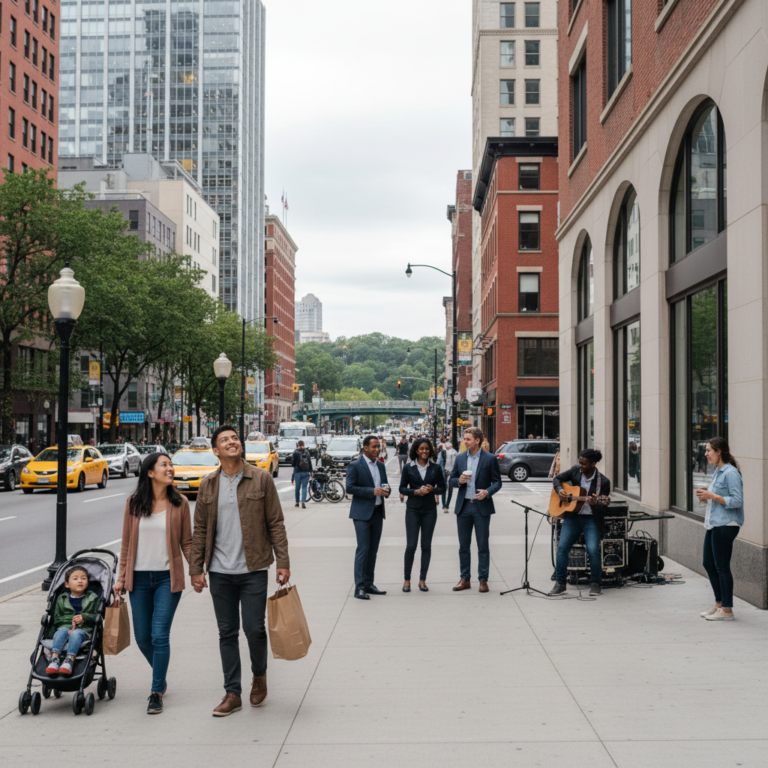
Downtown London centers on Covent Garden Market, Budweiser Gardens (a multi-purpose arena for events and hockey), and Dundas Place, a flexible street corridor that becomes pedestrian-only during events. The Museum London, situated at the confluence of the Thames River forks, brings together art and regional history, while Banting House, the former home of the discoverer of insulin, stands as a landmark in national medical history.

Western University animates the city with student life; its campus includes the McIntosh Gallery and TD Stadium. Storybook Gardens in Springbank Park is a beloved classic children's theme park, and Fanshawe Pioneer Village recreates a 19th-century settlement. London is known as the Forest City for its abundant tree canopy and more than 200 parks.

The annual calendar features Sunfest (a world music festival in July), London Ribfest, the Western Fair in September, and the Home County Music and Art Festival. The Thames Valley Parkway trail system stretches 40 km, connecting most of the city's parks and serving walkers, cyclists, and skaters throughout the year.

  1. 1["Museum London"
  2. 2"Storybook Gardens"
  3. 3"Fanshawe Pioneer Village"
  4. 4"Banting House National Historic Site"
  5. 5"Eldon House"
  6. 6"Western University campus"
Nightlife4.0 / 10
Parks & green spaces
  • ["Victoria Park"
  • "Springbank Park"
  • "Gibbons Park"
  • "Fanshawe Lake Conservation Area"
  • "Harris Park"
  • +1 more

Latest posts

Straight from the blog

There are no posts specifically about London yet. In the meantime, check out our latest posts.