Visto n' Visa
Blog
Notícias e artigos
Destinations
Careers
Immigrants

Want to live and work in Montana?

Personalized immigration plan with eligible visas, costs, and next steps for your goal!

If you are not eligible, you will know exactly why and what to do to improve your approval chances.

Save up to 12 hours in meetings

No pointless assessments.

Save up to 90%

Save money on vague or unfocused consultations

Avoid Fraud and Mistakes

One mistake can cost you your visa

Total Impartiality

Zero commercial bias

Decide with peace of mind

No toxic urgency

Fast and Accurate

Answers in minutes, no guesswork

Inside Montana

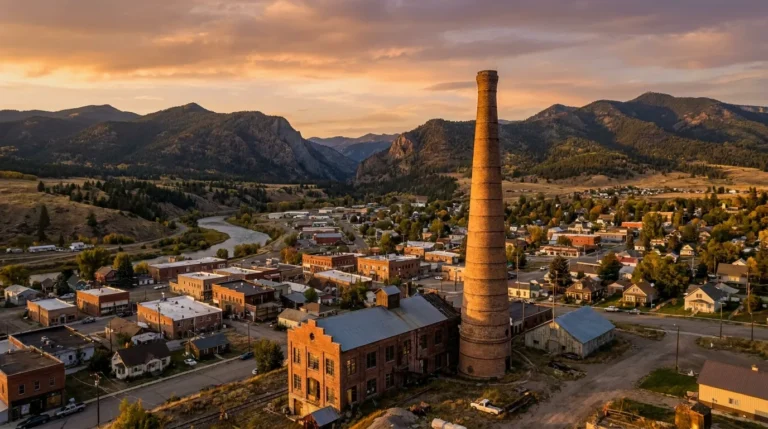
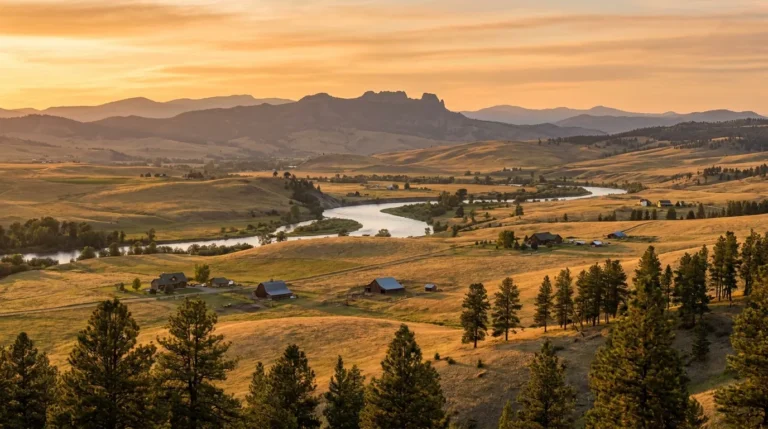
Open space, mountains, national parks, and a quiet pace of life.

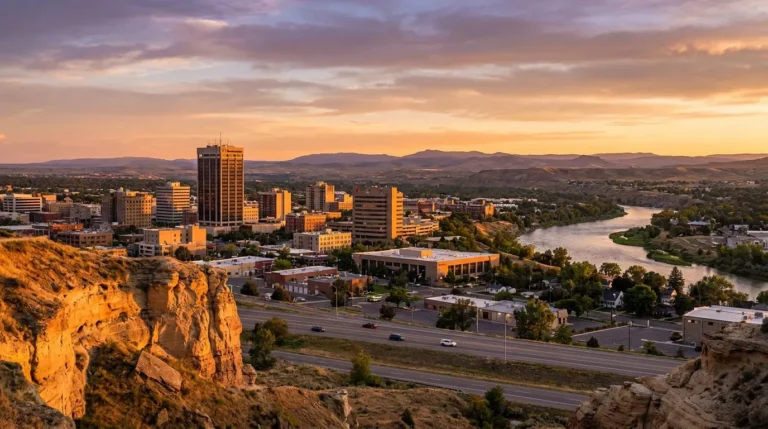
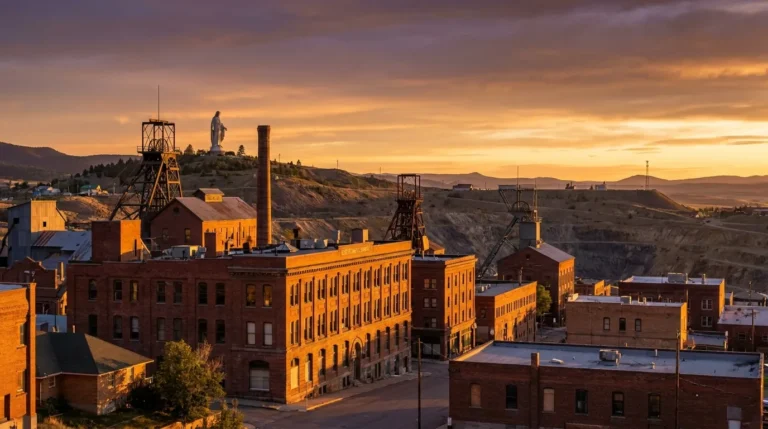
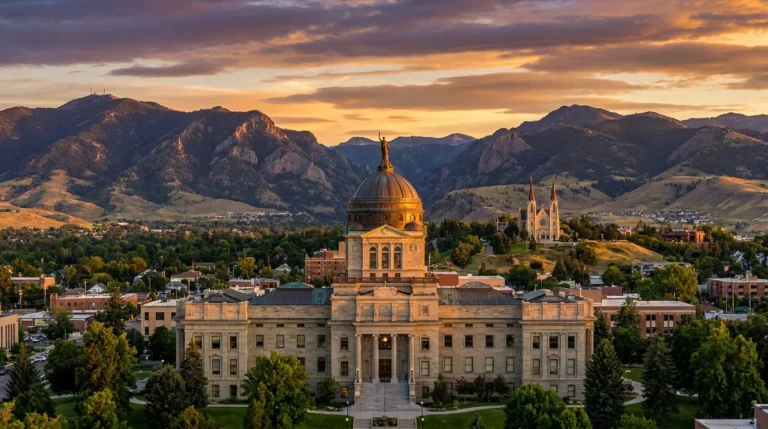
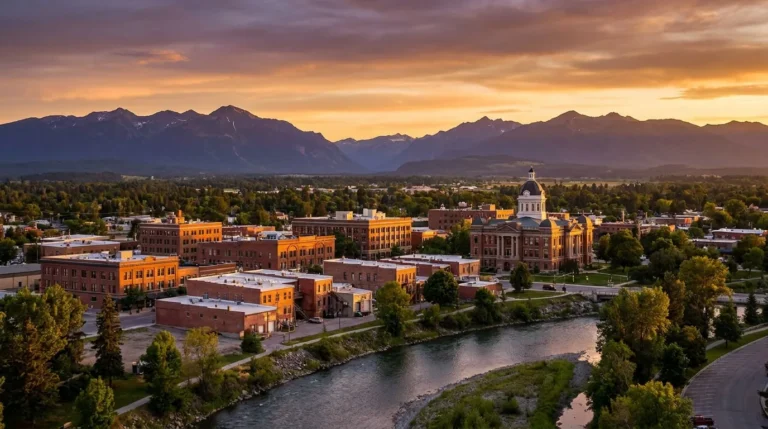
Montana is vast in territory and small in population. It has fewer than 1.2 million residents spread across an area nearly the size of Germany. The most populous city is Billings, followed by Missoula, Bozeman, and Great Falls. The capital is Helena, a fairly small city.

The state is famous for its national parks. Glacier National Park, in the north along the Canadian border, has glaciers, jagged peaks, and blue lakes. Part of Yellowstone, the world's first national park, lies within Montana's borders (the West Yellowstone entrance is the most popular).

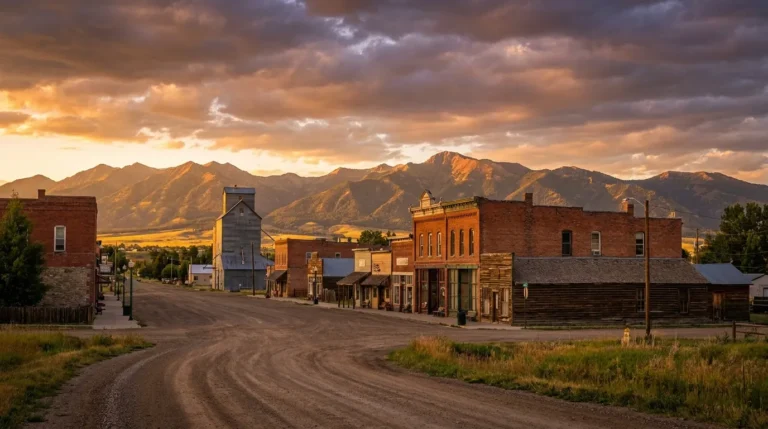
Life in Montana is different from the rest of the US. Vast ranches, empty roads, mountains in every direction. People who love nature, fishing, skiing, and quiet fall in love with it. Those who need intense urban life may find the state too slow-paced. The official nickname is Big Sky Country.

Population
1,122,867
Average monthly salary
53,000 USD/mo
46.9219°, -110.4544°

Featured places

Top 10 places in Montana

The places most sought-after by immigrants in this region.

Montana demographics: mostly white, with a strong Indigenous presence

Small and fairly homogeneous population. Seven recognized tribal nations form important communities in different parts of the state.

Montana is one of the most ethnically homogeneous states in the US. The vast majority of the population is white, with German, Irish, English, and Scandinavian roots. The Latino and Asian presence is still small, though it has been growing in cities like Bozeman and Missoula.

The Indigenous presence is one of the strongest in the US proportionally. There are seven federally recognized reservations, including Crow, Blackfeet, Flathead, Fort Peck, Fort Belknap, Northern Cheyenne, and Rocky Boy's. Some of these communities preserve traditional languages alongside English.

English is the only widely used language. Indigenous languages such as Crow, Blackfoot, and Salish are still spoken in specific communities. The state is known for its individualism, with a tradition of hunting, fishing, and outdoor life that spans generations.

1,122,867
Population
40 yrs
Median age
3/km²
Density
$66,800
Median income
per year
Urban population56.0%
Foreign-born2.3%
Languages spoken
  • English
  • Indigenous languages (Crow, Blackfoot, Salish, Cheyenne)
  • Spanish (small Latino community)
Main religions
  • Protestant Christian (Lutheran, Methodist, Evangelical)
  • Catholic
  • No religion
  • Mormon (Church of Jesus Christ of Latter-day Saints)
  • Traditional Indigenous spirituality
Cost of living in Montana: mixed, with expensive cities near the parks

Smaller cities are still affordable. Bozeman and Whitefish have gotten pricey as wealthy people moved in looking for a second home.

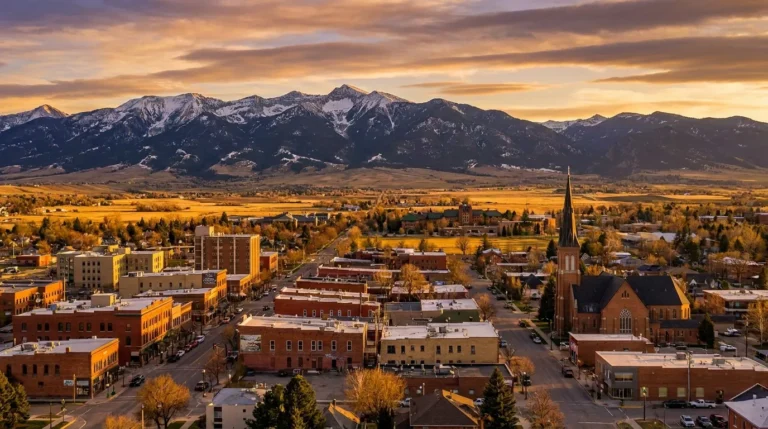
Montana used to be seen as a cheap state, but that has changed in recent years. Bozeman, near Yellowstone, became expensive after wealthy families from Texas and California bought homes there. A 1-bedroom apartment in Bozeman rents for between US$ 1,500 and US$ 2,000, similar to some mid-size coastal cities.

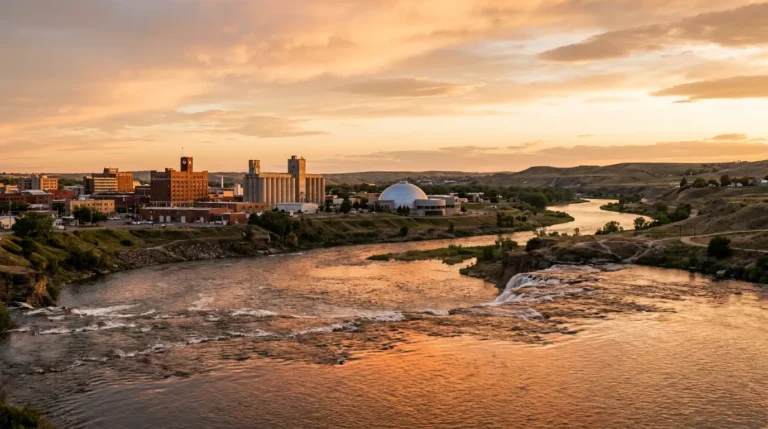
In Billings, Great Falls, and Helena prices remain more affordable, with rents between US$ 900 and US$ 1,400. Missoula, a college town, has intermediate costs. Small cities like Butte and Havre are quite inexpensive, with entire houses renting for under US$ 1,200.

Groceries can be pricier than the US average because of freight: Montana is far from major distribution centers. Gas is generally reasonable. The state has no state sales tax, which helps offset other costs. People earning in dollars who want a quiet life find a good value here.

95Cost index (US = 100)5% below US average
CategorySingleCoupleFamily (2 + 2)
iHousing$1,230$1,419$1,797
iFood$359$719$1,305
iTransport$473$804$1,041
iHealthcare$265$530$993
iChildcare$1,722
iOther$804$1,447$2,034
Monthly total$3,131$4,919$8,892

Source: U.S. BLS Consumer Expenditure Survey 2023 + BEA Regional Price Parities 2023 · Estimates in USD, monthly.

Housing in Montana: from ranches to apartments near the mountains

Large-lot homes are the norm. Cities near national parks have gotten expensive; mid-size cities remain affordable.

In Montana, homes with large lots are the standard. Yards with mountain views, multi-car garages, and spacious rooms are common even in modest properties. In Bozeman, however, demand has spiked: homes in good neighborhoods exceed US$ 800,000, levels previously seen only in coastal states.

Billings, the largest city, has more affordable housing: 3-bedroom homes start at US$ 350,000. Missoula has a middle market, with strong demand because of the university. Great Falls and Helena have even lower prices. Whitefish and Big Sky, near ski resorts, have become very expensive, with luxury homes aimed at wealthy buyers.

To rent, the process follows the American standard: proof of income (generally 2.5 to 3 times the rent), credit check, and references. In small towns, landlords are more flexible and may accept a larger deposit instead of requiring a US credit history.

Purchase price (m²)
  • Center$3,200/m²
  • Outside$2,100/m²
6.8×
Price-to-income
7.0%
Mortgage rate (20y)
Recommended neighborhoods
  • Bozeman (near Yellowstone, high quality of life)
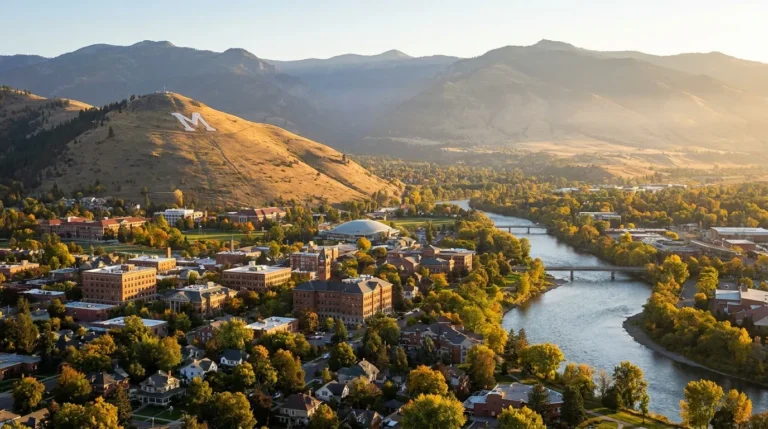
  • Missoula (university, cultural life)
  • Billings (largest city, mid-range cost)
  • Helena (capital, calm)
  • Great Falls (affordable)
  • +2 more

Job market in Montana: tourism, ranching, mining, and healthcare

Jobs are concentrated in ranching, tourism, mining, and the public sector. Tech is growing in Bozeman and Missoula.

Montana's economy is different from industrial states. A large share of jobs come from agriculture, with cattle ranches and wheat and barley farms. Mining is still important, with extraction of copper, gold, silver, and coal in various regions.

Tourism is one of the main engines, especially around Glacier National Park, Yellowstone, and ski resorts like Big Sky and Whitefish. Hotels, restaurants, tour guides, and adventure companies hire a lot of people, mainly in summer. Healthcare and education are stable employers in every city.

Technology is growing in Bozeman, which has earned the nickname Silicon Valley of the Rockies. Companies like Oracle (after acquiring RightNow Technologies) and several startups have operations there. Missoula has a strong university and public-sector presence. Average salaries are lower than on the coasts, but the cost of living outside Bozeman makes up for it.

$53,000
Avg net salary
per month
$21,320
Minimum wage
per month
3.2%
Unemployment
62.5%
Labor force
Dominant sectors
  • Ranching and agriculture (cattle, wheat, barley)
  • Tourism and national parks
  • Mining (copper, gold, coal)
  • Healthcare
  • Education
  • +3 more
Major employers
  • Oracle (Bozeman, former RightNow)
  • University of Montana (Missoula)
  • Montana State University (Bozeman)
  • Billings Clinic (healthcare)
  • St. Vincent Healthcare (Billings)
  • +2 more

Education in Montana: accessible public schools and two state universities

Free public education statewide. Montana State and the University of Montana are the main higher-education options.

Children have access to free public school throughout the state, from kindergarten through high school. Because of the low population density, rural schools can be small, with only a few dozen students. In cities like Bozeman, Missoula, and Billings, public schools are well rated.

Higher public education has two pillars: Montana State University (Bozeman), strong in engineering, agriculture, and sciences; and the University of Montana (Missoula), traditional in humanities, law, journalism, and wildlife biology. There are also smaller colleges like Montana Tech (Butte), focused on mining engineering.

Tuition at public universities is reasonable, especially for state residents. International students pay more, but it is still less expensive than universities on the coasts. University towns have an active cultural life, with music, theater, and sporting events that energize the entire community.

Literacy98.0%
Tertiary education33.0%
478
PISA score (avg)
$11,800
Private school
per year
Notable universities
  • Montana State University (Bozeman)
  • University of Montana (Missoula)
  • Montana Tech (Butte, mining engineering)
  • Carroll College (Helena, private Catholic)
  • Rocky Mountain College (Billings)

Healthcare in Montana: limited network due to the vast territory

Good hospitals in Billings, Bozeman, and Missoula. Rural areas can be hours away from the nearest hospital.

Montana's healthcare system follows the US standard: no universal public coverage. People with formal employment receive health insurance as a benefit. Those without a job buy through the federal Marketplace, with income-based subsidies. Low-income families are eligible for Montana Medicaid.

The main hospitals are in Billings (Billings Clinic and St. Vincent Healthcare), Bozeman (Bozeman Health), Missoula (Providence St. Patrick), and Great Falls (Benefis). For rare specialized procedures, patients often travel to Seattle, Salt Lake City, or Denver.

The big challenge is distance. In rural areas and on tribal reservations, the nearest hospital can be two or three hours away by car. Telehealth programs and air ambulance services exist for serious cases. Costs without insurance are high: an emergency room visit can exceed US$ 2,000.

Healthcare index66.0 / 100
  • Life expectancyyears at birth
    78.5yrs
  • Doctors per 1kpracticing physicians
    2.7
  • Health spendper capita, per year
    $10,800
  • Public systemoverall quality rating
    Fair

Safety in Montana: calm cities, with issues concentrated in specific areas

Violent crime is low in most cities. Some tribal reservations face chronic problems.

In general, Montana is a safe state. Cities like Bozeman, Helena, Missoula, and Kalispell typically have crime rates below the national average. Theft is more common than violent crime, and residential neighborhoods are considered very quiet.

Billings, the largest city, has some neighborhoods with problems, especially tied to methamphetamine. But even there, most residents live in safe areas. Some tribal reservations face higher rates of domestic violence and missing persons cases, a topic that has been gaining national attention.

For newly arrived immigrants, the main concern is nature, not people. Encounters with grizzly bears, moose, and bison can be dangerous in park areas. Winter roads also require caution: heavy snowstorms and ice are frequent, and help can take a long time to arrive in isolated areas.

4.3
Homicides per 100k
per year
Safety index
58.0
Crime index
42.0
Safer neighborhoods
  • Bozeman (university, pricey but safe)
  • Missoula (university, culture)
  • Helena (capital, small)
  • Kalispell (near Glacier)
  • Whitefish (tourism)
  • Suburban neighborhoods of Billings (West End)
Areas to avoid
  • Billings downtown at night
  • Great Falls peripheral neighborhoods
  • Isolated reservations without cell coverage

Transportation in Montana: a car is absolutely essential

Enormous distances, almost no public transit outside cities. Small airports connect the state to other hubs.

In Montana, a car is not an option, it is a necessity. The distances between cities are enormous and roads cross completely empty regions. Public transit exists only within Billings, Missoula, and Bozeman, with limited coverage. Passenger trains are rare, except for Amtrak's Empire Builder line, which crosses the northern part of the state.

Roads like I-90 (crossing the state east to west) and I-15 (north to south) are the main highways. In winter, travel can be dangerous with snow and ice, and some roads in national parks close for months. Carrying snow tires and chains is common practice.

The main airports are BZN (Bozeman, the busiest), MSO (Missoula), BIL (Billings), and GTF (Great Falls). Direct flights usually go to Denver, Seattle, Salt Lake City, Minneapolis, or Chicago. For international destinations, a connection is almost always required. Bozeman's airport has grown significantly because of Yellowstone and Big Sky tourism.

19 min
Avg commute
22
Walkability
Airports
  • BZN (Bozeman Yellowstone International)
  • MSO (Missoula Montana)
  • BIL (Billings Logan International)
  • GTF (Great Falls International)
  • FCA (Glacier Park International, Kalispell)
  • +1 more
  • International airport
  • Bike infrastructure

Montana climate: long cold winters, short sunny summers

Intense cold in winter with abundant snow. Short but pleasant summer, ideal for outdoor activities.

Montana has a severe continental climate. Winter is long, cold, and snowy. From November to March, temperatures typically range between -15°C and 0°C, and can drop to -30°C on some nights, especially in the east. Snowstorms close roads and require well-heated homes.

Summer (June to August) is short and beautiful. Temperatures range between 20°C and 30°C, with cool nights even in July. Low humidity makes the heat comfortable. This is the national park tourism season, with long days and sunsets after 9 p.m.

Spring and fall are short and unpredictable. Snow is possible in May in some areas. Fall, in September and October, offers golden foliage (birches and aspens) and ideal conditions for hiking before winter closes everything down. The western part of the state, near the mountains, is wetter than the east, which has a semi-arid climate.

Sunny days / year209 days
Avg high (°F)
  • 37°J
  • 41°F
  • 51°M
  • 59°A
  • 68°M
  • 77°J
  • 86°J
  • 85°A
  • 75°S
  • 60°O
  • 47°N
  • 37°D
Avg low (°F)
  • 14°J
  • 17°F
  • 25°M
  • 33°A
  • 42°M
  • 50°J
  • 56°J
  • 54°A
  • 45°S
  • 34°O
  • 24°N
  • 16°D
Rainfall (")
  • 1"J
  • 1"F
  • 1"M
  • 2"A
  • 2"M
  • 2"J
  • 1"J
  • 1"A
  • 2"S
  • 2"O
  • 1"N
  • 1"D

Montana culture: cowboy tradition, nature, and Indigenous peoples

Rodeos, ranches, hunting, and fishing define the identity. Indigenous culture stays alive on reservations, with festivals and language.

Montana's culture is shaped by rural American traditions. Cowboys, ranches, and rodeos are part of everyday life in many areas. Events like Crow Fair, an Indigenous gathering with tipis and traditional dances, show the living presence of native peoples, especially the Crow and Blackfeet.

Hunting, fishing, and outdoor activities are almost mandatory. Fly-fishing on famous rivers like the Madison, Yellowstone, and Bighorn is a weekly activity for many. Skiing at Big Sky, Whitefish, and Bridger Bowl draws visitors from around the world. In spring and summer, hiking and camping in Glacier and Yellowstone dominate.

The cuisine is simple, built around bison, elk, beef, and trout. Dishes like bison burgers, huckleberry pie (made from a berry native to the mountains), and grilled steak are common in local restaurants. The state has a strong craft beer scene, with breweries in almost every mid-size city.

120
Major museums
Notable dishes
  • Bison burger
  • Steak (especially Montana Angus)
  • Huckleberry pie and huckleberry jam
  • Grilled trout (Yellowstone, Madison)
  • Pasties (meat pie, legacy of Butte miners)
  • +1 more
Annual events
  • Crow Fair (August, largest Indigenous gathering in the US)
  • Montana State Fair (Great Falls, July)
  • Sweet Pea Festival (Bozeman, August)
  • Whitefish Winter Carnival (February)
  • Festival of Nations (Red Lodge, August)
  • +1 more
UNESCO sites
  • Glacier National Park (Waterton-Glacier International Peace Park)

Key industries in Montana's economy

Ranching, tourism, mining, and energy form the base. Technology is slowly but steadily growing in Bozeman.

Agriculture is the state's historical foundation. Montana is a major producer of wheat, barley (used in beers nationwide), cattle, and hogs. Enormous ranches cover the eastern part of the state, and the annual livestock fair moves millions of dollars.

Tourism is one of the main engines, sustained by Glacier National Park, Yellowstone, ski resorts, and sport fishing. Tourism companies, hotels, and guides hire both in summer and winter. Wealthy families buying vacation homes also drive construction activity.

Mining and energy remain important. Copper, gold, silver, palladium, and platinum are extracted at mines like Stillwater. Coal and natural gas are also produced. Technology is establishing itself in Bozeman, with startups and software companies relocating for the quality of life.

  • GDPgross domestic product
    $73.0B
  • GDP per capitaoutput per resident
    $65,000
  • GDP growth (yr)economy expanding
    +2.0%
Top sectors
  • Ranching and agriculture (cattle, wheat, barley)
  • Tourism and national parks
  • Mining (copper, palladium, gold)
  • Energy (coal, natural gas, wind)
  • Technology (growing)
  • +3 more

Immigrant communities in Montana

Montana has one of the smallest immigrant populations in the country, about 25,000 people, with Canadian, German, Mexican and a small refugee presence in Missoula.

Montana has about 25,000 foreign-born residents, just over 2% of the population, one of the lowest shares in the United States. The mix reflects geography: Canadians along the northern border in cities like Great Falls and Havre, Germans and Eastern Europeans settled more than a century ago in rural communities, and Mexicans working on sugar beet farms, ranches and meat plants in central and eastern Montana. Since 2016, Missoula has resettled small groups of refugees from the Democratic Republic of Congo, Eritrea, Syria and Afghanistan, mostly around the university district.

There are no resident foreign consulates in Montana. People needing Mexican consular services are served by the Consulate-General in Denver, or by Calgary across the Canadian border in cross-border cases. In Missoula, the International Rescue Committee and Soft Landing Missoula coordinate resettlement, English instruction and volunteer mentorship. Bilingual Catholic parishes in Billings and Bozeman serve Latino farm and ranch workers, and several nearby tribal reservations offer space for seasonal immigrant labor networks.

25,000
Foreign-born residents
estimated
Top countries of origin
  • Canada
  • Mexico
  • Germany
  • Philippines
Main immigrant hubs
  • Missoula
  • Billings
  • Bozeman
  • Great Falls
  • Havre
Foreign consulates
  • No dedicated consulate (Montana is served by Denver and Calgary, Canada)
Community organizations
  • International Rescue Committee Missoula
  • Soft Landing Missoula

Latest posts

Posts about Montana

Coverage and updates related to this destination.