Visto n' Visa
Blog
Notícias e artigos
Destinations
Careers
Immigrants

Want to live and work in Nebraska?

Personalized immigration plan with eligible visas, costs, and next steps for your goal!

If you are not eligible, you will know exactly why and what to do to improve your approval chances.

Save up to 12 hours in meetings

No pointless assessments.

Save up to 90%

Save money on vague or unfocused consultations

Avoid Fraud and Mistakes

One mistake can cost you your visa

Total Impartiality

Zero commercial bias

Decide with peace of mind

No toxic urgency

Fast and Accurate

Answers in minutes, no guesswork

More about Nebraska

Endless prairies, strong agribusiness, and one of the lowest costs of living in the US.

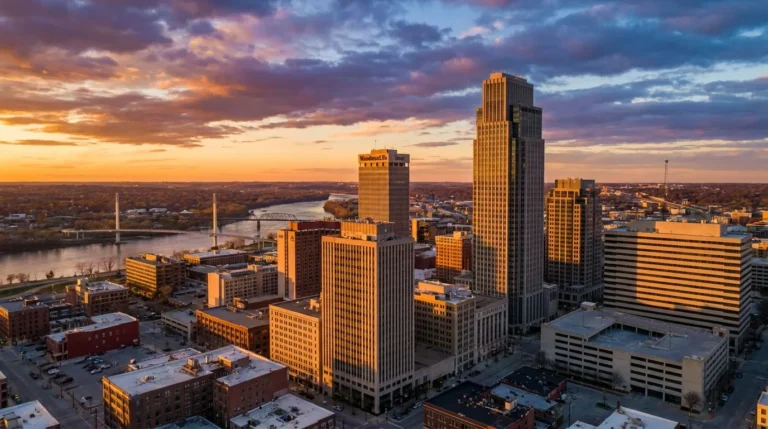
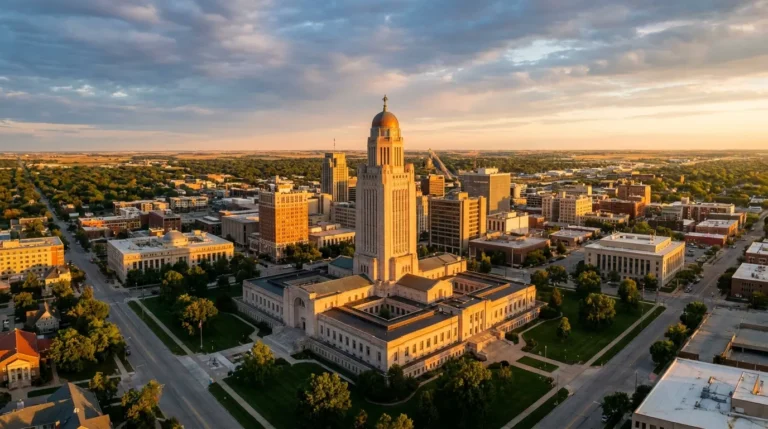
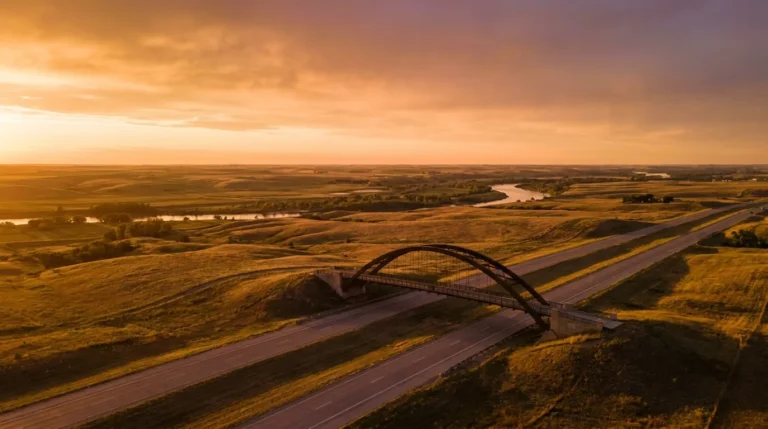
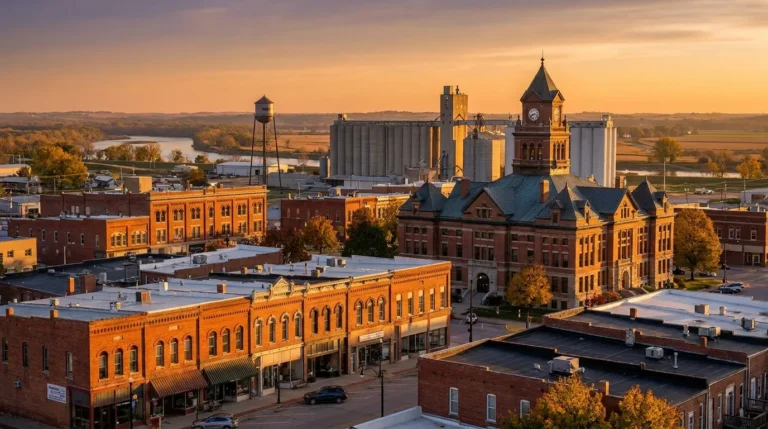
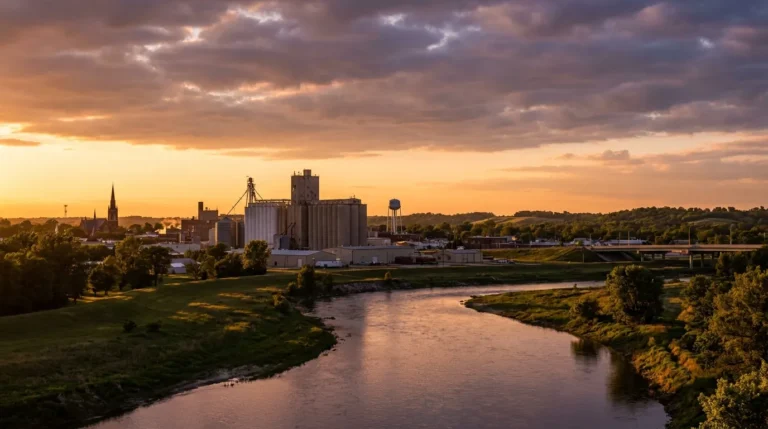
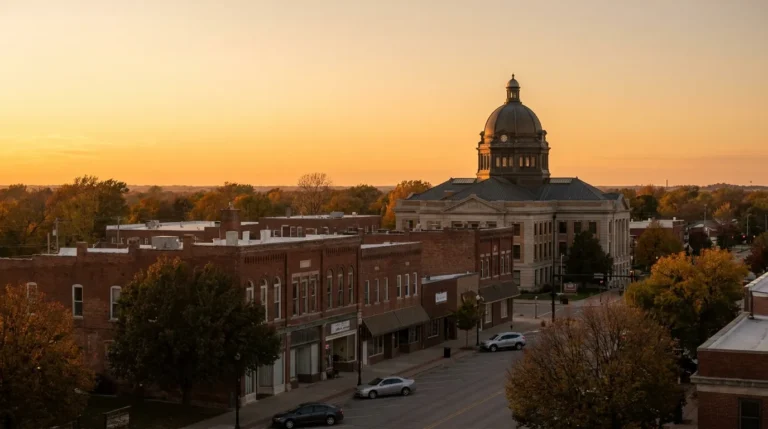
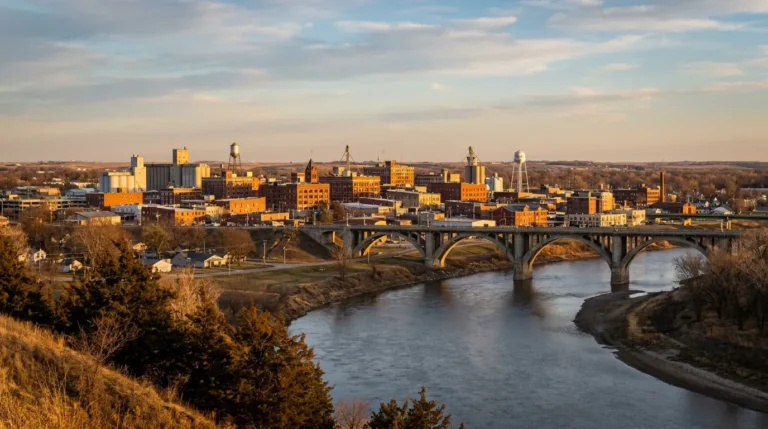
Nebraska sits in the center of the United States, in the region known as the Great Plains. The main cities are Omaha (the largest, on the Iowa border) and Lincoln (the capital, home of the University of Nebraska). The rest of the state is made up of small towns, cattle ranches, and cornfields and soybean fields stretching for hundreds of miles.

Omaha is home to Berkshire Hathaway, the holding company of investor Warren Buffett. The city has a regional airport, solid hospitals, and a financial district that employs people in insurance and banking. Lincoln revolves around the university and state government.

It is one of the most affordable states in the US. Housing, food, and gas cost less than almost anywhere else in the country. Life is calm, without major traffic jams. Those looking for a large Brazilian community will feel the absence: the Latin presence exists but is concentrated in Omaha and Lexington.

Population
1,967,923
Average monthly salary
54,000 USD/mo
41.1254°, -98.2681°

Featured places

Top 10 places in Nebraska

The places most sought-after by immigrants in this region.

Nebraska demographics: majority white with a growing Latino community

Historically white and rural, with a significant Latino presence in Omaha, Lincoln, and western agricultural towns.

Nebraska's population is predominantly white, with strong German, Irish, and Czech heritage. There are established communities that still maintain traditions, mainly in small towns. Catholic and Lutheran churches are a fixture of everyday life in almost every corner of the state.

The Hispanic community has grown significantly in recent decades, primarily from Mexico and Central America. They work in meatpacking plants, farms, and construction. Cities like Lexington, Schuyler, and parts of Omaha have entire neighborhoods where Spanish is the first language.

There are also refugee communities in Omaha (Sudanese, Somali, Vietnamese) brought through resettlement programs. Brazilians are few but present in Omaha, working in Tyson and Smithfield meatpacking plants. Religious and family life is central across almost the entire state.

1,967,923
Population
37 yrs
Median age
10/km²
Density
$66,600
Median income
per year
Urban population73.6%
Foreign-born7.4%
Languages spoken
  • English
  • Spanish (Latino community)
  • Vietnamese
  • Somali and Arabic (refugees)
  • German (cultural heritage)
Main religions
  • Protestant Christian (Lutheran and Methodist)
  • Catholic Christian
  • No religion
  • Muslim (refugee community)

Cost of living in Nebraska: affordable compared to the US average

Rent, food, and services well below the national average. Mid-size cities allow comfortable living on modest salaries.

Nebraska is one of the most affordable states in the US. In Omaha, a 1-bedroom apartment in a decent neighborhood runs about $900 to $1,200 per month. Lincoln is similar. In smaller cities like Grand Island, Kearney, or Norfolk, you can rent well for $700 to $900.

Groceries cost less than the national average. Eating out at a popular chain runs $12 to $18 per person. Gas is usually among the cheapest in the country. Electricity is reasonable, though air conditioning and heating add to the bill depending on the season.

Families with an annual income of $60,000 to $80,000 can live comfortably, with a home, two cars, and kids in public schools. State income tax exists, with progressive rates. People coming from expensive cities like New York or San Francisco are often surprised by how far their money goes.

91Cost index (US = 100)9% below US average
CategorySingleCoupleFamily (2 + 2)
iHousing$1,184$1,367$1,731
iFood$346$692$1,257
iTransport$456$774$1,002
iHealthcare$255$510$957
iChildcare$1,658
iOther$774$1,394$1,959
Monthly total$3,015$4,737$8,564

Source: U.S. BLS Consumer Expenditure Survey 2023 + BEA Regional Price Parities 2023 · Estimates in USD, monthly.

Housing in Nebraska: large homes at affordable prices

Spacious houses with yards are the norm. Buying property is feasible for middle-class families; mortgages are common.

In Omaha, 3-bedroom homes in good neighborhoods (Elkhorn, West Omaha, Dundee) range from $300,000 to $500,000. In Lincoln, prices are similar, with neighborhoods like Wilderness Hills, Williamsburg, and Piedmont among the most sought-after. Smaller cities have spacious homes for $150,000 to $250,000.

Renting is the first choice for newcomers. Apartments in newer complexes with pools and gyms run $1,100 to $1,500 in Omaha. To rent, landlords ask for proof of income (usually 2.5 to 3 times the rent) and a US credit history. Those arriving without a credit score need a larger deposit or a co-signer.

Buying a home requires a credit history and stable employment. Banks ask for a 10 to 20% down payment and review income. For newly arrived immigrants without an ITIN or green card, some local banks offer specific financing options, though at higher interest rates.

Purchase price (m²)
  • Center$2,300/m²
  • Outside$1,500/m²
3.6×
Price-to-income
7.0%
Mortgage rate (20y)
Recommended neighborhoods
  • Elkhorn and West Omaha (top schools, families)
  • Dundee and Benson (Omaha, historic neighborhoods)
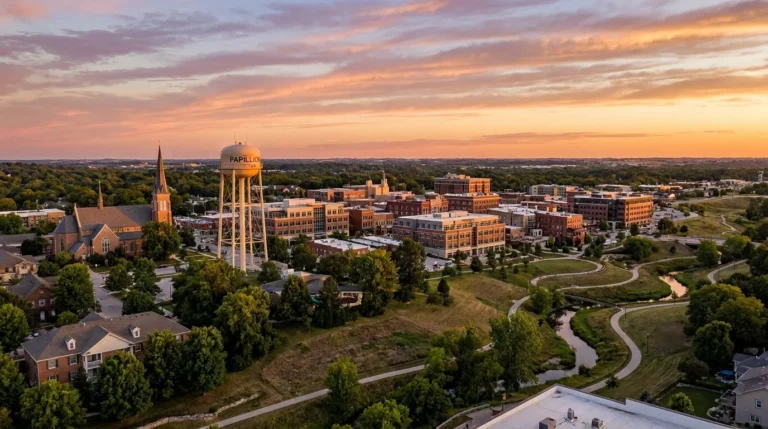
  • Papillion and La Vista (safe suburbs)
  • South Lincoln (near the university)
  • Wilderness Hills (Lincoln, families)
  • +2 more

Job market in Nebraska: agribusiness, insurance, and logistics

Meatpacking, farming, insurance, railroads, and logistics employ most of the workforce. Historically low unemployment.

Nebraska has one of the lowest unemployment rates in the US. In Omaha, the finance and insurance sector is strong, with Berkshire Hathaway, Mutual of Omaha, and TD Ameritrade among the largest employers. Union Pacific Railroad is also headquartered in Omaha, employing thousands in rail logistics.

Agribusiness dominates the interior. Meatpacking plants from Tyson Foods, Cargill, and Smithfield Foods employ immigrants in cities like Lexington, Grand Island, and Madison. It's hard work, but wages are above the federal minimum and benefits are included. Corn, soybean, and cattle operations drive both family farms and large-scale operations.

There is also employment in healthcare (Nebraska Medicine, CHI Health, Bryan Health), higher education (UNL, UNO, Creighton), and Offutt Air Force Base in Bellevue. Technology is growing in Omaha with startups and branch offices of national companies. Average salaries are lower than on the coasts, but the cost of living makes up for it.

$54,000
Avg net salary
per month
$22,880
Minimum wage
per month
2.5%
Unemployment
67.0%
Labor force
Dominant sectors
  • Agribusiness and cattle
  • Meatpacking and food processing
  • Insurance and financial services
  • Railroads and logistics
  • Healthcare
  • +2 more
Major employers
  • Berkshire Hathaway (Omaha)
  • Union Pacific Railroad (Omaha)
  • Mutual of Omaha
  • Tyson Foods
  • Cargill
  • +3 more

Education in Nebraska: quality public schools and affordable universities

Free public system, well-rated state universities. Creighton in Omaha is the state's top private reference.

Public elementary education is free for all resident children regardless of immigration status. Quality varies by district: newer neighborhoods tend to have better schools. The Elkhorn, Millard, and Papillion districts (Omaha area) and Lincoln Public Schools are among the best-rated in the state.

The University of Nebraska has campuses in Lincoln (UNL, the flagship), Omaha (UNO), Kearney (UNK), and a medical center in Omaha (UNMC). UNL is strong in agriculture, engineering, and journalism. UNMC is one of the best medical centers in the central US. In-state tuition is far lower than at coastal universities.

Creighton University in Omaha is a private Jesuit university with well-regarded programs in medicine, dentistry, and law. It offers competitive scholarships for international students. Community colleges (Metropolitan Community College, Southeast Community College) offer fast, affordable technical programs.

Literacy98.0%
Tertiary education33.2%
478
PISA score (avg)
$10,500
Private school
per year
Notable universities
  • University of Nebraska-Lincoln (UNL)
  • University of Nebraska Medical Center (UNMC, Omaha)
  • University of Nebraska Omaha (UNO)
  • Creighton University (Omaha)
  • University of Nebraska at Kearney (UNK)
  • Nebraska Wesleyan University (Lincoln)

Healthcare in Nebraska: solid private network and referral hospitals in Omaha

Employer-based coverage is the norm. UNMC and Nebraska Medicine in Omaha are regional referral centers for complex cases.

The US does not have universal public healthcare. In Nebraska, most people have health insurance through their employer. Family premiums can exceed $1,400 per month, with the employer covering part. Those without employment can buy a plan through the federal marketplace (healthcare.gov), with income-based subsidies.

Low-income families qualify for Nebraska Medicaid (Heritage Health). Children and pregnant women have expanded coverage through CHIP. Undocumented immigrants have restricted access, essentially limited to emergencies and pregnancy. Adults without coverage can use community clinics (FQHCs) with income-based fees.

Nebraska Medicine, affiliated with UNMC, is the state's main hospital complex with national recognition in transplants and oncology. CHI Health, Bryan Health (Lincoln), and Methodist Health System cover the rest. A basic emergency room visit costs between $1,000 and $3,000 for those without insurance.

Healthcare index71.0 / 100
  • Life expectancyyears at birth
    78.8yrs
  • Doctors per 1kpracticing physicians
    2.9
  • Health spendper capita, per year
    $10,400
  • Public systemoverall quality rating
    Fair

Safety in Nebraska: a safe state with low violent crime

Small cities are very peaceful. Omaha has some spotty neighborhoods, but most of the state is below the US crime average.

Nebraska ranks among the safest states in the US. Most small cities have very low crime rates. Lincoln has a high sense of safety, with quiet residential neighborhoods and little violent crime. Cities like Papillion, Bellevue, and Elkhorn regularly appear in national rankings of best places to raise children.

In Omaha, conditions vary by neighborhood. The west side and suburbs are very safe. Certain parts of north and south Omaha have higher crime rates, with gang activity and gun violence concentrated in a few areas. Researching the neighborhood before renting is important.

Natural hazards are more of a concern than crime for most of the state. Tornadoes occur in spring and early summer (April through June). Homes typically have basements or storm shelters. Those arriving from other regions need to learn emergency weather protocols.

3.5
Homicides per 100k
per year
Safety index
62.0
Crime index
38.0
Safer neighborhoods
  • Papillion and La Vista (south Omaha)
  • Elkhorn and West Omaha
  • Bellevue (near Offutt)
  • Gretna and Springfield
  • South Lincoln
  • Kearney and Grand Island (interior)
  • Norfolk and Columbus
Areas to avoid
  • North Omaha
  • Lincoln downtown at night
  • Grand Island outskirts

Transportation in Nebraska: a car is a must outside Omaha and Lincoln

Long distances and limited public transit. Main airport is Omaha (OMA). Lincoln has a regional airport (LNK).

Like most of the central US, a car is practically required in Nebraska. Distances between cities are large, and public transportation outside Omaha and Lincoln barely exists. Even within Omaha, the bus system (Metro Transit) serves central areas, but the suburbs depend on cars.

Lincoln has a bus system (StarTran) that serves the university and downtown. Biking is viable in warm months in Lincoln and parts of Omaha. Ride-share apps like Uber and Lyft work in both cities. For long distances, intercity buses (Greyhound, Burlington Trailways) connect the state to Chicago, Denver, and Kansas City.

The main airport is Eppley Airfield (OMA) in Omaha, with direct flights to major US cities and some international connections via hubs. Lincoln has a regional airport (LNK) with smaller flights. Interstates like I-80 (east-west) and I-29 (south-north) are the main highways.

19 min
Avg commute
27
Walkability
Airports
  • OMA (Eppley Airfield, Omaha)
  • LNK (Lincoln Airport)
  • Bike infrastructure

Nebraska climate: continental with harsh winters and hot summers

Four distinct seasons. Hot, humid summers and cold, snowy winters. Tornadoes in spring and early summer.

Nebraska has the classic continental climate of the American Midwest. Summer (June through August) is hot and humid, with temperatures frequently above 30°C and strong afternoon storms. Tornadoes occur mainly in May and June, and the state is part of what is known as Tornado Alley.

Winter (December through February) is genuinely cold. Temperatures drop below freezing on almost every night, and lows of -15°C are not rare. It snows multiple times each season, with storms that can close roads. Homes have central heating, and heavy clothing is essential.

Spring and fall are the best seasons: mild temperatures, green landscapes in spring, and golden harvest colors in fall. Strong wind is constant year-round, a characteristic of the Great Plains. Those coming from tropical climates take time to adjust to the temperature swings between seasons.

Sunny days / year223 days
Avg high (°F)
  • 34°J
  • 39°F
  • 52°M
  • 64°A
  • 75°M
  • 84°J
  • 88°J
  • 86°A
  • 79°S
  • 65°O
  • 50°N
  • 38°D
Avg low (°F)
  • 15°J
  • 19°F
  • 30°M
  • 41°A
  • 53°M
  • 63°J
  • 68°J
  • 66°A
  • 56°S
  • 43°O
  • 30°N
  • 20°D
Rainfall (")
  • 1"J
  • 1"F
  • 2"M
  • 3"A
  • 5"M
  • 4"J
  • 4"J
  • 5"A
  • 3"S
  • 2"O
  • 1"N
  • 1"D

Nebraska culture: college football, farming, and Midwest hospitality

The Cornhuskers (university team), state fairs, barbecue, and a friendly attitude define the state. Cultural scene growing in Omaha.

College football is almost a religion in Nebraska. The University of Nebraska Cornhuskers in Lincoln pack Memorial Stadium on game days. The entire city wears red. For immigrants, understanding this ritual helps with social integration into local life.

The culture is strongly influenced by the Midwest: polite, welcoming, and helpful people with a relaxed pace of life. State agricultural fairs, rodeos, and small-town festivals fill the calendar. Typical dishes revolve around beef (Nebraska is famous for its steaks), corn, and potatoes.

Omaha has a respectable cultural scene for an inland city. The Joslyn Art Museum, Henry Doorly Zoo (one of the best zoos in the US), and the Old Market (historic neighborhood with restaurants and bars) are key landmarks. Omaha's indie scene has launched bands like Bright Eyes and 311.

135
Major museums
Notable dishes
  • Nebraska steak (premium beef)
  • Runza (meat and cabbage-stuffed bread)
  • Reuben sandwich (created in Omaha)
  • Roasted sweet corn
  • Pierogi and kolache (Czech and Polish heritage)
  • +3 more
Annual events
  • College World Series (Omaha, June)
  • Berkshire Hathaway Annual Meeting (Omaha, May)
  • Nebraska State Fair (Grand Island, August-September)
  • Husker Football season (Lincoln, August to November)
  • Maha Music Festival (Omaha, August)
  • +1 more

Nebraska's main economic sectors

Agribusiness, meatpacking, insurance, railroads, and logistics sustain the state's economy. Technology is growing in Omaha.

Agribusiness is the economic heart of Nebraska. The state leads US beef production and is among the largest producers of corn, soybeans, and ethanol. Massive meatpacking plants from Tyson, Cargill, and Smithfield process meat for the entire country and for export.

The finance and insurance sector is strong in Omaha. Berkshire Hathaway, Warren Buffett's company, is headquartered in the city. Mutual of Omaha, Pacific Life, and various national insurers employ thousands. TD Ameritrade (now Schwab) also maintains large operations in Omaha.

Logistics and railroads carry historical weight: Union Pacific Railroad, headquartered in Omaha, is one of the largest railways in the US. Defense also provides solid employment: Offutt Air Force Base in Bellevue is home to US Strategic Command. Technology, biotechnology, and renewable energy (wind farms) are all growing.

  • GDPgross domestic product
    $165.0B
  • GDP per capitaoutput per resident
    $83,800
  • GDP growth (yr)economy expanding
    +2.4%
Top sectors
  • Agribusiness (beef, corn, soybeans)
  • Food processing
  • Insurance and financial services
  • Railroads and logistics
  • Healthcare and biotechnology
  • +3 more

Immigrant communities in Nebraska

Nebraska has around 150,000 immigrants, with a strong Mexican presence in Omaha and Lexington and Sudanese and Karen communities resettled in Omaha.

Nebraska is home to about 150,000 people born outside the United States, close to 8% of the population. The largest community is Mexican, especially strong in South Omaha, where markets, bakeries, and soccer leagues cluster around 24th Street, and in smaller towns like Lexington, Grand Island, Schuyler, and Crete, tied to the meat industry. Sudanese, mostly from South Sudan, form one of the largest Sudanese diasporas in the country in Omaha, the result of refugee resettlement since the 1990s. Karen and other Burmese groups have also been resettled in Omaha and Lincoln. Central Americans, Vietnamese, Iraqis, and Somalis round out the mix, and Lincoln, the state capital, draws families tied to the university and medical centers.

The Consulate-General of Mexico in Omaha serves Nebraska, Iowa, and part of Wyoming. The Heartland Workers Center, in Omaha, organizes Hispanic meatpacking workers. Lutheran Family Services of Nebraska coordinates refugee resettlement and offers mental health, legal, and educational services. The Refugee Empowerment Center serves newly arrived families in Omaha. Catholic and evangelical churches and mosques act as orientation points, and public schools in Omaha and meatpacking towns run bilingual programs in Spanish, Karen, and Arabic.

150,000
Foreign-born residents
estimated
Top countries of origin
  • Mexico
  • Sudan
  • El Salvador
  • Myanmar
  • Vietnam
Main immigrant hubs
  • Omaha
  • Lincoln
  • Grand Island
  • Lexington
  • Schuyler
Foreign consulates
  • Mexican Consulate General in Omaha
Community organizations
  • Heartland Workers Center
  • Lutheran Family Services of Nebraska
  • Refugee Empowerment Center
  • Nebraska Appleseed

Latest posts

Posts about Nebraska

Coverage and updates related to this destination.