Visto n' Visa
Blog
Notícias e artigos
Destinations
Careers
Immigrants

Want to live and work in Columbus?

Personalized immigration plan with eligible visas, costs, and next steps for your goal!

If you are not eligible, you will know exactly why and what to do to improve your approval chances.

Save up to 12 hours in meetings

No pointless assessments.

Save up to 90%

Save money on vague or unfocused consultations

Avoid Fraud and Mistakes

One mistake can cost you your visa

Total Impartiality

Zero commercial bias

Decide with peace of mind

No toxic urgency

Fast and Accurate

Answers in minutes, no guesswork

Who lives in Columbus: population profile

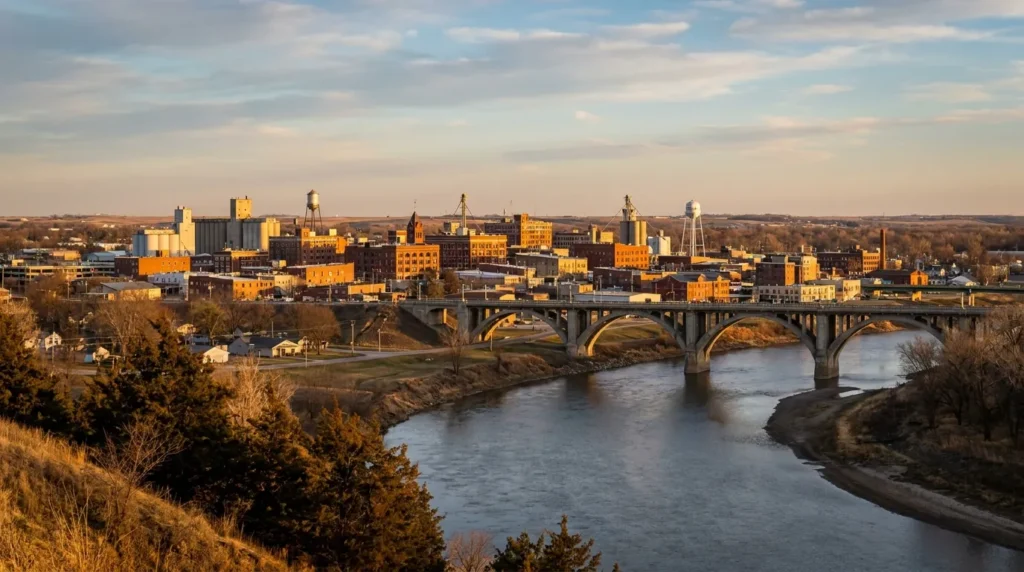
Population of around 24,000, with a strong German-heritage presence and a growing Hispanic community drawn by work at industrial and agricultural plants.

German heritage has shaped the region since the 19th century and still appears in surnames, Lutheran churches, and the annual Columbus Days festival. The predominantly white population coexists with a growing Hispanic community, which today makes up a large share of the workforce at the surrounding factories and meatpacking plants.

English dominates, but Spanish is spoken in shops, schools with bilingual programs, and Catholic churches throughout the area. There are also small groups of Vietnamese and Somali origin, tied to more recent industrial hiring.

Religion carries weight in daily life. Catholics and Lutherans form the base, with active parishes such as St. Bonaventure and St. Isidore. Community life revolves heavily around parishes, Columbus Community Hospital, and school sports leagues.

Languages spoken
  • English
  • Spanish
  • German (heritage)
Main religions
  • Catholic
  • Lutheran
  • Methodist
  • No religion

Cost of living in Columbus: affordable by American standards

Housing, food, and services fall well below the national average. Columbus ranks among the most accessible options in the Midwest for median-income families.

Rent for a three-bedroom home in a residential neighborhood tends to run well below Omaha or Lincoln. Buying property is also feasible: many homes from the 1960s and 1970s are priced accessibly, with large lots in the city's northern neighborhoods.

Grocery shopping is dominated by Hy-Vee, Walmart, and Super Saver. There is no sophisticated delivery infrastructure and limited ethnic restaurant variety. Those who cook at home save considerably; those who rely on eating out pay proportionally more given the limited options.

Electricity bills from Loup Power tend to stay below the state average, but natural gas adds up during the long winter. A car is essentially mandatory, so fuel, maintenance, and insurance become fixed monthly costs with no public transit alternative.

Columbus

Where to live in Columbus: neighborhoods and housing types

Single-family homes with yards predominate. Rentals are concentrated in complexes near 33rd Avenue and in older homes close to downtown.

The western area, around Lake Babcock and Pawnee Plaza, holds the newer construction and upper-middle-class homes. Families with children tend to look here, given proximity to schools and Pawnee Park.

Central neighborhoods near 13th Street and 23rd Street have older, more affordable homes. A practical choice for those working at the factories who want to minimize commute time. Some streets need structural repairs, so an inspection before closing is worthwhile.

The market is constrained: few listings, low turnover. Rentals are primarily in small, locally managed buildings. For newcomers, renting before buying is generally the more sensible path while getting to know the city.

Recommended neighborhoods
  • Lake Babcock
  • West Columbus
  • Pawnee Park area
  • Downtown (13th Street)
  • Northeast Columbus

Job market in Columbus: industry and agribusiness

Employment is concentrated in manufacturing, food processing, medical devices, and energy. Little room for corporate offices or tech.

Becton Dickinson runs a large local operation manufacturing disposable medical devices, with rotating shifts. Behlen Manufacturing employs hundreds in metal structures and rural construction. Operational positions open regularly and are accessible to workers without fluent English.

Archer Daniels Midland (ADM) and Cargill operate corn and feed processing plants on the outskirts. For technical professionals, there is demand in mechanical and electrical engineering and industrial maintenance. Wages follow the regional Midwest standard, not coastal rates.

Healthcare, education, and public administration round out the picture, with Columbus Community Hospital, Columbus Public Schools, and Central Community College as significant employers. Those seeking tech or financial services roles need to look toward Omaha or Lincoln.

Dominant sectors
  • Manufacturing
  • Agribusiness
  • Medical devices
  • Energy
  • Healthcare
Major employers
  • Becton Dickinson
  • Behlen Manufacturing
  • Archer Daniels Midland
  • Columbus Community Hospital
  • Loup Power District
  • +1 more

Education in Columbus: solid public schools and a community college

A well-regarded public school system for the region, with Columbus Public Schools and two Catholic schools. Local higher education centers on Central Community College.

Columbus Public Schools operates several elementary schools, two middle schools, and Columbus High School, with programs in science, athletics, and vocational training. Scotus Central Catholic and St. Anthony offer faith-based education for families seeking a private alternative.

Central Community College maintains a Columbus campus with technical programs in manufacturing, welding, nursing, accounting, and information technology. It serves as the affordable entry point to professional credentials and to transfer pathways at state universities.

For a full four-year degree, students typically go to the University of Nebraska-Lincoln (UNL), Wayne State College, or Creighton University in Omaha. Bilingual programs serve Hispanic families, and homeschooling has an active community in the surrounding rural area.

Notable universities
  • Central Community College - Columbus Campus
  • University of Nebraska-Lincoln (130 km)
  • Wayne State College
  • Creighton University (Omaha)

Healthcare in Columbus: regional hospital as the anchor

Primary and emergency care serves the city and surrounding rural areas. Complex procedures require travel to Omaha or Lincoln.

Columbus Community Hospital is the regional healthcare center, with a 24-hour emergency room, maternity ward, general surgery, and specialized clinics. It is also one of the city's largest employers, with a medical and nursing staff reinforced by specialists who travel in weekly from Omaha.

The clinic network includes Columbus Family Practice and several private clinics for pediatrics, orthopedics, and cardiology. Walmart, Hy-Vee, and independent pharmacies cover the city. Major private insurance plans, Medicare, and Medicaid are accepted.

Mental health services are limited, with few psychiatrists and psychologists seeing patients locally. High-complexity cases, advanced oncology, and transplants are referred to Nebraska Medicine or CHI Health in Omaha, about 90 minutes by car.

Healthcare index60.0 / 100
  • Life expectancyyears at birth
    78.4yrs
  • Doctors per 1kpracticing physicians
    3.7
  • Health spendper capita, per year
    $13,473
  • Public systemoverall quality rating
    Fair

Safety in Columbus: small city, low rates

Violent crime is rare. The main concerns are petty theft, occasional vandalism, and traffic on rural highways.

The crime rate falls below the national average for violent offenses. Residential neighborhoods are quiet, with neighbors who still know each other by name. The municipal police maintain a visible presence, and relations with the Hispanic community have improved in recent years with the addition of bilingual officers.

The busiest and safest daytime areas are around Pawnee Plaza, the historic downtown, and city parks. Older neighborhoods near the industrial zone to the south may have homes in poorer condition but rarely pose serious safety concerns.

The main concern is severe weather: tornadoes occur in spring and summer, and the city's siren system activates when alerts are issued. Having a shelter plan at home and following Platte County Emergency Management for warnings is strongly advisable.

Safer neighborhoods
  • Lake Babcock
  • Pawnee Park area
  • West Columbus
  • Commercial downtown
Areas to avoid
  • Southern industrial zone (at night)
  • Isolated areas near the railroad tracks

Transportation in Columbus: complete car dependency

A road-dependent city with no regular public transit. The nearest commercial airport is Eppley Airfield in Omaha, about 80 miles to the east.

There is no urban bus system. Some social service vans serve elderly residents and people with disabilities, but daily life depends on a personal vehicle. US Highway 30 and US Highway 81 cut through the city and connect to the rest of the state.

Columbus Municipal Airport (OLU) serves general aviation only. For commercial flights, Eppley Airfield (OMA) in Omaha is the reference, with direct flights to hubs such as Denver, Chicago, and Dallas. Lincoln Airport (LNK) is an alternative in some cases.

Union Pacific freight trains cross the city frequently, so grade crossings can close for minutes during peak hours. Urban bike lanes are limited, but the Loup Trail offers a good recreational route between Pawnee Park and the Loup Power Canal.

Airports
  • OLU - Columbus Municipal Airport
  • OMA - Eppley Airfield (Omaha, 130 km)
  • LNK - Lincoln Airport (140 km)

What the Climate Is Like Living in Columbus

Columbus has a humid continental climate, with cold and snowy winters, hot and humid summers, and severe storms in spring.

Winters are cold, with lows frequently between -12 and -5 degrees Celsius and regular snowfall from December through February. Snowstorms can close roads on some days each year.

Summer is hot and humid, with highs between 30 and 32 degrees Celsius in July and overnight lows around 21 degrees. Severe storms and tornadoes occur in spring and early summer.

Residents need heating, air conditioning, snow tires, and a tornado plan. The transitional seasons pass quickly between harsh winters and heavy summers.

Sunny days / year220 days
Avg high (°F)
  • 36°J
  • 35°F
  • 51°M
  • 63°A
  • 72°M
  • 85°J
  • 87°J
  • 86°A
  • 81°S
  • 64°O
  • 52°N
  • 41°D
Avg low (°F)
  • 19°J
  • 16°F
  • 30°M
  • 40°A
  • 53°M
  • 65°J
  • 68°J
  • 67°A
  • 61°S
  • 44°O
  • 33°N
  • 24°D
Rainfall (")
  • 1"J
  • 1"F
  • 3"M
  • 2"A
  • 4"M
  • 3"J
  • 2"J
  • 2"A
  • 2"S
  • 3"O
  • 1"N
  • 1"D

Culture in Columbus: rural tradition and community festivals

Cultural life revolves around community events, school sports, churches, and the rural heritage of eastern Nebraska. Theater and large-scale museums are limited.

Columbus Days, held in August, is the best-known event: a parade, fair food, outdoor concerts, and children's activities. The Platte County Fair draws families from across the region with agricultural exhibits, rodeos, and livestock competitions. Both are natural opportunities to meet people.

Local cuisine follows the Midwest German tradition, with runzas, bratwurst, kolaches, and dishes built around corn and beef. Establishments like Glur's Tavern, the oldest bar still operating west of the Missouri River, preserve the counter culture typical of small-town Nebraska.

The Columbus Performing Arts Center hosts plays, recitals, and Columbus Symphony Orchestra performances. The Quincentenary Bell Tower in the city center marks the city's founding. For a more substantial museum and theater scene, Omaha is the destination.

Notable dishes
  • Runza
  • Bratwurst
  • Kolache
  • Cinnamon roll with chili
  • Corn-fed beef
Annual events
  • Columbus Days (August)
  • Platte County Fair
  • Columbus Powwow
  • Glur's Tavern Oktoberfest
  • Pawnee Park Christmas Lights

What to see and do in Columbus: parks and local history

Attractions are modest but tangible: parks, an agricultural museum, a historic racetrack, and outdoor activities on the area's lakes.

Pawnee Park, at the city's southern entrance, is the main green space, with trails along the Loup River, a public pool, and a small zoo. Lake North and Lake Babcock, formed by the Loup Power Canal, offer fishing, waterskiing, and camping during warm months.

The Platte County Historical Society Museum holds artifacts from German settlement and railroad history. The Quincentenary Bell Tower marks the 500th anniversary of Columbus's arrival, giving the city its name. Glur's Tavern is a required stop for its title as the oldest bar west of the Missouri River.

The Ag Park Race Track hosts horse racing in summer, and the Nebraska State Fair Equestrian Center holds equestrian events. Rodeo enthusiasts can catch the Columbus Roundup at the Platte County Fair.

  1. 1Pawnee Park
  2. 2Quincentenary Bell Tower
  3. 3Glur's Tavern
  4. 4Platte County Historical Museum
  5. 5Ag Park Race Track
  6. 6Lake North
Parks & green spaces
  • Pawnee Park
  • Lake Babcock
  • Lake North
  • Powerhouse Park
  • Frankfort Square Park

Latest posts

Posts about Nebraska

Coverage and updates related to this destination.

Showing content from Nebraska, as there is no specific data for Columbus yet.