Visto n' Visa
Blog
Notícias e artigos
Destinations
Careers
Immigrants

Want to live and work in Mississippi?

Personalized immigration plan with eligible visas, costs, and next steps for your goal!

If you are not eligible, you will know exactly why and what to do to improve your approval chances.

Save up to 12 hours in meetings

No pointless assessments.

Save up to 90%

Save money on vague or unfocused consultations

Avoid Fraud and Mistakes

One mistake can cost you your visa

Total Impartiality

Zero commercial bias

Decide with peace of mind

No toxic urgency

Fast and Accurate

Answers in minutes, no guesswork

Inside Mississippi

Birthplace of the blues and the most affordable state in the US. Deep Southern culture.

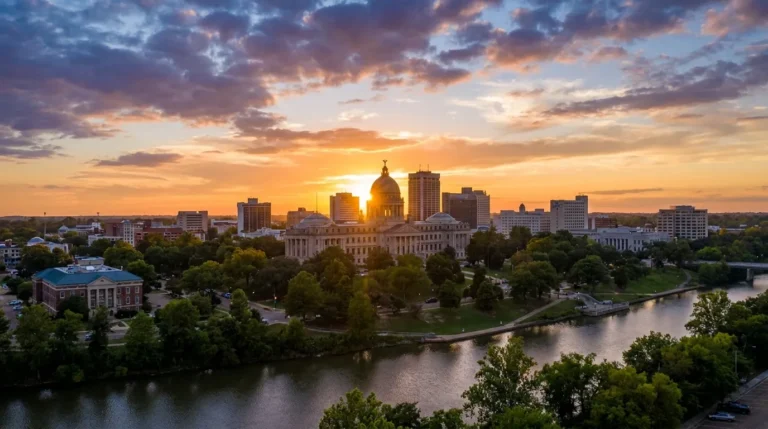
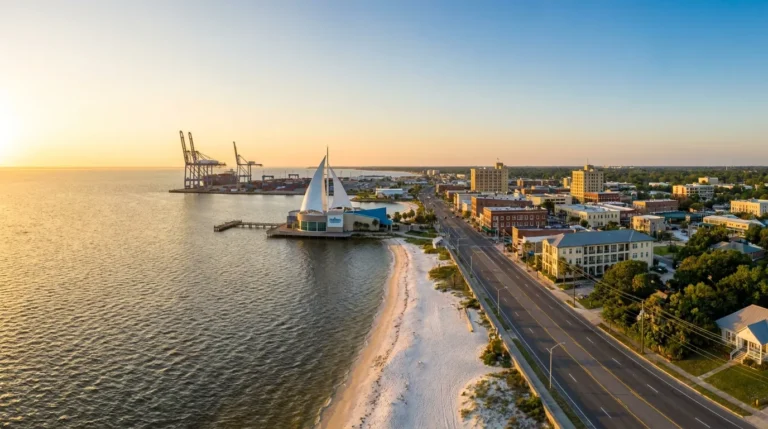
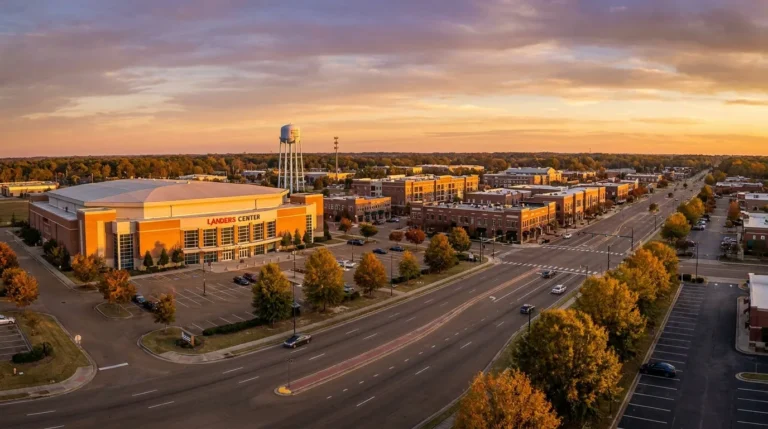
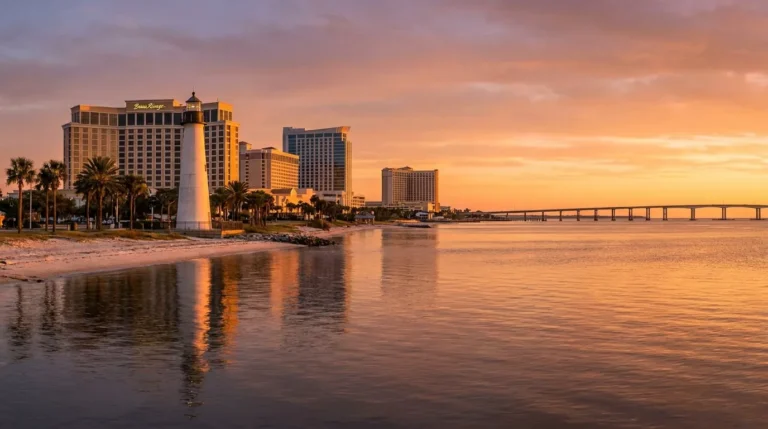
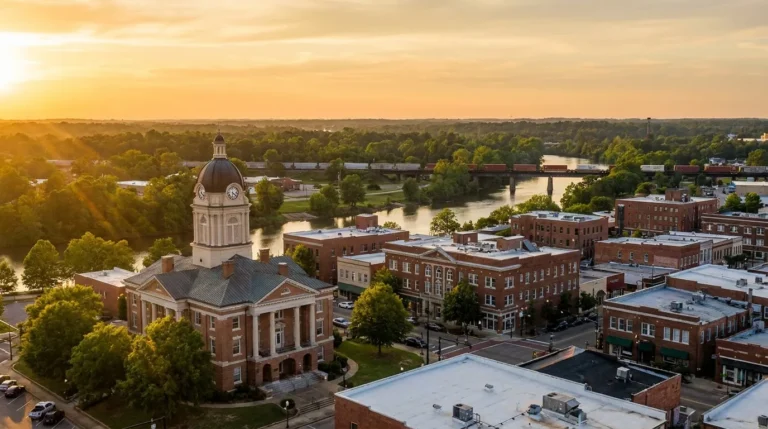
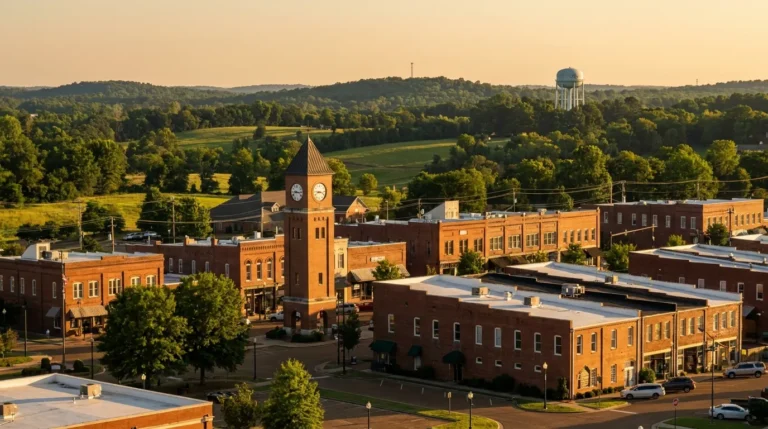
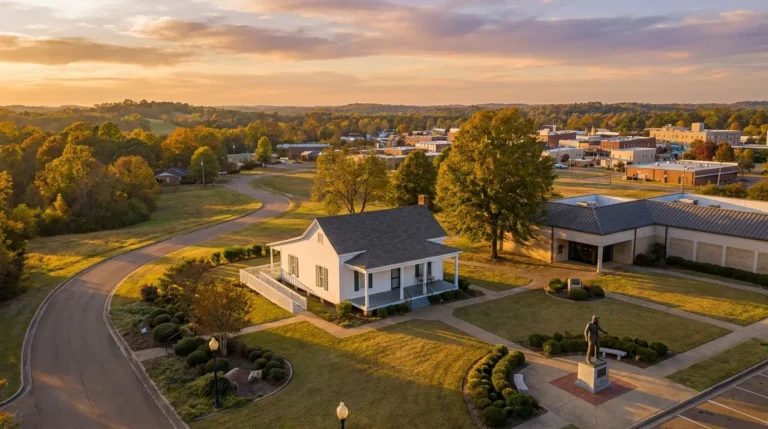
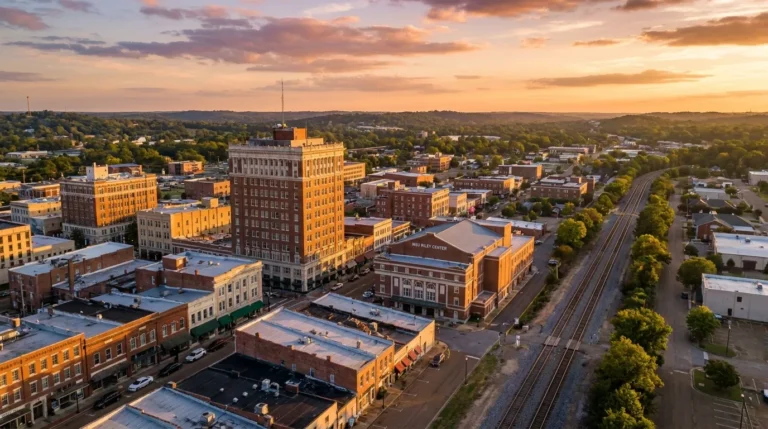
Mississippi sits in the Deep South, bordered by the Mississippi River to the west and the Gulf of Mexico to the south. The main cities are Jackson (the capital, in the center), Gulfport and Biloxi (Gulf Coast, with casinos), and smaller cities like Hattiesburg, Tupelo (Elvis Presley's birthplace), and Oxford (a college town).

It is the poorest state in the US, with social indicators (education, health, obesity, poverty) consistently at the bottom of national rankings. The economy depends heavily on agriculture (cotton, soybeans, corn), manufacturing plants (Nissan and Toyota have facilities in the state), and coastal tourism.

For immigrants, Mississippi is not an obvious destination: the Hispanic community is small (concentrated near the coast and in farming areas), there are very few Brazilians or other Latin Americans, and job opportunities in major cities are limited. On the other hand, the cost of living is the lowest in the US, homes are cheap, and life is calm. The downsides are variable public school quality and a strained healthcare system.

Population
2,940,057
Average monthly salary
45,500 USD/mo
32.7416°, -89.6787°

Featured places

Top 10 places in Mississippi

The places most sought-after by immigrants in this region.

Mississippi's demographics: highest proportion of Black Americans in the US

About 38% of the population is Black, the highest proportion of any US state. The white majority has English and Scots-Irish heritage.

Mississippi has the highest proportion of Black Americans of any US state, at about 38%. The state's history is deeply tied to slavery (it was a major cotton-producing state) and the Civil Rights movement (Freedom Summer of 1964, the murders of Medgar Evers and three civil rights workers in 1964). The Black American legacy is fundamental to local culture, especially in the Delta.

The white majority has English, Scots-Irish, and French (on the Gulf Coast) heritage. The Hispanic community is small but growing in agricultural areas and on the Gulf Coast. There are Vietnamese and Thai communities in Biloxi and Gulfport, descendants of fishermen who arrived after the Vietnam War. The Latin American community is minimal.

English is the only dominant language. Spanish appears in small concentrations. The culture is strongly Christian, with a Baptist majority (especially in the north and center) and Catholics on the Gulf Coast. Black American churches have a strong musical and cultural tradition. Politics is strongly conservative and Republican, with significant religious influence on state law.

2,940,057
Population
38 yrs
Median age
23/km²
Density
$52,990
Median income
per year
Urban population48.0%
Foreign-born2.4%
Languages spoken
  • English
  • Spanish (in agricultural and coastal communities)
  • Vietnamese (in Biloxi and Gulfport)
Main religions
  • Southern Baptist (dominant)
  • Pentecostal Christian
  • Methodist Christian
  • Catholic (strong on the Gulf Coast)
  • No religion (smaller share than the national average)

Cost of living in Mississippi: the lowest in the US

Rent, homes, and food cost less here than in any other state. Wages are also the lowest in the country.

Mississippi consistently has the lowest cost of living in the US. In Jackson, a one-bedroom apartment rents for $700 to $1,000. In Hattiesburg and Tupelo, $600 to $900. In smaller cities and rural areas, $400 to $700 covers an apartment. On the coast (Gulfport, Biloxi), prices are similar to Jackson.

Groceries and restaurant meals are well below the national average. A meal at a casual restaurant costs $10 to $15. Gas is among the cheapest in the US. Electricity is affordable because the state produces cheap energy from natural gas and nuclear power.

The downside is that wages match the cost: they are the lowest in the US. The minimum wage follows the federal rate ($7.25/hour). Remote workers earning a salary from another state can achieve a very high quality of life here, with a large home and low fixed expenses. Those seeking a high-paying local job will face challenges.

86Cost index (US = 100)14% below US average
CategorySingleCoupleFamily (2 + 2)
iHousing$1,121$1,293$1,638
iFood$328$655$1,190
iTransport$431$733$948
iHealthcare$241$483$905
iChildcare$1,569
iOther$733$1,319$1,853
Monthly total$2,854$4,483$8,103

Source: U.S. BLS Consumer Expenditure Survey 2023 + BEA Regional Price Parities 2023 · Estimates in USD, monthly.

Housing in Mississippi: large homes with land at very low prices

One of the cheapest states to buy property. Large homes with yards sell for under $200,000 in many cities.

In Jackson, 3-bedroom homes in good neighborhoods like Eastover, Northeast Jackson, and Belhaven go for $200,000 to $400,000. Suburbs like Madison, Ridgeland, and Brandon (preferred by families for their better schools) have homes from $250,000 to $500,000.

In mid-sized cities like Hattiesburg, Tupelo, Oxford, and Starkville, 3-bedroom homes sell for $180,000 to $300,000. Oxford (Ole Miss's college town) has a more competitive market because of the university. In rural areas and small towns, large homes with land can cost under $100,000.

On the coast (Gulfport, Biloxi, Ocean Springs), pay attention to hurricane zones and insurance: homes in high-risk zones have expensive insurance (over $3,000/year) and flood insurance is required. For renting, the process is more informal than in larger states: a high credit score is not always required, especially in smaller towns.

Purchase price (m²)
  • Center$1,500/m²
  • Outside$950/m²
3.0×
Price-to-income
7.0%
Mortgage rate (20y)
Recommended neighborhoods
  • Madison (Jackson suburb, top schools)
  • Ridgeland (Jackson suburb)
  • Brandon (Jackson suburb)
  • Eastover and Northeast Jackson
  • Oxford (Ole Miss college town)
  • +3 more

Job market in Mississippi: agriculture, manufacturing, and healthcare

Nissan, Toyota, and Ingalls Shipbuilding are major employers. Agriculture, healthcare, education, and Gulf Coast casinos also employ many.

Manufacturing offers the best wages for immigrants. Nissan has a large plant in Canton (near Jackson), producing multiple models. Toyota has a plant in Blue Springs (near Tupelo), producing the Corolla. Ingalls Shipbuilding in Pascagoula is one of the largest shipyards in the US, building Navy vessels.

Agriculture employs many in the Delta (cotton, soybeans, corn, rice) and in central and eastern areas. Poultry processing is major (Mississippi is a top broiler chicken producer, with Sanderson Farms and Tyson Foods employing thousands). Casinos in Biloxi, Gulfport, and Tunica employ in hospitality. Hospitals like the University of Mississippi Medical Center (Jackson) and North Mississippi Health Services (Tupelo) are large employers.

Higher education is a relevant sector: the University of Mississippi (Oxford) and Mississippi State University (Starkville) each employ thousands. Wages are generally the lowest in the US, but qualified professionals in engineering, medicine, and technology earn well by local standards. Remote work has grown as a solution for professionals attracted by the low cost of living.

$45,500
Avg net salary
per month
$15,080
Minimum wage
per month
3.4%
Unemployment
55.0%
Labor force
Dominant sectors
  • Agriculture (cotton, soybeans, poultry, corn)
  • Automotive manufacturing
  • Shipbuilding
  • Healthcare
  • Higher education
  • +3 more
Major employers
  • Nissan North America (Canton)
  • Toyota Mississippi (Blue Springs)
  • Ingalls Shipbuilding (Pascagoula)
  • University of Mississippi Medical Center (Jackson)
  • Sanderson Farms (poultry)
  • +3 more

Education in Mississippi: public schools with challenges, two main state universities

Free public K-12 education is available but performance is below the national average. Ole Miss and Mississippi State are the top universities.

Children and teens have the right to free public schooling regardless of immigration status. But Mississippi consistently ranks near the bottom on national K-12 education assessments. The best public districts are in Jackson's suburbs (Madison County, Rankin County) and in Oxford (Lafayette County). In small towns and rural areas, quality varies significantly.

Many families with resources opt for private schools, especially institutions descended from what were called segregation academies (schools set up in the 1960s to avoid desegregation). Today many of these schools have more diverse student bodies, but the dual system remains a reality in the state.

The University of Mississippi (Ole Miss), in Oxford, is the largest public university, with strong programs in law, accounting, journalism, and pharmacy. Mississippi State, in Starkville, is strong in engineering, agriculture, and veterinary science. There are also smaller private colleges and historically Black colleges and universities (Jackson State University, Tougaloo College).

Literacy95.0%
Tertiary education23.7%
478
PISA score (avg)
$9,500
Private school
per year
Notable universities
  • University of Mississippi (Ole Miss, Oxford)
  • Mississippi State University (Starkville)
  • University of Southern Mississippi (Hattiesburg)
  • Jackson State University (historically Black)
  • Millsaps College (Jackson, private)
  • Tougaloo College (historically Black)
  • University of Mississippi Medical Center (Jackson)

Healthcare in Mississippi: some of the worst indicators in the US, rural areas severely underserved

Health insurance is a necessity. The state did not expand Medicaid, leaving many without coverage. Good hospitals in Jackson and Tupelo; rural areas suffer.

The US has no universal public system. In Mississippi, those with formal employment receive employer-based insurance. Family premiums can exceed $1,200/month, with part paid by the employer. Without employment, there are federal marketplace plans (healthcare.gov) with income-based subsidies.

The state did not expand Medicaid after the Affordable Care Act, leaving hundreds of thousands of low-income people without coverage (they fall into a gap where they do not qualify for Medicaid or for sufficient marketplace subsidies). Documented immigrants with a green card for more than 5 years may qualify for Medicaid in some categories.

The best hospitals are the University of Mississippi Medical Center (Jackson) and North Mississippi Medical Center (Tupelo). Rural areas have a significant shortage of specialist physicians, with patients traveling 1 to 3 hours for appointments. Mississippi's health indicators (obesity, diabetes, infant mortality, life expectancy) rank among the worst in the US. For newcomers without insurance, hospital costs are extremely high.

Healthcare index50.0 / 100
  • Life expectancyyears at birth
    72.7yrs
  • Doctors per 1kpracticing physicians
    2.0
  • Health spendper capita, per year
    $9,700
  • Public systemoverall quality rating
    Poor

Safety in Mississippi: highly variable, with Jackson having some of the highest crime rates in the US

Rural areas and small towns are calm. Jackson has one of the highest homicide rates in the US. Suburbs are considerably safer.

Safety varies greatly by region. Rural areas and small towns in Mississippi are generally calm, with low rates of violent crime. Jackson suburbs like Madison, Ridgeland, and Brandon are safe, with very low crime. Oxford and Starkville (college towns) are also generally quiet.

Jackson, the capital, has had one of the highest per-capita homicide rates in the US in recent years. Some city neighborhoods require special care. Other cities like Greenville and parts of Gulfport also have higher-crime areas.

Hurricanes are a major concern on the Gulf Coast. Tornadoes can occur statewide, especially in April and May. To choose where to live, Niche.com and GreatSchools provide safety and school quality data. In general, suburbs and mid-sized cities are safe for families.

23.7
Homicides per 100k
per year
Safety index
38.0
Crime index
62.0
Safer neighborhoods
  • Madison (Jackson suburb, top schools)
  • Ridgeland (Jackson suburb)
  • Brandon (Jackson suburb)
  • Oxford (college town)
  • Starkville (college town)
  • Ocean Springs (Gulf Coast, charming)
  • Hattiesburg (mid-sized city)
  • Tupelo (Toyota, Elvis birthplace)
Areas to avoid
  • Jackson downtown at night
  • Jackson West Side
  • Greenville central districts
  • Gulfport isolated areas

Transportation in Mississippi: a car is required, public transit is nearly nonexistent

An essentially rural state. A car is needed everywhere. Airports are small, with Jackson and the Gulf Coast as the main options.

Mississippi is a car state in every sense. Even in Jackson, the capital, public transit (JATRAN buses) is limited. In mid-sized and small cities, public transit essentially does not exist. A car is required for every daily activity: work, grocery shopping, school, doctor visits.

The main highways are I-55 (north-south, linking Jackson to Memphis and New Orleans), I-20 (east-west, through Jackson), and I-10 (running along the Gulf Coast). Roads are generally in good condition with light traffic outside the larger cities. Rideshare apps like Uber and Lyft work in Jackson and larger cities but are limited in rural areas.

The main airport is Jackson-Medgar Wiley Evers International (JAN), with flights to hubs like Atlanta, Dallas, and Charlotte. Gulfport-Biloxi (GPT) serves the coast. For larger international flights, many people travel to Memphis (Tennessee), Atlanta, or New Orleans. Amtrak's City of New Orleans train passes through the state.

25 min
Avg commute
27
Walkability
Airports
  • JAN (Jackson-Medgar Wiley Evers International)
  • GPT (Gulfport-Biloxi International)
  • International airport
  • Bike infrastructure

Mississippi's climate: subtropical, hot and humid for most of the year

Long, hot, and humid summers. Short, mild winters. Hurricanes on the coast, tornadoes in spring.

Mississippi has a humid subtropical climate. Summer (May through September) is long, hot, and very humid, with temperatures between 30 and 35°C and high humidity. Heavy afternoon thunderstorms are common. Air conditioning is essential in homes, cars, and workplaces. Mosquitoes are a constant presence.

Winter (December through February) is short and mild, with average temperatures between 5 and 15°C. It can get quite cold on some days (near freezing in the north), but snow is rare. Spring is brief, with a mix of heat and cold, and fall starts warm and ends mild.

Hurricanes are a major concern on the Gulf Coast from June through November. Hurricane Katrina (2005) devastated part of the coast, and the region still deals with that legacy. Tornadoes are possible statewide, peaking in April and May. Thunderstorms and flash floods are common in summer.

Sunny days / year216 days
Avg high (°F)
  • 57°J
  • 62°F
  • 70°M
  • 77°A
  • 84°M
  • 90°J
  • 92°J
  • 92°A
  • 88°S
  • 78°O
  • 67°N
  • 60°D
Avg low (°F)
  • 38°J
  • 41°F
  • 48°M
  • 55°A
  • 63°M
  • 71°J
  • 73°J
  • 73°A
  • 68°S
  • 56°O
  • 44°N
  • 40°D
Rainfall (")
  • 5"J
  • 4"F
  • 5"M
  • 5"A
  • 4"M
  • 4"J
  • 5"J
  • 3"A
  • 3"S
  • 4"O
  • 4"N
  • 5"D

Mississippi's culture: blues, Southern cuisine, and literary tradition

Birthplace of the blues, with a powerful musical tradition. Hearty Southern cuisine. A strong literary heritage from Faulkner, Welty, and Wright.

Mississippi is the birthplace of the blues. The Mississippi Delta saw the rise of Robert Johnson, B.B. King, Muddy Waters, John Lee Hooker, and Howlin' Wolf. Blues festivals take place in Clarksdale, Indianola, and other Delta towns. Elvis Presley was born in Tupelo. Jimmy Buffett, Faith Hill, and LeAnn Rimes also call the state home.

Southern cuisine is hearty and has a strong identity. Fried chicken, smoked ribs, gumbo, jambalaya, hush puppies (fried cornmeal fritters), grits, and pecan pie. Soul food has its origins in the state. Historic restaurants like Doe's Eat Place in Greenville serve the ideal pre-blues meal.

Literature is also part of the identity. William Faulkner lived in Oxford (his home, Rowan Oak, is still preserved there). Eudora Welty, Richard Wright, Tennessee Williams, John Grisham, and Donna Tartt are from the state or lived there. Faulkner won the Nobel Prize in Literature. Religion, college football (Ole Miss vs. Mississippi State in the Egg Bowl), and family tradition define daily life.

110
Major museums
Notable dishes
  • Southern fried chicken
  • Smoked barbecue ribs
  • Fried catfish
  • Hush puppies (fried cornmeal fritters)
  • Grits
  • +4 more
Annual events
  • Mississippi Delta Blues Festival (Greenville, September)
  • Sunflower River Blues and Gospel Festival (Clarksdale, August)
  • Elvis Presley Festival (Tupelo, June)
  • Egg Bowl (Ole Miss vs. Mississippi State football, November)
  • Cruisin' the Coast (vintage cars, coast, October)
  • +2 more

Mississippi's main economic sectors

Agriculture, automotive manufacturing, shipbuilding, and casino tourism. Energy and timber round out the picture.

Agriculture is a historic sector that remains relevant. Mississippi produces large quantities of cotton, soybeans, corn, rice, sweet potatoes, and chicken (the poultry industry is massive, with Sanderson Farms and Tyson Foods employing thousands). The Delta remains one of the most productive agricultural regions in the US, even as mechanization has reduced headcount.

Manufacturing has grown in recent decades. Nissan in Canton (near Jackson), Toyota in Blue Springs (near Tupelo), and Ingalls Shipbuilding in Pascagoula are the pillars. Suppliers to the automotive and shipbuilding industries generate additional jobs. Furniture making is traditional in Tupelo (the La-Z-Boy company started in the region).

Tourism is strong on the Gulf Coast, with casinos in Biloxi, Gulfport, and D'Iberville. Tunica in the Delta also has casinos. Healthcare, higher education, and state government round out the picture. Energy (natural gas, nuclear at Grand Gulf) and timber and paper are relevant sectors in rural areas.

  • GDPgross domestic product
    $135.0B
  • GDP per capitaoutput per resident
    $45,900
  • GDP growth (yr)economy expanding
    +1.4%
Top sectors
  • Agriculture (cotton, soybeans, poultry)
  • Automotive manufacturing
  • Shipbuilding
  • Casino and coastal tourism
  • Healthcare
  • +3 more

Immigrant communities in Mississippi

Mississippi has about 80,000 immigrants, with Mexicans in Jackson and along the Gulf Coast and Vietnamese in Biloxi tied to fishing.

Mississippi is home to roughly 80,000 people born outside the country, close to 3% of the population, the lowest share in the Deep South. Mexicans form the largest community and are spread across Jackson, the Delta, and the Gulf Coast, tied to construction, farming, and poultry processing. Biloxi and the Gulf Coast host a historic Vietnamese community, founded in the 1970s by refugees tied to shrimp fishing.

The state has no foreign consulates of its own, and immigrants rely on Houston, New Orleans, and Atlanta. The Mississippi Center for Justice runs an Immigrant Justice Project with legal defense. MIRA (Mississippi Immigrant Rights Alliance), in Jackson, is the main community voice, with strong on-the-ground response to ICE raids at meatpacking plants.

80,000
Foreign-born residents
estimated
Top countries of origin
  • Mexico
  • Vietnam
  • Guatemala
  • Philippines
Main immigrant hubs
  • Jackson
  • Biloxi
  • Gulfport
  • Tupelo
Foreign consulates
  • Mexican Consulate General in New Orleans (jurisdiction includes Mississippi)
Community organizations
  • Mississippi Center for Justice (Immigrant Justice Project)
  • Mississippi Immigrant Rights Alliance (MIRA)

Latest posts

Posts about Mississippi

Coverage and updates related to this destination.