Visto n' Visa
Blog
Notícias e artigos
Destinations
Careers
Immigrants

Want to live and work in Alaska?

Personalized immigration plan with eligible visas, costs, and next steps for your goal!

If you are not eligible, you will know exactly why and what to do to improve your approval chances.

Save up to 12 hours in meetings

No pointless assessments.

Save up to 90%

Save money on vague or unfocused consultations

Avoid Fraud and Mistakes

One mistake can cost you your visa

Total Impartiality

Zero commercial bias

Decide with peace of mind

No toxic urgency

Fast and Accurate

Answers in minutes, no guesswork

Explore Alaska

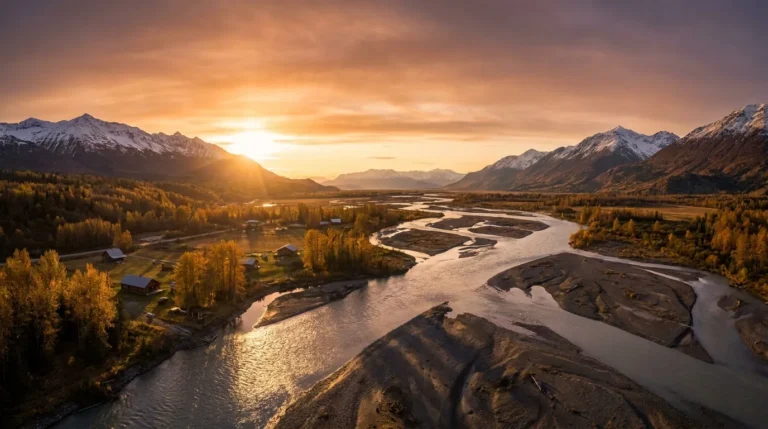
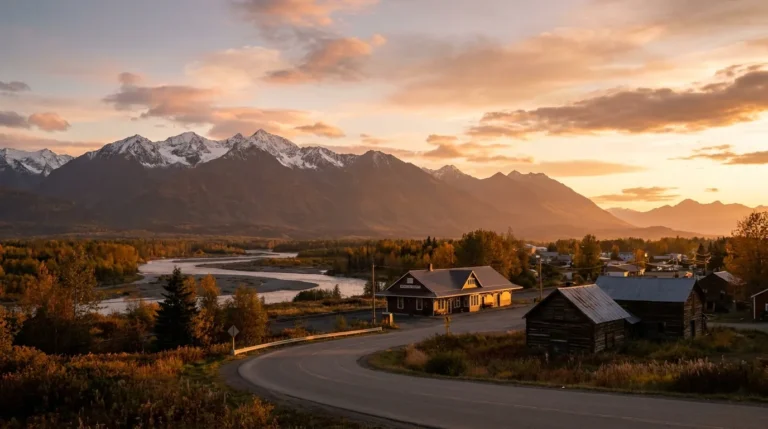
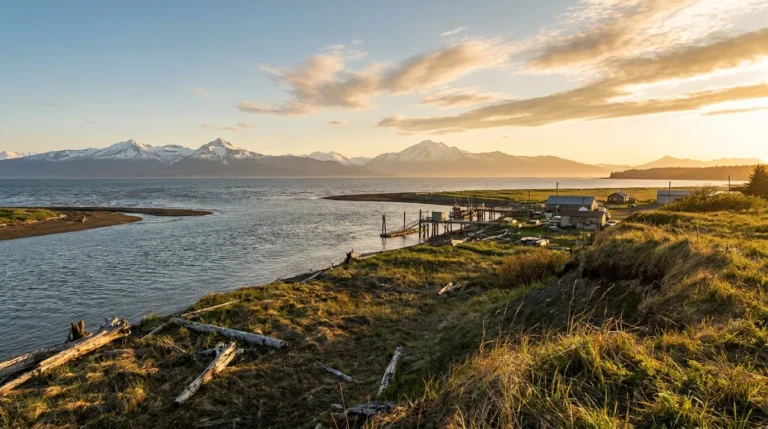
Majestic nature, long winters, and high wages. For those who love silence and the outdoors.

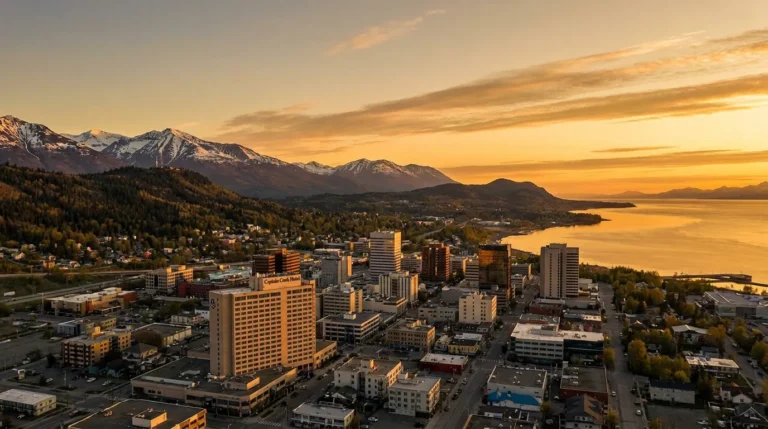
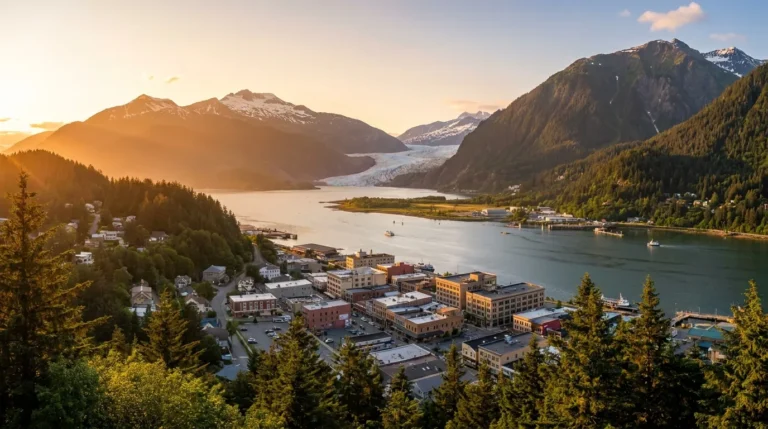
Alaska is the largest US state by area, more than twice the size of Texas, yet one of the least populated. The main cities are Anchorage (the largest, home to nearly half the state's population), Fairbanks (in the interior, cold and dry), and Juneau (the capital, in the southeast, isolated and accessible only by boat or plane).

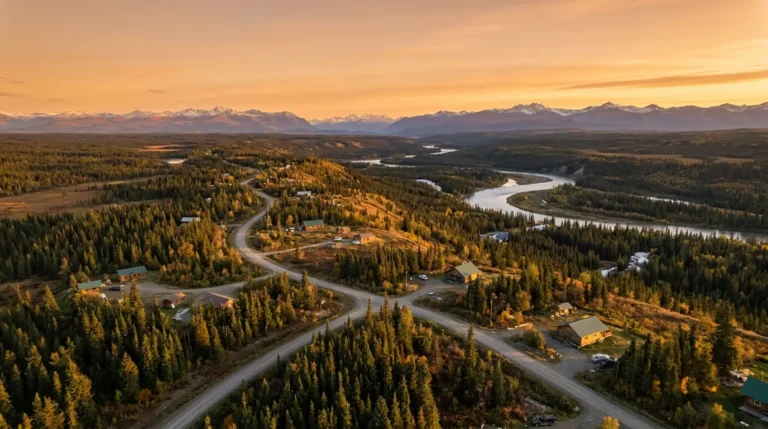
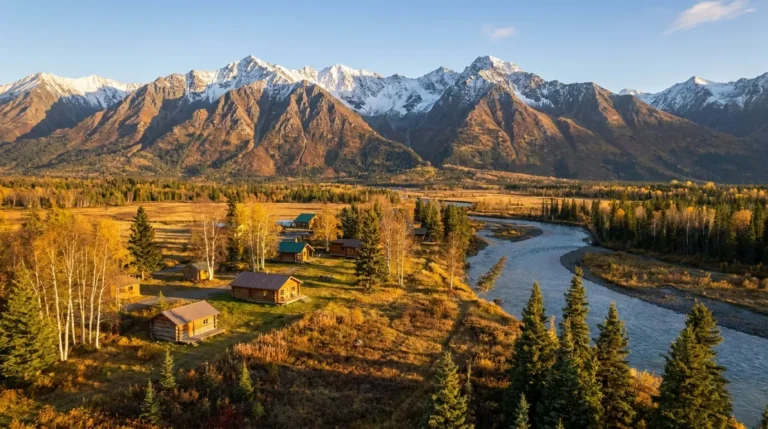
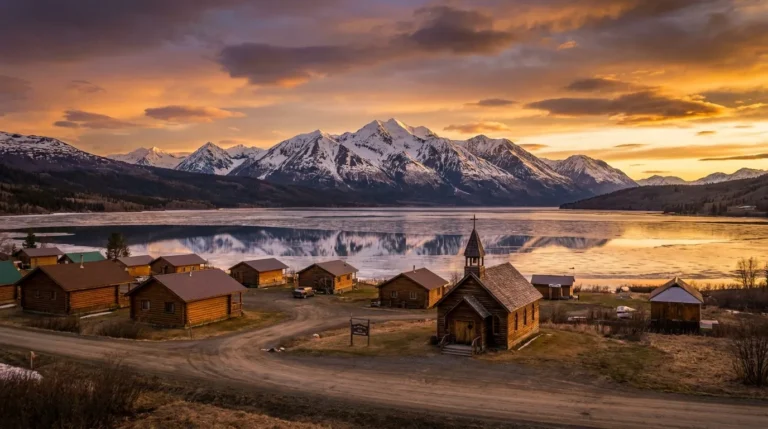
Nature dominates everything. Glaciers, mountains, forests, bears, moose, whales, and the northern lights are part of daily life. Outdoor living is practically a cultural institution: hunting, fishing, skiing, snowboarding, and hiking. Those who love nature may find paradise here. Those who need a big city will feel the absence.

For immigrants, Alaska's main draws are the high wages (the state pays an annual oil dividend to residents), reasonable housing costs outside Anchorage, and jobs in fishing, oil, the military, and healthcare. The Brazilian community is very small. Hispanics, Filipinos, and Alaska Natives make up an important part of the state's diversity.

Population
733,406
Average monthly salary
65,000 USD/mo
61.3707°, -152.4044°

Featured places

Top 10 places in Alaska

The places most sought-after by immigrants in this region.

Alaska's demographics: white, Alaska Native, Filipino, and Hispanic

White majority, but with the highest proportion of Native Americans of any US state. Significant Filipino and Korean communities as well.

Alaska has the highest percentage of Native Americans and Alaska Natives of any US state. Groups such as the Inupiat, Yup'ik, Aleut, Tlingit, and Athabascan live throughout the state, some in remote villages accessible only by plane or boat in summer and snowmobile in winter.

White residents form the majority, many descended from pioneers who came during the Gold Rush or to work in the oil industry. There is a large Filipino community, mainly in Anchorage, historically tied to fishing and the Navy. Koreans, Mexicans, and Samoans are also present.

Brazilians are rare. Hispanics have been growing in Anchorage, where Mexican grocery stores and restaurants now exist. In remote villages, the native language may still be used alongside English. The religious mix reflects this diversity: Protestant Christians, Catholics (strong Russian Orthodox heritage in the southwest), and traditional Native spiritual practices.

733,406
Population
35 yrs
Median age
1/km²
Density
$86,370
Median income
per year
Urban population65.0%
Foreign-born8.2%
Languages spoken
  • English
  • Spanish
  • Tagalog (Filipino)
  • Alaska Native languages (Yup'ik, Inupiaq, Tlingit)
  • Korean
  • +1 more
Main religions
  • Protestant Christian
  • Catholic
  • Russian Orthodox (in the southwest)
  • No religion (high proportion)
  • Traditional Native spiritual practices

Cost of living in Alaska: high for groceries and fuel, moderate for housing

Everything that comes from outside is expensive because it arrives by ship or plane. In return, the state pays an annual dividend to every resident.

The cost of living in Alaska depends heavily on where you live. In Anchorage, a one-bedroom apartment rents for between $1,200 and $1,800. In Fairbanks, it is cheaper ($900 to $1,300). In isolated villages, housing itself is simple and affordable, but everything else is extremely expensive because it arrives by plane.

Grocery stores are the biggest shock. Produce, dairy, and fresh items can cost 30 to 60 percent more than the US average. Fuel is also expensive, especially outside Anchorage. A meal at a casual restaurant runs about $18 to $30. Good winter clothing is a mandatory investment.

There is one unique benefit: the Alaska Permanent Fund Dividend. Every legal resident (including green card holders who meet the minimum residency requirement) receives an annual check from the state's oil fund. The amount varies but typically runs between $1,000 and $1,700 per person per year. There is no state income tax and no state sales tax.

106Cost index (US = 100)6% above US average
CategorySingleCoupleFamily (2 + 2)
iHousing$1,373$1,584$2,006
iFood$401$803$1,457
iTransport$528$898$1,162
iHealthcare$296$591$1,109
iChildcare$1,922
iOther$898$1,616$2,270
Monthly total$3,496$5,492$9,926

Source: U.S. BLS Consumer Expenditure Survey 2023 + BEA Regional Price Parities 2023 · Estimates in USD, monthly.

Housing in Alaska: functional cold-weather homes, affordable prices outside Anchorage

Anchorage is the largest market. Homes must be well insulated. Heating (oil, gas, or pellets) is a major winter expense.

In Anchorage, a three-bedroom home in a good neighborhood (Hillside, Eagle River, South Anchorage) costs between $400,000 and $700,000. More modest homes run $280,000 to $380,000. Fairbanks has cheaper homes, but winter conditions are even harsher (dropping to minus 40 Celsius).

For renters, requirements are standard: proof of income (3x the rent), credit history, and references. In small villages, things work more by personal contact and there are fewer available properties. Workers in mining or fishing sometimes have housing included.

The big detail in Alaska is heating. Most homes use heating oil, natural gas (in Anchorage), or wood pellets. The winter heating bill can exceed $400 per month. Well-insulated homes with triple-pane windows and roofs designed for snow loads are the standard.

Purchase price (m²)
  • Center$3,200/m²
  • Outside$2,100/m²
3.9×
Price-to-income
7.0%
Mortgage rate (20y)
Recommended neighborhoods
  • South Anchorage (Hillside, Bayshore)
  • Eagle River (suburban, near Anchorage)
  • Wasilla and Palmer (Mat-Su Valley)
  • Fairbanks (downtown and University area)
  • Juneau Mendenhall Valley
  • +2 more

Alaska's job market: oil, fishing, military, tourism, and healthcare

Wages are high to offset the isolation. Extractive industries, military bases, and commercial fishing are the largest employers.

Oil and gas are the economic foundation. Companies such as ConocoPhillips, ExxonMobil, and BP (now Hilcorp) operate on the North Slope. Workers do two-week rotations in the field followed by two weeks at home, with salaries well above average. Petroleum engineers, welders, and operators earn well.

Commercial fishing is enormous. Salmon, crab (king crab, snow crab), cod, and pollock generate billions of dollars. The season is short and intense, but boat workers earn good money in a few months. There are also seasonal jobs in seafood processing, open to foreigners with the right visa.

The military sector is strong: Air Force and Army bases in Anchorage and Fairbanks employ thousands. Healthcare is a growing sector (Providence Hospital, Alaska Native Medical Center). Tourism, driven by cruises, national parks, and the northern lights, generates seasonal jobs in summer.

$65,000
Avg net salary
per month
$24,523
Minimum wage
per month
4.6%
Unemployment
64.5%
Labor force
Dominant sectors
  • Oil and gas
  • Commercial fishing and processing
  • Military and defense
  • Tourism and cruises
  • Healthcare
  • +2 more
Major employers
  • ConocoPhillips Alaska
  • Hilcorp Alaska
  • Alaska Airlines
  • Providence Alaska Medical Center (Anchorage)
  • Alaska Native Medical Center
  • +3 more

Education in Alaska: public schools in all cities, one statewide university system

Free public schooling, with challenges in remote areas. The University of Alaska has campuses in the three main cities.

Children have the right to free public schooling. In Anchorage and Fairbanks, there are good schools in neighborhoods such as Hillside, Eagle River, South Anchorage, and Goldstream. In remote villages, a single school serves all grades, and distance-learning programs sometimes bridge the gap for more advanced courses. The state funds a distance education system.

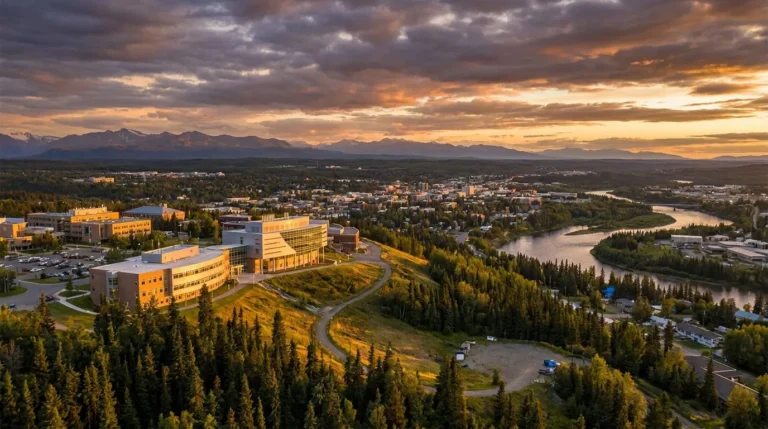
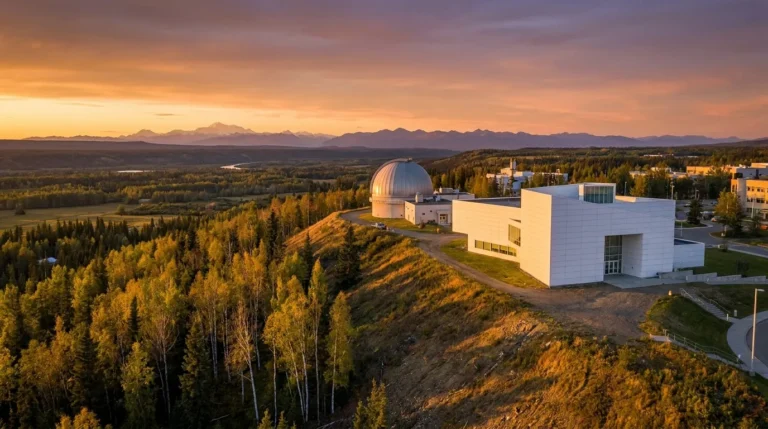
The University of Alaska (UA) has three main campuses: Anchorage (UAA), Fairbanks (UAF), and Southeast (Juneau). UAF is strong in Arctic studies, geophysics, marine biology, and petroleum engineering. UAA serves more non-traditional students and focuses on health, business, and engineering.

Tuition for residents is reasonable (around $8,000 to $10,000 per year). Non-resident students pay more. The Permanent Fund and state-specific scholarships help families cover college. Technical programs focused on oil, fishing, and nursing are also available.

Literacy97.0%
Tertiary education31.0%
478
PISA score (avg)
$11,800
Private school
per year
Notable universities
  • University of Alaska Fairbanks (UAF)
  • University of Alaska Anchorage (UAA)
  • University of Alaska Southeast (Juneau)
  • Alaska Pacific University (Anchorage, private)
  • Ilisagvik College (Utqiagvik, tribal college)

Healthcare in Alaska: good hospitals in cities, difficult access in remote areas

Anchorage has the best hospitals. In isolated villages, care is delivered by community health aides and emergency air transport.

Access to healthcare varies greatly by location. In Anchorage and Fairbanks, there are large hospitals, medical specialists, and quality care. Providence Alaska Medical Center is the largest in the state. For remote villages, the system is built around the Alaska Native Tribal Health Consortium, with community health aides and medevac flights for serious cases.

Employer-provided health insurance is the standard for formal workers. For lower incomes, Medicaid (Denali KidCare for children) covers many documented immigrants. The Alaska Native Medical Center provides free care for Alaska Natives and enrolled tribal communities.

Because of the climate and distances, medical evacuation by air (medevac) is part of the reality. Without insurance, this can cost tens of thousands of dollars. People moving to isolated areas often take out specific medevac insurance (LifeMed Alaska, Guardian Flight) for a few hundred dollars a year.

Healthcare index62.0 / 100
  • Life expectancyyears at birth
    77.7yrs
  • Doctors per 1kpracticing physicians
    2.6
  • Health spendper capita, per year
    $14,500
  • Public systemoverall quality rating
    Fair

Safety in Alaska: above-average urban crime, other dangers in rural areas

Anchorage has high rates of property crime and domestic violence. Rural areas are safe from human threats but require caution around wildlife and weather.

Anchorage has crime rates above the national average, especially for car theft, assault, and domestic violence. Safer neighborhoods include Hillside, Eagle River, Sand Lake, and South Anchorage. Areas such as Mountain View, Spenard, and Fairview have more incidents and require more caution.

Alaska as a whole has elevated rates of sexual assault and domestic violence in national rankings, a problem that particularly affects remote communities. State programs try to respond, but isolation makes it difficult. In small villages, it is common to have no local police, only a Village Public Safety Officer.

Outside urban centers, the dangers are different: bears (grizzlies, black bears), moose (which kill more people than bears through vehicle collisions), blizzards, snow, and river ice crossings. Anyone heading into the wilderness needs to know how to handle wildlife, carry bear spray, and never underestimate the weather.

9.6
Homicides per 100k
per year
Safety index
38.0
Crime index
62.0
Safer neighborhoods
  • Hillside (Anchorage)
  • South Anchorage
  • Eagle River
  • Palmer (Mat-Su Valley)
  • Sitka
  • Juneau Mendenhall Valley
  • Soldotna (Kenai Peninsula)
Areas to avoid
  • Anchorage downtown at night
  • Fairbanks peripheral areas
  • Bethel isolated areas

Transportation in Alaska: planes are part of daily life, roads only connect south-central areas

More than half the state has no roads. Small planes, ferries, and snowmobiles are common. A 4x4 vehicle is practically essential.

Alaska has a very limited road network. The Glenn Highway, Parks Highway, and Seward Highway connect Anchorage, Fairbanks, and the Kenai Peninsula. But most of the state, including the capital Juneau, is not connected by road. Getting to Juneau means taking a plane or a ferry.

General aviation is extremely high. Alaska has more pilots per capita than any other US state. Small aircraft (bush planes) carry people and supplies to roadless villages. Ted Stevens Anchorage International Airport (ANC) is the main hub and one of the busiest cargo airports in the world.

In Anchorage, there are buses (People Mover) and Uber/Lyft, but the car is dominant. In winter, studded snow tires and 4x4 vehicles are standard. The Alaska Marine Highway is a ferry system connecting coastal cities of the southeast and the Aleutian Peninsula, carrying both cars and passengers.

19 min
Avg commute
28
Walkability
Airports
  • ANC (Ted Stevens Anchorage International)
  • FAI (Fairbanks International)
  • JNU (Juneau International)
  • KTN (Ketchikan International)
  • SIT (Sitka)
  • +1 more
  • International airport
  • Bike infrastructure

Alaska's climate: long winters, short summers, and enormous regional variation

Extreme cold in the interior, milder on the coast. Summer has nearly endless daylight; winter has almost no sun in the north.

The climate varies greatly by region. Anchorage has a moderate subarctic climate, with long snowy winters (lows around minus 10 to minus 15 Celsius) and cool summers (highs of 18 to 22 Celsius). Fairbanks, in the interior, is far more extreme: it can drop below minus 40 Celsius in January and reach close to 30 Celsius in July.

The southeast (Juneau, Ketchikan, Sitka) has an oceanic climate, rainy year-round, with mild winters (lows near 0 Celsius) and cool summers. The far north (North Slope, Utqiagvik) is genuinely arctic: dark winters, extreme cold, and a short summer with the midnight sun.

The most famous phenomenon is the light cycle. In summer, in Fairbanks, the sun barely sets; in June you can play golf at midnight. In winter, in Utqiagvik, the sun disappears for more than two months. The northern lights (aurora borealis) are visible on clear nights from September to April across most of the state, away from city lights.

Sunny days / year125 days
Avg high (°F)
  • 23°J
  • 28°F
  • 34°M
  • 47°A
  • 58°M
  • 66°J
  • 68°J
  • 66°A
  • 57°S
  • 42°O
  • 29°N
  • 25°D
Avg low (°F)
  • J
  • 12°F
  • 17°M
  • 30°A
  • 41°M
  • 50°J
  • 54°J
  • 51°A
  • 43°S
  • 30°O
  • 16°N
  • 11°D
Rainfall (")
  • 0"J
  • 1"F
  • 1"M
  • 0"A
  • 1"M
  • 1"J
  • 2"J
  • 2"A
  • 3"S
  • 2"O
  • 1"N
  • 1"D

Alaska's culture: frontier spirit, Native peoples, and the outdoors

A blend of Native tradition, frontier life, and a love of nature. Fishing, hunting, and braving the cold are part of the identity.

Alaska's culture blends several roots. The Native peoples (Inupiat, Yup'ik, Tlingit, Athabascan, Aleut) have millennia-old traditions of hunting, fishing, dance, craftwork, and oral storytelling. These traditions remain alive in remote villages and at festivals such as the World Eskimo-Indian Olympics in Fairbanks.

There is also the American frontier culture, a legacy of the late-19th-century Gold Rush and the oil workers. A spirit of self-sufficiency is strong. People build their own homes, hunt to stock the freezer, and catch salmon for the year. TV programs such as Alaska: The Last Frontier showcased this way of life.

Outdoor life is central. Mushing (sled dog racing), sport fishing, snowmobiling, hunting, skiing, snowboarding, and hiking are common activities. The Iditarod, an annual sled dog race from Anchorage to Nome (1,600 km), is the state's most iconic sporting event. Winter festivals celebrate the cold rather than avoiding it.

80
Major museums
Notable dishes
  • Grilled, smoked, or canned salmon
  • King crab
  • Halibut
  • Reindeer sausage
  • Akutaq (traditional Yup'ik ice cream with fat and berries)
  • +3 more
Annual events
  • Iditarod Trail Sled Dog Race (March, Anchorage to Nome)
  • Fur Rendezvous (Anchorage, February)
  • World Eskimo-Indian Olympics (Fairbanks, July)
  • Alaska State Fair (Palmer, August and September)
  • Sitka Whalefest (November)
  • +1 more
UNESCO sites
  • Kluane / Wrangell-St. Elias / Glacier Bay / Tatshenshini-Alsek Parks

Alaska's main economic sectors

Oil, fishing, military, tourism, and mining are the pillars. The state is highly dependent on natural resources.

Oil and natural gas sustain a large share of the economy. The Trans-Alaska Pipeline System transports crude oil from the North Slope to the port of Valdez. Oil revenues fund the Alaska Permanent Fund, which pays dividends to residents. Oil price volatility affects the state budget every year.

Commercial fishing is the second major sector. Alaska produces more than half of all wild-caught fish in the US: salmon, crab, cod, pollock, and halibut. Cities such as Dutch Harbor, Kodiak, and Sitka depend on it. Seafood processing employs thousands during the season.

Mining extracts gold, zinc, lead, and silver. Tourism, especially Inside Passage cruises and visits to national parks (Denali, Kenai Fjords, Glacier Bay), generates billions of dollars. The military presence is strong, with Air Force and Army bases. Aviation and logistics are essential because of the state's remoteness.

  • GDPgross domestic product
    $67.0B
  • GDP per capitaoutput per resident
    $91,300
  • GDP growth (yr)economy expanding
    +2.0%
Top sectors
  • Oil and natural gas
  • Commercial fishing and seafood processing
  • Military and defense
  • Tourism (cruises, national parks)
  • Mining (gold, zinc, lead)
  • +3 more

Immigrant communities in Alaska

About 65,000 immigrants live in the state. Filipinos, Mexicans, and Koreans form the largest communities, with strong concentration in Anchorage.

Alaska has roughly 65,000 residents born outside the United States, around 9% of the population. Filipinos are the largest group, present in nearly every coastal town and tied to fishing, seafood processing, and health care. They cluster in Anchorage (the east side and Mountain View), Fairbanks, and Kodiak, home to one of the oldest Filipino communities in the state. Mexicans arrive for construction, restaurants, and services, mostly in Anchorage. There are also Koreans in Anchorage retail and small Hmong communities that came as refugees in the 1980s.

The support network is lean but effective. The Alaska Institute for Justice provides immigration legal aid and interpretation in more than 30 languages. Catholic Social Services Refugee Assistance welcomes resettled families in Anchorage. South Korea and Japan run consulates-general in Anchorage, and Russia maintains an honorary consul (status varies). Filipino Catholic parishes and Buddhist temples serve as meeting points and practical guidance hubs for newcomers.

65,000
Foreign-born residents
estimated
Top countries of origin
  • Philippines
  • Mexico
  • South Korea
  • Canada
  • Vietnam
Main immigrant hubs
  • Anchorage
  • Fairbanks
  • Juneau
  • Kodiak
Foreign consulates
  • South Korean Consulate General in Anchorage
  • Japanese Consulate General in Anchorage
  • Russian Honorary Consulate in Anchorage
Community organizations
  • Alaska Institute for Justice
  • Catholic Social Services Refugee Assistance

Latest posts

Posts about Alaska

Coverage and updates related to this destination.