Visto n' Visa
Blog
Notícias e artigos
Destinations
Careers
Immigrants

Want to live and work in Michigan?

Personalized immigration plan with eligible visas, costs, and next steps for your goal!

If you are not eligible, you will know exactly why and what to do to improve your approval chances.

Save up to 12 hours in meetings

No pointless assessments.

Save up to 90%

Save money on vague or unfocused consultations

Avoid Fraud and Mistakes

One mistake can cost you your visa

Total Impartiality

Zero commercial bias

Decide with peace of mind

No toxic urgency

Fast and Accurate

Answers in minutes, no guesswork

A closer look at Michigan

Cars, the Great Lakes, and Motown. Birthplace of the American auto industry.

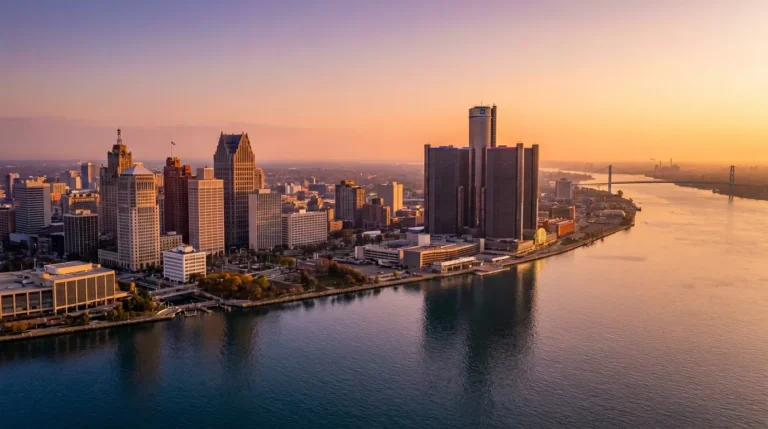
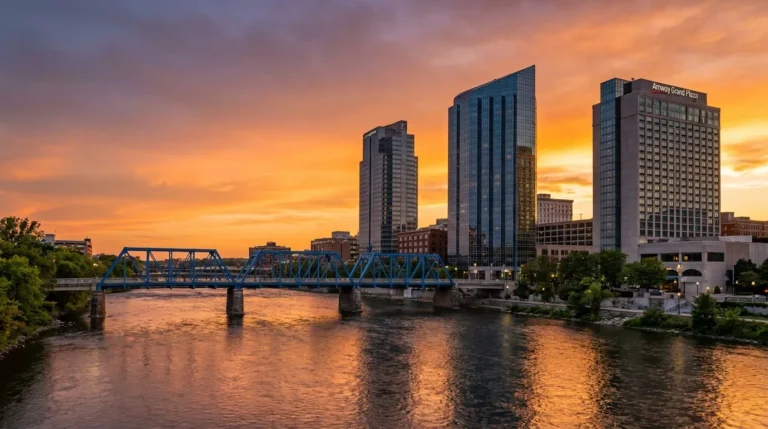
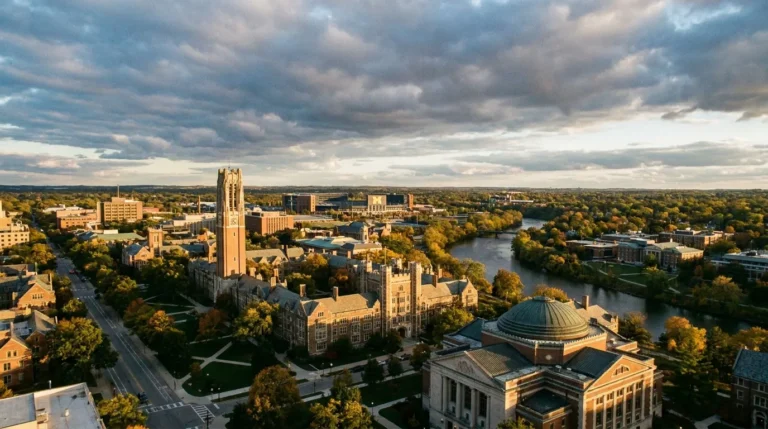
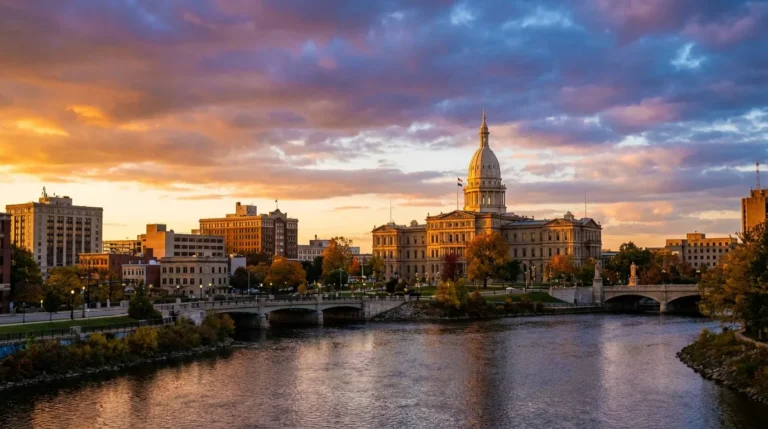
Michigan is located in the Midwest of the United States, divided into two peninsulas by the Great Lakes. The Lower Peninsula has the main cities: Detroit (the largest, the world's car capital), Grand Rapids (the second city, on the west), Ann Arbor (a university city), and Lansing (the capital). The Upper Peninsula is less populated, with forests and historic mines.

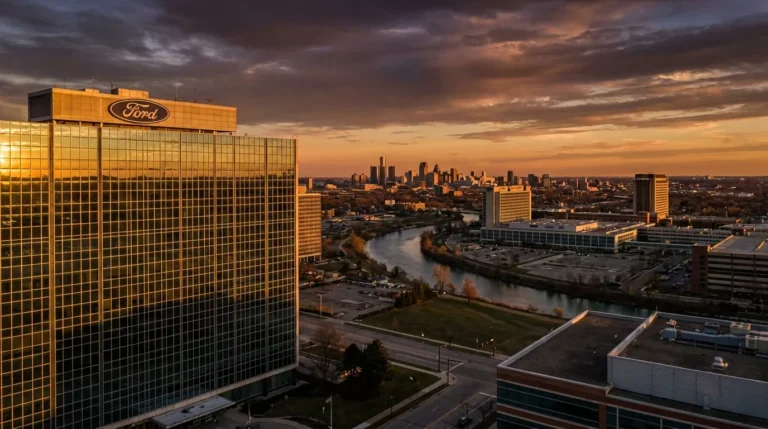
The economy revolves around the automotive industry. Detroit was the birthplace of Ford, General Motors, and Chrysler. The industry went through major highs and lows: it grew enormously in the first half of the 20th century, declined in subsequent decades (Detroit filed for bankruptcy in 2013), and is now reinventing itself around electric vehicles and automotive technology.

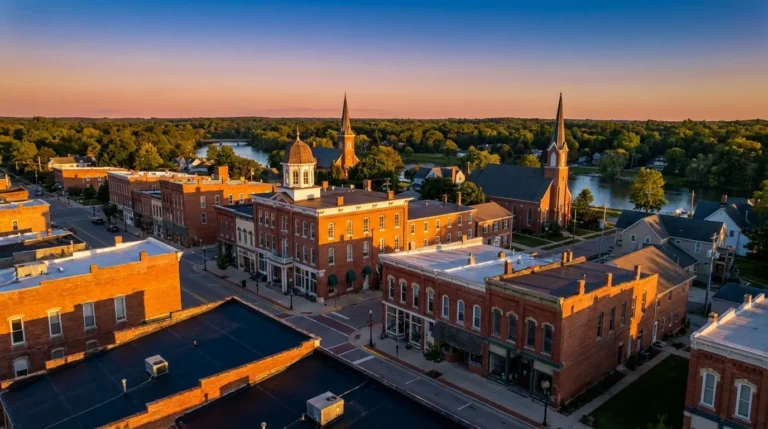
For immigrants, Michigan offers a cost of living much lower than coastal states and opportunities in automotive engineering, manufacturing, healthcare, and higher education. There are large Arab American communities (Dearborn is one of the largest outside the Middle East), a growing Hispanic community, and a small Brazilian community concentrated in Detroit and Grand Rapids.

Population
10,034,113
Average monthly salary
56,500 USD/mo
43.3266°, -84.5361°

Featured places

Top 10 places in Michigan

The places most sought-after by immigrants in this region.

Michigan demographics: a White majority, with large African American and Arab communities

Detroit has an African American majority. Dearborn has one of the largest Arab communities in the US. The rest of the state is predominantly White.

Michigan has a predominantly White population, with strong German, Polish, Dutch (especially in Grand Rapids), and Finnish (in the Upper Peninsula) heritage. Detroit, by contrast, is one of the most African American cities in the US, with about 80% of the population being Black. The history of the Great Migration brought many African Americans from the South to work in the auto plants.

Dearborn, a Detroit suburb, has one of the largest Arab American communities in the US (Lebanese, Iraqis, Yemenis), with mosques, grocery stores, and Arab restaurants that define the city. The Hispanic community is growing, especially in Grand Rapids and in Detroit (Mexican Americans in Mexicantown).

The Brazilian community is small, with no neighborhood of its own, but there are Brazilian churches in Detroit and Grand Rapids. English is dominant. Spanish and Arabic are the second most widely spoken languages. The state's population has been stagnant or in slight decline in recent decades, with many young people leaving for other states, though recent economic recovery is changing that.

10,034,113
Population
40 yrs
Median age
67/km²
Density
$68,990
Median income
per year
Urban population75.0%
Foreign-born7.2%
Languages spoken
  • English
  • Spanish (Grand Rapids, Mexicantown in Detroit)
  • Arabic (strong in Dearborn)
  • Polish (in historic communities)
  • Mandarin (in Ann Arbor)
Main religions
  • Protestant Christian (various denominations)
  • Catholic Christian
  • Islamic (one of the largest communities in the US)
  • No religion
  • Orthodox Christian (Chaldean, Lebanese)
  • +1 more

Cost of living in Michigan: among the lowest of northern states

Rent and homes cost less than in coastal states. Detroit has some of the lowest prices in the US for a large city.

Michigan has a below-average national cost of living. In Detroit, a one-bedroom apartment in good neighborhoods (Midtown, Corktown, Downtown) rents for $900 to $1,500. In Grand Rapids, $1,000 to $1,500. In Ann Arbor, more expensive because of the university: $1,500 to $2,000. In smaller cities, $700 to $1,100.

Groceries and restaurant meals are below the American average. A meal at a casual restaurant runs $12 to $18. Gas is cheaper than in coastal states. Energy is reasonable, though winter heating adds to the budget.

Salaries reflect the cost. Professionals in automotive engineering, healthcare, technology, and industry are well paid. Families with a combined income of $80,000 can live very comfortably in Grand Rapids or Detroit's suburbs. In Ann Arbor, $100,000 is a good family income.

94Cost index (US = 100)6% below US average
CategorySingleCoupleFamily (2 + 2)
iHousing$1,217$1,404$1,778
iFood$356$711$1,292
iTransport$468$796$1,030
iHealthcare$262$524$983
iChildcare$1,704
iOther$796$1,432$2,012
Monthly total$3,099$4,867$8,799

Source: U.S. BLS Consumer Expenditure Survey 2023 + BEA Regional Price Parities 2023 · Estimates in USD, monthly.

Housing in Michigan: large homes at affordable prices

Detroit and Grand Rapids suburbs have large homes with yards at low prices. Downtown Detroit has new buildings amid revitalization.

In Detroit, the market is divided: the center and neighborhoods like Midtown, Corktown, and Downtown are in strong revitalization, with new buildings and restored homes starting from $250,000. More distant neighborhoods still have homes at very low prices (some under $100,000), but quality and safety require careful research.

Detroit suburbs like Royal Oak, Birmingham, Bloomfield Hills, Grosse Pointe, Troy, and Novi have homes in good neighborhoods starting from $350,000, with some upscale areas (Bloomfield Hills) in the $800,000 range. In Grand Rapids, 3-bedroom homes with yards in good neighborhoods sell for $250,000 to $450,000.

Ann Arbor (university) has a competitive market: homes starting from $400,000. Smaller cities in the state offer large homes with land at prices that seem unreal to those coming from a big city. For renting, the contract is standard: proof of income, credit, references. Detroit's market has opened options for those with remote work.

Purchase price (m²)
  • Center$2,200/m²
  • Outside$1,400/m²
3.4×
Price-to-income
7.0%
Mortgage rate (20y)
Recommended neighborhoods
  • Royal Oak (Detroit suburb, young adults)
  • Birmingham and Bloomfield Hills (upscale Detroit suburbs)
  • Grosse Pointe (historic, lakeside)
  • Troy and Novi (Detroit suburbs, top schools)
  • Midtown and Corktown (Detroit, revitalization)
  • +3 more

Job market in Michigan: auto industry, healthcare, manufacturing, and technology

Ford, General Motors, and Stellantis dominate. Healthcare, universities, and the furniture industry (Steelcase) also employ many.

The automotive industry is the historic pillar. Ford (headquartered in Dearborn), General Motors (headquartered in Detroit), and Stellantis (formerly Chrysler, in Auburn Hills) employ tens of thousands directly, and hundreds of thousands through suppliers (Magna, Lear, Adient, BorgWarner). Automotive engineers, designers, mechanics, and line operators are common positions.

Healthcare is the second-largest sector, with hospitals like Henry Ford Health (Detroit), Beaumont Health, Spectrum Health (Grand Rapids), and University of Michigan Hospitals (Ann Arbor) employing many people. The University of Michigan, Michigan State, and Wayne State are also major employers. In Grand Rapids, Steelcase and Herman Miller (office furniture) are long-established.

Technology is growing in Ann Arbor, Detroit, and Grand Rapids, with companies like Rocket Companies (Quicken Loans, headquartered in Detroit, which gave new life to the downtown). Electric vehicle and autonomy engineering is gaining strength with Ford and GM investments, and new players like Rivian. The Arab community in Dearborn has many of its own businesses in food, retail, and services.

$56,500
Avg net salary
per month
$21,632
Minimum wage
per month
4.6%
Unemployment
60.5%
Labor force
Dominant sectors
  • Automotive industry
  • Healthcare
  • Higher education
  • Industrial manufacturing
  • Office furniture (Grand Rapids)
  • +3 more
Major employers
  • Ford Motor Company (Dearborn)
  • General Motors (Detroit)
  • Stellantis (Auburn Hills)
  • Henry Ford Health (Detroit)
  • Beaumont Health
  • +5 more

Education in Michigan: good public schools in suburbs and elite public universities

Basic public education is free. University of Michigan and Michigan State are elite public universities.

Children and teenagers have the right to free public schooling regardless of immigration status. Quality varies greatly by district: Detroit suburbs like Bloomfield Hills, Birmingham, Troy, Novi, and Northville have excellent public schools. East Grand Rapids is also a reference. In Detroit proper, traditional public schools face challenges, but there are good charter schools and magnet schools.

The University of Michigan, in Ann Arbor, is one of the best public universities in the US, with strong programs in engineering, medicine, social sciences, and law. It is a Big Ten school with global recognition. Michigan State University, in East Lansing, is large and strong in agriculture, hospitality, communications, and veterinary medicine. Wayne State, in Detroit, is the urban university, with a strong presence in healthcare and law.

For foreigners, coming as an international student (F-1 visa) is a common path. Michigan offers in-state tuition much lower than out-of-state rates for state residents, but foreigners pay the full non-resident rate. There are good private colleges such as Kalamazoo College, Hope College, Calvin University, and University of Detroit Mercy.

Literacy97.0%
Tertiary education31.7%
478
PISA score (avg)
$11,500
Private school
per year
Notable universities
  • University of Michigan (Ann Arbor)
  • Michigan State University (East Lansing)
  • Wayne State University (Detroit)
  • Western Michigan University (Kalamazoo)
  • Calvin University (Grand Rapids, Reformed Christian)
  • Hope College (Holland)
  • Kalamazoo College
  • Michigan Technological University (Houghton, Upper Peninsula)

Healthcare in Michigan: good hospitals in Detroit, Ann Arbor, and Grand Rapids

Health insurance is practically a necessity. University hospitals (UMich, Henry Ford) are regional references.

The US has no universal public system. In Michigan, those in formal employment receive an employer-provided plan. Family premiums can exceed $1,200, with the company covering part. Without employment, state marketplace plans (healthcare.gov) with subsidies are available.

Michigan expanded Medicaid (called the Healthy Michigan Plan) in 2014, so low-income families have easier access. Documented immigrants with a green card for more than 5 years may qualify. The best hospitals are University of Michigan Hospitals (Ann Arbor), Henry Ford Hospital (Detroit), Spectrum Health (Grand Rapids), and Beaumont (Detroit suburbs).

Rural areas and the Upper Peninsula have a shortage of specialist doctors. Health indicators in the state are at the national average, with specific problems in Detroit (especially access) and in some industrial areas (historical pollution). For those arriving without insurance, avoid the emergency room: a visit can cost $1,000 to $3,000.

Healthcare index65.0 / 100
  • Life expectancyyears at birth
    77.6yrs
  • Doctors per 1kpracticing physicians
    2.9
  • Health spendper capita, per year
    $9,400
  • Public systemoverall quality rating
    Fair

Safety in Michigan: very safe suburbs, parts of Detroit and Flint require care

Detroit suburbs are among the safest in the US. Detroit proper and Flint have areas with high crime rates, but improving.

Detroit's suburbs (Birmingham, Bloomfield Hills, Grosse Pointe, Troy, Novi, Northville) are among the safest in the US. Families go about their lives comfortably, and schools function well. Grand Rapids and its suburbs are also safe. Ann Arbor (a university city) has low crime rates.

Detroit proper has areas with still-high crime rates, especially on the East Side and parts of the West Side. But the city has shown consistent improvement, with revitalized neighborhoods (Midtown, Corktown, Downtown) becoming much safer. Flint, north of Detroit, had a water crisis in 2014 and faces economic and safety challenges.

To choose where to live, Niche.com and GreatSchools provide safety and school quality ratings. In general, any well-rated Detroit or Grand Rapids suburb is safe. Tornadoes can occur in spring, and snowstorms are part of winter throughout the state.

7.7
Homicides per 100k
per year
Safety index
49.0
Crime index
51.0
Safer neighborhoods
  • Birmingham and Bloomfield Hills (upscale Detroit suburbs)
  • Grosse Pointe (lakeside, historic)
  • Troy and Novi (top schools)
  • Northville (upscale suburb)
  • Ann Arbor (university city)
  • East Grand Rapids (Grand Rapids suburb)
  • Traverse City (north, lakeside)
  • Holland (west, Dutch heritage)
Areas to avoid
  • West Detroit (Brightmoor)
  • East Detroit
  • Flint downtown
  • Saginaw central districts

Transportation in Michigan: a car is essential, even Detroit has limited public transit

Michigan is a car state. Detroit, ironically the city of cars, has limited public transit. Airports serve well.

Michigan is the car state par excellence. Even Detroit, the world's car capital, has weak public transit for its size. The DDOT (city bus system) and the QLine (a downtown streetcar) are limited. The People Mover is more of a tourist curiosity than real transportation. A car is necessary for everyday life.

In Grand Rapids, there are reasonable buses (The Rapid) for a mid-sized city. In Ann Arbor, there are good university and municipal buses (AAATA). Throughout the rest of the state, a car is mandatory. Michigan's roads are notorious for potholes due to winter and the freeze-thaw cycle, with maintenance always lagging.

The main airport is Detroit Metropolitan Wayne County (DTW), a Delta hub with direct flights to many US cities, Europe, Latin America, and Asia. In Grand Rapids, the Gerald R. Ford Airport (GRR) serves regional flights and some major cities. Lansing and other cities have smaller airports. Amtrak trains connect Detroit to Chicago and Pontiac.

2
Metro lines
23
Metro stations
25 min
Avg commute
38
Walkability
Airports
  • DTW (Detroit Metropolitan Wayne County)
  • GRR (Gerald R. Ford International, Grand Rapids)
  • International airport
  • Bike infrastructure

Michigan's climate: long, snowy winters, pleasant lakeside summers

Winter is the most defining season: long, cold, and snowy, with significant lake effect. Summer is mild. Fall is beautiful.

Michigan has a humid continental climate with four well-marked seasons and strong influence from the Great Lakes. Summer (June to August) is mild and pleasant, with temperatures between 24°C and 30°C. The lakeshores (especially Lake Michigan on the west side of the state) are packed, with relatively warm water for swimming.

Winter (December to March) is long, cold, and very snowy. Temperatures frequently between -10°C and 0°C in January and February. The lake effect snow phenomenon means cities near the lakes receive heavy snowfall: Grand Rapids and Muskegon receive more than 200 cm per year. Marquette, in the Upper Peninsula, can receive 400 cm.

Spring is short and unstable. Fall (September to November) is beautiful, with leaves changing color. Tornadoes are possible in spring and early summer, though less frequent than in Oklahoma or Kansas. Afternoon thunderstorms are common in summer.

Sunny days / year172 days
Avg high (°F)
  • 32°J
  • 35°F
  • 45°M
  • 58°A
  • 69°M
  • 79°J
  • 83°J
  • 81°A
  • 74°S
  • 61°O
  • 48°N
  • 37°D
Avg low (°F)
  • 20°J
  • 21°F
  • 28°M
  • 39°A
  • 50°M
  • 60°J
  • 65°J
  • 64°A
  • 56°S
  • 45°O
  • 34°N
  • 26°D
Rainfall (")
  • 1"J
  • 1"F
  • 2"M
  • 3"A
  • 3"M
  • 3"J
  • 3"J
  • 3"A
  • 3"S
  • 2"O
  • 2"N
  • 2"D

Michigan's culture: cars, Motown, sports, and the Great Lakes

An identity tied to the auto industry, Motown music (Motor Town), sports, and outdoor life on the lakes.

The auto industry is part of the identity. Cities like Detroit and Flint grew with the factories; cars are a source of local pride. The Detroit Auto Show (NAIAS) draws a worldwide audience. Henry Ford is a mythical figure in the state. Detroit's reinvention (after the 2013 bankruptcy) is an important recent narrative: revitalization, new restaurants, street art, startups.

Motown Records was born in Detroit. Stevie Wonder, Marvin Gaye, Diana Ross and The Supremes, and The Jackson 5 all started there. Today, Eminem and Kid Rock represent Detroit in rap and rock. The cultural scene is strong in jazz, soul, and techno (Detroit is considered the global birthplace of techno music).

Sports are a passion: the Detroit Tigers (baseball), Pistons (basketball), Lions (football), and Red Wings (hockey). University of Michigan Wolverines and Michigan State Spartans in college football draw huge crowds. Outdoor life on the lakes: sailing, fishing, beach in summer, skiing and snowmobiling in winter. Mackinac Island is a historic, car-free destination, accessible only by carriage and bicycle.

350
Major museums
Notable dishes
  • Coney dog (Detroit-style chili dog)
  • Detroit-style pizza (rectangular, thick crust)
  • Pasties (Upper Peninsula meat pies)
  • Cherries and cherry pies (Traverse City)
  • Olive burgers
  • +3 more
Annual events
  • Detroit Auto Show (January)
  • Movement Electronic Music Festival (Detroit, May)
  • National Cherry Festival (Traverse City, July)
  • Detroit Jazz Festival (September)
  • Tulip Time Festival (Holland, May)
  • +3 more

Michigan's main economic sectors

Automotive industry is the historic pillar. Healthcare, furniture, agriculture, and tourism round out the picture.

The automotive industry is the economic heart. Ford, GM, and Stellantis employ tens of thousands directly, and the supplier ecosystem (Magna, Lear, BorgWarner, Adient) employs hundreds of thousands more. The industry is in transition: electric vehicles demand new skills, and Michigan is trying to lead that change in the US.

Healthcare carries great weight, with Henry Ford Health, Beaumont, Spectrum Health, and UMichigan Hospitals. General industrial manufacturing (not just cars) is strong, producing steel, tools, and machinery. Office furniture, with Steelcase, Herman Miller, and Haworth, makes Grand Rapids the world capital of the sector.

Agriculture is important: Michigan produces cherries (third largest US producer), blueberries, apples, corn, and dairy products. Tourism drives Great Lakes cities: Mackinac Island, Traverse City, Holland, Saugatuck. Higher education (UMichigan, Michigan State) is a relevant sector. Technology and fintech are gaining strength in Detroit with Rocket Companies.

  • GDPgross domestic product
    $670.0B
  • GDP per capitaoutput per resident
    $66,700
  • GDP growth (yr)economy expanding
    +1.8%
Top sectors
  • Automotive industry
  • Healthcare
  • Industrial manufacturing
  • Office furniture
  • Agriculture (cherries, blueberries, dairy)
  • +3 more

Immigrant communities in Michigan

Michigan has around 750,000 immigrants, including the largest Iraqi-Chaldean community in the United States in Sterling Heights and strong Mexican and Indian clusters.

Michigan is home to about 750,000 people born outside the United States, close to 7% of the population. The Detroit region holds most of them. Sterling Heights and the northern suburbs are home to the largest Iraqi-Chaldean community in the United States, with Chaldean Catholic churches, markets, and bakeries lining Dequindre Road. Dearborn, next to Detroit, has one of the largest Arab concentrations in the country, with a strong Lebanese and Yemeni presence. Mexicans and Central Americans live in southwest Detroit and in Pontiac, and Hamtramck, enclaved within Detroit, has become a Muslim-majority city with a strong Bangladeshi and Yemeni community. Indians cluster in Troy, Novi, and Canton, tied to the auto industry, engineering, and medicine. Ann Arbor, East Lansing, and Kalamazoo host Chinese, Korean, and Iranian university communities.

The Consulate-General of Mexico in Detroit serves the entire state, alongside consulates of Canada, India, and Iraq. The Michigan Immigrant Rights Center (MIRC) is the leading statewide legal aid organization for immigrants and refugees. ACCESS, in Dearborn, is the largest Arab-American organization in the country and provides health, legal, and educational services. The Chaldean Community Foundation serves Chaldean families in Sterling Heights. Community clinics and public schools offer services in Arabic, Spanish, Bengali, and Swahili across most of the metropolitan area.

750,000
Foreign-born residents
estimated
Top countries of origin
  • Mexico
  • Iraq
  • India
  • Lebanon
  • China
Main immigrant hubs
  • Detroit
  • Dearborn
  • Sterling Heights
  • Hamtramck
  • Troy
Foreign consulates
  • Mexican Consulate General in Detroit
  • Canadian Consulate General in Detroit
  • Indian Consulate General in Detroit
  • Iraqi Consulate in Detroit
Community organizations
  • Michigan Immigrant Rights Center (MIRC)
  • ACCESS (Arab Community Center for Economic and Social Services)
  • Chaldean Community Foundation
  • Freedom House Detroit

Latest posts

Posts about Michigan

Coverage and updates related to this destination.