Visto n' Visa
Blog
Notícias e artigos
Destinations
Careers
Immigrants

Want to live and work in Louisiana?

Personalized immigration plan with eligible visas, costs, and next steps for your goal!

If you are not eligible, you will know exactly why and what to do to improve your approval chances.

Save up to 12 hours in meetings

No pointless assessments.

Save up to 90%

Save money on vague or unfocused consultations

Avoid Fraud and Mistakes

One mistake can cost you your visa

Total Impartiality

Zero commercial bias

Decide with peace of mind

No toxic urgency

Fast and Accurate

Answers in minutes, no guesswork

All about Louisiana

Jazz, gumbo, and French in the South. The only US state with a Caribbean vibe.

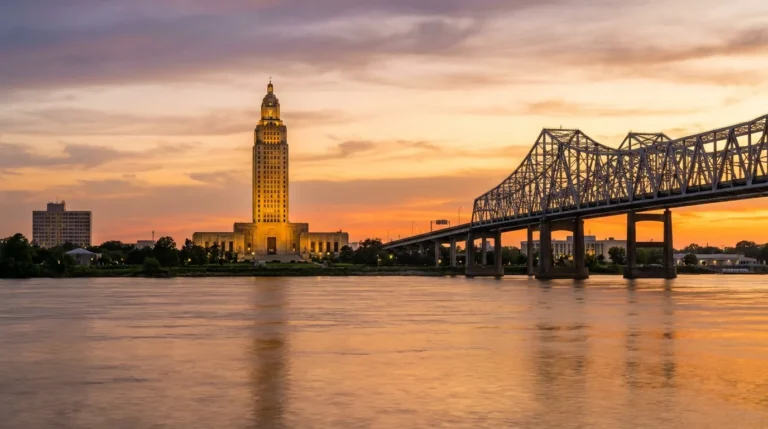
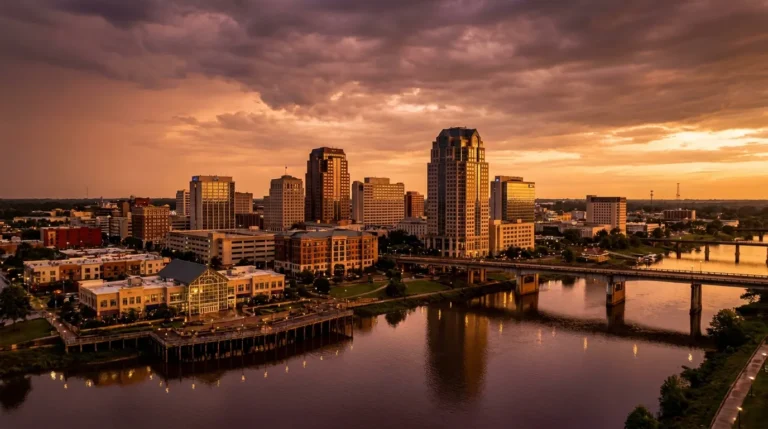
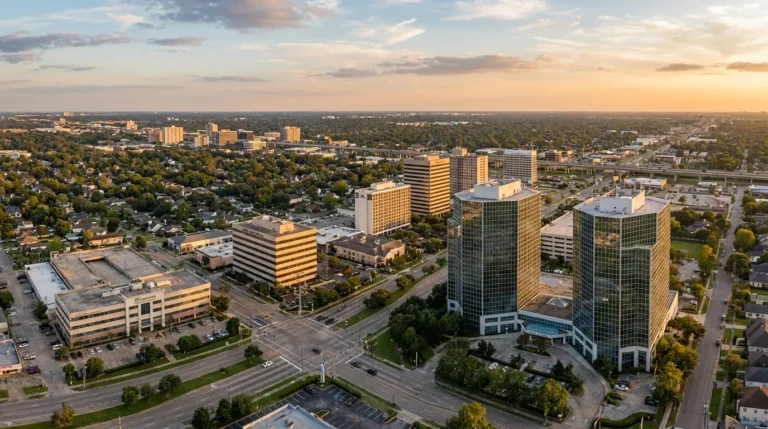
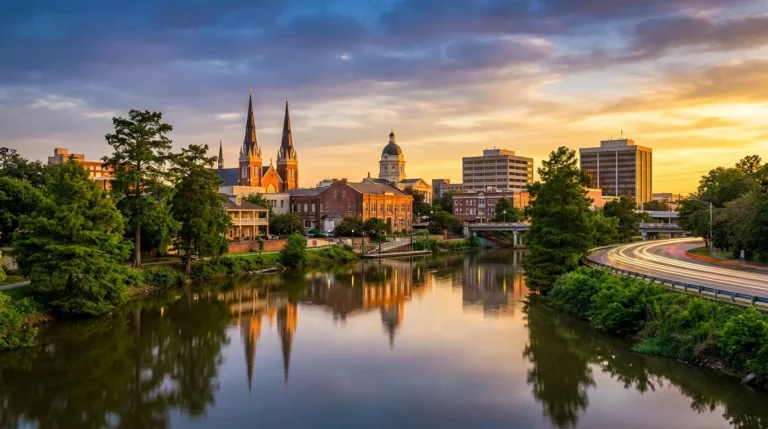
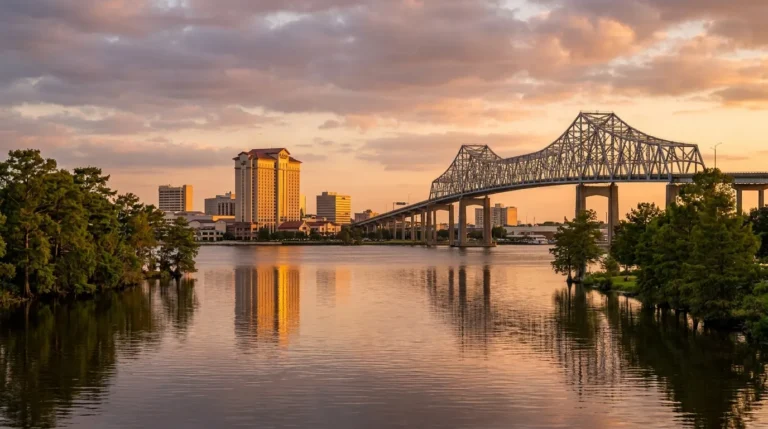
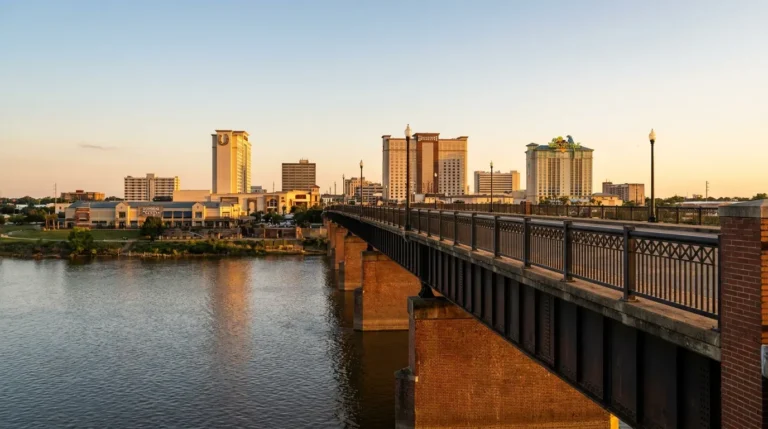
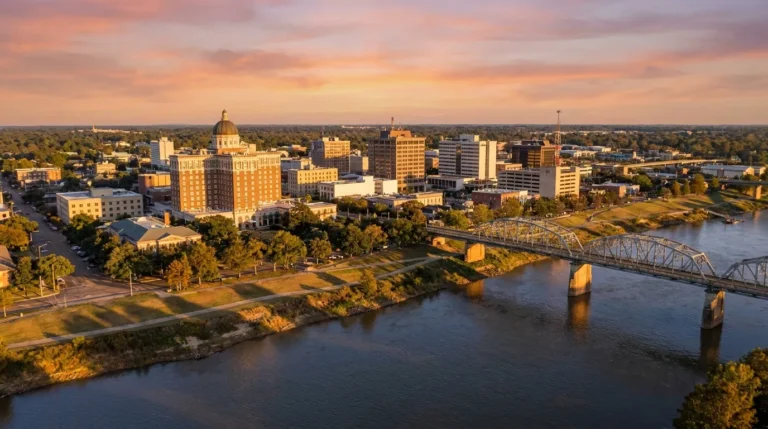
Louisiana sits in the southern United States where the Mississippi River meets the Gulf of Mexico. The main cities are New Orleans (the most famous, known for music and food), Baton Rouge (the political capital) and Shreveport (in the northwest, close to Texas). The state has a unique identity, blending French, Spanish, African, and Caribbean heritage.

The cost of living is low compared to coastal states. Rent is affordable and food is plentiful and cheap. Public life is lively: New Orleans has live music almost every day, year-round festivals, and a food scene that rivals cities much larger.

The difficult side is the climate: sweltering, humid summers with frequent hurricanes from June through November. Some coastal areas are still recovering from Hurricane Katrina (2005). For immigrants, the advantages are the cultural diversity and low prices; the downside is a more limited job market outside energy and tourism.

Population
4,590,241
Average monthly salary
51,000 USD/mo
31.1695°, -91.8678°

Featured places

Top 10 places in Louisiana

The places most sought-after by immigrants in this region.

Louisiana demographics: strong Black community and Cajun/Creole heritage

State with a large African American community, French descendants (Cajuns and Creoles), and a growing Hispanic population.

Louisiana has one of the largest proportional African American populations in the US, especially in New Orleans and Baton Rouge. Cajuns are descendants of French people expelled from Canada in the 18th century, concentrated in cities like Lafayette and along the bayous. Creoles have mixed origins (French, African, Spanish, and Caribbean).

English is the official language, but Cajun French is still spoken by older people in rural communities. Spanish grew significantly after Hurricane Katrina, with Hondurans and Mexicans arriving for the reconstruction. The Brazilian community is small, without its own neighborhood, spread across New Orleans and Baton Rouge.

Religion is predominantly Christian, with a strong Catholic presence (French and Spanish heritage) around New Orleans and the south of the state, and Baptist in the north. Mardi Gras is the perfect example of this mix: a Catholic pre-Lent celebration turned popular carnival.

4,590,241
Population
38 yrs
Median age
34/km²
Density
$57,650
Median income
per year
Urban population73.0%
Foreign-born4.6%
Languages spoken
  • English
  • Cajun and Creole French (in rural communities)
  • Spanish (grew after Katrina)
  • Vietnamese (in New Orleans East)
Main religions
  • Catholic Christian (south, around New Orleans)
  • Protestant Baptist Christian (north)
  • Pentecostal Christian
  • No religion
  • Voodoo (small cultural tradition in New Orleans)

Cost of living in Louisiana: low, but insurance is expensive because of hurricanes

Rent, food, and gas are cheap. Home insurance is pricey due to storm risk.

Louisiana has a cost of living below the US average. In New Orleans, a 1-bedroom apartment rents for between US$ 1,200 and US$ 1,800 in good neighborhoods (Uptown, Garden District). In Baton Rouge, US$ 900 to US$ 1,400. In Shreveport and smaller cities, US$ 700 to US$ 1,100 covers a comfortable apartment.

Groceries and restaurant meals are inexpensive. Fresh seafood costs little, and giant Cajun dishes go for US$ 12 to US$ 20. Gas is among the cheapest in the US because Louisiana is a major oil producer.

The expensive part is insurance: because of the hurricane and flood risk, home insurance can exceed US$ 4,000 per year in coastal zones, and flood insurance is required in most places. Salaries match the low cost of living, so someone with a remote salary from another state can enjoy a good quality of life.

91Cost index (US = 100)9% below US average
CategorySingleCoupleFamily (2 + 2)
iHousing$1,187$1,370$1,735
iFood$347$694$1,260
iTransport$457$776$1,004
iHealthcare$256$511$959
iChildcare$1,662
iOther$776$1,397$1,963
Monthly total$3,023$4,748$8,583

Source: U.S. BLS Consumer Expenditure Survey 2023 + BEA Regional Price Parities 2023 · Estimates in USD, monthly.

Housing in Louisiana: historic homes in New Orleans, suburbs in Baton Rouge

New Orleans has charming French and Creole-style houses. New suburbs in Baton Rouge offer more space.

In New Orleans, neighborhoods like the Garden District, Uptown, and Marigny have historic homes with porches and bold colors, very much in demand. Well-maintained houses exceed US$ 500,000. Areas like Mid-City and Bywater are more affordable. Some zones (Lower Ninth Ward) still carry marks from Katrina.

In Baton Rouge, suburban neighborhoods like Bocage, Inniswold, and Long Farm have modern homes with 3 to 4 bedrooms for US$ 300,000 to US$ 500,000. That is the typical option for families. In Lafayette (Cajun hub), River Ranch is the most prized neighborhood, with homes starting at US$ 350,000.

Smaller cities like Shreveport offer large homes for low prices (US$ 150,000 to US$ 250,000 for 3 bedrooms). Always pay attention to flood and hurricane zoning before buying. To rent, the contract follows the American standard: 1 month's deposit plus 1 or 2 months' security, proof of income, and credit check.

Purchase price (m²)
  • Center$2,000/m²
  • Outside$1,300/m²
3.7×
Price-to-income
7.0%
Mortgage rate (20y)
Recommended neighborhoods
  • Garden District (New Orleans, historic)
  • Uptown (New Orleans, families)
  • Marigny (New Orleans, young artists)
  • Bocage (Baton Rouge, suburban)
  • Inniswold (Baton Rouge, schools)
  • +2 more

Job market in Louisiana: oil, gas, port, and tourism

Oil and gas is the biggest employer. Tourism drives New Orleans. The Port of New Orleans is one of the largest in the US.

The oil and gas industry is the economic backbone. Companies like ExxonMobil, Shell, Chevron, and Marathon run refineries and offshore operations in the Gulf of Mexico. Engineering, maintenance, and logistics generate well-paid jobs in Baton Rouge, Lake Charles, and along the coast.

Tourism is massive in New Orleans: hotels, restaurants, live music, and Mardi Gras move billions. The sector employs a lot of people, but with low wages for servers, bartenders, musicians, and hotel staff. The Port of New Orleans is one of the largest in the US in volume, with jobs in logistics, transportation, and docking.

Healthcare (Ochsner Health, LSU Health), higher education, and state government also employ heavily in Baton Rouge. Commercial fishing (shrimp, oyster, sugarcane) and sugarcane and rice production are strong in communities in the south of the state.

$51,000
Avg net salary
per month
$15,080
Minimum wage
per month
4.1%
Unemployment
58.5%
Labor force
Dominant sectors
  • Oil and natural gas
  • Tourism and hospitality
  • Port and logistics (Mississippi)
  • Healthcare
  • Fishing and seafood
  • +3 more
Major employers
  • ExxonMobil (Baton Rouge)
  • Shell, Chevron, and Marathon (Gulf of Mexico)
  • Ochsner Health System (New Orleans)
  • LSU Health (Baton Rouge, New Orleans)
  • Louisiana State University (LSU)
  • +3 more

Education in Louisiana: struggling public schools and respected state universities

Free public education for all children. Public schools underperform the national average, with good districts in Mandeville and Lafayette.

Children and teenagers have the right to free public school, regardless of their parents' immigration status. But Louisiana often ranks among the last states in K-12 education in the US. The best public districts are in St. Tammany Parish (Mandeville, Covington) and Lafayette Parish.

Families with children often consider Catholic schools (a good tradition in the region due to French heritage) or secular private schools. New Orleans has the largest charter school system in the US (independently managed public schools), with mixed results.

LSU (Louisiana State University), in Baton Rouge, is the largest public university, with strong programs in engineering, agriculture, and law. Tulane University, in New Orleans, is private and well-regarded in medicine, law, and social sciences. Loyola and Xavier are also options in New Orleans.

Literacy95.0%
Tertiary education25.8%
478
PISA score (avg)
$11,800
Private school
per year
Notable universities
  • Louisiana State University (LSU, Baton Rouge)
  • Tulane University (New Orleans, private)
  • Loyola University New Orleans
  • Xavier University of Louisiana (historically Black)
  • University of Louisiana at Lafayette
  • University of New Orleans
  • Southern University (historically Black, Baton Rouge)

Healthcare in Louisiana: good hospitals in New Orleans and Baton Rouge, rural areas underserved

Health insurance is practically mandatory. People with formal employment usually have benefits; the state expanded Medicaid.

As in the US generally, there is no universal public system. In Louisiana, people with formal employment receive insurance through their employer. The family premium can exceed US$ 1,300, with part paid by the company. Without a job, there are plans through the state marketplace (healthcare.gov) with subsidies.

Medicaid was expanded in 2016, so low-income families have easier access. Documented immigrants with a green card for more than 5 years may qualify. The best hospitals are in New Orleans (Ochsner, Tulane Medical) and Baton Rouge (Our Lady of the Lake, LSU Health).

Rural areas and the north of the state lack specialist physicians. Louisiana's health indicators are among the worst in the US: obesity, diabetes, and heart disease are common problems. For those arriving without insurance, avoid the emergency room: a single visit can cost US$ 1,000 to US$ 3,000 without coverage.

Healthcare index53.0 / 100
  • Life expectancyyears at birth
    74.4yrs
  • Doctors per 1kpracticing physicians
    2.8
  • Health spendper capita, per year
    $9,700
  • Public systemoverall quality rating
    Fair

Safety in Louisiana: difficult situation in New Orleans, calm suburbs

New Orleans has one of the highest homicide rates in the US. Suburbs and smaller cities are much safer.

Louisiana, especially New Orleans, has violent crime rates among the highest in the US. Some areas like the French Quarter (tourist area) are well-patrolled during the day, but require caution at night. Neighborhoods like Central City and parts of the 7th Ward have serious violence problems.

Neighborhoods like the Garden District, Uptown, and Lakeview are much safer. The North Shore suburbs (Mandeville, Covington) and the West Bank are calm, with very low crime. Baton Rouge has mixed areas: suburbs are safe, but certain downtown areas are not.

Hurricanes and flooding are an important safety concern. Every resident should have an evacuation plan, an emergency kit, and flood insurance. Hurricane season runs from June to November, peaking in August and September. Sites like Niche.com and GreatSchools help compare neighborhoods before renting.

19.9
Homicides per 100k
per year
Safety index
35.0
Crime index
65.0
Safer neighborhoods
  • Mandeville and Covington (North Shore)
  • Garden District (New Orleans)
  • Uptown (New Orleans)
  • Lakeview (New Orleans)
  • Bocage and Inniswold (Baton Rouge)
  • River Ranch (Lafayette)
  • Slidell (suburb)
  • Metairie (Jefferson Parish)
Areas to avoid
  • New Orleans 7th Ward
  • New Orleans Central City
  • North Baton Rouge
  • Shreveport Cedar Grove

Transportation in Louisiana: streetcars in New Orleans, car essential everywhere else

New Orleans has historic streetcars and buses. Outside the city, a car is a daily necessity.

New Orleans is one of the few US cities where you can live without a car, especially in the Garden District, Uptown, French Quarter, and Marigny. The streetcars are part of the landscape and function as real transportation, not just tourist rides. The RTA operates buses and streetcars across the city.

In Baton Rouge, Lafayette, Shreveport, and any other city, a car is practically mandatory. The main highways are I-10 (crossing the state east to west, passing through New Orleans and Baton Rouge) and I-20 (north, passing through Shreveport). The Atchafalaya Basin crossing on I-10 is one of the longest bridges in the world.

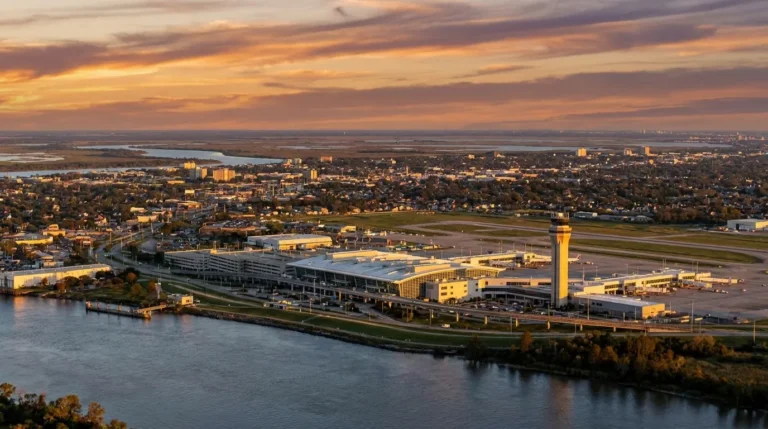
The main airport is Louis Armstrong New Orleans International (MSY), with direct flights to major US cities, Latin America, and Europe. Baton Rouge (BTR) and Shreveport (SHV) handle regional flights. Amtrak trains connect New Orleans to New York, Los Angeles, and Chicago.

25 min
Avg commute
37
Walkability
Airports
  • MSY (Louis Armstrong New Orleans International)
  • BTR (Baton Rouge Metropolitan)
  • SHV (Shreveport Regional)
  • International airport
  • Bike infrastructure

Louisiana climate: subtropical, hot and humid year-round, with hurricanes in summer

Long, suffocating summers with heavy rain. Mild winters. Hurricane season from June to November.

Louisiana has a humid subtropical climate. Summer (May to September) is long, hot, and very humid, with temperatures between 30°C and 35°C and humidity that makes it feel even hotter. Heavy thunderstorms are frequent in the afternoons. Air conditioning is essential at home, in the car, and at work.

Winter (December to February) is mild, with temperatures between 8°C and 18°C. It can get quite cold some weeks (near zero in the north), but snow is extremely rare. Spring is short, with rain and rapid changes. Fall is more pleasant and dry.

Hurricanes are the biggest concern. The official season runs from June 1 to November 30, peaking in August and September. Storms like Katrina (2005) and Ida (2021) leave lasting marks. Every resident needs to monitor forecasts and have an evacuation plan ready.

Sunny days / year216 days
Avg high (°F)
  • 64°J
  • 68°F
  • 74°M
  • 81°A
  • 88°M
  • 92°J
  • 94°J
  • 94°A
  • 90°S
  • 83°O
  • 73°N
  • 66°D
Avg low (°F)
  • 47°J
  • 51°F
  • 56°M
  • 62°A
  • 69°M
  • 75°J
  • 77°J
  • 77°A
  • 74°S
  • 65°O
  • 55°N
  • 49°D
Rainfall (")
  • 5"J
  • 4"F
  • 5"M
  • 5"A
  • 5"M
  • 7"J
  • 9"J
  • 7"A
  • 6"S
  • 4"O
  • 4"N
  • 5"D

Louisiana culture: jazz, Cajun food, Mardi Gras, and the French soul of the South

State with a unique cultural identity: jazz was born here, Cajun and Creole cuisine is world-famous, Mardi Gras is the largest carnival in the US.

Jazz was born in New Orleans, and the city still breathes music year-round. Frenchmen Street in the Marigny has live jazz bars every night. Bourbon Street in the French Quarter is more touristy, with intense music and partying. Festivals like the New Orleans Jazz and Heritage Festival (Jazz Fest) draw massive crowds.

The food is among the best in the world. Cajun dishes (gumbo, jambalaya, etouffee, boudin) and Creole (po'boy, beignet, muffuletta) have fans worldwide. Historic restaurants like Commander's Palace, Antoine's, and Cochon serve the best of the tradition. Seafood from the Gulf is plentiful: shrimp, oysters, crawfish.

Mardi Gras, before Lent, is the largest carnival in the US. Parades, costumes, marching bands, and the famous beads thrown from floats dominate New Orleans for weeks. The culture also features Cajun festivals in Lafayette, plus jazz, food, and literature festivals throughout the year.

170
Major museums
Notable dishes
  • Gumbo (Cajun soup with seafood and sausage)
  • Jambalaya (rice with shrimp, chicken, and sausage)
  • Crawfish etouffee
  • Po'boy (fried shrimp or fish sandwich)
  • Beignet (fried dough with powdered sugar, Cafe du Monde)
  • +4 more
Annual events
  • Mardi Gras (February/March)
  • New Orleans Jazz and Heritage Festival (April/May)
  • Essence Festival (Black music, July)
  • French Quarter Festival (April)
  • Festival International de Louisiane (Lafayette, April)
  • +2 more
UNESCO sites
  • Poverty Point Monumental Site

Key industries in Louisiana's economy

Oil and gas, tourism, the port, fishing, and agriculture lead. Film grew through tax incentives.

Oil and natural gas are the economic foundation. Louisiana sits on the Gulf of Mexico, where large offshore fields are located. Giant refineries in Baton Rouge, Lake Charles, and Norco turn oil into gasoline, plastics, and chemicals. Petrochemicals employ many people, with high salaries for engineers and technicians.

Tourism, especially in New Orleans, is an essential sector. Hotels, restaurants, jazz, Mardi Gras, and conventions move billions. The Port of New Orleans is one of the largest in the US by cargo volume, connecting the Mississippi River to the world. Agriculture (sugarcane, rice, cotton) and fishing (shrimp, oyster, crawfish) are also strong.

Film has grown over the last 20 years due to tax incentives, earning the nickname Hollywood South. Many big-budget films are shot in New Orleans and Baton Rouge. Healthcare with Ochsner Health, and education (LSU, Tulane) are also major sectors.

  • GDPgross domestic product
    $295.0B
  • GDP per capitaoutput per resident
    $64,200
  • GDP growth (yr)economy expanding
    +1.5%
Top sectors
  • Oil and natural gas
  • Petrochemicals and refining
  • Tourism and hospitality
  • Port and logistics
  • Agriculture (sugarcane, rice, cotton)
  • +3 more

Immigrant communities in Louisiana

Louisiana has about 200,000 immigrants, with Hondurans in Kenner and Metairie, Catholic Vietnamese in New Orleans East, and Mexicans across Greater New Orleans.

Louisiana is home to roughly 200,000 people born outside the country, just over 4% of the population. Hondurans form one of the largest Honduran communities in the United States, in Kenner and Metairie, with sharp growth after Katrina when reconstruction workers settled in. New Orleans East is the heart of the Vietnamese community, formed by Catholic refugees who arrived in 1975 and still run parishes, markets, and community gardens. Mexicans and Cubans round out the picture across the New Orleans and Baton Rouge areas.

New Orleans hosts consulates from Mexico, Honduras, Costa Rica, Guatemala, and France, reflecting the city's historical ties. The Vietnamese American Young Leaders Association (VAYLA) works with youth in the eastern part of the city. The Congress of Day Laborers organizes Hispanic workers. Catholic Charities Archdiocese of New Orleans runs a strong immigration program with legal aid and citizenship classes.

200,000
Foreign-born residents
estimated
Top countries of origin
  • Honduras
  • Vietnam
  • Mexico
  • Cuba
Main immigrant hubs
  • New Orleans
  • Kenner
  • Metairie
  • Baton Rouge
Foreign consulates
  • Mexican Consulate General in New Orleans
  • Honduran Consulate General in New Orleans
  • Costa Rican Consulate in New Orleans
  • Guatemalan Consulate in New Orleans
  • French Consulate in New Orleans
Community organizations
  • Vietnamese American Young Leaders Association (VAYLA)
  • Congress of Day Laborers
  • Catholic Charities Archdiocese of New Orleans

Latest posts

Posts about the United States

Coverage and updates related to this destination.

Showing content from the United States, as there is no specific data for Louisiana yet.