Visto n' Visa
Blog
Notícias e artigos
Destinations
Careers
Immigrants

Want to live and work in Florida?

Personalized immigration plan with eligible visas, costs, and next steps for your goal!

If you are not eligible, you will know exactly why and what to do to improve your approval chances.

Save up to 12 hours in meetings

No pointless assessments.

Save up to 90%

Save money on vague or unfocused consultations

Avoid Fraud and Mistakes

One mistake can cost you your visa

Total Impartiality

Zero commercial bias

Decide with peace of mind

No toxic urgency

Fast and Accurate

Answers in minutes, no guesswork

Why visit Florida

Beaches, Disney, year-round sunshine, and the largest Brazilian community in the US.

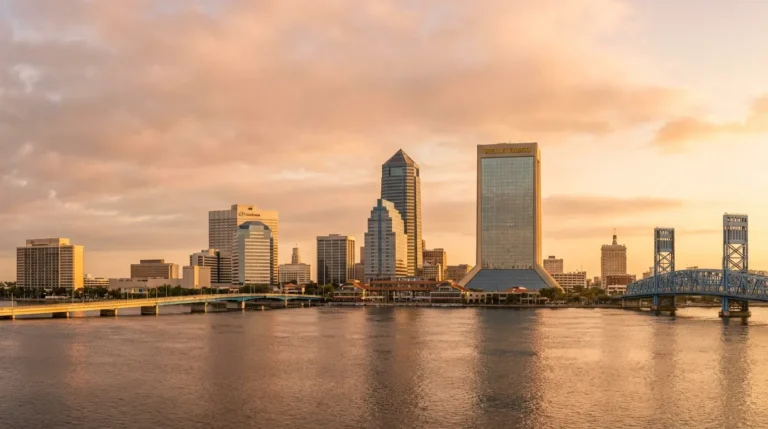
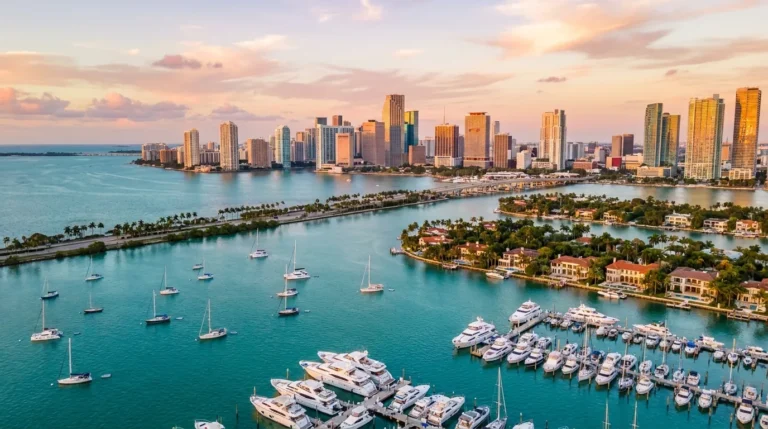
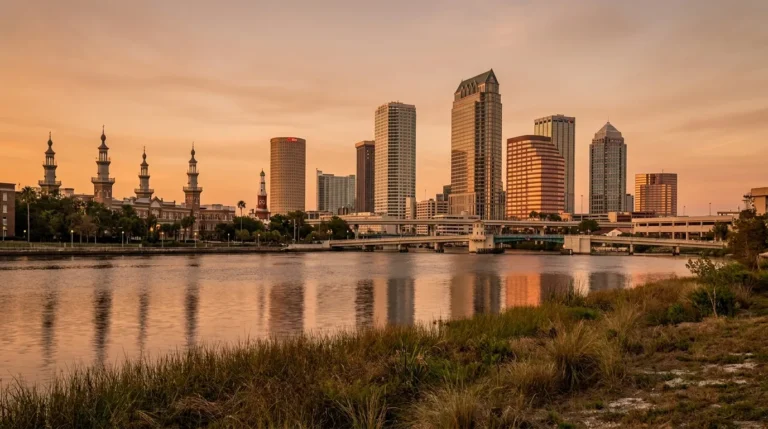
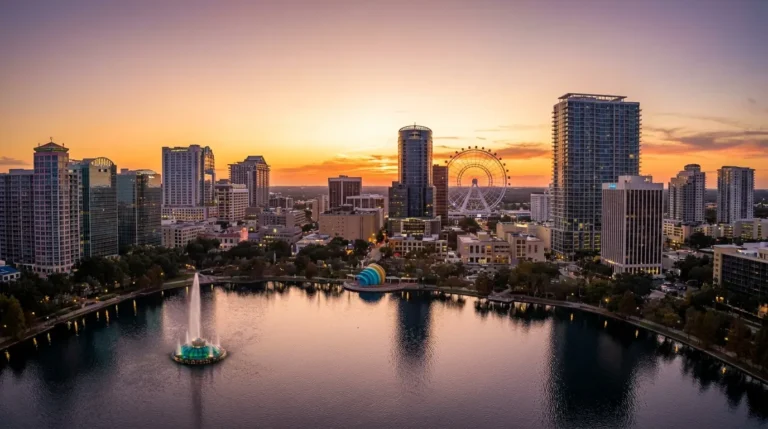
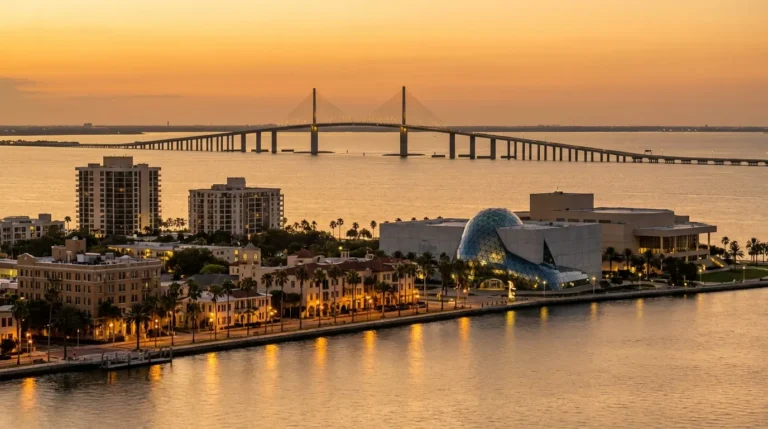
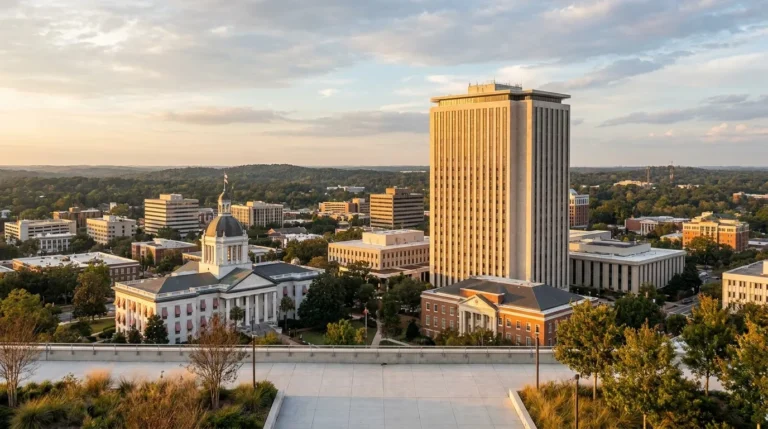
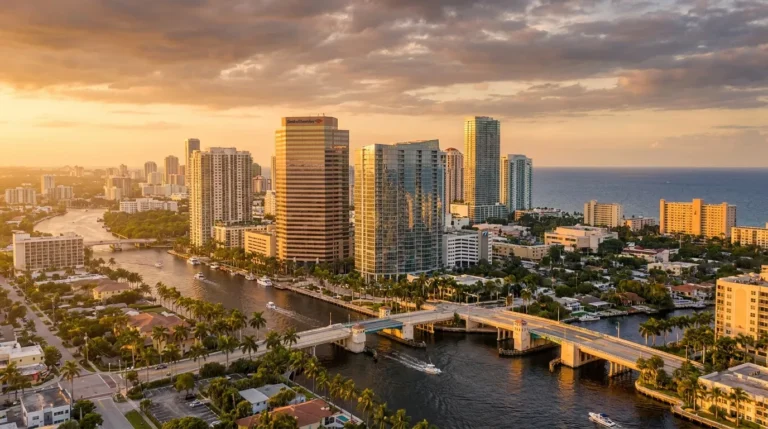
Florida is in the southeastern US, shaped like a peninsula separating the Gulf of Mexico from the Atlantic Ocean. The main cities are Miami (the state's cultural and financial capital, a gateway to Latin America), Orlando (Disney, Universal, theme parks), Tampa (west coast, with a port and industry), and Jacksonville (north, military and logistics). Tallahassee is the political capital.

Florida has the largest Brazilian community of any US state. Orlando, Miami, and Boca Raton have entire neighborhoods with Brazilian shops, restaurants, Portuguese-speaking churches, and bilingual schools. For those arriving from Latin America, the cultural adjustment is easier here than anywhere else in the country.

Florida charges no state income tax. Combined with a year-round warm climate and beaches, this draws retirees, families, and entrepreneurs. On the downside, insurance costs (especially for homes, because of hurricanes) and private school tuition can be high.

Population
22,244,823
Average monthly salary
56,000 USD/mo
27.7663°, -81.6868°

Featured places

Top 10 places in Florida

The places most sought-after by immigrants in this region.

Florida's demographics: a Latino, diverse state

Nearly a third of the population is Hispanic. The Brazilian community is the largest in the US, concentrated in Orlando, Miami, and Boca Raton.

Florida has more than 22 million inhabitants, making it the third most populous state in the US. The composition is diverse: non-Hispanic whites form the relative majority, Hispanics account for about 27% (Cubans in Miami, Puerto Ricans in Orlando, Venezuelans in Doral, Colombians throughout the state). Black Americans are a large and historic community.

The Brazilian community is the largest in the US, with a strong presence in Orlando (Kissimmee, Davenport, Clermont), Miami (Aventura, Brickell, Pompano Beach), and Boca Raton. Brazilian grocery stores, doctors, lawyers, churches, salons, and businesses operate across the state. There is virtually no corner of Florida where Portuguese is not heard.

Spanish is so prevalent that in some Miami neighborhoods it is spoken more than English. Haitian Creole is also common in Miami Gardens and Little Haiti. Religious and ethnic diversity is one of the state's defining characteristics.

22,244,823
Population
43 yrs
Median age
131/km²
Density
$67,920
Median income
per year
Urban population91.0%
Foreign-born21.7%
Languages spoken
  • English
  • Spanish
  • Portuguese (large Brazilian and Portuguese-speaking community)
  • Haitian Creole
  • French
  • +1 more
Main religions
  • Christian (Catholic, Protestant, Evangelical)
  • No religion
  • Jewish (especially Miami Beach and Boca Raton)
  • Santeria and Afro-Cuban religions
  • Muslim

Cost of living in Florida: balanced overall, but has risen sharply in recent years

Cheaper than New York or California, but Miami has become expensive. No state income tax helps the budget.

The cost of living in Florida varies greatly by city. Miami became one of the most expensive cities in the US after 2020, with one-bedroom apartments renting for $2,500 to $3,500/month in good neighborhoods (Brickell, Coconut Grove, Aventura). Orlando and Tampa range from $1,700 to $2,200.

Smaller and inland cities (Jacksonville, Gainesville, Ocala) are much more affordable, with rents starting around $1,300. The major advantage of Florida is no state income tax. Someone earning $100,000 here takes home several thousand dollars more per year than in states like New York or California.

Home insurance has risen sharply due to hurricanes, and can exceed $3,000/year for a house. Electricity bills are high in summer because of air conditioning. Groceries and restaurants are at the national average, but Latin and Brazilian food (in ethnic markets) tends to be cheaper than in most other states.

101Cost index (US = 100)1% above US average
CategorySingleCoupleFamily (2 + 2)
iHousing$1,314$1,517$1,921
iFood$384$768$1,395
iTransport$506$859$1,112
iHealthcare$283$566$1,062
iChildcare$1,840
iOther$859$1,547$2,174
Monthly total$3,346$5,257$9,504

Source: U.S. BLS Consumer Expenditure Survey 2023 + BEA Regional Price Parities 2023 · Estimates in USD, monthly.

Housing in Florida: pool homes, beachfront condos, options for every budget

Single-story suburban homes with yards and pools are the norm. Waterfront condos cost more. The market is competitive statewide.

The typical Florida home has one story, a two-car garage, a yard, and a pool. Neighborhoods like Doral, Weston, Pembroke Pines (Miami area), Lake Nona, Winter Park (Orlando), and Wesley Chapel (Tampa) are popular with families. Prices range from $400,000 in mid-sized cities to over $1 million in Miami and Boca Raton.

Beachfront condos (Sunny Isles, Miami Beach, Hollywood Beach, Fort Lauderdale) attract investors and lifestyle-focused buyers. Prices start around $500,000 for modest units and exceed $5 million in luxury towers.

Renting is straightforward. Landlords typically require proof of income (usually 3 times the rent), credit history, and references. Newly arrived immigrants without a US credit score may need to pay two or three months upfront or show bank reserves. Brazilian neighborhoods (Pompano, Kissimmee, Boca) often have landlords experienced with immigrant profiles.

Purchase price (m²)
  • Center$4,200/m²
  • Outside$2,700/m²
6.0×
Price-to-income
7.0%
Mortgage rate (20y)
Recommended neighborhoods
  • Aventura (Miami, Brazilian community, schools)
  • Doral (Miami, Latinos)
  • Boca Raton (top schools, safety)
  • Weston (families, Brazilian community)
  • Kissimmee and Davenport (Orlando, Brazilian community)
  • +4 more

Job market in Florida: tourism, healthcare, finance, and construction

Disney and Universal employ over 100,000. Miami is a financial hub for Latin America. Construction and healthcare are growing fast.

Tourism is Florida's largest sector. Disney and Universal Orlando together employ more than 100,000 people. Hotels, restaurants, water parks, cruises (Miami is the world's largest cruise port), and attractions make the state one of the top global tourism destinations.

Miami is a financial and business hub for Latin America. International banks, foreign trade offices, family offices, and fintechs (including several Brazilian companies) operate there. Brickell has become a financial district known as the Wall Street of the South.

Healthcare is a major sector across the state, driven by the large retiree population. Construction is growing fast due to population inflows. The aerospace sector is strong at Cape Canaveral (Kennedy Space Center) and in Tampa (defense). Jobs for immigrants exist at all levels, from hospitality to tech in Miami.

$56,000
Avg net salary
per month
$26,416
Minimum wage
per month
3.3%
Unemployment
59.4%
Labor force
Dominant sectors
  • Tourism and theme parks
  • Healthcare (hospitals and senior services)
  • Construction
  • Finance and banking for Latin America
  • Logistics and ports
  • +3 more
Major employers
  • Walt Disney World (Orlando)
  • Universal Orlando
  • Publix (grocery chain, HQ in Lakeland)
  • Carnival Corporation (cruises, Miami)
  • AdventHealth
  • +3 more

Education in Florida: variable public schools and rising universities

Free public K-12 education with variable quality by county. State universities are quickly building their reputation.

Florida has free public schools, with quality that varies greatly by county. The best districts tend to be St. Johns (near Jacksonville), Sarasota, Seminole, Palm Beach, and parts of Miami-Dade. Boca Raton, Weston, Winter Park, and Lake Nona are known for strong schools.

Because of the large immigrant population, many schools offer ESOL (English as a Second Language) and bilingual programs. In Miami, Spanish is part of the curriculum in many schools. IB (International Baccalaureate) and magnet school programs (with a focus on science, arts, or languages) are also public options.

The main public universities are the University of Florida (UF, in Gainesville), Florida State University (FSU, in Tallahassee), the University of Miami (private, in Coral Gables), the University of Central Florida (UCF, a large institution in Orlando), and the University of South Florida (USF, in Tampa). In-state public tuition is among the lowest in the US.

Literacy96.0%
Tertiary education31.5%
478
PISA score (avg)
$12,700
Private school
per year
Notable universities
  • University of Florida (Gainesville)
  • Florida State University (Tallahassee)
  • University of Miami (private, Coral Gables)
  • University of Central Florida (Orlando)
  • University of South Florida (Tampa)
  • Florida International University (Miami)
  • Florida Atlantic University (Boca Raton)

Healthcare in Florida: strong hospital network driven by the retiree population

The state has some of the Southeast's best hospitals. Private employer-based insurance follows the American standard.

Florida has a large and developed hospital network, especially because of its elderly population. Hospitals like Cleveland Clinic Florida (Weston), Mayo Clinic Jacksonville, Jackson Memorial (Miami), Baptist Health (Miami), and AdventHealth (Orlando) rank among the Southeast's best.

The model is the standard American one: health insurance through employment, no universal coverage. Family premiums run $1,200 to $1,700/month, with the employer paying a portion. Retirees over 65 are covered by federal Medicare. Low-income families may qualify for Florida's Medicaid, though the state applies stricter criteria than most.

There are large numbers of Latino physicians practicing in Miami, Orlando, and Boca Raton, with consultations available in Spanish. For immigrants without insurance, community clinics (FQHCs) charge on a sliding scale. Visiting a private emergency room without coverage should be avoided: a single visit can exceed $3,000.

Healthcare index68.0 / 100
  • Life expectancyyears at birth
    78.5yrs
  • Doctors per 1kpracticing physicians
    2.7
  • Health spendper capita, per year
    $9,400
  • Public systemoverall quality rating
    Fair

Safety in Florida: calm in family neighborhoods, with variations by city

Suburban neighborhoods and mid-sized cities are safe. Some areas of Miami and Jacksonville have higher crime rates.

Safety in Florida varies considerably by city and neighborhood. Family suburbs like Weston, Boca Raton, Aventura, Winter Park, Wesley Chapel, and Estero rank among the safest cities in the US. Families and retirees concentrate in these areas because of the combination of good schools and low crime.

Large cities like Miami, Jacksonville, and Orlando have both problem areas and very safe neighborhoods. In Miami, areas like Coral Gables, Pinecrest, Aventura, and Bal Harbour are calm; Liberty City, Overtown, and parts of Little Havana have higher rates. In Orlando, the tourism core is closely monitored.

Break-ins at vacant homes during the off-season (when snowbirds are away) and car theft are the most common complaints in tourist areas. Violent crime is less common in residential neighborhoods. Sites like Niche.com and GreatSchools help compare neighborhoods before renting.

5.7
Homicides per 100k
per year
Safety index
49.0
Crime index
51.0
Safer neighborhoods
  • Weston
  • Boca Raton
  • Aventura
  • Coral Gables
  • Pinecrest
  • Wesley Chapel
  • Winter Park
  • Lake Nona
  • Estero (Naples area)
  • Parkland
Areas to avoid
  • Miami Liberty City
  • Orlando Pine Hills
  • Jacksonville Northside
  • Tampa University Square

Transportation in Florida: a car is essential, several large international airports

Long distances and weak public transit make the car standard. The state has five international airports.

Florida was built for the car. Distances between cities are large (Miami to Orlando is 380 km, Orlando to Tampa is 140 km) and intercity public transit is limited. Rideshare apps like Uber and Lyft work well in larger cities. Getting a Florida driver's license is straightforward for residents.

Miami has an elevated metro (Metrorail), a regional commuter rail (Tri-Rail), and buses, but the network is limited compared to New York or DC. Orlando has buses (Lynx) and a regional commuter train (SunRail). The Brightline train connects Miami to Orlando in about 3.5 hours with modern coaches, a good option for those who prefer not to drive.

The state has five major international airports: Miami (MIA), Orlando (MCO), Tampa (TPA), Fort Lauderdale (FLL), and Jacksonville (JAX). MIA is one of the largest hubs for Latin America, with direct flights to all major Latin American capitals. MCO is the most used airport for Orlando and Disney.

2
Metro lines
23
Metro stations
28 min
Avg commute
44
Walkability
Airports
  • MIA (Miami International)
  • MCO (Orlando International)
  • TPA (Tampa International)
  • FLL (Fort Lauderdale-Hollywood International)
  • JAX (Jacksonville International)
  • +2 more
  • International airport
  • Bike infrastructure

Florida's climate: tropical in the south, subtropical in the north, with hurricane season

Hot and humid year-round in the south, with a milder winter in the north. Hurricane season runs June through November.

Florida has a tropical climate from the center southward (Miami, Naples, the Keys) and subtropical in the north (Jacksonville, Tallahassee). Summer is hot, humid, and rainy, with temperatures around 30 to 35°C and afternoon thunderstorms nearly every day. Air conditioning is essential in homes, cars, and any indoor space.

Winter is the best season. In Miami and Orlando, temperatures stay between 18°C and 25°C with little rain and blue skies. This is when snowbirds (northerners) and visitors arrive in large numbers. In Jacksonville and northern Florida, it is cooler, with some nights dipping to 5°C.

Hurricane season runs June through November, with the peak between August and October. Major hurricanes can cause severe damage and evacuations. Buying a home requires specialized insurance. Flooding in coastal areas is worsening with rising sea levels, a chronic problem in Miami Beach.

Sunny days / year240 days
Avg high (°F)
  • 65°J
  • 69°F
  • 74°M
  • 80°A
  • 86°M
  • 90°J
  • 92°J
  • 91°A
  • 88°S
  • 82°O
  • 73°N
  • 67°D
Avg low (°F)
  • 47°J
  • 50°F
  • 55°M
  • 61°A
  • 69°M
  • 74°J
  • 76°J
  • 76°A
  • 74°S
  • 66°O
  • 56°N
  • 50°D
Rainfall (")
  • 3"J
  • 2"F
  • 3"M
  • 2"A
  • 3"M
  • 7"J
  • 6"J
  • 6"A
  • 6"S
  • 4"O
  • 2"N
  • 2"D

Florida's culture: Latin mix, beaches, parks, and year-round festivals

Salsa in Miami, theme parks in Orlando, and Brazilian and Cuban festivals. Intense cultural life in the south, quieter in the north.

Florida's culture is a unique blend of American, Latin, and Caribbean influences. Miami breathes Cuban, Venezuelan, Colombian, and Brazilian rhythms. Neighborhoods like Little Havana (Cuban), Little Haiti, Doral (Venezuelan), and Aventura (Brazilian, Israeli) each have their own food, music, and festivals. Salsa, reggaeton, and samba share space with hip-hop and pop.

Orlando is the kingdom of theme parks: Walt Disney World (four main parks), Universal Orlando, SeaWorld, and Legoland. The city runs on tourism, which shapes local culture. Active Brazilian immigrant neighborhoods offer food, churches, events, and Brazilian steakhouses.

In the north (Jacksonville, Tallahassee, Pensacola), the culture is more classically Southern American, with country music, college football (Gators and Seminoles), and Deep South-style food. The Florida Keys have their own bohemian vibe. Festivals like Carnaval Miami, Ultra Music, and Brazilian Independence Day celebrations draw large crowds.

380
Major museums
Notable dishes
  • Cuban sandwich (Tampa, Miami)
  • Stone crab (South Florida specialty)
  • Key lime pie
  • Peruvian and Ecuadorian ceviche
  • Pao de queijo (in Brazilian markets)
  • +3 more
Annual events
  • Ultra Music Festival (Miami, March)
  • Art Basel Miami Beach (December)
  • Calle Ocho Festival (Little Havana, March)
  • Carnaval Miami
  • EPCOT Food and Wine Festival (Orlando, fall)
  • +2 more
UNESCO sites
  • Everglades National Park

Florida's main economic sectors

Tourism, healthcare, Latin American finance, construction, and aerospace drive the economy. Technology is growing in Miami.

Tourism is the economic engine. Disney, Universal, cruises (Miami, Port Everglades, Port Canaveral), beaches, and parks receive more than 130 million visitors per year. Hotels, restaurants, and entertainment companies employ millions. Without tourism, Florida would be a very different state.

Financial services oriented to Latin America are Miami's specialty. International banks, wealth managers, trade offices, and fintechs (including Mercado Libre and Nubank) operate there. The city has become a crypto and venture capital hub since 2020.

Healthcare is a massive sector statewide, driven by retirees. Aerospace and defense are concentrated at Cape Canaveral (Kennedy Space Center, SpaceX, Blue Origin) and in Tampa (defense). Agriculture is significant: oranges, tomatoes, sugarcane, avocados, and tropical fruits. Construction tracks the state's rapid population growth.

  • GDPgross domestic product
    $1,390.0B
  • GDP per capitaoutput per resident
    $62,500
  • GDP growth (yr)economy expanding
    +3.5%
Top sectors
  • Tourism and theme parks
  • Healthcare and senior services
  • Finance and banking for Latin America
  • Real estate and construction
  • Aerospace and space exploration
  • +3 more

Immigrant communities in Florida

More than 4.5 million immigrants live in Florida, with Cubans dominating Miami-Dade, Venezuelans in Doral, and Brazilians spread across Orlando, Boca Raton, and Pompano Beach.

Florida has around 4.5 million residents born outside the country, close to 21% of the population, making it the third most immigrant state in the United States. Cubans form the largest community, with nearly 1.3 million concentrated in Miami-Dade, with iconic neighborhoods like Little Havana, Hialeah, and Westchester, and a cultural influence felt across radio, politics, and food. Venezuelans arrived in waves over the last two decades and dominate Doral, to the point that the city is nicknamed Doralzuela. Haitians form large communities in Little Haiti, North Miami, and Miramar. Colombians, Nicaraguans, Peruvians, and Dominicans round out the south. Brazilians number over 300,000, concentrated in Pompano Beach, Boca Raton, Deerfield, Orlando, and Kissimmee. Mexicans have a strong presence in the Panhandle and the north of the state, tied to agricultural work.

Miami hosts consulates from nearly every Latin American and Caribbean country, including Brazil, Mexico, Cuba (Interests Section), Venezuela, Colombia, Haiti, Honduras, Nicaragua, Peru, Dominican Republic, Argentina, and Chile. Orlando hosts consulates of Brazil and Mexico. The Florida Immigrant Coalition links dozens of organizations across the state. Americans for Immigrant Justice, in Miami, is a leading provider of free legal aid. Catholic Charities of the Archdiocese of Miami offers immigration services through several parishes. Sant La Haitian Neighborhood Center serves Haitians in Little Haiti, and the Hispanic Federation covers South Florida with social services.

4,500,000
Foreign-born residents
estimated
Top countries of origin
  • Cuba
  • Haiti
  • Colombia
  • Venezuela
  • Brazil
Main immigrant hubs
  • Miami
  • Hialeah
  • Doral
  • Orlando
  • Pompano Beach
Foreign consulates
  • Brazilian Consulate General in Miami
  • Mexican Consulate General in Miami
  • Colombian Consulate General in Miami
  • Venezuelan Consulate General in Miami
  • Haitian Consulate General in Miami
  • +1 more
Community organizations
  • Florida Immigrant Coalition
  • Americans for Immigrant Justice
  • Catholic Charities of the Archdiocese of Miami
  • Sant La Haitian Neighborhood Center
  • Hispanic Federation

Latest posts

Posts about Florida

Coverage and updates related to this destination.