Visto n' Visa
Blog
Notícias e artigos
Destinations
Careers
Immigrants

Want to live and work in Arkansas?

Personalized immigration plan with eligible visas, costs, and next steps for your goal!

If you are not eligible, you will know exactly why and what to do to improve your approval chances.

Save up to 12 hours in meetings

No pointless assessments.

Save up to 90%

Save money on vague or unfocused consultations

Avoid Fraud and Mistakes

One mistake can cost you your visa

Total Impartiality

Zero commercial bias

Decide with peace of mind

No toxic urgency

Fast and Accurate

Answers in minutes, no guesswork

More about Arkansas

Low cost, beautiful nature, and jobs in logistics and industry. The quiet South.

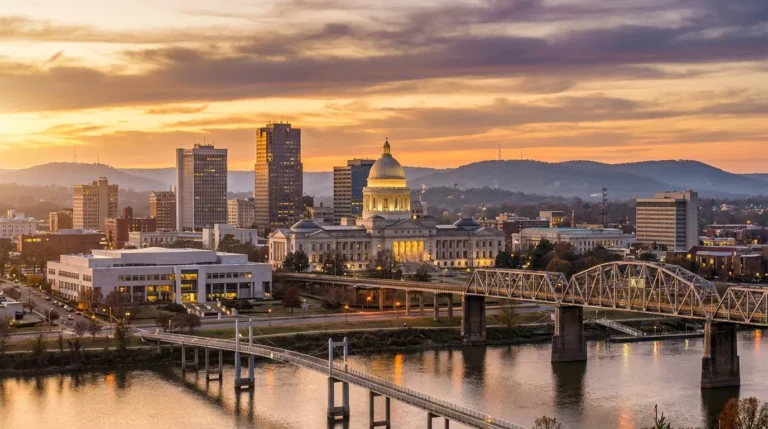
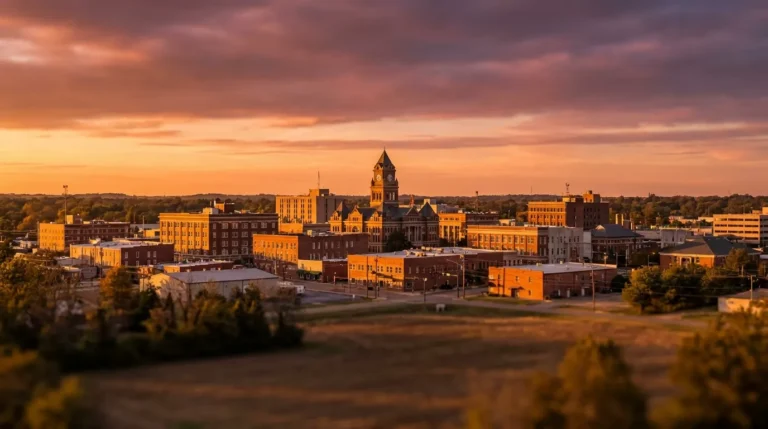
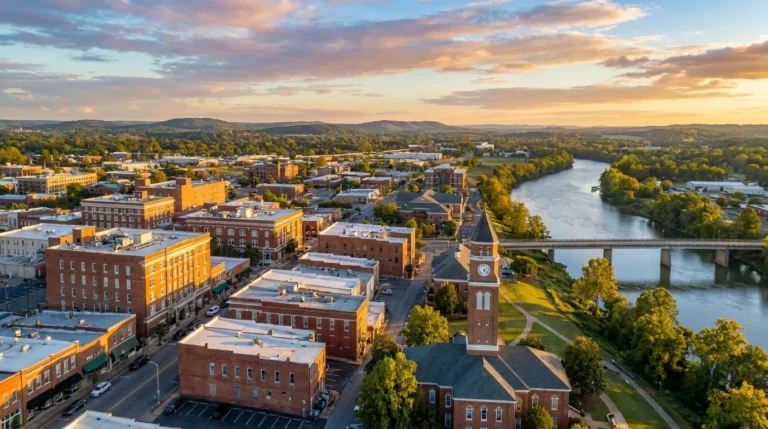
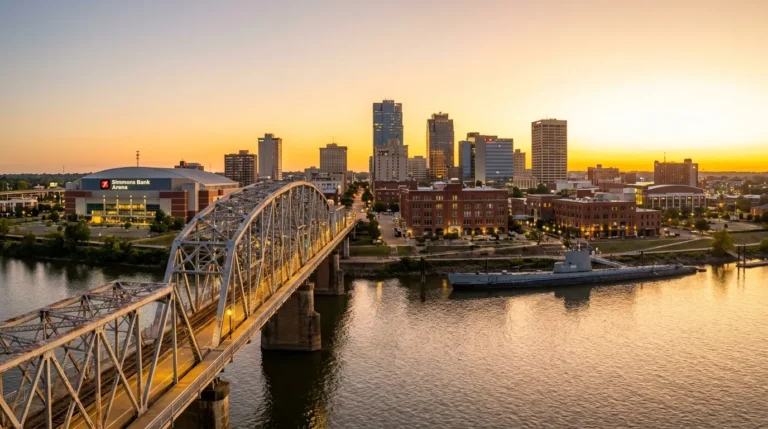
Arkansas is located in the South of the US, between Texas, Tennessee, Missouri, and Mississippi. The main cities are Little Rock (the capital), Fayetteville and Bentonville (in the northwest, headquarters of Walmart), Fort Smith, and Jonesboro. It is one of the least populous states in the region, with a much slower pace than major coastal cities.

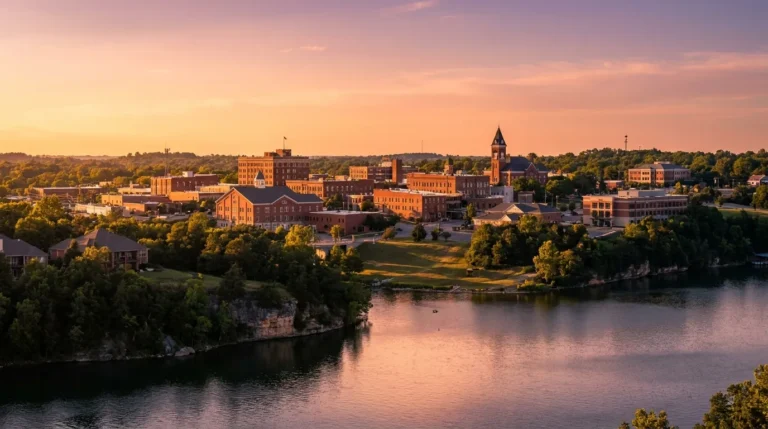
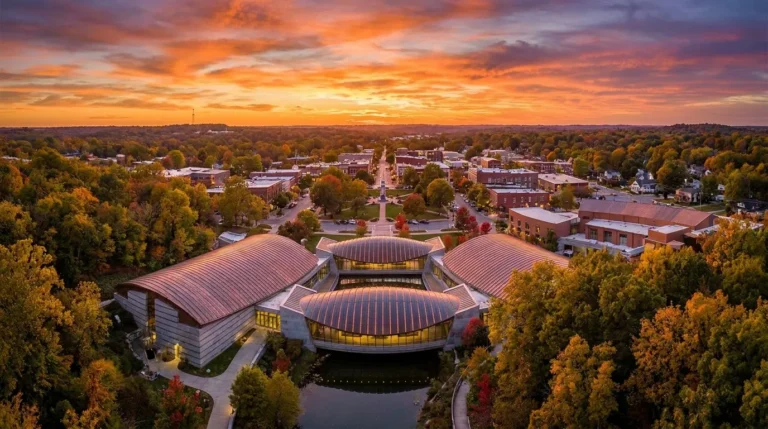
It is a state in transition. Bentonville, where Sam Walton founded Walmart in 1962, has become an economic hub in the northwest, with art museums (Crystal Bridges) and well-kept parks. Little Rock is the political and financial center. The Ozark Mountains in the north offer hiking, river paddling, and charming small towns.

For immigrants, Arkansas has two main draws: a very low cost of living (among the cheapest in the US) and jobs in factories and logistics. Walmart, Tyson Foods, and J.B. Hunt employ tens of thousands. The Hispanic community, especially Mexican and Central American, has grown considerably. Brazilians are few.

Population
3,045,637
Average monthly salary
48,500 USD/mo
34.9697°, -92.3731°

Featured places

Top 10 places in Arkansas

The places most sought-after by immigrants in this region.

Arkansas demographics: white and Black Americans make up the majority, Hispanics on the rise

Nearly three-quarters of the population is white. African Americans make up about 15%. Hispanics have grown rapidly over the last two decades.

Arkansas is predominantly white, largely descended from British, Irish, and German immigrants who settled the state in the 18th and 19th centuries. The African American community is strong in the Delta (southeast), historically tied to cotton agriculture. In Little Rock, the civil rights legacy (Little Rock Nine, 1957) is an important part of local memory.

The Hispanic community has grown from under 1% in 1990 to close to 10% today, primarily Mexicans and Salvadorans. They work in chicken processing (Tyson, Pilgrim's), construction, and agriculture. Cities like Springdale in the northwest have entire Hispanic neighborhoods with grocery stores, Catholic churches, and bilingual schools.

There is also a Marshallese community in Springdale, one of the largest outside the Marshall Islands, linked to the poultry industry. Asians (Chinese, Vietnamese, Indian) are growing in Bentonville because of Walmart. Brazilians are few, mostly tech professionals tied to Walmart suppliers.

3,045,637
Population
39 yrs
Median age
22/km²
Density
$55,430
Median income
per year
Urban population56.0%
Foreign-born4.9%
Languages spoken
  • English
  • Spanish
  • Marshallese (in Springdale)
  • Vietnamese
  • Hindi (in Bentonville)
Main religions
  • Christian (Southern Baptist, Methodist, Pentecostal)
  • Catholic (among Hispanics)
  • No religion (minority)

Cost of living in Arkansas: one of the lowest in the US

Low rent, food, and taxes. You can own a home on a modest salary. A state known for being easy on your wallet.

A one-bedroom apartment in Little Rock rents for between $800 and $1,100/month. In Bentonville and Fayetteville, because of Walmart-related growth and the university, prices have gone up a bit ($1,000-$1,400). Smaller cities like Jonesboro or Fort Smith offer rentals starting at $700.

Food is cheap. Walmart, Aldi, Harps, and Kroger supermarkets compete on price. A meal at a casual restaurant runs $10-$15. Gas is usually among the cheapest in the country. Electricity and natural gas are also moderate.

State income tax runs from 2% to 4.4%. There is no heavy state personal property tax, and the sales tax is around 6.5% plus local variations. Overall, a family can live comfortably on $50,000-$70,000 a year. You can buy a home on an average salary, something difficult in coastal states.

88Cost index (US = 100)12% below US average
CategorySingleCoupleFamily (2 + 2)
iHousing$1,144$1,320$1,672
iFood$334$669$1,214
iTransport$440$748$968
iHealthcare$246$493$924
iChildcare$1,602
iOther$748$1,346$1,892
Monthly total$2,912$4,576$8,272

Source: U.S. BLS Consumer Expenditure Survey 2023 + BEA Regional Price Parities 2023 · Estimates in USD, monthly.

Housing in Arkansas: affordable homeownership, calm family neighborhoods

Large homes at low prices. Bentonville is the hottest market. Little Rock and Fayetteville have good family options.

Buying a home in Arkansas is feasible on a moderate salary. In Little Rock, decent homes in good neighborhoods (Hillcrest, Heights, Chenal Valley) run $250,000-$450,000. In Bentonville and Rogers, because of Walmart, prices have risen to $350,000-$600,000. Fayetteville is similar. In smaller towns, three-bedroom homes with a big yard go for $150,000.

To rent, standard requirements apply: proof of income (3x the rent), credit history, and references. Those arriving without a US credit score often negotiate with two months upfront. In Bentonville and Rogers the market is tight because of the migration of professionals; in Little Rock and smaller cities there is more supply.

Recommended neighborhoods include Chenal Valley and Hillcrest in Little Rock, downtown Bentonville and Pleasant Grove, Rogers Pinnacle Hills, Fayetteville (downtown and Mount Sequoyah), Jonesboro Westside, and South Fort Smith. In every area, check the school district on GreatSchools before signing a lease.

Purchase price (m²)
  • Center$1,600/m²
  • Outside$1,050/m²
3.2×
Price-to-income
7.0%
Mortgage rate (20y)
Recommended neighborhoods
  • Chenal Valley (Little Rock)
  • Hillcrest and Heights (Little Rock)
  • Downtown Bentonville (Walmart HQ)
  • Rogers Pinnacle Hills (Bentonville)
  • Fayetteville (near University of Arkansas)
  • +2 more

Job market in Arkansas: Walmart, Tyson, J.B. Hunt, and logistics

Three global giants were born here: Walmart, Tyson Foods, and J.B. Hunt. Logistics, food processing, and Walmart suppliers dominate employment.

Arkansas is home to Walmart, the world's largest retailer, headquartered in Bentonville. That presence attracts suppliers and partners (Procter & Gamble, Coca-Cola, Sam's Club) that keep offices in the area. Retail, supply chain, marketing, and tech professionals have global career opportunities here.

Tyson Foods, the giant chicken and meat processor, is headquartered in Springdale. Along with Pilgrim's and George's, this sector employs thousands, mostly Hispanic and Marshallese immigrants. J.B. Hunt, in Lowell, is one of the largest freight carriers in the US, generating jobs in logistics, truck driving, and operations.

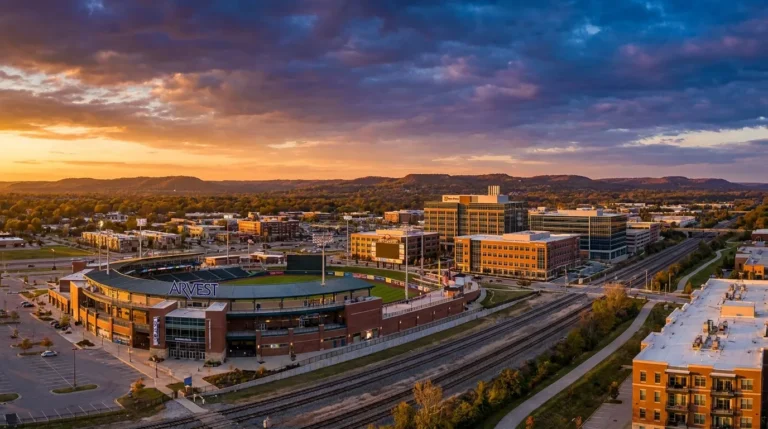
In Little Rock there is healthcare (UAMS, Baptist Health), banking (Bank of the Ozarks, Arvest), state government, and some industry. Average wages in the state are below the national median, but combined with the low cost of living, purchasing power is solid. Engineers, doctors, and supply chain managers earn well in Bentonville.

$48,500
Avg net salary
per month
$22,880
Minimum wage
per month
3.4%
Unemployment
57.6%
Labor force
Dominant sectors
  • Retail and supply chain (Walmart)
  • Food processing (chicken and beef)
  • Logistics and transportation
  • Healthcare
  • Aerospace (Fort Smith)
  • +2 more
Major employers
  • Walmart (Bentonville)
  • Tyson Foods (Springdale)
  • J.B. Hunt Transport (Lowell)
  • Sam's Club
  • George's (chicken)
  • +3 more

Education in Arkansas: public schools statewide, solid regional universities

Schools vary widely by district. The University of Arkansas in Fayetteville is the leading public institution. UAMS is the medical reference.

Children are entitled to free public school. Quality varies by district. Bentonville, Fayetteville, Cabot, Conway, and Bryant have well-rated schools. In other areas, especially the rural Delta, schools face resource and performance challenges.

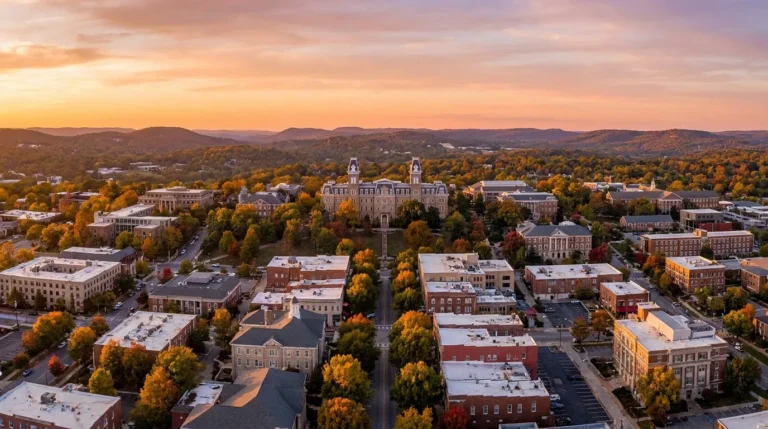
The University of Arkansas in Fayetteville (UA) is the state's leading public university. It has strong programs in agriculture, business (Sam M. Walton College of Business, linked to Walmart), engineering, and architecture. UAMS in Little Rock is the university's medical center and the statewide reference for medicine and public health.

Other options include Arkansas State (Jonesboro), University of Central Arkansas (Conway), and Hendrix College (a prestigious private school in Conway). In-state tuition at public institutions runs about $9,000-$11,000 per year. International students pay more, but costs are still lower than in coastal states.

Literacy96.0%
Tertiary education24.0%
478
PISA score (avg)
$9,800
Private school
per year
Notable universities
  • University of Arkansas (Fayetteville)
  • University of Arkansas for Medical Sciences (UAMS, Little Rock)
  • Arkansas State University (Jonesboro)
  • University of Central Arkansas (Conway)
  • Hendrix College (Conway, private)
  • University of Arkansas at Little Rock

Healthcare in Arkansas: UAMS is the anchor, rural areas have limited access

Little Rock has the best hospitals. In rural areas and the Delta, lack of doctors and hospitals is a serious problem.

There is no universal public system in the US. In Arkansas, those with formal employment receive coverage through their employer. For low-income residents, Medicaid (ARHOME in Arkansas, with a private component) covers families and children. The state expanded Medicaid under the ACA, so coverage is broader than in neighboring states like Texas.

UAMS Medical Center is the state's reference hospital. Baptist Health, CHI St. Vincent, and Mercy operate large networks in Little Rock, Fort Smith, and the northeast. For the northwest, Washington Regional (Fayetteville) and Mercy (Rogers) serve the Walmart corridor.

In rural areas, especially the Delta (southeast), there is a chronic shortage of doctors and small hospital closures. Distances to an emergency room can be long. Community health clinics (FQHCs) provide care regardless of documentation on a sliding-fee scale. Without insurance, a single ER visit can cost over $1,500.

Healthcare index53.0 / 100
  • Life expectancyyears at birth
    73.8yrs
  • Doctors per 1kpracticing physicians
    2.3
  • Health spendper capita, per year
    $9,600
  • Public systemoverall quality rating
    Fair

Safety in Arkansas: suburbs and small towns are calm, Little Rock has localized issues

Bentonville, Rogers, Conway, and Cabot are among the safest cities. Parts of central and south Little Rock and some areas have above-average crime rates.

Arkansas has above-average crime rates nationally, but as in almost every state, this is concentrated in specific neighborhoods. Small towns and suburbs are generally calm. Bentonville, Rogers, Cabot, Conway, and Bryant regularly appear on lists of safe cities.

Little Rock has areas with higher crime, especially downtown and in the south. Neighborhoods like Heights, Hillcrest, and Chenal Valley are much safer. Pine Bluff, in the south, has one of the highest per-capita homicide rates in the US, so it is a city most people avoid.

For immigrants, the standard advice applies: live in recommended neighborhoods, use the public school rating as a proxy for safety, and avoid known problem areas at night. The state has permissive gun laws, so arguments should be avoided. In general, life in suburbs and mid-sized cities in Arkansas is quite safe.

10.3
Homicides per 100k
per year
Safety index
42.0
Crime index
58.0
Safer neighborhoods
  • Bentonville
  • Rogers
  • Cabot
  • Bryant
  • Conway
  • Chenal Valley (Little Rock)
  • Fayetteville
  • Jonesboro Westside
Areas to avoid
  • Little Rock southwest
  • Pine Bluff downtown
  • West Memphis peripheral districts

Transportation in Arkansas: a car is essential, public transit is scarce

Long distances and almost no public transportation. Little Rock's airport serves domestic flights. Northwest Arkansas has a fast-growing airport.

Arkansas is a car state. Almost everyone drives to work. Little Rock has a modest bus system (Rock Region Metro), but ridership is low. Biking and walking are options in Fayetteville (a college town) and Bentonville (which has invested in bike trails and parks).

The main highways are I-30 (Texarkana to Little Rock), I-40 (east-west), and I-49 (north-south, connecting the northwest to the rest of the state). Traffic exists in Little Rock and Bentonville but is very light compared to big cities. Parking is easy and cheap almost everywhere.

Bill and Hillary Clinton National Airport (LIT) in Little Rock is the main airport, with domestic flights to major hubs. Northwest Arkansas Regional Airport (XNA) in Bentonville has grown quickly because of Walmart and offers flights to many US cities. There are no significant direct international flights; almost everything connects through Dallas, Atlanta, or Chicago.

22 min
Avg commute
28
Walkability
Airports
  • LIT (Bill and Hillary Clinton National, Little Rock)
  • XNA (Northwest Arkansas Regional, Bentonville)
  • FSM (Fort Smith Regional)
  • TXK (Texarkana Regional)
  • JBR (Jonesboro Municipal)
  • Bike infrastructure

Arkansas climate: humid subtropical, with a tornado-prone spring

Hot, humid summers and mild winters with occasional freezes. Strong spring storms. The Ozarks have a slightly milder climate.

Arkansas has a humid subtropical climate (Koppen Cfa, typical of the US South): hot and humid summers with highs frequently above 90°F (32°C), and mild winters with January lows around 30-36°F (-1 to 2°C). Snow is rare but does fall a few times a year, usually in small amounts.

Summer humidity makes the heat feel worse. Air conditioning is the rule. Rain is well distributed throughout the year, with strong thunderstorms in spring. Arkansas lies within part of the so-called Dixie Alley, a high tornado-activity corridor, mainly from March to May. Homes typically have a tornado shelter or basement.

In the north and west, the Ozark and Boston Mountains bring a slightly milder, drier climate. In the south and east (the Delta), humidity is higher. Spring and fall are the most pleasant seasons. Those coming from a cold climate tend to adapt well; those from a dry climate may feel the humidity.

Sunny days / year217 days
Avg high (°F)
  • 51°J
  • 55°F
  • 64°M
  • 73°A
  • 80°M
  • 88°J
  • 92°J
  • 92°A
  • 85°S
  • 74°O
  • 62°N
  • 53°D
Avg low (°F)
  • 31°J
  • 34°F
  • 42°M
  • 50°A
  • 59°M
  • 68°J
  • 71°J
  • 70°A
  • 63°S
  • 51°O
  • 40°N
  • 33°D
Rainfall (")
  • 4"J
  • 4"F
  • 5"M
  • 6"A
  • 5"M
  • 4"J
  • 3"J
  • 3"A
  • 3"S
  • 4"O
  • 5"N
  • 5"D

Arkansas culture: traditional South, country music, nature, and barbecue

Southern hospitality, churches, hearty food, and country music define most cities. Fayetteville leans more university-oriented and progressive.

Arkansas culture is typical of the US South. Southern hospitality, a Baptist church on every block, hearty food, and a slow pace of life define most cities. Fall Saturdays revolve around college football, especially the Arkansas Razorbacks from the University of Arkansas.

Country, bluegrass, and gospel music have deep roots. Cities like Mountain View in the north have traditional music and folk festivals. Johnny Cash was born in Kingsland, and there is a museum honoring him. Bill Clinton, US President in the 1990s, is from Arkansas, and his museum in Little Rock draws visitors.

Nature is a central part of life. Hot Springs (a national park with thermal baths), Buffalo National River (the first national river in the US), and the Ozark and Ouachita Mountains attract hikers, paddlers, and hunters. Bentonville has become an arts hub with the Crystal Bridges Museum of American Art, funded by the Walton family, and award-winning bike trails.

130
Major museums
Notable dishes
  • Fried chicken
  • Pulled pork barbecue
  • Fried catfish
  • Cornbread
  • Hush puppies
  • +4 more
Annual events
  • Razorbacks football (fall Saturdays in Fayetteville)
  • Bikes, Blues and BBQ (Fayetteville, September)
  • Riverfest (Little Rock, May)
  • Ozark Folk Festival (Mountain View, October)
  • Hot Springs Documentary Film Festival (October)
  • +1 more

Main economic sectors of Arkansas

Retail, food processing, transportation, agriculture, and healthcare dominate. The state is home to 3 of the 500 largest US companies.

Arkansas is home to three Fortune 500 companies: Walmart, Tyson Foods, and J.B. Hunt. This concentration in a small city (Bentonville) is unusual in the US. The ecosystem around Walmart has created a global hub for technology, marketing, and supply chain talent. Professionals come from across the US to work in it.

Food processing, primarily chicken (Tyson, Pilgrim's, George's) and beef, is the second major sector. Thousands work in plants in Springdale, Rogers, Forrest City, and Pine Bluff. Logistics and transportation (J.B. Hunt, ArcBest) are also strong, with I-40 crossing the state.

Agriculture matters: Arkansas is the largest rice producer in the US and also grows soybeans, cotton, and raises cattle. Healthcare generates urban jobs (UAMS, Baptist Health, Mercy). Aerospace in Fort Smith serves suppliers. Crystal Bridges and Hot Springs tourism also move local money.

  • GDPgross domestic product
    $168.0B
  • GDP per capitaoutput per resident
    $55,100
  • GDP growth (yr)economy expanding
    +1.8%
Top sectors
  • Retail and supply chain (Walmart)
  • Food processing (chicken, beef)
  • Logistics and transportation
  • Agriculture (rice, soybeans, cotton)
  • Healthcare
  • +3 more

Immigrant communities in Arkansas

Arkansas has about 150,000 immigrants, with Mexicans in Springdale and Rogers and the largest U.S. Marshallese community outside Hawaii.

Arkansas is home to roughly 150,000 people born outside the country, close to 5% of the state's population. Mexicans form the largest community and concentrate in Springdale, Rogers, and Fort Smith, tied to Tyson and Cargill poultry plants. Springdale also hosts the largest Marshallese community in the U.S. outside Hawaii, with its own schools and churches. Hmong and Salvadorans round out the picture in the northwest.

The Consulate-General of Mexico in Little Rock serves the entire region. Arkansas United, based in Springdale, offers citizenship services and English classes. The Marshallese Educational Initiative works with the Pacific community, translating school and medical materials. Hispanic Catholic parishes and Hmong Buddhist temples serve the largest communities.

150,000
Foreign-born residents
estimated
Top countries of origin
  • Mexico
  • Marshall Islands
  • El Salvador
  • Vietnam
Main immigrant hubs
  • Springdale
  • Rogers
  • Fort Smith
  • Little Rock
  • Fayetteville
Foreign consulates
  • Mexican Consulate General in Little Rock
Community organizations
  • Arkansas United
  • Marshallese Educational Initiative

Latest posts

Posts about Arkansas

Coverage and updates related to this destination.