Visto n' Visa
Blog
Notícias e artigos
Destinations
Careers
Immigrants

Want to live and work in Maine?

Personalized immigration plan with eligible visas, costs, and next steps for your goal!

If you are not eligible, you will know exactly why and what to do to improve your approval chances.

Save up to 12 hours in meetings

No pointless assessments.

Save up to 90%

Save money on vague or unfocused consultations

Avoid Fraud and Mistakes

One mistake can cost you your visa

Total Impartiality

Zero commercial bias

Decide with peace of mind

No toxic urgency

Fast and Accurate

Answers in minutes, no guesswork

Discover Maine

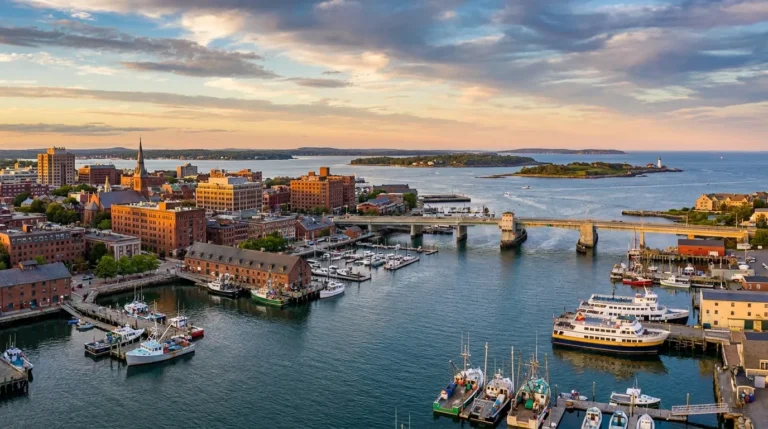
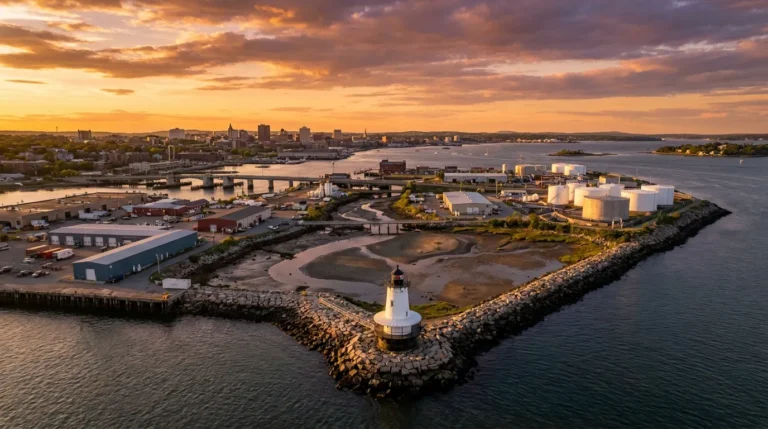
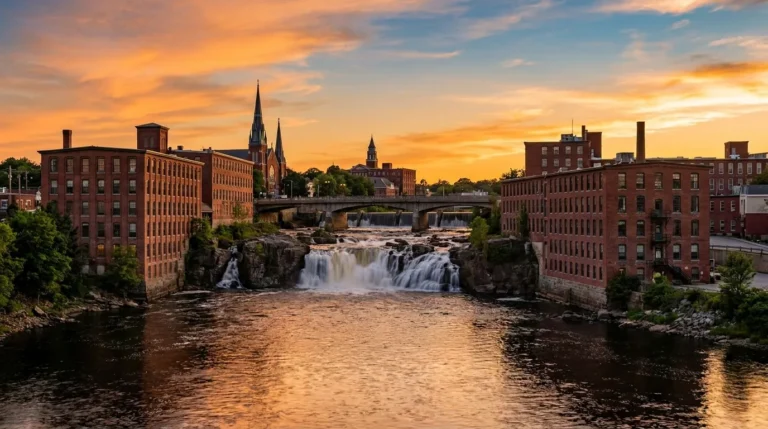
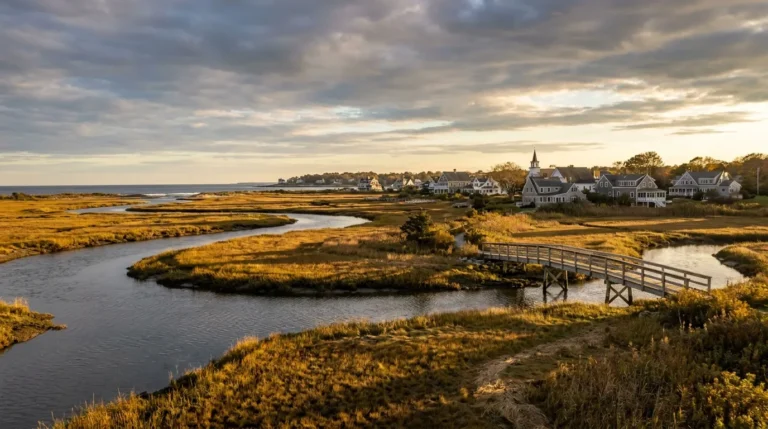
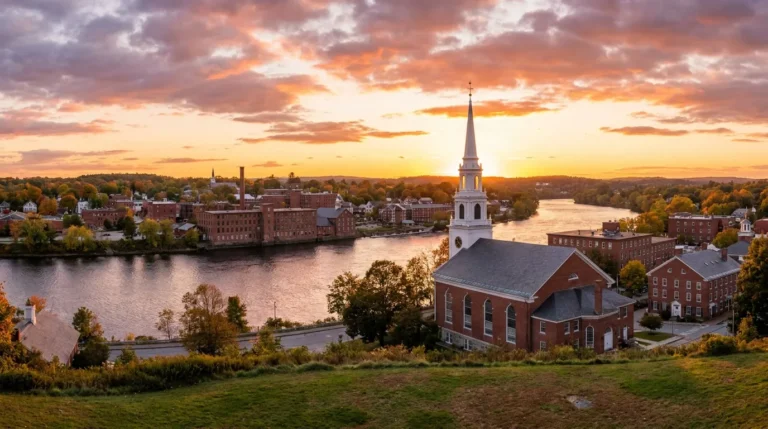
Lobster, lighthouses, and colorful fall foliage. The quietest corner of the US.

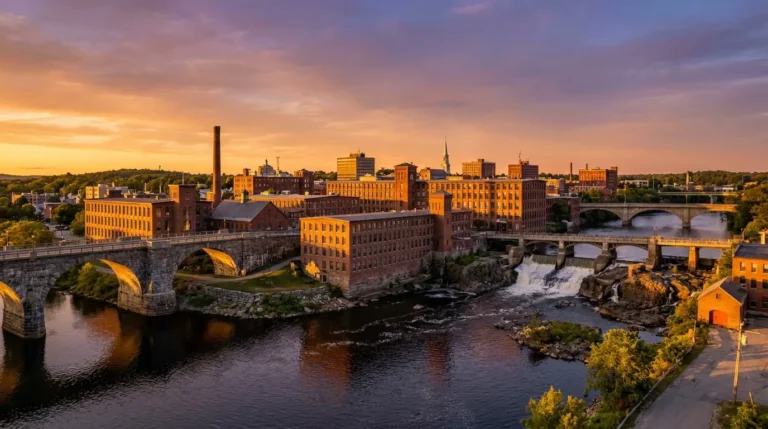
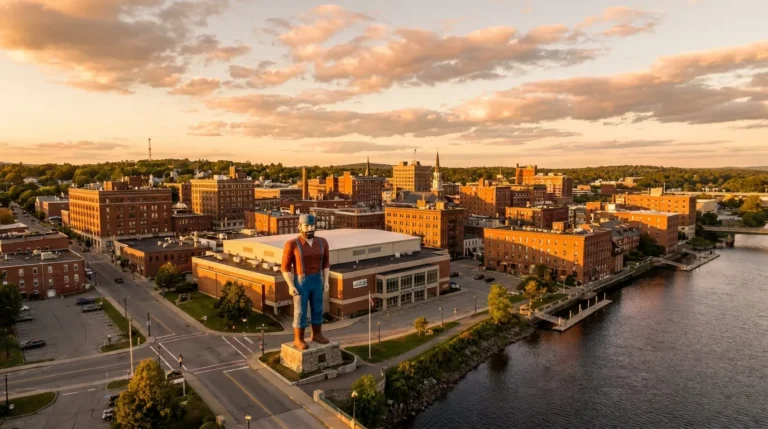
Maine is the most northeastern state in the US, sharing a border with Canada. The main cities are Portland (the largest, charming, on the coast), Bangor (the second largest, inland), and Augusta (the small capital). The rest of the state consists of forests, coasts with lighthouses, and small fishing towns. It is the least densely populated state east of the Mississippi River.

The pace of life is calm, with outdoor living as part of the culture. Hunting, fishing, hiking, and skiing are common activities. The population is small and quite homogeneous (one of the whitest in the US), with a strong English and French-Canadian tradition in border communities.

For immigrants, Maine is not an obvious destination: Brazilian or Hispanic communities are small, the job market is limited outside Portland, and winters are long and harsh. On the other hand, the quality of life, nature, and prices (lower than neighboring states like Massachusetts) attract those looking for a calm and safe life.

Population
1,385,340
Average monthly salary
54,000 USD/mo
44.6939°, -69.3819°

Featured places

Top 10 places in Maine

The places most sought-after by immigrants in this region.

Maine's demographics: one of the whitest and oldest populations in the US

White majority with English and French-Canadian heritage. Small refugee communities in Portland and Lewiston.

Maine has one of the most homogeneously white populations in the US, with about 93% identifying as white. There is a strong English and Irish heritage throughout the state, and a French-Canadian heritage in communities like Lewiston, Biddeford, and Madawaska, near the Quebec border. Some people still speak French at home.

Diversity has grown in the past two decades with the arrival of refugees, especially Somalis, Sudanese, and Angolans in Lewiston and Portland. Lewiston in particular went through a demographic transformation with the Somali community. The Brazilian community is small and dispersed.

The population is one of the oldest in the US, with a high median age. Many young people leave the state to study or work in Boston, New York, or California, leaving rural communities aging. Immigration programs try to attract foreign workers to address the labor shortage.

1,385,340
Population
45 yrs
Median age
17/km²
Density
$64,400
Median income
per year
Urban population38.7%
Foreign-born4.0%
Languages spoken
  • English
  • French (in French-Canadian communities)
  • Somali (in Lewiston and Portland)
  • Spanish (small community)
Main religions
  • Protestant Christian (various denominations)
  • Catholic Christian (strong in French-Canadian communities)
  • No religion (one of the highest proportions in the US)
  • Islam (Somali community)

Cost of living in Maine: moderate, higher in Portland

Rent and food cost less than in Boston or New York, but more than in southern states. Heating in winter weighs on the budget.

The cost of living in Maine is moderate. In Portland, a one-bedroom apartment rents for between US$1,500 and US$2,200 — cheaper than Boston but far from inexpensive. In Bangor, US$900 to US$1,300. In smaller cities, US$700 to US$1,000 covers a comfortable apartment.

Grocery and restaurant prices are above the national average, especially because much of the food has to be brought in from outside the state. Local seafood (lobster, scallops, clams) is an exception: fresh and more affordable than elsewhere.

The biggest expense is heating in winter. Many homes still depend on heating oil, which can cost US$1,500 to US$3,000 per winter. Electricity is also expensive. Salaries are in line with average costs, but those earning in US dollars from another state can live comfortably.

97Cost index (US = 100)3% below US average
CategorySingleCoupleFamily (2 + 2)
iHousing$1,255$1,448$1,834
iFood$367$733$1,332
iTransport$483$820$1,062
iHealthcare$270$540$1,013
iChildcare$1,756
iOther$820$1,476$2,075
Monthly total$3,195$5,017$9,072

Source: U.S. BLS Consumer Expenditure Survey 2023 + BEA Regional Price Parities 2023 · Estimates in USD, monthly.

Housing in Maine: charming wooden homes and rising prices in Portland

Traditional wooden homes spread across the state. Portland saw prices rise with an influx from outside during the pandemic.

Portland is the hottest real estate market. Neighborhoods like West End, Munjoy Hill, and East End have charming historic homes, with well-maintained properties selling for over US$600,000. Suburbs like Falmouth, Cumberland, and Cape Elizabeth are expensive, with homes starting at US$700,000.

In cities like Bangor, Augusta, and Lewiston, 3-bedroom homes go for US$200,000 to US$350,000. Rural and inland areas have even cheaper properties, some below US$150,000, but care is needed: hard winters mean high heating costs and good insulation is essential.

To rent, the contract is standard American: 1 month's rent plus 1 or 2 months' security deposit, proof of income, and credit check. In Portland, high demand makes the market competitive. Those looking to buy should check when the heating system was last updated, since switching from heating oil to natural gas or a heat pump can be costly.

Purchase price (m²)
  • Center$2,400/m²
  • Outside$1,650/m²
4.5×
Price-to-income
7.0%
Mortgage rate (20y)
Recommended neighborhoods
  • West End (Portland, historic)
  • Munjoy Hill (Portland, young professionals)
  • Falmouth (suburb, top schools)
  • Cape Elizabeth (coastal suburb)
  • Cumberland (suburb, families)
  • +3 more

Job market in Maine: healthcare, tourism, fishing, and lumber

Healthcare is the largest employer. Tourism is strong in summer. Lobster fishing and the paper industry are traditional.

Healthcare is the state's largest employer. MaineHealth (the Maine Medical Center group in Portland) employs thousands. University-affiliated hospitals and regional clinics cover the rest of the state. Other large employers are Bath Iron Works (a naval shipyard that builds US Navy ships) and L.L. Bean (a retail company for outdoor clothing and equipment, headquartered in Freeport).

Tourism employs many people in summer and early fall, when visitors come for the coast, national parks (Acadia), and to see the leaves change color. Bar Harbor, Kennebunkport, and Old Orchard Beach depend on this. Lobster fishing is the signature industry: more than half the lobster consumed in the US comes from Maine.

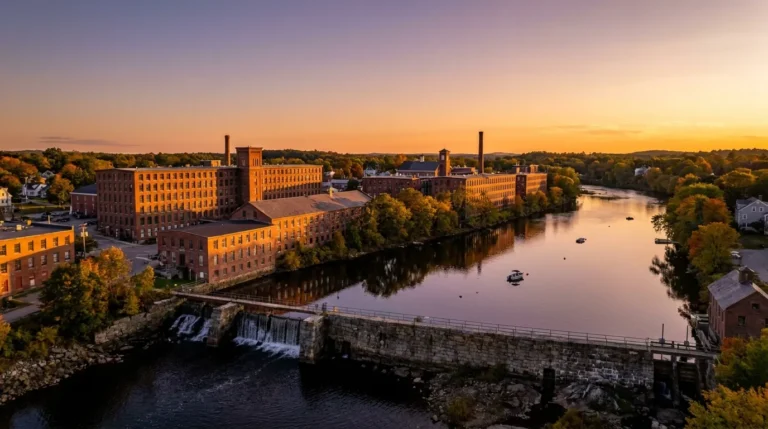
The paper and lumber industry was once much larger but remains relevant in interior cities. Technology is growing cautiously in Portland, with smaller startups. The job market is limited for those seeking big-city corporate careers; many people work remotely for companies in other states.

$54,000
Avg net salary
per month
$29,432
Minimum wage
per month
3.4%
Unemployment
62.0%
Labor force
Dominant sectors
  • Healthcare
  • Tourism and hospitality
  • Fishing (lobster, scallops)
  • Naval shipbuilding (Bath Iron Works)
  • Paper and lumber industry
  • +3 more
Major employers
  • MaineHealth (Portland)
  • Bath Iron Works (naval shipyard)
  • L.L. Bean (Freeport)
  • Hannaford Supermarkets
  • Northern Light Health (Bangor)
  • +3 more

Education in Maine: decent public schools and a few small, strong universities

Free basic public education. Bowdoin, Bates, and Colby are small, highly respected private colleges.

Children and teenagers have the right to free public school, regardless of their parents' immigration status. Public schools in Maine tend to score above the national average, especially in Portland's suburbs (Falmouth, Cumberland, Cape Elizabeth) and Brunswick. In small towns and rural areas, quality varies.

The state has three small and highly respected private colleges: Bowdoin (in Brunswick), Bates (in Lewiston), and Colby (in Waterville). They are small (1,500 to 2,000 students), selective, with high tuition (above US$60,000 per year) but with aid for low-income students.

The University of Maine in Orono is the largest public university, with strong programs in engineering, agriculture, and marine sciences. For foreigners, coming as an international student (F-1 visa) is a common path, with tuition higher than for state residents.

Literacy98.0%
Tertiary education33.6%
478
PISA score (avg)
$13,500
Private school
per year
Notable universities
  • Bowdoin College (Brunswick, private)
  • Bates College (Lewiston, private)
  • Colby College (Waterville, private)
  • University of Maine (Orono)
  • University of Southern Maine (Portland)
  • Maine College of Art & Design (Portland)
  • Bangor Theological Seminary

Healthcare in Maine: good hospitals in Portland and Bangor, few doctors in rural areas

Health insurance is practically required. Rural healthcare is a challenge: many people travel hours to reach specialists.

The US has no universal public system. In Maine, those with formal employment receive insurance through their employer. A family plan can exceed US$1,200, with the company paying part. Without employment, there are plans through the state marketplace (CoverME.gov) with income-based subsidies.

Maine expanded Medicaid in 2018, so low-income families have easier access. Documented immigrants with a green card for more than 5 years may qualify. The best hospitals are Maine Medical Center (Portland) and Northern Light Eastern Maine Medical Center (Bangor).

The big challenge is rural healthcare: many areas in the interior and north have a shortage of doctors, and residents travel 1 to 3 hours to see specialists. Maine has one of the oldest populations in the US, which strains the system. For those arriving without insurance, avoid the ER unless it is a real emergency.

Healthcare index72.0 / 100
  • Life expectancyyears at birth
    79.7yrs
  • Doctors per 1kpracticing physicians
    3.4
  • Health spendper capita, per year
    $11,500
  • Public systemoverall quality rating
    Fair

Safety in Maine: one of the safest states in the US

Very low violent crime rate. Opioids are a problem in rural areas. Overall, it is one of the most peaceful places in the country.

Maine is consistently listed among the safest states in the US. The homicide rate is one of the lowest in the country. In Portland, Bangor, Augusta, and small towns, walking at night is generally safe. Children walk to school alone in many communities, and many people leave their doors unlocked.

The main public safety problem is the opioid crisis, which significantly affects rural areas and cities like Lewiston and Bangor. Other concerns are car accidents on icy winter roads and encounters with wildlife (moose, bears, deer) in rural areas.

Snowstorms can be intense and isolate towns. Rare hurricanes arrive weakened from the Atlantic coast. For choosing where to live, Niche.com and GreatSchools provide safety and school ratings. In general, it is hard to go badly wrong in any Portland suburb or mid-sized state city.

2.3
Homicides per 100k
per year
Safety index
65.0
Crime index
35.0
Safer neighborhoods
  • Falmouth (Portland suburb)
  • Cape Elizabeth (coastal suburb)
  • Cumberland (suburb)
  • Yarmouth (suburb)
  • Brunswick (college town)
  • Kennebunkport (coast)
  • Camden (coast)
  • Scarborough (suburb, beach)
Areas to avoid
  • Lewiston downtown (isolated spots at night)
  • East Bangor outskirts
  • Waterville downtown

Transportation in Maine: your own car is required outside Portland

Public transit exists in Portland but is limited. Outside Portland, a car is necessary, and winter roads require care.

In Portland, there is a city bus (METRO) and the city is compact enough to walk or cycle. But even there, having a car is practical. Outside Portland, a car is required. Distances between cities are large and public transit between cities is minimal.

The main highways are I-95 (running north-south across the state) and I-295 (an alternative through Portland). Rural roads are beautiful but can be dangerous in winter due to ice, snow, and wildlife. Cars need winter tires (studded in some areas) from November through April.

The main airport is Portland International Jetport (PWM), with direct flights to several US cities and some international connections via Toronto or Boston. Bangor International (BGR) serves the north of the state, with charter and domestic flights. Amtrak trains (Downeaster) connect Portland to Boston in about 2 hours 30 minutes.

24 min
Avg commute
30
Walkability
Airports
  • PWM (Portland International Jetport)
  • BGR (Bangor International)
  • International airport
  • Bike infrastructure

Maine's climate: long snowy winters, short pleasant summers

Winter is the most defining season: long, cold, and very snowy. Summer is short, mild, and beautiful. Fall is the famous season.

Maine's climate is cold and humid, with four well-marked seasons. Winter (December to March) is long, with temperatures frequently below zero (-10°C to -20°C in January in the interior) and abundant snow. Some regions receive more than 250 cm of snow per year. Home heating is a must.

Spring is short and sometimes muddy (the famous mud season in April). Summer (June to August) is the best season: mild, with temperatures between 20°C and 28°C, ideal for the beach (despite the cold seawater) and outdoor activities. Mosquitoes can be intense in the interior.

Autumn (September and October) is the state's pride: the leaves on the trees turn yellow, red, and orange, creating famous landscapes. Tourists come from far away for leaf peeping. Coastal storms can bring strong winds in winter, and intense nor'easter snowstorms.

Sunny days / year197 days
Avg high (°F)
  • 32°J
  • 35°F
  • 42°M
  • 54°A
  • 64°M
  • 74°J
  • 80°J
  • 79°A
  • 71°S
  • 60°O
  • 48°N
  • 38°D
Avg low (°F)
  • 16°J
  • 17°F
  • 26°M
  • 35°A
  • 46°M
  • 55°J
  • 61°J
  • 60°A
  • 52°S
  • 41°O
  • 32°N
  • 22°D
Rainfall (")
  • 4"J
  • 4"F
  • 4"M
  • 4"A
  • 4"M
  • 4"J
  • 3"J
  • 4"A
  • 4"S
  • 5"O
  • 4"N
  • 5"D

Maine's culture: lobster, outdoor living, and New England tradition

Identity tied to the sea, lobster fishing, colorful autumn, and outdoor living. Calm and practical culture.

Lobster is the symbol of the state. Fishing towns like Stonington, Boothbay, and Bar Harbor live off it. Lobster shacks (small stands) serve the famous lobster roll, a lobster sandwich on a bun. Plentiful, fresh seafood is part of daily life. Local fishermen are respected figures.

Outdoor living is part of the identity. Hiking, fishing, hunting, canoeing, skiing (Sunday River, Sugarloaf), and snowmobiling are common. Acadia National Park on Mount Desert Island is one of the most visited in the US, with a rocky coast and spectacular trails. L.L. Bean in Freeport is so large it becomes a tourist attraction in itself.

New England culture marks the state: white colonial architecture, churches with tall towers, coastal lighthouses, community church dinners. Stephen King, the horror writer, is from Bangor and uses Maine as the setting for many of his books. Lobster, blueberry, and literary festivals happen throughout the year.

150
Major museums
Notable dishes
  • Lobster roll (lobster sandwich)
  • Steamed lobster with butter
  • Seafood chowder (clam chowder)
  • Wild blueberries
  • Whoopie pie (classic dessert)
  • +3 more
Annual events
  • Maine Lobster Festival (Rockland, August)
  • Old Port Festival (Portland, June)
  • Wild Blueberry Festival (Machias, August)
  • Fall foliage (peak in September/October)
  • Camden International Film Festival (September)
  • +2 more

Maine's main economic sectors

Healthcare, tourism, fishing, and naval shipbuilding lead. Technology and biotech are growing in Portland.

Healthcare is the largest sector of the economy, with MaineHealth and Northern Light generating jobs across the state. Naval shipbuilding, especially Bath Iron Works (which builds destroyers for the US Navy), is traditional and still relevant. Tourism is vital in summer and fall, keeping coastal cities and Acadia active.

Lobster fishing is iconic and drives hundreds of millions of dollars per year. Scallops, clams, and other seafood complement. The paper and lumber industry was once much larger, but remains relevant in interior cities. Agriculture has famous products: potatoes and wild blueberries.

Technology is growing in Portland, with startups in fintech (WEX), software, and biotech. The city has been becoming a destination for professionals who want quality of life without Boston's chaos. Higher education (private colleges and the University of Maine) is also an important sector for the local economy.

  • GDPgross domestic product
    $76.0B
  • GDP per capitaoutput per resident
    $54,800
  • GDP growth (yr)economy expanding
    +1.5%
Top sectors
  • Healthcare
  • Fishing and seafood
  • Tourism and hospitality
  • Naval shipbuilding
  • Paper and lumber industry
  • +3 more

Immigrant communities in Maine

Maine has around 65,000 immigrants, with a strong presence of Somali, Congolese, and Angolan refugees in Portland and Lewiston.

Maine is one of the whitest and least densely populated states in the country, but it is changing fast. Around 65,000 residents were born outside the country, close to 4.5% of the population. The largest communities come from Somalia, the Democratic Republic of Congo, Angola, Canada, and Iraq. Refugee resettlement has transformed Portland and Lewiston: entire neighborhoods in Kennedy Park and downtown Lewiston have schools and markets in Somali, Lingala, and Arabic. There is also a historic French-Canadian presence in Lewiston and Biddeford.

No foreign consulates are based in Maine. Consular services run through Boston. The local network is led by the Maine Immigrants' Rights Coalition, Catholic Charities Maine Refugee and Immigration Services, and ProsperityME, which offer financial literacy, ESL, and legal aid. The Immigrant Legal Advocacy Project (ILAP) is the main reference for immigration law, with free help for asylum and status adjustment cases.

65,000
Foreign-born residents
estimated
Top countries of origin
  • Somalia
  • Democratic Republic of the Congo
  • Angola
  • Canada
  • Iraq
Main immigrant hubs
  • Portland
  • Lewiston
  • South Portland
  • Auburn
  • Biddeford
Foreign consulates
  • German Honorary Consulate (Portland)
  • Austrian Honorary Consulate (jurisdiction includes Maine)
Community organizations
  • Maine Immigrants' Rights Coalition
  • Catholic Charities Maine Refugee and Immigration Services
  • ProsperityME
  • Immigrant Legal Advocacy Project (ILAP)

Latest posts

Posts about Maine

Coverage and updates related to this destination.