Visto n' Visa
Blog
Notícias e artigos
Destinations
Careers
Immigrants

Want to live and work in Kentucky?

Personalized immigration plan with eligible visas, costs, and next steps for your goal!

If you are not eligible, you will know exactly why and what to do to improve your approval chances.

Save up to 12 hours in meetings

No pointless assessments.

Save up to 90%

Save money on vague or unfocused consultations

Avoid Fraud and Mistakes

One mistake can cost you your visa

Total Impartiality

Zero commercial bias

Decide with peace of mind

No toxic urgency

Fast and Accurate

Answers in minutes, no guesswork

Visit Kentucky

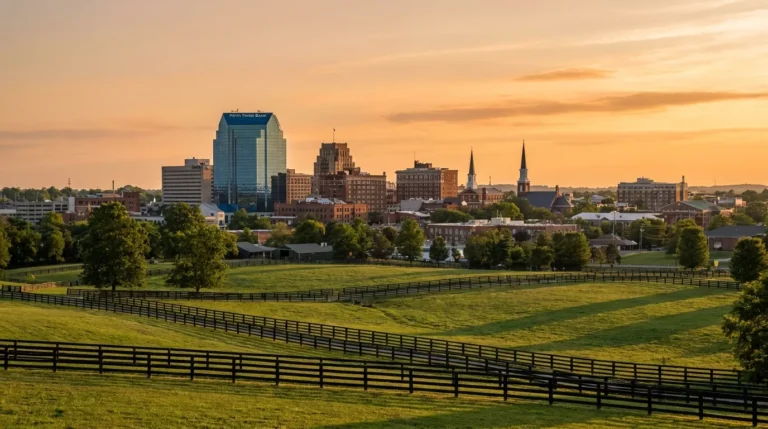
Bourbon, horses, and a relaxed pace. One of the cheapest states to live in the US.

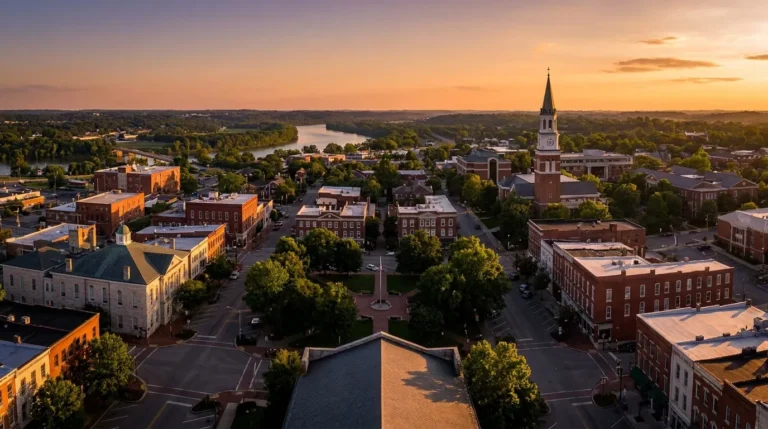
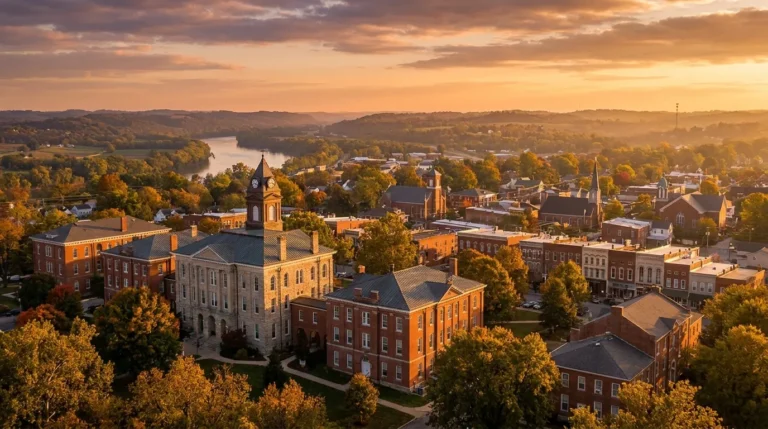
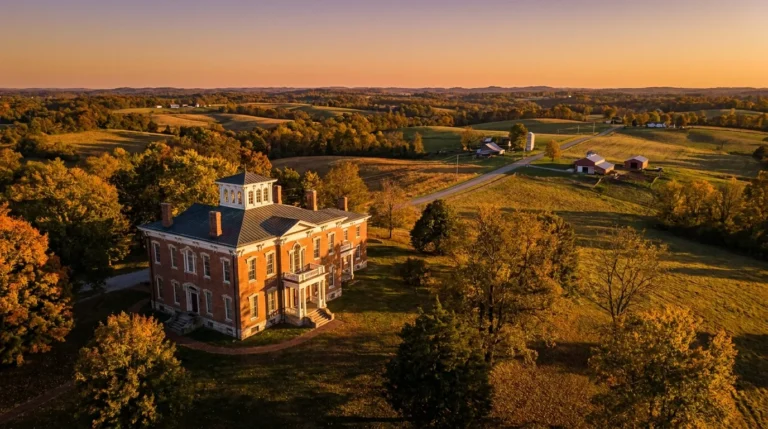
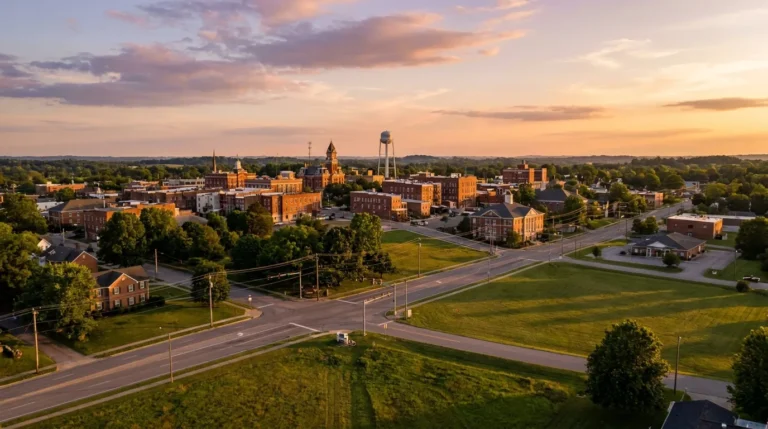
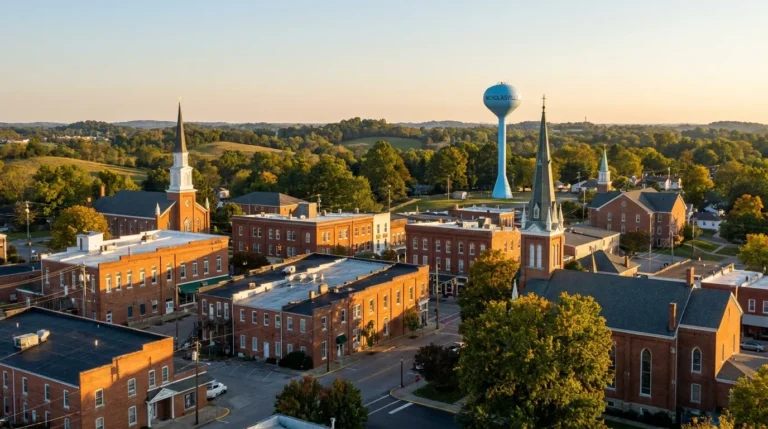
Kentucky sits in the mid-eastern US, between the rural South and the industrial Midwest. The two main cities are Louisville (the largest, home of the Kentucky Derby) and Lexington (the center of the Thoroughbred horse industry and the state university). The political capital is Frankfort, a small city. The rest of the state is rolling hills, farms, and small towns.

The cost of living is among the lowest in the US. Rent, food, and gas cost considerably less than in coastal states. Many remote workers relocate here precisely for that reason. Life moves at a slower pace, with a strong Southern culture and Baptist church presence in daily life.

For immigrants, the advantages are affordability and stable industrial employment: the Toyota plant in Georgetown and UPS in Louisville employ thousands. The drawback is the limited organized Latino or Brazilian community outside of Louisville and Lexington. Those seeking urban diversity will feel the gap.

Population
4,512,310
Average monthly salary
50,000 USD/mo
37.6681°, -84.6701°

Featured places

Top 10 places in Kentucky

The places most sought-after by immigrants in this region.

Kentucky's demographics: majority white, with Hispanic and refugee communities growing in Louisville and Lexington

Predominantly white and Christian population. Hispanic and refugee communities are growing in the larger cities.

Kentucky is predominantly white, with a historic Black American presence especially in Louisville. Hispanic communities have grown over the past two decades, mainly Mexicans, Hondurans, and Cubans. Louisville has resettled refugees from Cuba, Bosnia, Somalia, and more recently the Democratic Republic of Congo, forming multicultural neighborhoods.

English is the dominant language. Spanish is heard in some Louisville (South End) and Lexington neighborhoods. The Brazilian community is small and scattered, with no distinct neighborhood of its own. Brazilian evangelical churches exist in Louisville, but they take some searching.

The culture is typically Southern: hospitality, Protestant faith, hearty food. Outside the two large cities, most people live in towns of fewer than 30,000 where everyone knows each other and life revolves around church, school, and high school sports.

4,512,310
Population
39 yrs
Median age
43/km²
Density
$60,180
Median income
per year
Urban population59.0%
Foreign-born4.4%
Languages spoken
  • English
  • Spanish (in Louisville and Lexington)
  • Swahili and Arabic (in refugee communities in Louisville)
Main religions
  • Protestant Christian (Baptist, Methodist, Pentecostal)
  • Catholic (in Louisville)
  • No religion
  • Muslim (small community)

Cost of living in Kentucky: among the lowest in the US

Rent, food, and gas cost well below the American average. A good state for stretching a paycheck.

Kentucky is one of the least expensive states to live in. In Louisville, a one-bedroom apartment rents for $900 to $1,400. Lexington is similar. In smaller cities like Bowling Green or Owensboro, $700 to $1,000 covers a comfortable apartment.

Grocery prices are lower than in coastal states. A meal at a casual restaurant costs $12 to $18. Gas prices tend to be among the lowest in the US. Electricity is also affordable because the state produces much of its energy from coal and natural gas.

Wages track the cost of living and are lower than in New York or California, but the real purchasing power can actually be better. Remote workers earning a big-city salary can enjoy a very high quality of life here, with a large home and low fixed expenses.

89Cost index (US = 100)11% below US average
CategorySingleCoupleFamily (2 + 2)
iHousing$1,161$1,340$1,697
iFood$339$679$1,232
iTransport$447$759$982
iHealthcare$250$500$938
iChildcare$1,625
iOther$759$1,366$1,920
Monthly total$2,956$4,644$8,394

Source: U.S. BLS Consumer Expenditure Survey 2023 + BEA Regional Price Parities 2023 · Estimates in USD, monthly.

Housing in Kentucky: large homes at accessible prices

Buying a home here costs a fraction of what it does in coastal states. Good neighborhoods in Louisville and Lexington start around $250,000.

In Louisville, neighborhoods like St. Matthews, the Highlands, and Crescent Hill have homes ranging from $300,000 to $600,000, with yards, garages, and 3 to 4 bedrooms. The East End is the most desirable area. In Lexington, areas like Beaumont, Hamburg, and Andover attract families because of the schools.

In smaller cities (Bowling Green, Owensboro, Paducah), a 3-bedroom house with a yard goes for $180,000 to $280,000. Rural areas offer large homes with land at prices that seem unreal to anyone coming from a major city.

To rent, landlords typically require proof of income (3 times the rent), credit history, and references. Those arriving without a US credit score may need to pay more months upfront. Local property managers handle foreign tenants well as long as payment is guaranteed.

Purchase price (m²)
  • Center$1,800/m²
  • Outside$1,150/m²
3.3×
Price-to-income
7.0%
Mortgage rate (20y)
Recommended neighborhoods
  • St. Matthews (Louisville, suburban)
  • The Highlands (Louisville, nightlife and culture)
  • Crescent Hill (Louisville, families)
  • Beaumont (Lexington, top schools)
  • Hamburg (Lexington, shopping and services)
  • +2 more

Job market in Kentucky: manufacturing, logistics, and horses

Toyota and UPS are the largest employers. Bourbon, Thoroughbred horses, and healthcare also drive the economy.

The Toyota plant in Georgetown, near Lexington, is one of the largest in the world, producing the Camry, RAV4, and hybrids. It employs more than 9,000 people. In Louisville, UPS operates Worldport, the world's largest air cargo hub, with thousands of jobs in logistics and overnight operations.

Ford also has assembly plants in Louisville (Escape, Lincoln Navigator, Super Duty). General Electric maintains Appliance Park, a giant home appliance manufacturing complex. Humana, the health insurance multinational, is headquartered in Louisville and employs thousands in office roles.

The bourbon industry employs thousands at distilleries (Jim Beam, Maker's Mark, Buffalo Trace, Woodford Reserve). The Thoroughbred horse farms around Lexington support vets, trainers, and farm workers. Healthcare and the major universities (University of Kentucky, University of Louisville) are also major employers.

$50,000
Avg net salary
per month
$15,080
Minimum wage
per month
4.2%
Unemployment
57.7%
Labor force
Dominant sectors
  • Automotive manufacturing
  • Logistics (air and trucking)
  • Bourbon and spirits
  • Healthcare and health insurance
  • Thoroughbred horses
  • +3 more
Major employers
  • Toyota Motor Manufacturing (Georgetown)
  • UPS Worldport (Louisville)
  • Ford Motor Company (Louisville)
  • Humana (Louisville)
  • General Electric Appliances (Louisville)
  • +3 more

Education in Kentucky: free public schools and two well-known state universities

Free public K-12 education is available. The University of Kentucky and the University of Louisville are the main higher education options.

Children and teens have the right to free public schooling regardless of their parents' immigration status. Quality varies by district: Oldham County (near Louisville) and Anderson County have the state's best public schools. Neighborhoods like St. Matthews and Beaumont (Lexington) are also well regarded.

The University of Kentucky in Lexington is the state's largest public university, with strong programs in agriculture, equine veterinary science, and medicine. The University of Louisville is second, with recognized programs in health and engineering. In-state tuition is lower than in larger states.

Community colleges are affordable and offer a faster path to jobs in maintenance, nursing, and logistics. For foreigners, the most common pathway is arriving as an international student (F-1 visa) paying full price, though merit scholarships exist.

Literacy96.0%
Tertiary education26.5%
478
PISA score (avg)
$10,500
Private school
per year
Notable universities
  • University of Kentucky (Lexington)
  • University of Louisville
  • Western Kentucky University (Bowling Green)
  • Eastern Kentucky University (Richmond)
  • Murray State University
  • Northern Kentucky University (near Cincinnati)
  • Berea College (tuition-free on merit)

Healthcare in Kentucky: good hospitals in Louisville and Lexington, rural areas more underserved

Health insurance is practically a requirement. Those with formal employment typically receive it as a benefit.

The US has no universal public system. In Kentucky, those with formal employment generally receive health insurance through their employer. Family premiums can exceed $1,200/month, but the employer pays a portion. Without employment, there is kynect, the state health insurance marketplace, with subsidies based on income.

Low-income families are eligible for Medicaid, which is free or very low-cost. Kentucky expanded Medicaid under the Affordable Care Act, so more people qualify here than in many other Southern states. Documented immigrants with a green card for more than 5 years can access the program.

The best hospitals are UK HealthCare (Lexington), University of Louisville Health, Norton Healthcare, and Baptist Health. Rural areas in the eastern part of the state (former coal mining regions) have a shortage of doctors and high rates of chronic disease. People living far from the larger cities often travel for specialist appointments.

Healthcare index58.0 / 100
  • Life expectancyyears at birth
    74.4yrs
  • Doctors per 1kpracticing physicians
    2.6
  • Health spendper capita, per year
    $9,700
  • Public systemoverall quality rating
    Fair

Safety in Kentucky: quiet suburbs, some downtown neighborhoods with higher crime

Small towns and suburbs are very safe. Some areas of downtown Louisville have above-average crime rates.

Most of Kentucky is safe by American standards. Small towns and the suburbs of Louisville and Lexington have very low crime rates. Families move freely, children ride bikes to school, and doors stay unlocked in rural areas.

In Louisville, some parts of the West End and Newburg have higher rates of violent crime. In Lexington, certain spots near downtown also require caution at night. But overall, the cities do not have the kind of open-air drug problems seen in San Francisco or Philadelphia.

The biggest public health issue is the opioid crisis, which hit the eastern part of the state hard, particularly in former coal mining communities. To choose where to live, Niche.com and GreatSchools show safety and school quality ratings by neighborhood. Researching before signing a lease is worthwhile.

7.3
Homicides per 100k
per year
Safety index
50.0
Crime index
50.0
Safer neighborhoods
  • Oldham County (suburban, Louisville area)
  • St. Matthews (Louisville)
  • Crescent Hill (Louisville)
  • Beaumont (Lexington)
  • Hamburg (Lexington)
  • Andover (Lexington)
  • Downtown Bowling Green
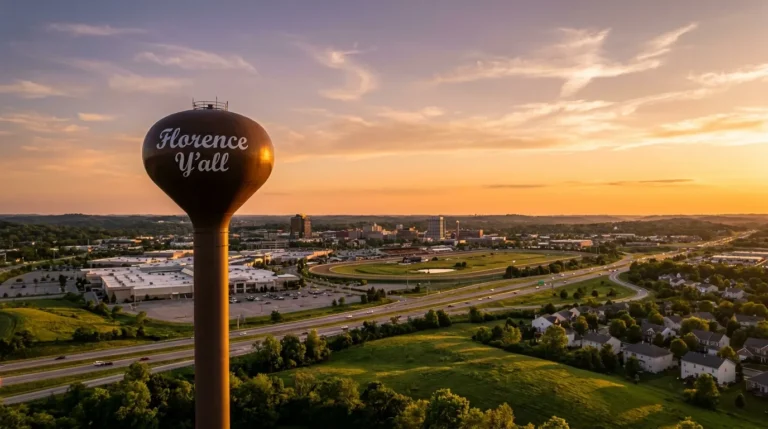
  • Florence and Union (Northern Kentucky, near Cincinnati)
Areas to avoid
  • Louisville West End
  • Lexington central districts at night
  • Covington central areas

Transportation in Kentucky: a car is essential outside the cities

Public transit is limited even in Louisville and Lexington. A car is a daily necessity.

Like most of the US outside major metros, a car is practically required in Kentucky. Louisville has a city bus system (TARC), but the network is limited and neighborhood distances are large. Lexington has a similar setup. In smaller cities, public transit basically does not exist.

The main highways are I-65 (north-south, linking Louisville to Nashville and Indianapolis), I-64 (east-west, through Louisville and Lexington), and I-75 (running north-south through the eastern part of the state). Traffic in Louisville and Lexington is nothing like a major coastal city.

The main airport is Louisville Muhammad Ali International (SDF), also a large UPS cargo hub. Lexington has Blue Grass Airport (LEX), smaller, with flights to major hubs. Many travelers from northern Kentucky use Cincinnati/Northern Kentucky International Airport (CVG), technically in Kentucky, which has more international options.

24 min
Avg commute
33
Walkability
Airports
  • CVG (Cincinnati/Northern Kentucky International)
  • SDF (Louisville Muhammad Ali International)
  • LEX (Blue Grass Airport, Lexington)
  • International airport
  • Bike infrastructure

Kentucky's climate: four distinct seasons, humid summers, snowy winters

Hot and humid summers, cold winters with occasional snow. Spring and fall are pleasant and scenic.

Kentucky has four well-defined seasons. Summer (June through August) is hot and humid, with temperatures between 28 and 33°C and high humidity. Afternoon thunderstorms are common. Air conditioning is essential in all homes.

Winter (December through February) is cold, with frequent lows below freezing and snow on several days, mainly in January. Heavy snowstorms are not common but do occur. Homes need heating, typically natural gas or electric.

Spring and fall are the most pleasant seasons, with mild temperatures (15 to 22°C) and beautiful scenery. Kentucky's fall foliage is especially well known, drawing tourists to rural areas. Tornadoes are rare but possible in spring.

Sunny days / year189 days
Avg high (°F)
  • 43°J
  • 48°F
  • 57°M
  • 69°A
  • 77°M
  • 85°J
  • 89°J
  • 88°A
  • 82°S
  • 70°O
  • 57°N
  • 47°D
Avg low (°F)
  • 26°J
  • 29°F
  • 37°M
  • 47°A
  • 58°M
  • 66°J
  • 70°J
  • 69°A
  • 62°S
  • 50°O
  • 38°N
  • 31°D
Rainfall (")
  • 3"J
  • 3"F
  • 5"M
  • 5"A
  • 5"M
  • 4"J
  • 4"J
  • 3"A
  • 4"S
  • 3"O
  • 4"N
  • 4"D

Kentucky's culture: bourbon, horses, bluegrass music, and Southern traditions

The state has a strong identity: bourbon distilleries, horse racing, bluegrass music, and home-style Southern cooking.

Bourbon is the state's pride. Nearly all of the world's bourbon is made in Kentucky, with the famous Bourbon Trail taking visitors through historic distilleries like Jim Beam, Maker's Mark, Woodford Reserve, and Buffalo Trace. Tasting bourbon is a local cultural experience, not just consumption.

The Kentucky Derby, held in Louisville on the first Saturday in May, is the most famous horse race in the US. The whole city stops. Women wear elaborate hats, everyone drinks a mint julep, and the race itself lasts two minutes. Around Lexington, Thoroughbred horse farms are part of the everyday landscape.

Bluegrass music was born in this region, with Bill Monroe as its iconic figure. Southern cooking is hearty: the Hot Brown (an open-face sandwich with turkey and Mornay sauce), pecan pie, bourbon balls, and the famous recipe that gave birth to KFC, which started in the state. Music festivals, food events, and horse competitions run year-round.

180
Major museums
Notable dishes
  • Kentucky Hot Brown (open-face sandwich with turkey and Mornay sauce)
  • Burgoo (meat stew)
  • Bourbon balls (chocolate and bourbon confection)
  • Derby Pie (chocolate and pecan tart)
  • KFC-style fried chicken (origin in Corbin)
  • +3 more
Annual events
  • Kentucky Derby (Louisville, first Saturday in May)
  • Kentucky Bourbon Festival (Bardstown, September)
  • Kentucky State Fair (Louisville, August)
  • Forecastle Festival (music, Louisville, July)
  • Festival of the Bluegrass (Lexington, June)
  • +1 more
UNESCO sites
  • Mammoth Cave National Park

Kentucky's main economic sectors

Automotive manufacturing, bourbon, logistics, and horses lead. Healthcare and energy are also strong.

The automotive industry is the backbone of the economy. Toyota, Ford, and General Motors maintain plants in the state, producing vehicles sold around the world. This attracts dozens of smaller suppliers, generating thousands of manufacturing jobs.

Bourbon is the most distinctive industry. Kentucky produces 95% of the world's bourbon, generating billions in revenue, distillery employment, and tourism along the Bourbon Trail. Thoroughbred horse breeding in Lexington is a separate sector in itself, with international auctions and high transaction volumes.

Logistics is major because of the UPS Worldport in Louisville and its air cargo hub. Healthcare, with Humana headquartered in Louisville, generates office employment. Energy (coal, though in decline, and natural gas) still employs workers in eastern Kentucky. Agriculture, especially tobacco and corn, remains present.

  • GDPgross domestic product
    $260.0B
  • GDP per capitaoutput per resident
    $57,700
  • GDP growth (yr)economy expanding
    +1.7%
Top sectors
  • Automotive manufacturing
  • Bourbon and distilleries
  • Air and road logistics
  • Thoroughbred horses
  • Healthcare and health insurance
  • +3 more

Immigrant communities in Kentucky

Kentucky has about 200,000 immigrants, with Mexicans in Louisville and Lexington, Cubans in the Iroquois neighborhood, and Bosnians in Bowling Green.

Kentucky is home to roughly 200,000 people born outside the country, close to 4% of the population. Mexicans form the largest community in Louisville and Lexington, tied to construction, agriculture, and the horse industry. Louisville has a significant Cuban community in the Iroquois neighborhood. Lexington has drawn Hondurans for farm jobs. Bowling Green became a resettlement hub for Bosnian refugees in the 1990s.

Kentucky Refugee Ministries, with offices in Louisville and Lexington, is the main resettlement agency, with English classes and legal support. The Kentucky Coalition for Immigrant and Refugee Rights leads statewide advocacy. Catholic Charities of Louisville runs the oldest immigration program in the state, serving multiple languages.

200,000
Foreign-born residents
estimated
Top countries of origin
  • Mexico
  • Cuba
  • Honduras
  • Bosnia
  • India
Main immigrant hubs
  • Louisville
  • Lexington
  • Bowling Green
  • Owensboro
Foreign consulates
  • Mexican Consulate General in Indianapolis (jurisdiction includes Kentucky)
  • Hungarian Consulate in Louisville (honorary)
Community organizations
  • Kentucky Refugee Ministries
  • Kentucky Coalition for Immigrant and Refugee Rights
  • Catholic Charities of Louisville

Latest posts

Posts about Kentucky

Coverage and updates related to this destination.