Visto n' Visa
Blog
Notícias e artigos
Destinations
Careers
Immigrants

Want to live and work in Idaho?

Personalized immigration plan with eligible visas, costs, and next steps for your goal!

If you are not eligible, you will know exactly why and what to do to improve your approval chances.

Save up to 12 hours in meetings

No pointless assessments.

Save up to 90%

Save money on vague or unfocused consultations

Avoid Fraud and Mistakes

One mistake can cost you your visa

Total Impartiality

Zero commercial bias

Decide with peace of mind

No toxic urgency

Fast and Accurate

Answers in minutes, no guesswork

Everything about Idaho

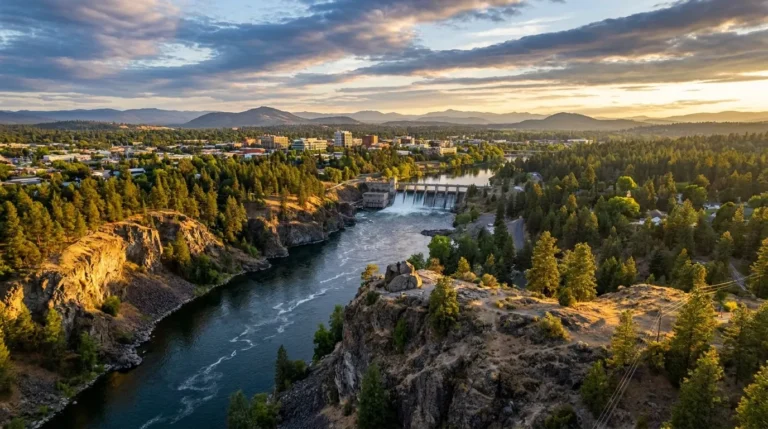
Mountains, potatoes, outdoor living, and a low cost of living in the American Northwest.

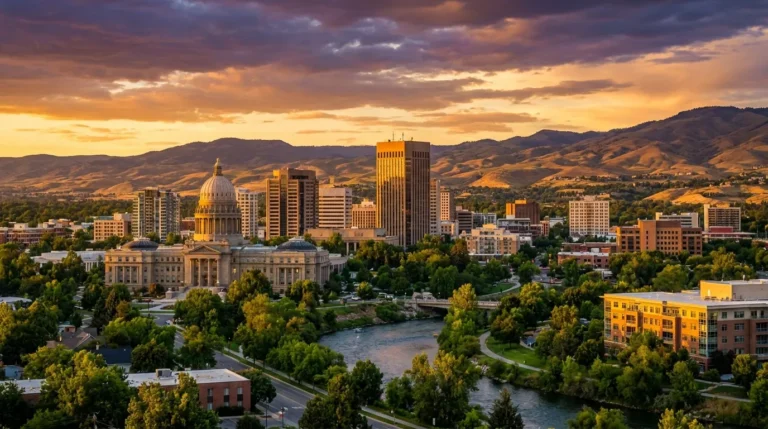
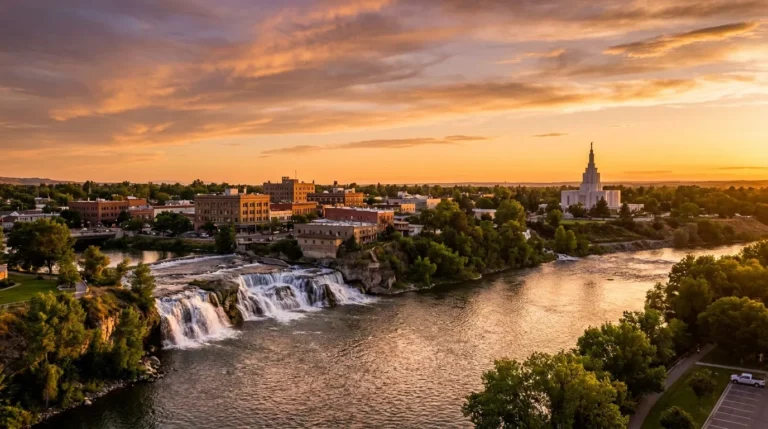
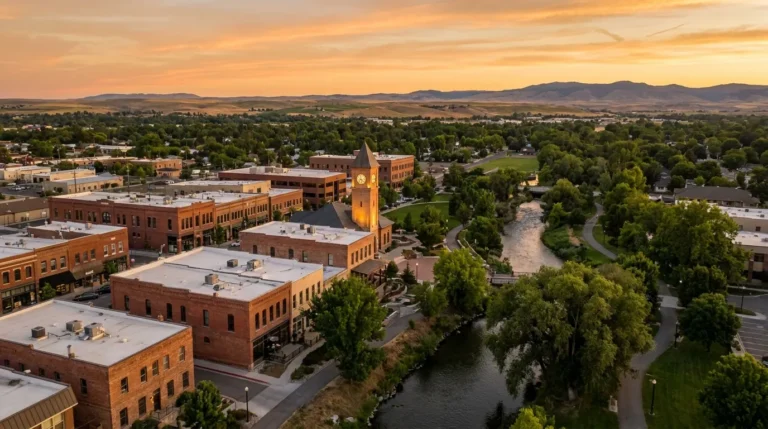
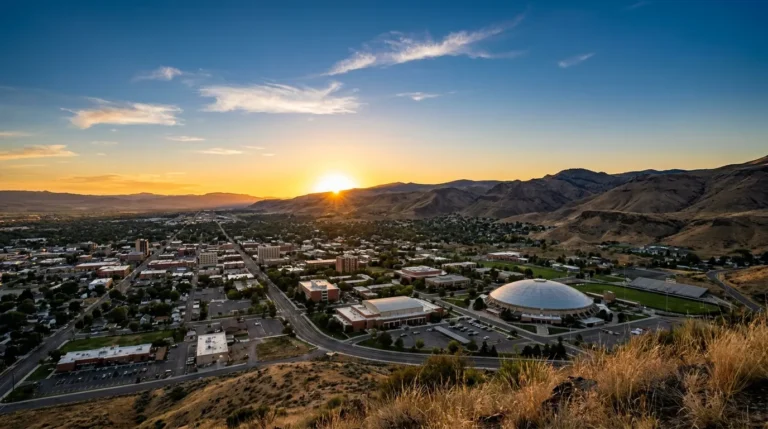
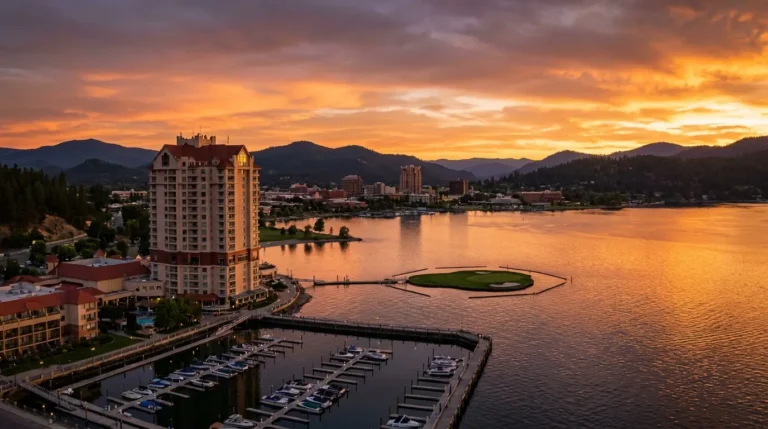
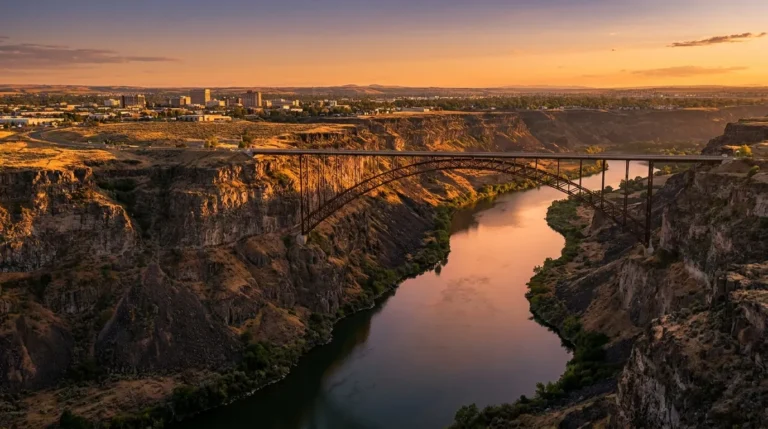
Idaho is located in the northwestern US, bordered by Oregon, Washington, Montana, Wyoming, Utah, and Nevada. It is a large state by area but small in population, with just over 2 million inhabitants. The capital and largest city is Boise (pronounced Boi-see), which has grown rapidly in recent years. Other important cities are Idaho Falls, Pocatello, Coeur d'Alene, and Twin Falls.

The state is known for its potatoes (Idaho produces more potatoes than any other state), its mountain landscapes (part of the Rocky Mountains, the Sawtooth Range), its national parks, and its trout-filled rivers. It is popular among those who enjoy hunting, fishing, skiing, hiking, and outdoor living.

Boise has become one of the top destinations for people fleeing California and expensive West Coast cities. The cost of living is still low compared to the rest of the country, though prices have risen with migration. Immigrant communities exist but are small: there are refugees (historically Bosnians and Somalis) and a growing Hispanic community.

Population
1,939,033
Average monthly salary
52,000 USD/mo
44.2405°, -114.4788°

Featured places

Top 10 places in Idaho

The places most sought-after by immigrants in this region.

Idaho's demographics: white majority, with a growing Hispanic community

A historically homogeneous state, but with Hispanics growing in the south and in Boise.

Idaho has about 2 million inhabitants and is one of the most homogeneous states in the US. Non-Hispanic whites make up about 80% of the population. Hispanics, mainly Mexican, are the largest minority group, concentrated in the southern part of the state (Twin Falls, Caldwell, Nampa, Burley), working in agriculture and dairy.

Boise has had an established refugee community for decades. Bosnians, Somalis, Eritreans, and Congolese were resettled through the federal refugee program and formed small but visible communities. The Native American community (Shoshone, Bannock, Nez Perce tribes) has reservations in the state with a cultural presence.

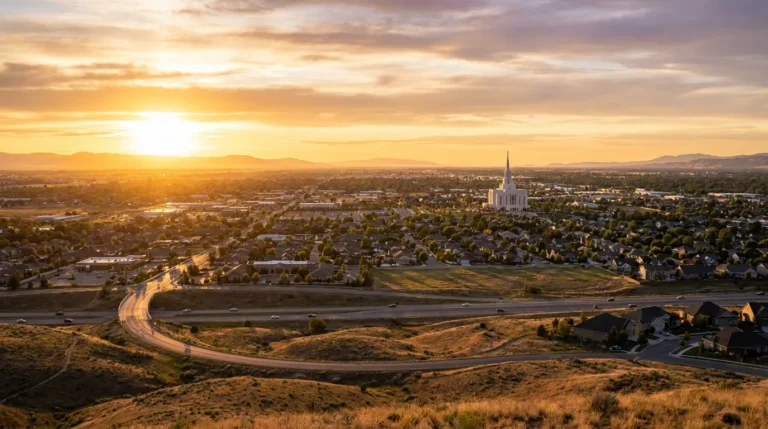
The Brazilian community is very small, with no specific neighborhoods. Idaho is not a traditional destination for Brazilian immigration. Those who come here usually do so for marriage, remote work, or study. English dominates; Spanish is heard in agricultural cities in the south. The culture is strongly influenced by Mormons (LDS) in the southeastern part of the state.

1,939,033
Population
37 yrs
Median age
9/km²
Density
$70,210
Median income
per year
Urban population71.0%
Foreign-born5.7%
Languages spoken
  • English
  • Spanish (especially in the south)
  • Bosnian (in Boise)
  • Somali (in Boise)
  • Indigenous languages (Shoshone, Nez Perce)
Main religions
  • Christian (LDS/Mormon in the southeast, Catholic, Protestant)
  • No religion
  • Muslim (refugee communities)
  • Traditional indigenous religions

Cost of living in Idaho: low, but rising fast in Boise

One of the most affordable states in the US. Boise has become more expensive with the influx from California.

Idaho has a below-average cost of living. A one-bedroom apartment in Boise rents for between US$1,200 and US$1,700, depending on the neighborhood. In smaller cities (Idaho Falls, Pocatello, Twin Falls), between US$800 and US$1,200. Food and gas are at or slightly below the national average.

Boise saw rapid price increases between 2020 and 2024, as many people moved from California, Oregon, and Washington. Homes that cost US$250,000 in 2018 are now at US$500,000. Still, it is more affordable than large West Coast cities. Small towns remain inexpensive.

State income tax exists and is progressive (up to 6%). Sales tax is 6% at the state level, with some local additions. Electricity bills are low due to hydroelectric power. Simple restaurant meals cost US$12 to US$22. For families who want a house with a yard and clean air at a reasonable cost, Idaho is still a good option.

93Cost index (US = 100)7% below US average
CategorySingleCoupleFamily (2 + 2)
iHousing$1,212$1,398$1,771
iFood$354$708$1,286
iTransport$466$792$1,025
iHealthcare$261$522$979
iChildcare$1,696
iOther$792$1,426$2,004
Monthly total$3,085$4,846$8,761

Source: U.S. BLS Consumer Expenditure Survey 2023 + BEA Regional Price Parities 2023 · Estimates in USD, monthly.

Housing in Idaho: large homes, spacious lots, and affordable prices outside Boise

Boise suburbs are appreciating fast. Idaho Falls, Pocatello, and Twin Falls have affordable real estate.

In Boise and its surroundings (Meridian, Eagle, Nampa, Caldwell), four-bedroom homes with yards range from US$450,000 to US$750,000. New neighborhoods in Meridian and Eagle are popular with families moving from out of state. Older homes in Boise (North End) have historical charm and prices above average.

Idaho Falls and Pocatello, in the eastern part of the state, have modest homes starting from US$250,000. Twin Falls in the south is also affordable. Coeur d'Alene in the north (near Spokane, Washington) has become a tourist destination and prices have risen, with lakeside homes exceeding US$700,000.

Mountain areas (Sun Valley, McCall) are luxury and second-home destinations, with homes starting at US$1 million. To rent, requirements are standard: proof of income, credit history, references. Recent immigrants may need to pay more months upfront or have a cosigner.

Purchase price (m²)
  • Center$3,300/m²
  • Outside$2,100/m²
5.1×
Price-to-income
7.0%
Mortgage rate (20y)
Recommended neighborhoods
  • Meridian (near Boise, families)
  • Eagle (Boise, top schools)
  • Boise North End (historical charm)
  • Nampa (more affordable, Boise area)
  • Coeur d'Alene (north, lake, tourism)
  • +3 more

Job market in Idaho: technology in Boise, agriculture, mining, and tourism

Boise has a growing technology hub. The agricultural south employs many. The north has mining and tourism.

Boise is a growing technology hub, known as Boise Tech. Companies like Micron Technology (semiconductors, the state's largest private employer), HP, Clearwater Analytics, and various startups operate there. Technology salaries are good (not as high as the Bay Area, but combined with a low cost of living, they generate a good quality of life).

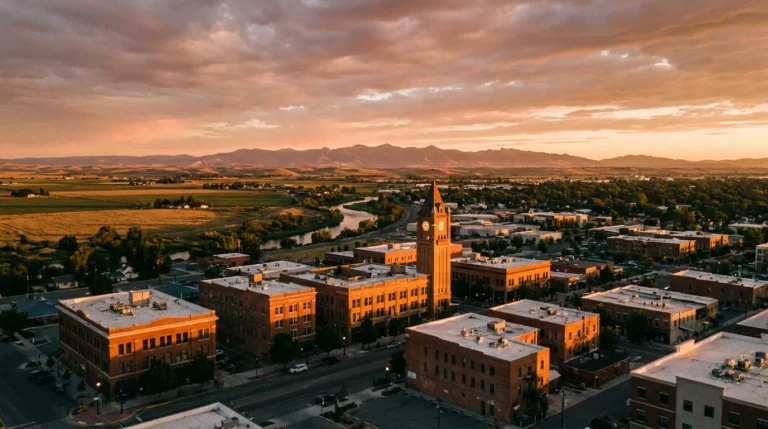
Agriculture is the state's historical trademark. Idaho is the largest potato producer in the US, and also produces wheat, sugar (beets), dairy, fruits (cherries, apples), and barley (feeding the brewing industry). Cities like Twin Falls, Burley, and Nampa have a strong agricultural economy. Mexican immigrants make up much of the rural labor force.

Tourism drives the north (Coeur d'Alene, Sandpoint) and the mountains (Sun Valley, McCall, Stanley). Mining still exists (silver, phosphate, gold), though smaller than in the past. The Idaho National Laboratory (INL) in Idaho Falls is a federal research center for nuclear energy, employing thousands of scientists.

$52,000
Avg net salary
per month
$15,080
Minimum wage
per month
3.5%
Unemployment
62.7%
Labor force
Dominant sectors
  • Technology (semiconductors, software)
  • Agriculture (potatoes, dairy, wheat)
  • Mining (silver, phosphate)
  • Mountain and lake tourism
  • Nuclear energy and research (INL)
  • +3 more
Major employers
  • Micron Technology (Boise)
  • Idaho National Laboratory (Idaho Falls)
  • Hewlett Packard (Boise)
  • St. Luke's Health System
  • Albertsons (supermarket chain headquarters in Boise)
  • +3 more

Education in Idaho: decent public schools and few universities

Free public system with varying quality. State universities cover the basics; no major national names.

Idaho has a free public school system, with quality that varies by district. Boise's suburban districts (Eagle, Meridian) have well-rated schools. Rural districts and smaller cities may have more limited resources. The state has been investing in technical education and ESL programs for Hispanic children.

The main public universities are Boise State University (the state's largest, known for its football team and blue field), the University of Idaho (in Moscow, more traditional, with programs in agronomy and engineering), and Idaho State University (in Pocatello, with programs in health and science). Brigham Young University Idaho in Rexburg is a large Mormon university.

Public tuition for state residents is among the lowest in the US. For foreign students, it is higher but still affordable compared to states like California or Massachusetts. There are also community colleges with short, inexpensive technical courses.

Literacy97.0%
Tertiary education29.5%
478
PISA score (avg)
$9,800
Private school
per year
Notable universities
  • Boise State University
  • University of Idaho (Moscow)
  • Idaho State University (Pocatello)
  • Brigham Young University Idaho (Rexburg)
  • Lewis-Clark State College
  • College of Idaho

Healthcare in Idaho: decent hospitals, but shortages in rural areas

Boise has good hospitals. Rural areas suffer from a lack of doctors and long distances to specialized care.

Boise has good hospital infrastructure. St. Luke's Health System and Saint Alphonsus Health System cover the southwest of the state with hospitals and clinics. Idaho Falls and Pocatello have decent regional hospitals. Coeur d'Alene serves the north, with patients occasionally crossing to Spokane (Washington) for specialized treatment.

The model is the standard American one: employer-based health insurance. A family plan runs about US$1,200 to US$1,500, with the employer paying a share. Low-income families have state Medicaid, though Idaho has stricter eligibility criteria than West Coast states.

The central problem is the rural interior: several counties have no pediatrician, gynecologist, or cardiologist, requiring long trips. Idaho has one of the lowest doctor-to-patient ratios in the US. In serious emergencies, patients may be airlifted. For immigrants, finding Spanish-speaking doctors is easier in Boise; in other cities, it is harder.

Healthcare index64.0 / 100
  • Life expectancyyears at birth
    78.7yrs
  • Doctors per 1kpracticing physicians
    2.1
  • Health spendper capita, per year
    $8,700
  • Public systemoverall quality rating
    Fair

Safety in Idaho: one of the safest states in the US

Low crime rates throughout the state. Small towns and suburbs are peaceful. Boise is safe by big-city standards.

Idaho is consistently among the states with the lowest crime rates in the US. Small towns, rural villages, and suburbs are very peaceful. Violent crime is rare, and even residential burglary is less common than in other states.

Boise, even while growing fast, maintains crime rates below the national average. Neighborhoods like the North End, East Boise, Eagle, and Meridian are considered very safe. There is some increase in property crimes in areas with more unhoused residents, but nothing comparable to larger cities.

Agricultural cities in the south (Caldwell, Nampa) have slightly higher rates, but still within average. The north (Coeur d'Alene, Sandpoint) is especially peaceful. Keep in mind that Idaho is a state with high gun ownership and an outdoor culture, with hunting and fishing being common. For urban immigrants, this may be an initial cultural adjustment.

3.2
Homicides per 100k
per year
Safety index
64.0
Crime index
36.0
Safer neighborhoods
  • Eagle (Boise)
  • Meridian (Boise)
  • Boise North End
  • Coeur d'Alene
  • Sandpoint
  • Rexburg
  • Idaho Falls (residential neighborhoods)
  • Twin Falls (residential neighborhoods)
Areas to avoid
  • Boise industrial zones at night
  • Nampa outskirts
  • Pocatello isolated areas

Transportation in Idaho: a car is essential, with the main airport in Boise

Minimal public transit. A car is required outside Boise. BOI airport has good national connections.

Idaho is a state of long distances and low density. A car is practically required throughout the state. Even in Boise, the bus system (ValleyRide) is limited, and most residents depend on their own vehicle. Rideshare apps like Uber and Lyft work in Boise, with less coverage in smaller cities.

The main airport is Boise (BOI), with direct flights to major US cities (San Francisco, Seattle, Los Angeles, Denver, Salt Lake City, Chicago, New York). There are no direct international flights, but connections are easy. Idaho Falls and Pocatello have smaller airports with flights to regional hubs.

Interstate highways (I-84, I-86, I-15, I-90) crisscross the state. There are no regular commercial passenger train services in Idaho. Interstate bus (Greyhound, FlixBus) covers some routes but with low frequency. For long trips to neighboring states, flying or driving are the options.

21 min
Avg commute
30
Walkability
Airports
  • BOI (Boise Airport)
  • IDA (Idaho Falls Regional)
  • PIH (Pocatello Regional)
  • TWF (Magic Valley Regional, Twin Falls)
  • LWS (Lewiston-Nez Perce County)
  • Bike infrastructure

Idaho's climate: four distinct seasons, with cold winters in the mountains

Hot, dry summers. Cold winters with significant mountain and northern snow. Short springs and autumns.

Idaho has four well-defined seasons, but with large regional variation. In Boise and the south, summers are hot and dry, with averages of 30-35°C and low humidity. It is comfortable compared to the humid summers of the American Southeast. Afternoon storms are rare.

Winter in Boise is cold but manageable, with averages between -3°C and 5°C and occasional snow. In the north (Coeur d'Alene, Sandpoint) and the mountains (Sun Valley, McCall), winter is more severe, with abundant snow and temperatures that stay below zero for weeks. Ski resorts take advantage of this.

Spring and autumn are short but beautiful. Spring (April to June) has mixed days, with late snowfalls possible in May. Autumn (September to October) is crisp, with orange foliage in the mountains. Wildfires are a growing problem in summer, with smoke affecting air quality.

Sunny days / year206 days
Avg high (°F)
  • 39°J
  • 46°F
  • 56°M
  • 62°A
  • 72°M
  • 81°J
  • 93°J
  • 91°A
  • 80°S
  • 65°O
  • 49°N
  • 39°D
Avg low (°F)
  • 26°J
  • 29°F
  • 35°M
  • 40°A
  • 47°M
  • 54°J
  • 62°J
  • 61°A
  • 53°S
  • 42°O
  • 32°N
  • 25°D
Rainfall (")
  • 1"J
  • 1"F
  • 1"M
  • 1"A
  • 1"M
  • 1"J
  • 0"J
  • 0"A
  • 0"S
  • 1"O
  • 1"N
  • 2"D

Idaho's culture: outdoor living, rural values, and a growing food scene in Boise

Hunting, fishing, skiing, and hiking are part of the identity. Boise has a good restaurant and craft brewery scene.

Idaho's culture revolves around nature. Hunting, trout fishing, skiing (Sun Valley, Schweitzer, Brundage), hiking, mountain biking, rafting (on the Salmon River), and camping are part of the lifestyle. Many people have pickup trucks, trailers, and outdoor gear. The state has more public land per capita than almost any other.

Boise has become a surprisingly good food city. There are craft breweries (Boise has one of the highest per-capita concentrations in the US), Basque-American restaurants (Boise has the largest Basque community outside the Basque Country), Pacific Northwest cuisine, and a growing ethnic food scene. The city has theater, museums, and music festivals.

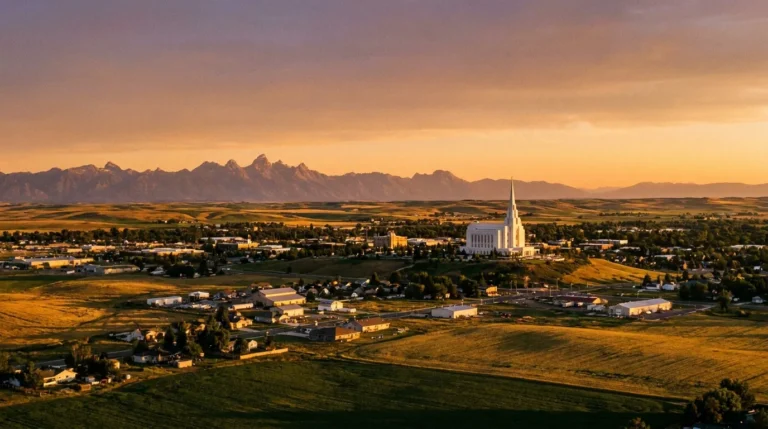
Outside Boise, culture is rural and traditional. Rodeos, county fairs, country music, and churches are part of the social fabric. In the southeast, Mormon (LDS) communities give a specific tone, with large families and visible temples. The state is politically conservative, with rural values and a love of individual freedom.

75
Major museums
Notable dishes
  • Idaho potato (baked, in various preparations)
  • Finger steaks (breaded meat strips, a Boise specialty)
  • Rainbow trout (locally caught)
  • Basque sausage and croquetas
  • Elk or bison burgers
  • +2 more
Annual events
  • Treefort Music Fest (Boise, March)
  • Boise River Festival (June)
  • Snake River Stampede (rodeo, Nampa, July)
  • Sun Valley Film Festival (March)
  • Festival of the Trees (December)
  • +2 more

Idaho's main economic sectors

Agriculture (potatoes, dairy) is historical. Technology is growing in Boise. Mining, lumber, and tourism round out the picture.

Agriculture is the sector most historically identified with the state. Idaho is the largest potato producer in the US, and also produces wheat, sugar beets, dairy, fruits, and cattle. Companies like J.R. Simplot, Lamb Weston, and Glanbia process these products. Craft beer benefits from hops grown in the state.

Technology is growing fast in Boise. Micron Technology, a memory chip maker, is the largest private employer. HP, Clearwater Analytics, and local startups form an expanding ecosystem. Boise has become a destination for professionals who want quality of life without the Bay Area's cost.

The Idaho National Laboratory (INL) in Idaho Falls is one of the top US nuclear energy research centers, employing thousands of scientists and engineers. Mining of silver (Coeur d'Alene area), phosphate, and lumber still employs workers in the interior. Mountain tourism (Sun Valley) and lake tourism (Coeur d'Alene) drive both summer and winter activity.

  • GDPgross domestic product
    $115.0B
  • GDP per capitaoutput per resident
    $59,300
  • GDP growth (yr)economy expanding
    +4.0%
Top sectors
  • Agriculture and food processing
  • Technology (semiconductors, software)
  • Nuclear energy research (INL)
  • Mining (silver, phosphate)
  • Lumber and paper
  • +3 more

Immigrant communities in Idaho

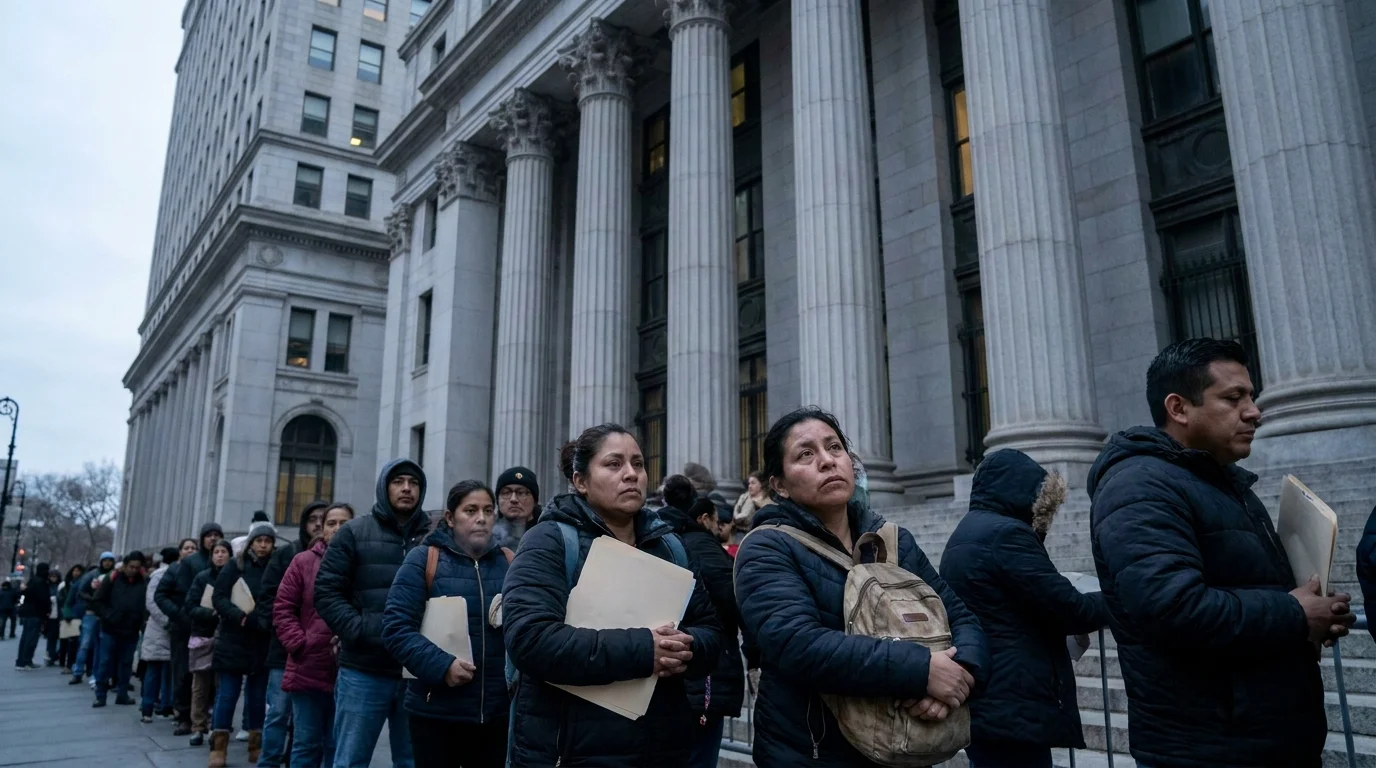
Idaho hosts about 105,000 immigrants, with strong Mexican farming communities in the Treasure Valley and a long-established Bosnian and refugee presence in Boise.

Idaho has about 105,000 foreign-born residents, a little over 5% of the state. The majority are Mexican, settled for generations on potato farms, dairies and food processing plants in the Treasure Valley, especially in Caldwell, Nampa, Twin Falls and west Boise. Peruvians, Guatemalans and more recent Venezuelans share the same corridors at smaller scale. Boise is also one of the most active refugee resettlement cities per capita in the United States: Bosnians who arrived in the 1990s built a visible community, followed by families from Iraq, Syria, Afghanistan, Myanmar (including the Karen) and the Democratic Republic of Congo, clustered along State Street and around the local refugee community center.

State-level coordination runs through the Idaho Office for Refugees in Boise, which manages resettlement, English classes and workforce integration. The Agency for New Americans provides direct case management for newly arrived families. There is no resident Mexican consulate in Idaho; services come from the honorary consulate in Boise and from mobile consulates that travel in from Salt Lake City and Portland. Catholic parishes in Caldwell and Nampa, mosques in Boise, Bosnian Orthodox churches and Vietnamese Buddhist temples act as first landing points for new arrivals.

105,000
Foreign-born residents
estimated
Top countries of origin
  • Mexico
  • Bosnia
  • Myanmar
  • Iraq
Main immigrant hubs
  • Boise
  • Nampa
  • Caldwell
  • Twin Falls
  • Idaho Falls
Foreign consulates
  • Mexican Honorary Consulate in Boise
  • Mexican Consulate General in Salt Lake City (jurisdiction covers Idaho)
Community organizations
  • Idaho Office for Refugees
  • Agency for New Americans
  • International Rescue Committee Boise

Latest posts

Posts about the United States

Coverage and updates related to this destination.

Showing content from the United States, as there is no specific data for Idaho yet.