Visto n' Visa
Blog
Notícias e artigos
Destinations
Careers
Immigrants

Want to live and work in South Dakota?

Personalized immigration plan with eligible visas, costs, and next steps for your goal!

If you are not eligible, you will know exactly why and what to do to improve your approval chances.

Save up to 12 hours in meetings

No pointless assessments.

Save up to 90%

Save money on vague or unfocused consultations

Avoid Fraud and Mistakes

One mistake can cost you your visa

Total Impartiality

Zero commercial bias

Decide with peace of mind

No toxic urgency

Fast and Accurate

Answers in minutes, no guesswork

Get to know South Dakota

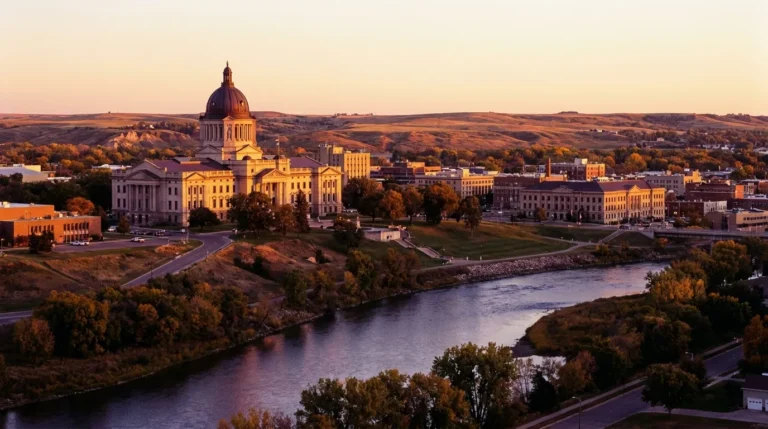
No income tax, low cost of living, and Mount Rushmore. Agricultural and financial anchor of the northern US.

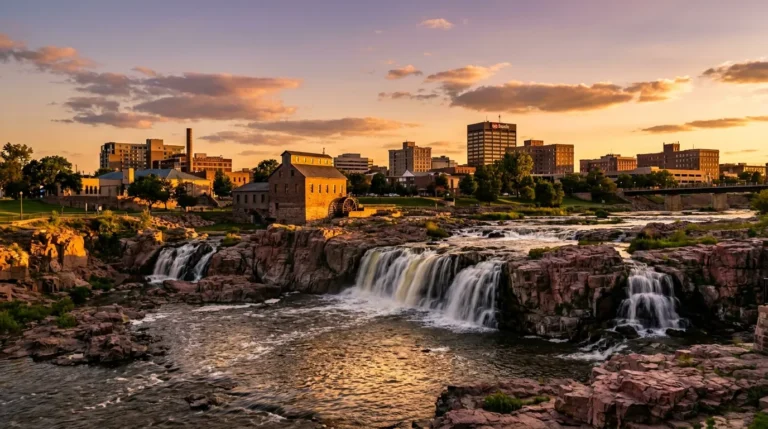
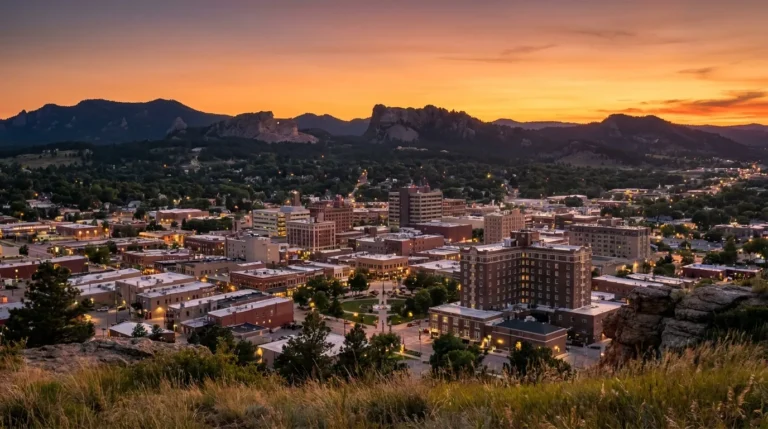
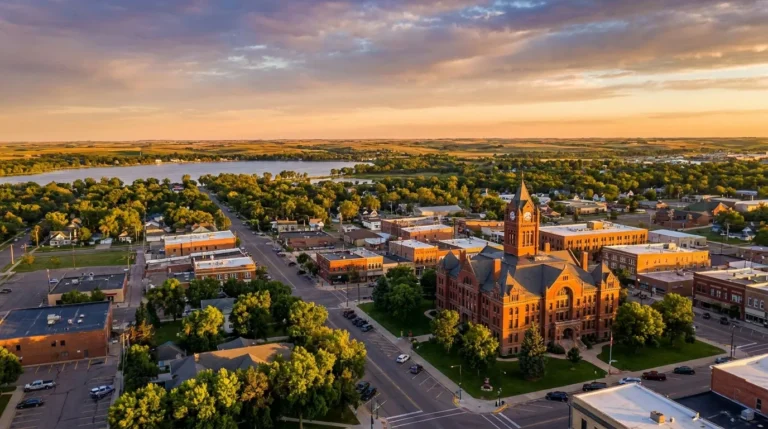
South Dakota sits in the north-central US, bordered by Minnesota, Iowa, Nebraska, Wyoming, Montana, and North Dakota. It is a sparsely populated, mostly rural state. The main cities are Sioux Falls (the largest, a financial and medical hub), Rapid City (in the west, near Mount Rushmore and the Black Hills), Aberdeen, and Brookings.

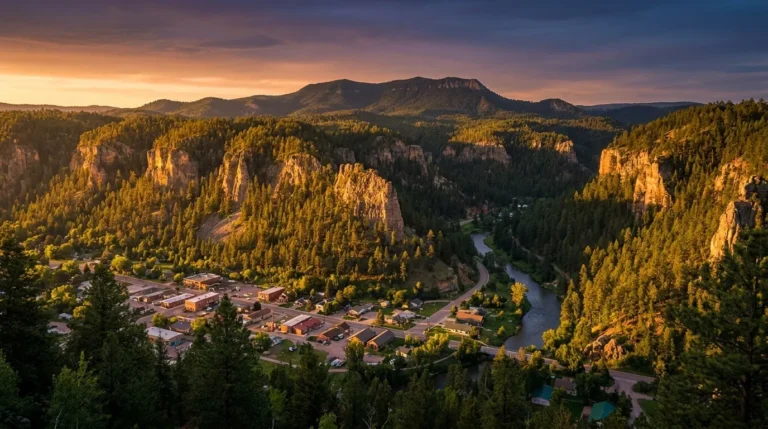
The state has two distinct sides. The east, around Sioux Falls, is agricultural and more economically developed, hosting credit-card operations (Citibank, Wells Fargo) that relocated here because of favorable financial laws. The west, centered on Rapid City, is tourism-driven: Mount Rushmore, the Black Hills, the Badlands, and Custer State Park.

For immigrants, South Dakota's appeal lies in jobs in healthcare (Sanford Health, Avera), financial services (credit cards), agriculture, meatpacking, and tourism. There is no state income tax, which helps the household budget. The Brazilian community is small. Hispanics have grown in Sioux Falls. Refugees (Sudanese, Ethiopian) have also been resettled in Sioux Falls.

Population
909,824
Average monthly salary
51,000 USD/mo
44.2998°, -99.4388°

Featured places

Top 10 places in South Dakota

The places most sought-after by immigrants in this region.

South Dakota demographics: white majority, Native Americans, and refugees

About 82% white and 9% Native American, one of the highest proportions in the US, with Hispanics and refugees growing in Sioux Falls.

South Dakota is predominantly white, mostly descended from German, Norwegian, Swedish, Dutch, and Irish immigrants who settled in the 19th century. Surnames ending in -son and -sen are common. The Lutheran tradition is strong, with churches in nearly every rural community.

The Native American population is one of the highest in proportion in the US. There are nine reservations in the state, including Pine Ridge (Oglala Lakota Nation, one of the largest and poorest), Rosebud, Cheyenne River, and Standing Rock (shared with North Dakota). Lakota, Dakota, and Nakota communities maintain cultural traditions and face longstanding challenges of poverty and isolation.

In Sioux Falls, diversity is growing. Refugees from Somalia, South Sudan, Ethiopia, Bhutan, and Iraq have been resettled through federal programs and formed visible communities. Hispanics, mainly Mexican, have grown over the past two decades, working in meatpacking plants (Smithfield Foods) and construction. Brazilians are rare, mostly in Sioux Falls.

909,824
Population
38 yrs
Median age
5/km²
Density
$66,100
Median income
per year
Urban population57.4%
Foreign-born4.0%
Languages spoken
  • English
  • Spanish
  • Native languages (Lakota, Dakota, Nakota)
  • Somali (in Sioux Falls)
  • Nepali and Dzongkha (Bhutanese refugees)
  • +2 more
Main religions
  • Christian (Lutheran and Catholic)
  • Lutheran
  • Catholic
  • Lakota and Native spiritual traditions
  • Islam (among refugees)
  • +1 more

Cost of living in South Dakota: low, with no state income tax

One of the most affordable states to live in. No state income tax. Moderate wages, but building savings is achievable.

A one-bedroom apartment in Sioux Falls runs between $850 and $1,200/month. In Rapid City, between $750 and $1,100/month. In smaller cities like Aberdeen or Brookings, between $600 and $900/month. Buying a home is realistic: three-bedroom houses in good neighborhoods in Sioux Falls range from $280,000 to $450,000. Rapid City is similar. In small towns, homes go for $150,000 to $250,000.

Grocery chains like Hy-Vee, Sunshine, Walmart, Costco, and Aldi compete. A meal at a popular restaurant costs $10 to $16. Gas is below the national average. Electricity is reasonable, and winter heating runs $150 to $350/month in the coldest months.

The main financial draw: South Dakota has no state income tax. Sales tax is 4.5% (plus local variations). In general, a modest salary goes a long way. Average wages are lower than in major metros, but purchasing power is high. Retirees from other states move here for the combination of low taxes, low costs, and solid medical care.

89Cost index (US = 100)11% below US average
CategorySingleCoupleFamily (2 + 2)
iHousing$1,151$1,328$1,682
iFood$336$673$1,221
iTransport$443$752$974
iHealthcare$248$496$929
iChildcare$1,611
iOther$752$1,354$1,903
Monthly total$2,930$4,603$8,320

Source: U.S. BLS Consumer Expenditure Survey 2023 + BEA Regional Price Parities 2023 · Estimates in USD, monthly.

Housing in South Dakota: large family homes, stable market

Homes with big yards and good insulation are standard. Sioux Falls and Rapid City have active markets. Rural areas are very affordable.

In Sioux Falls, homes in good neighborhoods like Tea, Harrisburg, Brandon, and the South side run from $300,000 to $550,000. In Rapid City, homes in areas like Robbinsdale, Wilson Park, and near Rapid Creek range from $280,000 to $450,000. Smaller cities offer large homes with yards and two-car garages for $200,000 to $350,000.

To rent, standard US requirements apply: income three times the rent, credit history, and references. Newcomers without a US credit score can rent with two or three months upfront or a co-signer. Supply in Sioux Falls is decent, and competition is lighter than in large cities.

Important features to look for: good thermal insulation, an enclosed garage (ideally two-car), natural gas heating, and a roof built for snow. Recommended neighborhoods in Sioux Falls: Tea, Harrisburg, Brandon, South Sioux Empire. In Rapid City: Robbinsdale, Black Hills area, Wilson Park. In Brookings: near SDSU. In Aberdeen: residential neighborhoods near downtown.

Purchase price (m²)
  • Center$2,300/m²
  • Outside$1,500/m²
4.0×
Price-to-income
7.0%
Mortgage rate (20y)
Recommended neighborhoods
  • Tea (Sioux Falls suburb)
  • Harrisburg (Sioux Falls)
  • Brandon (Sioux Falls)
  • South Sioux Empire (Sioux Falls)
  • Robbinsdale (Rapid City)
  • +3 more

Job market in South Dakota: healthcare, finance, agriculture, tourism, and industry

Sioux Falls is a healthcare hub (Sanford, Avera) and a credit-card center (Citibank, Wells Fargo). Rapid City runs on tourism, the military, and healthcare.

Healthcare is the top employer. Sanford Health and Avera Health compete in Sioux Falls, with hospitals, clinics, and research centers. Together they employ tens of thousands across the state and into Iowa and Minnesota, drawing professionals from across the US.

Financial services are strong. Citibank has run a large credit-card operation in Sioux Falls since 1981, when it moved from New York to take advantage of favorable state laws. Wells Fargo, First Premier Bank, Capital One, and other large companies have operations in the city. Jobs in customer service, risk analysis, fraud prevention, and financial technology are common.

Agriculture anchors many rural communities. Corn, soybeans, wheat, and cattle lead. Smithfield Foods (a meatpacking plant in Sioux Falls) employs thousands, mainly refugees and immigrants. In Rapid City, there is tourism (Mount Rushmore draws millions), Ellsworth Air Force Base, and National American University. Average wages are moderate, but combined with low costs and zero income tax, purchasing power is solid.

$51,000
Avg net salary
per month
$23,566
Minimum wage
per month
2.0%
Unemployment
68.0%
Labor force
Dominant sectors
  • Healthcare (Sanford, Avera)
  • Financial services and credit cards
  • Agriculture (corn, soybeans, cattle)
  • Meatpacking
  • Tourism (Mount Rushmore, Black Hills)
  • +3 more
Major employers
  • Sanford Health (Sioux Falls)
  • Avera Health (Sioux Falls)
  • Citibank (Sioux Falls)
  • Wells Fargo
  • First Premier Bank
  • +3 more

Education in South Dakota: accessible schools, regional public universities

A decent, accessible school system. South Dakota State University (Brookings) and the University of South Dakota (Vermillion) are the main public universities.

Children have the right to free public schooling. Schools vary less than in some other states, with decent quality almost everywhere. Districts in Sioux Falls, Brandon, Harrisburg, Brookings, and Rapid City are well-rated. Schools on reservations and in small towns may have fewer resources but generally function well.

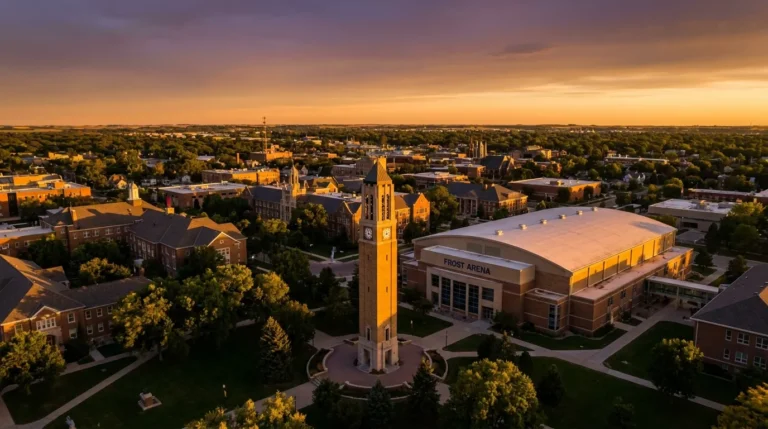
South Dakota State University (SDSU), in Brookings, is the largest university in the state, with strengths in agriculture, engineering, biotechnology, and veterinary medicine. The University of South Dakota (USD), in Vermillion, is the oldest, with strong programs in law (Knudson School of Law), medicine (Sanford School of Medicine), and public administration.

Other universities include South Dakota School of Mines and Technology (Rapid City, excellent in mining and geological engineering), Black Hills State University (Spearfish), Northern State (Aberdeen), and Augustana University (private, Sioux Falls). In-state tuition at public universities runs roughly $9,000 to $12,000 a year.

Literacy98.0%
Tertiary education30.6%
478
PISA score (avg)
$9,500
Private school
per year
Notable universities
  • South Dakota State University (SDSU, Brookings)
  • University of South Dakota (USD, Vermillion)
  • South Dakota School of Mines and Technology (Rapid City)
  • Black Hills State University (Spearfish)
  • Augustana University (Sioux Falls, private)
  • Northern State University (Aberdeen)
  • Dakota State University (Madison)

Healthcare in South Dakota: Sanford and Avera dominate, wide coverage in Sioux Falls

Sanford and Avera are two large competing networks in Sioux Falls. Rapid City has Monument Health. Rural areas rely on telemedicine.

Sanford Health, headquartered in Sioux Falls (and Fargo, ND), is one of the largest rural health networks in the US, present in several states. Avera Health is also based in Sioux Falls and competes directly with Sanford. Both systems operate large hospitals, clinics, and research centers serving Sioux Falls, numerous smaller cities, and parts of Minnesota, Iowa, and Nebraska.

In Rapid City, Monument Health (formerly Regional Health) is the main network. Smaller hospitals serve Aberdeen, Brookings, and Pierre. On reservations, the Indian Health Service runs hospitals (Pine Ridge, Rosebud), though with long waits and limited resources.

South Dakota expanded Medicaid under the ACA in 2023. Employer-provided insurance is the standard for formal workers. Telemedicine has grown, especially for rural areas. Without insurance, an ER visit can top $1,500. Urgent care ($100 to $200) is an alternative. For immigrants in Sioux Falls, community clinics offer sliding-scale fees without checking immigration documents.

Healthcare index68.0 / 100
  • Life expectancyyears at birth
    78.5yrs
  • Doctors per 1kpracticing physicians
    2.8
  • Health spendper capita, per year
    $10,400
  • Public systemoverall quality rating
    Fair

Safety in South Dakota: a safe state, with issues concentrated on reservations and some urban areas

Sioux Falls, Rapid City, and small towns have low crime rates. Native American reservations face chronic violence and poverty.

South Dakota is one of the safer states in the US. Sioux Falls, Rapid City, Brookings, Aberdeen, and smaller towns have crime rates below the national average. Violent crime is rare outside specific neighborhoods. Drunk driving, property crime, and domestic violence are the most common offenses.

In Rapid City, some areas near downtown have more incidents tied to homelessness and drug use. In Sioux Falls, neighborhoods like Whittier and All Saints see slightly higher-than-average rates. Overall, though, these are quiet cities.

On Native American reservations, especially Pine Ridge, there are serious rates of domestic violence, alcohol and drug abuse, and extreme poverty. Pine Ridge has one of the lowest life expectancies in the US. For the typical immigrant settling anywhere in the state, safety is not a major concern. The biggest risks are weather (extreme cold, blizzards) and driving on icy roads in winter.

4.4
Homicides per 100k
per year
Safety index
61.0
Crime index
39.0
Safer neighborhoods
  • Brandon (Sioux Falls)
  • Harrisburg (Sioux Falls)
  • Tea (Sioux Falls)
  • Sioux Falls West
  • Brookings
  • Aberdeen
  • Spearfish
  • Rapid City (Robbinsdale)
Areas to avoid
  • Rapid City isolated neighborhoods
  • Sioux Falls east side at night
  • Remote reservations (Pine Ridge)

Transportation in South Dakota: a car is essential, Sioux Falls has the main airport

Completely car-dependent state. Long distances between cities. Sioux Falls and Rapid City airports handle domestic flights.

South Dakota is car country. There are no passenger trains or subways. Sioux Falls and Rapid City have modest bus systems, but most people drive. Distances between cities are long: Sioux Falls to Rapid City is about five and a half hours across the entire state.

Interstates I-29 (north-south, connecting Sioux Falls to Fargo) and I-90 (east-west, crossing the state from Sioux Falls to Rapid City and the Black Hills) are the main highways. Traffic is minimal. Parking is free or cheap. A four-wheel-drive or all-wheel-drive vehicle is useful for winter and for reaching rural areas and the Black Hills. Roads in the west can become isolated during blizzards.

Sioux Falls Regional Airport (FSD) is the largest in the state, with direct flights to Minneapolis, Chicago, Denver, Dallas, Atlanta, and several other US cities. Rapid City Regional (RAP) also serves domestic routes. Smaller airports in Aberdeen, Pierre, Brookings, and Watertown handle regional flights. There are no significant nonstop international flights; connections go through larger hubs.

17 min
Avg commute
24
Walkability
Airports
  • FSD (Sioux Falls Regional)
  • RAP (Rapid City Regional)
  • ABR (Aberdeen Regional)
  • PIR (Pierre Regional)
  • BKX (Brookings Regional)
  • +1 more
  • Bike infrastructure

South Dakota climate: continental, with cold winters and hot summers

Harsh winters with snow and wind. Hot summers with thunderstorms. Extreme temperature swings between seasons.

South Dakota has a continental climate (Koppen Dfa in the east, BSk in the drier west). Winter is cold: January lows between -15 and -20 degrees Celsius, dropping to -30 or colder with windchill. Snowfall is frequent, with occasional blizzards. The west (Black Hills) gets more snow because of its elevation.

Summer is hot. July and August highs around 28 to 32 degrees Celsius, sometimes exceeding 38 during heat waves. Humidity is higher in the east and drier in the west. Spring comes late (snow is still possible in May); fall is short, with tree colors in September and possible snow by October.

Tornadoes occur in the eastern part of the state between May and July. The west is drier and has some risk of wildfires in summer (especially in the Black Hills). For immigrants, adapting to the cold is a real challenge: proper clothing, efficient home heating, a car with a good battery and antifreeze are all necessary. Wind chill is a concept to understand well: the apparent temperature can be far lower than the thermometer reading.

Sunny days / year217 days
Avg high (°F)
  • 27°J
  • 32°F
  • 45°M
  • 59°A
  • 71°M
  • 81°J
  • 85°J
  • 83°A
  • 76°S
  • 61°O
  • 45°N
  • 32°D
Avg low (°F)
  • J
  • 13°F
  • 24°M
  • 35°A
  • 47°M
  • 59°J
  • 63°J
  • 61°A
  • 52°S
  • 38°O
  • 24°N
  • 13°D
Rainfall (")
  • 1"J
  • 1"F
  • 2"M
  • 3"A
  • 4"M
  • 4"J
  • 3"J
  • 3"A
  • 3"S
  • 2"O
  • 1"N
  • 1"D

South Dakota culture: Lakota Native heritage, farming traditions, Mount Rushmore, and festivals

A blend of Lakota and European heritage. Mount Rushmore, agricultural festivals, rodeos, and the iconic Sturgis Motorcycle Rally define the state.

Native American culture is central to South Dakota. The Lakota, Dakota, and Nakota nations (collectively known as the Sioux) have millennia-old traditions of buffalo hunting, ceremonial dances (the Sun Dance), spirituality, and art. On reservations, powwows (festivals with dance, music, and food) happen year-round. The Crazy Horse Monument, under construction for decades near Mount Rushmore, honors the Lakota leader.

European heritage, mainly Scandinavian, German, and Dutch, is strong in rural areas. Lutheran and Catholic churches, fall festivals (Oktoberfest), and traditional foods (kuchen, hotdish, runza) mark community life. The Sturgis Motorcycle Rally in August draws hundreds of thousands of riders from around the world to the Black Hills, making it one of the largest events of its kind on the planet.

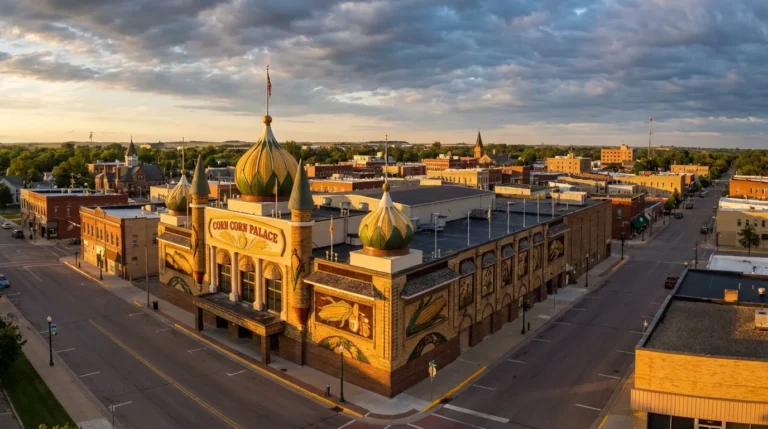
Tourists come mainly for Mount Rushmore (with four presidential faces carved into the mountain), Badlands National Park, Custer State Park (with free-roaming bison), Wind Cave, and the Black Hills. Rapid City has statues of all 44 presidents on its sidewalks. The Corn Palace in Mitchell is an architectural curiosity (a building decorated every year with corn). There is also a strong rodeo tradition, with competitions across the state throughout the summer.

110
Major museums
Notable dishes
  • Chislic (lamb or beef skewers, official state dish)
  • Kuchen (German cake)
  • Hotdish (casserole)
  • Indian taco (taco on frybread)
  • Walleye (freshwater fish)
  • +3 more
Annual events
  • Sturgis Motorcycle Rally (August, Black Hills)
  • Mount Rushmore Fourth of July
  • Custer State Park Buffalo Roundup (September)
  • Black Hills Powwow (Rapid City, October)
  • Brookings Beer Festival
  • +2 more

Main industries of South Dakota's economy

Healthcare, financial services (credit cards), agriculture, meatpacking, and tourism. A small but economically diverse state.

Healthcare is the largest sector. Sanford Health and Avera Health, both headquartered in Sioux Falls, serve a large part of the northern Midwest. Together they employ tens of thousands and have made Sioux Falls a regional medical hub, with hospitals, clinics, and research centers.

Financial services are a stable anchor. Citibank arrived in Sioux Falls in 1981 to take advantage of the state's permissive credit-card interest-rate laws. Wells Fargo, First Premier, Capital One, Discover, and others followed. Today thousands work in operations centers, customer service, risk analysis, and financial technology.

Agriculture sustains the rural state. Corn, soybeans, cattle, wheat, and hogs lead. Meatpacking, particularly pork, is large (Smithfield Foods in Sioux Falls is one of the biggest plants in the US). Tourism generates billions of dollars in the Black Hills (Mount Rushmore, Crazy Horse, Sturgis, the Badlands). Ellsworth Air Force Base injects federal dollars. Wind energy is growing, and there is still some gold mining in certain areas.

  • GDPgross domestic product
    $72.0B
  • GDP per capitaoutput per resident
    $79,200
  • GDP growth (yr)economy expanding
    +2.6%
Top sectors
  • Healthcare (Sanford, Avera)
  • Financial services and credit cards
  • Agriculture (corn, soybeans, cattle, wheat)
  • Meatpacking
  • Tourism (Black Hills, Mount Rushmore)
  • +3 more

Immigrant communities in South Dakota

South Dakota has around 35,000 immigrants, with a strong Karen, Somali, Sudanese, and Mexican presence concentrated mainly in Sioux Falls.

South Dakota is home to about 35,000 people born outside the United States, close to 4% of the population. Sioux Falls is the main refugee resettlement center in the state and hosts one of the largest Karen communities in the United States, coming from Myanmar via refugee camps in Thailand. Somalis arrived from the 2000s on and run mosques and markets in Sioux Falls. Sudanese from South Sudan form another visible community, alongside Ethiopians, Eritreans, and Congolese. Mexicans and Central Americans arrived through construction, meatpacking, and agriculture, with a presence in Sioux Falls, Rapid City, and Huron, known for its Karen community and a Dakota Provisions plant.

South Dakota has no foreign consulates of its own, and consular support comes from Chicago or Minneapolis. Lutheran Social Services of South Dakota, based in Sioux Falls, is the main resettlement agency and offers English classes, legal services, and support to newly arrived families. Caminando Juntos serves Hispanic families with educational and legal support. Churches, mosques, and Buddhist temples in Sioux Falls act as orientation points. Public schools in Sioux Falls and Huron run bilingual programs in Karen, Spanish, Somali, and Swahili.

35,000
Foreign-born residents
estimated
Top countries of origin
  • Mexico
  • Myanmar
  • Somalia
  • Ethiopia
  • Sudan
Main immigrant hubs
  • Sioux Falls
  • Rapid City
  • Huron
  • Aberdeen
  • Brookings
Foreign consulates
  • Consular coverage via Chicago and Minneapolis
Community organizations
  • Lutheran Social Services of South Dakota
  • Caminando Juntos
  • Multi-Cultural Center of Sioux Falls

Latest posts

Posts about South Dakota

Coverage and updates related to this destination.