Visto n' Visa
Blog
Notícias e artigos
Destinations
Careers
Immigrants

Want to live and work in Maryland?

Personalized immigration plan with eligible visas, costs, and next steps for your goal!

If you are not eligible, you will know exactly why and what to do to improve your approval chances.

Save up to 12 hours in meetings

No pointless assessments.

Save up to 90%

Save money on vague or unfocused consultations

Avoid Fraud and Mistakes

One mistake can cost you your visa

Total Impartiality

Zero commercial bias

Decide with peace of mind

No toxic urgency

Fast and Accurate

Answers in minutes, no guesswork

A closer look at Maryland

Science, medicine, and the DC corridor. A small state with high salaries.

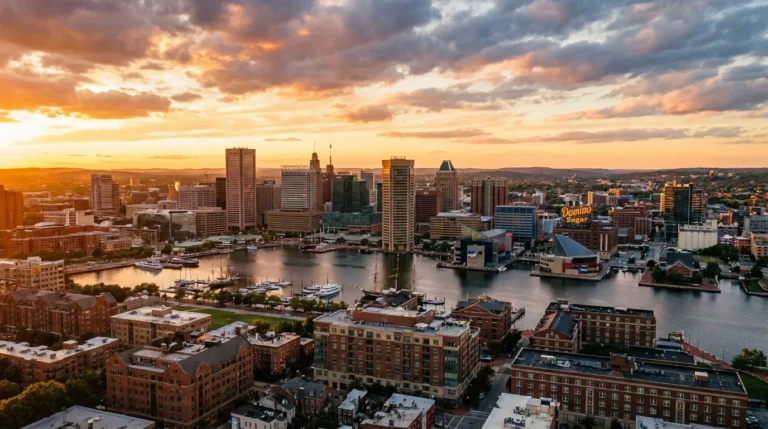
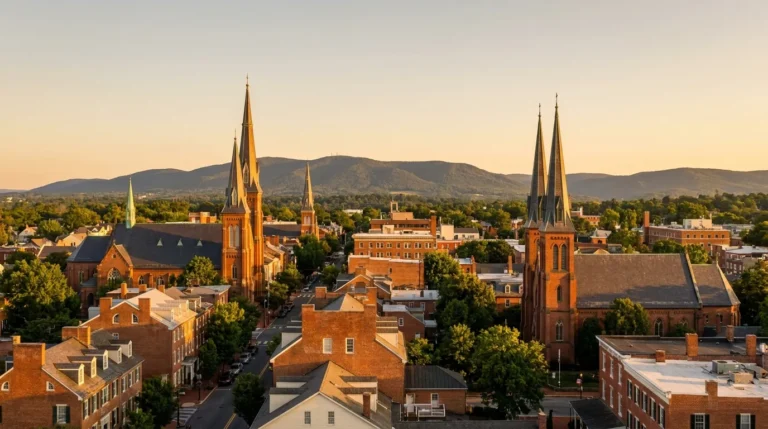
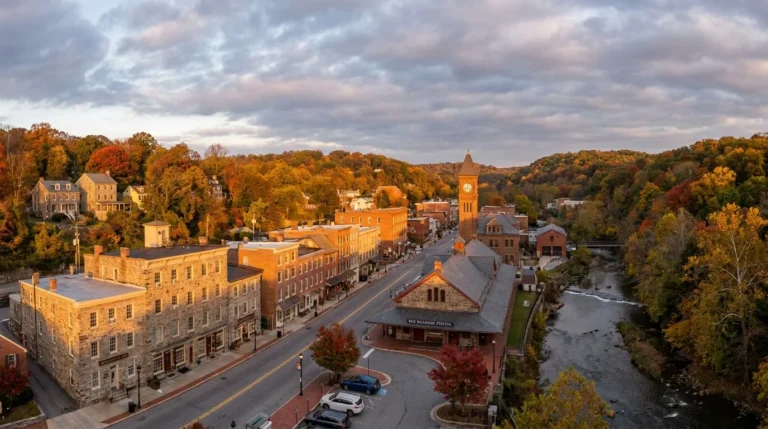
Maryland is one of the wealthiest states in the US and borders Washington DC directly. The main cities are Baltimore (the largest, a historic port and major medical hub), Bethesda and Rockville (affluent DC suburbs in Montgomery County), Columbia (a planned city between Baltimore and DC), and Annapolis (the small state capital on the Chesapeake Bay).

The federal government shapes life in the state. The NIH (National Institutes of Health), FDA, NASA Goddard, and dozens of federal agencies are located in Maryland. Healthcare, science, defense, and technology professionals concentrate in Bethesda, Rockville, Silver Spring, and Columbia. Salaries are high, but so is the cost of living.

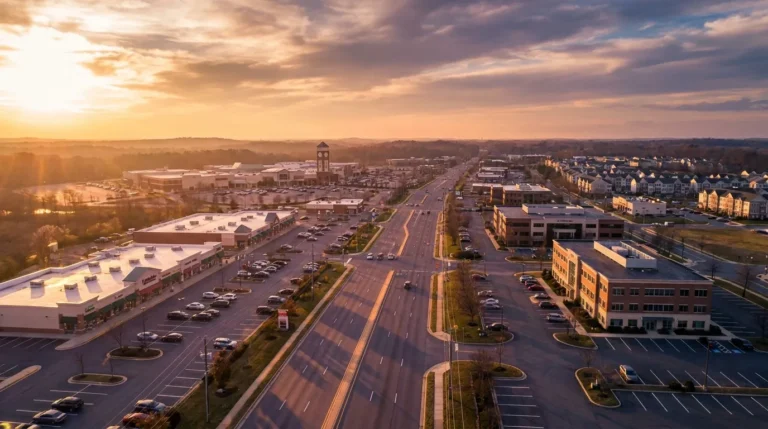
For skilled immigrants, especially in healthcare, biotechnology, and technology, Maryland is an attractive destination. There are Brazilian communities in Silver Spring, Rockville, and Bethesda. The state is compact, with easy access to DC, Philadelphia, and New York. The downsides are housing costs and traffic in the DC suburbs.

Population
6,164,660
Average monthly salary
71,500 USD/mo
39.0639°, -76.8021°

Featured places

Top 10 places in Maryland

The places most sought-after by immigrants in this region.

Maryland demographics: a diverse state with a strong African American and Asian presence

One of the most diverse states in the US. Baltimore has an African American majority. DC suburbs have large Asian and Hispanic communities.

Maryland is among the most diverse states in the US. Non-Hispanic whites are a minority in some counties (Prince George's, Montgomery). Baltimore has an African American majority with a strong history tied to the civil rights movement. Montgomery County (Bethesda, Rockville, Silver Spring) is one of the most diverse counties in the country, with large Asian, Hispanic, and African communities.

There is an active Brazilian community in Silver Spring, Rockville, Wheaton, and Hyattsville. Brazilian stores, restaurants, and churches are easy to find in these areas. The Hispanic community is large, especially Salvadoran, Mexican, and Guatemalan. English is dominant, but Spanish and Amharic (Ethiopian) are common in several neighborhoods.

The population is largely urban and suburban, with the DC and Baltimore metro areas concentrating most residents. Rural areas (Eastern Shore, western part of the state) have a more white and conservative population. Maryland is one of the most Democratic states in the country, especially in urban areas.

6,164,660
Population
39 yrs
Median age
192/km²
Density
$98,460
Median income
per year
Urban population87.0%
Foreign-born15.6%
Languages spoken
  • English
  • Spanish (in Latino communities in DC suburbs)
  • Amharic (large Ethiopian community)
  • Korean and Chinese (in Rockville, Ellicott City)
  • Portuguese (in Brazilian communities in Silver Spring and Rockville)
Main religions
  • Protestant Christian (various denominations)
  • Catholic Christian
  • No religion
  • Jewish (strong in Montgomery County)
  • Islamic
  • +1 more

Cost of living in Maryland: high in DC suburbs, moderate in Baltimore

Bethesda and Rockville are among the most expensive areas in the US. Baltimore is considerably more affordable.

The cost of living varies widely across the state. In Bethesda, Rockville, and Silver Spring, a one-bedroom apartment runs between $2,000 and $2,800. Buying a home in a good neighborhood easily exceeds $800,000. In Annapolis, costs are similar. In Baltimore, rent drops to $1,300 to $1,800 in decent neighborhoods.

Groceries, utilities, and taxes are above the national average. Tolls on bridges and tunnels (especially between Baltimore and Washington) add up. Gas is cheaper than in New York or California, but more expensive than in southern states.

Salaries make up for the cost. Professionals in healthcare, science, the federal government, technology, and defense earn well. Households with a combined income above $150,000 per year live comfortably in Bethesda or Rockville. In Baltimore, $80,000 provides a good standard of living. Those arriving without a job need savings, especially for the rental deposit and insurance.

109Cost index (US = 100)9% above US average
CategorySingleCoupleFamily (2 + 2)
iHousing$1,420$1,638$2,075
iFood$415$830$1,507
iTransport$546$928$1,201
iHealthcare$306$612$1,147
iChildcare$1,987
iOther$928$1,671$2,348
Monthly total$3,615$5,679$10,265

Source: U.S. BLS Consumer Expenditure Survey 2023 + BEA Regional Price Parities 2023 · Estimates in USD, monthly.

Housing in Maryland: expensive neighborhoods near DC, historic homes in Baltimore

DC suburbs have highly competitive real estate. Baltimore has historic rowhouses at more accessible prices.

In Montgomery County (Bethesda, Rockville, Potomac, Chevy Chase), homes in good neighborhoods exceed $1 million. New apartments in Bethesda high-rises start above $600,000. Silver Spring has somewhat more affordable options and a large Brazilian and Latin community.

Baltimore offers historic rowhouses (narrow attached townhomes) in neighborhoods such as Federal Hill, Canton, Fells Point, and Hampden. Prices range from $200,000 in transitional areas to over $600,000 in sought-after neighborhoods. Baltimore suburbs like Towson, Pikesville, and Columbia are options for families.

Annapolis has charming bay-view homes at high prices. The Eastern Shore (St. Michaels, Easton) attracts wealthy retirees. To rent, the standard American contract applies: proof of income (3x the rent), credit history, and references. In Bethesda and Rockville, the market is competitive, so having documents ready is important.

Purchase price (m²)
  • Center$4,500/m²
  • Outside$2,900/m²
4.5×
Price-to-income
7.0%
Mortgage rate (20y)
Recommended neighborhoods
  • Bethesda (Montgomery County, top tier)
  • Rockville (Montgomery County, immigrant community)
  • Silver Spring (Montgomery County, diverse)
  • Columbia (planned city, top schools)
  • Potomac (wealthy suburb)
  • +3 more

Job market in Maryland: federal government, healthcare, science, and defense

NIH, FDA, NASA, and Johns Hopkins lead. Defense and cybersecurity are strong thanks to Fort Meade and the NSA.

The federal government is the largest employer. The NIH (National Institutes of Health) in Bethesda is the world's largest center for biomedical research. The FDA is in Silver Spring. NASA Goddard in Greenbelt conducts space research. Fort Meade is home to the NSA (National Security Agency), generating thousands of jobs in cybersecurity and intelligence.

Johns Hopkins in Baltimore is one of the world's largest universities and hospitals, with thousands of jobs in medicine, research, and administration. Lockheed Martin (defense), Northrop Grumman (defense), and MedImmune/AstraZeneca (pharma) are also major employers. Biotechnology clusters along the I-270 Corridor (between Bethesda and Frederick).

Salaries in healthcare, science, defense, and technology are among the highest in the US. For professionals with foreign degrees in medicine, research, or engineering, Maryland is one of the best states to find employment. The Brazilian community in healthcare and research is considerable in Bethesda and Baltimore.

$71,500
Avg net salary
per month
$31,200
Minimum wage
per month
3.0%
Unemployment
65.7%
Labor force
Dominant sectors
  • Federal government and agencies (NIH, FDA, NASA)
  • Healthcare and biomedical research
  • Defense and cybersecurity
  • Biotechnology and pharmaceuticals
  • Higher education
  • +3 more
Major employers
  • NIH (Bethesda)
  • Johns Hopkins University and Hospital (Baltimore)
  • FDA (Silver Spring)
  • NASA Goddard (Greenbelt)
  • Lockheed Martin (Bethesda)
  • +3 more

Education in Maryland: excellent public schools in Montgomery County and top universities

Free public K-12 education is well-regarded. Johns Hopkins and the University of Maryland are the best-known universities.

Children and teenagers have the right to free public schooling regardless of their parents' immigration status. Maryland has public schools among the best in the US, especially in Montgomery County (Bethesda, Rockville, Potomac) and Howard County (Columbia). Families move to these counties specifically for the schools.

Bethesda-Chevy Chase High School, Walt Whitman, Walter Johnson, and Richard Montgomery are top-tier public high schools, with many students going on to Ivy League universities. In Howard County, River Hill and Centennial are equally strong. In Baltimore, the best public schools are charter or magnet schools (entry by selection).

Johns Hopkins University in Baltimore is one of the best universities in the world, especially in medicine, public health, and engineering. The University of Maryland in College Park is the largest public university in the state, with strong programs in computer science, engineering, and business. Good private colleges include Loyola, Goucher, and Mount St. Mary's.

Literacy97.0%
Tertiary education42.0%
478
PISA score (avg)
$17,500
Private school
per year
Notable universities
  • Johns Hopkins University (Baltimore, top private)
  • University of Maryland (College Park)
  • United States Naval Academy (Annapolis)
  • University of Maryland, Baltimore County (UMBC)
  • Loyola University Maryland (Baltimore)
  • Towson University
  • Goucher College
  • Maryland Institute College of Art (MICA, Baltimore)

Healthcare in Maryland: some of the world's best hospitals

Johns Hopkins is one of the best hospitals in the world. The NIH conducts cutting-edge research. Coverage through private insurance works well.

Maryland has some of the best hospitals in the US and the world. Johns Hopkins in Baltimore is frequently ranked among the top in the world across multiple specialties. The NIH Clinical Center in Bethesda conducts cutting-edge clinical research. The University of Maryland Medical Center and MedStar are also reference institutions.

As in the US generally, there is no universal public system. Those with formal employment receive insurance from their employer. Family premiums can exceed $1,500, with the company paying part. Without employment, there are plans through the state marketplace (Maryland Health Connection) with income-based subsidies.

Maryland expanded Medicaid after the ACA. Low-income families have improved access. Documented immigrants with a green card held for more than 5 years may qualify. Because of the concentration of top hospitals, healthcare quality in the state is among the best in the US, with easy specialist access for those with insurance.

Healthcare index75.0 / 100
  • Life expectancyyears at birth
    79.0yrs
  • Doctors per 1kpracticing physicians
    4.0
  • Health spendper capita, per year
    $11,200
  • Public systemoverall quality rating
    Good

Safety in Maryland: suburbs among the safest in the US, Baltimore with troubled areas

Montgomery and Howard County are very safe. Certain Baltimore neighborhoods have very high crime rates.

Maryland's suburbs are among the safest in the US. Bethesda, Rockville, Potomac, Columbia, Ellicott City, and Annapolis have very low crime rates. Families move around freely, schools function well, and quality of life is high. Howard County regularly ranks among the wealthiest and safest counties in the country.

Baltimore, on the other hand, has a history of violence. Some areas (West Baltimore, parts of East Baltimore) have homicide rates among the highest in the country. Neighborhoods like Federal Hill, Canton, Fells Point, and Hampden are considerably safer, especially for young professionals. Baltimore suburbs (Towson, Pikesville) are peaceful.

In Prince George's County (between Baltimore and DC), safety varies considerably: areas like Bowie and National Harbor are safe; other zones have higher rates. Niche.com and GreatSchools help compare neighborhoods. For those moving with children, Montgomery or Howard County is worth prioritizing.

11.4
Homicides per 100k
per year
Safety index
50.0
Crime index
50.0
Safer neighborhoods
  • Bethesda and Chevy Chase (Montgomery County)
  • Potomac (Montgomery County)
  • Rockville (Montgomery County)
  • Columbia and Ellicott City (Howard County)
  • Towson (Baltimore suburb)
  • Annapolis (state capital)
  • Bowie (Prince George's County)
  • Federal Hill and Canton (Baltimore, safer areas)
Areas to avoid
  • Baltimore West Side (Sandtown)
  • Baltimore East Side
  • Capitol Heights
  • Annapolis peripheral districts at night

Transportation in Maryland: DC Metro reaches Maryland, but a car is still useful

DC Metro lines serve Montgomery and Prince George's. Baltimore has a light rail. A car is practical for the suburbs.

The Washington DC Metro (WMATA) has several stations in Maryland: the Red Line goes to Shady Grove (Rockville), the Green Line to Greenbelt, the Orange Line to New Carrollton. Those living near a station can commute to DC without a car. The MARC train system connects Baltimore and DC, and Frederick to DC.

Baltimore has a Light Rail and a Metro SubwayLink, but the network is limited. Urban buses cover the city. For getting between suburbs and cities, a car is essential. The main highways are I-95 (crossing the state), I-495 (DC Beltway), and I-695 (Baltimore Beltway).

The main airport is Baltimore/Washington International Thurgood Marshall (BWI), with direct flights to many US cities and some international destinations (Europe, Caribbean). It is a Southwest Airlines hub. For larger international flights, many people use Dulles (IAD) or Reagan National (DCA) in Virginia, close to DC.

2
Metro lines
47
Metro stations
33 min
Avg commute
50
Walkability
Airports
  • BWI (Baltimore/Washington International Thurgood Marshall)
  • International airport
  • Bike infrastructure

Maryland climate: four seasons, humid summers, and occasional winter snow

Hot and muggy summers, cold winters with snow. Spring and autumn are pleasant. Coastal storms possible.

Maryland has a humid continental climate with four distinct seasons. Summer (June to August) is hot and humid, with temperatures between 28 and 33 degrees Celsius and high humidity from the Chesapeake Bay. Afternoon thunderstorms are common. Air conditioning at home and in the car is essential.

Winter (December to February) is cold, with average temperatures of -3 to 5 degrees Celsius and snowfall several times per year. Major snowstorms can close schools and roads. The western part of the state (Garrett County, mountains) receives considerably more snow than the coast. Home heating is necessary.

Spring and autumn are the most pleasant seasons. Cherry blossoms bloom in DC and surrounding areas in March and April, drawing tourists. Autumn foliage is beautiful in October. Coastal storms (nor'easters) can bring strong winds and flooding in low-lying coastal areas.

Sunny days / year203 days
Avg high (°F)
  • 44°J
  • 47°F
  • 55°M
  • 67°A
  • 76°M
  • 85°J
  • 90°J
  • 87°A
  • 80°S
  • 69°O
  • 58°N
  • 48°D
Avg low (°F)
  • 30°J
  • 32°F
  • 39°M
  • 48°A
  • 58°M
  • 68°J
  • 73°J
  • 71°A
  • 65°S
  • 53°O
  • 43°N
  • 35°D
Rainfall (")
  • 3"J
  • 3"F
  • 4"M
  • 4"A
  • 3"M
  • 3"J
  • 5"J
  • 4"A
  • 4"S
  • 3"O
  • 3"N
  • 4"D

Maryland culture: blue crab, the Chesapeake Bay, and the political-academic life of the DC corridor

Identity tied to the Chesapeake Bay and blue crab. Baltimore's urban culture has strong music, sports, and arts. DC suburbs concentrate intellectuals.

The blue crab from the Chesapeake Bay is the state's symbol. Eating crab covered in Old Bay seasoning, with a wooden mallet, over newspaper spread on the table is a local tradition. Old Bay is Maryland's signature spice, used on almost everything.

Baltimore has a strong cultural scene: Edgar Allan Poe is buried there, John Waters and the band Animal Collective are from the city, and the Baltimore Orioles (baseball) and Ravens (American football) are local passions. The revitalized Inner Harbor has museums, an aquarium, and restaurants. Annapolis, the capital, is home to the Naval Academy and attracts sailors.

The DC suburbs (Bethesda, Rockville, Silver Spring) have a more cosmopolitan and academic culture, with DC museums just minutes away by car or Metro. Diversity generates many ethnic festivals, world cuisine restaurants, and varied religious communities. Summer crab feasts, autumn American football.

200
Major museums
Notable dishes
  • Blue crab steamed with Old Bay
  • Crab cakes
  • Maryland crab soup
  • Pit beef sandwich (Baltimore-style grilled beef)
  • Berger Cookies (chocolate-covered cookies)
  • +2 more
Annual events
  • Preakness Stakes (horse race, Baltimore, May)
  • Maryland Renaissance Festival (Crownsville, August-October)
  • Artscape (Baltimore, July)
  • National Hard Crab Derby (Crisfield, September)
  • Annapolis Boat Shows (October)
  • +2 more

Key sectors of the Maryland economy

Federal government, healthcare, biotechnology, defense, and cybersecurity lead. Higher education and the port are also strong.

The federal government is the economic pillar. Agencies such as NIH, FDA, NASA Goddard, the NSA, and USDA have headquarters or major operations in the state. Well-paid federal jobs sustain consumption in the wealthy suburbs. Government contractors (Lockheed Martin, Northrop Grumman, Leidos) move billions.

Healthcare and biomedical research are iconic. Johns Hopkins, NIH, and the University of Maryland in Baltimore form one of the world's largest medical clusters. Biotechnology concentrates along the I-270 Corridor (between Bethesda and Frederick), with MedImmune/AstraZeneca, Emergent BioSolutions, and dozens of smaller companies.

Defense and cybersecurity grow around Fort Meade (NSA). The Port of Baltimore, one of the largest in the US, handles cars, sugar, and containers. Agriculture (chicken from the Eastern Shore, soybeans, corn) and crab and oyster fishing in the Chesapeake Bay are also important.

  • GDPgross domestic product
    $510.0B
  • GDP per capitaoutput per resident
    $82,700
  • GDP growth (yr)economy expanding
    +2.3%
Top sectors
  • Federal government and agencies
  • Healthcare and biomedical research
  • Biotechnology and pharmaceuticals
  • Defense and cybersecurity
  • Higher education
  • +3 more

Immigrant communities in Maryland

About 950,000 immigrants live in Maryland, with Salvadorans in Prince George's and Montgomery, Ethiopians in Silver Spring, and Indians in Howard County.

Maryland has around 950,000 residents born outside the country, close to 15% of the population, with strong concentration in the counties near Washington D.C. Salvadorans form the largest group, with strong presence in Prince George's and Montgomery, especially in Langley Park, Wheaton, and Hyattsville, and dominate construction and service sectors. Ethiopians formed one of the largest Ethiopian communities in the country in Silver Spring and Takoma Park, with injera restaurants and Tewahedo Orthodox churches clustered along Georgia Avenue. Indians concentrate in Howard County and Montgomery, tied to Johns Hopkins, the NIH, and the biotech corridor. Chinese, Nigerians, and Koreans round out the picture, with Rockville and Gaithersburg as Chinese hubs and Baltimore home to West African communities.

The consulate-general of India in Washington D.C. serves Maryland residents, as do virtually all embassies in D.C. Baltimore has honorary consulates from several countries, including South Korea and Poland. CASA, headquartered in Hyattsville, is one of the largest immigrant advocacy organizations on the East Coast, with legal services, English classes, and community organizing. Ayuda, originally from D.C., also serves Maryland. Catholic Charities of the Archdiocese of Baltimore provides immigration assistance. The International Rescue Committee has an office in Baltimore for refugee resettlement, and the Ethiopian Community Development Council operates in Silver Spring.

950,000
Foreign-born residents
estimated
Top countries of origin
  • El Salvador
  • India
  • Ethiopia
  • China
  • Nigeria
Main immigrant hubs
  • Silver Spring
  • Hyattsville
  • Langley Park
  • Rockville
  • Baltimore
Foreign consulates
  • El Salvador Embassy in Washington D.C. (jurisdiction includes Maryland)
  • Ethiopia Embassy in Washington D.C.
  • India Embassy in Washington D.C.
  • Chinese Consulate General in Washington D.C.
Community organizations
  • CASA
  • Ayuda
  • Catholic Charities of the Archdiocese of Baltimore
  • International Rescue Committee Baltimore
  • Ethiopian Community Development Council

Latest posts

Posts about Maryland

Coverage and updates related to this destination.