Visto n' Visa
Blog
Notícias e artigos
Destinations
Careers
Immigrants

Want to live and work in Kansas?

Personalized immigration plan with eligible visas, costs, and next steps for your goal!

If you are not eligible, you will know exactly why and what to do to improve your approval chances.

Save up to 12 hours in meetings

No pointless assessments.

Save up to 90%

Save money on vague or unfocused consultations

Avoid Fraud and Mistakes

One mistake can cost you your visa

Total Impartiality

Zero commercial bias

Decide with peace of mind

No toxic urgency

Fast and Accurate

Answers in minutes, no guesswork

Inside Kansas

Wheat, cattle, and aircraft. The geographic heart of the US, with low costs and endless plains.

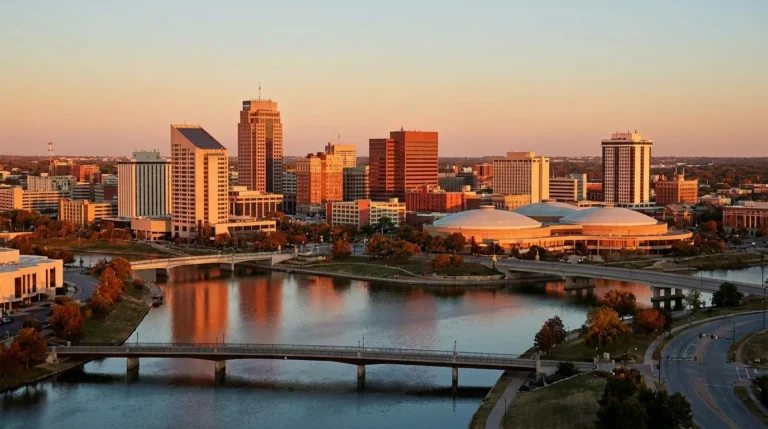
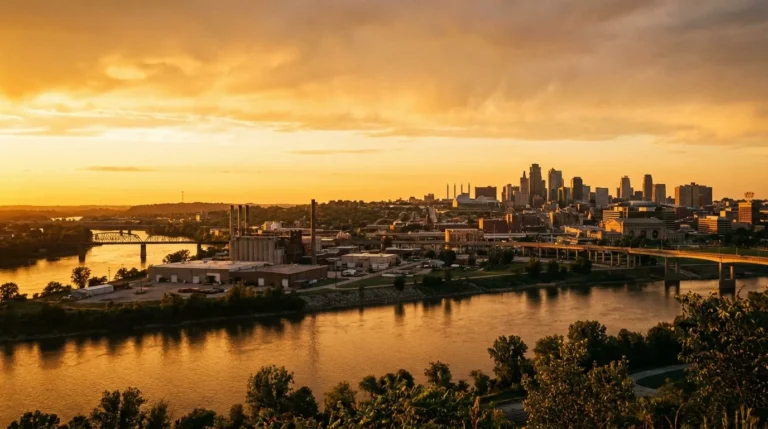
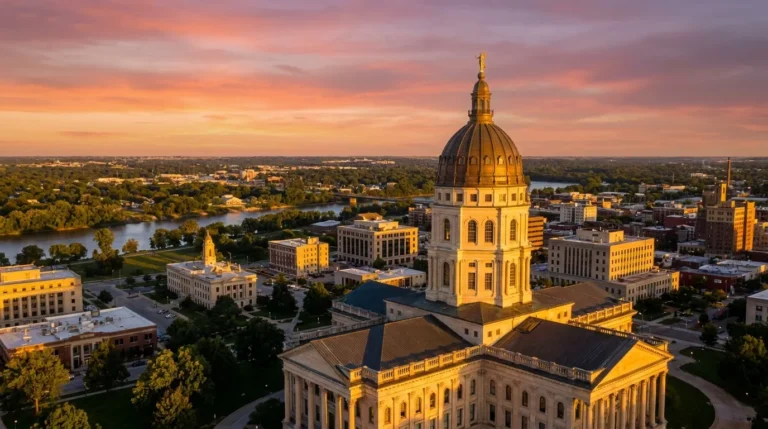
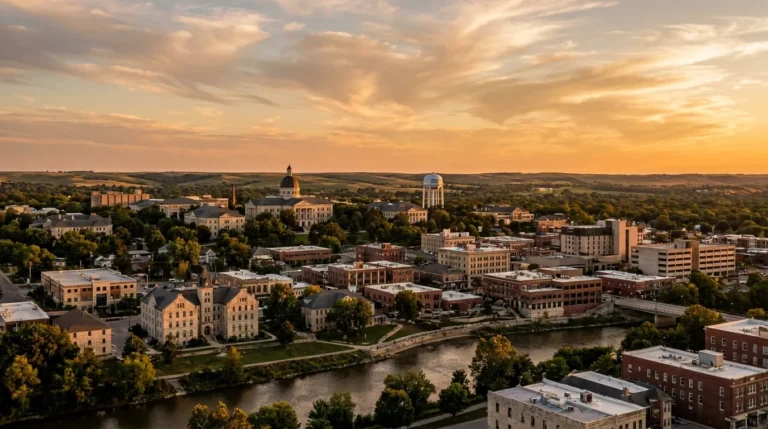
Kansas sits at the geographic center of the continental United States, bordered by Nebraska, Missouri, Oklahoma, and Colorado. It has about 2.9 million residents. The capital is Topeka, but Wichita (south, aerospace industry), Kansas City (part of a metro area that crosses into Missouri), and Overland Park (a wealthy Kansas City suburb) are the most economically and demographically significant cities.

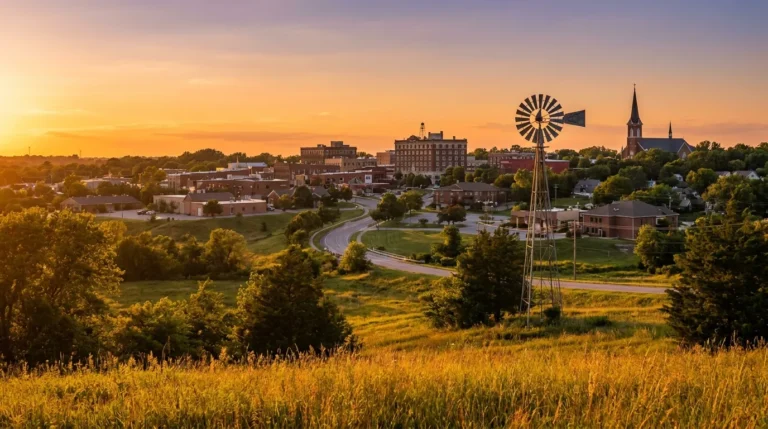
The state is dominated by agriculture: wheat (Kansas is the largest US producer), corn, sorghum, soybeans, and cattle. Vast plains stretch to the horizon, especially in the west. But Kansas also has heavy industry: Wichita is nicknamed the Air Capital of the World, with Cessna, Beechcraft, Spirit AeroSystems, and Bombardier building planes here for decades.

For immigrants, Kansas offers a low cost of living, welcoming communities, and jobs in agriculture, aeronautical manufacturing, meatpacking plants, and services. Hispanic communities have grown in cities like Garden City, Liberal, and Dodge City. The Brazilian community is very small. The state is conservative, with a strong Christian religious presence.

Population
2,937,150
Average monthly salary
53,500 USD/mo
38.5266°, -96.7265°

Featured places

Top 10 places in Kansas

The places most sought-after by immigrants in this region.

Kansas demographics: white majority, with Hispanics growing in the west

A predominantly white state. The Hispanic community grew rapidly, especially in meatpacking cities in the west.

Kansas has about 2.9 million residents. The composition is majority non-Hispanic white (about 75%), with Hispanics representing about 13% (mainly Mexicans and Central Americans). African Americans are about 6% (concentrated in Kansas City and Topeka). There is also a visible Native American community and growing Asian presence around Kansas City.

Cities like Garden City, Liberal, and Dodge City in the western part of the state became immigration destinations for Mexicans and Central Americans because of large meatpacking plants run by Tyson, Cargill, and National Beef. Entire neighborhoods are Spanish-speaking, with bilingual schools, Spanish-language Catholic churches, and Mexican restaurants. In some of these counties, Hispanics form the majority.

The Kansas City metro area (which extends into Missouri) is the most diverse region, with historic African American neighborhoods, Indian communities in Overland Park, and a growing Vietnamese presence. The Brazilian community in Kansas is very small, with no specific neighborhoods. English dominates; Spanish is common in the west.

2,937,150
Population
37 yrs
Median age
14/km²
Density
$69,740
Median income
per year
Urban population74.0%
Foreign-born7.4%
Languages spoken
  • English
  • Spanish (especially in the west)
  • Vietnamese
  • Mandarin
  • Hindi
  • +1 more
Main religions
  • Christian (Protestant, Catholic, Evangelical)
  • No religion
  • Muslim
  • Hindu
  • Traditional indigenous religions

Cost of living in Kansas: well below the American average

Rent, homes, and food are affordable. Overland Park is the most expensive area, but still reasonable by American standards.

Kansas has one of the lowest costs of living in the US. A one-bedroom apartment in Wichita rents for between $800 and $1,200. In Topeka, similar. In Overland Park (the most valued Kansas City suburb), between $1,200 and $1,700. In smaller interior towns, rents start from $600.

Buying a home is very affordable. Family homes in Wichita or Topeka start at $200,000 and rarely exceed $400,000. Overland Park has pricier homes (up to $700,000 in premium neighborhoods), but still accessible for a wealthy suburb. Food, gas, and utilities are below the national average.

Kansas has a progressive state income tax (reaching 5.7% in the top brackets) and a combined sales tax of about 8%. The food tax was recently reduced. Simple restaurant meals cost $10 to $20. Families can live comfortably and save money in Kansas, especially those earning in dollars.

91Cost index (US = 100)9% below US average
CategorySingleCoupleFamily (2 + 2)
iHousing$1,177$1,358$1,720
iFood$344$688$1,249
iTransport$453$769$996
iHealthcare$253$507$950
iChildcare$1,647
iOther$769$1,385$1,946
Monthly total$2,996$4,707$8,508

Source: U.S. BLS Consumer Expenditure Survey 2023 + BEA Regional Price Parities 2023 · Estimates in USD, monthly.

Housing in Kansas: large, affordable homes with generous yards

Affordable properties across the state. Overland Park is the premium suburb. Smaller cities offer modest homes at low prices.

In Wichita, homes in good neighborhoods (College Hill, Eastborough, Riverside) range from $220,000 to $450,000. Suburbs like Andover have larger family homes. In Topeka, prices are similar or slightly lower. Homes with four bedrooms and a large yard are within reach of the middle class.

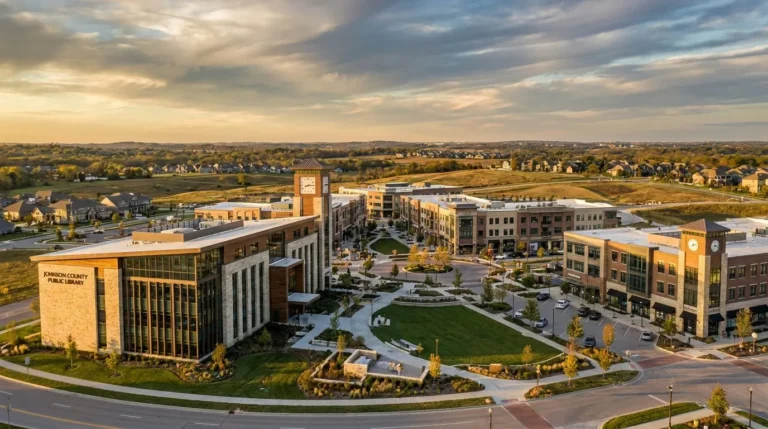
Overland Park, in Johnson County (part of the Kansas City metro), is the most prized suburb. Family homes range from $400,000 to $800,000 in good neighborhoods. Leawood and Prairie Village are even more expensive, with some homes exceeding $1 million. Even so, the cost is lower than equivalent suburbs in Chicago or Boston.

Smaller and interior cities have homes from $100,000 in rural communities. Lawrence (a college town) has its own market. For renting, requirements are standard: proof of income, credit history, references. Recent immigrants may need to pay a larger deposit or have a co-signer.

Purchase price (m²)
  • Center$1,900/m²
  • Outside$1,200/m²
3.0×
Price-to-income
7.0%
Mortgage rate (20y)
Recommended neighborhoods
  • Overland Park (Kansas City metro, top schools)
  • Leawood (Kansas City metro, exclusive)
  • Prairie Village (Kansas City metro, charming)
  • Olathe (Kansas City metro, family-friendly)
  • Andover (Wichita, family-friendly)
  • +3 more

Kansas job market: aerospace, agriculture, meatpacking, and logistics

Wichita is the center of aircraft manufacturing. Agriculture and food processing dominate the interior. Kansas City has a diversified economy.

Wichita is nicknamed the Air Capital of the World. Spirit AeroSystems (makes fuselages for Boeing and Airbus), Textron Aviation (Cessna, Beechcraft), Bombardier, and Airbus operate large factories in the city. The aerospace industry employs tens of thousands and attracts engineers from across the country. Its historic presence dates back to the early days of American aviation.

Agriculture is the oldest sector. Kansas is the largest wheat producer in the US and also strong in corn, sorghum, soybeans, and cattle. Large meatpacking plants (Tyson, Cargill, National Beef) process beef in the west, in cities like Garden City, Liberal, and Dodge City. These plants drove Mexican and Central American immigration.

Kansas City (the Kansas side) has a diversified economy: logistics (Kansas City is a major railroad and highway hub in the center of the US), telecommunications (Sprint was born there, now T-Mobile), digital services (Cerner became Oracle Health), engineering, and services. Overland Park has several corporate headquarters. Topeka is the state government center.

$53,500
Avg net salary
per month
$15,080
Minimum wage
per month
3.2%
Unemployment
65.6%
Labor force
Dominant sectors
  • Aerospace industry (Wichita)
  • Agriculture (wheat, corn, sorghum, cattle)
  • Meat processing (meatpacking plants)
  • Logistics (railroads, transport)
  • Energy (wind, oil, gas)
  • +3 more
Major employers
  • Spirit AeroSystems (Wichita)
  • Textron Aviation (Wichita)
  • Tyson Foods (multiple plants)
  • Cargill
  • Garmin (headquarters in Olathe)
  • +4 more

Education in Kansas: decent public universities and top suburban schools

University of Kansas (KU) and Kansas State (K-State) are the main universities. Overland Park has some of the best school districts in the US.

Children have the right to free public schooling regardless of immigration status. Quality varies by district. The best are typically Blue Valley and Shawnee Mission, in Overland Park and surrounding areas, frequently ranked among the best in the US. Olathe and Lawrence also have good schools. Small and rural cities vary more.

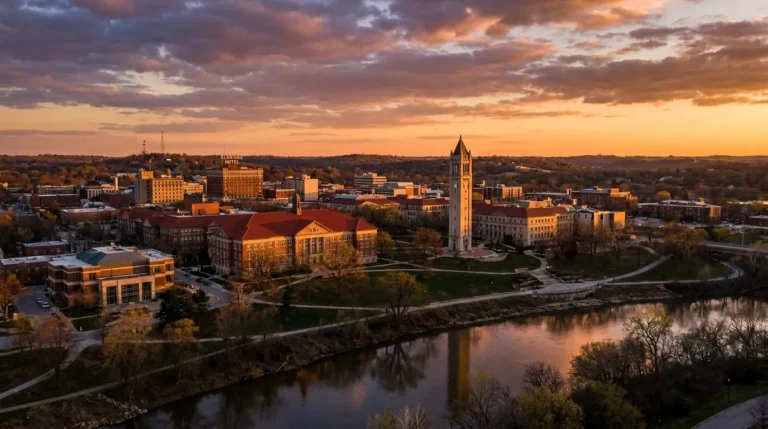
The main public universities are the University of Kansas (KU, in Lawrence, known for its Jayhawks basketball team and programs in medicine and journalism) and Kansas State University (K-State, in Manhattan, strong in agriculture, engineering, and veterinary sciences). Wichita State is another public option, in Wichita.

Private universities include Baker University, Friends University, and MidAmerica Nazarene. Public university tuition for residents is among the lowest in the US. Foreign students pay more, but it is still affordable. Community colleges with short technical programs are available across the state.

Literacy97.0%
Tertiary education34.6%
478
PISA score (avg)
$10,500
Private school
per year
Notable universities
  • University of Kansas (Lawrence)
  • Kansas State University (Manhattan)
  • Wichita State University
  • Pittsburg State University
  • Emporia State University
  • Washburn University (Topeka)
  • Baker University

Healthcare in Kansas: decent hospitals in large cities, shortage in the west

Kansas City and Wichita have good hospitals. Rural areas suffer from hospital closures and physician shortages.

The Kansas City metro area (including the Kansas side) has a good hospital network, with University of Kansas Medical Center (Kansas City, KS), Saint Luke's, and AdventHealth. Wichita has Ascension Via Christi, Wesley Medical Center, and Kansas Heart Hospital. Topeka has Stormont Vail and University of Kansas Health System.

The model is standard American: employer health insurance. Family premiums around $1,200 to $1,500. Kansas did not expand Medicaid under the ACA, so low-income families have more limited coverage than in liberal states. Documented immigrants qualify for some programs after a waiting period.

The major problem is the rural west: several small counties have hospitals that have closed or are already closed, and a critical shortage of physicians. Patients may need to travel hundreds of kilometers for specialized care. In cities with more Hispanic residents, Spanish-speaking doctors are more common. Community clinics (FQHCs) serve some cities on an income basis.

Healthcare index65.0 / 100
  • Life expectancyyears at birth
    77.4yrs
  • Doctors per 1kpracticing physicians
    2.4
  • Health spendper capita, per year
    $9,000
  • Public systemoverall quality rating
    Fair

Safety in Kansas: safe suburbs and mid-size cities, with isolated issues

Overland Park and Kansas City suburbs are among the safest in the US. Wichita and Topeka have neighborhoods with more problems.

Kansas has variable crime rates. Kansas City suburbs (Overland Park, Leawood, Prairie Village, Olathe) regularly rank among the safest cities in the US. Families concentrate there for the combination of good schools, safety, and quality of life.

Wichita and Topeka, the larger cities, have neighborhoods with higher crime rates. Wichita has more elevated rates in the central and northern parts; the residential west and east are calmer. Topeka has a similar pattern. Property crimes (theft, vandalism) are more common than violent crimes in most areas where professional immigrants tend to live.

Small towns and rural areas are generally very quiet. Meatpacking cities in the west (Garden City, Dodge City) have slightly higher crime than the rural average, but still lower than large cities. Tornadoes are an environmental concern: Kansas is at the heart of Tornado Alley. Sites like Niche.com help compare neighborhoods.

6.4
Homicides per 100k
per year
Safety index
53.0
Crime index
47.0
Safer neighborhoods
  • Overland Park
  • Leawood
  • Prairie Village
  • Olathe
  • Lenexa
  • Andover (Wichita)
  • Eastborough (Wichita)
  • Lawrence (residential neighborhoods)
  • Manhattan (college town)
Areas to avoid
  • Wichita downtown at night
  • Topeka central districts
  • South Kansas City

Transportation in Kansas: a car is essential, main airports in Wichita and Kansas City

Minimal public transit. A car is necessary throughout the state. ICT (Wichita) and MCI (Kansas City) serve flights.

Kansas is a state of long distances and low density. A car is practically mandatory even in Wichita and Kansas City. Public transportation is limited: Wichita has local buses, Kansas City has a regional system, but coverage is weak. Ride-hailing apps like Uber and Lyft work in mid-size cities.

The state's main airport is Wichita Dwight D. Eisenhower National Airport (ICT), with direct flights to major American hubs (Dallas, Denver, Chicago, Atlanta). Kansas City International (MCI), technically in Missouri but serving the entire metro area (including Kansas), is the most used airport by residents of the northeastern part of the state, with flights to many cities.

Interstate highways (I-70, I-35, I-135) cut through the state, connecting with Denver, St. Louis, Oklahoma City, and Wichita. Amtrak (Southwest Chief line) passes through some Kansas cities on its Chicago to Los Angeles route. Interstate buses (Greyhound, FlixBus) cover regional routes. Kansas is an important freight railroad hub.

20 min
Avg commute
30
Walkability
Airports
  • ICT (Wichita Dwight D. Eisenhower National)
  • MCI (Kansas City International, in Missouri but serves Kansas)
  • MHK (Manhattan Regional)
  • FOE (Topeka Regional)
  • Bike infrastructure

Kansas climate: continental, with hot summers, cold winters, and many tornadoes

Very hot, dry summers in the west and humid in the east. Cold winters with moderate snow. Frequent tornadoes in spring.

Kansas has a continental climate with marked differences between east and west. The east (Kansas City, Topeka) is more humid, with hot, muggy summers (averages of 30 to 35 Celsius) and cold winters with moderate snowfall. Afternoon thunderstorms are common in summer.

The western part of the state (Hays, Garden City) is drier, nearly semi-arid. Summers are hot and dry, with temperatures frequently above 35 Celsius. Winters can bring intense cold waves with temperatures below minus 10 Celsius, but snowfall is less abundant than in the east. Strong winds are a constant throughout the year.

Kansas is at the heart of Tornado Alley. Tornado season runs from April to June, peaking in May. The state averages about 100 tornadoes per year. Homes typically have basements or shelters. Severe storms with hail, strong winds, and lightning are part of summer. Autumn is the most pleasant season, with clear blue skies and mild temperatures.

Sunny days / year220 days
Avg high (°F)
  • 44°J
  • 49°F
  • 59°M
  • 68°A
  • 78°M
  • 88°J
  • 93°J
  • 91°A
  • 83°S
  • 71°O
  • 57°N
  • 46°D
Avg low (°F)
  • 22°J
  • 26°F
  • 36°M
  • 45°A
  • 56°M
  • 66°J
  • 70°J
  • 69°A
  • 60°S
  • 47°O
  • 35°N
  • 25°D
Rainfall (")
  • 1"J
  • 1"F
  • 2"M
  • 3"A
  • 5"M
  • 5"J
  • 4"J
  • 4"A
  • 3"S
  • 3"O
  • 1"N
  • 1"D

Kansas culture: cowboys, basketball, rodeos, and Kansas City's food scene

Strong rural tradition, with rodeos and county fairs. Kansas City BBQ is nationally famous. College basketball is a religion.

Kansas has a strong American rural tradition. Rodeos are part of the cultural calendar, especially in Dodge City (the historic Old West town). County fairs in summer, with cattle competitions, fried food, and country music shows, animate small towns. Country and gospel music are popular.

College basketball is taken almost as a religion. The University of Kansas (KU Jayhawks, in Lawrence) and Kansas State (Wildcats, in Manhattan) have a historic rivalry called the Sunflower Showdown. KU is one of the most storied brands in American college basketball, with multiple NCAA titles. Games fill gyms and bars.

Kansas City is nationally famous for its BBQ (Kansas City-style barbecue, with sweet and smoky sauce). Restaurants like Joe's Kansas City BBQ, Arthur Bryant's, and Gates draw tourists. The city has a historic jazz scene (Charlie Parker was born there) and museums like the American Jazz Museum. Wichita has a smaller but growing cultural scene.

150
Major museums
Notable dishes
  • Kansas City BBQ (smoked meat with sweet sauce)
  • Burnt ends (smoked brisket tips)
  • Bierocks (stuffed rolls, German heritage)
  • Chicken-fried steak with gravy
  • Mexican food (in meatpacking cities)
  • +2 more
Annual events
  • Dodge City Days (Old West festival, July-August)
  • Kansas State Fair (Hutchinson, September)
  • Country Stampede (country music festival, June)
  • American Royal (rodeo and BBQ in Kansas City, autumn)
  • KU vs K-State Basketball Sunflower Showdown
  • +2 more

Kansas's main economic sectors

Aerospace industry in Wichita, wheat and cattle farming, meatpacking, wind energy, and logistics.

The aerospace industry is Wichita's hallmark. Spirit AeroSystems, Textron Aviation (Cessna, Beechcraft), Bombardier, and Airbus operate large factories, building commercial, business, and military aircraft. Tens of thousands of skilled jobs depend on this sector. Wichita exports planes worldwide.

Agriculture is the historic sector. Kansas is the largest wheat producer in the US and also strong in corn, sorghum, soybeans, and cattle. Large meatpacking plants (Tyson, Cargill, National Beef) process beef in the west and employ thousands of Hispanic immigrants. Agricultural cooperatives are part of the rural economic fabric.

Energy is a growing sector. Kansas is one of the leading wind energy generators in the US, taking advantage of Great Plains winds. Oil and natural gas are also produced. Logistics is central because of the geographic position: Kansas City is a railroad and highway hub. Technology and telecommunications are growing in Overland Park (Garmin, T-Mobile, Oracle Health).

  • GDPgross domestic product
    $200.0B
  • GDP per capitaoutput per resident
    $68,100
  • GDP growth (yr)economy expanding
    +1.8%
Top sectors
  • Aerospace industry (Wichita)
  • Agriculture (wheat, corn, sorghum, cattle)
  • Meat processing (meatpacking plants)
  • Energy (wind, oil, gas)
  • Logistics and freight rail
  • +3 more

Immigrant communities in Kansas

Kansas has around 200,000 immigrants, with a strong Mexican presence in meatpacking towns and Somali and Vietnamese communities in Garden City and Wichita.

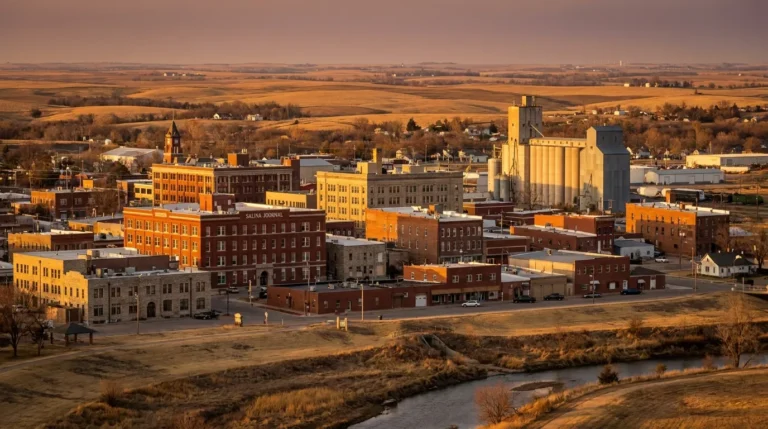
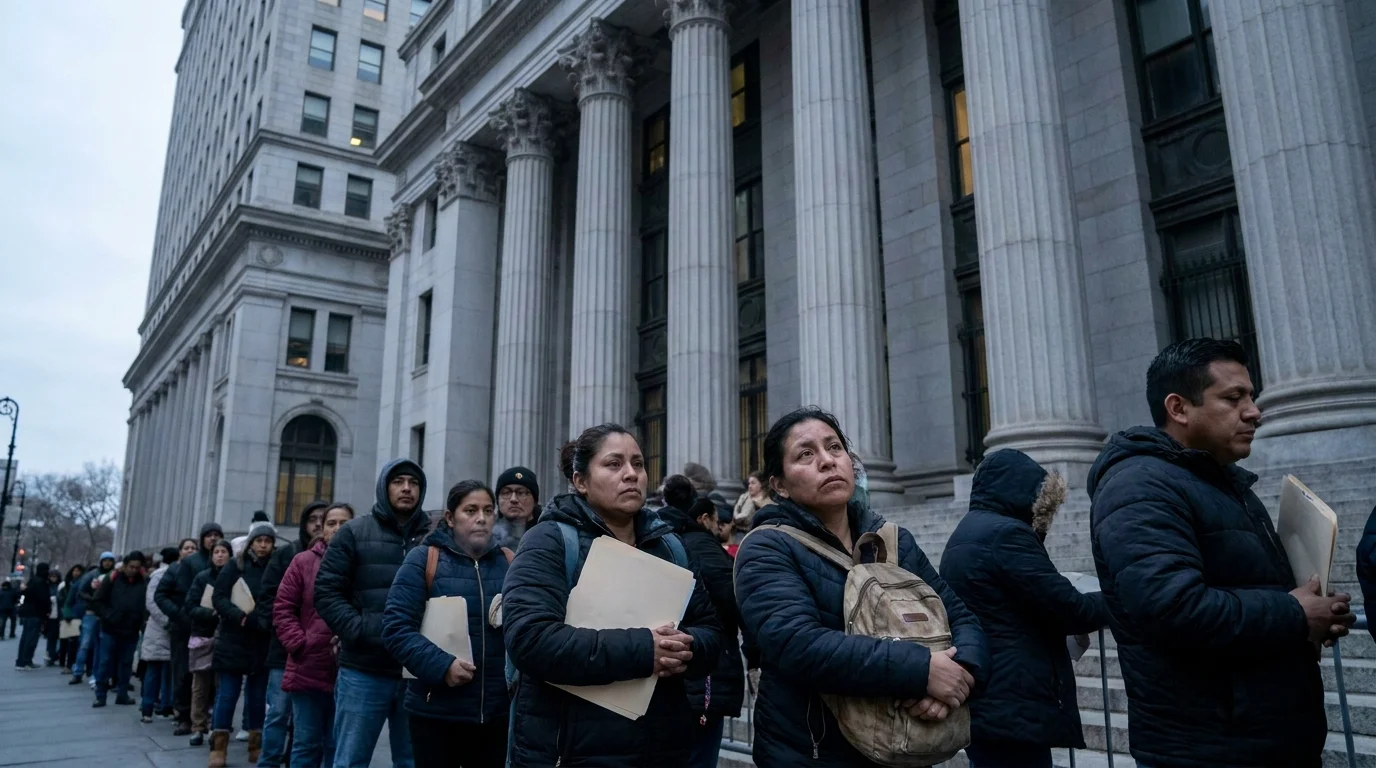
Kansas is home to about 200,000 people born outside the United States, close to 7% of the population. Most are Mexican and concentrated in the southwest of the state, in meatpacking towns like Garden City, Liberal, and Dodge City, where the meat industry sustains entire Hispanic neighborhoods. Kansas City, on the eastern side, has long-established Mexican and Central American communities, especially in Argentine and Armourdale. Wichita is home to one of the largest Vietnamese communities in the Midwest, alongside Laotian, Cambodian, and more recently Burmese clusters. Somalis arrived in Garden City from the 2000s on, drawn by meatpacking work, and run their own mosques and markets.

The nearest Mexican consulate is in Kansas City on the Missouri side and serves the entire state. Other countries are typically covered by Chicago. El Centro Inc., based in Kansas City Kansas, serves Hispanic families with legal, educational, and health services. Catholic Charities of Northeast Kansas coordinates refugee resettlement in Wichita and Garden City. Vietnamese centers and mosques in Wichita and Garden City act as entry points for newcomers, and community clinics provide services in Spanish, Vietnamese, and Somali.

200,000
Foreign-born residents
estimated
Top countries of origin
  • Mexico
  • Vietnam
  • India
  • Somalia
  • El Salvador
Main immigrant hubs
  • Wichita
  • Garden City
  • Kansas City
  • Dodge City
  • Liberal
Foreign consulates
  • Mexican Consulate General in Kansas City (Missouri), with jurisdiction over Kansas
  • Other countries served by Chicago
Community organizations
  • El Centro Inc.
  • Catholic Charities of Northeast Kansas
  • International Rescue Committee Wichita
  • Kansas/Missouri Dream Alliance

Latest posts

Posts about Kansas

Coverage and updates related to this destination.