Visto n' Visa
Blog
Notícias e artigos
Destinations
Careers
Immigrants

Want to live and work in Illinois?

Personalized immigration plan with eligible visas, costs, and next steps for your goal!

If you are not eligible, you will know exactly why and what to do to improve your approval chances.

Save up to 12 hours in meetings

No pointless assessments.

Save up to 90%

Save money on vague or unfocused consultations

Avoid Fraud and Mistakes

One mistake can cost you your visa

Total Impartiality

Zero commercial bias

Decide with peace of mind

No toxic urgency

Fast and Accurate

Answers in minutes, no guesswork

Visit Illinois

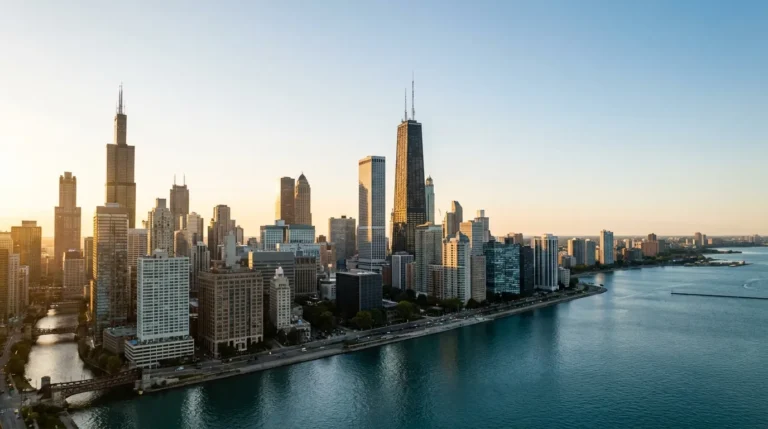
Chicago at the center, with finance, architecture, and world-famous food. Midwest with an urban accent.

Illinois is located in the Midwest of the United States, with Chicago as its largest city and main economic engine. It is the sixth most populous state in the country, with about 12 million inhabitants. The political capital is Springfield (a small city in the center of the state), but Chicago dominates in almost everything: economy, culture, sports, and media.

Chicago is the third-largest city in the US. It has the largest airport in the Midwest (O'Hare), the world's oldest futures exchanges (CME Group, trading agricultural and financial derivatives), historic skyscrapers, and one of the richest urban cultures in the country. The city is home to the headquarters of companies such as Boeing (formerly), McDonald's, United Airlines, and Walgreens.

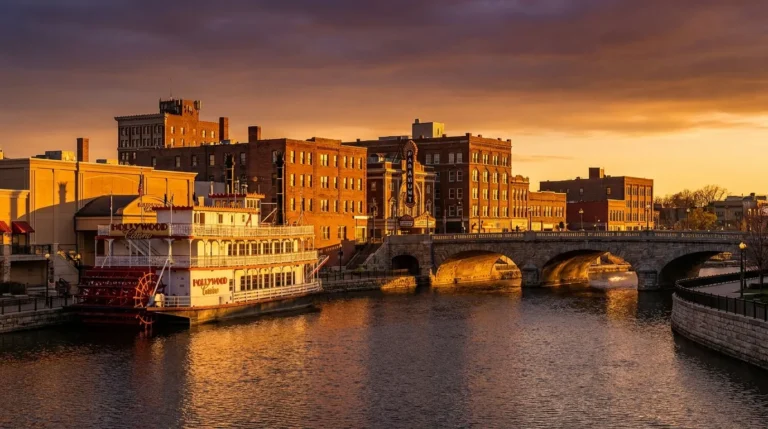
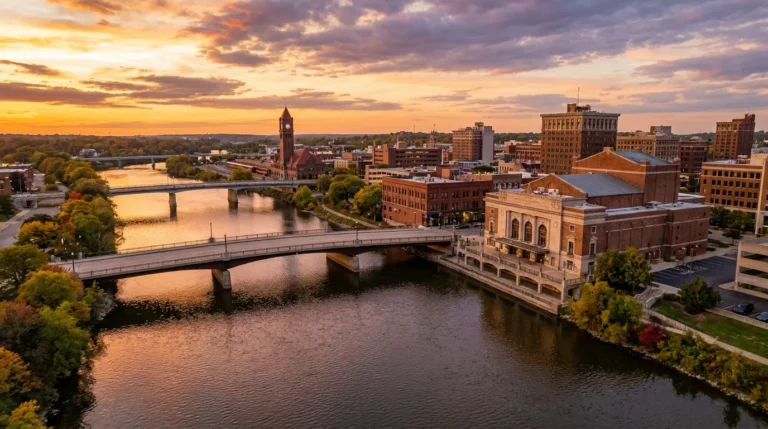
The rest of the state is more agricultural and industrial. Cities like Peoria, Rockford, Champaign-Urbana (university), and Bloomington-Normal (State Farm) have their own weight. Illinois has small Brazilian communities, mainly in Chicago and surrounding areas (Lincoln Square, Glenview, Mount Prospect), and enormous Mexican, Polish, Irish, and Indian communities in Chicago.

Population
12,582,032
Average monthly salary
63,500 USD/mo
40.3495°, -88.9861°

Featured places

Top 10 places in Illinois

The places most sought-after by immigrants in this region.

Illinois demographics: a diverse state, with Chicago concentrating immigrants

Chicago has some of the largest Polish, Mexican, and Irish communities in the US. Small but present Brazilian community.

Illinois has about 12 million inhabitants. The composition is diverse: non-Hispanic Whites form just over half the population. Hispanics (mainly Mexicans) are about 18%, African Americans about 14% (with a strong historical presence in Chicago), and Asians are growing, especially Indians and Chinese.

Chicago is famous for its historic immigrant communities: Poles (one of the largest Polish communities in the world outside Poland), Irish, Italians, Greeks, Germans, Ukrainians, Lithuanians, and Swedes. More recently, Mexicans (in neighborhoods like Pilsen and Little Village), Indians (Devon Avenue), Filipinos, Chinese (Chinatown), and Nigerians have grown.

The Brazilian community is small but exists, mainly in neighborhoods on Chicago's north side and in suburbs such as Mount Prospect, Glenview, and Schaumburg. There are restaurants, Portuguese-language evangelical churches, and some schools with Portuguese programs. Other Latino immigrants (Puerto Ricans, Salvadorans) are more visible.

12,582,032
Population
39 yrs
Median age
84/km²
Density
$78,430
Median income
per year
Urban population88.0%
Foreign-born14.0%
Languages spoken
  • English
  • Spanish
  • Polish (Chicago)
  • Mandarin
  • Tagalog (Filipino)
  • +3 more
Main religions
  • Christian (Catholic, Protestant, Orthodox)
  • No religion
  • Jewish
  • Muslim
  • Hindu
  • +1 more

Cost of living in Illinois: Chicago is expensive, the rest of the state is affordable

Chicago has an average cost for a large American city. Smaller cities in the state are very cheap.

Chicago is expensive, but not as expensive as New York or San Francisco. A one-bedroom apartment in good neighborhoods (River North, Lincoln Park, Wicker Park) rents for $1,800 to $2,400. In more distant neighborhoods (Logan Square, Ravenswood), $1,400 to $1,700. Suburbs vary by proximity to downtown and school quality.

Outside Chicago, Illinois is much more affordable. Cities like Peoria, Rockford, Champaign, and Bloomington have rentals starting from $800. Suburban homes in mid-sized cities cost $200,000 to $350,000. Gas and energy are at or slightly below the national average.

Illinois has a flat state income tax (4.95%), which is considered high compared to states with no income tax. Property taxes are among the highest in the US, especially in Chicago-area counties (Cook). Combined sales tax in Chicago exceeds 10%. Well-established families can live comfortably; those just starting out need to research carefully.

100Cost index (US = 100)same as US average
CategorySingleCoupleFamily (2 + 2)
iHousing$1,303$1,503$1,904
iFood$381$762$1,383
iTransport$501$852$1,102
iHealthcare$281$561$1,052
iChildcare$1,824
iOther$852$1,533$2,154
Monthly total$3,318$5,211$9,419

Source: U.S. BLS Consumer Expenditure Survey 2023 + BEA Regional Price Parities 2023 · Estimates in USD, monthly.

Housing in Illinois: skyscrapers in Chicago, brick houses in the suburbs

Urban apartments in downtown Chicago. Suburban houses with yards in the outskirts. Mid-sized cities have large houses at low prices.

Chicago has one of the most striking urban landscapes in the world, with skyscrapers and historic buildings. Apartments downtown (Loop, River North, Streeterville) and in nearby neighborhoods (Lincoln Park, Lakeview, Wicker Park) sell for $350,000 to $700,000 for two bedrooms. Brick houses (bungalows and two-flats) in more distant neighborhoods range from $300,000 to $600,000.

Chicago's suburbs offer great variety. Naperville, Evanston, Glenview, Wilmette, and Northbrook are known for excellent schools and family homes, with prices between $500,000 and $1.5 million. More affordable suburbs (Schaumburg, Arlington Heights, Mount Prospect) fall below that range.

In mid-sized cities in the state (Peoria, Champaign-Urbana, Bloomington), three- or four-bedroom homes with yards sell for $200,000 to $400,000. Rental requirements are standard: proof of income (usually 3 times the rent), credit history, and references. Neighborhoods with more immigrants have landlords accustomed to the profile.

Purchase price (m²)
  • Center$2,700/m²
  • Outside$1,700/m²
3.5×
Price-to-income
7.0%
Mortgage rate (20y)
Recommended neighborhoods
  • Lincoln Park (Chicago, families)
  • Lakeview (Chicago, young adults)
  • Wicker Park (Chicago, creative)
  • Naperville (suburb, top schools)
  • Evanston (suburb, university)
  • +4 more

Job market in Illinois: finance, manufacturing, agriculture, and technology

Chicago has global weight in finance and derivatives. Strong manufacturing outside Chicago. Agriculture in the central and southern state.

Chicago is one of the leading financial centers in the world. CME Group (futures market, successor to the Chicago Board of Trade) is the world's largest derivatives exchange, trading contracts on grains, oil, interest rates, and currencies. Banks like JPMorgan Chase and Goldman Sachs, and consulting firms, have large operations there.

Companies headquartered in Chicago or the region include McDonald's (Chicago), United Airlines (Chicago), Walgreens (Deerfield), State Farm (Bloomington), Caterpillar (Peoria), Allstate (Northbrook), Boeing (headquarters moved to Arlington, Virginia, but operations continue), and Mondelez. The pharmaceutical and food industries are also strong.

Agriculture is a historic sector in the central and southern state. Illinois produces corn and soybeans on a large scale. Technology is growing in Chicago, especially fintech (1871, Salesforce, and Google have offices). The University of Chicago and Northwestern drive research and biotechnology. Healthcare and education are also pillars.

$63,500
Avg net salary
per month
$29,120
Minimum wage
per month
4.8%
Unemployment
64.7%
Labor force
Dominant sectors
  • Finance and derivatives (Chicago)
  • Manufacturing (Caterpillar, John Deere)
  • Agriculture (corn, soybeans)
  • Technology and fintech (Chicago)
  • Healthcare and biotechnology
  • +3 more
Major employers
  • Walgreens Boots Alliance (Deerfield)
  • United Airlines (Chicago)
  • McDonald's (Chicago)
  • Boeing (operations in Chicago)
  • Caterpillar (Peoria)
  • +5 more

Education in Illinois: elite universities and varied public schools

University of Chicago and Northwestern are among the best in the US. Chicago suburbs have first-rate public schools.

Illinois has two elite names in university education: the University of Chicago (private, world-renowned in economics, with 100+ Nobel Prize winners affiliated) and Northwestern University (private, in Evanston, strong in journalism, business, and law). Both are extremely selective.

The University of Illinois Urbana-Champaign (public) is a reference in engineering, computer science, and agriculture. Other universities include Illinois Institute of Technology, DePaul, Loyola (Chicago), and Illinois State. Public tuition for state residents is affordable; international students pay more.

In public schools, Chicago suburban districts like New Trier (Winnetka), Hinsdale, Naperville 203, and Stevenson High School (Lincolnshire) rank among the best in the US. Chicago Public Schools has uneven quality, but magnet schools and selective enrollment schools are excellent options within the city's public system.

Literacy97.0%
Tertiary education36.7%
478
PISA score (avg)
$13,700
Private school
per year
Notable universities
  • University of Chicago
  • Northwestern University (Evanston)
  • University of Illinois Urbana-Champaign
  • University of Illinois Chicago (UIC)
  • Illinois Institute of Technology
  • DePaul University (Chicago)
  • Loyola University Chicago
  • Illinois State University

Healthcare in Illinois: top hospitals in Chicago, uneven quality outside

Chicago has some of the best hospitals in the US. Rural areas suffer from shortages.

Chicago has some of the best hospitals in the US. Northwestern Memorial, the University of Chicago Medical Center, Rush University Medical Center, and Lurie Children's Hospital (pediatrics) all rank in national listings. The city is a destination for patients from across the Midwest seeking specialized treatment.

The model is the standard American one: employer-provided health insurance. Family premiums of $1,300 to $1,800, with the employer covering part. Illinois expanded Medicaid under the ACA, so low-income families have better access than in more conservative states. Documented immigrants qualify after a waiting period.

The issue is rural Illinois: several counties in the southern part of the state have hospitals closing and a shortage of doctors. In Chicago and suburbs, Brazilian and Hispanic doctors serve specific communities (Lincoln Square, Mexican neighborhoods). Community clinics (FQHCs) charge on a sliding-fee scale for those without insurance.

Healthcare index68.0 / 100
  • Life expectancyyears at birth
    78.0yrs
  • Doctors per 1kpracticing physicians
    2.8
  • Health spendper capita, per year
    $9,300
  • Public systemoverall quality rating
    Good

Safety in Illinois: calm suburbs, with problems in parts of Chicago

Chicago suburbs rank among the safest in the US. Parts of Chicago have a reputation for violence, but most neighborhoods are calm.

The suburbs of the Chicago metropolitan area are generally very safe. Naperville, Wilmette, Glenview, Hinsdale, Buffalo Grove, and Vernon Hills rank among the safest cities in the US. Families with children concentrate there for the combination of good schools and low crime.

Chicago has a bad reputation because of gun violence concentrated in a few neighborhoods on the south and west sides (Englewood, West Garfield Park, Austin). Those neighborhoods do have high rates of violent crime. But most of the city where professional immigrants live (north side, central neighborhoods) is reasonably safe, comparable to other large American cities.

Mid-sized cities in the state (Peoria, Rockford) have crime slightly above average. Champaign-Urbana and Bloomington (university cities) are calm. It is worth researching specific neighborhoods in Chicago before renting; sites like Niche.com and the Chicago Police Department portal have detailed crime maps.

11.2
Homicides per 100k
per year
Safety index
47.0
Crime index
53.0
Safer neighborhoods
  • Naperville
  • Wilmette
  • Glenview
  • Hinsdale
  • Buffalo Grove
  • Vernon Hills
  • Lincoln Park (Chicago)
  • Lakeview (Chicago)
  • Evanston
  • Oak Park
  • Mount Prospect
Areas to avoid
  • Chicago West Side (Austin)
  • Chicago South Side (Englewood)
  • East St. Louis
  • Rockford downtown at night

Transportation in Illinois: Chicago has great public transit, the rest depends on a car

Chicago has a metro and regional trains. O'Hare Airport is the largest air hub in the Midwest. Outside the city, a car is essential.

Chicago is one of the few American cities where you can live well without a car. The CTA (Chicago Transit Authority) operates an elevated metro (eight lines, known as the L) and buses throughout the city. Metra regional trains connect Chicago to the suburbs. Ride-hailing apps like Uber and Lyft are omnipresent.

O'Hare Airport (ORD) is one of the largest and busiest in the world, a hub for United Airlines and American Airlines, with direct flights to every continent (including Sao Paulo). Midway (MDW) is the city's second airport, mainly used by Southwest Airlines for domestic flights.

Outside Chicago, a car is essential. Interstate highways (I-90, I-94, I-55, I-57) cross the state. Amtrak trains (Union Station) connect Chicago to several American cities, including St. Louis, Detroit, Milwaukee, and distant cities like Los Angeles and Seattle. Interstate buses cover regional routes.

8
Metro lines
145
Metro stations
28 min
Avg commute
55
Walkability
Airports
  • ORD (Chicago O'Hare International)
  • MDW (Chicago Midway International)
  • PIA (Peoria International)
  • RFD (Chicago Rockford International)
  • BMI (Bloomington-Normal)
  • International airport
  • Bike infrastructure

Illinois climate: four extreme seasons, harsh winters

Hot, humid summers. Very cold, snowy, windy winters. Short but pleasant spring and fall.

Illinois has a continental climate with four well-defined and extreme seasons. Summer (June to August) is hot and humid, with averages of 28-32°C in Chicago and hotter in the south. Storms, tornadoes, and heat waves are common. Lake Michigan moderates temperatures somewhat in Chicago's lakefront neighborhoods.

Winter is harsh. In Chicago, averages are between -7°C and -1°C, with temperatures that can drop to -20°C or lower during polar vortex events. It snows considerably, averaging 90-100 cm per winter. Winds off the lake (so-called lake effect) make the wind chill even worse. The southern part of the state has a less severe winter, but still cold.

Spring (April to May) can be unstable, with temperatures varying widely. Fall (September to October) is the most beautiful season, with orange and red foliage and pleasant temperatures. Tornadoes can occur especially in April and May, mainly in the central and southern state.

Sunny days / year189 days
Avg high (°F)
  • 33°J
  • 37°F
  • 48°M
  • 60°A
  • 71°M
  • 81°J
  • 85°J
  • 83°A
  • 76°S
  • 63°O
  • 49°N
  • 38°D
Avg low (°F)
  • 19°J
  • 23°F
  • 32°M
  • 41°A
  • 52°M
  • 62°J
  • 68°J
  • 66°A
  • 59°S
  • 47°O
  • 35°N
  • 25°D
Rainfall (")
  • 1"J
  • 1"F
  • 2"M
  • 4"A
  • 4"M
  • 4"J
  • 4"J
  • 4"A
  • 3"S
  • 3"O
  • 2"N
  • 2"D

Illinois culture: blues, jazz, deep-dish pizza, and Chicago architecture

Chicago is a reference for blues, jazz, comedy (Second City), food, and architecture. An intense cultural life year-round.

Chicago is one of the culturally richest cities in the US. It is the birthplace of Chicago blues (Muddy Waters, Buddy Guy, Howlin' Wolf) and an important part of jazz history. Legendary comedians came out of Second City: Tina Fey, Stephen Colbert, Bill Murray, Steve Carell. Music, theater, and stand-up are woven into the urban fabric.

Chicago food is iconic. Deep-dish pizza (thick Chicago-style pizza), Chicago-style hot dog (with cucumber, mustard, onion, green relish, tomato, and celery salt, but never ketchup), Italian beef sandwich, and cheese-and-caramel popcorn (Garrett Popcorn). Ethnic neighborhoods offer excellent cooking: Polish, Mexican, Vietnamese, Indian, Ethiopian.

Sports carry enormous weight: the Bulls, Bears, Cubs, White Sox, and Blackhawks dominate conversations. Chicago architecture is a world reference: the birthplace of the modern skyscraper, with works by Frank Lloyd Wright (Oak Park), Mies van der Rohe, and Skidmore Owings & Merrill. Museums like the Art Institute and the Field Museum are world class.

600
Major museums
Notable dishes
  • Deep-dish pizza (Chicago style)
  • Chicago-style hot dog (no ketchup)
  • Italian beef sandwich
  • Garrett's popcorn (cheese and caramel)
  • Polish sausage
  • +3 more
Annual events
  • Lollapalooza (Chicago, August, music festival)
  • Taste of Chicago (July)
  • Pitchfork Music Festival (July)
  • Chicago Air and Water Show (August)
  • Chicago Marathon (October)
  • +3 more
UNESCO sites
  • Cahokia Mounds Historic Site

Illinois's main economic sectors

Finance and derivatives in Chicago, industrial manufacturing, grain agriculture, and growing technology.

Finance is Chicago's hallmark. CME Group, successor to the Chicago Board of Trade founded in 1848, is the world's largest derivatives exchange. Banks, wealth managers, and trading firms have large operations. The futures and options industry employs tens of thousands.

Manufacturing is still strong outside Chicago. Caterpillar (Peoria) makes heavy machinery, Deere & Company (Moline) makes tractors, and the state has steel, chemical, and pharmaceutical factories. Boeing had its headquarters in Chicago for years. The food industry (Mondelez, Kraft Heinz) also has weight.

Agriculture in the central and southern state produces corn and soybeans on a large scale, driving American exports. Logistics is central: Chicago is the largest rail hub in the US, and O'Hare is a global air hub. Technology, fintech, and biotechnology are growing rapidly in Chicago, with universities feeding talent.

  • GDPgross domestic product
    $1,050.0B
  • GDP per capitaoutput per resident
    $83,400
  • GDP growth (yr)economy expanding
    +1.9%
Top sectors
  • Finance and derivatives (CME Group)
  • Industrial manufacturing (machinery, chemicals)
  • Agriculture (corn, soybeans)
  • Technology and fintech
  • Healthcare and biotechnology
  • +3 more

Immigrant communities in Illinois

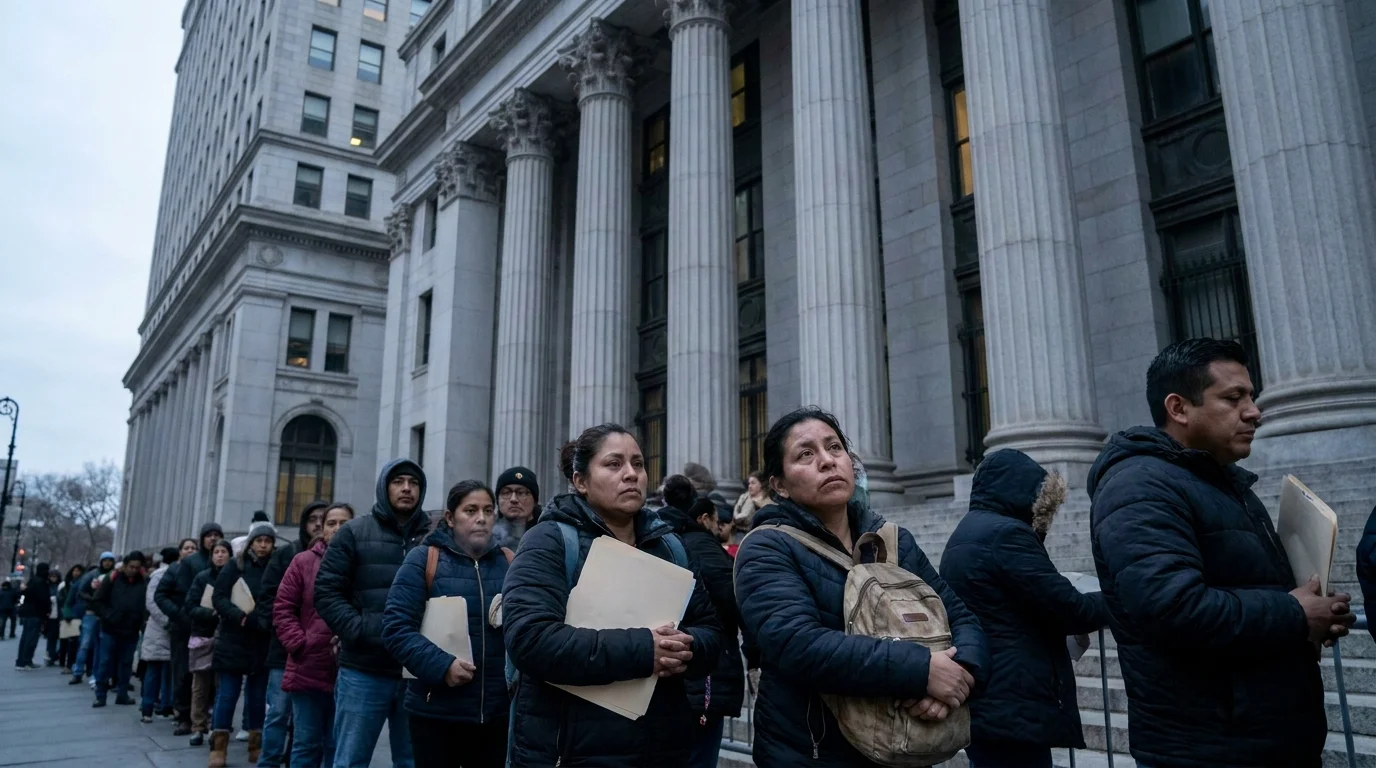
Around 1.9 million immigrants live in Illinois, with Mexicans, Poles, and Indians forming the largest communities, almost all concentrated in the Chicago area.

Illinois is home to roughly 1.9 million people born outside the United States, more than 14% of the state's population. The vast majority live in the Chicago metro area. Mexicans form the largest community and dominate Pilsen, Little Village, and the neighboring city of Cicero, with markets, bakeries, and bilingual schools lining Cermak Road. Poles are the second largest origin and have made Chicago the largest Polish community outside Poland, anchored in Avondale, Jefferson Park, and the northwest suburbs. Indians cluster on Devon Avenue, in West Ridge, where sari shops, vegetarian restaurants, and Hindu temples sit side by side. The South Side Chinatown, one of the oldest in the country, remains active, and Filipinos have a steady presence in Albany Park and across the suburbs. Smaller cities like Aurora, Joliet, Waukegan, Elgin, and Rockford also host established Hispanic communities, many tied to industry and agribusiness.

Chicago has one of the largest consular networks in the interior of the country, with consulates-general of Mexico, Poland, India, China, the Philippines, Korea, El Salvador, Guatemala, Lithuania, and many others. The Illinois Coalition for Immigrant and Refugee Rights (ICIRR) coordinates dozens of grassroots organizations. The Polish American Association offers English classes and newcomer services. The Indo-American Center, in West Ridge, serves South Asian families. Asian Americans Advancing Justice Chicago provides legal aid in more than ten languages. Community clinics and pro bono law offices operate in Spanish, Polish, Mandarin, Hindi, and Tagalog in nearly every immigrant neighborhood.

1,900,000
Foreign-born residents
estimated
Top countries of origin
  • Mexico
  • Poland
  • India
  • China
  • Philippines
Main immigrant hubs
  • Chicago
  • Cicero
  • Aurora
  • Joliet
  • Waukegan
Foreign consulates
  • Mexican Consulate General in Chicago
  • Polish Consulate General in Chicago
  • Indian Consulate General in Chicago
  • Chinese Consulate General in Chicago
  • Philippine Consulate General in Chicago
  • +1 more
Community organizations
  • Illinois Coalition for Immigrant and Refugee Rights (ICIRR)
  • Polish American Association
  • Indo-American Center
  • Asian Americans Advancing Justice Chicago

Latest posts

Posts about Illinois

Coverage and updates related to this destination.