Visto n' Visa
Blog
Notícias e artigos
Destinations
Careers
Immigrants

Want to live and work in South Carolina?

Personalized immigration plan with eligible visas, costs, and next steps for your goal!

If you are not eligible, you will know exactly why and what to do to improve your approval chances.

Save up to 12 hours in meetings

No pointless assessments.

Save up to 90%

Save money on vague or unfocused consultations

Avoid Fraud and Mistakes

One mistake can cost you your visa

Total Impartiality

Zero commercial bias

Decide with peace of mind

No toxic urgency

Fast and Accurate

Answers in minutes, no guesswork

Inside South Carolina

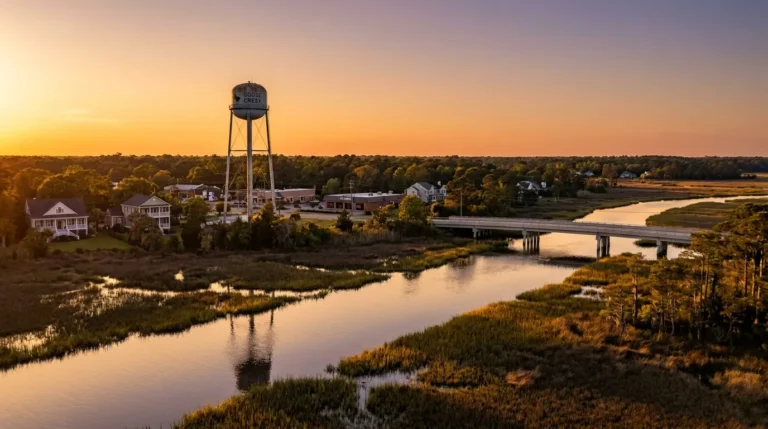
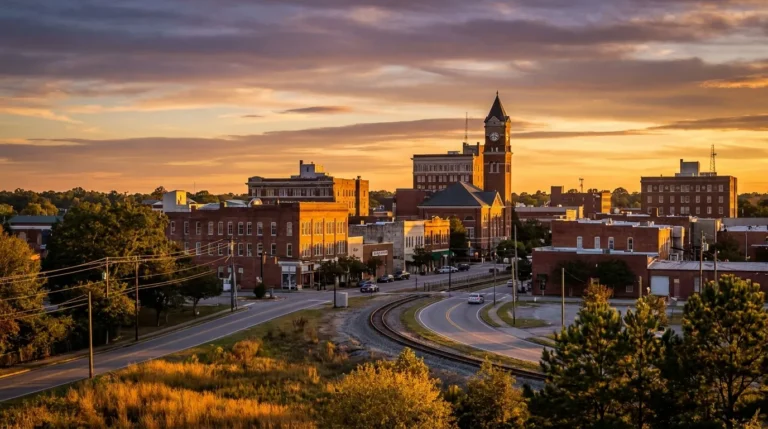
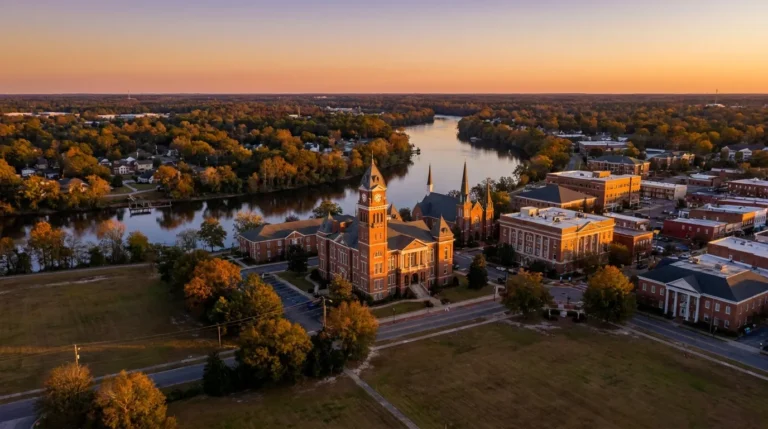
Beaches, history, BMW, and the Southern pace. A mix of tourism, industry, and coastal charm.

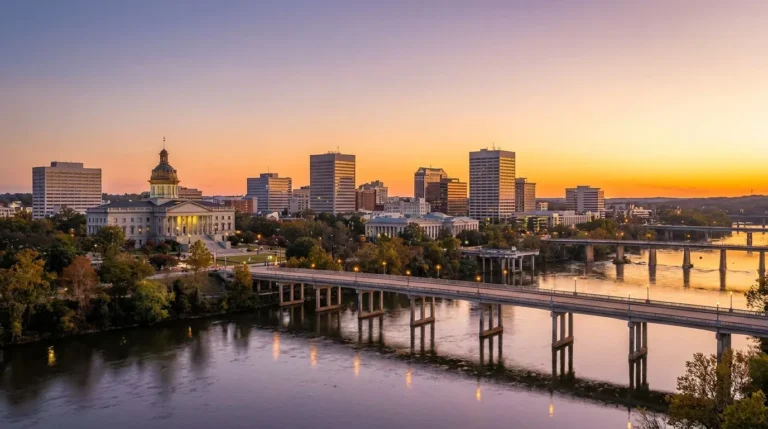
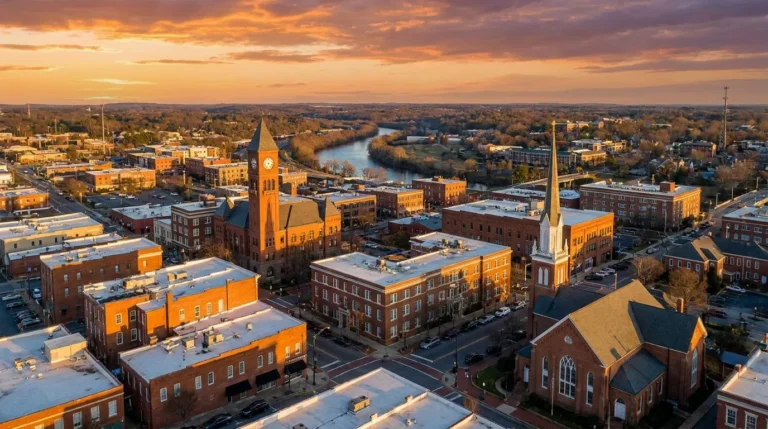
South Carolina sits in the American Southeast, between North Carolina and Georgia. The main cities are Columbia (the capital), Charleston (historic, on the coast), Greenville (in the west, an industrial hub), Myrtle Beach (beach tourism), and Hilton Head (luxury tourism).

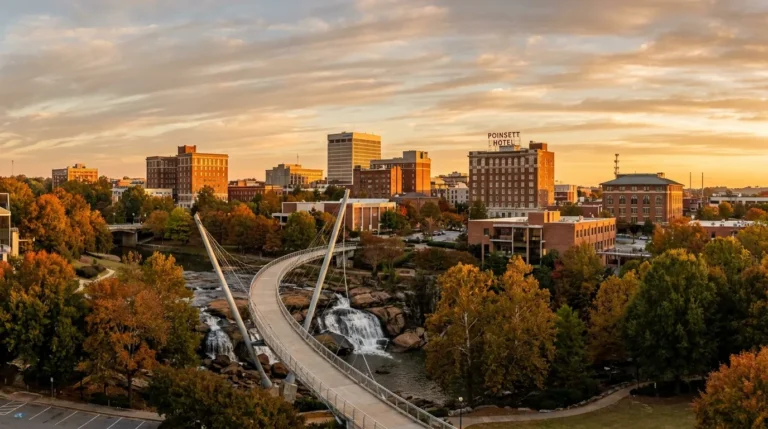
This is a state that has been drawing attention for its growth. Charleston attracts young professionals, retirees, and tourists with its historic downtown, award-winning restaurants, and nearby beaches. Greenville transformed from an industrial city into a vibrant center when BMW opened its largest factory in the Americas there in 1994. Myrtle Beach and Hilton Head drive a multi-billion-dollar tourism economy.

The cost of living is still reasonable compared to the Northeast coast or California, though prices in tourist areas have risen. The Hispanic community is growing rapidly, especially Mexicans. There is a large African American community, with the unique Gullah culture on the coast. Brazilians are few, concentrated in Charleston and Greenville.

Population
5,282,634
Average monthly salary
53,000 USD/mo
33.8569°, -80.9450°

Featured places

Top 10 places in South Carolina

The places most sought-after by immigrants in this region.

South Carolina demographics: white and African American residents form the majority

About two-thirds white, one-quarter African American. The Gullah culture on the coast is a uniquely American African heritage. Hispanics are growing.

South Carolina is one of the states with the highest proportion of African Americans (about 26%), a legacy of its agricultural history. On the coast, especially on the Sea Islands and around Charleston, the Gullah/Geechee community lives, descended from enslaved Africans who preserved a creole language, cuisine, and unique spiritual traditions.

White residents make up about 64%, mainly of British, Irish, Scottish, and German descent. The Hispanic presence grew from less than 1% in 1990 to around 6-7% today, primarily Mexicans. They work in construction, agriculture, tourism, and food processing.

In Greenville and Spartanburg there is a German, French, and Brazilian community tied to BMW, Michelin, and automotive suppliers. Indians and Chinese are growing. Brazilians arrive mainly to work in construction (Myrtle Beach), restaurants (Charleston), and the automotive industry (Greenville-Spartanburg).

5,282,634
Population
40 yrs
Median age
64/km²
Density
$63,600
Median income
per year
Urban population66.3%
Foreign-born5.5%
Languages spoken
  • English
  • Spanish
  • Gullah (African American creole of the coast)
  • German (in Greenville)
  • Portuguese (small community)
  • +1 more
Main religions
  • Christian (Southern Baptist, Methodist, Presbyterian)
  • Catholic (among Hispanics and in Charleston)
  • No religion (minority)
  • Gullah spiritual traditions

Cost of living in South Carolina: reasonable, with pressure in tourist areas

Cheaper than North Carolina in most areas. Charleston has risen significantly. Columbia and Greenville offer good value.

A one-bedroom apartment in Charleston rents for between $1,500 and $2,200 (prices have risen considerably in recent years). In Greenville, $1,100 to $1,500. In Columbia, more accessible: $900 to $1,300. Myrtle Beach varies a lot by season, but generally $1,000 to $1,500.

Food is reasonable. Publix, Harris Teeter, Aldi, Food Lion, and Walmart compete for shoppers. A meal at a popular restaurant costs $12 to $18, more in tourist areas like Charleston. Gas is cheaper than the national average.

The state income tax goes up to 6.5% (top bracket), but there are generous deductions. The sales tax is 6%. In general, a family can live comfortably on a salary of $60,000 to $90,000. Buying a home is feasible, though Charleston has become more expensive. More affordable areas in the interior remain accessible.

96Cost index (US = 100)4% below US average
CategorySingleCoupleFamily (2 + 2)
iHousing$1,247$1,439$1,822
iFood$364$729$1,323
iTransport$480$815$1,055
iHealthcare$269$537$1,007
iChildcare$1,745
iOther$815$1,467$2,062
Monthly total$3,175$4,987$9,014

Source: U.S. BLS Consumer Expenditure Survey 2023 + BEA Regional Price Parities 2023 · Estimates in USD, monthly.

Housing in South Carolina: big variation between the coast and the interior

The coast and tourist areas are expensive. Greenville and Columbia offer large homes at reasonable prices. Suburbs have grown rapidly.

In Charleston and Mount Pleasant, homes in good neighborhoods run from $600,000 to $1.5 million. Neighborhoods like Daniel Island, James Island, and parts of the historic downtown carry high price tags. In Greenville, quality homes run $350,000 to $600,000 in areas like Augusta Road and Cleveland Park.

Columbia offers more affordable homes: $250,000 to $450,000 in good neighborhoods like Forest Acres or Lake Murray. In Myrtle Beach and Hilton Head, there are condos with pools and beach houses ranging from $300,000 (an apartment) to several million. Small towns in the interior have excellent homes for $200,000 to $300,000.

To rent, standard requirements apply: proof of income, credit history, references. In Charleston and Myrtle Beach, the short-term rental market (Airbnb) has pulled many homes off the long-term market, pushing up prices. Recommended neighborhoods in Charleston: Mount Pleasant, James Island, Daniel Island, West Ashley. In Greenville: Augusta Road, Five Forks. In Columbia: Forest Acres, Irmo.

Purchase price (m²)
  • Center$2,700/m²
  • Outside$1,750/m²
4.7×
Price-to-income
7.0%
Mortgage rate (20y)
Recommended neighborhoods
  • Mount Pleasant (Charleston, families)
  • Daniel Island (Charleston, top schools)
  • James Island (Charleston, beach)
  • Augusta Road (Greenville)
  • Five Forks (Greenville, suburban)
  • +4 more

Job market in South Carolina: automotive, aerospace, the port, and tourism

BMW, Boeing, Michelin, and Volvo Cars drive manufacturing. The Port of Charleston has grown enormously. Tourism generates billions and many seasonal jobs.

South Carolina has become an advanced manufacturing hub. BMW's plant in Spartanburg is the brand's largest in the world (by volume), producing SUVs for global markets. Volvo Cars opened a factory near Charleston. Boeing produces the 787 Dreamliner in North Charleston. Mercedes-Benz Vans manufactures in Charleston. Michelin has several plants and its North American headquarters in Greenville.

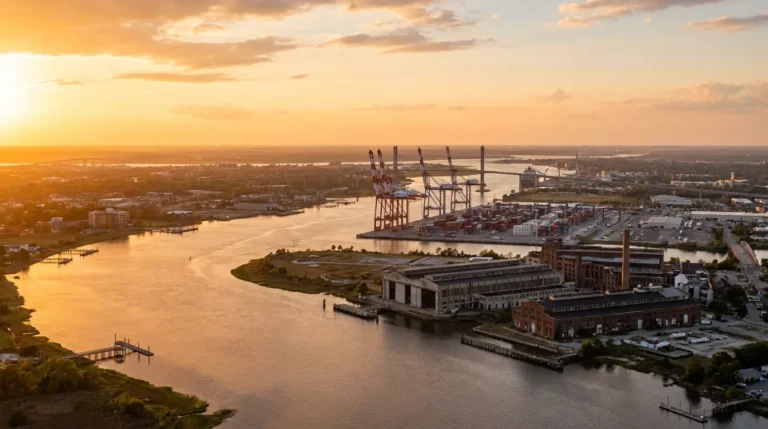
The Port of Charleston is one of the largest and busiest on the U.S. East Coast. Logistics, container handling, and port services employ thousands. The military presence is strong: Joint Base Charleston (Air Force and Navy) and the Marine Corps Recruit Depot at Parris Island inject money into the economy.

Tourism in Myrtle Beach, Hilton Head, Charleston, and Greenville generates billions and many seasonal jobs. Healthcare (MUSC in Charleston, Prisma Health in Greenville and Columbia) is a major employer. Agriculture in the interior produces tobacco, soybeans, cotton, peaches, and tomatoes. Industrial engineering salaries range from $75,000 to $110,000 a year.

$53,000
Avg net salary
per month
$15,080
Minimum wage
per month
3.7%
Unemployment
58.5%
Labor force
Dominant sectors
  • Automotive industry
  • Aerospace (Boeing)
  • Port and logistics (Charleston)
  • Tourism and hospitality
  • Healthcare
  • +3 more
Major employers
  • BMW (Spartanburg)
  • Boeing (North Charleston)
  • Volvo Cars (Charleston)
  • Michelin (Greenville)
  • Mercedes-Benz Vans (Charleston)
  • +4 more

Education in South Carolina: public schools improving, decent public universities

Suburban districts have good schools. USC in Columbia and Clemson are the main public universities. Charleston has the College of Charleston.

Children have the right to free public education. School quality varies considerably. Districts like Mount Pleasant, Daniel Island, Charleston County (some areas), Greenville County (Five Forks, Eastside), and Lexington-Richland 5 (near Columbia) have well-rated schools. In rural areas and some urban neighborhoods, schools face challenges.

The University of South Carolina (USC), in Columbia, is the main public university, with strong programs in business (the Darla Moore School), law, medicine, and journalism. Clemson University excels in engineering, agriculture, and architecture. The College of Charleston is a smaller public university with a strong historical setting in downtown Charleston.

Furman (private, in Greenville) and Wofford (Spartanburg) are prestigious liberal arts colleges. South Carolina State is a public HBCU in Orangeburg. In-state tuition at public universities runs around $12,000 to $15,000 per year. International students pay more, but still less than in Northeast coastal states.

Literacy96.0%
Tertiary education30.0%
478
PISA score (avg)
$11,800
Private school
per year
Notable universities
  • University of South Carolina (Columbia)
  • Clemson University
  • College of Charleston
  • Furman University (Greenville, private)
  • Wofford College (Spartanburg, private)
  • Medical University of South Carolina (MUSC, Charleston)
  • South Carolina State University (HBCU, Orangeburg)

Healthcare in South Carolina: MUSC in Charleston is a referral center, rural areas face challenges

Charleston and Greenville have good hospitals. Specialist doctors are concentrated in big cities. The state has not fully expanded Medicaid.

South Carolina has good hospitals in its large cities. MUSC (Medical University of South Carolina) Health in Charleston is the main academic medical center, with transplant, cardiology, oncology, and research programs. Prisma Health, formed by the merger of Greenville Health System and Palmetto Health, operates large networks in Columbia and Greenville. Roper St. Francis and Bon Secours are also well respected.

As everywhere in the U.S., there is no universal public healthcare system. Employer-based insurance is the standard. South Carolina has not fully expanded Medicaid under the ACA, so childless adults with low incomes have difficulty getting coverage. Children and pregnant women have more options.

Rural areas, especially in the interior and the Sea Islands, suffer from doctor shortages and hospital closures. Community health centers (FQHCs) serve patients regardless of immigration status, on a sliding income scale. Without insurance, an ER visit can exceed $1,500. An urgent care visit ($100-200) is an alternative for minor issues.

Healthcare index64.0 / 100
  • Life expectancyyears at birth
    77.0yrs
  • Doctors per 1kpracticing physicians
    2.5
  • Health spendper capita, per year
    $10,100
  • Public systemoverall quality rating
    Fair

Safety in South Carolina: quiet suburbs and historic cities, higher crime in some urban centers

Mount Pleasant, Daniel Island, Bluffton, and parts of Greenville are very safe. Downtown Columbia, parts of Charleston, and Myrtle Beach require caution.

South Carolina has crime rates slightly above the national average, but the bulk of it is concentrated in specific neighborhoods. Mount Pleasant, Daniel Island, Five Forks, Bluffton, and parts of Hilton Head regularly appear on lists of safe U.S. cities.

Downtown Columbia, some parts of Charleston (areas near King Street and North Charleston), and Myrtle Beach (especially during peak season) have more incidents of robbery, assault, and drug-related violence. In Myrtle Beach, there is a concentration of theft in tourist areas, especially in the summer.

For immigrants, the general rule applies: live in recommended neighborhoods, use the local public school rating as a proxy for safety, and never leave anything visible in your car in tourist areas. The state has permissive gun laws. In rural areas, there is peace and quiet, with occasional petty theft more common than violent crime. Beaches with lifeguards and family neighborhoods are very safe to visit.

10.0
Homicides per 100k
per year
Safety index
49.0
Crime index
51.0
Safer neighborhoods
  • Mount Pleasant (Charleston)
  • Daniel Island (Charleston)
  • Bluffton (Hilton Head)
  • Five Forks (Greenville)
  • Fort Mill (Charlotte border)
  • Tega Cay (Lake Wylie)
  • Irmo (Columbia)
  • Hilton Head Plantation
Areas to avoid
  • North Charleston (some parts)
  • Columbia downtown at night
  • Florence isolated neighborhoods
  • Myrtle Beach western outskirts

Transportation in South Carolina: a car is essential, regional airports with some international service

Fully car-dependent state. Charleston and Greenville have airports with international flights. The Port of Charleston is a major cargo hub.

South Carolina is a car-dependent state. There is no metro system and bus service is limited. CARTA (Charleston), Greenlink (Greenville), and COMET (Columbia) operate bus lines, but most people drive. Biking and walking are viable in historic downtowns like Charleston and Greenville, which have bike lanes and pedestrian paths.

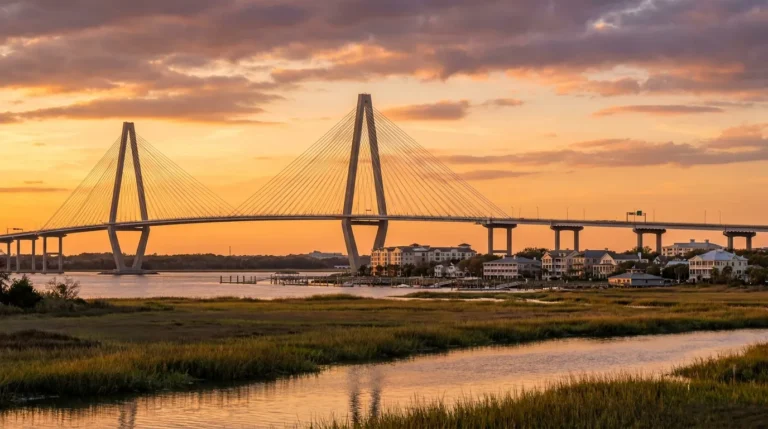
The main highways are I-26 (crossing the state from Charleston to Spartanburg), I-95 (north-south on the east side), I-77 (from Columbia north), and I-85 (in the west). Rush-hour traffic in Charleston is heavy, especially on the bridges connecting Mount Pleasant to the city. Greenville and Columbia have light traffic.

Charleston International Airport (CHS) is the main airport, with flights to many U.S. cities and some international destinations (Toronto, Bermuda). Greenville-Spartanburg International (GSP) also handles several domestic flights. Columbia (CAE) and Myrtle Beach (MYR) serve regional routes. The Port of Charleston (SCPA) is one of the largest on the East Coast for cargo.

25 min
Avg commute
28
Walkability
Airports
  • CHS (Charleston International)
  • GSP (Greenville-Spartanburg International)
  • CAE (Columbia Metropolitan)
  • MYR (Myrtle Beach International)
  • HHH (Hilton Head)
  • +1 more
  • International airport
  • Bike infrastructure

South Carolina climate: humid subtropical, long hot summers

Hot, humid summers on the coast and inland. Mild winters. Hurricane risk from June to November.

South Carolina has a humid subtropical climate (Koppen Cfa). Summer is long, hot, and humid, with high temperatures around 31-34°C from June through September. Air conditioning is essential. On the coast, sea breezes offer some relief; inland (Columbia), the heat can be stifling. High humidity is part of daily life.

Winter is mild. In Charleston, January lows sit around 4-7°C, with highs near 15°C. Columbia is a bit colder. Snow is rare but does occasionally fall (Charleston had snow in 2018). In Greenville and the northwestern region, closer to the mountains, winter is colder with occasional light snow.

Hurricane season runs from June to November. Charleston, Myrtle Beach, and Hilton Head are in a frequent path. Hugo (1989) devastated Charleston, and more recently Matthew (2016), Florence (2018), and Ian (2022) impacted the coast. Spring (April to May) and fall (October to November) are the most pleasant seasons, with blooms in spring and colorful foliage in fall.

Sunny days / year218 days
Avg high (°F)
  • 58°J
  • 60°F
  • 66°M
  • 72°A
  • 79°M
  • 84°J
  • 87°J
  • 86°A
  • 83°S
  • 76°O
  • 67°N
  • 61°D
Avg low (°F)
  • 44°J
  • 46°F
  • 52°M
  • 60°A
  • 68°M
  • 74°J
  • 77°J
  • 76°A
  • 73°S
  • 63°O
  • 53°N
  • 47°D
Rainfall (")
  • 3"J
  • 3"F
  • 3"M
  • 3"A
  • 3"M
  • 5"J
  • 5"J
  • 6"A
  • 5"S
  • 4"O
  • 2"N
  • 3"D

South Carolina culture: Lowcountry, Gullah, college football, and history

Charleston is an icon of the historic South. The Gullah culture on the coast is unique. College football and barbecue define daily life.

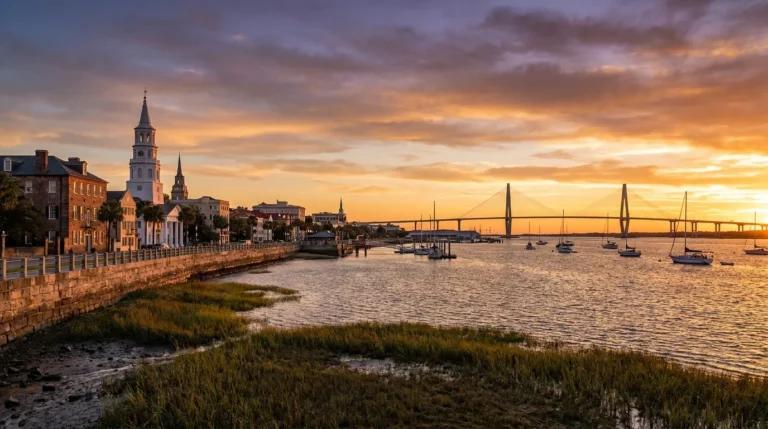
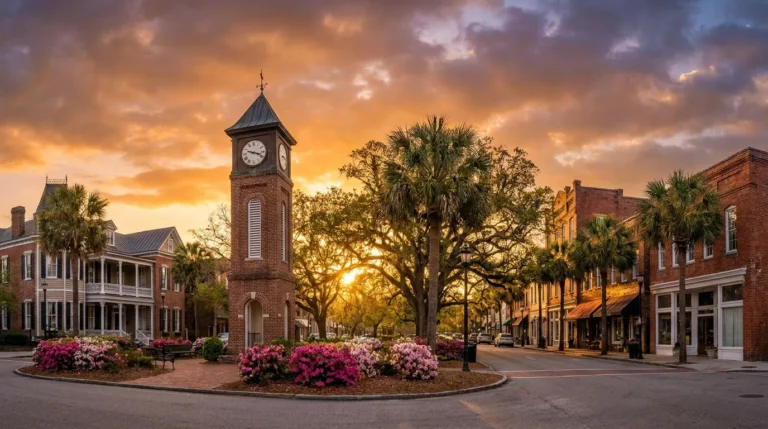
Charleston is one of the most unique cultural centers in the U.S. The historic downtown, with the colorful houses of Rainbow Row, market halls (Charleston City Market), Lowcountry cuisine restaurants, and the Sea Island marshlands, draws tourists year-round. The city carries enormous historical weight as the place where the Civil War began (Fort Sumter, 1861).

The Gullah/Geechee culture, on the coast and islands, keeps alive a creole language, distinctive foods (shrimp and grits, gumbo, sweet potato bread), spiritual music, and religion rooted in Africa. It is considered one of the most distinct African American cultures in the U.S. Visiting Hilton Head, St. Helena Island, and the Penn Center is a unique experience.

College football is huge. The Clemson Tigers and South Carolina Gamecocks divide the state every fall Saturday. Beach music (a regional style from the 1960s), barbecue (mustard-based sauce is South Carolina's signature style, unlike other states), and festivals like Spoleto Festival (Charleston, performing arts) and the Festival of Houses (spring) mark the calendar.

175
Major museums
Notable dishes
  • Shrimp and grits
  • Gullah gumbo
  • Frogmore stew (shrimp, potatoes, corn, sausage)
  • South Carolina mustard barbecue
  • Hoppin' John (rice and black-eyed peas)
  • +4 more
Annual events
  • Spoleto Festival USA (Charleston, May and June)
  • Charleston Wine + Food Festival (March)
  • Clemson vs. South Carolina football (November)
  • Festival of Houses and Gardens (Charleston, spring)
  • Myrtle Beach Bike Week (May)
  • +2 more

South Carolina's key economic sectors

Advanced manufacturing (automotive, aerospace), the port, tourism, military, and healthcare sustain the economy. Growth is driven by foreign investment.

The automotive industry is the standout sector. BMW (Spartanburg), Volvo Cars (Charleston), and Mercedes-Benz Vans (Charleston) have made the state a manufacturing hub for the world. Michelin has several plants and its North American headquarters in Greenville. Suppliers and German companies have built a strong cluster in the west.

Aerospace is centered on Boeing (North Charleston, producing the 787 Dreamliner), with supporting suppliers throughout the region. The Port of Charleston has grown enormously and is one of the largest on the East Coast by container volume. The military presence is strong: Joint Base Charleston, MCRD Parris Island, Shaw Air Force Base.

Tourism generates billions in Myrtle Beach (mass tourism, golf), Hilton Head (luxury, golf), and Charleston (history, food). Healthcare with MUSC and Prisma Health is a major employer. Agriculture in the interior produces peaches, tomatoes, tobacco, soybeans, and cotton. Textiles, historically dominant, still employ workers in the northwest.

  • GDPgross domestic product
    $305.0B
  • GDP per capitaoutput per resident
    $57,700
  • GDP growth (yr)economy expanding
    +2.7%
Top sectors
  • Automotive industry
  • Aerospace and aviation
  • Port and logistics
  • Tourism and hospitality
  • Military and defense
  • +3 more

Immigrant communities in South Carolina

About 250,000 immigrants live in South Carolina, with Mexicans in Greenville and Charleston, Indians in Columbia, and refugees being resettled.

South Carolina has around 250,000 residents born outside the country, close to 5% of the population, a lower share than neighboring states but with steady growth over the last two decades. Mexicans form the largest group, concentrated in Greenville, Spartanburg, Charleston, and Columbia, tied to construction, agriculture, and poultry processing. Guatemalans and Hondurans have a growing presence, especially in Columbia and small inland towns. Indians concentrate in Columbia (tied to the University of South Carolina) and Greenville, with a community linked to hospitals, engineering, and the BMW automotive hub. Chinese, Filipinos, and Ukrainian and Afghan refugees round out the picture.

The state has no career consulate, and residents turn to Atlanta (Mexico, India, South Korea) or Charlotte for consular services. The South Carolina Hispanic Leadership Council works on statewide advocacy. PASOs (Programa de Servicios de Salud), part of the University of South Carolina, connects Latinos to health services. Lutheran Services Carolinas handles refugee resettlement in Columbia and Greenville. Catholic Charities of the Diocese of Charleston covers the entire state with immigration services.

250,000
Foreign-born residents
estimated
Top countries of origin
  • Mexico
  • India
  • Guatemala
  • Honduras
  • China
Main immigrant hubs
  • Greenville
  • Columbia
  • Charleston
  • Spartanburg
  • Myrtle Beach
Foreign consulates
  • Mexican Consulate General in Atlanta (jurisdiction includes South Carolina)
  • Indian Consulate in Atlanta
  • Mexican Consulate in Raleigh
Community organizations
  • South Carolina Hispanic Leadership Council
  • PASOs (University of South Carolina)
  • Lutheran Services Carolinas
  • Catholic Charities of the Diocese of Charleston

Latest posts

Posts about South Carolina

Coverage and updates related to this destination.