Visto n' Visa
Blog
Notícias e artigos
Destinations
Careers
Immigrants

Want to live and work in Georgia?

Personalized immigration plan with eligible visas, costs, and next steps for your goal!

If you are not eligible, you will know exactly why and what to do to improve your approval chances.

Save up to 12 hours in meetings

No pointless assessments.

Save up to 90%

Save money on vague or unfocused consultations

Avoid Fraud and Mistakes

One mistake can cost you your visa

Total Impartiality

Zero commercial bias

Decide with peace of mind

No toxic urgency

Fast and Accurate

Answers in minutes, no guesswork

Why visit Georgia

The Southeast hub, with Atlanta as the engine of business, film, and culture.

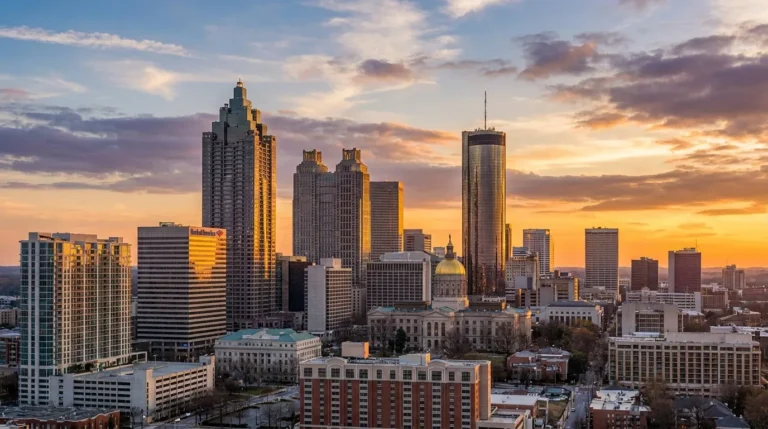
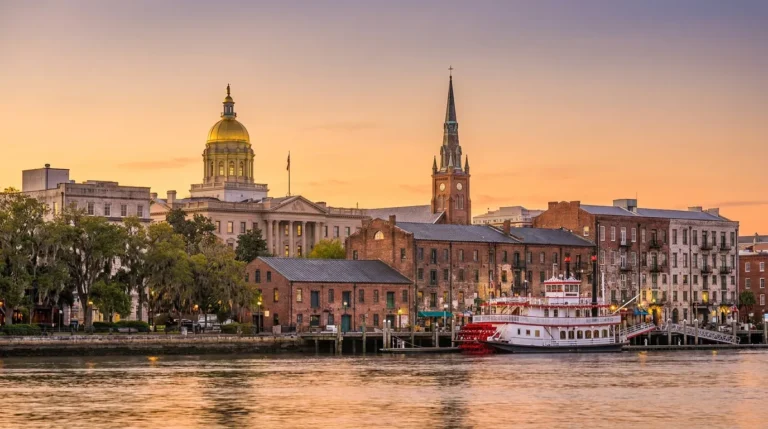
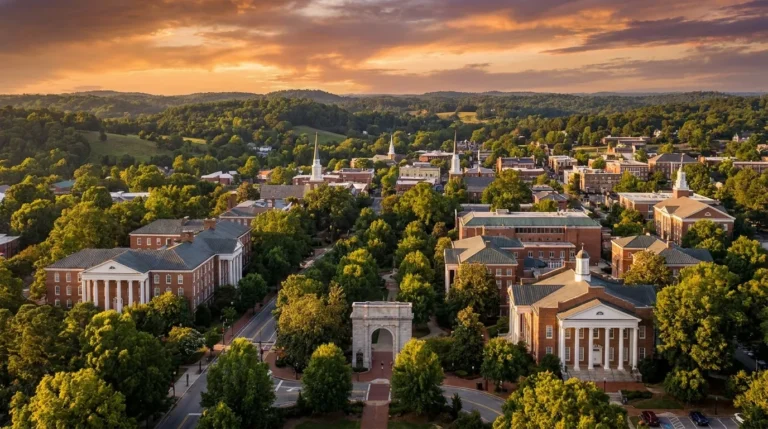
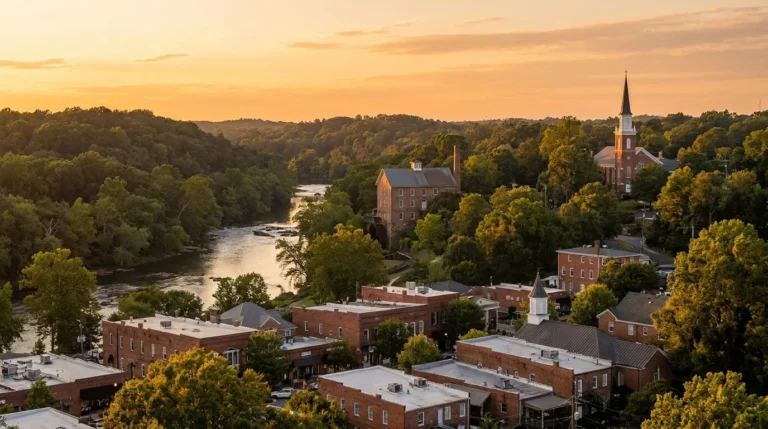
Georgia is located in the Southeast US, neighboring Florida, Tennessee, Alabama, South Carolina, and North Carolina. Atlanta is the largest city and capital, functioning as the primary center of business, transportation, and culture in the South. Other important cities include Savannah (a charming historic coastal city), Augusta (host of the Masters golf tournament), and Athens (a university town).

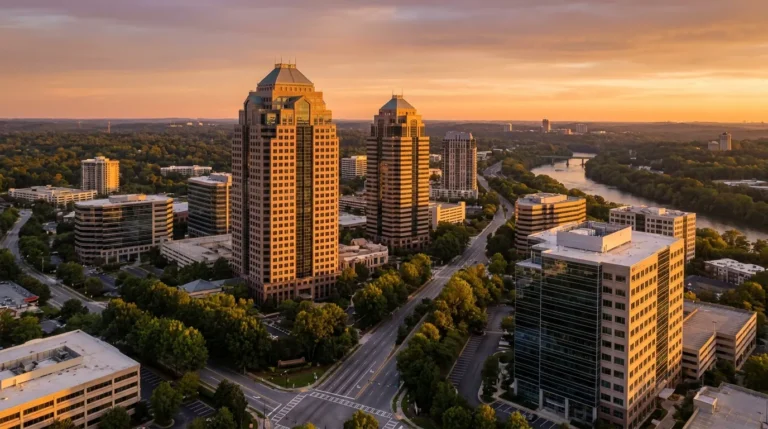
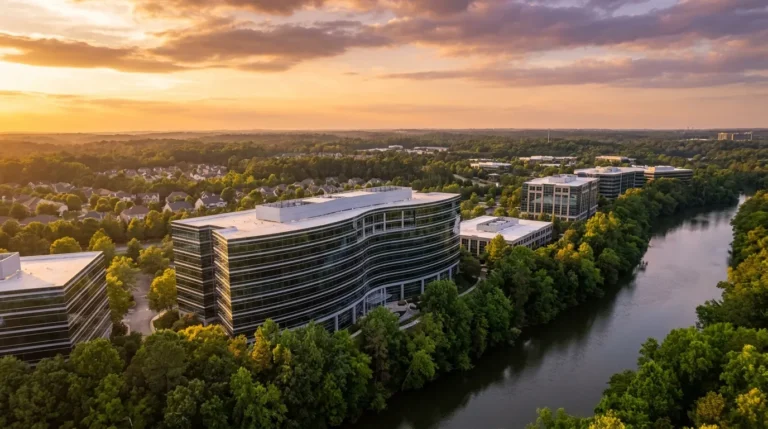
The state has significant economic weight. Coca-Cola, Delta Airlines, CNN, UPS, and Home Depot are headquartered in Atlanta. Atlanta's airport (ATL) is the world's busiest by passenger count. In recent years, the film industry has exploded: much of what appears to be set in New York or Los Angeles is actually filmed at studios in Atlanta.

The Brazilian community is well established in Atlanta, mainly in neighborhoods like Marietta, Smyrna, and Norcross, with restaurants, churches, and grocery stores in Portuguese. Hispanics form a larger community, especially Mexicans and Central Americans in cities like Gainesville and Dalton. The cost of living is reasonable for what the city offers.

Population
10,912,876
Average monthly salary
58,000 USD/mo
33.0406°, -83.6431°

Featured places

Top 10 places in Georgia

The places most sought-after by immigrants in this region.

Georgia demographics: a diverse state with a strong African American presence

A large historic Black community, rapidly growing Hispanics, and a new wave of Asian immigrants in Atlanta.

Georgia has about 11 million inhabitants. The makeup is diverse: non-Hispanic whites form the majority, but African Americans are a huge community with cultural and political weight (Atlanta is a symbol city for the civil rights movement and has historic Black colleges like Spelman and Morehouse). Hispanics are growing fast, especially Mexicans and Guatemalans.

Atlanta has one of the most established Brazilian communities in the Southeast, with neighborhoods like Marietta, Smyrna, Roswell, and Norcross concentrating families, restaurants (churrascarias, bakeries), and Portuguese-language evangelical churches. There are also strong Vietnamese, Indian, Korean, and Nigerian communities around Atlanta.

The state divides between the Atlanta metropolitan area (cosmopolitan, diverse) and the interior (more rural, agricultural, traditional). Religion carries significant weight, especially evangelical Protestantism (the Bible Belt). The cultural life mixes traditional Southern American customs with the constant arrival of new immigrants.

10,912,876
Population
38 yrs
Median age
71/km²
Density
$71,350
Median income
per year
Urban population76.0%
Foreign-born10.5%
Languages spoken
  • English
  • Spanish
  • Portuguese (Brazilian community in Atlanta)
  • Korean
  • Vietnamese
  • +2 more
Main religions
  • Christian (evangelical Protestant, Baptist, Catholic)
  • No religion
  • Muslim
  • Jewish
  • Hindu
  • +1 more

Cost of living in Georgia: reasonable by American standards

Atlanta is cheaper than New York, Boston, or San Francisco. Smaller cities have a very low cost.

Georgia has a cost of living below the US average, making it an attractive destination for people coming from the Northeast or West Coast. A one-bedroom apartment in Atlanta ranges from $1,500 to $2,200 depending on the neighborhood. In mid-sized cities (Athens, Augusta, Savannah), between $1,000 and $1,500.

Groceries and restaurants are accessible. A meal at a casual restaurant costs $12-$22. Gas and electricity are at or slightly below the national average. State income tax exists and is moderate (around 5.49%).

State sales tax is 4%, but with local additions it can reach 8% in some cities. Property tax is among the lowest in the Southeast. All things considered, Georgia is a great state for those who want space, a house with a yard, and controlled expenses, especially compared to New York, California, or Massachusetts.

95Cost index (US = 100)5% below US average
CategorySingleCoupleFamily (2 + 2)
iHousing$1,240$1,431$1,813
iFood$363$725$1,317
iTransport$477$811$1,049
iHealthcare$267$534$1,002
iChildcare$1,736
iOther$811$1,460$2,051
Monthly total$3,158$4,961$8,968

Source: U.S. BLS Consumer Expenditure Survey 2023 + BEA Regional Price Parities 2023 · Estimates in USD, monthly.

Housing in Georgia: large homes at affordable prices outside the city center

Atlanta suburbs offer four-bedroom homes with yards at prices well below the East or West Coast.

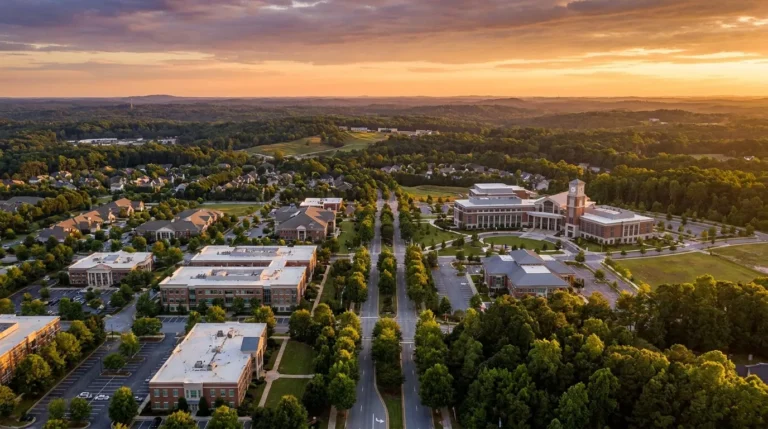
The Atlanta metropolitan area has dozens of suburbs spread across several counties. Areas like Marietta, Roswell, Alpharetta, Sandy Springs, and Decatur have four-bedroom homes between $450,000 and $800,000, typically with a yard and in planned communities. More central neighborhoods (Buckhead, Midtown) are pricier.

Savannah, with its historic charm, has its own market: homes in the historic district exceed $1 million, but normal neighborhoods run $350,000-$600,000. Athens, a university city, and Augusta, with the famous golf course, have moderate prices. Small interior towns offer homes starting at $200,000.

Renting is straightforward. Landlords ask for proof of income (3x the rent), a credit check, and references. Recently arrived immigrants may need a co-signer or to pay upfront. Neighborhoods with more Brazilians (Marietta, Smyrna, Norcross) tend to have landlords accustomed to the immigrant renter profile.

Purchase price (m²)
  • Center$2,700/m²
  • Outside$1,700/m²
4.1×
Price-to-income
7.0%
Mortgage rate (20y)
Recommended neighborhoods
  • Marietta (Brazilian community, family suburb)
  • Smyrna (close to Atlanta, Brazilian community)
  • Roswell (family, good schools)
  • Alpharetta (tech, top schools)
  • Sandy Springs (close to Atlanta)
  • +3 more

Job market in Georgia: logistics, film, finance, and technology

Atlanta is an air and business hub. The film industry is growing fast. Logistics and fintech are on the rise.

Atlanta is home to some of the largest US companies: Coca-Cola, Delta Airlines, Home Depot, UPS, CNN/WarnerMedia, Chick-fil-A, and Newell Brands. Hartsfield-Jackson airport is the world's busiest, and UPS operates its main logistics hub there. This generates jobs in logistics, transportation, and airport support.

The film industry has exploded in the last 15 years. Atlanta has been nicknamed Hollywood of the South, with Tyler Perry Studios, Pinewood Atlanta, and productions from Marvel, Netflix, and HBO. Rapid growth in technical production, acting, and post-production jobs.

Technology and fintech are growing in Midtown and Buckhead, with companies like NCR, Mailchimp (sold to Intuit), and various startups. Healthcare is a big sector, with the CDC (Centers for Disease Control) headquartered in Atlanta. Universities like Georgia Tech, Emory, and UGA employ thousands.

$58,000
Avg net salary
per month
$15,080
Minimum wage
per month
3.3%
Unemployment
62.7%
Labor force
Dominant sectors
  • Logistics and air transportation
  • Film and audiovisual production
  • Technology and fintech
  • Healthcare and biotech (CDC, Emory)
  • Automotive (Kia in West Point)
  • +3 more
Major employers
  • Delta Air Lines
  • Coca-Cola Company
  • Home Depot
  • UPS
  • Chick-fil-A
  • +5 more

Education in Georgia: strong universities, public schools varying by district

Georgia Tech and Emory are benchmarks. Atlanta suburban districts have good schools; rural areas lag behind.

Children are entitled to free public school regardless of immigration status. Quality varies significantly by county. The best districts in the Atlanta metropolitan area are typically Fulton (north), Forsyth, Cherokee, Cobb (Marietta), and Gwinnett. Cities like Alpharetta and Johns Creek are known for excellent schools.

IB (International Baccalaureate) and magnet schools (focused on STEM, arts, or languages) are alternatives within the public system. Charter schools (public schools with independent management) are also options. Some Atlanta-area schools offer ESOL programs for children still learning English.

The top universities are Georgia Tech (engineering, computer science, world STEM reference), Emory (health sciences, social sciences), University of Georgia (UGA, in Athens, diverse programs), Georgia State (in Atlanta, urban and diverse), and Spelman and Morehouse (historic Black universities). Public tuition is affordable for residents.

Literacy96.0%
Tertiary education32.8%
478
PISA score (avg)
$12,500
Private school
per year
Notable universities
  • Georgia Institute of Technology (Georgia Tech, Atlanta)
  • Emory University (Atlanta)
  • University of Georgia (Athens)
  • Georgia State University (Atlanta)
  • Spelman College (Atlanta)
  • Morehouse College (Atlanta)
  • Mercer University (Macon)

Healthcare in Georgia: a strong network in Atlanta, scarcer in the interior

Emory and Piedmont hospitals are among the best in the Southeast. Rural areas suffer from a doctor shortage.

The Atlanta metro area has first-rate hospitals. Emory Healthcare, Piedmont Healthcare, Northside Hospital, Children's Healthcare of Atlanta, and Grady Memorial are among the best in the Southeast. The CDC (Centers for Disease Control) is also headquartered here, a global public health reference.

The model is the American standard: employer-sponsored health insurance, no universal coverage. Family premiums run about $1,300-$1,700, with the employer paying part. Low-income families may qualify for Georgia's Medicaid, but the state has more restrictive criteria than many states (it did not expand Medicaid under the ACA).

The big problem is the rural interior: many counties have a doctor shortage, hospitals closing, and long distances to specialized care. For immigrants in Atlanta, there are Brazilian and Hispanic doctors who see patients in Portuguese and Spanish, especially in Marietta, Norcross, and Doraville. Community clinics serve those without insurance.

Healthcare index60.0 / 100
  • Life expectancyyears at birth
    76.4yrs
  • Doctors per 1kpracticing physicians
    2.6
  • Health spendper capita, per year
    $8,500
  • Public systemoverall quality rating
    Fair

Safety in Georgia: calm suburbs, with pockets of crime in Atlanta

Most Atlanta suburbs are very safe. Central city areas have higher crime rates.

Atlanta's suburbs are generally safe. Johns Creek, Alpharetta, Suwanee, Milton, Peachtree City, and Decatur consistently rank among the safest cities in the US, with crime well below the national average. Families with children concentrate in these areas for exactly that reason.

Downtown Atlanta and neighborhoods like parts of Southwest Atlanta and East Atlanta have higher crime rates, especially car theft, robbery, and occasional violent crime. Buckhead, Midtown, and Virginia-Highland are relatively safe central neighborhoods, though they have also seen increased crime in recent years.

Savannah is calm in the historic district but has issues in some peripheral neighborhoods. Mid-sized cities (Athens, Augusta) vary by neighborhood. Sites like Niche.com and GreatSchools help compare safety and school quality before renting or buying.

8.8
Homicides per 100k
per year
Safety index
45.0
Crime index
55.0
Safer neighborhoods
  • Johns Creek
  • Alpharetta
  • Suwanee
  • Milton
  • Peachtree City
  • Decatur
  • Roswell
  • Sandy Springs
  • Cumming
  • Marietta (northern neighborhoods)
Areas to avoid
  • Atlanta Bankhead
  • Macon downtown at night
  • Savannah West Side
  • Albany central districts

Transportation in Georgia: the world's airport and the car as the standard

Atlanta's airport is the world's busiest. For daily life, a car is necessary across almost the entire state.

Hartsfield-Jackson Atlanta (ATL) is the world's busiest airport by passenger count. It is a global hub for Delta Airlines, with direct flights to Latin America, Europe, Asia, and Africa, including direct service to Sao Paulo (Guarulhos) and Rio de Janeiro. Savannah (SAV) also has an airport, but with domestic flights only.

Within Atlanta, the MARTA system combines rail (four lines) and buses, but the network is limited and mainly covers downtown. For most residents, especially in the suburbs, a car is essential. Rush-hour traffic in Atlanta is among the worst in the US, with the I-285 (perimeter highway) heavily congested in the morning and afternoon.

For intercity travel, Amtrak passes through Atlanta (Crescent Line, connecting New Orleans to New York) but is seldom used. Interstate bus services (Greyhound, FlixBus) cover routes to Florida, Charlotte, and Nashville. Uber and Lyft are ubiquitous in Atlanta.

4
Metro lines
38
Metro stations
28 min
Avg commute
41
Walkability
Airports
  • ATL (Hartsfield-Jackson Atlanta International, world's busiest)
  • SAV (Savannah/Hilton Head International)
  • AGS (Augusta Regional)
  • CSG (Columbus Metropolitan)
  • International airport
  • Bike infrastructure

Georgia's climate: hot, humid summers and mild winters

Long, muggy summers, mild winters with little snow. A beautiful spring and a pleasant fall.

Georgia has a humid subtropical climate. Summer (June to September) is long, hot, and humid, with averages of 86-91°F (30-33°C) and frequent afternoon thunderstorms. Air conditioning is non-negotiable at home, in the car, and at work. Atlanta experiences slightly less heat than the south of the state because of its elevation.

Spring (March to May) is delightful, with magnolias, cherry blossoms, and azaleas blooming. Mild temperatures of 64-77°F (18-25°C). Fall (October to November) is the best season, with colorful foliage in the northern mountains (Blue Ridge) and cool weather. Atlanta holds outdoor festivals during this time.

Winter (December to February) is mild, with averages between 37-54°F (3-12°C). Snow is rare in Atlanta, but when it falls, it paralyzes the city (drivers are not used to it). Cities in the northern mountains (Helen, Blue Ridge) can get more regular snowfall. Savannah and the south have even milder winters.

Sunny days / year218 days
Avg high (°F)
  • 54°J
  • 58°F
  • 66°M
  • 74°A
  • 81°M
  • 87°J
  • 90°J
  • 89°A
  • 84°S
  • 74°O
  • 64°N
  • 56°D
Avg low (°F)
  • 33°J
  • 37°F
  • 43°M
  • 49°A
  • 58°M
  • 67°J
  • 70°J
  • 69°A
  • 63°S
  • 51°O
  • 41°N
  • 36°D
Rainfall (")
  • 4"J
  • 4"F
  • 5"M
  • 4"A
  • 4"M
  • 4"J
  • 5"J
  • 4"A
  • 3"S
  • 4"O
  • 4"N
  • 4"D

Georgia culture: traditional South, strong music scene, and a growing film industry

Atlanta hip-hop, Athens rock, classic Southern food. Savannah preserves its colonial charm.

Atlanta was the world capital of hip-hop in the 2000s and 2010s, with artists like OutKast, Future, Migos, T.I., Ludacris, and Lil Baby hailing from the city. The LaFace record label, founded there, launched Toni Braxton and TLC. In Athens, the tradition is alternative rock: R.E.M. and the B-52's were born there. The music scene is central to the state's identity.

Southern food dominates: fried chicken, mac and cheese, collard greens, biscuits and gravy. Atlanta has a diverse food scene: Peruvian, Vietnamese, Ethiopian, and Brazilian (churrascarias and bakeries) are all present. In Savannah, coastal food (shrimp, oysters, grits) reigns.

Savannah is one of the most beautiful historic cities in the US, with shaded squares and colonial architecture. The Masters golf tournament in Augusta takes place every April. Atlanta has a good theater scene (Fox Theatre), live music, museums (High Museum, Civil Rights Museum), and sports (Braves, Falcons, Hawks).

300
Major museums
Notable dishes
  • Southern fried chicken
  • Pulled pork barbecue
  • Georgia peaches
  • Boiled peanuts
  • Shrimp and grits
  • +3 more
Annual events
  • Masters Golf Tournament (Augusta, April)
  • Atlanta Film Festival (April)
  • Music Midtown (Atlanta, September)
  • Savannah St. Patrick's Day Parade (March)
  • Dragon Con (Atlanta, September)
  • +2 more

Main economic sectors of Georgia

Logistics, film, technology, beverages, agriculture, and automotive drive the economy.

Logistics is the sector that most defines Georgia's economy. Atlanta's airport, the port of Savannah (one of the largest in the US), and the state's central position in the Southeast make it a key distribution point. UPS, FedEx, Delta, and hundreds of transportation companies have major operations here.

The film industry has exploded because of aggressive tax incentives: the state has become one of the largest production centers in the US. Marvel, Disney, Netflix, and HBO film regularly in Atlanta. Studios like Tyler Perry and Pinewood employ thousands. Atlanta has also gained strength in technology, fintech, and gaming.

Agriculture is historic: Georgia is the nation's largest peanut and peach producer, along with chicken (Tyson, Pilgrim's), pecans, and cotton. The automotive industry arrived in force with Kia's factory in West Point and a Hyundai plant being built near Savannah. Coca-Cola headquartered in Atlanta is more than an industry: it's a state symbol.

  • GDPgross domestic product
    $755.0B
  • GDP per capitaoutput per resident
    $69,300
  • GDP growth (yr)economy expanding
    +3.0%
Top sectors
  • Logistics and air transportation
  • Film and audiovisual production
  • Technology and fintech
  • Beverage industry (Coca-Cola)
  • Automotive (Kia, Hyundai)
  • +3 more

Immigrant communities in Georgia

About 1.1 million immigrants live in Georgia, with Mexicans in Gwinnett County, Indians in Suwanee, Koreans in Duluth, and refugees resettled in Clarkston.

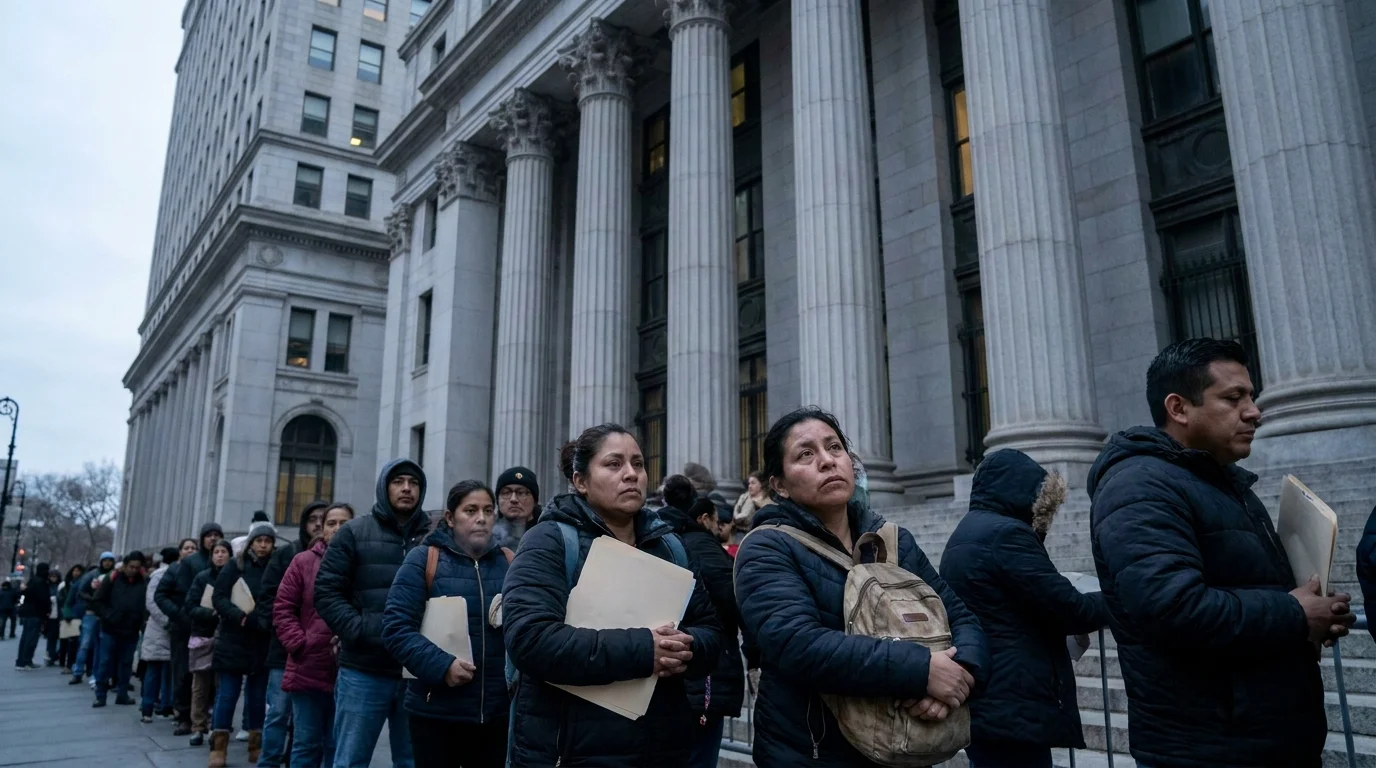
Georgia has around 1.1 million residents born outside the country, close to 10% of the population, and the fastest growth has happened in the last two decades. Mexicans form the largest group, concentrated in Norcross, Lawrenceville, and Doraville, inside Gwinnett County, with a strong presence in construction and food service. Indians have their own corridor in Suwanee and Johns Creek, tied to tech services, and the Hindu Temple of Atlanta is one of the largest in the Southeast. Koreans dominate Duluth, with supermarkets, churches, and schools in hangul, and form one of the largest Korean communities between New York and California. Vietnamese, Ethiopians, Somalis, Burmese, and Bhutanese fill Clarkston, known as the most diverse square mile in the United States and a historic refugee resettlement hub.

Atlanta hosts the consulate-general of Mexico, the consulate of India, the consulate of South Korea, the consulate of El Salvador, and the consulate of Vietnam. The Latin American Association, in Atlanta, is the largest Hispanic organization in the state, with English classes, immigration services, and workforce training. The Coalition of Refugee Services Agencies coordinates resettlement organizations in Clarkston and DeKalb. GALEO works on civil rights and Latino political participation. Catholic Charities Atlanta provides immigration legal services, and Asian Americans Advancing Justice Atlanta advocates for Asian communities.

1,100,000
Foreign-born residents
estimated
Top countries of origin
  • Mexico
  • India
  • South Korea
  • Vietnam
  • El Salvador
Main immigrant hubs
  • Atlanta
  • Norcross
  • Duluth
  • Suwanee
  • Clarkston
Foreign consulates
  • Mexican Consulate General in Atlanta
  • Indian Consulate General in Atlanta
  • South Korean Consulate General in Atlanta
  • El Salvador Consulate General in Atlanta
  • Vietnamese Consulate General in Atlanta
Community organizations
  • Latin American Association
  • Coalition of Refugee Services Agencies
  • GALEO (Georgia Association of Latino Elected Officials)
  • Catholic Charities Atlanta
  • Asian Americans Advancing Justice Atlanta

Latest posts

Posts about Georgia

Coverage and updates related to this destination.