Visto n' Visa
Blog
Notícias e artigos
Destinations
Careers
Immigrants

Want to live and work in Grafton?

Personalized immigration plan with eligible visas, costs, and next steps for your goal!

If you are not eligible, you will know exactly why and what to do to improve your approval chances.

Save up to 12 hours in meetings

No pointless assessments.

Save up to 90%

Save money on vague or unfocused consultations

Avoid Fraud and Mistakes

One mistake can cost you your visa

Total Impartiality

Zero commercial bias

Decide with peace of mind

No toxic urgency

Fast and Accurate

Answers in minutes, no guesswork

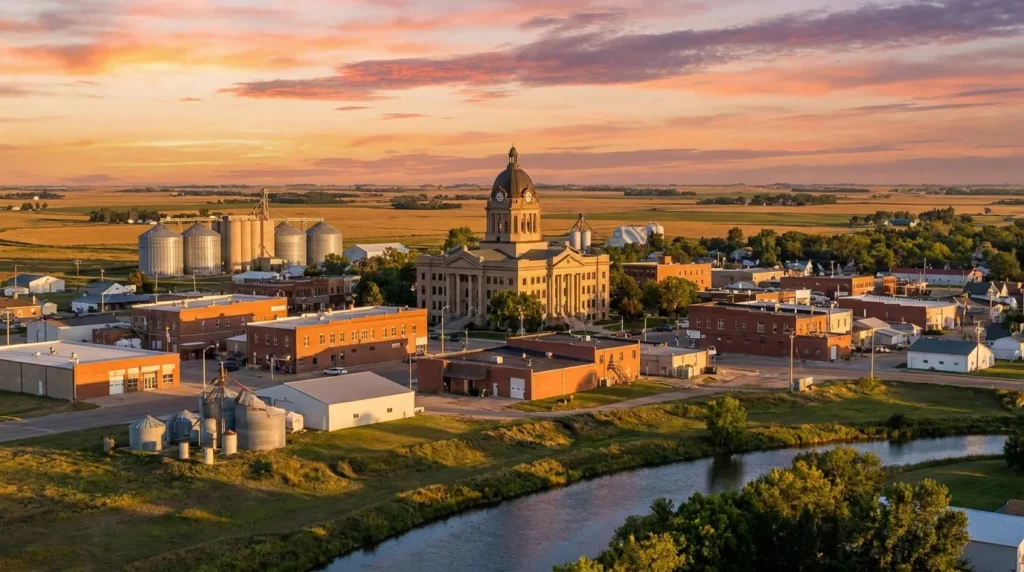
Small community with Scandinavian and Ukrainian roots, today with a growing presence of Latin American workers

Grafton has about 4,000 residents. Most descend from Norwegian, Swedish, German, and Ukrainian immigrants of the late 19th century. There is a growing Hispanic community tied to agriculture.

Grafton's population is mostly white, with strong Scandinavian and Central European heritage. Norwegian, Swedish, Volga German, and Ukrainian surnames appear in phone listings, gravestones, and street names, reflecting the migration waves that settled North Dakota between 1880 and 1920. Several families keep culinary and religious traditions from that origin.

Over the past two decades, the town has received Hispanic workers, especially Mexicans and Central Americans, drawn by the sugar beet plant and seasonal harvest. There is also a smaller presence of Filipinos and Indians tied to the local hospital, and some Somali and South Sudanese families who came from Fargo and Grand Forks. The public school offers ESL programs.

The dominant religion is Christianity: Scandinavian Lutheranism, Catholicism among German, Polish, and Hispanic families, and some evangelical congregations. The population skews older on average, with many young people moving to Grand Forks or Fargo. Recent immigrant families help keep schools and local businesses active.

Languages spoken
  • English
  • Spanish
  • Norwegian (heritage)
  • German (heritage)
  • Ukrainian (heritage)
Main religions
  • Lutheranism
  • Catholicism
  • Evangelicals
  • No religion

Very low cost of living by American standards, with rent and housing among the most affordable in the country

Grafton is one of the cheapest cities in the United States to live in. Rent, groceries, and basic utilities weigh little on the budget, although imported goods cost more due to distance.

The cost of living in Grafton sits well below the American national average. Three-bedroom homes are often listed at prices that in large cities would only cover a small bedroom. Apartment rents are modest, electricity and water bills as well, and property taxes in North Dakota are reasonable compared to states such as Texas or Illinois.

Stores such as Leevers Foods and the Grafton Walmart cover the basics. For greater variety, residents drive 60 km to Grand Forks, home to Target, Costco, and shopping malls. Fuel tends to cost less than the national average. Restoring an old house is cheap in labor, although materials can take a while to arrive in winter.

The weak point is the cost of imported goods, electronics, brand-name clothing, and travel, which require trips to Grand Forks, Fargo, or Winnipeg. Winter heating weighs heavily, with natural gas or propane bills rising from November through March. Even so, for those earning a middle-class American salary, Grafton makes it easy to save.

Century-old wood-frame houses, quiet streets, and a very low-priced housing market

Most of the stock is single-family homes built between 1900 and 1970. There are few apartments and rare condominiums. Buying is usually cheaper than renting in the long term.

Grafton's residential core has tree-lined streets with Victorian houses and wood-frame bungalows, deep porches, and large backyards. Neighborhoods such as the area around Leistikow Park and the Hill Avenue district concentrate the oldest and best-maintained homes. The outskirts have newer ranch-style homes from the 1970s and 1980s on larger lots.

Rental properties are limited. There are a few small apartment buildings, duplex houses, and sublet rooms. Newcomers usually buy, given the affordable prices. Recently arrived immigrants often start by renting a modest house while getting settled, then buy within a few years. Trailer parks also exist on the edge of town.

Points to watch are the condition of the roof and basement, given the harsh climate, and the heating system. Older homes may have lead plumbing or poor insulation. A technical inspection is recommended before buying. The market is slow, with few sales per month, which gives time to negotiate.

Recommended neighborhoods
  • Downtown near Leistikow Park
  • Hill Avenue
  • North Grafton near the hospital
  • Western Grafton

Job market concentrated in agriculture, sugar processing, healthcare, and public services

The largest employers are American Crystal Sugar, Unity Medical Center hospital, schools, supermarkets, and the regional agricultural sector. Seasonal openings appear during harvest.

American Crystal Sugar Company, a cooperative of sugar beet growers, operates a plant in Drayton, 30 km away, and has a strong presence in Grafton. The beet campaign, which begins in October and runs into winter, generates hundreds of seasonal jobs and regularly hires Hispanic and local workers. Seasonal wages are good with overtime.

Unity Medical Center is the local hospital and employs nurses, technicians, doctors, and administrative staff. Grafton's public schools, the North Dakota State Developmental Center (state institution for people with disabilities), the Walsh County government, and agricultural companies such as Cavendish Farms and grain elevators round out the formal employment base.

For immigrants without fluent English, entry points include harvest work, food processing, cleaning, and construction. Those with credentials in healthcare, agricultural engineering, or technology find positions at the hospital and at regional companies, although many technical jobs are in Grand Forks. Starting an ethnic business is viable, given the lack of competition.

Dominant sectors
  • Agriculture
  • Sugar and food processing
  • Healthcare
  • Education
  • Public services
  • +1 more
Major employers
  • American Crystal Sugar Company
  • Unity Medical Center
  • North Dakota State Developmental Center
  • Grafton Public Schools
  • Cavendish Farms
  • +1 more

Small, well-rated public schools, with large universities an hour away in Grand Forks

Grafton has a stable K-12 public school system with programs for non-English-speaking students. Local higher education is limited; a large public university is in Grand Forks.

Grafton Public School District serves children from kindergarten through high school in small schools, with reduced class sizes and a focus on individual attention. Grafton High School offers sports programs, agriculture (FFA), music, and some vocational options. For immigrant children, there is ESL support and teachers experienced with the diversity brought by the recent Hispanic wave.

Catholic schools serve families of religious tradition, and homeschooling options exist. After high school, local youth typically move to the University of North Dakota (UND) in Grand Forks, one of the largest public universities in the region. North Dakota State University in Fargo is the other traditional option, especially for agriculture and engineering.

In Grafton itself, technical education options are few. There are extension courses and partnerships with regional community colleges, such as Lake Region State College. Those seeking practical local university training take online courses through UND or Bismarck State College. Adult English classes exist through churches and community centers.

Notable universities
  • University of North Dakota (Grand Forks, 60 km)
  • Lake Region State College (Devils Lake)
  • North Dakota State University (Fargo, 170 km)

Local community hospital with emergency room and clinics, larger hospitals in Grand Forks for complex cases

Unity Medical Center serves the Walsh County region. For complex procedures, referrals go to Altru Health System in Grand Forks or Sanford in Fargo.

Unity Medical Center is the Grafton hospital, a community hospital with a 24-hour emergency room, clinics, inpatient care, maternity, and outpatient services. Family doctors, general practitioners, and some specialties cover most everyday needs. The system handles farm injuries, deliveries, chronic illnesses, and pediatric care.

For complex surgeries, advanced cardiology, oncology, or major trauma, patients are referred to Altru Health System in Grand Forks or Sanford Health in Fargo. Access to specialists requires travel or telemedicine, which has grown significantly since 2020. Dentists, opticians, and pharmacies are available in Grafton.

For immigrants, access depends on visa type and insurance. Employed workers usually have employer-provided coverage. For undocumented or uninsured individuals, there are clinics with reduced fees, and the emergency room cannot refuse emergency care. Public coverage (Medicaid) has state-level criteria; consulting the hospital social worker is advisable.

Very safe town, with low crime rates typical of a small prairie community

Grafton has very low crime rates. Serious incidents are rare. The main issues are minor theft, vandalism, and drug use in specific pockets, common to small towns.

Grafton is a quiet town. Most residents leave doors unlocked, know their neighbors by name, and rarely see violent crime. The municipal police and Walsh County Sheriff's Department handle the routine, which involves more traffic accidents on rural roads, domestic incidents, and minor occurrences than urban violence.

Existing problems follow the pattern of rural America: methamphetamine and opioid use, drunk driving on highways, family fights tied to alcohol, thefts from empty houses during harvest. There are no dangerous areas in the urban sense. The industrial edge, near the sugar plant and the railway, is less busy and warrants attention at night, but it is not a violent zone.

For immigrants, the environment is generally welcoming, although isolated cases of hostility or discrimination can occur, especially outside professional spaces. The relationship with local police tends to be cordial. Locking the car, avoiding drunk driving, and being careful on winter roads are greater concerns than crime safety.

Safer neighborhoods
  • Residential downtown
  • Around Leistikow Park
  • North near the hospital
  • Neighborhoods near the schools
Areas to avoid
  • Industrial area near the sugar plant at night
  • Railway zone in late hours

Car-dependent town, connected by highways and railway, with no regular public transit

Grafton sits on Interstate 29, North Dakota's main north-south corridor. There is no urban public transit. The nearest airport is Grand Forks, with regional commercial flights.

A car is essential in Grafton. Distances within town are short, but for work outside, the regional hospital, larger shopping, and any trip, a vehicle is needed. Interstate 29 crosses North Dakota north to south, linking Grafton to Grand Forks (60 km south) and Fargo (170 km south), and north to the Canadian border at Pembina.

There is no city bus. A transit service for the elderly and people with disabilities is operated by the county, but nothing equivalent to a metropolitan system. For long trips, intercity bus lines exist and Amtrak passes through Grand Forks. Grand Forks International Airport (GFK) offers daily flights to Minneapolis, Denver, and Phoenix.

The climate requires care: winters demand snow tires, an emergency kit in the trunk, and attention to road closures from blizzards. Bike lanes exist as shared-use markings on quiet streets, but there is no formal network. Walking downtown is feasible in summer, impractical from December to February due to snow and extreme cold.

Airports
  • GFK, Grand Forks International (60 km)
  • FAR, Hector International in Fargo (170 km)
  • YWG, Winnipeg James Armstrong Richardson (270 km, Canada)

Prairie culture with Scandinavian roots, community celebrations, and American Midwest cuisine

Cultural life is homemade: church dinners, summer festivals, winter hockey, and Norwegian and Ukrainian culinary traditions. Ethnic festivals celebrate immigrant heritage.

Grafton has the typical culture of a small Upper Midwest town. Social life revolves around churches, schools, amateur sports leagues, and community events. Ice hockey is a local passion, with the Grafton Sugar Beet Spudfest and school games drawing crowds. In summer, barbecues at Leistikow Park, Fourth of July fireworks, and parades down central streets mark the calendar.

Culinary traditions blend the American Midwest with immigrant heritage. Dishes such as lutefisk (Scandinavian cured cod) appear at Lutheran church Christmas dinners, alongside lefse (Norwegian flatbread) and kringla (twisted pastry). Ukrainian families keep recipes for pierogi and holopchi. Recently arrived Hispanics have opened small taquerias and grocery stores.

The historic Leistikow Cinema hosts films and events. Libraries, the county museum, and community centers organize activities. There is no major live music scene or professional theater. For art and concerts, residents go to Grand Forks, which has a public university and broader cultural offerings. In Winnipeg, three hours away, there are international festivals.

Notable dishes
  • Lutefisk
  • Lefse
  • Kringla
  • Knoephla soup
  • Pierogi
  • +2 more
Annual events
  • Grafton Sugar Beet Spudfest
  • Walsh County Fair
  • Fourth of July Parade
  • Norwegian Christmas Festival
  • County Demolition Derby

Simple outdoor attractions: parks, county museum, hunting and fishing, historic cinema

Grafton offers small-town attractions: parks, local museum, restored cinema, and access to hunting, fishing, and Red River Valley nature. Summer events animate downtown.

Leistikow Park is the city's green heart, with playground, picnic area, public pool in summer, and a stage for community events. Heritage Village preserves historic buildings from the late 19th century, including a one-room school, church, and pioneer house, showing what life was like in the Red River Valley in the first decades after settlement.

Walsh County Heritage Village and the local museum hold collections on Scandinavian and Ukrainian immigration, agriculture, and railroad history. Leistikow Park Theater, a restored historic cinema, shows films and has event programming. Outside town, there are waterfowl hunting areas, fishing in local rivers, and trails in state parks such as Icelandic State Park.

For short trips, Forest River Colony (a Hutterite community), Pembina State Museum at the Canadian border, and the Manitoba side in Winnipeg are reachable in a few hours. In winter, snowmobiling and ice fishing are popular sports. It is not a tourist destination, but it has enough options for those who enjoy outdoor life and regional history.

  1. 1Leistikow Park
  2. 2Walsh County Heritage Village
  3. 3Leistikow Park Theater (historic cinema)
  4. 4Hill Avenue historic district
  5. 5Walsh County Courthouse
  6. 6Icelandic State Park (nearby)
Parks & green spaces
  • Leistikow Park
  • Riverside Park
  • Park River Recreation Area
  • Memorial Park
  • Trails along the Park River

Small but growing immigrant community, tied to agriculture and food processing

Most immigrants come from Mexico and Central America, drawn by sugar beets. There are smaller nuclei of Filipinos, Indians, and Africans tied to the hospital and to Grand Forks.

Grafton's immigrant community is small in absolute numbers but significant for a town this size. Hispanic families, especially of Mexican and Central American origin (Guatemala, El Salvador, Honduras), make up the largest group, tied to work at American Crystal Sugar and on regional farms. Some families have been in Grafton for two or three generations, while others arrived in recent years.

There are Filipino and Indian workers at Unity Medical Center, especially in nursing, with some living in Grafton and others in Grand Forks. Somali, South Sudanese, and Ukrainian refugee families, in smaller numbers, arrived through resettlement programs that operate mainly in Fargo and have expanded to smaller towns. The public school and some churches serve as meeting points.

Direct support for immigrants in Grafton is limited. For resettlement services, immigration lawyers, and ethnic organizations, residents turn to Grand Forks and Fargo, where Lutheran Social Services of North Dakota and other agencies are based. Consulates are in Minneapolis and Winnipeg. Local churches and Catholic Charities offer practical support in emergencies.

250
Foreign-born residents
estimated
Top countries of origin
  • Mexico
  • Guatemala
  • Philippines
  • India
  • El Salvador
  • Honduras
  • Somalia
  • Ukraine
Foreign consulates
  • Consulate General of Mexico in Minneapolis (MN)
  • Consulate General of Canada in Minneapolis
  • Consulate General of the Philippines in Chicago
  • Consulate of India in Chicago
  • Consulate of Brazil in Chicago
Community organizations
  • Lutheran Social Services of North Dakota (Grand Forks)
  • Catholic Charities of Eastern North Dakota
  • Global Friends Coalition (Grand Forks)
  • Walsh County Social Services
  • Catholic Church of Grafton

Latest posts

Posts about North Dakota

Coverage and updates related to this destination.

Showing content from North Dakota, as there is no specific data for Grafton yet.