Visto n' Visa
Blog
Notícias e artigos
Destinations
Careers
Immigrants

Want to live and work in District of Columbia?

Personalized immigration plan with eligible visas, costs, and next steps for your goal!

If you are not eligible, you will know exactly why and what to do to improve your approval chances.

Save up to 12 hours in meetings

No pointless assessments.

Save up to 90%

Save money on vague or unfocused consultations

Avoid Fraud and Mistakes

One mistake can cost you your visa

Total Impartiality

Zero commercial bias

Decide with peace of mind

No toxic urgency

Fast and Accurate

Answers in minutes, no guesswork

Get to know the District of Columbia

The US political capital. City of embassies, free museums, and federal power.

The District of Columbia, known as Washington DC or simply DC, is the federal capital of the United States. It is not a state but a federal district created to house the government. It has about 700,000 inhabitants in a small area, situated between the states of Maryland and Virginia.

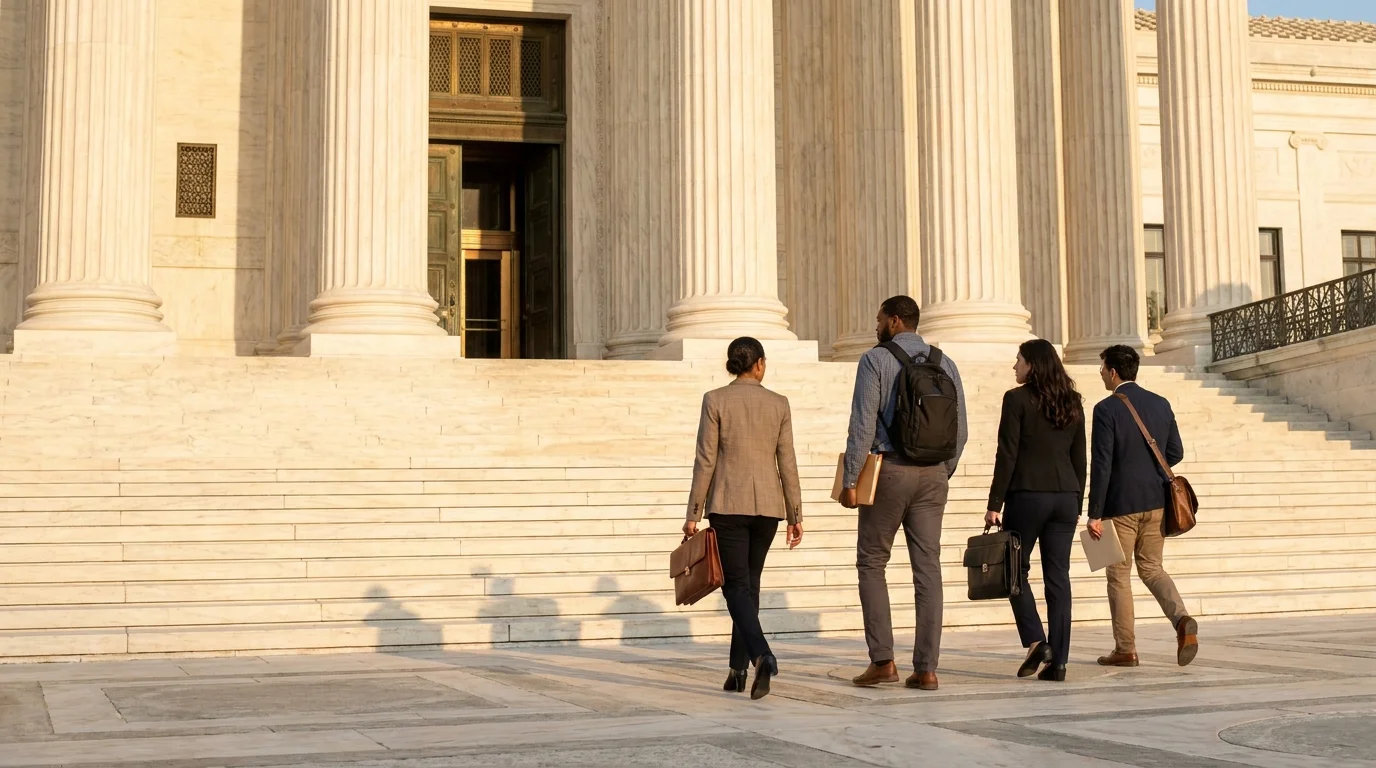
The city revolves around politics and government. The White House, the Capitol, the Supreme Court, federal departments, embassies, and the headquarters of international organizations such as the World Bank and the IMF are all located here. This attracts people from around the world: lawyers, lobbyists, diplomats, journalists, and researchers.

DC has a peculiar political situation: its residents do not have full representation in Congress (no senators, only a non-voting delegate in the House). Despite this, it is a wealthy, culturally vibrant city with the largest concentration of free museums in the US, all part of the Smithsonian complex.

Population
671,803
Average monthly salary
109,500 USD/mo
38.8974°, -77.0268°

Featured places

Top 10 places in District of Columbia

The places most sought-after by immigrants in this region.

District of Columbia demographics: a diverse and cosmopolitan city

Historic African American community, growing White, Latino, and African populations. Embassies bring people from around the world.

DC was historically a majority African American city, with a strong and influential Black community since the 19th century. Today the city is more balanced, with African Americans making up about 40% of the population, non-Hispanic Whites representing another large share, and rapid growth among Hispanic and Asian residents.

As a diplomatic capital, DC has one of the largest concentrations of foreign-born residents in the US outside of New York. There are large communities of Ethiopians, Eritreans, Salvadorans, Brazilians (in Adams Morgan and Mount Pleasant), Nigerians, and Indians. The Adams Morgan neighborhood is particularly known for its diversity.

Spanish is the second most commonly spoken language. Amharic (Ethiopian) is so common in some neighborhoods that DC has been nicknamed the second-largest Ethiopian city outside Ethiopia. Portuguese appears in small Brazilian communities, mainly in middle-class neighborhoods in the northwest.

671,803
Population
35 yrs
Median age
3,795/km²
Density
$101,027
Median income
per year
Urban population100.0%
Foreign-born13.9%
Languages spoken
  • English
  • Spanish
  • Amharic (Ethiopian)
  • French
  • Mandarin
  • +2 more
Main religions
  • Christian (Catholic, Protestant, Ethiopian Orthodox)
  • No religion
  • Jewish
  • Muslim
  • Hindu
  • +1 more

Cost of living in the District of Columbia: high, but with matching salaries

One of the most expensive cities in the US, with rents approaching New York City. Salaries in the public and legal sectors help offset costs.

Living in DC is expensive. A one-bedroom apartment in central neighborhoods (Dupont Circle, Logan Circle, Adams Morgan, Capitol Hill) runs between $2,000 and $2,800 per month. In more outlying neighborhoods (Petworth, Brookland), $1,500 to $1,900. Crossing into Maryland or Virginia brings costs down.

Groceries and restaurants follow the pattern of large East Coast cities. A meal at a casual restaurant costs $18 to $30. Specialty coffees and weekend brunches, which are common in the city, run around $25 to $40 per person.

The good news is that DC salaries are above the national average. Federal jobs, law firms, lobbying firms, consultancies (Booz Allen, Deloitte), and think tanks pay well. Families with a combined income above $150,000 can live comfortably, though housing takes a large share of earnings.

113Cost index (US = 100)13% above US average
CategorySingleCoupleFamily (2 + 2)
iHousing$1,474$1,701$2,155
iFood$431$862$1,565
iTransport$567$964$1,247
iHealthcare$318$635$1,191
iChildcare$2,064
iOther$964$1,735$2,438
Monthly total$3,754$5,897$10,660

Source: U.S. BLS Consumer Expenditure Survey 2023 + BEA Regional Price Parities 2023 · Estimates in USD, monthly.

Housing in the District of Columbia: expensive urban condos, homes in historic neighborhoods

Space is limited and prices are high. Brick rowhouses dominate the most classic neighborhoods.

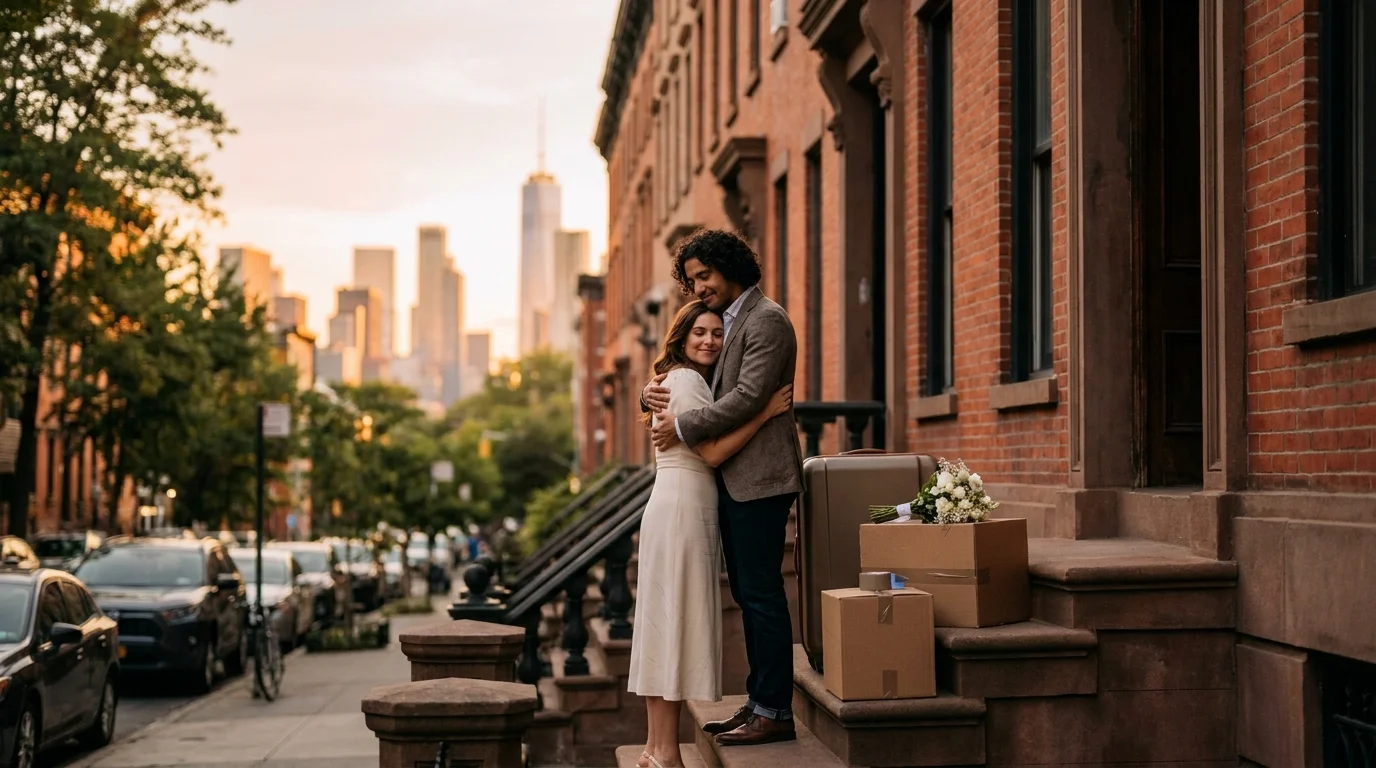
DC is a dense city and space is expensive. The most common housing type in traditional neighborhoods is the rowhouse (attached brick home), two or three stories tall. In neighborhoods like Georgetown, Capitol Hill, and Dupont Circle, these homes easily exceed $1.5 million.

New apartments in modern buildings (Navy Yard, NoMa, Shaw) run around $600,000 to $1 million for two bedrooms. Rents track accordingly. Many young professionals prefer to rent in DC and buy later in Maryland suburbs (Bethesda, Silver Spring) or Virginia (Arlington, Alexandria).

Legal statutes make renting accessible for documented immigrants. The process is the same: proof of income equivalent to 3 times the rent, credit history, and references. Those arriving without a US credit score may need a co-signer or a larger upfront payment. Many immigrants start in adjacent Maryland neighborhoods, which are more affordable.

Purchase price (m²)
  • Center$8,500/m²
  • Outside$5,800/m²
7.0×
Price-to-income
7.0%
Mortgage rate (20y)
Recommended neighborhoods
  • Dupont Circle (urban life, embassies)
  • Logan Circle (restaurants, nightlife)
  • Capitol Hill (near Congress)
  • Georgetown (historic, expensive)
  • Adams Morgan (diverse, Brazilian community)
  • +3 more

Job market in the District of Columbia: government, law, consulting, and diplomacy

The federal government is the largest employer. Law firms, lobbying offices, and international organizations employ thousands.

The federal public sector dominates the market. The US government employs hundreds of thousands of people in the city and its suburbs. Positions range from civil service (GS scale) to political appointee roles. Embassies, international organizations (World Bank, IMF, IDB), and NGOs also employ large numbers.

Law is enormous in DC, with firms like Covington, WilmerHale, Akin Gump, and Skadden moving billions. Lobbying, government relations, and think tanks (Brookings, Heritage, Cato) are part of the economic fabric. Consultancies like Booz Allen, Accenture Federal, and Deloitte have headquarters or large operations here.

Journalism (Washington Post, Politico, NPR), higher education (Georgetown, GW, American University), and healthcare are also strong sectors. Salaries in the legal and federal consulting sectors are among the highest in the country, frequently exceeding $200,000 for experienced professionals.

$109,500
Avg net salary
per month
$36,795
Minimum wage
per month
5.2%
Unemployment
70.9%
Labor force
Dominant sectors
  • Federal government
  • Law and lobbying
  • Consulting and federal contracting
  • Diplomacy and international organizations
  • Higher education
  • +3 more
Major employers
  • US Federal Government
  • Georgetown University
  • George Washington University
  • World Bank
  • Booz Allen Hamilton
  • +3 more

Education in the District of Columbia: elite universities and recovering public schools

Several well-known universities within the city. Public school system is improving but quality varies greatly by neighborhood.

DC has several respected universities. Georgetown is the oldest and most famous, with strong programs in law, international relations, and medicine. George Washington University (GW) and American University are large private institutions with excellent politics and journalism programs. Howard University is a historic reference in African American higher education.

The city's public school system (DC Public Schools) has uneven quality. Schools in neighborhoods like Capitol Hill and Cleveland Park are well rated. In poorer neighborhoods east of the Anacostia River, quality is still a challenge. Many families choose charter schools (publicly funded, independently managed) or private schools.

Maryland suburbs (Montgomery County, especially Bethesda) and Virginia (Fairfax County) have some of the best public school systems in the US. Families with children frequently move to these counties to ensure good schools without paying private tuition.

Literacy96.0%
Tertiary education64.0%
478
PISA score (avg)
$32,500
Private school
per year
Notable universities
  • Georgetown University
  • George Washington University
  • American University
  • Howard University
  • Catholic University of America
  • Gallaudet University
  • University of the District of Columbia

Healthcare in the District of Columbia: top hospitals, standard American model

First-class university hospitals. Employer-sponsored health insurance is the usual path; no universal coverage.

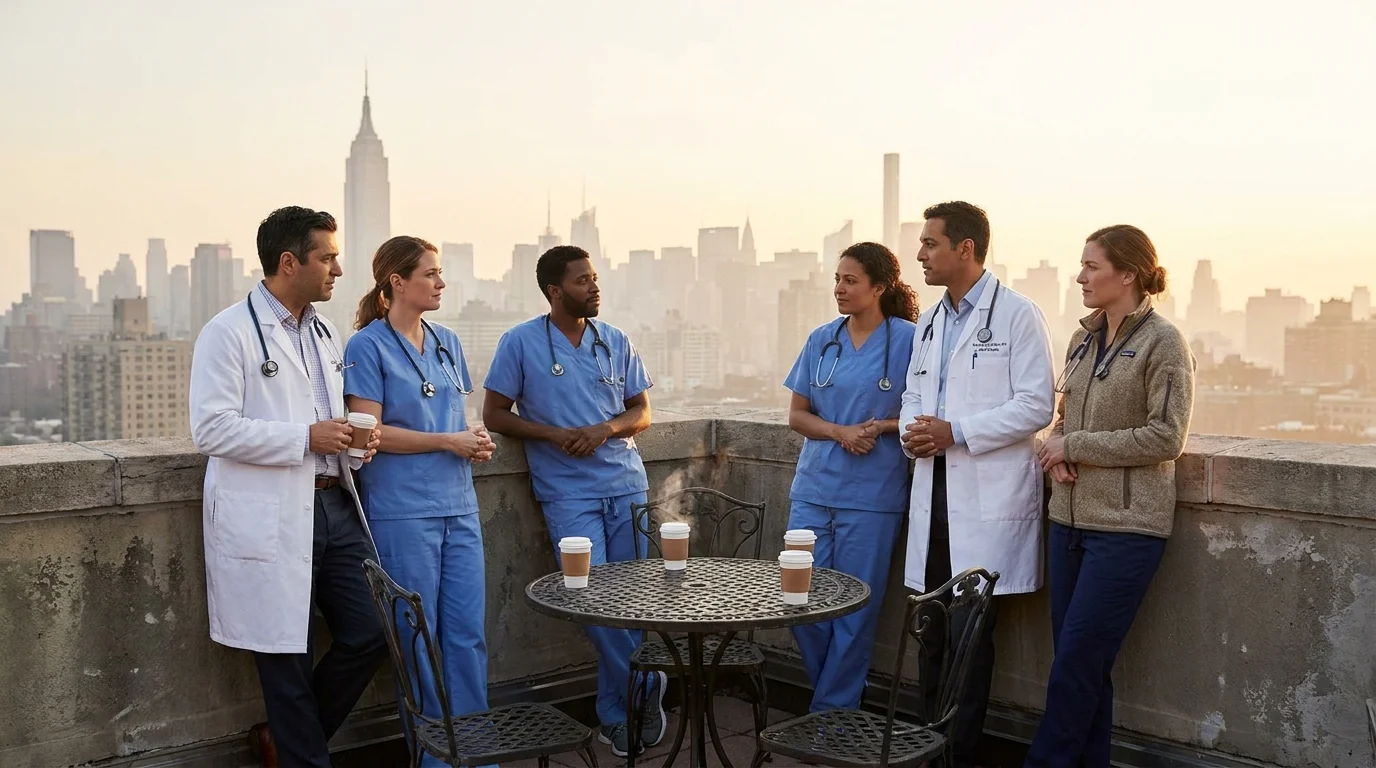
DC has some of the best hospitals on the East Coast. MedStar Georgetown University Hospital, George Washington University Hospital, and Children's National (a national pediatric reference) attract doctors and patients from around the world. There are also smaller hospitals scattered across the city.

The coverage model is the classic American one: no universal public system, private plan from the employer. Since many DC jobs are governmental or at large consultancies, plans tend to be good. Federal employees have FEHB (a specific program) with several plan options.

For lower-income residents, DC has one of the most inclusive Medicaid programs in the US. Documented immigrants have access after a waiting period. The city offers community clinics (Federally Qualified Health Centers) in various neighborhoods, with fees based on income, for those without a plan.

Healthcare index78.0 / 100
  • Life expectancyyears at birth
    78.4yrs
  • Doctors per 1kpracticing physicians
    7.5
  • Health spendper capita, per year
    $12,500
  • Public systemoverall quality rating
    Good

Safety in the District of Columbia: central neighborhoods safe, eastern areas more challenging

Most neighborhoods frequented by professional immigrants are calm. Areas east of the Anacostia River have higher crime rates.

Safety in DC varies considerably. Neighborhoods like Georgetown, Dupont Circle, Capitol Hill, Cleveland Park, and Foggy Bottom are quite safe, with consistent police presence and low violent crime. These are where most professionals, university students, and middle-class families are concentrated.

Areas east of the Anacostia River (Wards 7 and 8) have historically had the city's highest crime rates, with gun violence problems. Car thefts and muggings increased citywide in recent years, but much of the center and northwest remains reasonably safe.

Maryland suburbs (Bethesda, Chevy Chase) and Virginia (Arlington, Alexandria) rank among the safest in the metropolitan area. Many families with children prefer to live across the border for exactly this reason. It is worth checking the MPD (local police) crime maps before signing a lease.

35.8
Homicides per 100k
per year
Safety index
34.0
Crime index
66.0
Safer neighborhoods
  • Georgetown
  • Cleveland Park
  • Friendship Heights
  • Foggy Bottom
  • Capitol Hill (west side)
  • Dupont Circle
  • Bethesda (Maryland)
  • Arlington (Virginia)
Areas to avoid
  • Anacostia (Ward 8)
  • Trinidad northeast
  • Brentwood
  • Congress Heights

Transportation in the District of Columbia: good Metro, possible to live without a car

The Metro (WMATA) covers the city and nearby suburbs well. Three airports serve the region.

DC is one of the few American cities where you can live comfortably without a car. The Metro system (WMATA) has six lines covering the city and extending into Maryland and Virginia. Stations serve residential and commercial neighborhoods and the major tourist attractions.

There is also the DC Circulator bus (short central-area routes with nominal fares), Capital Bikeshare bicycles, and regular Metrobuses. Apps like Uber and Lyft are everywhere. In neighborhoods like Georgetown (which has no Metro station), the DC Streetcar and bike-sharing are common alternatives.

The metropolitan area is served by three airports: Ronald Reagan Washington National (DCA, inside DC, closest to the center), Washington Dulles (IAD, in Virginia, for international flights), and Baltimore/Washington (BWI, in Maryland). Amtrak trains from Union Station go directly to New York, Philadelphia, and Boston on the Acela line.

6
Metro lines
98
Metro stations
32 min
Avg commute
77
Walkability
Airports
  • DCA (Ronald Reagan Washington National)
  • IAD (Washington Dulles International)
  • BWI (Baltimore/Washington International)
  • International airport
  • Bike infrastructure

District of Columbia climate: four seasons, hot and humid summer

Heavy summer heat and humidity. Cold winter with occasional snow. Spring cherry blossoms are a spectacle.

DC has a humid temperate climate with four well-defined seasons. Summer (June to September) is rough: heat of 86 to 95 degrees Fahrenheit combined with high humidity. The city becomes stifling, and air conditioning is practically mandatory at home, work, and in transit. Afternoon storms are common.

Spring is magical in DC, especially in March and April, when cherry trees (a gift from Japan) bloom around the Tidal Basin and draw millions of visitors. Autumn is also pleasant, with colorful foliage in October and November and mild, comfortable temperatures.

Winter is cold but not extreme, with averages between 32 and 45 degrees Fahrenheit. It does snow, but the amount varies greatly: some winters have almost none, others bring major snowstorms. Serious snow events (Nor'easters) can shut down the federal government for days, becoming national news.

Sunny days / year203 days
Avg high (°F)
  • 45°J
  • 48°F
  • 56°M
  • 68°A
  • 76°M
  • 85°J
  • 90°J
  • 88°A
  • 81°S
  • 69°O
  • 58°N
  • 49°D
Avg low (°F)
  • 30°J
  • 32°F
  • 39°M
  • 48°A
  • 58°M
  • 67°J
  • 72°J
  • 71°A
  • 64°S
  • 52°O
  • 42°N
  • 35°D
Rainfall (")
  • 3"J
  • 3"F
  • 4"M
  • 3"A
  • 4"M
  • 4"J
  • 4"J
  • 3"A
  • 4"S
  • 4"O
  • 3"N
  • 3"D

District of Columbia culture: free museums, politics, and international cuisine

The Smithsonian, national monuments, and theaters keep cultural life active. Ethiopian, Salvadoran, and Mexican restaurants shine.

DC has one of the best cultural scenes in the US, with most attractions free of charge. The Smithsonian complex includes dozens of world-class museums (Natural History, Air and Space, American Art, African American History), all free to enter. The National Mall, with the Lincoln Memorial and Washington Monument, draws millions.

The theater scene is vibrant: the Kennedy Center, Arena Stage, and the Shakespeare Theatre. Independent cinema is shown at Landmark theaters, with festivals like Filmfest DC. Live music appears at venues like the 9:30 Club. Summer park concerts (National Symphony on the Capitol steps) are a seasonal highlight.

The food scene reflects the city's diversity. Ethiopian restaurants (Dukem, Etete) are a local tradition. Salvadoran food in Mount Pleasant and strong Mexican, Peruvian, Mediterranean, and Indian options abound. Weekend brunch is practically a local sport. Good Brazilian restaurants are rare, but a few exist in neighborhoods like Adams Morgan.

200
Major museums
Notable dishes
  • Half-smoke (DC's signature sausage, from Ben's Chili Bowl)
  • Mumbo sauce (DC's sweet sauce on fried chicken)
  • Ethiopian food (injera with wat)
  • Salvadoran pupusas
  • Soft-shell crab
  • +1 more
Annual events
  • National Cherry Blossom Festival (March-April)
  • Independence Day on the National Mall (July 4)
  • DC Jazz Festival (June)
  • Smithsonian Folklife Festival (June-July)
  • Capital Pride (June)
  • +1 more

Key industries in the District of Columbia

Federal government, law, consulting, diplomacy, and higher education dominate. Technology in government contracts is growing.

The federal government is the engine of the local economy. Hundreds of thousands of employees work directly in departments, agencies, Congress, and the Supreme Court. Around them orbit law firms, lobbying shops, consultancies, and PR agencies that subsist on government access.

International organizations (World Bank, IMF, IDB, OAS) and embassies bring professionals from around the world. NGOs, foundations (Gates, Open Society), and think tanks also concentrate operations in the city. Higher education is strong: Georgetown, GWU, American, and Howard employ thousands.

Technology has grown through federal contracting, especially in cybersecurity, defense, and data. Companies like Booz Allen, Leidos, CACI, and NSA contractors have large operations in the metropolitan area. Tourism (museums, monuments, political interest) and hospitality complete the picture.

  • GDPgross domestic product
    $175.0B
  • GDP per capitaoutput per resident
    $260,000
  • GDP growth (yr)economy expanding
    +2.3%
Top sectors
  • Federal government
  • Law and lobbying
  • Management consulting and federal contracts
  • Diplomacy and international organizations
  • Higher education
  • +3 more

Immigrant communities in District of Columbia

About 95,000 immigrants live in Washington D.C., home to the largest Ethiopian community in the United States and a strong Salvadoran presence in Mount Pleasant and Columbia Heights.

Washington D.C. has around 95,000 residents born outside the country, close to 14% of the population. The capital hosts the largest Ethiopian community in the United States, about 35,000 people clustered along U Street, Adams Morgan, and Shaw, where Amharic signs over injera restaurants mark the neighborhood. Salvadorans form the second largest group and have dominated Mount Pleasant and Columbia Heights since the 1980s, brought by the civil war. Hondurans, Guatemalans, Indians, and Vietnamese round out the picture, the last with a strong presence around the Eden Center in nearby Falls Church.

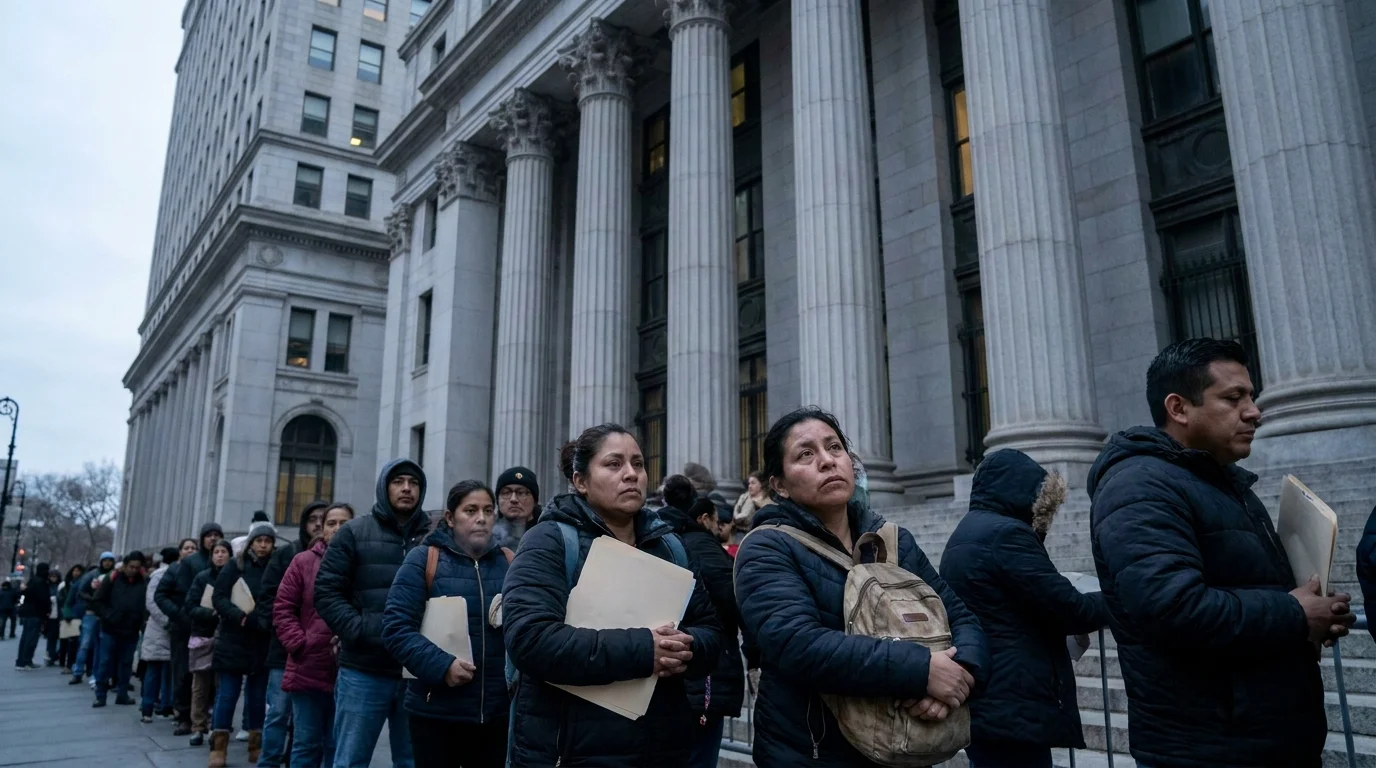
As the national capital, D.C. concentrates virtually every embassy in the world, and most offer consular services for residents. CARECEN (Central American Resource Center) has worked for four decades with Salvadorans and Central Americans, offering immigration counsel, DACA, and TPS assistance. Ayuda provides free legal aid in immigration, domestic violence, and workers' rights. The Asian Pacific American Legal Resource Center serves Mandarin, Vietnamese, and Korean speakers. Ethiopian Community Services operates along U Street with social services, and Catholic Charities of D.C. covers the entire district.

95,000
Foreign-born residents
estimated
Top countries of origin
  • El Salvador
  • Ethiopia
  • Guatemala
  • Honduras
  • India
Main immigrant hubs
  • Mount Pleasant
  • Columbia Heights
  • U Street/Adams Morgan
  • Shaw
  • Petworth
Foreign consulates
  • Embassy of El Salvador in Washington D.C.
  • Embassy of Ethiopia in Washington D.C.
  • Embassy of Mexico in Washington D.C.
  • Embassy of India in Washington D.C.
  • Embassy of Guatemala in Washington D.C.
Community organizations
  • CARECEN (Central American Resource Center)
  • Ayuda
  • Asian Pacific American Legal Resource Center
  • Ethiopian Community Services
  • Catholic Charities of the Archdiocese of Washington

Latest posts

Posts about the United States

Coverage and updates related to this destination.

Showing content from the United States, as there is no specific data for the District of Columbia yet.