English
 Português
 Español



Physical therapy is one of the healthcare professions with the highest demand in the American market, offering competitive salaries and growth prospects above the national average. For foreign professionals who wish to work as physical therapists in the United States, the path involves diploma validation, passing specific exams, state licensing, and obtaining an appropriate immigration status.
The aging of the American population, the growing emphasis on post-surgical rehabilitation, and the increased value placed on preventive care drive sustained demand for physical therapists across the country. Understanding each step of the licensing process is essential to turning this professional goal into reality.
Salaries and Job Market
Figures from the Bureau of Labor Statistics (BLS) confirm the financial attractiveness of the career. The median annual salary for physical therapists in the United States is approximately $101,020, according to the most recent data (May 2024). The top 25% earn above $117,190 per year, while the lowest 25% earn from $83,470.
Compensation varies according to state, specialization, and work environment. States such as California, Texas, Florida, and New York concentrate a large share of job openings and offer some of the highest salaries in the country. Specialized outpatient clinics tend to pay above average, while hospital settings offer competitive pay with additional benefits.
Employment for physical therapists is expected to grow 11% between 2024 and 2034, a rate significantly higher than the average for all occupations in the United States. This growth creates consistent opportunities for qualified professionals, including those trained abroad.
Diploma Validation
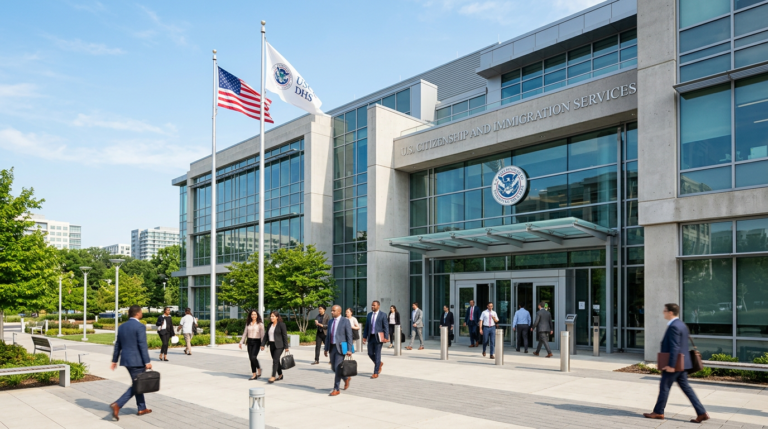
The first step to legally practice as a physical therapist in the US is to validate your foreign degree. In most states, this evaluation is conducted by the Foreign Credentialing Commission on Physical Therapy (FCCPT), a nonprofit organization authorized by USCIS to issue certificates for foreign healthcare professionals.
The purpose of the evaluation is to prove that the professional’s education is substantially equivalent to the American Doctor of Physical Therapy (DPT), the standard academic degree required for practice in the United States. The FCCPT analyzes the course curriculum, supervised clinical hours, and academic content in comparison with the standards established by the Commission on Accreditation in Physical Therapy Education (CAPTE).
It is important to start this process in advance, as collecting and sending international academic documents can take months. Certified translations and institutional verifications are often required.
NPTE National Exam
After credential approval by the FCCPT, the professional must pass the National Physical Therapy Examination (NPTE), administered by the Federation of State Boards of Physical Therapy (FSBPT). This is the mandatory national exam to obtain a physical therapist license in all US states.
The NPTE assesses clinical competencies, therapeutic reasoning, professional ethics, and evidence-based decision-making ability. The exam is computerized and contains 250 multiple-choice questions, of which 200 are scored. The candidate has five hours to complete the test.
Adequate preparation for the NPTE requires mastery of technical English and familiarity with the American healthcare system. Specialized preparatory courses, question banks, and study groups are widely used resources by international candidates. The clinical knowledge acquired in professional practice in the country of origin is a solid foundation, but must be complemented with the particularities of the American therapeutic approach.
State Requirements
In addition to the NPTE, each state has additional requirements for granting a physical therapist license. These requirements may include state jurisprudence exams, which assess knowledge of local laws and regulations of the profession, supervised clinical experience hours, and criminal background checks.
Some states have faster processes, while others require additional documentation or periods of supervision before granting full licensure. Researching the requirements of the state where you intend to work in advance is essential to avoid delays and ensure efficient planning. The FSBPT website provides detailed information on the requirements of each jurisdiction.
Visa Options
With licensing in hand, the foreign physical therapist needs to secure an immigration status that allows them to work legally in the United States. The main visa categories include temporary and permanent options, each with distinct requirements and advantages.
The H-1B is a temporary work visa intended for specialized occupations. It requires a job offer and sponsorship from a US employer, and is also subject to an annual lottery system due to high demand. Physical therapists with a state license and a formal job offer are eligible candidates for this category.
The EB-3 is a permanent residency category for skilled professionals, also dependent on a job offer and PERM labor certification. The process is longer, but results directly in a green card for the beneficiary and their dependents.
The EB-2 NIW (National Interest Waiver) is one of the most strategic alternatives for physical therapists. It is a permanent residency visa that waives the job offer requirement, provided the professional proves that their work serves the national interest of the United States. Physical therapists with relevant experience, work in high-demand areas, or demonstrable impact on public health often have profiles that meet the criteria for this category.
Building a strong case for the EB-2 NIW requires detailed documentation of professional contributions, including clinical experience, any publications, participation in community health programs, and evidence of the positive impact of the physical therapist’s work in the region where they intend to work.
The physical therapy career in the United States combines high demand, competitive compensation, and multiple immigration pathways. The licensing process is technical and requires dedication, but professionals who invest in proper preparation find a receptive market and consistent opportunities for professional growth throughout the country.
Learn more about EB-2 NIW
- Category
- EB-2 NIW Green Card
- Self-petition
- Allowed (no sponsor needed)
- PERM
- Waived
- Processing
- 12-36 months
About the author

Victoria Harper
Editor-in-Chief
As a journalist and lead editor at Visto n’ Visa, Victoria helps ensure that immigration topics are covered in a clear, trustworthy, and easy-to-understand way. Her focus is on delivering useful, human, and relevant content for people exploring new paths abroad.