English
 Português
 Español


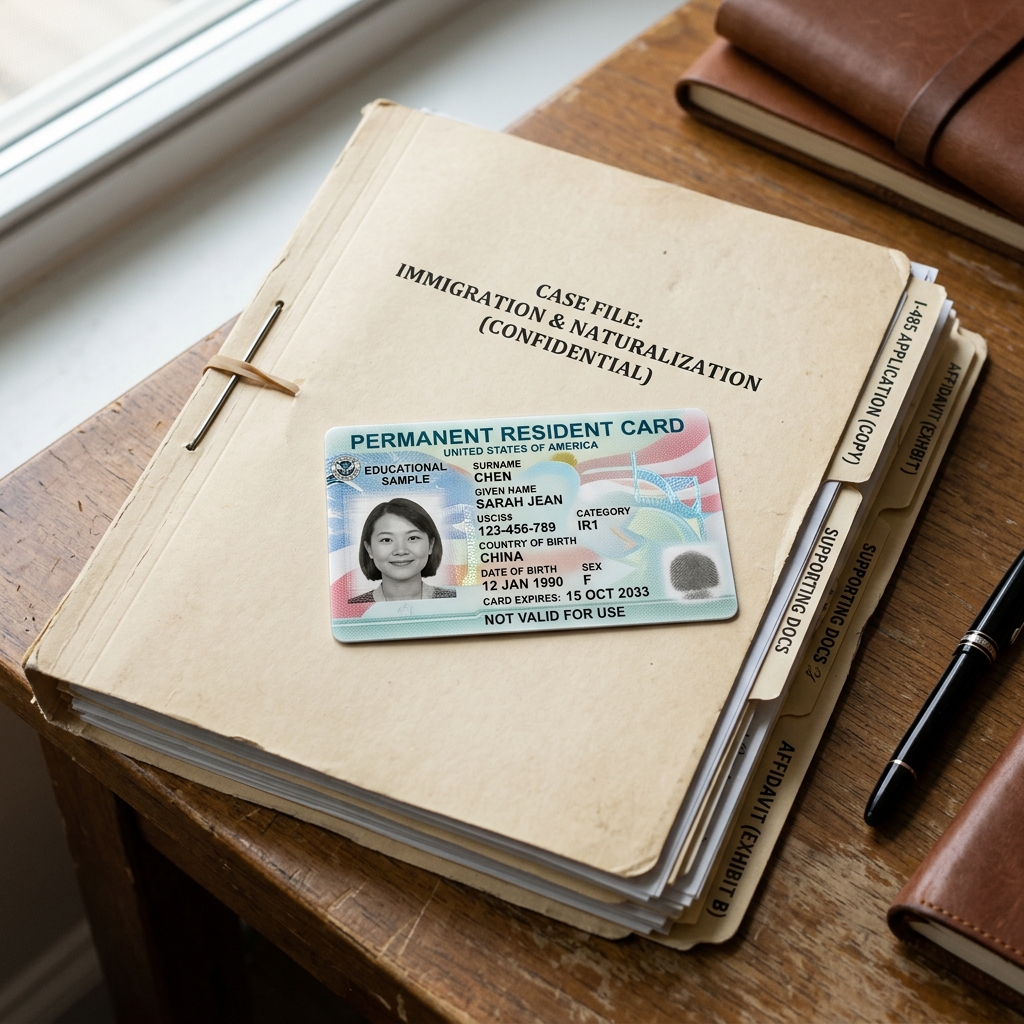
Obtaining a Green Card is the primary goal for skilled professionals who want to build a long-term career in the United States. Permanent residence eliminates dependence on temporary visas, allows you to work for any employer, and opens the path to U.S. citizenship. Among the various employment-based immigration categories, two stand out for professionals with advanced degrees and strong track records: the EB-2 NIW and the EB-1.
Both categories offer the possibility of self-petition, meaning the applicant can initiate the process independently, without relying on a job offer or a sponsoring employer in the United States. This feature makes these pathways especially attractive for foreign professionals who still live abroad or who want greater autonomy in their immigration process.
Understanding the differences between these two categories, the requirements, and the steps in the process is essential for making an informed decision and increasing the chances of approval.
What Is the EB-2 NIW
The EB-2 NIW (National Interest Waiver) is a subcategory of the EB-2 visa that waives the requirement for a PERM Labor Certification and a formal job offer. To qualify, the applicant must demonstrate either an advanced academic degree, a master’s degree or higher, or a bachelor’s degree with at least five years of progressive experience in the field, or exceptional ability in their area of expertise.
Beyond educational requirements, the applicant must satisfy the test established in the precedent Matter of Dhanasar (2016), which evaluates three criteria: the proposed endeavor must have substantial merit and national importance; the applicant must be well positioned to advance that endeavor; and it must be beneficial to the United States to waive the job offer and labor certification requirements.
In practice, USCIS examines whether the professional’s work has the potential to generate a positive impact at a national scale, not necessarily across the entire country, but in an area that transcends purely local or single-employer interests. Fields such as technology, healthcare, engineering, science, education, and innovative entrepreneurship tend to perform well under this category.
Profiles Eligible for EB-2 NIW
The EB-2 NIW serves a broad spectrum of professionals. Among the profiles that most frequently receive approval are engineers across various specialties, information technology professionals, academic researchers, physicians, dentists, pharmacists, data scientists, and artificial intelligence professionals. Entrepreneurs who can demonstrate economic impact or innovation in their sectors may also qualify.
The key element is not necessarily individual prestige, but the ability to demonstrate that the proposed work in the United States addresses a need of national interest. Scientific publications, patents, impactful projects, relevant contracts, and letters of recommendation from independent experts are all evidence that significantly strengthens a petition.
- Engineering and technology professionals with innovative projects
- Researchers with publications and citations in recognized journals
- Healthcare professionals working in areas of shortage or innovation
- Entrepreneurs with a track record of job creation or revenue generation
- Educators with significant contributions to academic development
The EB-1 Visa
The EB-1 is the top preference category among employment-based immigrant visas, which generally means shorter wait times in the Visa Bulletin. This category is divided into three subcategories with distinct requirements.
EB-1A (Extraordinary Ability) is for individuals who demonstrate extraordinary ability in sciences, arts, education, business, or athletics. The applicant must show sustained national or international recognition in their field, presenting evidence such as major awards, publications in prominent venues, participation as a judge of others’ work, original contributions of major significance, and high compensation relative to the industry average. Like the EB-2 NIW, EB-1A allows self-petition.
EB-1B is for outstanding professors and researchers, requiring at least three years of experience in research or teaching and a permanent job offer from a U.S. university or research institution. EB-1C covers multinational executives and managers transferred to a branch, subsidiary, or affiliate in the United States, requiring at least one year of experience in an executive or managerial role at the foreign company within the three years preceding the petition.
Documentation and Evidence
Preparing documentation is one of the most critical steps in the process, both for the EB-2 NIW and the EB-1. A well-supported petition requires organized evidence, strategically presented to demonstrate that the applicant meets the criteria of the chosen category.
Among the most important documents are academic degrees and certifications (with equivalency evaluation when obtained outside the United States), detailed recommendation letters from independent experts attesting to the applicant’s contributions, evidence of publications and citations, patent records, evidence of awards and professional recognition, and documentation of impactful projects or ventures.
Recommendation letters deserve special attention. USCIS values letters from professionals who have no direct working relationship with the applicant, as those opinions are considered more impartial. Each letter should detail the professional’s specific contributions and explain why they are relevant to the field.
Steps in the Process
The process for obtaining a Green Card through the EB-2 NIW or EB-1 follows a well-defined sequence of steps. The first step is filing the I-140 petition (Immigrant Petition for Alien Workers) with USCIS, accompanied by all supporting documentation and the filing fee. Standard I-140 processing can take several months, but premium processing is available and guarantees an initial response within 45 business days for an additional fee.
After the I-140 is approved, the next step depends on where the applicant is located. Those already in the United States with valid status may file for Adjustment of Status (Form I-485), provided a visa is available in the category, meaning the priority date is current in the Visa Bulletin. In some cases, it is possible to use concurrent filing, submitting the I-140 and I-485 simultaneously, which can significantly accelerate the process.
Applicants outside the United States will go through consular processing, attending an interview at the U.S. embassy or consulate in their country of residence after the I-140 is approved and an immigrant visa becomes available.
Regardless of the path chosen, maintaining valid immigration status throughout the entire process is essential. Any irregularity can jeopardize the petition and cause delays or denials that could have been avoided with proper planning and attention to legal deadlines and requirements.
Learn more about EB-1
- Category
- EB-1 Green Card (1st priority)
- Requirement
- Extraordinary ability
- Self-petition
- Allowed (no sponsor needed)
- Processing
- 6-18 months
Tags
About the author

Victoria Harper
Editor-in-Chief
As a journalist and lead editor at Visto n’ Visa, Victoria helps ensure that immigration topics are covered in a clear, trustworthy, and easy-to-understand way. Her focus is on delivering useful, human, and relevant content for people exploring new paths abroad.