English
 Português
 Español


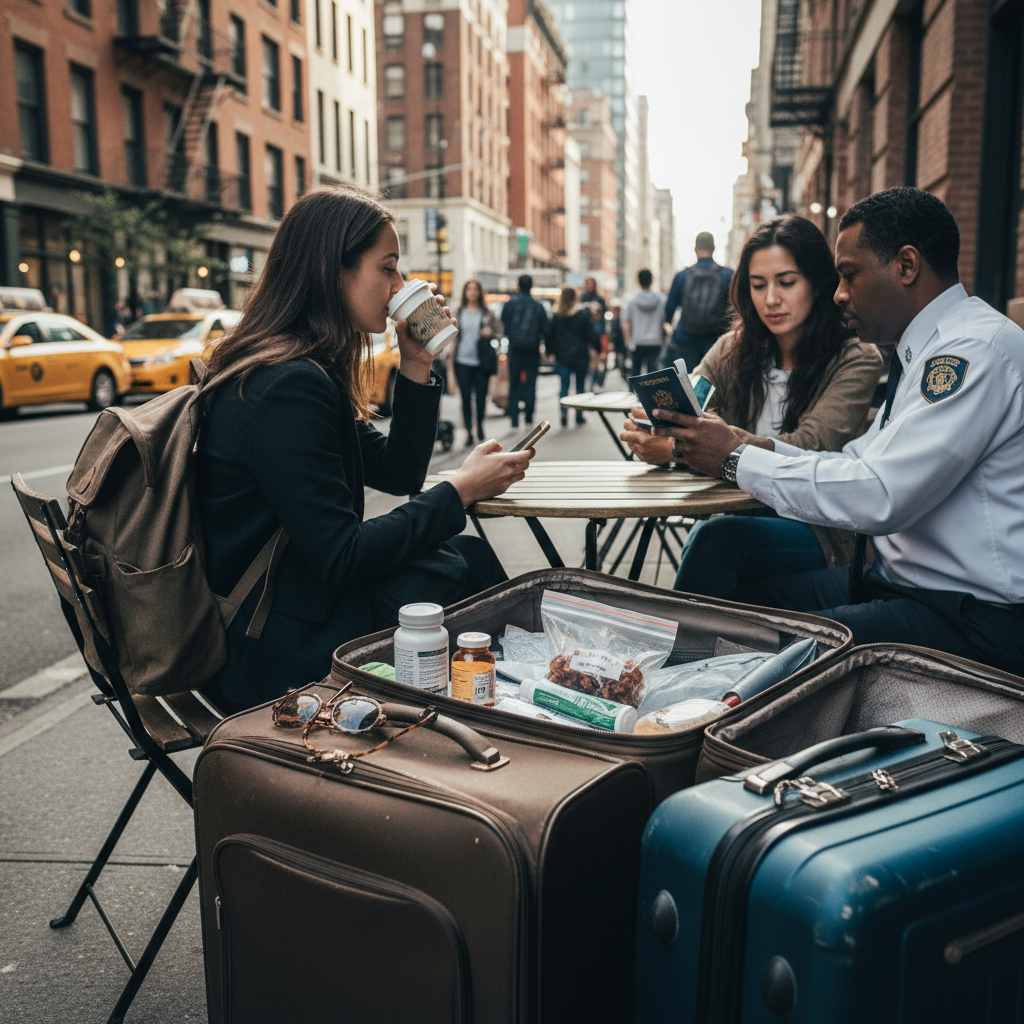
Traveling to the United States in 2026 requires extra preparation. Border enforcement has become stricter in recent years, with Customs and Border Protection (CBP) officers inspecting luggage, electronic devices, and even travelers’ social media accounts. Small oversights — such as an unprescribed medication or a prohibited food item — can result in detention, deportation, or a years-long ban. This guide covers the current rules from the Transportation Security Administration (TSA), Food and Drug Administration (FDA), United States Department of Agriculture (USDA), and CBP so your arrival goes smoothly.
Medications in Your Luggage
Not every medication sold over the counter outside the US is accepted in American territory. Controlled substances such as opioids (Tramadol, Codeine, Oxycodone) and anxiolytics (Diazepam, Clonazepam) require an English-language medical prescription and, in some cases, prior authorization from the Drug Enforcement Administration (DEA). Dipyrone (metamizole), widely used in many countries, has been banned in the US since 1977 due to the risk of agranulocytosis, and the FDA has never reintroduced it to the market.
For Temporary Visitors
Foreign nationals on temporary visits may bring their own medications, provided they are accompanied by a valid prescription or doctor’s note in English. The CBP recommends keeping medication in its original packaging with the printed insert. If the original packaging is unavailable, carry a copy of the prescription or a letter from your doctor explaining the medical condition.
The general rule is not to exceed a 90-day supply, the maximum period allowed under most visitor visas. Longer stays may require mail importation with supporting documentation: a copy of your passport and visa, a doctor’s letter, and an English-language prescription.
For US Citizens
US citizens should travel only with medications prescribed by a physician licensed in the United States or legally obtained in the country. In general, it is illegal for a US citizen to import medications purchased abroad for personal use — even foreign versions of FDA-approved products. Limited exceptions are outlined in Chapter 9-2 of the agency’s Regulatory Procedures Manual, but they require specific documentation.
Before You Board
- Bring only the amount needed for your trip;
- Check the active ingredient on the DEA website before boarding;
- For controlled substances, consider requesting prior authorization from the DEA or FDA;
- If there is no viable alternative medication, consult a US-based physician to issue a local prescription before traveling.
Medical Devices and Sensitive Items
Passengers with prosthetics, post-surgical bras, or body-integrated devices have specific rights during airport screening. These items are recognized as medical necessities and do not need to be removed at the X-ray checkpoint. Notify the TSA officer before the screening so an alternative pat-down can be conducted.
Those who wear glasses or contact lenses should bring a spare pair and a copy of their optical prescription, useful in case a replacement needs to be purchased at the destination.
Cosmetics and Liquids
The TSA’s 3-1-1 Rule is the starting point for any liquid in carry-on luggage. Each container must hold no more than 100 ml, all packed in a single clear, zip-top bag with a capacity of approximately 1 liter. Each passenger may carry one bag.
Carry-On Luggage
Allowed: moisturizers, liquid makeup, foundations, perfumes, gel deodorant — all in containers up to 100 ml. Solid cosmetics (lipstick, compact powder, stick blush, bar shampoo) are not subject to the rule.
Prohibited: containers larger than 100 ml, even if partially full; flammable aerosols with high alcohol concentration; cosmetics outside the clear zip-top bag.
Checked Luggage
There is no strict quantity limit. Large-bottle cosmetics, roll-on deodorants, and alcohol-free sprays are allowed. Flammable aerosols and poorly sealed containers remain prohibited.
Food and Beverages
The USDA prohibits the entry of products that could compromise American agriculture or public health. Fresh meats, uninspected fruits and vegetables, unsealed honey, and certain seeds are frequently confiscated at customs.
Carry-On Luggage
Liquid and paste-like foods (yogurt, jam, sauces) follow the 3-1-1 Rule. Non-alcoholic beverages may only be brought on board if purchased after the security checkpoint. Breast milk and infant formula are exceptions and may exceed 100 ml, provided they are declared to the officer.
Checked Luggage
Allowed: packaged food (cookies, canned goods, whole-bean coffee, chocolate) and properly packed non-alcoholic beverages. Prohibited by the USDA: fresh meats, fruits and vegetables without a phytosanitary certificate, artisan cheeses, homemade yogurts, and unsealed honey.
Alcoholic Beverages
In carry-on luggage, miniatures up to 100 ml follow the 3-1-1 Rule. Duty-free purchases made after screening must remain in the sealed bag until the final destination, with the receipt visible.
In checked luggage, beverages with an alcohol content between 24% and 70% may be transported up to a limit of 5 liters per passenger. Beverages above 70% are classified as flammable material and are prohibited. Some US states have their own laws regarding alcohol importation — check local regulations before traveling.
Carry-On vs. Checked Luggage
Carry-On on Flights to the US
Allowed: liquids in 100 ml containers in the 3-1-1 bag, baby food and breast milk in reasonable quantities (with declaration), medications with an English-language prescription, solid cosmetics, electronics such as laptops and tablets.
Prohibited: liquids over 100 ml outside sealed duty-free packaging, fresh meats and fruits, sharp objects such as knives and scissors with a blade longer than 6 cm, tools, additional lighters (only one standard lighter is allowed).
Checked Luggage on Flights to the US
Allowed: liquids in any quantity, packaged foods, tools, alcoholic beverages within the content and volume limits.
Prohibited: fresh or uninspected meats, fruits and seeds without a phytosanitary certificate, non-industrialized dairy products, counterfeit goods, bladed weapons, controlled substances (including marijuana, even if legalized in some states under local law — federal law still applies at the border).
Lithium Batteries
Removable lithium batteries may not travel in checked luggage due to the risk of overheating. When integrated into a device (laptop, camera), the equipment may be checked, but the official recommendation is to carry it in your carry-on for a quick response in the event of an incident.
Luggage and Electronic Device Searches
The CBP has the authority to inspect bags and electronic devices — including cell phones, laptops, and tablets — without a court warrant at ports of entry. Scrutiny of social media accounts and private messages has intensified in recent years, and conversations suggesting an intent to work without authorization, overstay, or start a business in a visa-incompatible status can trigger a secondary inspection and even denial of entry.
To reduce risks, keep documents that support the declared purpose of your trip: hotel reservations, return tickets, ties to your home country, proof of income, and an itinerary. Avoid messages, emails, or posts that could be interpreted as inconsistent with the stated purpose of your visa.
Duty-Free Shops and Exceptions
Liquid products purchased at duty-free shops in the boarding area may exceed the standard limits in carry-on luggage, provided they are in sealed plastic bags, with a visible receipt and a purchase date matching the flight date. This exception does not apply to liquids purchased outside the airport. On international connections with a new security checkpoint, the sealed bag must remain closed and the receipt must be accessible.
TSA and CBP officers have the authority to confiscate any item deemed inappropriate, even if technically allowed. Before boarding, check the TSA’s official What Can I Bring? page and your airline’s specific rules, as weight and allowance limits vary by carrier.
About the author

Victoria Harper
Editor-in-Chief
As a journalist and lead editor at Visto n’ Visa, Victoria helps ensure that immigration topics are covered in a clear, trustworthy, and easy-to-understand way. Her focus is on delivering useful, human, and relevant content for people exploring new paths abroad.