English
 Português
 Español


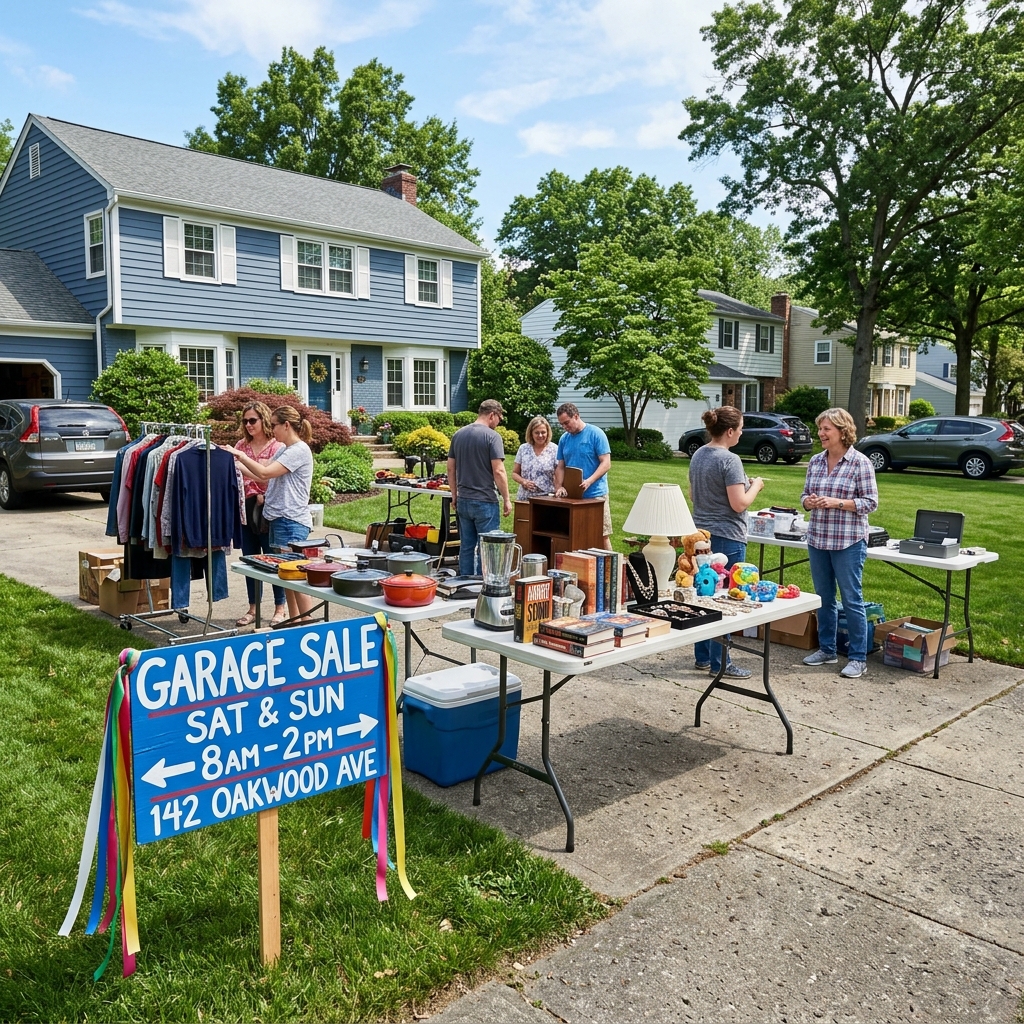
Adapting to life in the United States goes far beyond sorting out the paperwork of immigration. Social customs that seem trivial to Americans can catch newly arrived immigrants off guard and, when unfamiliar, lead to awkward situations. Two emblematic examples of this cultural difference are tipping and garage sales.
Understanding these traditions is not just a matter of etiquette. It is a way to integrate into the community, avoid misunderstandings, and take advantage of opportunities that are part of everyday American life. For those moving to the United States, investing time in learning these cultural codes is just as important as getting the paperwork in order. Knowing the unwritten rules of daily life eases the adjustment and makes the experience of living abroad more enjoyable.
Why Tipping Matters
In the United States, the tip is not an optional gesture of generosity: it is a structural part of the compensation for millions of service industry workers. Federal law allows employers to pay a reduced base wage to tipped employees, known as the tipped minimum wage, currently set at $2.13 per hour. This means that tips make up the majority of these workers’ income.
Not tipping or leaving a very low amount is interpreted as severe dissatisfaction with the service and can be considered socially offensive. Even if the service was only adequate, the expectation is to leave at least 15% of the total bill.
A Practical Tipping Guide
Each type of service in the United States has a socially accepted tipping range. Knowing these norms prevents awkward situations and shows respect for local culture.
At sit-down restaurants, the expected tip is 15% to 20% of the bill before taxes. For exceptional service, many Americans leave 25% or more. At bars, the common practice is $1 to $2 per drink ordered at the counter.
Rideshare drivers for services like Uber and Lyft receive tips of 15% to 20% of the fare, offered directly through the app. Food delivery drivers follow the same range, with a suggested minimum of $3 to $5 even for smaller orders.
Hairdressers, nail technicians, estheticians, and massage therapists expect tips of 15% to 20% of the service fee. At hotels, it is customary to leave $2 to $5 per night for housekeeping, usually in an envelope or under the pillow, and $1 to $5 per bag for bellhops.
Some situations do not call for tipping: fast food establishments, counter-service cafes, and retail stores do not carry this expectation. However, digital tip prompts on payment terminals are becoming increasingly common, even in places where tipping was not traditionally expected.
Garage Sales Explained
Garage sales are a deeply rooted American tradition tied to the culture of consumption and letting go. Residents sell items they no longer use, from furniture and appliances to clothing, toys, books, and household goods, typically at prices well below market value.
These sales take place predominantly on weekends, especially in spring and summer. They are advertised with signs in the neighborhood, on community apps like Nextdoor, and in local social media groups. In many cities, there are also community garage sales, organized events where dozens of homes in the same neighborhood participate at the same time.
How to Make the Most of Garage Sales
For those setting up a home in the United States, garage sales are an exceptional opportunity to acquire quality items at a fraction of the price. It is common to find furniture in good condition for $20 to $50, kitchen items for under $5, and brand-name clothing for $1 to $3 per piece.
Negotiating the price is not only accepted but expected, especially in the final hours of the sale, when sellers prefer to let things go cheap rather than haul them back inside. Bringing cash is essential, as most sellers do not accept credit or debit cards.
Arriving early ensures access to the best items, but going at the end of the day allows for even lower negotiated prices. Beyond in-person garage sales, platforms like Facebook Marketplace, OfferUp, and Craigslist offer similar options for buying used items, with the convenience of filtering by location and category.
Cultural Context
In many other countries, the culture of selling used items between neighbors is less established. More common options include donating to institutions, selling at charity bazaars, or using digital platforms. The in-person experience of browsing garage sales, with direct negotiation and community interaction, is an aspect of American life that many immigrants come to appreciate.
Regarding tipping, the contrast with other countries is also significant. In many places, a 10% service charge is optional and often already suggested on the bill. In the United States, the tip is calculated separately, the percentages are higher, and tipping is considered virtually mandatory for personal service interactions.
Adapting to these cultural practices is an essential part of integrating into American society. Over time, both tipping appropriately and frequenting garage sales become second nature and enrich the experience of living in the United States, offering not only day-to-day savings but also genuine connections with the local community.
About the author

Victoria Harper
Editor-in-Chief
As a journalist and lead editor at Visto n’ Visa, Victoria helps ensure that immigration topics are covered in a clear, trustworthy, and easy-to-understand way. Her focus is on delivering useful, human, and relevant content for people exploring new paths abroad.