English
 Português
 Español


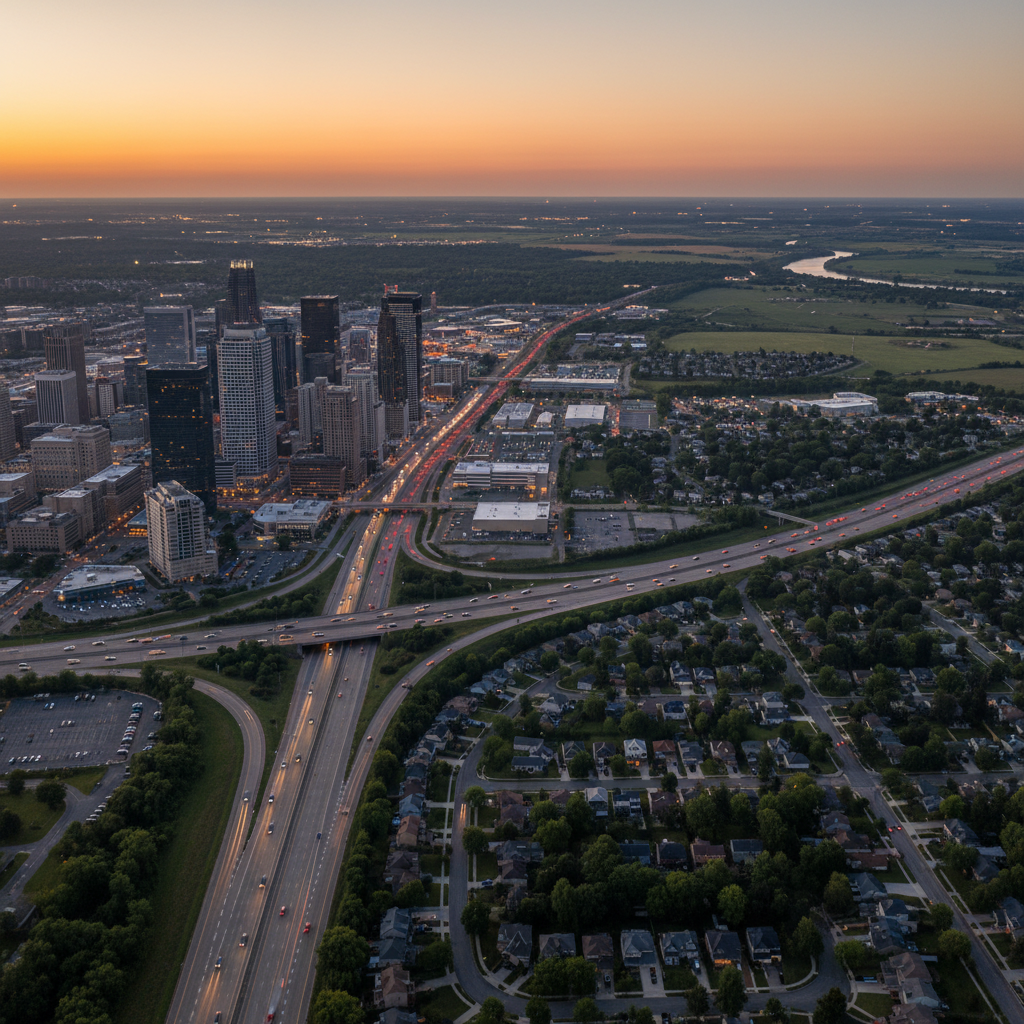
The EB-5 visa is the primary investment-based immigration pathway to the United States and took on a new shape after the EB-5 Reform and Integrity Act (RIA), signed into law in March 2022. The rules in effect for 2026 redefined minimum investment amounts, created set-aside visa categories, and extended the Regional Center Program through at least September 2027. Anyone planning to immigrate to the U.S. through this route needs to understand how much to invest, where to invest, which forms to file, and what timelines to expect before committing capital.
What Is the EB-5
The EB-5 is an employment-based immigrant visa category created by the Immigration Act of 1990. It allows a foreign investor and their immediate dependents — spouse and unmarried children under 21 — to obtain conditional permanent residence by investing capital in a U.S. commercial enterprise that creates or preserves at least ten full-time jobs for qualifying workers.
After two years of conditional residency, the investor files to remove the conditions and receives an unrestricted Green Card. Once the statutory waiting periods are met — typically five years from the grant of permanent residence — adults may naturalize as U.S. citizens.
Minimum Investment Amounts in 2026
The EB-5 Reform and Integrity Act raised the minimum thresholds that had remained frozen for decades. The current rules are:
- Standard investment: $1,050,000 for projects located outside a Targeted Employment Area.
- TEA investment: $800,000 for projects in a rural area, high-unemployment area, or a qualifying governmental infrastructure project.
USCIS may adjust these amounts every five years based on inflation. The next adjustment scheduled under the legislation is set for 2027, and investors who have already filed a petition before the adjustment date retain the amount in effect at the time of filing.
Targeted Employment Area
The TEA category was overhauled by the RIA. Today, only USCIS — no longer the individual states — designates which regions qualify as high-unemployment areas, defined as having an unemployment rate of at least 150% of the national average. Rural areas, defined as localities outside Metropolitan Statistical Areas and outside cities with more than 20,000 residents, also qualify and received special priority status.
Set-Aside Visas and Country Backlogs
The RIA created three set-aside categories within the EB-5 annual quota, which totals approximately 10,000 visas per fiscal year:
- 20% for rural projects
- 10% for high-unemployment areas
- 2% for infrastructure projects
These set-aside categories have their own queues and, in general, faster processing for investors born in countries with historically long backlogs, such as mainland China and India. For investors born in Brazil, the EB-5 has remained largely backlog-free, though it is prudent to check the Department of State’s Visa Bulletin at the time of the decision.
Direct Investment and Regional Center
An EB-5 investor may choose between two structures. In a direct investment, capital goes into a business that the investor personally operates, and the ten required jobs must be direct, full-time positions with formal employment records and payroll. The investor files Form I-526.
Through a regional center, the investor places capital into a project operated by a USCIS-designated entity. The practical advantage is that indirect and induced jobs — measured by econometric models accepted by USCIS — can count toward the ten required positions. The applicable form is I-526E, created by the RIA. The Regional Center Program is reauthorized by law through September 30, 2027, and has a history of successive renewals.
Process Steps
Initial Petition: I-526 or I-526E
The investor compiles financial documentation, proof of lawful source of funds, a business plan meeting the standards set by Matter of Ho, the investment agreement, and other project materials. USCIS adjudication times in mid-2025 and early 2026 ranged from 18 to 36 months, with variations across form types and set-aside categories.
Conditional Permanent Residence
Once the I-526 or I-526E is approved, there are two paths. Investors outside the U.S. proceed through consular processing at a U.S. embassy or consulate and receive the EB-5 immigrant visa before traveling. Those already in the U.S. in valid status may file for Adjustment of Status on Form I-485, and the RIA permits concurrent filing in certain situations, shortening the overall timeline.
Two-Year Conditional Period
The investor receives a conditional Green Card valid for two years. During this period, the capital must remain at risk in the project, and the required jobs must be created or on track for creation within a reasonable timeframe.
Removal of Conditions: I-829
Between 90 and zero days before the conditional Green Card expires, the investor files Form I-829 to remove the conditions. The petition must demonstrate that the investment was sustained and that the ten jobs were created. Once the I-829 is approved, the investor receives a ten-year, renewable Green Card.
Government Fees in 2026
Following USCIS’s April 2024 fee schedule update, the applicable EB-5 fees are approximately as follows. Since USCIS may revise fees periodically, it is prudent to confirm amounts on the official fee schedule before filing.
- I-526: $11,160
- I-526E: $11,160 plus the Integrity Fund Fee
- Integrity Fund Fee: $1,000 per investor for projects with more than 20 investors, and up to $20,000 for the regional center
- I-485 (adjustment of status): $1,440 per person
- I-829: $9,525
These amounts do not include consular processing fees, biometrics, the medical examination, project fees, independent due diligence, or attorney fees. The total cost of the process — combining invested capital and ancillary expenses — typically exceeds the legal minimum.
Lawful Source of Funds
The most rigorous aspect of EB-5 adjudication focuses on source of funds. USCIS requires full documentary traceability of every dollar invested, from its origin through its arrival in the new commercial enterprise’s account. For Brazilian and Latin American investors, this typically involves income tax returns for the past five to ten years, real estate or business sale contracts, bank statements, inheritance documents where applicable, and proof of international wire transfers.
Funds from loans are accepted provided the loan is secured by the investor’s personal assets and not by the EB-5 investment itself. Gift funds are also accepted, with additional proof of the donor’s lawful source of funds.
Common Mistakes
- Underestimating the time and volume of documentation required to prove source of funds.
- Choosing a project without independent due diligence, relying solely on marketing materials.
- Confusing a designated regional center with one that is active and in compliance.
- Overlooking the requirement that capital must remain at risk throughout the entire conditional period.
- Failing to monitor Visa Bulletin changes that may affect the visa issuance timeline.
The EB-5 remains one of the most predictable investment-based immigration pathways to the United States — but that predictability only exists for those who enter the process with clear eyes about timelines, real costs, and the risks of the chosen project. Each step, from the I-526E to the I-829, is a window in which the quality of the initial planning determines the outcome.
Learn more about EB-5
- Type
- Investment Green Card
- Min. investment
- US$ 800,000
- Jobs created
- Minimum 10 (full-time)
- Processing
- 24-48 months
About the author

Victoria Harper
Editor-in-Chief
As a journalist and lead editor at Visto n’ Visa, Victoria helps ensure that immigration topics are covered in a clear, trustworthy, and easy-to-understand way. Her focus is on delivering useful, human, and relevant content for people exploring new paths abroad.