Visto n' Visa
Blog
Notícias e artigos
Destinations
Careers
Immigrants

Want to live and work in Texas?

Personalized immigration plan with eligible visas, costs, and next steps for your goal!

If you are not eligible, you will know exactly why and what to do to improve your approval chances.

Save up to 12 hours in meetings

No pointless assessments.

Save up to 90%

Save money on vague or unfocused consultations

Avoid Fraud and Mistakes

One mistake can cost you your visa

Total Impartiality

Zero commercial bias

Decide with peace of mind

No toxic urgency

Fast and Accurate

Answers in minutes, no guesswork

Visit Texas

The second largest U.S. state. Major cities, a huge Hispanic community, and no state income tax.

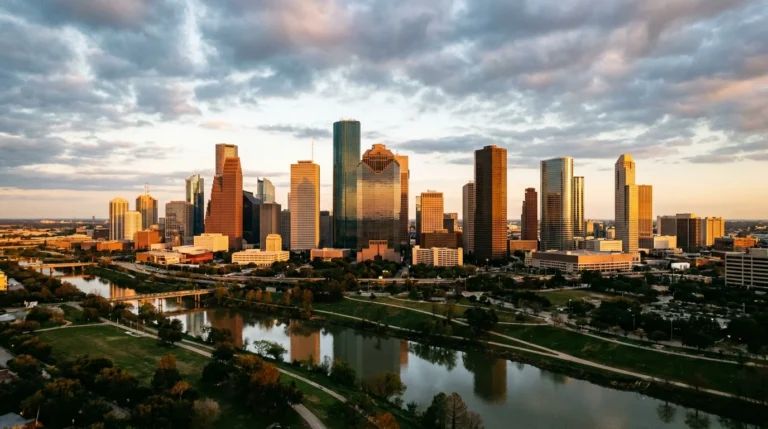
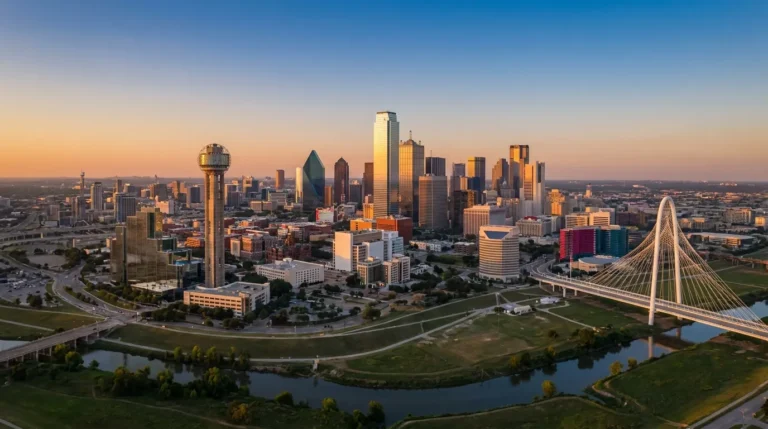
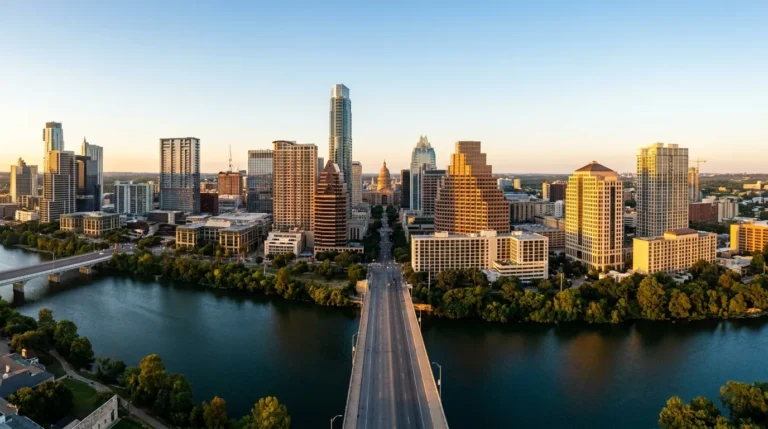
Texas is the second largest state in the U.S. by both area and population. The main cities are Houston (oil, NASA, and the world's largest medical center), Dallas (finance and telecommunications), Austin (technology and the state capital), and San Antonio (tourism and military). Each city has its own identity and offers a different way of life.

Texas does not collect a state income tax, which attracts both individuals and businesses. In recent years, it has seen a wave of migration from California and New York. Companies like Tesla, Oracle, and HP Enterprise have moved their headquarters to the state.

The Hispanic presence is enormous. Nearly 40% of the population is Latino, with a deep historical and cultural connection to Mexico. In cities like San Antonio, Laredo, and El Paso, Spanish is spoken as widely as English. Mexican food, celebrations, and Latin traditions are part of everyday life.

Population
30,029,572
Average monthly salary
60,000 USD/mo
31.0545°, -97.5635°

Featured places

Top 10 places in Texas

The places most sought-after by immigrants in this region.

Texas demographics: a Hispanic-majority state with growing diversity

Hispanics make up the largest ethnic group. Vietnamese, Indian, Nigerian, and Brazilian communities are growing.

Texas has a population where Hispanic and non-Hispanic white residents make up roughly similar proportions, followed by African Americans. Mexican heritage is central, with entire generations of families deeply rooted in the state. Cities like San Antonio and El Paso are culturally Latino from end to end.

Houston is one of the most diverse cities in the U.S., with large communities of Vietnamese, Indian, Pakistani, Chinese, Nigerian, and Arab residents. Dallas and Austin attract many Asian professionals due to the technology sector. Brazilians live across all major cities, especially in Houston and Dallas.

Spanish is spoken by a large share of the population. Vietnamese, Chinese, and Arabic appear on commercial signs throughout Houston. Churches, schools, and markets serve each community. Texas has become a modern melting pot without losing the Southern and ranch identity of its interior.

30,029,572
Population
36 yrs
Median age
43/km²
Density
$73,000
Median income
per year
Urban population84.7%
Foreign-born17.6%
Languages spoken
  • English
  • Spanish
  • Vietnamese (strong in Houston)
  • Chinese (Mandarin and Cantonese)
  • Arabic
  • +2 more
Main religions
  • Protestant (strong Baptist tradition)
  • Catholic (strong Mexican tradition)
  • Unaffiliated
  • Muslim
  • Hindu and Buddhist
  • +1 more

Cost of living in Texas: more affordable than the east and west coasts, but Austin has risen sharply

Historically affordable state. Austin has gotten expensive quickly. Houston, Dallas, and San Antonio still offer a good balance.

Texas generally has a lower cost of living than states like California and New York. The absence of a state income tax increases take-home pay. Houston, Dallas, and San Antonio maintain reasonable rent and housing prices for large cities.

Austin, once one of the most affordable places in Texas, has become significantly more expensive in recent years due to the tech boom. Apartments and home prices have surged. Even so, it remains cheaper than San Francisco or New York. Mid-sized cities like Fort Worth, El Paso, and Corpus Christi have very affordable prices.

The downside is property tax, which is high. Homeowners need to account for that annual expense. Sales tax also adds up. Even so, the overall combination tends to work out well for those moving from more expensive states.

97Cost index (US = 100)3% below US average
CategorySingleCoupleFamily (2 + 2)
iHousing$1,258$1,452$1,839
iFood$368$736$1,336
iTransport$484$823$1,065
iHealthcare$271$542$1,016
iChildcare$1,762
iOther$823$1,481$2,081
Monthly total$3,204$5,034$9,099

Source: U.S. BLS Consumer Expenditure Survey 2023 + BEA Regional Price Parities 2023 · Estimates in USD, monthly.

Housing in Texas: large homes with yards and two-car garages

American standard of spacious homes. Well-established suburbs. Downtown Austin is expensive; the rest of the state offers good value.

The typical housing in Texas is the suburban home: one or two stories, a two-car garage, a backyard, a front yard, and a pool in more desirable neighborhoods. Suburbs like Frisco, Plano, and Allen (Dallas), Sugar Land and The Woodlands (Houston), and Cedar Park and Round Rock (Austin) attract families for their good schools and safety.

In Austin, prices have risen sharply. Homes in central neighborhoods have crossed the $700,000 mark in a short time. In Houston and Dallas, it is still possible to find a new home in a suburban development for much less. San Antonio is the most affordable of the major cities.

Renting requires a U.S. credit history, proof of income (typically 3 times the monthly rent), and a background check. Newcomers without a credit history may need a co-signer or to pay several months upfront. Buying is feasible: financing typically requires a 5% to 20% down payment for legal residents.

Purchase price (m²)
  • Center$2,800/m²
  • Outside$1,800/m²
3.9×
Price-to-income
7.0%
Mortgage rate (20y)
Recommended neighborhoods
  • Frisco and Plano (Dallas suburbs)
  • The Woodlands and Sugar Land (Houston)
  • Cedar Park and Round Rock (Austin)
  • Katy (Houston, strong Brazilian community)
  • Stone Oak (San Antonio)
  • +3 more

Job market in Texas: energy, technology, healthcare, and finance

Houston leads in energy and healthcare. Dallas in finance. Austin in technology. San Antonio in military and tourism.

Houston is the American capital of energy. ExxonMobil, Chevron, and Shell have major operations in the city. The Texas Medical Center in Houston is the largest medical complex in the world, employing more than 100,000 people. NASA operates the Johnson Space Center there, the home base of astronauts.

Dallas-Fort Worth is a hub for finance and telecommunications, with headquarters for AT&T, ExxonMobil, McKesson, and American Airlines. Austin has become one of the leading technology hubs in the U.S., with Tesla, Apple, Google, Meta, Dell, and Oracle expanding their operations. Tech salaries tend to be high.

San Antonio's economy is tied to the military (several bases), tourism (the Alamo, River Walk), and healthcare. Texas also has strong agriculture (cotton, cattle), construction, and logistics sectors. The state creates more jobs per year than most countries and attracts workers from across the U.S.

$60,000
Avg net salary
per month
$15,080
Minimum wage
per month
4.1%
Unemployment
64.0%
Labor force
Dominant sectors
  • Energy (oil, gas, renewables)
  • Technology (Austin, Dallas)
  • Healthcare and medicine (Houston)
  • Finance and insurance
  • Aerospace and defense
  • +3 more
Major employers
  • ExxonMobil (Houston)
  • Tesla (Austin)
  • AT&T (Dallas)
  • American Airlines (Fort Worth)
  • Texas Medical Center (Houston)
  • +4 more

Education in Texas: large public universities and schools that vary by neighborhood

UT Austin and Texas A&M lead the public system. Schools vary widely by district. Desirable neighborhoods have strong schools.

Children have the right to free public education regardless of their parents' immigration status. Quality varies by district. Suburbs like Plano, Frisco, Highland Park, Westlake, and Eanes (Austin) rank among the best public school systems in the state.

The University of Texas at Austin (UT) is one of the best public universities in the U.S., with strong programs in engineering, computer science, business, and law. Texas A&M, in College Station, is a benchmark in agriculture, engineering, and veterinary science. Rice University in Houston is private and highly selective, offering generous scholarships.

There is also the University of Houston, Texas Tech, North Texas, Baylor, and SMU. The system is large and serves thousands of students each year. In-state tuition is significantly lower than out-of-state rates, and graduate fellowships are common in the sciences, engineering, and medicine.

Literacy96.0%
Tertiary education32.3%
478
PISA score (avg)
$12,500
Private school
per year
Notable universities
  • University of Texas at Austin (UT)
  • Texas A&M University (College Station)
  • Rice University (Houston)
  • University of Houston
  • Southern Methodist University (SMU, Dallas)
  • Texas Tech University (Lubbock)
  • Baylor University (Waco)
  • University of Texas at Dallas

Healthcare in Texas: the world's largest medical center in Houston, with uneven coverage

Texas Medical Center is a global reference. Health insurance is practically essential. Rural areas have fewer options.

The U.S. does not have a universal public health system. In Texas, workers with formal employment receive health insurance through their employer. For those outside that model, HealthCare.gov offers subsidies for low- and middle-income households. Texas has one of the highest rates of uninsured residents in the U.S.

Low-income families may qualify for Medicaid, but eligibility criteria in Texas are more restrictive than in many other states. Children and pregnant women have access through CHIP. Undocumented immigrants typically rely on community health clinics and public hospitals such as Ben Taub (Houston) and Parkland (Dallas), where emergency care cannot be denied.

The Texas Medical Center in Houston is the largest medical complex in the world. Hospitals like MD Anderson (cancer) and Texas Children's Hospital attract patients from around the globe. Dallas and Austin also have high-quality hospital networks. In rural areas, access is more difficult and some regions have very few doctors.

Healthcare index63.0 / 100
  • Life expectancyyears at birth
    78.4yrs
  • Doctors per 1kpracticing physicians
    2.5
  • Health spendper capita, per year
    $8,800
  • Public systemoverall quality rating
    Fair

Safety in Texas: conditions vary widely by neighborhood and city

Well-organized suburbs are extremely safe. Some central urban areas have higher crime rates.

Texas, in general, has average safety by U.S. standards. Suburbs like Frisco, Sugar Land, The Woodlands, Cedar Park, and Stone Oak rank among the safest places in the country. Family neighborhoods typically feel peaceful, with good schools and low crime.

Some central areas of Houston, Dallas, and San Antonio experience higher rates of car theft, robbery, and drug-related violence. Downtown areas and lower-income neighborhoods call for more caution. Border cities like Laredo and El Paso tend to have lower crime rates than many expect, according to official data.

Tornadoes and severe storms are a part of life in some regions, especially in spring. In Houston, localized flooding from heavy storms occurs regularly. Before renting or buying, it is worth researching the neighborhood's flood history and safety statistics.

6.4
Homicides per 100k
per year
Safety index
53.0
Crime index
47.0
Safer neighborhoods
  • Frisco and Plano
  • The Woodlands
  • Sugar Land
  • Cedar Park and Round Rock
  • Allen and McKinney
  • Stone Oak (San Antonio)
  • Katy (Houston)
  • Westlake (Austin)
Areas to avoid
  • Houston Greenspoint/Sunnyside
  • Dallas South Dallas
  • San Antonio East Side
  • Austin Rundberg corridor

Transportation in Texas: a car is essential in most of the state

Vast cities and limited public transit. Each city has a major airport. Wide highways and heavy traffic.

Texas is a state built around the car. Cities have enormous metropolitan areas and public transit covers only a small portion of them. Dallas has DART (light rail and buses); Houston and Austin have more limited systems; San Antonio relies almost entirely on buses.

Even living within city limits, going car-free is rare. Distances between work, school, and grocery stores usually require driving. Apps like Uber and Lyft work well in major cities, and Austin has electric scooters downtown. Traffic in Houston, Dallas, and Austin can be heavy during peak hours.

DFW International (Dallas-Fort Worth) is one of the largest airports in the world and is an American Airlines hub. George Bush Intercontinental (IAH) in Houston is a United Airlines hub. Austin (AUS) and San Antonio (SAT) also have international flights. For long trips within the state, flying is often preferable to driving.

6
Metro lines
95
Metro stations
27 min
Avg commute
41
Walkability
Airports
  • DFW (Dallas-Fort Worth International)
  • IAH (George Bush Intercontinental, Houston)
  • AUS (Austin-Bergstrom International)
  • SAT (San Antonio International)
  • International airport
  • Bike infrastructure

Climate in Texas: hot almost year-round, with significant regional variation

Long, hot summers across most of the state. Humid coast, dry west, occasional cold in the north.

Texas is a large state with varied climates. In Houston, near the Gulf of Mexico, the heat is humid and oppressive for most of the year, with long summers reaching 35°C. Hurricanes and severe storms occur between June and November. Dallas has a hot, dry summer with a more pronounced winter and occasional light snowfall.

Austin and San Antonio sit in the south-central region, with a subtropical climate and very hot summers around 35-38°C at their peak. Winters are mild, rarely dropping below 0°C. The western part of the state (El Paso, Big Bend) is desert, with little rainfall and wide temperature swings between day and night.

Tornadoes occur in spring, especially in the Tornado Alley region that crosses northern Texas. Hurricanes affect the coast. Flooding in Houston is common during heavy storms. People coming from tropical countries tend to adapt well, but should be prepared for extreme heat and seasonal storms.

Sunny days / year226 days
Avg high (°F)
  • 64°J
  • 68°F
  • 73°M
  • 79°A
  • 86°M
  • 91°J
  • 93°J
  • 94°A
  • 89°S
  • 82°O
  • 73°N
  • 66°D
Avg low (°F)
  • 46°J
  • 50°F
  • 56°M
  • 62°A
  • 69°M
  • 75°J
  • 77°J
  • 77°A
  • 73°S
  • 64°O
  • 54°N
  • 48°D
Rainfall (")
  • 4"J
  • 3"F
  • 3"M
  • 4"A
  • 5"M
  • 6"J
  • 5"J
  • 5"A
  • 6"S
  • 6"O
  • 4"N
  • 4"D

Culture in Texas: cowboys, Tex-Mex, music, football, and local pride

Deep Texan pride. Tex-Mex, barbecue, country, hip-hop, rodeo, and Mexican influence shape the identity.

Texas has its own sense of pride. The state flag on houses, pickup trucks, and T-shirts is part of the scenery. Mexican influence is everywhere: in the food (Tex-Mex), the music, street names, and festivals. The cowboy is a cultural symbol, with rodeos and livestock shows held throughout the state.

In Houston, the cultural scene includes rap music (the city has its own distinct scene), contemporary art at the Museum District, and the Houston Livestock Show and Rodeo, one of the largest rodeos in the world. Dallas has a rich finance and arts scene, with the Dallas Museum of Art and the AT&T Performing Arts Center. San Antonio has the River Walk, the Alamo, and a strong Hispanic heritage.

Austin calls itself the live music capital of the world. The South by Southwest (SXSW) festival and Austin City Limits draw fans from around the globe. American football is a religion in the state, from high school to the pros (Dallas Cowboys, Houston Texans). Texas barbecue (smoked brisket) is a world-class reference.

580
Major museums
Notable dishes
  • Texas barbecue (smoked brisket)
  • Tex-Mex (tacos, fajitas, enchiladas)
  • Chili con carne
  • Breakfast taco (Austin)
  • Frito pie
  • +3 more
Annual events
  • South by Southwest (SXSW, Austin, March)
  • Austin City Limits (festival, October)
  • Houston Livestock Show and Rodeo (February-March)
  • State Fair of Texas (Dallas, September-October)
  • Fiesta San Antonio (April)
  • +1 more
UNESCO sites
  • San Antonio Missions

Key industries of the Texas economy

Energy (oil and gas), technology, healthcare, finance, and agriculture. A state with a GDP the size of a major world economy.

Energy is Texas's historic sector. Oil and natural gas are concentrated in Houston and the Permian Basin in the west. Companies like ExxonMobil, Chevron, ConocoPhillips, and Halliburton have enormous operations here. The state also leads in wind energy, with wind farms spread across the west.

Technology has exploded in recent years, especially in Austin. Tesla moved its headquarters to the city, and Apple, Google, Meta, and Oracle have expanded their operations there. Dallas has strong telecommunications and finance sectors, with AT&T and regional banks. Houston hosts the world's largest medical complex, generating jobs in research and patient care.

Agriculture and ranching remain a strong presence: Texas leads the country in cattle, cotton, and sheep farming. Defense and aerospace create jobs in Fort Worth (Lockheed Martin) and Houston (NASA). Logistics, construction, and tourism round out the picture of a massive and diverse economy.

  • GDPgross domestic product
    $2,400.0B
  • GDP per capitaoutput per resident
    $80,000
  • GDP growth (yr)economy expanding
    +3.7%
Top sectors
  • Energy (oil, gas, wind)
  • Technology and software
  • Healthcare and medicine
  • Finance and insurance
  • Aerospace and defense
  • +3 more

Immigrant communities in Texas

Texas has about 5 million immigrants, the country's second-largest population, with Mexicans in the Rio Grande Valley, Vietnamese in Bellaire, and Indians in Sugar Land.

Texas is home to roughly 5 million people born outside the country, the second-largest immigrant population in the United States, close to 17% of the state's population. Mexicans dominate throughout the state, forming an absolute majority in the Rio Grande Valley, in El Paso, and in large neighborhoods of Houston, Dallas, and San Antonio. Houston has the largest Vietnamese community in the country, in Bellaire and Alief. Sugar Land, Plano, and Irving form the Indian belt, with a strong Gujarati and Telugu presence. Plano and Sugar Land also concentrate the state's largest Chinese community. Salvadorans and Hondurans have large communities in Houston, in Gulfton and Spring Branch, and Alief hosts the largest African community in the U.S. South.

Houston ranks behind only New York and Los Angeles in consular density, with more than 90 foreign missions, including Mexico, India, Pakistan, Vietnam, El Salvador, Brazil, China, and South Korea. Dallas and San Antonio have major Mexican consulates, and Austin, El Paso, and Laredo round out the network. RAICES in San Antonio is the state's largest immigrant legal defense organization. American Gateways works out of Austin, the Houston Immigration Legal Services Collaborative connects local clinics, and FIEL Houston organizes mixed-status families.

5,000,000
Foreign-born residents
estimated
Top countries of origin
  • Mexico
  • India
  • Vietnam
  • China
  • El Salvador
  • Honduras
Main immigrant hubs
  • Houston
  • Dallas
  • San Antonio
  • Austin
  • El Paso
  • Sugar Land
  • Plano
  • Irving
  • McAllen
Foreign consulates
  • Mexican Consulate General in Houston (one of the largest in the world)
  • Indian Consulate General in Houston
  • Vietnamese Consulate General in Houston
  • El Salvadoran Consulate General in Houston
  • Brazilian Consulate General in Houston
  • +5 more
Community organizations
  • RAICES (San Antonio)
  • American Gateways
  • FIEL Houston
  • Houston Immigration Legal Services Collaborative (HILSC)
  • Catholic Charities of the Archdiocese of Galveston-Houston

Latest posts

Posts about Texas

Coverage and updates related to this destination.