Visto n' Visa
Blog
Notícias e artigos
Destinations
Careers
Immigrants

Want to live and work in New Jersey?

Personalized immigration plan with eligible visas, costs, and next steps for your goal!

If you are not eligible, you will know exactly why and what to do to improve your approval chances.

Save up to 12 hours in meetings

No pointless assessments.

Save up to 90%

Save money on vague or unfocused consultations

Avoid Fraud and Mistakes

One mistake can cost you your visa

Total Impartiality

Zero commercial bias

Decide with peace of mind

No toxic urgency

Fast and Accurate

Answers in minutes, no guesswork

Discover New Jersey

Pharmaceutical hub, New York suburbs, and intense cultural diversity.

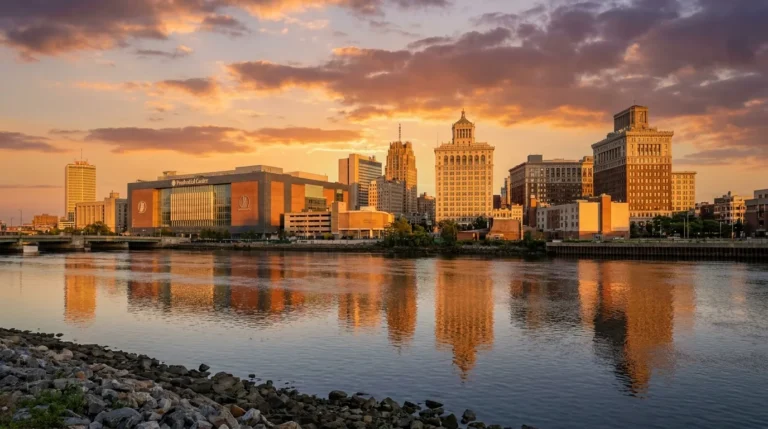
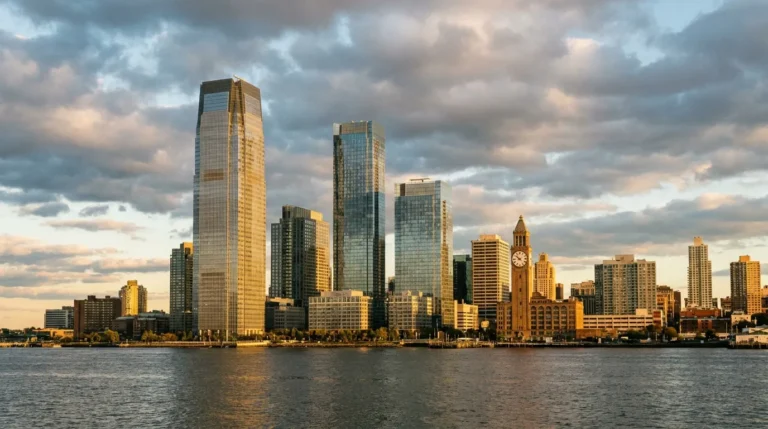
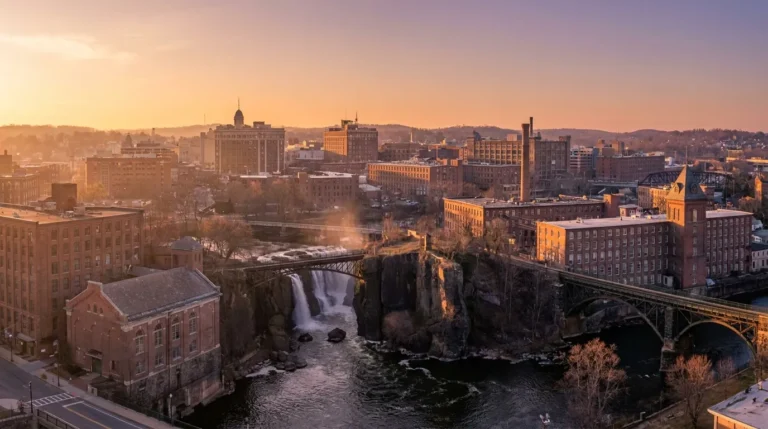
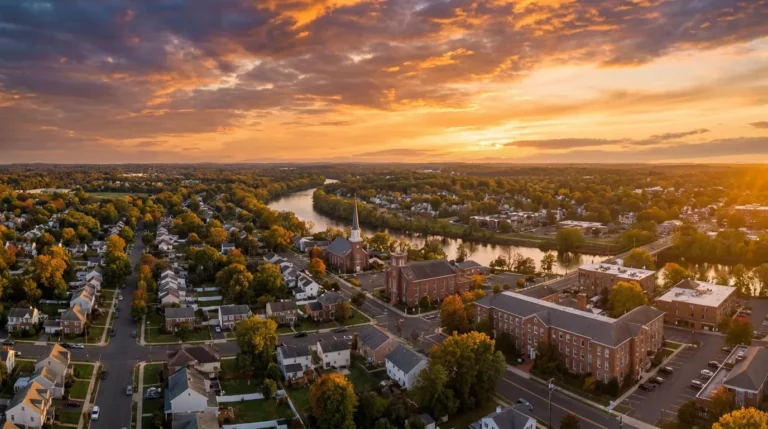
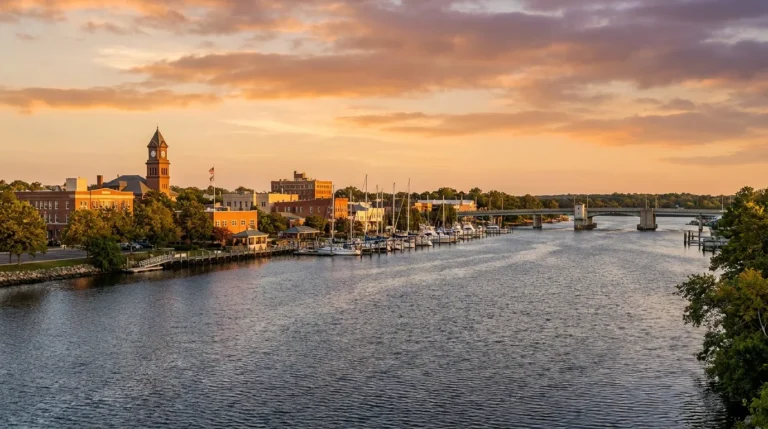
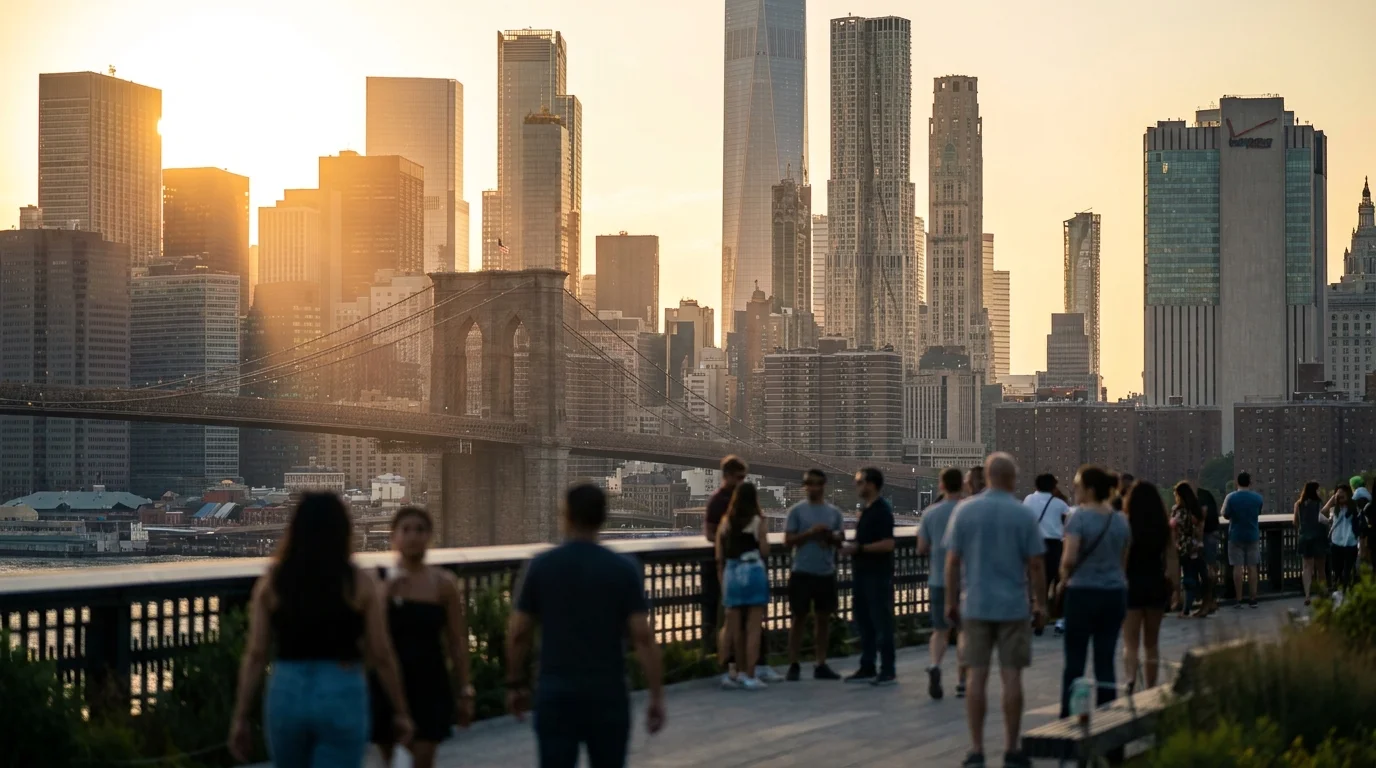
New Jersey sits between New York City and Philadelphia in the northeastern US. It is one of the most densely populated states in the country. Trenton is the capital, but the most prominent cities are Newark (home to the region's largest airport, EWR), Jersey City (facing Manhattan with skyline views), Princeton (home to the university), and the resort cities of Atlantic City and Cape May.

Many people work in New York and live in New Jersey, commuting across the Hudson daily by train (PATH), bus, or ferry. The suburbs offer larger homes, better schools, and more space than Manhattan at prices that are still high but more manageable. Princeton, Montclair, Summit, and Short Hills are established family communities.

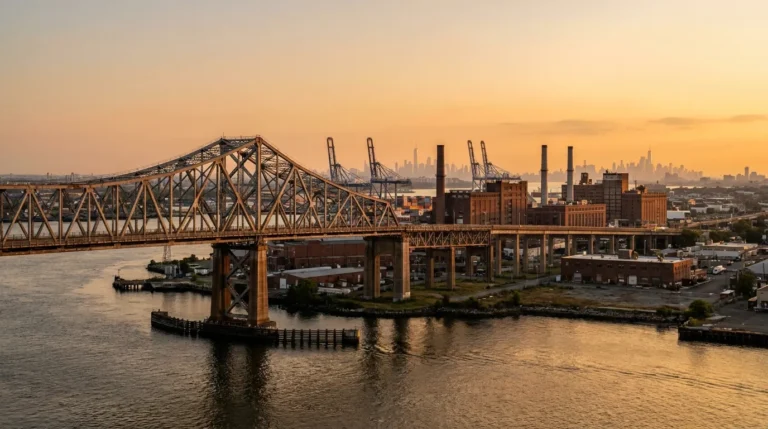
The economy is diverse: pharmaceuticals (Johnson & Johnson, Merck, and Bristol-Myers Squibb all have headquarters or major operations here), finance, port logistics (Newark Harbor is the second largest in the US), tourism, and technology. The immigrant community is enormous: Indian, Latino, Asian, Italian, and Brazilian. In some cities, more than 30% of residents were born outside the US.

Population
9,261,699
Average monthly salary
73,000 USD/mo
40.2989°, -74.5210°

Featured places

Top 10 places in New Jersey

The places most sought-after by immigrants in this region.

New Jersey demographics: one of the most diverse states in the US

Indian, Hispanic, Italian, Asian, Brazilian, and Jewish communities live side by side. Entire neighborhoods operate in languages other than English.

New Jersey is one of the most diverse states in the US. Nearly half the population is non-white, and more than 20% were born outside the country. The Hispanic community (Puerto Rican, Dominican, Mexican, Salvadoran, Colombian) is large, especially in Newark, Elizabeth, Paterson, and Union City.

The Indian community is one of the largest in the country, with centers in Edison, Iselin (known as Little India), Jersey City, and Parsippany. There are also significant Chinese, Korean, and Filipino communities. The Jewish community is historically rooted in Lakewood, Teaneck, and Englewood, with schools and businesses serving the community.

The Brazilian community is one of the largest in the US, concentrated in Newark (the Ironbound neighborhood, known as Little Brazil), Elizabeth, Long Branch, and Kearny. There are grocery stores, restaurants, bakeries, churches, attorneys, and accountants who speak Portuguese. Newcomers typically find a support network quickly.

9,261,699
Population
40 yrs
Median age
488/km²
Density
$97,100
Median income
per year
Urban population94.7%
Foreign-born23.2%
Languages spoken
  • English
  • Spanish (strong presence)
  • Portuguese (large Brazilian community)
  • Hindi, Gujarati, Tamil (Indian community)
  • Mandarin, Cantonese, and Korean
  • +2 more
Main religions
  • Roman Catholic
  • Protestant Christian
  • Jewish (strong Orthodox presence in Lakewood)
  • Hindu
  • Muslim
  • +1 more

Cost of living in New Jersey: high, especially in counties near New York City

Bergen, Hudson, and Essex County have a high cost of living similar to New York City. The southern part of the state is more affordable.

New Jersey is among the most expensive states in the US. In Jersey City, Hoboken, Newark, and Hudson County, a one-bedroom apartment rents for $2,500 to $3,500/month depending on the neighborhood and proximity to trains into Manhattan. In suburban cities like Montclair, Summit, and Princeton, prices are also high.

The southern part of the state and inland areas are considerably more affordable. In Camden, Trenton, and rural communities, rent can fall below $1,500. Cherry Hill, Mount Laurel, and cities near Philadelphia offer good options for those seeking lower costs while retaining urban access.

Property taxes in New Jersey are among the highest in the US. A $600,000 home can carry $12,000 to $18,000 per year in property tax. This weighs heavily on homeowners' budgets. A state income tax exists with progressive rates. Sales tax is 6.625%. Families typically need at least $100,000 in annual household income to live comfortably near New York City.

113Cost index (US = 100)13% above US average
CategorySingleCoupleFamily (2 + 2)
iHousing$1,473$1,700$2,153
iFood$431$861$1,564
iTransport$567$963$1,246
iHealthcare$317$634$1,190
iChildcare$2,062
iOther$963$1,733$2,436
Monthly total$3,751$5,891$10,651

Source: U.S. BLS Consumer Expenditure Survey 2023 + BEA Regional Price Parities 2023 · Estimates in USD, monthly.

Housing in New Jersey: high-rise apartments near NYC, traditional homes in the suburbs

New high-rises in Jersey City and Hoboken, traditional homes in suburbs with strong school districts.

Jersey City and Hoboken have transformed into corridors of new high-rises with Manhattan views. One-bedroom apartments in modern buildings cost over $600,000 to buy or $2,800 to $4,000/month to rent. Newark has lower costs, with revitalizing neighborhoods like the Ironbound and downtown.

The suburbs are New Jersey's calling card. Cities like Short Hills, Summit, Princeton, Montclair, Westfield, and Ridgewood have traditional brick or wood-frame homes with yards and garages on tree-lined streets. Prices range from $700,000 to several million for mansions. School districts in these towns rank among the best in the US.

To rent, landlords typically require proof of income (usually 3x the monthly rent), a credit history (FICO score), and references. New arrivals without US credit history may need a co-signer or several months' rent upfront. Buying requires an established credit history and at least two years of financial stability. High property taxes must be factored into monthly budget planning.

Purchase price (m²)
  • Center$5,200/m²
  • Outside$3,500/m²
5.4×
Price-to-income
7.0%
Mortgage rate (20y)
Recommended neighborhoods
  • Jersey City and Hoboken (facing NYC, young adults)
  • Montclair (urban-artsy)
  • Summit and Short Hills (top schools, families)
  • Princeton (university, sciences)
  • Westfield and Ridgewood (traditional family)
  • +2 more

Job market in New Jersey: pharmaceuticals, finance, logistics, and technology

Strong in pharmaceuticals and biotech (the Pharma Valley corridor), complemented by finance and port logistics.

New Jersey is known as Pharma Valley. Johnson & Johnson is headquartered in New Brunswick, Merck in Rahway, Bristol-Myers Squibb in Princeton, and Novartis and Bayer operate across multiple sites. The sector employs tens of thousands in research, manufacturing, regulation, and marketing. Salaries are high, especially in scientific research.

The financial sector is strong: many New York banks maintain back-office operations in New Jersey at lower cost. Goldman Sachs is in Jersey City, JPMorgan in Newark, and Prudential Financial is headquartered in Newark. Verizon and ADP also have large operations in the state.

Logistics and ports are a significant economic driver: the Port of Newark-Elizabeth is the second largest in the US, handling containers from Asia and Europe. Newark Airport (EWR) generates thousands of jobs. Tech is growing, with startups and operations from companies like Audible (Amazon) in Newark. Remote work has made life considerably easier for residents who work in New York City.

$73,000
Avg net salary
per month
$31,200
Minimum wage
per month
4.7%
Unemployment
63.8%
Labor force
Dominant sectors
  • Pharmaceuticals and biotech
  • Financial services
  • Port logistics and aviation
  • Technology
  • Healthcare
  • +3 more
Major employers
  • Johnson & Johnson (New Brunswick)
  • Merck (Rahway, Kenilworth)
  • Bristol-Myers Squibb (Princeton)
  • Prudential Financial (Newark)
  • Verizon
  • +3 more

Education in New Jersey: public schools among the best in the US and prestigious universities

Affluent suburban school districts rank at the top of national lists. Princeton is Ivy League; Rutgers is the flagship public university.

Public K-12 education in New Jersey is traditionally well regarded, though quality varies significantly by district. Suburbs like Short Hills, Summit, Princeton, Westfield, Ridgewood, and Tenafly have schools among the best in the country. Poorer cities like Camden, Newark, and Paterson have districts with fewer resources, though quality magnet and charter schools exist.

Princeton University is one of the eight Ivy League schools, located in Princeton. Founded in 1746, it is among the oldest and most prestigious universities in the US, with strength in the sciences, humanities, economics, and engineering. Tuition is high, but financial aid for low-income students is generous.

Rutgers University, with its main campus in New Brunswick, is the state's public flagship. Strong in pharmacy, business, engineering, and health sciences. Tuition is affordable for state residents. New Jersey Institute of Technology (NJIT) is in Newark, Stevens Institute of Technology is in Hoboken, and several reputable private colleges round out the landscape.

Literacy97.0%
Tertiary education42.8%
478
PISA score (avg)
$18,500
Private school
per year
Notable universities
  • Princeton University (Ivy League)
  • Rutgers University (New Brunswick)
  • Stevens Institute of Technology (Hoboken)
  • New Jersey Institute of Technology (NJIT, Newark)
  • Seton Hall University (South Orange)
  • Montclair State University
  • Drew University (Madison)

Healthcare in New Jersey: high-quality private network, large hospital systems

Employer-based coverage is standard. RWJBarnabas, Hackensack Meridian, and Atlantic Health are the largest hospital networks.

The US has no universal public healthcare system. In New Jersey, those with formal employment receive health insurance through their employer as part of their compensation. A family premium can exceed $1,700/month, with the employer paying a portion. Those without coverage can buy a plan on the federal marketplace with income-based subsidies.

Low-income families are eligible for NJ FamilyCare (a combined Medicaid and CHIP program). Children, pregnant women, and low-income adults have coverage, and in some cases this extends regardless of citizenship. Undocumented immigrants have restricted access, essentially limited to emergency care and maternity.

Major hospital systems include RWJBarnabas Health (a large statewide network), Hackensack Meridian Health (northern New Jersey), Atlantic Health System (Morristown), and University Hospital (Newark). For very complex cases, some patients are referred to New York City. Emergency care for the uninsured can cost $1,500 to $5,000 per visit.

Healthcare index73.0 / 100
  • Life expectancyyears at birth
    80.7yrs
  • Doctors per 1kpracticing physicians
    3.4
  • Health spendper capita, per year
    $11,600
  • Public systemoverall quality rating
    Good

Safety in New Jersey: varies widely by city and neighborhood

Suburbs in Bergen, Morris, and Somerset County are extremely safe. Some cities like Newark, Camden, and Trenton have dangerous neighborhoods.

New Jersey has significant internal variation in safety. Suburbs like Short Hills, Summit, Princeton, Westfield, Tenafly, and Ridgewood rank among the safest communities in the US, with very low crime and high quality of life. Families choose these towns for exactly this reason.

Urban cities like Newark, Camden, Trenton, Paterson, and Atlantic City have neighborhoods with high crime rates, including gun violence, drug trafficking, and robbery. Even so, many of these cities have revitalizing areas that have improved considerably, such as the Ironbound in Newark and parts of Atlantic City.

In Jersey City and Hoboken, areas near the Hudson waterfront and downtown are quite safe. Violent crime is rare in the suburbs. For immigrants, the standard advice applies: research the neighborhood thoroughly before renting, talk to current residents, and use sites like Niche.com or City-Data to understand local patterns.

3.2
Homicides per 100k
per year
Safety index
65.0
Crime index
35.0
Safer neighborhoods
  • Short Hills and Summit
  • Princeton and West Windsor
  • Westfield and Ridgewood
  • Tenafly and Englewood Cliffs
  • Hoboken (downtown and waterfront)
  • Montclair (west)
  • Cherry Hill (south)
Areas to avoid
  • Newark downtown (parts)
  • Camden (most areas)
  • Trenton downtown
  • Atlantic City areas away from the boardwalk

Transportation in New Jersey: among the best transit systems in the US, close to NYC

NJ Transit connects to New York by train, bus, and PATH. Newark Airport (EWR) is one of the largest international hubs.

New Jersey has one of the most heavily used public transit systems in the US, thanks to its proximity to New York City. NJ Transit operates trains and buses connecting virtually the entire state to Manhattan. The PATH (operated by the Port Authority) links Jersey City, Hoboken, and Newark to Manhattan quickly. Ferries cross the Hudson with spectacular views.

In cities like Hoboken and Jersey City, it is possible to live well without a car, reaching Manhattan in minutes. In Princeton, Summit, Montclair, and other suburbs with train stations (Northeast Corridor, Morristown Line), many people commute to New York City every day. More interior areas and southern New Jersey depend more on cars.

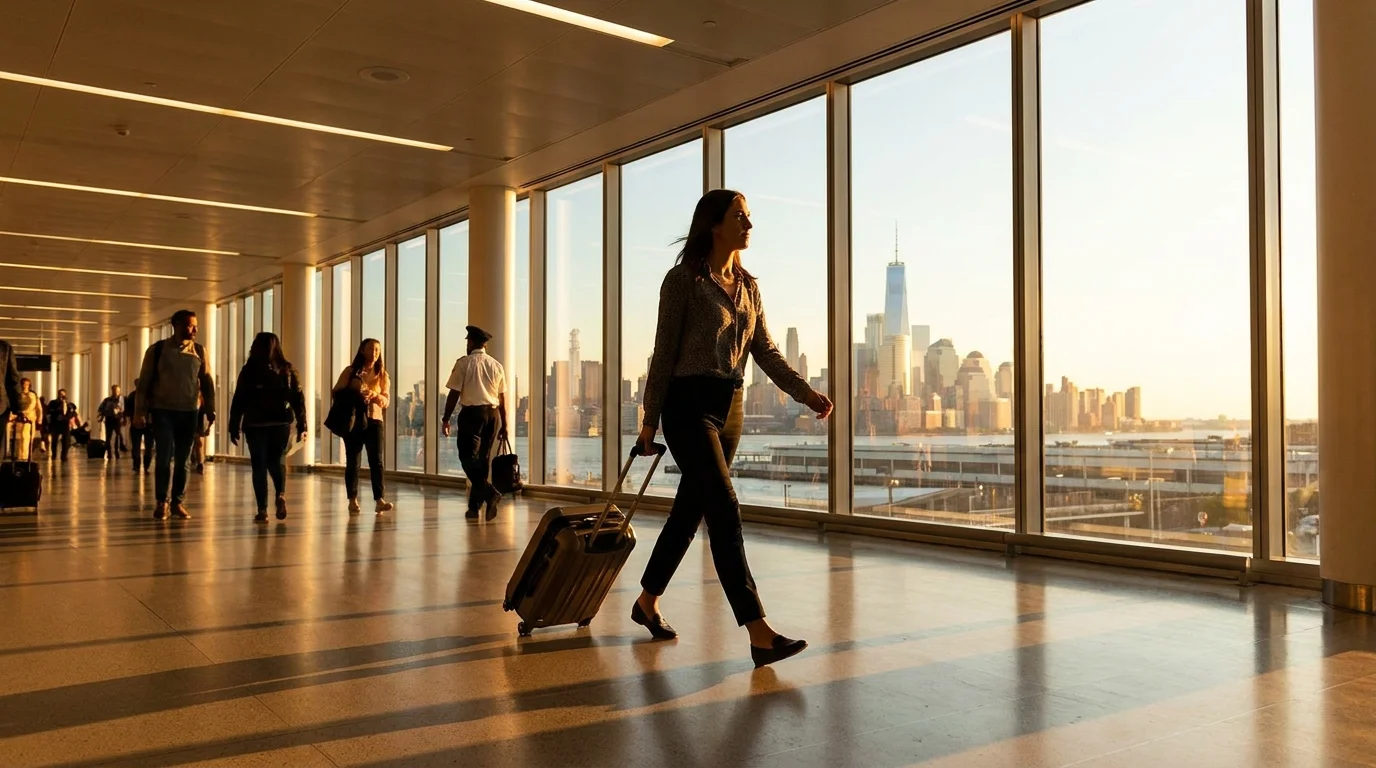
Newark Liberty International Airport (EWR) is one of the largest hubs in the country, with direct flights worldwide. It is the primary gateway for immigrants arriving in the state. Atlantic City also has a regional airport (ACY). Major roads include the New Jersey Turnpike (I-95) and the Garden State Parkway.

3
Metro lines
62
Metro stations
32 min
Avg commute
55
Walkability
Airports
  • EWR (Newark Liberty International)
  • ACY (Atlantic City International)
  • TTN (Trenton-Mercer)
  • International airport
  • Bike infrastructure

Climate in New Jersey: four distinct seasons, with the coast more moderate than inland areas

Hot and humid summers, cold winters with snow. The Atlantic coast moderates temperatures compared to more inland areas.

New Jersey has a humid continental climate with maritime influence along the coast. Summer (June through August) is hot and humid, with temperatures frequently reaching 82-91°F and muggy afternoons. Afternoon thunderstorms are common. The Atlantic coast (Cape May, Long Branch, Asbury Park) is cooler due to ocean breezes.

Fall (September through November) is the most pleasant season: mild temperatures, colorful foliage, and clear days. October is many residents' favorite month. Winter (December through February) is cold, with temperatures regularly below freezing and snow several times per season. Powerful storms (Nor'easters) can dump 12-20 inches of snow within a few days.

Spring (March through May) is variable with unsettled weather and thawing. Occasional hurricanes and tropical storms affect the state between August and October (Hurricane Sandy in 2012 left a lasting mark). Homes typically have central heating and air conditioning. Clothing for all seasons is necessary.

Sunny days / year205 days
Avg high (°F)
  • 39°J
  • 42°F
  • 50°M
  • 62°A
  • 72°M
  • 82°J
  • 87°J
  • 85°A
  • 78°S
  • 66°O
  • 54°N
  • 44°D
Avg low (°F)
  • 25°J
  • 26°F
  • 33°M
  • 43°A
  • 53°M
  • 63°J
  • 69°J
  • 67°A
  • 60°S
  • 48°O
  • 38°N
  • 31°D
Rainfall (")
  • 4"J
  • 3"F
  • 4"M
  • 4"A
  • 4"M
  • 5"J
  • 5"J
  • 4"A
  • 4"S
  • 4"O
  • 4"N
  • 5"D

Culture of New Jersey: Italian, Latino, Indian, Brazilian, and everything mixed together

Strong Italian heritage, with intense Indian, Latino, and Brazilian diasporas. Sports, food, and music define the identity.

New Jersey has its own cultural identity, distinct from New York City despite the proximity. Italian heritage is strong, especially in cities like Belleville, Nutley, and Hoboken (Frank Sinatra's birthplace). Italian restaurants, authentic pizzerias, and bakeries are found throughout the state. Bruce Springsteen, the state's icon, captured the working-class soul of Asbury Park in his songs.

Diversity adds layer upon layer: Little India in Edison-Iselin, with restaurants, sarees, and markets; the Ironbound in Newark with Brazilian and Portuguese steakhouses, bakeries, and bars; Chinese neighborhoods in Edison and Korean communities in Palisades Park. Ethnic festivals happen year-round.

Sports are a local passion: New York teams play in New Jersey stadiums (the Giants and Jets at MetLife Stadium in East Rutherford, the Devils at the Prudential Center in Newark). The Atlantic coast has its own summer culture, with towns like Ocean City, Wildwood, and Long Beach Island where families vacation.

280
Major museums
Notable dishes
  • New Jersey-style pizza (thin crust, wood-fired)
  • Sub sandwich (large sandwich, Italian heritage)
  • Pork roll (breakfast meat, a local staple)
  • Saltwater taffy (beach candy, Atlantic City)
  • Disco fries (fries with cheese and gravy)
  • +3 more
Annual events
  • New Jersey State Fair (Sussex County, August)
  • Atlantic City Air Show (August)
  • Newark Brazilian Festival (Ironbound)
  • Asbury Park Music Festival (throughout the year)
  • Princeton Reunions (June)
  • +1 more

Key industries in New Jersey

Pharmaceuticals, finance, logistics, technology, and healthcare sustain the economy. Education and hospitality are also relevant.

Pharmaceuticals are a historic and current pillar of New Jersey's economy. Johnson & Johnson, Merck, Bristol-Myers Squibb, Pfizer (with major operations), Bayer, and dozens of other companies maintain headquarters or research centers in the state. The Pharma Valley ecosystem employs scientists, engineers, and regulatory professionals in large numbers.

The financial sector is the second pillar. New York banks maintain large operations in Jersey City and Newark at lower cost, and Prudential Financial is one of the largest insurance companies in the world, headquartered in Newark. ADP, based in the state, is a global leader in payroll services.

Logistics is a critical sector: the Port of Newark-Elizabeth handles cargo from around the world, and Newark Airport is a major continental hub. Technology is growing in Hoboken, Jersey City, and Princeton. Hospitality is strong along the coast (Atlantic City, Cape May, the Jersey Shore) and around New York City. Healthcare and higher education (Rutgers, Princeton) are also large employers.

  • GDPgross domestic product
    $770.0B
  • GDP per capitaoutput per resident
    $83,100
  • GDP growth (yr)economy expanding
    +1.9%
Top sectors
  • Pharmaceuticals and biotech
  • Financial services and insurance
  • Port logistics and aviation
  • Technology and telecommunications
  • Healthcare and hospitals
  • +3 more

Immigrant communities in New Jersey

More than 2.1 million immigrants live in New Jersey. Indians, Dominicans, Mexicans, Filipinos, and Chinese form the largest groups.

New Jersey is one of the most diverse states in the country: around 2.1 million residents were born outside the United States, close to 23% of the population. The largest communities come from India, the Dominican Republic, Mexico, the Philippines, China, South Korea, and Ecuador. Indians make up the biggest block and dominate Edison, Jersey City, and the Oak Tree Road corridor, with temples, schools, and markets stretching across many blocks. Dominicans cluster in Paterson and Passaic, Mexicans in Trenton and Middlesex County, and Brazilians and Portuguese share the historic Ironbound neighborhood in Newark. Filipinos have a strong presence in Jersey City and Bergenfield, and there is a Koreatown in Palisades Park and Fort Lee.

The state hosts important consulates in and around Newark: Mexico, the Dominican Republic, Brazil, Ecuador, Peru, Colombia, and India all maintain accessible consular offices. The community network is led by the American Friends Service Committee Newark, Wind of the Spirit (Morristown), Make the Road New Jersey (Elizabeth), the Latin American Legal Defense and Education Fund (LALDEF), and the New Jersey Alliance for Immigrant Justice. Casa Esperanza, Catholic Charities, and El Centro Hispanoamericano provide legal and social services.

2,100,000
Foreign-born residents
estimated
Top countries of origin
  • India
  • Dominican Republic
  • Mexico
  • Philippines
  • China
Main immigrant hubs
  • Newark
  • Jersey City
  • Elizabeth
  • Paterson
  • Edison
  • Passaic
Foreign consulates
  • Mexican Consulate General in Newark
  • Dominican Republic Consulate General in Newark
  • Brazilian Consulate General in Hartford (jurisdiction covers NJ via NY)
  • Ecuador Consulate General in Newark
  • Peru Consulate General in Paterson
  • +1 more
Community organizations
  • American Friends Service Committee Newark
  • Wind of the Spirit
  • Make the Road New Jersey
  • Latin American Legal Defense and Education Fund (LALDEF)
  • New Jersey Alliance for Immigrant Justice
  • Catholic Charities of New Jersey

Latest posts

Posts about New Jersey

Coverage and updates related to this destination.