Visto n' Visa
Blog
Notícias e artigos
Destinations
Careers
Immigrants

Want to live and work in New Hampshire?

Personalized immigration plan with eligible visas, costs, and next steps for your goal!

If you are not eligible, you will know exactly why and what to do to improve your approval chances.

Save up to 12 hours in meetings

No pointless assessments.

Save up to 90%

Save money on vague or unfocused consultations

Avoid Fraud and Mistakes

One mistake can cost you your visa

Total Impartiality

Zero commercial bias

Decide with peace of mind

No toxic urgency

Fast and Accurate

Answers in minutes, no guesswork

Why visit New Hampshire

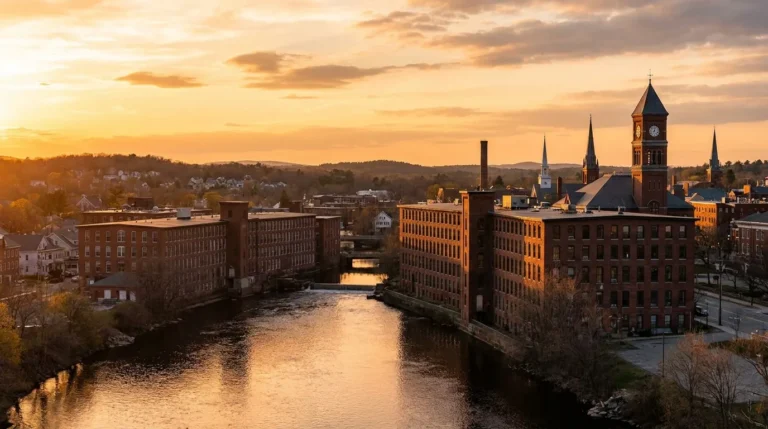
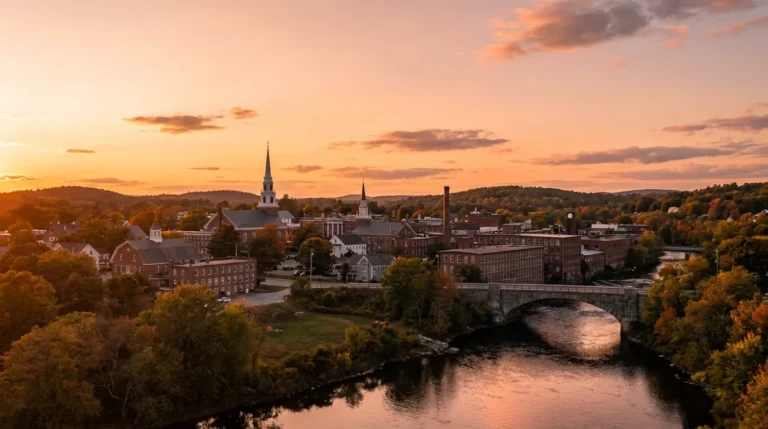
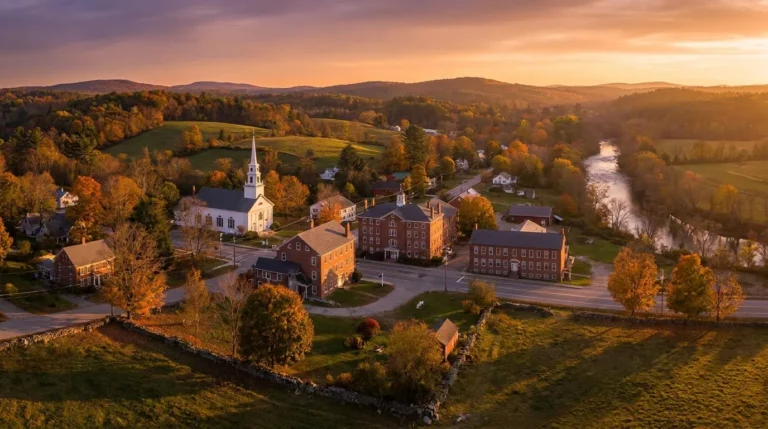
Colorful fall, lakes, and mountains, with no income tax and no sales tax.

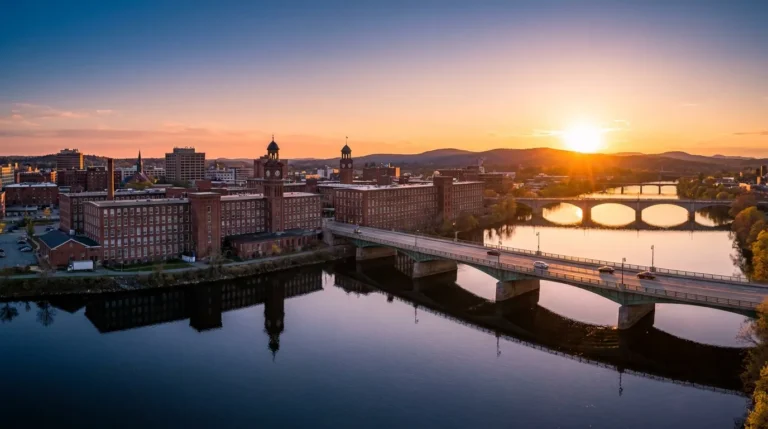
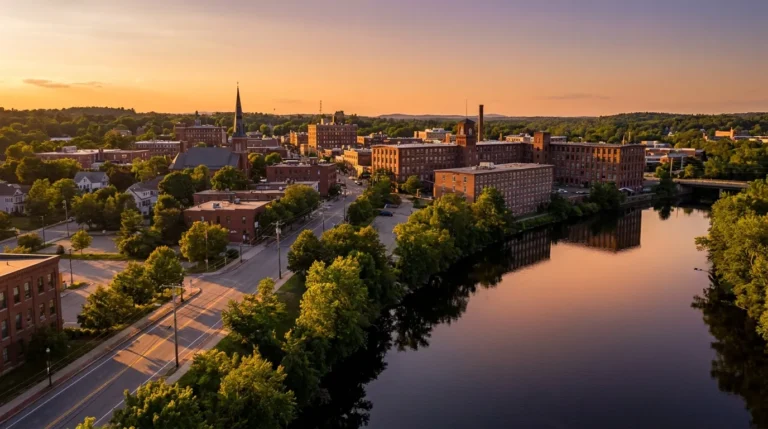
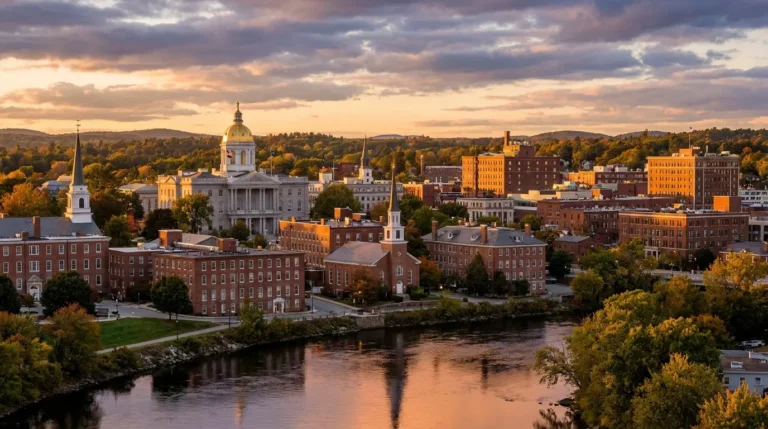
New Hampshire is in New England, in the northeastern United States, bordering Massachusetts to the south and Maine to the east. Concord is the capital, small in size. Manchester is the largest city, followed by Nashua. The state has about 1.4 million inhabitants, spread across small cities, forests, lakes, and mountains.

The major financial draw is a rare combination: zero state income tax on wages and zero sales tax. Massachusetts residents often cross the border to buy electronics, furniture, and beverages. In exchange, property taxes are high, making homeownership more costly than in other states.

Many people work in Boston (Massachusetts) and live in New Hampshire for the lower taxes and a quieter lifestyle. Life is calm, with fall foliage that is world-famous. The immigrant community is small compared to larger states, but it exists in Manchester and Nashua.

Population
1,395,231
Average monthly salary
64,000 USD/mo
43.4525°, -71.5639°

Featured places

Top 10 places in New Hampshire

The places most sought-after by immigrants in this region.

New Hampshire demographics: a White majority, with immigrant communities in Manchester

Historically a White state, with a growing Latino, Asian, and African presence in cities like Manchester and Nashua.

New Hampshire is one of the whitest states in the US, with strong English, Irish, French (Quebec), and Italian heritage. Catholic and Protestant culture coexist in many communities, and there are small towns where families have lived in the same place for generations.

Diversity has increased in recent years. Manchester has received refugees from countries such as Bhutan, Somalia, Iraq, and Syria through resettlement programs. There are also growing Latino communities (Mexican, Dominican, Salvadoran) and Indian communities in technology-heavy cities. Nashua has Portuguese, Brazilian, and Asian communities.

The Brazilian community is small but present, mainly in Nashua, Manchester, and Hudson, close to the Brazilian clusters in Massachusetts (Framingham, Marlborough). They work in construction, cleaning, beauty, and services. Churches and markets serving Portuguese speakers are mainly in Massachusetts, just minutes away by car.

1,395,231
Population
43 yrs
Median age
58/km²
Density
$90,800
Median income
per year
Urban population60.3%
Foreign-born6.2%
Languages spoken
  • English
  • Spanish
  • French (Quebec heritage)
  • Portuguese (Brazilian community in Nashua)
  • Swahili, Somali, and Arabic (refugees)
  • +1 more
Main religions
  • Catholic Christian
  • Protestant Christian (Congregational, Methodist)
  • No religion
  • Hindu and Buddhist
  • Muslim (refugee community)

Cost of living in New Hampshire: moderate, with a tax advantage

Overall cost is near the New England average. The absence of income tax and sales tax partially offsets high property taxes.

The cost of living in New Hampshire is moderate by New England standards. A one-bedroom apartment in Manchester or Nashua rents for $1,500 to $1,900 per month. In Concord and smaller cities, prices are lower. Near the Massachusetts border, prices rise because of people who work in Boston but live there.

Groceries and services cost similar amounts to Massachusetts. The big advantage is the absence of sales tax: in the rest of New England, you pay an extra 6-7% on every purchase; in New Hampshire, nothing. This makes a real difference on electronics, furniture, beverages, and gas.

Property taxes are high, among the highest in the US. A $500,000 home can pay $8,000 to $12,000 per year in property taxes. Renters do not feel this directly. Buyers do. Families with an annual income of $80,000 to $120,000 can live well, with the advantage of paying no tax on their wages.

106Cost index (US = 100)6% above US average
CategorySingleCoupleFamily (2 + 2)
iHousing$1,373$1,584$2,006
iFood$401$803$1,457
iTransport$528$898$1,162
iHealthcare$296$591$1,109
iChildcare$1,922
iOther$898$1,616$2,270
Monthly total$3,496$5,492$9,926

Source: U.S. BLS Consumer Expenditure Survey 2023 + BEA Regional Price Parities 2023 · Estimates in USD, monthly.

Housing in New Hampshire: traditional homes and quiet small towns

New England-style homes with wood siding. Suburbs near the Massachusetts border are the most sought-after.

In Manchester and Nashua, 3-bedroom homes in good neighborhoods sell for $450,000 to $700,000. Suburbs close to the Massachusetts border (Bedford, Hollis, Amherst, Windham) have homes starting from $600,000, some above $1 million. Cities further north and west have much more affordable real estate.

Traditional New England homes with clapboard siding, sloped roofs for snow clearance, and large yards are the standard. Many have finished basements and double garages. To rent, landlords ask for proof of income (usually 3 times the rent), a credit history, and references.

Buying property requires a credit history and financial stability. The high property tax is an important factor in the calculation. Smaller cities like Lebanon (west) and Portsmouth (coast) have their own dynamics and can have higher prices due to demand from professionals working in hospitals or in the financial sector.

Purchase price (m²)
  • Center$3,500/m²
  • Outside$2,400/m²
4.7×
Price-to-income
7.0%
Mortgage rate (20y)
Recommended neighborhoods
  • Bedford (Manchester, top schools)
  • Hollis and Amherst (upscale suburb)
  • Windham and Salem (near Massachusetts)
  • Nashua (vibrant urban center)
  • Portsmouth (coastal, historic)
  • +2 more

Job market in New Hampshire: technology, healthcare, finance, and tourism

Strong in healthcare, technology, defense, and tourism. Many residents commute daily to Boston (Massachusetts).

New Hampshire has a diversified economy for its size. Manchester and Nashua concentrate technology, finance, and healthcare companies. Fidelity Investments maintains a large operation in Merrimack. BAE Systems (defense) is one of the state's largest employers in Nashua and Hudson.

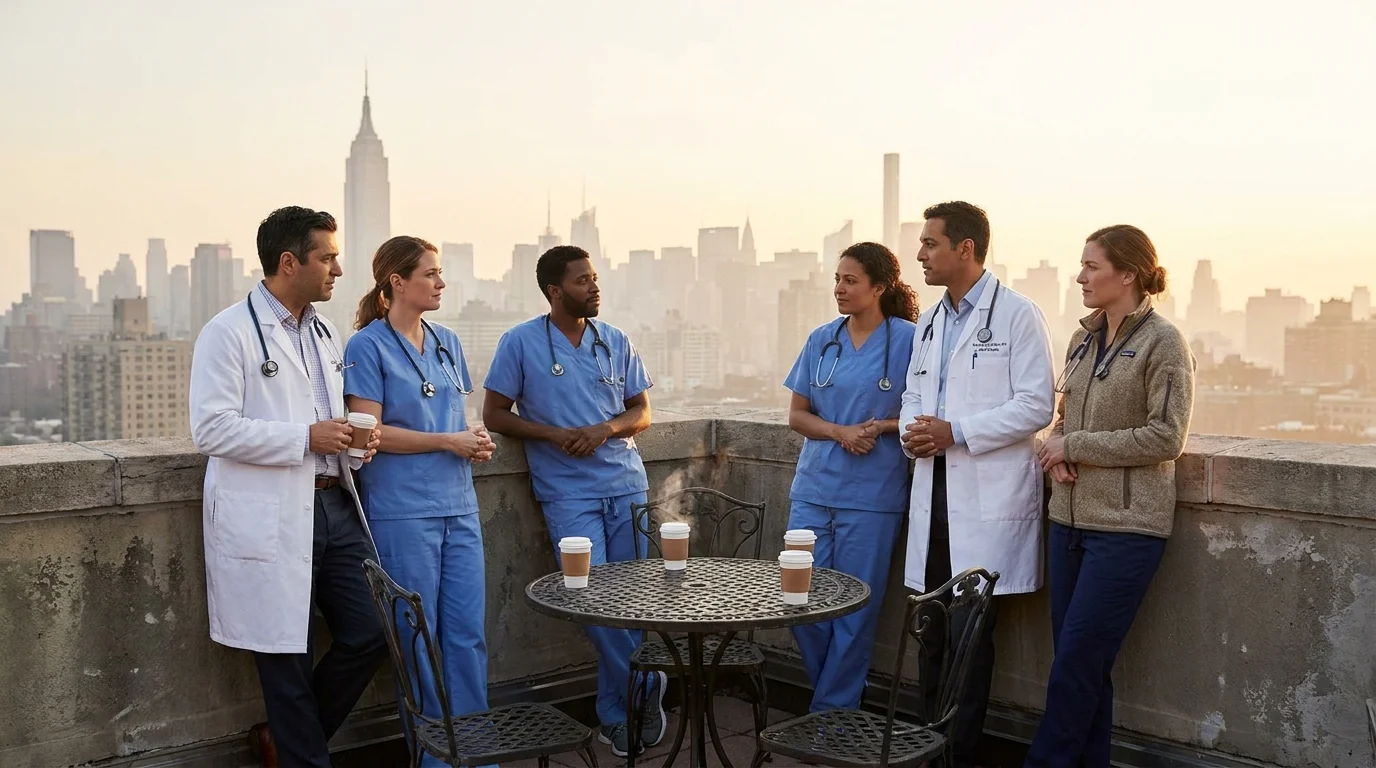
The healthcare sector is strong. Dartmouth-Hitchcock Medical Center, in Lebanon, is the state's largest hospital and a regional reference. Catholic Medical Center (Manchester) and Elliot Hospital also employ thousands. Universities like UNH (University of New Hampshire) and Dartmouth (Hanover) are major employers in their regions.

Many people live in New Hampshire and drive to Boston (1 to 1.5 hours depending on traffic) to work in technology, finance, or pharmaceuticals. Tourism is an important sector: White Mountains, the Lakes Region, Portsmouth's coast, and fall activities employ workers in hotels, restaurants, and parks.

$64,000
Avg net salary
per month
$15,080
Minimum wage
per month
2.6%
Unemployment
65.0%
Labor force
Dominant sectors
  • Technology and software
  • Healthcare and hospitals
  • Defense and aerospace
  • Financial services
  • Higher education
  • +2 more
Major employers
  • BAE Systems (Nashua)
  • Fidelity Investments (Merrimack)
  • Dartmouth-Hitchcock Medical Center (Lebanon)
  • Liberty Mutual
  • Hypertherm (Hanover)
  • +3 more

Education in New Hampshire: quality public schools and Dartmouth as the highlight

The public system is well rated. Dartmouth College is one of the eight Ivy League universities. UNH is the main state school.

Basic public education in New Hampshire is considered among the best in the US on average, though it depends heavily on the district. Bedford, Hollis-Brookline, Windham, and Hanover have well-rated school districts, with high college acceptance rates. Poorer cities in the northern part of the state have schools with fewer resources.

Dartmouth College, in Hanover, is one of the eight Ivy League universities. Founded in 1769, it has worldwide prestige, especially in medicine, engineering, and business (Tuck School of Business). Tuition is high (above $60,000 per year), with scholarships for lower-income students. Admission is very selective.

The University of New Hampshire (UNH), in Durham, is the main public university. Strong in engineering, business, marine sciences, and education. Tuition is affordable for state residents. There is also Saint Anselm College (private, in Manchester) and Plymouth State (public, in the north). Community colleges offer quick technical programs.

Literacy98.0%
Tertiary education39.4%
478
PISA score (avg)
$14,500
Private school
per year
Notable universities
  • Dartmouth College (Ivy League, Hanover)
  • University of New Hampshire (UNH, Durham)
  • Saint Anselm College (Manchester)
  • Plymouth State University
  • Keene State College
  • Southern New Hampshire University (strong online presence)

Healthcare in New Hampshire: a quality private network, with Dartmouth as a regional reference

Employment-based coverage is the standard. Dartmouth-Hitchcock handles complex cases for all of rural New England.

The US has no universal public healthcare. In New Hampshire, those in formal employment generally receive employer-provided health insurance as part of their compensation. Family premiums can exceed $1,500. Those without coverage purchase plans on the federal marketplace (healthcare.gov) with income-based subsidies.

Low-income families are eligible for New Hampshire Medicaid. Children and pregnant women have extended coverage. Undocumented immigrants have restricted access, essentially limited to emergencies and pregnancy. Community clinics serve patients on a sliding-fee scale.

The main hospitals are Dartmouth-Hitchcock Medical Center (Lebanon, reference for complex cases), Catholic Medical Center, and Elliot Hospital in Manchester. For highly specialized procedures, many people go to Boston, just 1 hour away. An uninsured private emergency room visit costs $1,500 to $5,000.

Healthcare index74.0 / 100
  • Life expectancyyears at birth
    79.2yrs
  • Doctors per 1kpracticing physicians
    3.2
  • Health spendper capita, per year
    $11,900
  • Public systemoverall quality rating
    Good

Safety in New Hampshire: one of the safest states in the US

Calm small towns and low crime. Manchester and Nashua have isolated problem areas, but far below the American urban average.

New Hampshire regularly appears among the safest states in the US. Most small cities have very low crime rates. Bedford, Hollis, Hanover, Windham, and Portsmouth are considered extremely safe, with little violent crime and a high quality of life.

Manchester and Nashua, the two largest cities, have neighborhoods with higher crime rates, but still far below the average for large American cities. There are isolated problems with drug trafficking (especially opioids) and related violence. The opioid epidemic has strongly affected the state over the past ten years.

Natural risks are more of a concern than crime in most of the state. Heavy winter snowstorms can close roads and leave communities isolated for days. Occasional hurricanes and spring flooding also occur. Homes in mountainous areas need reliable heating and emergency preparedness.

1.4
Homicides per 100k
per year
Safety index
70.0
Crime index
30.0
Safer neighborhoods
  • Bedford
  • Hollis and Amherst
  • Hanover (Dartmouth)
  • Windham and Salem
  • Exeter and Stratham
  • Portsmouth
  • Concord (capital)
Areas to avoid
  • Manchester downtown at night
  • Nashua isolated neighborhoods
  • Berlin outskirts

Transportation in New Hampshire: a car is essential, with an airport in Manchester

Sparse public transit outside a few routes. Manchester Airport (MHT) has flights to major US cities. Boston (Logan) is nearby.

A car is practically essential throughout the state. Distances are large by New England standards, and public transit outside a few basic routes is insufficient. There is limited bus service between larger cities (Concord Coach, Boston Express) and within Manchester and Nashua, but most families have two cars.

Ride-hailing apps like Uber and Lyft operate in more populated areas but are scarce in rural towns. To reach downtown Boston, many people drive to Lowell (Massachusetts) and take the commuter rail. In Salem and Plaistow, crossing the border daily is common.

The main airport is Manchester-Boston Regional Airport (MHT), with flights to hubs like Atlanta, Chicago, Philadelphia, Charlotte, and Orlando. For international flights or more options, most people use Logan International (BOS) in Boston, about 1 hour away by car. There are no direct international flights from MHT.

28 min
Avg commute
35
Walkability
Airports
  • MHT (Manchester-Boston Regional Airport)
  • LEB (Lebanon Municipal, regional)
  • PSM (Portsmouth International, limited flights)
  • Bike infrastructure

New Hampshire's climate: four distinct seasons, world-famous fall foliage, harsh winter

Mild summer, world-famous colorful fall, snowy winter, short and variable spring.

New Hampshire has a typical New England humid continental climate. Summer (June to August) is mild and pleasant, with temperatures between 20 and 28°C, perfect for outdoor activities on lakes, mountains, and the coast. Nights are usually cool. Mosquitoes can be a problem in areas near water.

Fall (September to November) is the state's most celebrated season. Tree leaves turn red, orange, and yellow, drawing tourists from around the world between late September and mid-October. Roads fill with visitors during the so-called leaf peeping season. The White Mountains are the highlight.

Winter (December to March) is cold with considerable snow. Temperatures frequently below zero, with nights reaching -20°C. Snowstorms close roads and schools multiple times per season. Ski resorts (Loon, Bretton Woods, Cannon, Waterville Valley) attract visitors. Spring is short, with snowmelt, mud, and variable weather.

Sunny days / year196 days
Avg high (°F)
  • 34°J
  • 37°F
  • 46°M
  • 59°A
  • 70°M
  • 79°J
  • 84°J
  • 82°A
  • 75°S
  • 62°O
  • 50°N
  • 39°D
Avg low (°F)
  • 17°J
  • 19°F
  • 27°M
  • 38°A
  • 48°M
  • 58°J
  • 64°J
  • 62°A
  • 54°S
  • 42°O
  • 33°N
  • 24°D
Rainfall (")
  • 2"J
  • 3"F
  • 3"M
  • 3"A
  • 3"M
  • 4"J
  • 3"J
  • 3"A
  • 4"S
  • 4"O
  • 3"N
  • 3"D

New Hampshire's culture: New England tradition, outdoor life, and civic independence

Traditional Yankee culture, fall foliage, outdoor sports, and the most famous presidential primary in the US.

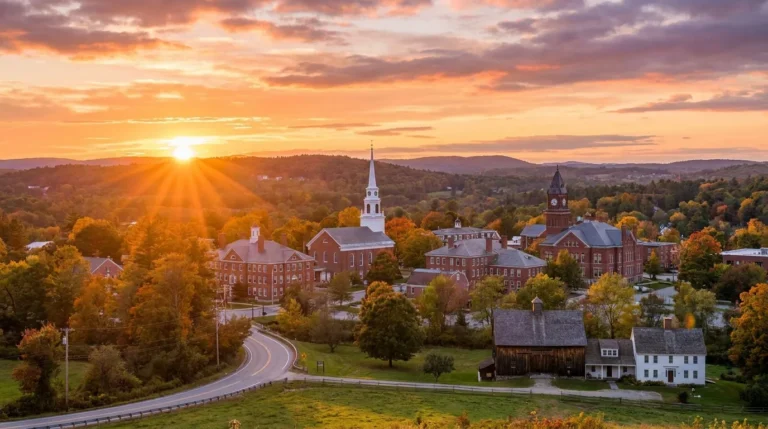
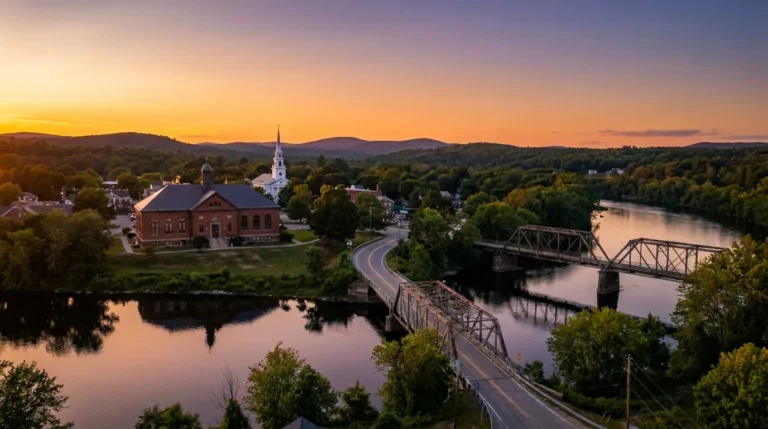
New Hampshire's culture has deep roots in colonial New England. Small towns with white churches at the center, democratic town meetings (municipal assemblies), and a strong sense of civic independence. The state motto, Live Free or Die, appears on license plates and sums up the local spirit well.

Outdoor life is central to the identity. Hiking in the White Mountains (including Mount Washington, the tallest peak in the region), skiing, canoeing on lakes like Winnipesaukee and Sunapee, fishing, and hunting. Even in winter, people stay active: snowshoeing, cross-country skiing, and ice skating.

Politically, New Hampshire has disproportionate weight because it hosts the first presidential primary in the American election cycle. Every four years, candidates spend months in the state speaking with voters at small gatherings. Local food includes clam chowder, lobster rolls, maple syrup, and craft beers that have grown enormously in recent years.

145
Major museums
Notable dishes
  • Clam chowder
  • Lobster roll
  • Maple syrup (locally produced)
  • Apple cider (especially in fall)
  • Pumpkin pie
  • +2 more
Annual events
  • New Hampshire Primary (presidential primary, February every 4 years)
  • Laconia Motorcycle Week (June)
  • Fryeburg Fair (October, on the Maine border)
  • Keene Pumpkin Festival (October)
  • Mount Washington Auto Road Hillclimb (June)
  • +1 more

New Hampshire's main economic sectors

Technology, healthcare, defense, and tourism lead. Higher education and specialized manufacturing are also important.

Technology has a strong presence in Manchester, Nashua, and Merrimack, with software, hardware, and technology-based financial services companies. Fidelity Investments, Liberty Mutual, and various startups employ thousands. Proximity to Boston helps attract talent and capital.

The defense sector is important, with BAE Systems being one of the largest employers. The company develops electronic systems for the American military industry. Hypertherm, in Hanover, is a world reference in plasma and waterjet cutting. High-tech specialized manufacturing is a significant part of the economy.

Healthcare revolves around the Dartmouth-Hitchcock complex and CMC. Higher education employs many people in Hanover (Dartmouth), Durham (UNH), and smaller cities. Tourism is a seasonal but relevant sector, peaking in fall and winter. Craft breweries and local agriculture (maple syrup, apples) also drive the economy.

  • GDPgross domestic product
    $117.0B
  • GDP per capitaoutput per resident
    $83,800
  • GDP growth (yr)economy expanding
    +2.1%
Top sectors
  • Technology and software
  • Healthcare and hospitals
  • Defense and aerospace
  • Financial services
  • Higher education
  • +3 more

Immigrant communities in New Hampshire

New Hampshire has around 100,000 immigrants. Indians, Canadians, Dominicans, and African refugees form the largest groups.

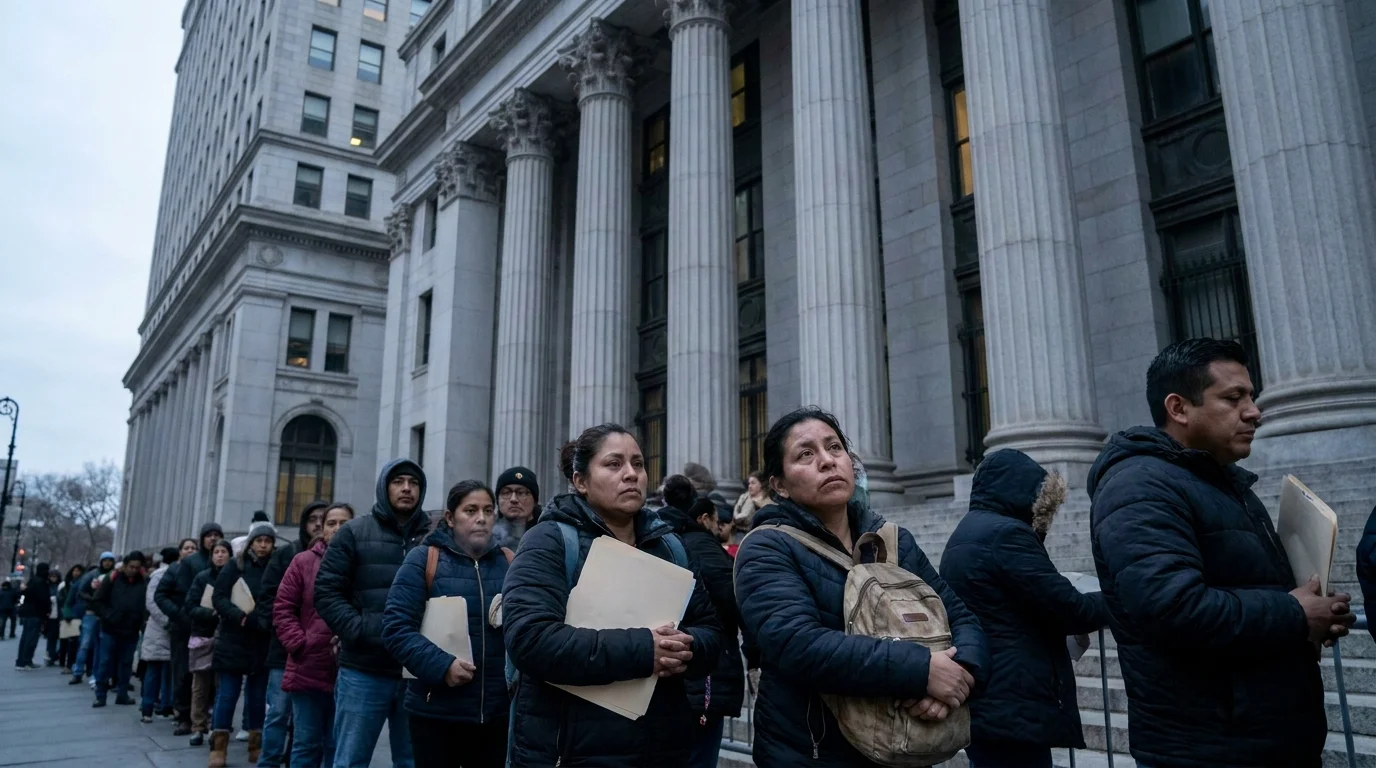
New Hampshire has roughly 100,000 foreign-born residents, close to 7% of the population. The largest communities come from India, Canada, the Dominican Republic, Brazil, and China. Manchester is the main immigration hub, with a strong presence of Congolese, Bhutanese, Iraqi, and Somali refugees resettled over the past two decades. Nashua has an Indian and Chinese presence tied to the tech sector, and Concord receives smaller refugee flows. French-Canadian heritage is still visible in Manchester and in small towns up north.

No foreign consulates are based in the state. Consular services run through Boston. Local support is coordinated by the NH Alliance for Immigrants and Refugees, the Organization for Refugee and Immigrant Success (ORIS), the International Institute of New England (Manchester office), and Catholic Charities NH. Free legal aid is provided mostly by NH Legal Assistance and pro bono lawyers tied to the NH Bar Association.

100,000
Foreign-born residents
estimated
Top countries of origin
  • India
  • Canada
  • Dominican Republic
  • Brazil
  • China
Main immigrant hubs
  • Manchester
  • Nashua
  • Concord
  • Derry
  • Dover
Foreign consulates
  • French Honorary Consulate (Manchester)
  • Austrian Honorary Consulate (jurisdiction includes New Hampshire)
Community organizations
  • NH Alliance for Immigrants and Refugees
  • Organization for Refugee and Immigrant Success (ORIS)
  • International Institute of New England
  • Catholic Charities NH
  • NH Legal Assistance

Latest posts

Posts about the United States

Coverage and updates related to this destination.

Showing content from the United States, as there is no specific data for New Hampshire yet.