Visto n' Visa
Blog
Notícias e artigos
Destinations
Careers
Immigrants

Want to live and work in Nevada?

Personalized immigration plan with eligible visas, costs, and next steps for your goal!

If you are not eligible, you will know exactly why and what to do to improve your approval chances.

Save up to 12 hours in meetings

No pointless assessments.

Save up to 90%

Save money on vague or unfocused consultations

Avoid Fraud and Mistakes

One mistake can cost you your visa

Total Impartiality

Zero commercial bias

Decide with peace of mind

No toxic urgency

Fast and Accurate

Answers in minutes, no guesswork

Get to know Nevada

Casinos, desert, 24-hour entertainment, and zero state income tax.

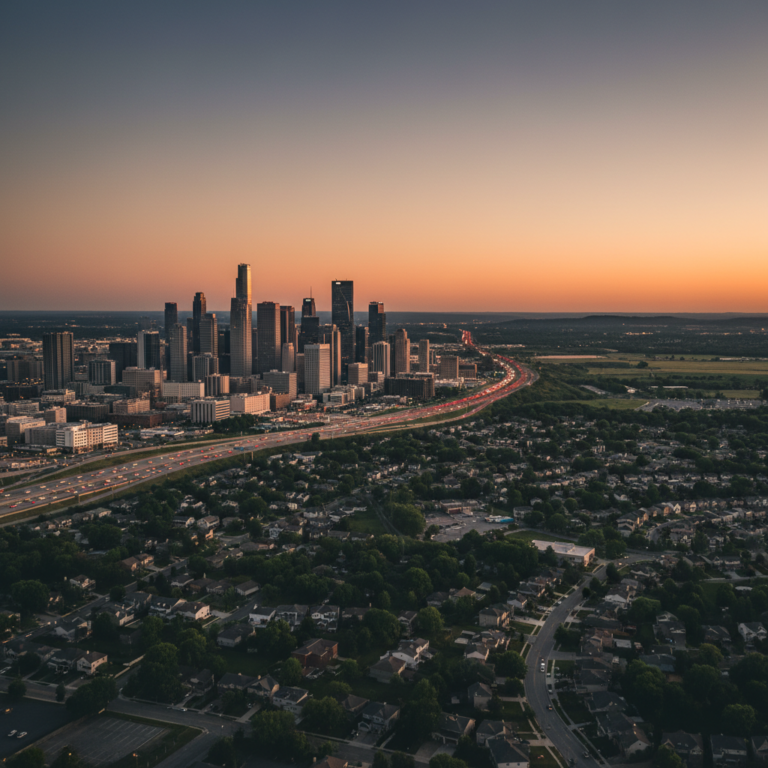
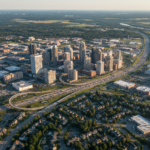
Nevada sits in the Southwest, in a predominantly desert region. The two main cities are Las Vegas (south, in the Mojave) and Reno (north, near the California border). Carson City is the capital, much smaller. The rest of the state is desert, arid mountains, and thinly populated mining towns.

Las Vegas runs on tourism, Strip casinos, and events: conventions, shows, sports (the Raiders in football, the Golden Knights in hockey), and quick-stop weddings. The economy depends heavily on hospitality, with enormous hotels employing thousands. Reno reinvented itself in recent years by attracting logistics and tech, with Tesla and Google established in the area.

The big draw for newcomers: Nevada has no state income tax. High earners save thousands a year compared to California or New York. The cost of living is reasonable and the dry climate appeals to many. The Hispanic community is large, especially in Las Vegas.

Population
3,177,772
Average monthly salary
58,000 USD/mo
38.3135°, -117.0554°

Featured places

Top 10 places in Nevada

The places most sought-after by immigrants in this region.

Nevada demographics: a diverse state with a strong Hispanic presence

More than a quarter of the population is Hispanic. Asian, Black, and white communities are all represented in meaningful shares.

Nevada is one of the most diverse states in the country. The Hispanic community, primarily Mexican, Salvadoran, and Cuban, makes up roughly 30% of the population. In Las Vegas, it is common to hear Spanish in supermarkets, schools, and at work. Spanish-speaking churches, markets, and attorneys are found throughout the city.

There are significant Asian communities (Filipino, Chinese, Korean, Vietnamese) concentrated in Las Vegas, many employed in casinos and services. The Black population is substantial in neighborhoods on the west side of Las Vegas. Brazilians are present, mainly working in hospitality, beauty, and construction, though the community is smaller than in Florida or California.

Reno has a different demographic profile: more white, with a smaller but growing Hispanic community. The Mormon (Latter-day Saints) presence is strong in some small towns in the eastern part of the state, near Utah.

3,177,772
Population
39 yrs
Median age
11/km²
Density
$71,600
Median income
per year
Urban population94.2%
Foreign-born19.5%
Languages spoken
  • English
  • Spanish (strong presence)
  • Tagalog (Filipino)
  • Mandarin and Cantonese
  • Korean
  • +1 more
Main religions
  • Christian Catholic
  • Christian Protestant
  • Non-religious
  • Mormon (LDS)
  • Jewish
  • +1 more

Cost of living in Nevada: moderate, with zero state income tax

Las Vegas and Reno are near the national average. With no state income tax, paychecks go further than in neighboring states.

The cost of living in Las Vegas and Reno sits close to the US national average. A one-bedroom apartment in a decent neighborhood runs between $1,400 and $1,800/month in Las Vegas; in Reno, between $1,500 and $1,900/month. Henderson and Summerlin (Las Vegas suburbs) tend to be pricier but offer higher quality.

Groceries cost slightly less than in California but more than in the Midwest. Eating out at a popular chain runs $15 to $20 per person. Gas is reasonable, though it tracks international prices. Electricity bills can be heavy in summer because air conditioning runs almost around the clock in July and August.

The real financial differentiator is no state income tax. Someone earning $100,000 a year saves roughly $6,000 to $10,000 compared to states like California or Oregon. That is why many remote workers, retirees, and entrepreneurs relocate to Nevada.

98Cost index (US = 100)2% below US average
CategorySingleCoupleFamily (2 + 2)
iHousing$1,277$1,473$1,866
iFood$373$746$1,355
iTransport$491$835$1,080
iHealthcare$275$550$1,031
iChildcare$1,787
iOther$835$1,502$2,111
Monthly total$3,251$5,106$9,230

Source: U.S. BLS Consumer Expenditure Survey 2023 + BEA Regional Price Parities 2023 · Estimates in USD, monthly.

Housing in Nevada: new homes in planned suburbs, high-rises near the Strip

Las Vegas has large planned suburban developments with new homes. Reno has grown fast, with rising prices in recent years.

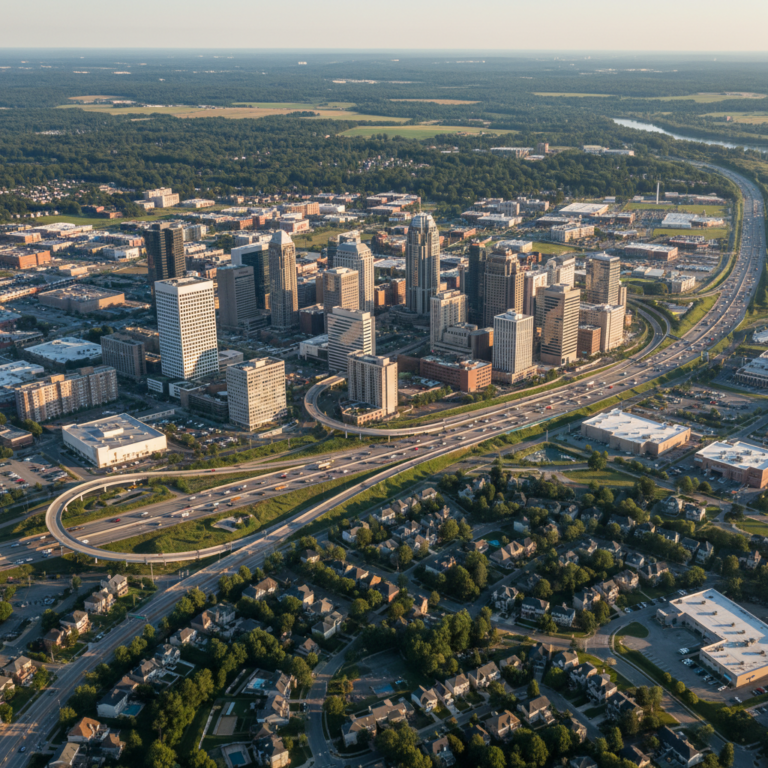
In Las Vegas, housing is concentrated in planned suburbs: Summerlin (west), Henderson (southeast), Green Valley, and North Las Vegas. New three- or four-bedroom homes with a yard and small pool range from $450,000 to $700,000 in well-located areas. Near the Strip, condos and high-rise apartments vary widely in price.

Reno has grown significantly, partly driven by Tesla's arrival in the region. Homes in South Reno, Somersett, and Spanish Springs typically range from $500,000 to $800,000. More central neighborhoods (Midtown, Old Southwest) offer smaller historic homes.

To rent, landlords typically ask for proof of income (usually three times the rent), a credit history (FICO score), and references. Newcomers without a US credit history will need a co-signer or several months' rent upfront. The rental market in Las Vegas has been tight for years, with limited supply and rising prices.

Purchase price (m²)
  • Center$3,600/m²
  • Outside$2,300/m²
5.8×
Price-to-income
7.0%
Mortgage rate (20y)
Recommended neighborhoods
  • Summerlin (Las Vegas, planned and safe)
  • Henderson and Green Valley (families)
  • Anthem (south Las Vegas, new homes)
  • Lake Las Vegas (lakefront area)
  • South Reno and Somersett (Reno)
  • +2 more

Job market in Nevada: hospitality, gaming, logistics, and growing tech

Casinos and tourism dominate in Las Vegas. Reno draws logistics and technology. Mining employs people in smaller towns.

In Las Vegas, the hospitality sector (hotels, casinos, restaurants, events) is the top employer. Companies like MGM Resorts, Caesars Entertainment, Wynn Resorts, and Las Vegas Sands employ tens of thousands. Roles range from server and dealer to engineer, marketing, and IT. Base wages often come with tips that significantly boost take-home pay.

Reno has transformed into a logistics and tech hub. Tesla's Gigafactory in Sparks employs thousands, and Google has a data center in the area. Amazon and Walmart also operate large distribution centers. Gold and silver mining companies hire in the interior of the state.

There are also jobs in construction (always active in Las Vegas), education (UNLV, UNR), healthcare, and government. Remote work grew substantially during the pandemic, attracting professionals from California who keep earning big-city salaries while paying less in taxes by living in Nevada.

$58,000
Avg net salary
per month
$25,168
Minimum wage
per month
5.4%
Unemployment
62.5%
Labor force
Dominant sectors
  • Hospitality and gaming (casinos)
  • Tourism and conventions
  • Logistics and distribution
  • Technology (Reno)
  • Mining
  • +3 more
Major employers
  • MGM Resorts International
  • Caesars Entertainment
  • Wynn Resorts
  • Las Vegas Sands
  • Tesla (Gigafactory Nevada)
  • +3 more

Education in Nevada: public schools with uneven quality, two public universities

Free public schooling with quality that varies a lot by neighborhood. UNLV and UNR are the main state universities.

Public K-12 schooling is free for resident children, but quality varies widely. The Clark County School District (covering Las Vegas) is one of the largest in the US and faces challenges with funding and class size. Suburbs such as Henderson, Summerlin, and parts of Sparks (Reno) have schools well above average.

The University of Nevada has two main campuses: UNLV in Las Vegas (strong in hospitality, engineering, and law) and UNR in Reno (the older campus, with strengths in mining and journalism). In-state tuition is reasonable. International students pay more but still less than at coastal universities.

Community colleges (College of Southern Nevada, Truckee Meadows Community College) offer quick, affordable technical programs. Newcomers without a US degree often use these schools to earn certifications in healthcare, hospitality, technology, and construction.

Literacy96.0%
Tertiary education26.5%
478
PISA score (avg)
$13,800
Private school
per year
Notable universities
  • University of Nevada, Las Vegas (UNLV)
  • University of Nevada, Reno (UNR)
  • Nevada State College (Henderson)
  • College of Southern Nevada
  • Truckee Meadows Community College (Reno)

Healthcare in Nevada: employer coverage is standard, large hospitals in Las Vegas and Reno

Employer-provided health insurance is the norm. Renown in Reno and Sunrise/MountainView in Las Vegas are the main networks.

The US has no universal public healthcare. In Nevada, workers with formal employment receive a health plan from their employer as part of their compensation, with family premiums exceeding $1,500/month. Those without coverage can purchase a plan through the federal marketplace (healthcare.gov) with income-based subsidies.

Low-income families can qualify for Nevada Medicaid. Children and pregnant women have expanded coverage through Nevada Check Up (CHIP). Undocumented immigrants have restricted access, essentially limited to emergencies and pregnancy. Community health centers (FQHCs) offer sliding-scale fees.

The main hospitals are Sunrise Hospital, MountainView Hospital, and University Medical Center in Las Vegas, and Renown Regional and Saint Mary's in Reno. For highly complex cases, many patients end up traveling to Los Angeles or Salt Lake City. An ER visit without insurance costs between $1,500 and $5,000.

Healthcare index62.0 / 100
  • Life expectancyyears at birth
    78.1yrs
  • Doctors per 1kpracticing physicians
    2.4
  • Health spendper capita, per year
    $9,000
  • Public systemoverall quality rating
    Fair

Safety in Nevada: safe suburbs, some issues in tourist-heavy areas

Henderson and Summerlin are among the safest suburbs in the US. Downtown Las Vegas and areas near the Strip require more attention, especially at night.

Henderson, Summerlin, and Boulder City rank among the safest suburbs in the US, with low crime rates and high quality of life. Families with children tend to cluster in these areas. In Reno, South Reno and Somersett also have a quiet reputation.

Las Vegas has issues concentrated in specific areas. The historic Downtown, parts of north Las Vegas, and some neighborhoods near the Strip have higher crime rates. Tourists are common targets of theft and scams, particularly near casinos. Renters should research neighborhoods carefully before signing a lease.

Violent crime is confined to a few areas. Most of the state is empty desert. Natural hazards include extreme summer heat (40°C and above is normal) and occasional dust storms. Car accidents on desert highways are common; keeping the tank full and carrying water matters on long drives.

6.2
Homicides per 100k
per year
Safety index
51.0
Crime index
49.0
Safer neighborhoods
  • Summerlin (west Las Vegas)
  • Henderson and Green Valley
  • Boulder City
  • Anthem (south Las Vegas)
  • South Reno and Somersett
  • Spanish Springs (Reno)
  • Sparks (Reno suburb)
Areas to avoid
  • East Las Vegas
  • North Las Vegas downtown
  • Reno isolated neighborhoods
  • East Sparks outskirts

Transportation in Nevada: a car is essentially required outside the Strip

Long distances and limited public transit. Las Vegas has a Strip monorail. Las Vegas airport is one of the busiest in the US.

A car is essential in nearly all of Nevada. Las Vegas and Reno are sprawling cities with limited public transit outside central areas. In Las Vegas, the monorail covers part of the Strip and helps tourists, but it does not serve residents' daily needs. The RTC runs buses that reach main neighborhoods, but the network is not sufficient for car-free living.

Uber and Lyft work well in both cities and are popular for heading to the Strip at night. In Reno, distances within the city are shorter and some people manage without a car in the most central neighborhoods. Cycling is practical in cooler months.

Harry Reid International Airport (LAS) in Las Vegas is one of the busiest in the US, with nonstop flights to dozens of American cities, Mexico, Canada, Europe, and Asia. Reno-Tahoe (RNO) serves regional routes to major US cities. Interstate 15 connects Las Vegas to Los Angeles and Salt Lake City.

1
Metro lines
7
Metro stations
25 min
Avg commute
39
Walkability
Airports
  • LAS (Harry Reid International, Las Vegas)
  • RNO (Reno-Tahoe International)
  • International airport
  • Bike infrastructure

Nevada climate: hot desert in the south, snowy mountains in the north

Scorching summers in Las Vegas, with temperatures above 40 degrees. Mild winters in the south. Reno has cold winters with snow.

Nevada has a desert climate across most of the state. In Las Vegas, summer is extreme: July and August regularly exceed 40 degrees, sometimes hitting 45 or higher. The air is very dry, which makes the heat more bearable, but staying hydrated is essential. Rain is rare. Winter is mild, with daytime temperatures between 10 and 18 degrees and only occasional nights near freezing.

Reno sits at a higher elevation (about 1,370 meters) and has a noticeably different climate. Hot, dry summers with cool nights. Cold winters with temperatures frequently below freezing overnight and snow several times each season. Lake Tahoe, near Reno, is a skiing destination in winter.

The rest of the state is mountainous desert. Dust storms, heat waves, and prolonged droughts are challenges. People coming from humid climates take time to adjust to the dry air, which affects skin, throat, and sinuses. Drinking plenty of water is a basic rule during warm months.

Sunny days / year252 days
Avg high (°F)
  • 58°J
  • 62°F
  • 71°M
  • 78°A
  • 88°M
  • 99°J
  • 104°J
  • 102°A
  • 94°S
  • 80°O
  • 67°N
  • 56°D
Avg low (°F)
  • 39°J
  • 43°F
  • 49°M
  • 55°A
  • 64°M
  • 74°J
  • 80°J
  • 78°A
  • 70°S
  • 58°O
  • 46°N
  • 38°D
Rainfall (")
  • 1"J
  • 1"F
  • 1"M
  • 0"A
  • 0"M
  • 0"J
  • 0"J
  • 0"A
  • 0"S
  • 0"O
  • 0"N
  • 0"D

Nevada culture: 24-hour entertainment, big shows, and old-west landscapes

Las Vegas lives for shows, sports, and events. Reno has an arts scene and sits near Lake Tahoe. Old-west culture survives in the interior.

Las Vegas is the entertainment capital of the US. Big-name artists with residencies (Adele, U2, Bruno Mars), Cirque du Soleil in multiple casinos, sporting events, UFC and boxing fights, festivals like Electric Daisy Carnival. The Strip runs 24 hours, with lights and action that never stop.

Reno has a different feel: an independent arts scene, festivals like Burning Man (in the Black Rock Desert to the north), and proximity to Lake Tahoe for skiing, hiking, and outdoor activities. The city has invested in revitalizing its downtown with breweries, restaurants, and galleries.

The interior of the state preserves American old-west culture: rodeos, cattle ranches, and ghost towns from the mining era. Food in the cities is varied: Mexican tacos, Chinese dim sum, Vietnamese pho, casino buffets, and award-winning restaurants from chefs like Joel Robuchon and Wolfgang Puck.

130
Major museums
Notable dishes
  • Casino buffets (unlimited variety)
  • Mexican tacos (strong Latin presence)
  • Breaded shrimp (Las Vegas classic)
  • Ribeye steak (Strip steakhouses)
  • Vietnamese pho (Las Vegas Chinatown)
  • +2 more
Annual events
  • Electric Daisy Carnival (EDC, Las Vegas, May)
  • CES (Consumer Electronics Show, Las Vegas, January)
  • Burning Man (Black Rock Desert, August-September)
  • National Finals Rodeo (Las Vegas, December)
  • Reno Air Races (September)
  • +2 more

Main industries of Nevada's economy

Hospitality and gaming lead, with logistics and technology rising fast. Mining remains relevant in rural areas.

Gaming and hospitality remain the heart of the economy, especially in Las Vegas. Casinos, hotels, restaurants, and conventions generate tens of billions of dollars a year. The pandemic exposed the risk of relying so heavily on a single sector, and the state has been actively diversifying.

Logistics and technology are growing quickly. Tesla's Gigafactory in Sparks (Reno) became a regional landmark. Amazon, Google, Apple, and Switch (data centers) also invested heavily in Nevada because of low taxes and proximity to California. Reno has consolidated itself as a warehousing hub for the western US.

Gold and silver mining remains important in the interior, with Nevada being one of the largest gold producers in the US. Solar energy is an expanding sector given the desert's intense sunlight. Aerospace (with Nellis Air Force Base) and biotechnology also appear in the economy, alongside construction, which is always in high demand.

  • GDPgross domestic product
    $235.0B
  • GDP per capitaoutput per resident
    $73,900
  • GDP growth (yr)economy expanding
    +3.0%
Top sectors
  • Hospitality, gaming, and tourism
  • Logistics and distribution
  • Technology and data centers
  • Mining (gold and silver)
  • Solar energy
  • +3 more

Immigrant communities in Nevada

Around 580,000 immigrants live in Nevada, with a strong Mexican, Filipino, Salvadoran and Cuban presence tied to the 24-hour Las Vegas economy.

Nevada has about 580,000 foreign-born residents, close to 19% of the population, one of the highest shares in the inland United States. Almost all of them live in greater Las Vegas. Mexicans are the largest group, spread across the East Side, North Las Vegas, Sunrise Manor and along Boulder Highway, working in construction, hospitality, landscaping and the casinos. The Filipino community is one of the biggest in the western United States, drawn for decades by the hotel industry and nursing, and concentrated in Spring Valley, Summerlin and Henderson, with its own Catholic parishes. Salvadorans, Hondurans and Guatemalans share the east side; more recent Cubans and Venezuelans cluster on the west side. Reno has a smaller Mexican and Peruvian community linked to logistics and mountain tourism.

The Consulate-General of Mexico in Las Vegas is one of the busiest in the western United States, and the city also hosts consulates of El Salvador, Guatemala and an honorary consulate of the Philippines. Make the Road Nevada organizes immigrants around wages, housing and removal defense, with a strong base on the Strip. Hispanics in Politics works on advocacy, and USCRI Las Vegas resettles refugees from Myanmar, Afghanistan and Syria. There is a thick layer of Hispanic and Filipino Catholic parishes, and the Culinary Union, very large in Las Vegas, acts as a de facto entry point for many immigrants arriving to work in hotels and casinos.

580,000
Foreign-born residents
estimated
Top countries of origin
  • Mexico
  • Philippines
  • El Salvador
  • Cuba
  • China
Main immigrant hubs
  • Las Vegas
  • North Las Vegas
  • Henderson
  • Reno
  • Sparks
Foreign consulates
  • Mexican Consulate General in Las Vegas
  • El Salvador Consulate in Las Vegas
  • Guatemala Consulate in Las Vegas
  • Philippine Honorary Consulate in Las Vegas
Community organizations
  • Make the Road Nevada
  • Hispanics in Politics
  • USCRI Las Vegas

Latest posts

Posts about the United States

Coverage and updates related to this destination.

Showing content from the United States, as there is no specific data for Nevada yet.