English
  Português
  Español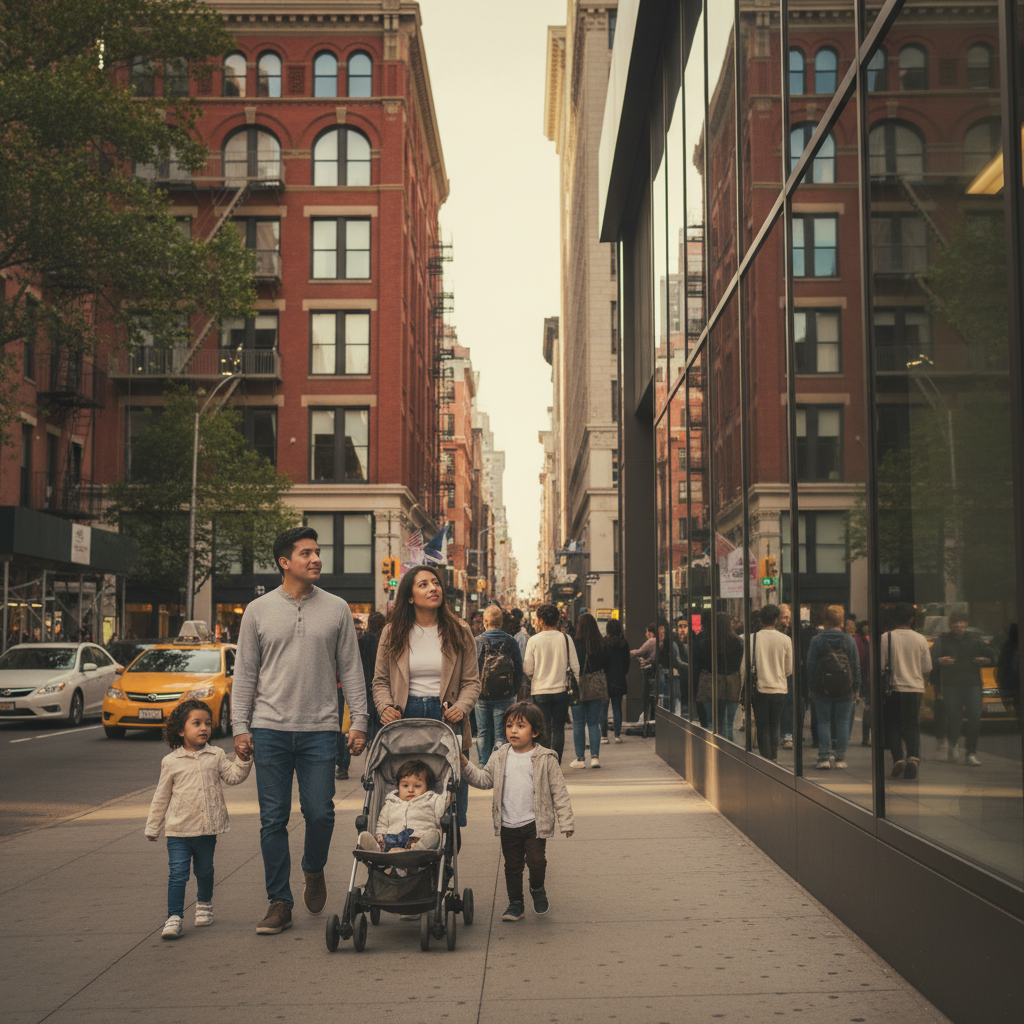
Do babies and children need a US visa? Yes, without exception. Every foreign national entering the United States for tourism, a family visit, or medical treatment needs a visa, regardless of age. This applies to newborns, adopted children, and minors traveling with or without a parent. This complete guide explains, step by step, how the consular process works for minors, what changed in 2025, and which documents parents or guardians must gather before starting the application.
Why Minors Also Need a Visa
The B-1/B-2 nonimmigrant visa is issued individually. A parent’s visa does not cover their children, and a child’s presence in a parent’s passport does not substitute for their own visa. Every person crossing the border as a visitor needs their own valid passport and their own visa affixed to that passport, except for citizens of Visa Waiver Program countries, who use ESTA.
For the vast majority of countries in our audience (Brazil, India, Mexico, the Philippines, Colombia, Peru, South Africa, China, Nigeria, and others), ESTA is not available. That means even a newborn must go through the full consular process: DS-160, MRV fee payment, scheduling, appearance at the biometric collection center, and an interview at the consulate.
A Major Change in 2025: End of the Age-Based Waiver
Until mid-2025, many embassies and consulates applied the so-called interview waiver for children under 14 and adults over 79. In practice, these applicants could mail in their passports without appearing at the consulate.
Starting in September 2025, the Department of State ended this automatic age-based waiver. Since then, every nonimmigrant visa applicant, including infants just a few months old, must appear in person at the biometric collection center and the consular interview, always accompanied by a legal guardian. The well-defined exception remains limited to certain visa renewal cases in specific categories, and even then the consular officer may call the applicant in for an in-person interview.
This means international families planning to travel with children must plan for logistics, travel, and parental availability on the day of the appointment. At consulates with long wait times, this factor can define the viable travel window.
Step-by-Step Consular Process for Minors
The Minor’s Passport
The first step is to obtain the child’s passport in their home country. Each authority has its own rules: in most Latin American countries, a minor’s passport requires the presence of both parents or formal authorization from the absent parent, with a 5-year validity for young children and 10 years from adolescence onward. Check your country’s rules in advance, because passport issuance is often the most time-consuming bottleneck in the process.
Individual DS-160 Form
Each applicant needs their own DS-160. The form is filled out by the parent or guardian using the child’s information: full name, date of birth, passport number, home address, and planned travel details. For the occupation, income, and employment fields, it is appropriate to indicate student status or that the child has no paid occupation. The home-country ties section is filled out based on the parents or legal guardians.
MRV Fee Payment
The nonimmigrant consular fee for B, C, F, I, J, and M categories is charged per applicant, with no age discount. Children and infants pay the same amount as adults. The B-1/B-2 fee is US$185 per application, per the Department of State schedule in effect since mid-2023. Payment is made by bank payment slip, debit card, or international credit card, depending on the system used in each country.
Scheduling and Biometric Collection Center
After payment, the guardian schedules two appointments through the visa system portal in their home country: the biometric collection center and the consular interview. In some countries, both appointments take place in the same building; in others, they are in different cities. Very young infants may have fingerprint collection simplified or waived due to physical limitations, but the child’s physical presence is still required.
Consular Interview
On the day of the interview, the minor must be physically present. The consular officer directs questions to the guardian: purpose of travel, dates, accommodation, home-country ties, parents’ employment status, and financial ability to cover the entire family’s trip. The child’s profile is not evaluated in isolation but within the family context.
US-Standard Photo: The Most Common Point of Failure
The visa photo for children and infants is where most families go wrong. The required standard is strict:
- 2 by 2 inches (5 cm × 5 cm), square format
- Plain white background, no shadows or objects
- Taken within the last 6 months
- Face centered, eyes open, neutral expression
- No toys, adult hands, or blankets visible in the frame
- No other faces in the image
For photographing an infant to this standard, the most common method is to lay the child on their back on a white sheet and photograph from above with diffused natural light. Photography studios that specialize in ID documents are usually familiar with the requirements. A photo that does not meet the standard delays the process: the embassy may request a new photo on the day of the interview, adding to wait times and stress for the family.
Documents for Interview Day
The guardian must bring both the child’s documentation and their own, organized in separate folders:
Minor’s Documentation
- Valid passport with at least 6 months of validity beyond the expected return date
- Printed DS-160 confirmation
- Printed appointment confirmation
- Photo printed to the 2 by 2 inch standard
- Birth certificate or equivalent document
- School enrollment certificate, when applicable
Parents’ or Guardians’ Documentation
- Own passport and visa (if already held)
- Recent proof of income
- Bank statements from the last 3 months
- Proof of residence
- Employer letter or self-employment documents
When Only One Parent Accompanies the Minor
In many countries, authorization from the other parent is required for a minor to travel internationally without both parents present. Even when this authorization is not formally required by the US consulate, bringing a translated and notarized copy is prudent practice. The consular officer may request custody documents, a court order, or a notarized authorization in cases of divorce, the death of one parent, or sole custody. Voluntarily presenting these documents demonstrates organization and reduces questions during the interview.
Validity of Visas Issued for Minors
The B-1/B-2 visa for children is typically issued with the same maximum validity as for adults: up to 10 years for nationals of countries with full reciprocity agreements, and shorter terms for nationalities under restricted reciprocity. The final decision on the term is at the consular officer’s discretion and takes into account the family’s profile, travel history, and the diplomatic relationship between the home country and the United States.
Because a child’s passport often expires before the visa does, it is common for teenagers to end up traveling with two passports: the current one in use and the expired one where the valid visa is affixed. This combination is accepted by CBP upon entry into the United States, as long as the visa is not damaged or canceled.
Realistic Process Planning
Families with babies or children need to account for three combined time windows: obtaining the child’s passport, waiting for a biometric center appointment, and the consular interview. In high-demand cities, this combined wait can stretch to several months. Starting the process at least 6 months before the planned travel date avoids last-minute rushes and the loss of flight and accommodation reservations. For urgent cases, some consulates offer expedited scheduling with documented justification, but approval is not guaranteed and follows local discretion.
Learn more about B-1/B-2 Visa
- Duration
- Up to 6 months
- Extension
- Possible (up to 6 months)
- Work
- Not permitted
- Processing
- 2-8 weeks

Victoria Harper
Editor-in-Chief
Leading journalism and editorial content at Visto n’ Visa, Victoria helps make immigration topics clear, trustworthy, and easy to understand. Her focus is on delivering useful, human, and relevant content for people exploring new paths abroad.