Visto n' Visa
Blog
Notícias e artigos
Destinations
Careers
Immigrants

Want to live and work in Delaware?

Personalized immigration plan with eligible visas, costs, and next steps for your goal!

If you are not eligible, you will know exactly why and what to do to improve your approval chances.

Save up to 12 hours in meetings

No pointless assessments.

Save up to 90%

Save money on vague or unfocused consultations

Avoid Fraud and Mistakes

One mistake can cost you your visa

Total Impartiality

Zero commercial bias

Decide with peace of mind

No toxic urgency

Fast and Accurate

Answers in minutes, no guesswork

Discover Delaware

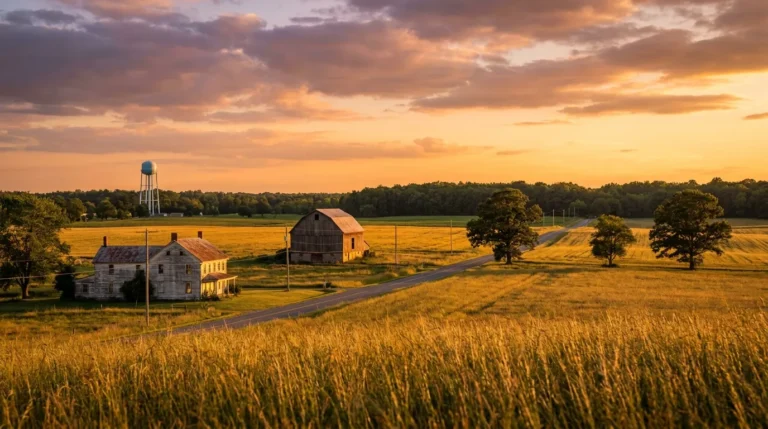
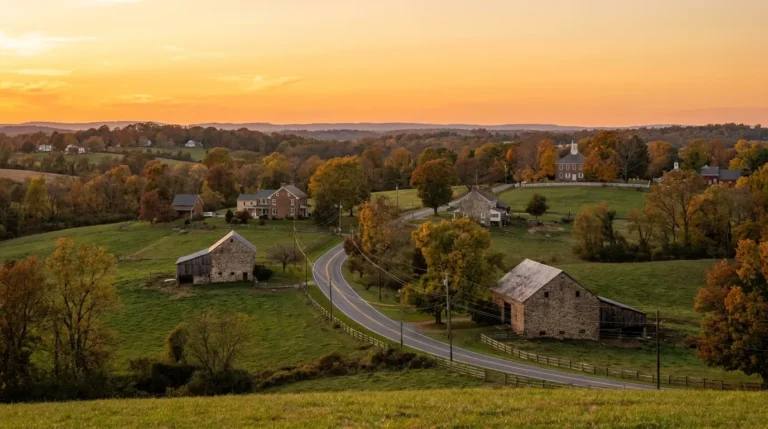
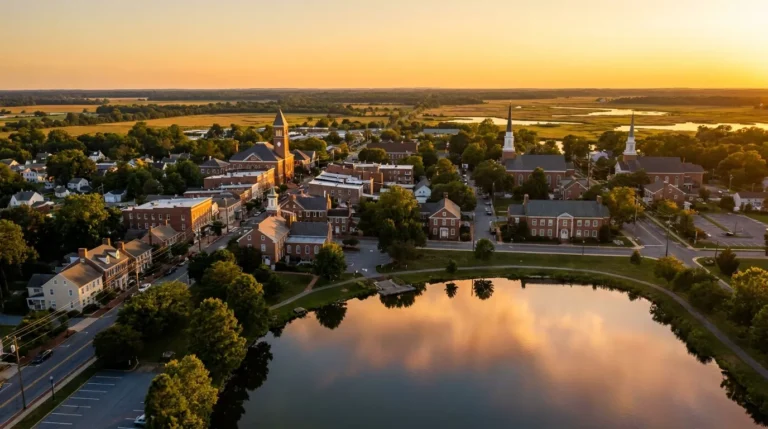
A small coastal state, calm, with enormous weight in the American corporate world.

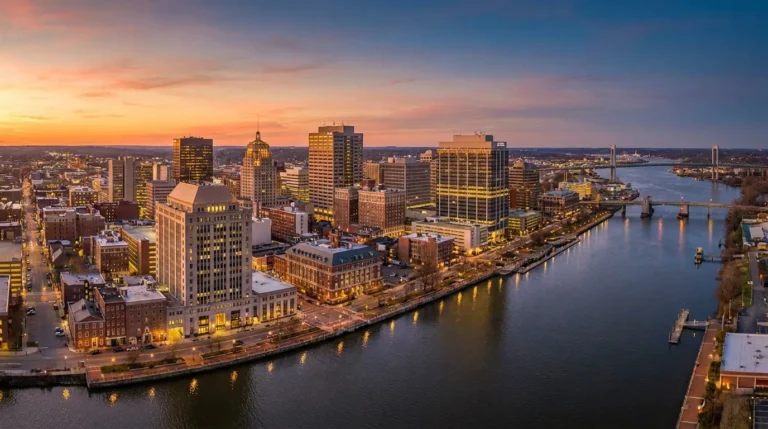
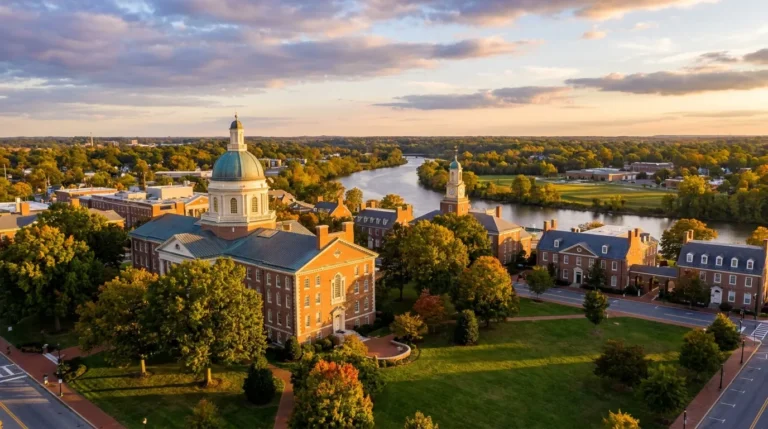
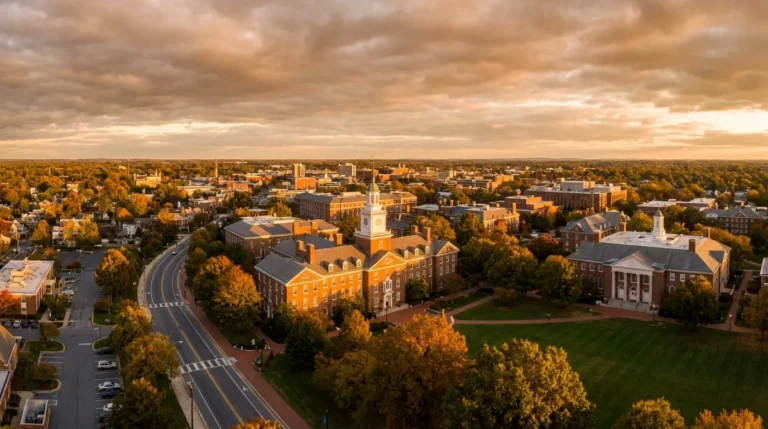
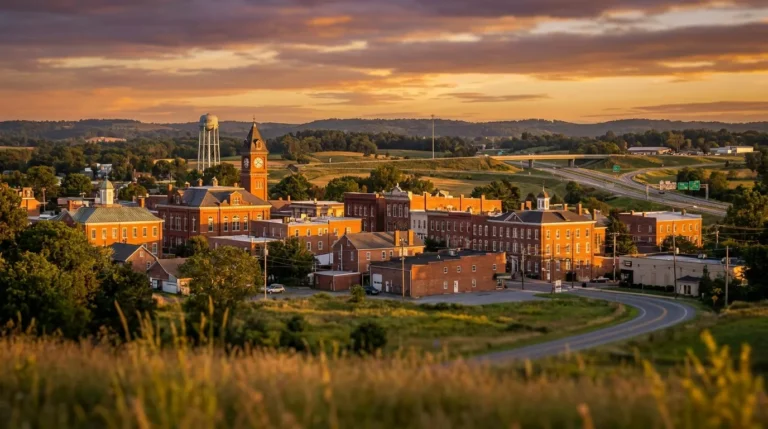
Delaware sits on the East Coast, bordered by Pennsylvania, New Jersey, and Maryland. It is the second-smallest US state, with just a few counties. The main cities are Wilmington (the largest city and financial center), Dover (the capital), and Newark (home to the University of Delaware).

The state is famous in the business world. More than half of all companies listed on the New York Stock Exchange are legally incorporated in Delaware, thanks to favorable corporate laws and a specialized business court. That explains why so many major corporate addresses point to Wilmington.

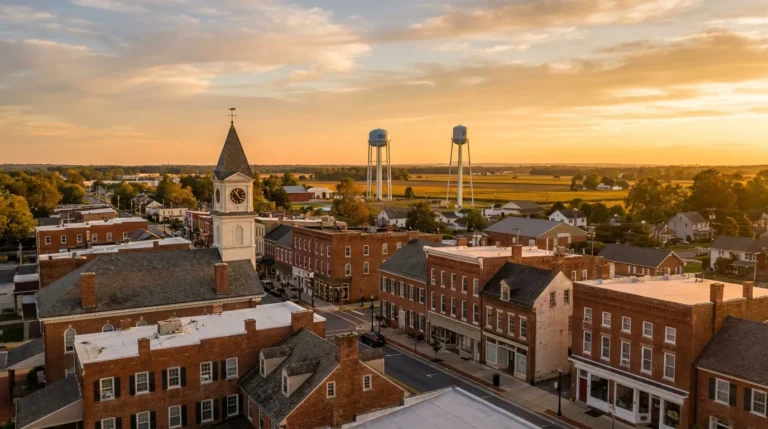
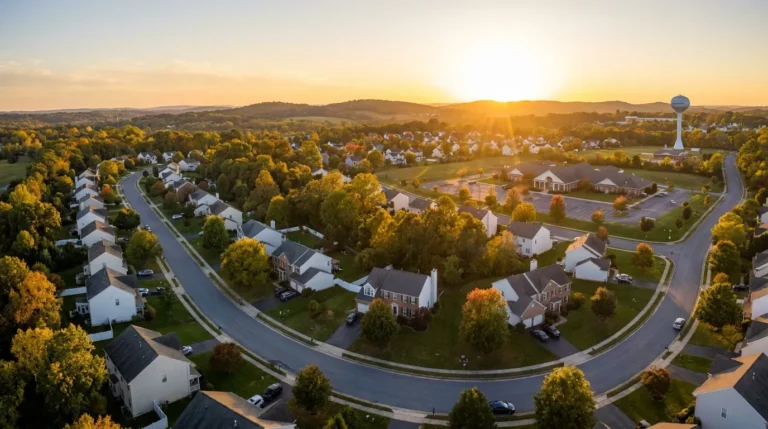
For those looking to live here, Delaware offers a below-average cost of living for the East Coast, decent beaches in summer (Rehoboth Beach, Bethany Beach), and easy access to Philadelphia, Baltimore, and Washington DC by car or train. It is a small, calm state without big crowds.

Population
1,018,396
Average monthly salary
61,500 USD/mo
39.3185°, -75.5071°

Featured places

Top 10 places in Delaware

The places most sought-after by immigrants in this region.

Delaware's demographics: a small and relatively diverse state

Modest population, with a white majority, a significant Black community, and rapidly growing Hispanic numbers in recent years.

Delaware has about one million residents. The majority is non-Hispanic white, but there is a large African American community (about one-fifth of the population), with a strong presence in Wilmington and Dover. Hispanics are growing quickly, mainly in Georgetown and in agricultural towns in the southern part of the state.

English is the dominant language. Spanish appears in neighborhoods with more Mexican, Guatemalan, and Puerto Rican immigrants. There are also small Indian and Chinese communities tied to the financial sector and the university.

The population divides between the more urban north (Wilmington, Newark), connected to Philadelphia, and the more rural and agricultural south. This division also shows up in politics and lifestyle: the north is more liberal, the south more conservative and oriented toward farming and beach tourism.

1,018,396
Population
42 yrs
Median age
158/km²
Density
$79,330
Median income
per year
Urban population83.0%
Foreign-born10.4%
Languages spoken
  • English
  • Spanish
  • Haitian Creole (in small communities)
  • Mandarin
  • Hindi
Main religions
  • Christian (Protestant and Catholic)
  • No religion
  • Jewish
  • Muslim
  • Hindu

Cost of living in Delaware: affordable for the East Coast

Cheaper than New Jersey, New York, and Philadelphia. No state sales tax, which helps in daily life.

Delaware is one of the few US states with no sales tax. That means the price on the tag is the final price, with no add-on at checkout. Electronics, clothing, and furniture cost less here than in neighboring states, and residents of Maryland and Pennsylvania cross the border to shop.

A one-bedroom apartment in Wilmington rents for about $1,300 to $1,700 per month. In Dover or Newark, $1,100 to $1,500. Small towns in the south have even lower prices. Groceries and electricity are near the national average.

There is a state income tax, and it is progressive, but no local sales tax. Property taxes are among the lowest in the US. Taken together, money goes further here than in neighboring states like New Jersey or New York.

99Cost index (US = 100)1% below US average
CategorySingleCoupleFamily (2 + 2)
iHousing$1,292$1,491$1,889
iFood$378$755$1,372
iTransport$497$845$1,093
iHealthcare$278$557$1,044
iChildcare$1,809
iOther$845$1,521$2,137
Monthly total$3,290$5,169$9,344

Source: U.S. BLS Consumer Expenditure Survey 2023 + BEA Regional Price Parities 2023 · Estimates in USD, monthly.

Housing in Delaware: yards and reasonable prices

Buying a home in Delaware is more affordable than in most East Coast states. Quiet, suburban neighborhoods are the norm.

Home prices in Delaware are friendly compared to New Jersey, New York, or Massachusetts. In Wilmington, homes in good neighborhoods run between $350,000 and $600,000. In Newark, near the university, prices are similar, with family homes of three to four bedrooms.

Dover, the capital, and the southern part of the state (Georgetown, Milford, Seaford) have the lowest prices, with modest homes from around $250,000. In the beach towns (Rehoboth Beach, Bethany Beach, Lewes), prices rise because of tourism and retirees who relocate there.

Renting is straightforward. Landlords ask for proof of income, generally three times the monthly rent, and a credit check. Newcomers without a US credit score may need a co-signer or to pay two or three months upfront to secure a lease.

Purchase price (m²)
  • Center$3,300/m²
  • Outside$2,200/m²
4.3×
Price-to-income
7.0%
Mortgage rate (20y)
Recommended neighborhoods
  • Wilmington (north, near Philadelphia)
  • Newark (university, good schools)
  • Hockessin (quiet suburb)
  • Middletown (residential growth)
  • Lewes (beach, retirees)
  • +2 more

Delaware's job market: banking, chemistry, pharmaceuticals, and logistics

Large financial sector in Wilmington. Historic chemical and pharmaceutical industry. Agriculture in the south of the state.

Delaware concentrates much of its employment in finance. Wilmington is home to major banks and credit card companies such as Bank of America, JPMorgan Chase, Capital One, and Barclays. This came from state banking laws favorable to the financial sector since the 1980s.

The chemical industry has deep historical roots, with DuPont born in Wilmington. Today, DuPont and its spin-offs (Chemours, Corteva) still employ thousands. Pharmaceutical companies such as AstraZeneca and Incyte also have large operations in the state.

Other strong sectors include logistics and warehousing (because of the location between New York and Washington), beach tourism, and agriculture in the south. The University of Delaware and the ChristianaCare hospital system also employ many people. Salaries are good in the financial and chemical sectors and average in others.

$61,500
Avg net salary
per month
$26,416
Minimum wage
per month
4.0%
Unemployment
61.4%
Labor force
Dominant sectors
  • Finance and banking
  • Chemicals and pharmaceuticals
  • Corporate law and business services
  • Agriculture (chicken, soybeans, corn)
  • Beach tourism
  • +3 more
Major employers
  • DuPont
  • AstraZeneca
  • JPMorgan Chase
  • Bank of America
  • Capital One
  • +3 more

Education in Delaware: decent public schools and a well-regarded university

Free statewide public system. The University of Delaware is the most recognized name, with a good national reputation.

As in all US states, children have the right to free public schooling regardless of immigration status. Quality varies by district: Hockessin, Newark, and Middletown have highly rated schools. Wilmington has more challenging districts in some neighborhoods.

The University of Delaware (UDel), in Newark, is the state's main institution. It has a strong reputation in engineering, business, and biological sciences and attracts students from all along the East Coast. It is a public university with reduced tuition for state residents.

Other options include Delaware State University (historically Black university, in Dover) and Delaware Technical Community College, with several campuses and short technical programs. Those seeking elite institutions can easily reach Philadelphia (University of Pennsylvania, Drexel) or Baltimore (Johns Hopkins), both very close.

Literacy97.0%
Tertiary education34.6%
478
PISA score (avg)
$13,800
Private school
per year
Notable universities
  • University of Delaware (Newark)
  • Delaware State University (Dover)
  • Wesley College
  • Delaware Technical Community College
  • Wilmington University

Healthcare in Delaware: competent hospitals, standard American coverage

Solid healthcare network with good hospitals in Wilmington and Newark. Employer health plan is the norm.

The healthcare system follows the American standard: no universal coverage, with private insurance through employment for formal workers. Family premiums run about $1,200 to $1,800, with the employer covering much of it.

ChristianaCare, based in Wilmington and Newark, is the state's main hospital network and ranks among the best regional hospitals in the US. Nemours Children's Hospital is a pediatric reference center. Bayhealth serves the southern part of the state.

Lower-income families may qualify for Medicaid (Delaware Healthy Children Program for children, adult Medicaid for specific income brackets). Documented immigrants have access after a waiting period. Those who arrive without coverage should avoid private emergency rooms, where a visit can exceed $2,000.

Healthcare index70.0 / 100
  • Life expectancyyears at birth
    78.4yrs
  • Doctors per 1kpracticing physicians
    2.7
  • Health spendper capita, per year
    $11,500
  • Public systemoverall quality rating
    Fair

Safety in Delaware: quiet suburbs, isolated issues in Wilmington

Most of the state is safe. Wilmington has neighborhoods with above-average crime rates; the rest of the state is calm.

Delaware as a whole is a mid-range state for safety. Small cities and suburbs (Hockessin, Lewes, Middletown, Newark) are quite peaceful, with crime below the national average. Families and retirees concentrate there precisely for the calm.

Wilmington, the largest city, has neighborhoods with gun violence and drug trafficking, mainly in central and eastern areas. Residential areas such as Trolley Square or Greenville, within the same city, are quite safe. It is worth researching the specific neighborhood before signing a lease.

The southern beaches (Rehoboth, Bethany) are considered among the safest areas in the state, ideal for families and retirees. Rural roads in the south occasionally see drunk driving incidents, but serious crimes are rare. Sites like GreatSchools and Niche.com help compare neighborhoods.

7.8
Homicides per 100k
per year
Safety index
47.0
Crime index
53.0
Safer neighborhoods
  • Hockessin
  • Greenville (Wilmington)
  • Lewes
  • Rehoboth Beach
  • Middletown
  • Newark (areas near the university)
  • Bethany Beach
Areas to avoid
  • Wilmington downtown at night
  • Southeast Dover
  • Seaford central areas

Transportation in Delaware: car is the standard, but trains connect to Philadelphia and New York

No international airport of its own. Amtrak and SEPTA trains connect Wilmington to major East Coast cities.

Delaware has no international airport. ILG (New Castle Airport) handles private flights and cargo, but for air travel residents use Philadelphia Airport (PHL), about 40 minutes from Wilmington, or Baltimore (BWI) and Washington (DCA, IAD), all 1 to 2 hours by car.

The car is the main mode of transport. Highways I-95 and I-495 cut through the state and connect with Philadelphia, Baltimore, and Washington in a few hours. For the south, Route 1 leads straight to the beaches. There are DART buses in Wilmington and Newark, but the network is limited.

Amtrak stops at Wilmington station (an important stop on the Northeast Corridor) and runs directly to Philadelphia (30 min), Baltimore (1 hr), Washington DC (1.5 hrs), and New York (2 hrs). SEPTA regional rail also connects Wilmington to Philadelphia, a popular option for those who work there but live here.

26 min
Avg commute
38
Walkability
Airports
  • ILG (Wilmington New Castle, regional)
  • Bike infrastructure

Delaware's climate: four well-defined seasons

Hot, humid summers, cold winters with occasional snow, and pleasant spring and autumn. Ocean influence on coastal temperatures.

Delaware has a humid temperate climate with four clearly marked seasons. Summer (June to August) is hot and humid, with averages of 28 to 32 Celsius and plenty of mosquitoes near ponds and rivers. Afternoon thunderstorms are common. The beaches fill up during this time.

Autumn is the most pleasant season: mild temperatures, sunny days, and orange and red foliage in October. Spring is also enjoyable, with flowers in March and April. Humidity comes back in May.

Winter is cold, with averages between minus 2 and 5 Celsius. There is snowfall, but not much: the state gets between 25 and 50 cm of snow per winter, depending on the year. Winter storms (nor'easters) can close roads and schools. The ocean makes the coast (Rehoboth, Lewes) slightly warmer than the interior in winter.

Sunny days / year204 days
Avg high (°F)
  • 38°J
  • 41°F
  • 49°M
  • 61°A
  • 71°M
  • 79°J
  • 84°J
  • 82°A
  • 75°S
  • 63°O
  • 53°N
  • 43°D
Avg low (°F)
  • 24°J
  • 25°F
  • 32°M
  • 42°A
  • 52°M
  • 62°J
  • 67°J
  • 66°A
  • 59°S
  • 47°O
  • 37°N
  • 29°D
Rainfall (")
  • 4"J
  • 3"F
  • 5"M
  • 4"A
  • 4"M
  • 5"J
  • 5"J
  • 4"A
  • 5"S
  • 4"O
  • 3"N
  • 4"D

Delaware's culture: beach life, colonial history, and Philadelphia influence

Summers at the beach, small local festivals, and strong Philadelphia flavor in the north. A quiet cultural life.

Delaware is culturally understated. Life revolves around local events, community festivals, and beach trips in summer. Rehoboth Beach has become a traditional LGBTQ+ destination on the East Coast with a good scene of restaurants, bars, and galleries.

The northern part of the state is heavily influenced by Philadelphia, with the accent, foods (cheesesteak), and sports culture of Philadelphia (Eagles, 76ers, Phillies, Flyers). Wilmington has a theater scene, small museums, and the Grand Opera House. The south is more rural, with agricultural traditions, churches, and county fairs.

Restaurants in Delaware have a strong seafood scene: Chesapeake blue crabs, local oysters, and sweet corn in summer. Classic American food dominates, with some Italian, Mexican, and Indian options in Newark and Wilmington.

65
Major museums
Notable dishes
  • Blue crab
  • Crab cakes
  • Chicken and slippery dumplings (Delaware specialty)
  • Scrapple (breakfast)
  • Cheesesteak (Philadelphia influence)
  • +2 more
Annual events
  • Firefly Music Festival (Dover, June)
  • Sea Witch Festival (Rehoboth Beach, October)
  • Dover International Speedway NASCAR (May)
  • Delaware State Fair (Harrington, July)
  • Punkin Chunkin (October)

Delaware's main economic sectors

Corporate law, finance, chemicals, and pharmaceuticals lead. Strong agriculture in the south. Beach tourism in summer.

Delaware is nationally recognized for its corporate law industry. The Court of Chancery, a specialized tribunal, adjudicates corporate disputes and attracts companies that incorporate in the state. Law firms in Wilmington are a reference in American corporate law.

The financial sector is strong because of favorable banking laws. Credit cards, investment funds, and banks have large operations in Wilmington. The chemical industry, a legacy of DuPont, still generates skilled jobs, now also in pharmaceuticals and agricultural technology.

In the south, agriculture dominates, with chicken farming (Delaware is a major poultry producer), soybeans, and corn. Companies such as Perdue and Mountaire maintain operations in the state. Beach tourism is a seasonal but relevant sector, with Rehoboth, Lewes, and Bethany drawing visitors from across the East Coast each summer.

  • GDPgross domestic product
    $90.0B
  • GDP per capitaoutput per resident
    $88,400
  • GDP growth (yr)economy expanding
    +2.1%
Top sectors
  • Corporate services and business law
  • Finance and banking
  • Chemicals and pharmaceuticals
  • Agriculture (poultry, soybeans, corn)
  • Beach tourism
  • +3 more

Immigrant communities in Delaware

Roughly 100,000 immigrants live in Delaware, with a strong Mexican presence in Sussex County and Indian and Chinese communities in Newark and Wilmington.

Delaware has around 100,000 residents born outside the country, close to 10% of the population. The most visible group is Mexican, concentrated in the south of the state in Sussex County, where they work in poultry plants and food processing in towns like Georgetown, Seaford, and Milford. In the north, Newark and Wilmington host Indian and Chinese communities tied to the University of Delaware, the banking hub, and the chemical-pharmaceutical corridor. Guatemalans, Hondurans, and Haitians round out the picture, with a growing presence in Dover.

The state has no career consulates, so anyone needing a passport or documents turns to Philadelphia, Baltimore, or Washington D.C. The Latin American Community Center, in Wilmington, offers English classes, legal guidance, and children's programs. La Esperanza, in Georgetown, serves immigrants in the south with an immigration clinic and housing support. Catholic Charities of the Diocese of Wilmington provides low-cost immigration legal help, and the Delaware Hispanic Commission coordinates public services in Spanish.

100,000
Foreign-born residents
estimated
Top countries of origin
  • Mexico
  • India
  • China
  • Guatemala
  • Haiti
Main immigrant hubs
  • Wilmington
  • Newark
  • Dover
  • Georgetown
  • Seaford
Foreign consulates
  • Mexican Consulate in Philadelphia (jurisdiction includes Delaware)
  • Guatemalan Consulate in Philadelphia
  • Indian Consulate in Washington D.C.
Community organizations
  • Latin American Community Center (Wilmington)
  • La Esperanza (Georgetown)
  • Catholic Charities of the Diocese of Wilmington
  • Delaware Hispanic Commission

Latest posts

Posts about the United States

Coverage and updates related to this destination.

Showing content from the United States, as there is no specific data for Delaware yet.