English
 Português
 Español


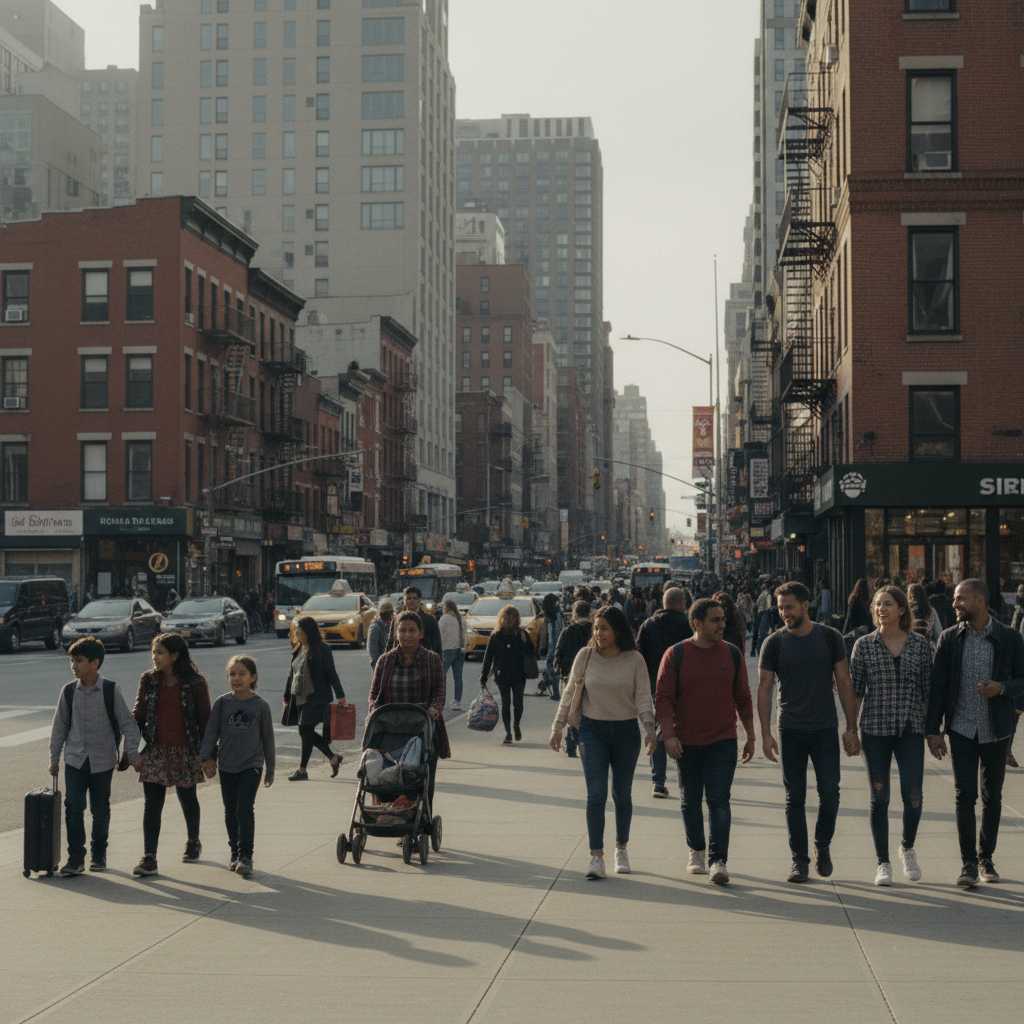
Since January 2026, the United States has maintained one of the broadest entry restrictions for foreigners ever implemented by the federal government. Presidential Proclamation 10998, signed on December 16, 2025, significantly expanded the scope of the so-called travel ban, increasing the number of affected countries from 19 to 39, and also including holders of travel documents issued by the Palestinian Authority. The measure came into effect on January 1, 2026, and remains active as of April 2026, directly impacting thousands of immigration processes and visa applications.
For the Portuguese-speaking community, it is essential to highlight that Brazil is not included in any of the restricted country lists. However, the measure has indirect implications for Brazilians with family members, business partners, or spouses from the affected countries, and also signals a more restrictive stance by the government regarding immigration as a whole.
The travel ban differentiates countries into two categories – total suspension and partial suspension – each with distinct consequences for the types of visas affected and the possibilities of entering the United States.
Evolution of the Restriction
The first version of the ban was instituted by presidential proclamation in June 2025, covering 19 nations whose governments were deemed insufficient in cooperating with the US on security and migration information sharing. Less than six months later, in December 2025, a new proclamation expanded the list to 39 countries and tightened the waiver conditions.
The December version removed categorical exceptions that existed in the previous proclamation, including automatic waivers for immediate relatives of US citizens, international adoption cases, and holders of the Afghan Special Immigrant Visa (SIV). This change made the restriction substantially stricter than the June version.
Countries with Total Suspension
Total suspension blocks the issuance of both immigrant and non-immigrant visas for citizens of the 19 countries listed below. In practice, no new visas – for work, tourism, study, or immigration – will be issued to nationals of these countries while the proclamation is in effect.
The 19 countries under total suspension are: Afghanistan, Burkina Faso, Myanmar (Burma), Chad, Republic of the Congo, Equatorial Guinea, Eritrea, Haiti, Iran, Laos, Libya, Mali, Niger, Sierra Leone, Somalia, South Sudan, Sudan, Syria, and Yemen.
Countries with Partial Suspension
Partial suspension prohibits the issuance of immigrant visas and certain categories of non-immigrant visas. Tourist visas (B-1/B-2) and some other temporary categories may continue to be issued in certain cases, but employment-based, family-based, and diversity visas are blocked.
The 20 countries under partial suspension include: Angola, Antigua and Barbuda, Benin, Burundi, Ivory Coast, Cuba, Dominica, Gabon, Gambia, Malawi, Mauritania, Nigeria, Senegal, Tanzania, Togo, Tonga, Venezuela, Zambia, Zimbabwe, and Turkmenistan (the latter with restrictions limited only to immigrant visas).
In addition to the 39 countries, the proclamation affects holders of travel documents issued by the Palestinian Authority, who are subject to total suspension.
Who Is Exempt
Proclamation 10998 provides for some exemption categories. Lawful permanent residents (green card holders) are not affected by the restriction, even if they are nationals of one of the listed countries. Likewise, dual nationals who hold a passport from a non-restricted country can apply for visas as usual.
Foreigners who already held a valid US visa on the date the proclamation came into effect (January 1, 2026) are also exempt – the proclamation expressly states that existing visas will not be revoked. Additionally, athletes and members of sports delegations traveling for events such as the FIFA World Cup 2026 received a specific exemption.
It is important to note that, unlike the June 2025 version, the December proclamation eliminated the automatic exemption for immediate relatives of US citizens. Spouses, minor children, and parents of Americans from the listed countries now need to apply for an individual waiver, with no guarantee of approval.
Impacts on Immigration Processes
The restriction directly affects family reunification petitions, employment-based visas, and the Diversity Visa (Lottery) program. US employers who rely on professionals from the listed countries face the impossibility of obtaining new work visas, while family petitions are suspended with no defined timeline for resumption.
For companies in the technology, health, and engineering sectors – which have historically recruited talent from countries like Nigeria and Iran – the measure represents a significant obstacle to workforce planning. The Department of State has confirmed that no new visas will be issued to nationals of countries under total suspension while the proclamation remains active.
Processes already underway at the National Visa Center (NVC) are not automatically canceled, but are put on hold with no possibility of scheduling a consular interview. This may result in the expiration of documents and the need to resubmit forms and fees when – and if – the suspension is lifted.
What to Monitor in 2026
There is no defined deadline for the end of the restrictions. The federal government has indicated that the measure will be periodically reassessed based on security reports and cooperation from the listed countries, but no public review had been scheduled as of April 2026.
Those with affected processes should regularly monitor updates from U.S. Citizenship and Immigration Services (USCIS) and the Department of State, check if individual waivers are available for their category, and keep all documentation up to date to avoid expiration during the suspension period.
Citizens of countries under partial suspension should specifically check which visa categories remain available, as restrictions vary by country and visa type. Direct inquiries to the nearest US consulate are recommended to obtain updated guidance on individual cases.
Learn more about B-1/B-2
- Duration
- Up to 6 months
- Extension
- Possible (up to 6 months)
- Work
- Not permitted
- Processing
- 2-8 weeks
About the author

Victoria Harper
Editor-in-Chief
As a journalist and lead editor at Visto n’ Visa, Victoria helps ensure that immigration topics are covered in a clear, trustworthy, and easy-to-understand way. Her focus is on delivering useful, human, and relevant content for people exploring new paths abroad.