English
 Português
 Español


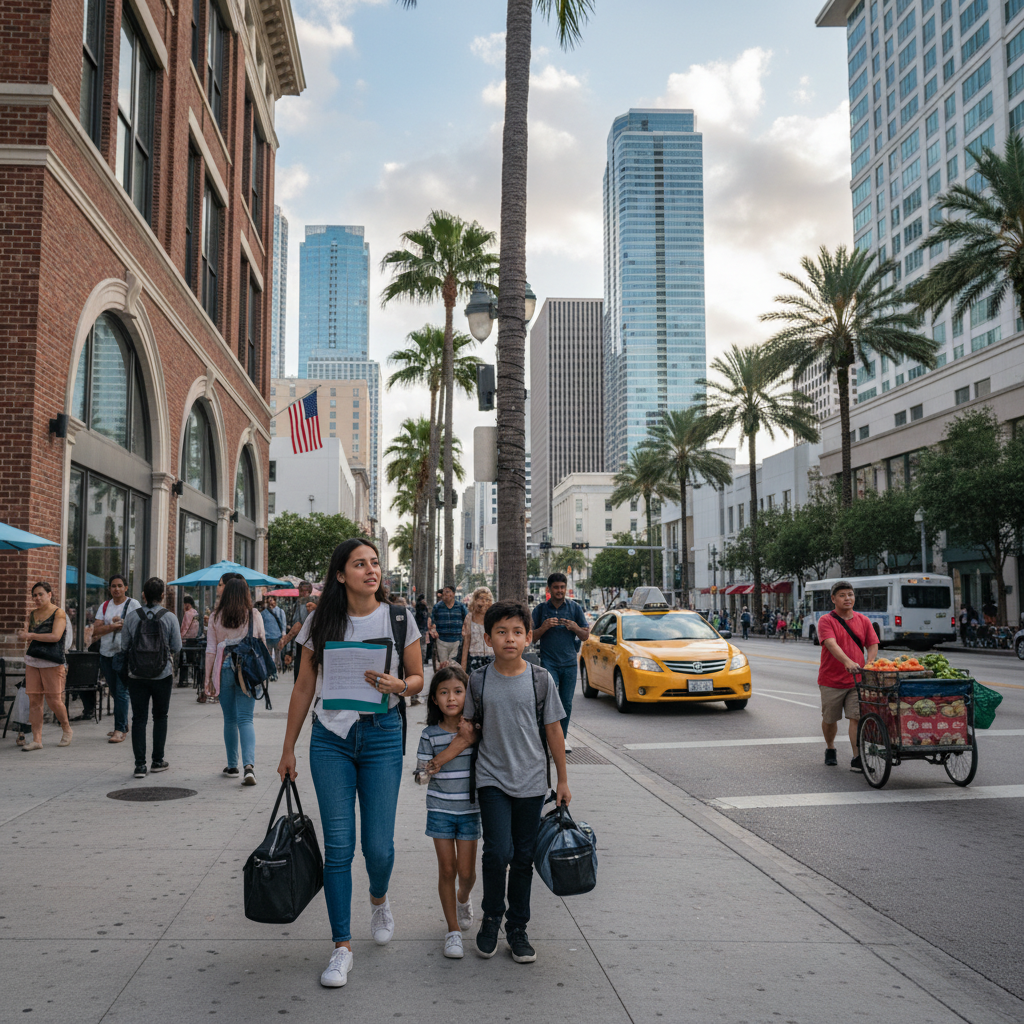
The US immigration landscape has undergone significant changes between 2024 and 2026. For Brazilians considering a move to the United States — whether for work, education, investment, or family reunification — understanding the current environment is essential before making major financial and professional decisions.
The picture has three distinct layers: restrictive state-level legislation (most notably in Florida), a federal policy overhaul under the second Trump administration that began in January 2025, and the continued availability of pathways for highly skilled professionals, which remain the primary legal route for regular immigrants. Each layer affects different applicant profiles in different ways.
This article offers a consolidated overview of the most relevant changes, with a focus on practical implications for Brazilians. A careful reading will help you identify which routes remain viable, which have become more difficult, and which windows have opened amid the reshuffling of federal priorities.
Florida: SB-1718 Still in Effect
Signed by Governor Ron DeSantis in May 2023 and fully in force since July 1 of that year, SB-1718 is described by its proponents as the strictest state-level anti-illegal immigration law in the country. More than two years after taking effect, its practical consequences are still being felt.
The law’s key provisions:
- Mandatory E-Verify checks for private employers with 25 or more employees, with heavy fines and operating license suspensions for non-compliance.
- Criminalization of transporting undocumented immigrants into the state, classified as a felony under certain circumstances.
- Invalidation of driver’s licenses issued by other states to undocumented immigrants.
- Mandatory collection of patient data by hospitals regarding immigration status.
The most visible consequence has been an exodus of workers from sectors such as construction, agriculture, and services. Many companies reported hiring difficulties and project delays. For Brazilians with legal status — Green Card holders, work visa holders, or those going through regular immigration processes — SB-1718 does not alter their rights, but the social climate and employer scrutiny around documentation have become noticeably stricter.
The Federal Landscape After January 2025
Donald Trump’s inauguration on January 20, 2025 marked the start of an aggressive federal immigration policy overhaul. In the administration’s first days, multiple executive orders were signed with immediate and indirect effects across all immigration profiles.
Tougher Border and Removal Policies
A national emergency was declared at the southern border, with troop deployments and expanded budgets for the construction and reinforcement of physical barriers. Catch-and-release programs were suspended, and interior enforcement operations targeting undocumented immigrants were intensified in urban centers. Zero-tolerance language returned to the official policy discourse.
Program Suspensions and Rollbacks
Several humanitarian programs were revised or terminated:
- TPS (Temporary Protected Status): designations for Venezuela and Haiti were placed under review, with decisions to end or not renew them announced in 2025.
- Humanitarian Parole: the CHNV parole programs for nationals of Cuba, Haiti, Nicaragua, and Venezuela were terminated.
- Refugee Admissions: annual caps were reduced and the processing of pending applications slowed considerably.
Birthright Citizenship
An executive order signed in January 2025 sought to narrow the interpretation of the 14th Amendment with respect to birthright citizenship, proposing to exclude children born to parents who are undocumented or hold temporary visas. The order was immediately challenged and blocked by federal courts, and the matter continues to work through the judicial system. For Brazilians with children born in the United States under legal status, the practical application remains unchanged.
Nonimmigrant Visas and Processing
Several visa categories saw operational adjustments:
- H-1B: increased scrutiny of sponsorship arrangements, minimum wage requirements under review, and stricter selection rates.
- F-1 (students): revised OPT eligibility criteria, particularly for STEM fields, with heightened consular scrutiny.
- Consular visas generally: wait times increased at multiple consulates, including São Paulo, Rio de Janeiro, Brasília, and Recife.
Pathways for Skilled Professionals Remain Open
Amid the broader tightening, channels aimed at highly skilled professionals have remained operational — and in some cases were explicitly preserved as a priority of the administration’s economic agenda. For qualified Brazilians, these pathways continue to be the most viable options.
EB-1: Extraordinary Ability and Multinational Executives
The EB-1 is an immigrant visa category (Green Card) designed for three profiles: individuals with extraordinary ability (EB-1A), outstanding professors and researchers (EB-1B), and multinational executives and managers (EB-1C). It does not require labor certification (PERM) and offers faster processing than most other EB categories. Brazilian interest in the EB-1A grew substantially between 2023 and 2025, particularly in technology, science, the arts, and entrepreneurship.
EB-2 NIW: No Job Offer Required
The EB-2 with National Interest Waiver allows professionals with an advanced degree or exceptional ability to self-petition for a Green Card without an employer sponsor, provided they demonstrate that their work serves the national interest. The category has become one of the most sought-after by Brazilians in fields such as technology, healthcare, energy, education, and research. The criteria established by the Matter of Dhanasar decision remain in effect in 2026.
O-1: Extraordinary Ability (Temporary)
The O-1 is the nonimmigrant equivalent of the EB-1A. It grants renewable temporary status to individuals with extraordinary ability in science, the arts, education, business, or athletics. It frequently serves as a bridge to the EB-1A — the evidentiary criteria overlap significantly. For Brazilians who have not yet assembled the full body of evidence required for an EB-1A petition, the O-1 provides lawful presence in the United States while they continue building their record.
EB-5: Investment in a Qualifying Project
The EB-5 program remains active, with a minimum investment of $800,000 in Targeted Employment Areas (TEAs) or $1,050,000 in non-TEA areas. Regional centers were authorized to operate through 2027 under the EB-5 Reform and Integrity Act of 2022. The category appeals to Brazilians with available capital who are seeking permanent residence without relying on an employer sponsor or documented extraordinary abilities.
Practical Takeaways for Brazilians
Three practical conclusions emerge from the 2025–2026 landscape.
Any immigration plan must start from a position of legal status. The operational tightening materially raises the cost of any irregularity — even in so-called gray areas, such as overstaying a B-1/B-2 visa. The legal path is simultaneously slower and the only viable one in the medium term.
The window for skilled professionals remains open and, in many respects, has been deliberately preserved as a priority. Brazilians working in technology, healthcare, science, engineering, higher education, and entrepreneurship will find robust alternatives in the EB-1, EB-2 NIW, and O-1 categories, with stable and well-established criteria.
Processing times and costs have increased. USCIS fee adjustments in April 2024 significantly raised the price of petitions. Consular wait times in Brazil are among the longest in the Western Hemisphere for certain visa categories. Careful document planning and realistic timelines matter more than ever.
The environment is more demanding, but it remains structurally open to those who prepare in advance, document their professional history with care, and choose the right category for their specific profile. The changes did not close doors — they simply made it clearer how important it is to know which door to open.
About the author

Victoria Harper
Editor-in-Chief
As a journalist and lead editor at Visto n’ Visa, Victoria helps ensure that immigration topics are covered in a clear, trustworthy, and easy-to-understand way. Her focus is on delivering useful, human, and relevant content for people exploring new paths abroad.