English
 Português
 Español


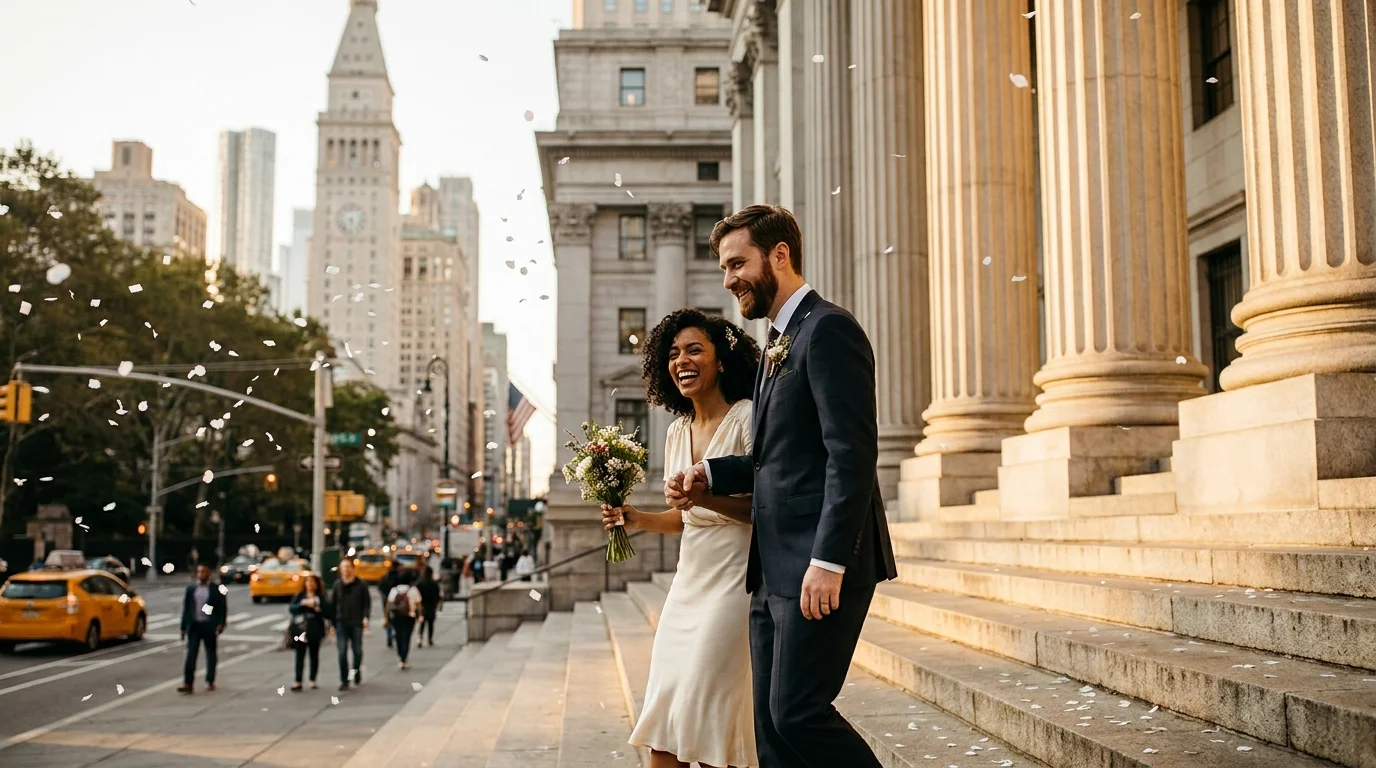
If you’re planning to apply for a marriage-based green card, you’re probably looking for the safest path to live and work in the United States alongside your spouse. This is one of the most commonly used routes in the US family-based immigration system, but the journey, from the initial petition to the interview, has steps, timelines, and pitfalls worth knowing before you start. This guide brings together the updated step-by-step process for 2026, from Form I-130 to the removal of conditions on residence.
How the marriage-based green card works
The marriage-based green card grants permanent residence to those married to a US citizen or a lawful permanent resident. The key factor is the category the couple falls into, since it determines how fast the process moves.
Spouses of US citizens are considered immediate relatives and, as a result, don’t face annual quotas or numerical backlogs, the visa is always available. Spouses of lawful permanent residents, on the other hand, fall into a family preference category subject to annual limits, which tends to extend the wait. In both cases, the application moves through family-based immigration channels, which also cover children and other qualifying relatives.
The application steps
Although every case is unique, the process follows common milestones. Understanding them helps you arrive prepared and avoid delays.
Step 1: file the I-130
It all starts with Form I-130 (Petition for Alien Relative), filed by the sponsoring spouse. It establishes the qualifying relationship and must be accompanied by evidence that the marriage is genuine: marriage certificate, photos taken over time, joint bank accounts, a lease in both names, and mail addressed to both at the same address. Once the I-130 is approved, the case typically moves to the National Visa Center (NVC) when consular processing applies.
Step 2: adjustment of status or consular processing
Those already in the United States in lawful status can file Form I-485 (Adjustment of Status) and obtain the green card without leaving the country. Those abroad go through consular processing, with an interview at a US consulate or embassy. This stage includes the medical exam, the affidavit of support (proof of the sponsor’s income), and any additional documents that may be required. Watch for Requests for Evidence (RFEs) and respond promptly.
Step 3: the interview
The last hurdle is usually the interview. The officer wants to confirm the relationship is genuine, asking about the couple’s daily routine, shared documents, and details of life together. Bring updated evidence of the relationship and keep your answers consistent, discrepancies between spouses are one of the main red flags that trigger suspicion.
Realistic timelines in 2026
Timelines vary significantly depending on the USCIS office and the sponsor’s profile. As a reference for 2026:
- The I-130 for a US citizen’s spouse has been taking, on average, around 14 months, with a wide range depending on the unit reviewing the case.
- The I-485 (adjustment of status) usually ranges between 10 and 17 months; when the I-130 and I-485 are filed together, the average reported by USCIS for fiscal year 2026 is close to six months at some centers, but can exceed 20 months at the most backlogged ones.
- Overall, most marriage-based green card applications are resolved within 10 to 24 months in 2026.
The K-1 visa path
Another route is the K-1 visa, the fiancé(e) visa. It’s for those engaged to a US citizen who plan to marry on US soil: you enter the United States and have 90 days to get married. After the wedding, you apply for the green card through adjustment of status.
To qualify for the K-1, you generally need to show:
- A genuine relationship;
- An in-person meeting at least once in the past two years (with narrow cultural or religious exceptions);
- Both parties free to marry;
- Financial capacity to provide support from the US petitioner.
It’s worth adjusting your timeline expectations: according to 2026 USCIS data, the full K-1 journey, from Form I-129F to permanent residence, tends to take 22 to 30 months, combining the initial petition with the subsequent adjustment of status. The time gap between the K-1 and the spouse visa has narrowed in recent years.
Mistakes that sink cases
Marriage-based immigration is straightforward when well organized, but a few missteps sink many cases:
- Insufficient documentation to prove a bona fide marriage;
- Missing deadlines or ignoring RFE notices;
- Inconsistent or incomplete information on the forms.
If USCIS suspects fraud, the couple may face lengthy investigations and even denial. That’s why consistency and solid evidence are non-negotiable.
Removal of conditions
If the marriage was less than two years old when the green card was granted, the residence is issued as conditional, valid for two years. Before it expires, you must file Form I-751 to remove the conditions and secure permanent residence. Failing to complete this step within the deadline can jeopardize the status already obtained.
Your next steps
The marriage-based green card is a long journey, but with concrete rewards: work authorization, access to services, and, further down the road, the path to citizenship. To keep the momentum on your side:
- Confirm your category: a citizen’s spouse tends to move faster, while a permanent resident’s spouse should start early and track the timelines closely.
- Gather strong, consistent evidence of a shared life: joint finances, photos, contracts, and correspondence.
- Review forms and documents ahead of time, anticipating any points that could raise questions even before filing.
With preparation and attention to detail, the formalities, from the paperwork to the interview, stop being an overwhelming challenge. In the end, organization and patience are the greatest allies of anyone building a permanent life in the United States alongside the person they love.
Learn more about Family Based
- Type
- Family-sponsored Green Card
- Sponsor
- U.S. citizen or LPR
- Petition
- Form I-130
- Processing
- 12 months to several years
Tags
About the author

Victoria Harper
Editor-in-Chief
As a journalist and lead editor at Visto n’ Visa, Victoria helps ensure that immigration topics are covered in a clear, trustworthy, and easy-to-understand way. Her focus is on delivering useful, human, and relevant content for people exploring new paths abroad.